×

Cameroon🇨🇲 | attractionsBimbia Slave Trade Sitecoastal ruins, memorial stones, Atlantic embarkation point | things to do and best time to go

Explore National Museum of CameroonExplore Reunification Monument

Backpacking in Bimbia Slave Trade Site
🏆 Top pickattraction ranked #3
By Johan Kruseman 🇳🇱 | Updated September 3, 2026

Forget the glossy Instagram posts: Bimbia Slave Trade Site isn’t some sanitized, photogenic ruin where you pose for likes. It’s raw, unsettling, and absolutely essential. Tucked away near Limbe on Cameroon’s southwest coast, Bimbia is where the Atlantic slave trade’s brutal machinery ground through real lives—far from the tourist crowds of Yaoundé or the manicured colonial leftovers in Douala. If you’re backpacking Cameroon for the thrill, the history here hits harder than any mountain summit. The site itself is humble—crumbling stone cells, overgrown jungle, the echo of chains—but the emotional punch is seismic. Don’t expect polished signage or a slick visitor center; you’ll need to arrange a guide, and the road in is rough. Entry is cheap, but the cost is measured in what you carry away. Bimbia isn’t easy or pretty, but it’s the kind of place that changes how you see the world—and that’s worth more than any postcard.

Discover everything you want to know in the 📖 Cameroon Travel Guide.


Get your Cameroon guide
95 ranked highlights, routes & tips, works offline (374 pages)
Loading the map 🌍
CLICK TO FILTER
cities
towns
landmarks
national parks
hikes
beaches
attractions
festivals
regions
SHOW COUNTRY’S BESTSHOW ALL

✨ Why go?
Ranked #3 attraction in Cameroon
What makes it a must-see attraction

The Bimbia Slave Trade Site in Cameroon isn’t some polished postcard spot. It’s raw, heavy, and real—exactly why backpackers carve out time for it. This place is a living scar of history, a brutal reminder of the transatlantic slave trade’s reach into Central Africa. Forget sanitized museum tours; here, you walk the same paths where countless lives were torn apart, and that weight hits you hard. It’s not about pretty views or Instagram likes. It’s about confronting a dark chapter that shaped the region’s identity and understanding Cameroon beyond the surface.

Yes, the site draws crowds, especially during peak season, and the modest entrance fee might seem steep for some. But the effort-to-reward ratio is undeniable. The guides—often descendants of those affected—bring stories that textbooks … read more 👉
The Bimbia Slave Trade Site in Cameroon isn’t some polished postcard spot. It’s raw, heavy, and real—exactly why backpackers carve out time for it. This place is a living scar of history, a brutal reminder of the transatlantic slave trade’s reach into Central Africa. Forget sanitized museum tours; here, you walk the same paths where countless lives were torn apart, and that weight hits you hard. It’s not about pretty views or Instagram likes. It’s about confronting a dark chapter that shaped the region’s identity and understanding Cameroon beyond the surface.

Yes, the site draws crowds, especially during peak season, and the modest entrance fee might seem steep for some. But the effort-to-reward ratio is undeniable. The guides—often descendants of those affected—bring stories that textbooks can’t touch. Their raw, personal narratives turn the visit into an emotional journey, not just a history lesson. For backpackers on a Cameroon route, Bimbia is a major milestone—a place where history, culture, and humanity collide. It’s a sobering stop that demands respect and reflection, but it also deepens your connection to the country in a way no flashy attraction ever could.
Want to include Bimbia Slave Trade Site in your Cameroon route?
Create a personalized Cameroon itinerary that includes Bimbia Slave Trade Site and the places that fit your trip — based on your travel style, budget, and available time. Get your route in seconds.

Generate my trip

💡 HighlightsWhat this place is best known for

The Slave Trade Route
Forget the sanitized museum dioramas. Here, you walk the same dirt path where thousands were marched from the forest edge to the Atlantic. The route is raw, unpolished, and still lined with the gnarled roots and thick undergrowth that swallowed the cries of the enslaved. You feel the weight of history in your bones. It’s not ‘Instagrammable’—it’s real, and it’s heavy. The silence here is louder than any audio guide.


The Slave Auction Square
This isn’t a reconstructed plaza with tidy plaques. The auction square is a clearing, still marked by the remnants of stone foundations and the ghostly outlines of what once passed for ‘civilization.’ Guides don’t sugarcoat it. You stand where families were torn apart, and the air feels thick with memory. It’s a gut-punch, but it’s … read more 👉
The Slave Trade Route
Forget the sanitized museum dioramas. Here, you walk the same dirt path where thousands were marched from the forest edge to the Atlantic. The route is raw, unpolished, and still lined with the gnarled roots and thick undergrowth that swallowed the cries of the enslaved. You feel the weight of history in your bones. It’s not ‘Instagrammable’—it’s real, and it’s heavy. The silence here is louder than any audio guide.


The Slave Auction Square
This isn’t a reconstructed plaza with tidy plaques. The auction square is a clearing, still marked by the remnants of stone foundations and the ghostly outlines of what once passed for ‘civilization.’ Guides don’t sugarcoat it. You stand where families were torn apart, and the air feels thick with memory. It’s a gut-punch, but it’s also a rare chance to confront the past without filters or euphemisms.


The Barracoon Ruins
Most so-called ‘slave castles’ have been polished for tourists. Not here. The barracoons—holding cells for human cargo—are half-swallowed by vines and time. You can still see the iron rings embedded in stone, rusted but stubborn. The walls are low, the space claustrophobic. It’s not a photo op; it’s a confrontation with the mechanics of cruelty. If you want to understand the logistics of the slave trade, this is the unvarnished reality.


The Beach of No Return
This is where the forest ends and the ocean begins. The sand is coarse, the surf relentless. There’s no glossy monument, just a battered sign and the endless horizon. This is the last African soil thousands ever touched. The entertainment here isn’t spectacle—it’s the raw, unfiltered drama of standing at the edge of a continent, imagining the terror and hope tangled in every departing wave. If you want a selfie, you’ll have to earn it.


Local Storytelling and Oral Histories
Skip the scripted tours. The real magic is in the stories told by local guides—descendants of survivors, not actors in period costume. They don’t recite; they remember. You’ll hear names, not numbers. You’ll get context: how Bimbia’s story fits into the wider Atlantic slave trade, and how it still shapes local identity. This is living history, delivered with the kind of honesty that makes you question everything you thought you knew.


Traditional Ritual Sites
If you’re lucky (and respectful), you might witness or hear about ongoing rituals at sacred spots near the site. These aren’t staged for tourists. They’re acts of remembrance and resilience, woven into daily life. The energy is palpable—part mourning, part defiance. It’s a reminder that Bimbia isn’t just a relic; it’s a place where the past is still alive, and the community is still writing its own story.
Spotted a mistake or missing something? Contact us.

Things to do near Bimbia Slave Trade Site

Ratings based on Tripadvisor reviews. When you book through this link, you support our work at no extra cost to you.

🌤️ When to go?Best time to visit Bimbia Slave Trade Site


  • Topic: Weather and Temperature The best time to visit Bimbia Slave Trade Site is during the dry season from November to March. Expect daytime temperatures around 28-32°C (82-90°F), which is warm but manageable without the oppressive humidity of the rainy season. April to October brings heavy rains, making trails slippery and the experience less accessible.

  • Topic: Daylight Hours Daylight is fairly consistent year-round, roughly 11 to 12 hours daily. However, visiting in the dry season means clearer skies and more reliable daylight for exploring without the risk of sudden downpours cutting your visit short.

  • Topic: Crowds This site is not a mainstream tourist magnet, but local and regional visitors increase during December and January holidays. For a quieter, more reflective experience,
read more 👉

  • Topic: Weather and Temperature The best time to visit Bimbia Slave Trade Site is during the dry season from November to March. Expect daytime temperatures around 28-32°C (82-90°F), which is warm but manageable without the oppressive humidity of the rainy season. April to October brings heavy rains, making trails slippery and the experience less accessible.

  • Topic: Daylight Hours Daylight is fairly consistent year-round, roughly 11 to 12 hours daily. However, visiting in the dry season means clearer skies and more reliable daylight for exploring without the risk of sudden downpours cutting your visit short.

  • Topic: Crowds This site is not a mainstream tourist magnet, but local and regional visitors increase during December and January holidays. For a quieter, more reflective experience, aim for November or February when the crowds thin out.

  • Topic: Seasonal Activities The dry season allows for guided tours and cultural events that delve into the site’s history, often unavailable or canceled during the wet months. These activities add depth beyond just walking the grounds.

  • Topic: Price Fluctuations Prices for guides and accommodations tend to rise slightly during the peak dry months of December and January due to holiday demand. Visiting in November or February can save you a bit while still enjoying ideal conditions.


Pro-tip: Plan your trip for the shoulder dry months—November or February—to dodge crowds, avoid rain, and get the most authentic, uninterrupted experience at Bimbia.


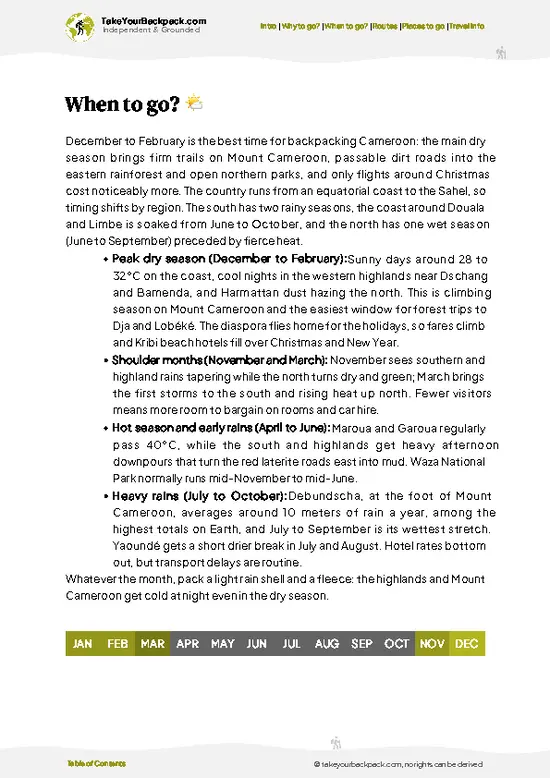
source: climatestotravel.comJANJanuary: highly recommended for travelingFEBFebruary: excellent for travelingMARMarch: excellent for travelingAPRApril: fair for travelingMAYMay: below average for travelingJUNJune: below average for travelingJULJuly: below average for travelingAUGAugust: below average for travelingSEPSeptember: fair for travelingOCTOctober: fair for travelingNOVNovember: excellent for travelingDECDecember: highly recommended for traveling
cameroon-attraction-bimbia-slave-trade-site
© Google |

✈️ The backpacker research shortcutCameroon Travel Guide

An offline-friendly backpacking guide with optimized travel routes, ranked highlights, transport advice, and the best areas to stay.
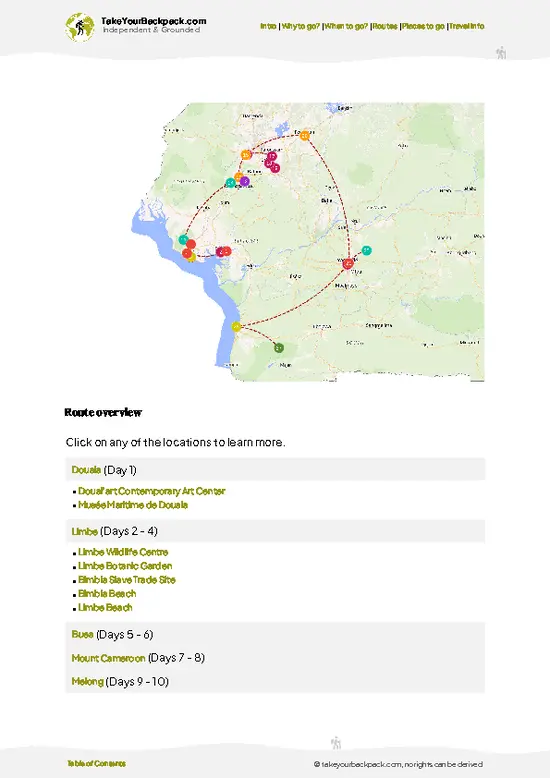
example page 0 from our offline Travel Guide for Cameroon
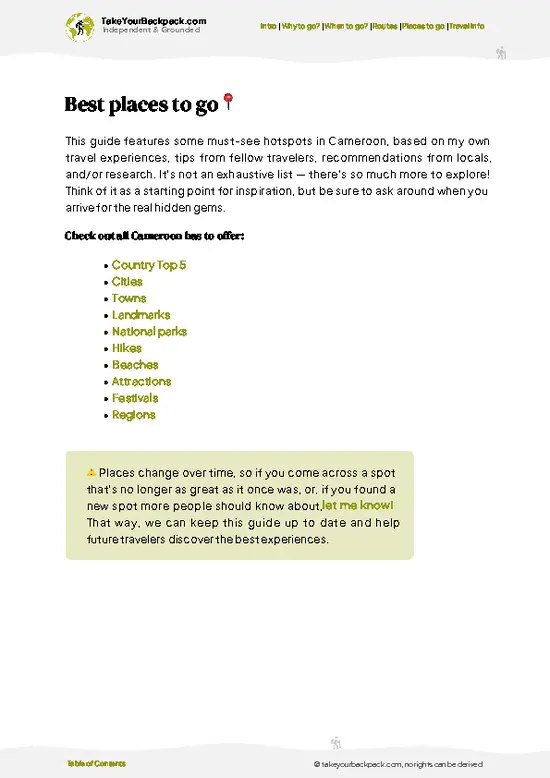
example page 1 from our offline Travel Guide for Cameroon
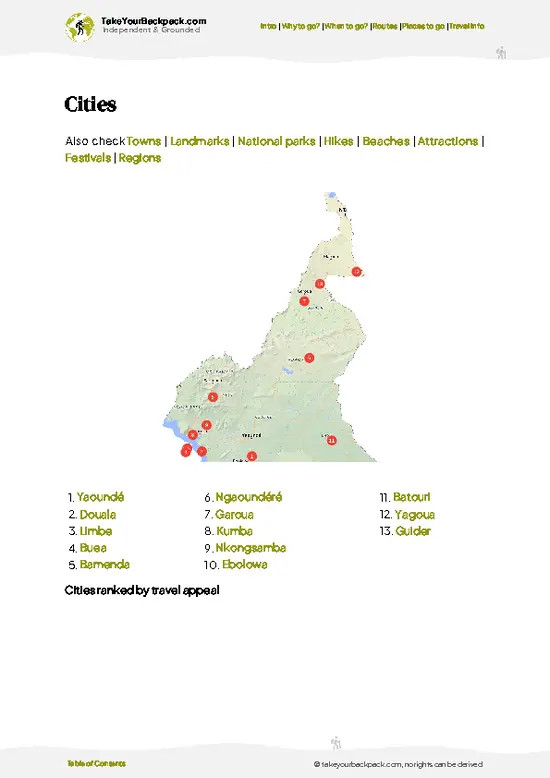
example page 2 from our offline Travel Guide for Cameroon
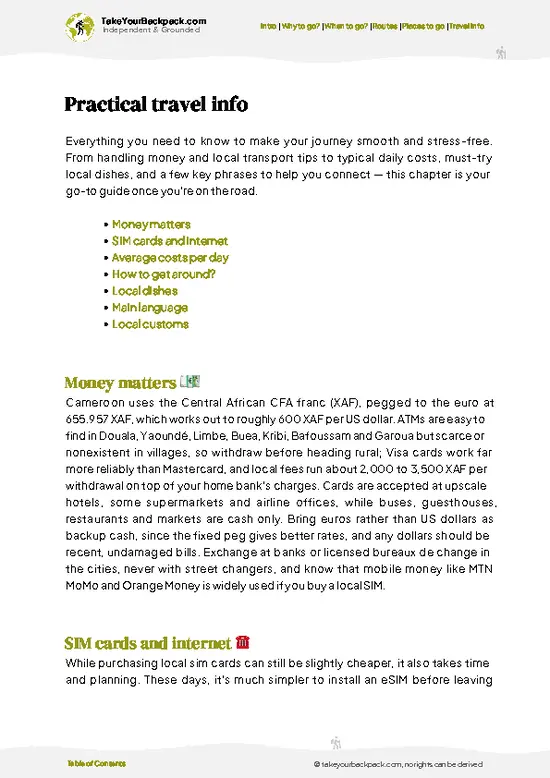
example page 3 from our offline Travel Guide for Cameroon
example page 4 from our offline Travel Guide for Cameroon
example page 5 from our offline Travel Guide for Cameroon
example page 6 from our offline Travel Guide for Cameroon
example page 7 from our offline Travel Guide for Cameroon
The digital guide (374 pages) contains:
95 highlights, ranked by travel appeal
Optimized 7, 14 & 21-day travel routes
Cities, national parks, landmarks, beaches
How to get around
Offline-friendly for travel without Wi-Fi
👉 Click to see all 30+ guide features

📅 Plan smarter in minutes, not weeks
Month by month travel advice
Festivals & national holidays
Budget expectations

🗺️ Go to the right places, skip the overrated ones
Honest pros & cons of destinations
Top hikes, parks & viewpoints
Lesser-known places most travelers miss
Clear “worth it vs skip it” guidance

🛏️ Travel smoothly without rookie mistakes
Best areas to stay
Transport systems explained simply
Common scams & safety advice
SIM cards, money & practical tips

🌍 Understand the country, not just visit it
Culture & traditions
52 Essential phrases & customs
Festivals worth planning around
Traveler-friendly historical context
Insights that make places more meaningful

📱 Built for real travel conditions
Fully downloadable PDF
Works completely offline
Optimized for phone use
Useful in remote areas & buses
Everything in one place
Save weeks of stressful planning
Get instant access to your full guide. 30‑day money-back guarantee.
+ Add another guide for just US$7.80

By proceeding you agree to our terms.
Sent to your inbox immediately after payment • 100% Secure Checkout
Best Backpacking Travel Advisor 2025 tourism awardBest Backpacking
Travel Advisor
2025
What others say about Take Your Backpack Guides:
⭐⭐⭐⭐⭐
Fantastic, amazing amount of information!
⭐⭐⭐⭐⭐
My goodness this is amazing, it's what I've been looking for hats off too you!
⭐⭐⭐⭐⭐
I think this is absolutely BRILLIANT
⭐⭐⭐⭐
Very complete and informative. It's still missing places, but I gotta to commend you
⭐⭐⭐⭐⭐
This is truly amazing, thank you, can't wait to explore it with my kids!
⭐⭐⭐⭐⭐
Awesome resource, thank you!
⭐⭐⭐⭐⭐
This is amazing! Can't wait to explore the ones I haven't seen
⭐⭐⭐⭐
I love this! Well done, great idea.
⭐⭐⭐⭐⭐
Thanks for taking the time to make this gem!
⭐⭐⭐⭐⭐
This might be the best website I've ever seen.
⭐⭐⭐⭐⭐
Congratulations, and thank you so much for your work; it's incredibly valuable.
⭐⭐⭐⭐
In all seriousness I think you did a great job pointing out the important spots
⭐⭐⭐⭐⭐
10/10 very good
⭐⭐⭐⭐⭐
As someone who's only just starting to visit regularly this is awesome, thank you.
⭐⭐⭐⭐
Thank you very much! I'm going to visit my dad, it's going to be very useful!
⭐⭐⭐⭐⭐
This is really cool! We'll be travelling for the first time and this definitely come in handy.
⭐⭐⭐⭐⭐
You are now our minister of culture, congratulations 👨‍💼
⭐⭐⭐⭐⭐
Just wanted to tell you that this is a pearl! Going to follow your recommendations.
⭐⭐⭐⭐⭐
This is so cool. I'll definitely be using the resource for my travels soon.
⭐⭐⭐⭐⭐
This is very impressive! Good work.
⭐⭐⭐⭐⭐
This is an amazing and informative site. Very well done!

🛏️ Where to stay?Best areas to stay in Cameroon

Bimbia Slave Trade Site isn’t some polished tourist magnet with cushy resorts and endless amenities. It’s raw history, and that means you’re not exactly camping next to a Starbucks. The best places to stay are in Limbe, about 15 kilometers away. Limbe is the practical choice—safe enough for solo travelers, with a decent backpacker scene that’s low-key but lively. You’ll find guesthouses and small inns where the vibe is more “meet fellow adventurers” than “tourist assembly line.”

Limbe’s charm isn’t in luxury; it’s in its gritty, real-life pulse. The town has a mix of locals and travelers, so … read more 👉
Bimbia Slave Trade Site isn’t some polished tourist magnet with cushy resorts and endless amenities. It’s raw history, and that means you’re not exactly camping next to a Starbucks. The best places to stay are in Limbe, about 15 kilometers away. Limbe is the practical choice—safe enough for solo travelers, with a decent backpacker scene that’s low-key but lively. You’ll find guesthouses and small inns where the vibe is more “meet fellow adventurers” than “tourist assembly line.”

Limbe’s charm isn’t in luxury; it’s in its gritty, real-life pulse. The town has a mix of locals and travelers, so you get authentic interactions without the usual tourist bubble. It’s also a hub for exploring the surrounding natural beauty—think volcanic beaches and botanical gardens—which balances the heavy history of Bimbia with some much-needed fresh air and perspective.

If you want to be closer to Bimbia itself, options are limited and less social. The village is quiet, with few accommodations, mostly basic and family-run. Staying here means embracing simplicity and a slower pace, but it’s not the place to expect a backpacker party or easy connections. For safety and social life, Limbe wins hands down. It’s where you recharge, swap stories, and prepare for the sobering walk through Bimbia’s past.

👛 Costs (as of 3 September 2026)What things cost and how to budget

As of the most recent estimates, the entrance fee to the Bimbia Slave Trade Site is approximately €8.50, which includes a guided tour. Additional costs may include transportation, such as a taxi fare of around €3.50 from Limbe Beach to the site. Please note that prices are subject to change, and it's advisable to confirm current rates before planning your visit.

source: evendo.com
⚠️ Prices can change and everyone travels differently, so take this as a rough guide. Hope it helps you plan your adventure!

FAQCommon questions from travelers

2 to 3 hours is sufficient to visit Bimbia Slave Trade Site. This allows time to explore the historical ruins and the museum exhibits thoroughly. Guided tours are recommended for deeper understanding and typically last about 1 to 2 hours.
Yes, Bimbia Slave Trade Site is worth the entrance fee, which is around 2000 CFA francs (approximately 3-4 USD). The site offers a powerful historical experience and insight into the transatlantic slave trade, making it valuable for educational and cultural purposes.
To get to Bimbia Slave Trade Site, travel to Limbe, Cameroon, then take a local taxi or motorbike taxi to Bimbia village, about 10 kilometers away. The site is accessible by road, and Limbe is reachable by bus or car from Douala, approximately 80 kilometers northeast.
⚠️ Things can change over time, so always validate details locally before you go.

Other Cameroonian attractions near Bimbia Slave Trade Site

Explore more nearby:


💡 Not sure where to go next?
Create a personalized itinerary for Cameroon including Bimbia Slave Trade Site and the places that fit your trip.

Generate my itinerary

👉 Discover all attractions

Or checkout all Cameroon has to offer (think cities, towns, villages, national parks, hikes, beaches, festivals)
Country photo of Cameroon

We 💚 feedbackWhat to keep in mind

Visiting Bimbia isn’t about postcard-perfect scenes or Instagram crowds—expect a quiet, raw place where history hits hard. The real surprise? The stories locals share, unfiltered and deeply personal, that no guidebook captures. It’s not polished or touristy, which means you’ll need patience and respect to connect with the site’s weight and meaning. If you’re after a sanitized souvenir moment, look elsewhere. But if you want to feel the pulse of a painful past that still shapes today’s Cameroon, Bimbia delivers in a way few places can.

✍️ Help improve this page!
The information on this page is based on in-depth research, insights shared by experienced travelers, and feedback from the local travel community in Cameroon. While every effort is made to keep the information accurate and current, conditions can change — so if you spot anything incorrect or outdated, please get in touch.


🙋‍♂️ Give feedback

👋 Meet the founderWho’s Behind Take Your Backpack?

Johan, backpacker and founder of TakeYourBackpackHi, I’m Johan (Netherlands 🇳🇱), the creator of TakeYourBackpack. Over the past decade, I’ve backpacked through 80+ countries across six continents, gaining extensive experience with independent travel, long-term trips, and overland routes.

This site is built on a combination of firsthand travel experience and carefully curated insights from other backpackers. Many guides are based on places I’ve personally visited, while others bring together tips, observations, and practical advice shared by trusted travelers I’ve met along the way.

The goal is to provide realistic, experience-driven guidance — not generic itineraries — so you can explore destinations with better context, clearer expectations, and more confidence.

Get full Cameroon guide •
Instant download • 95 highlights • Full Offline guide