×

Cameroon🇨🇲 | national parksWaza National ParkSahel waterholes, Kordofan giraffes, dry-season elephants, floodplain birds | things to do and best time to go

Explore Sangha TrinationalExplore Mbam et Djerem National Park

Backpacking in Waza
🏆 Top picknational park ranked #1
By Johan Kruseman 🇳🇱 | Updated October 22, 2026

Waza National Park is a seasonal park, not a year-round safari: the waterholes that draw elephants dry up only in the later months, and by the rains much of the park turns to mud and closes in practice. It lies in the Far North region of Cameroon, on the flat Sahelian plain south of the Chad border. Expect acacia scrub, cracked clay, harmattan haze and the smell of dust and dung. Elephants gather at waterholes, giraffes thread through thorn trees, and lions are possible but never promised. Walking is limited and you drive in a 4x4 with a ranger. Crowds are nonexistent, which is the charm and the cost. Fuel, a vehicle and a guide are the budget traps, so arrange them in Maroua before arriving, not at the gate. Check current security advice for the region, since conditions shift. Delays come from poor tracks, so start early. A first day usually means a dawn drive to the main waterholes, a hot midday rest in the shade, then a late loop as the animals return.

Discover everything you want to know in the 📖 Cameroon Travel Guide.


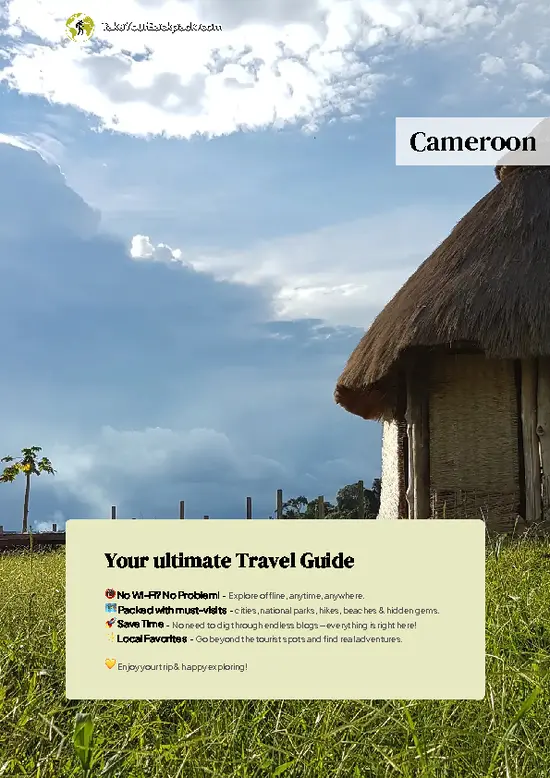
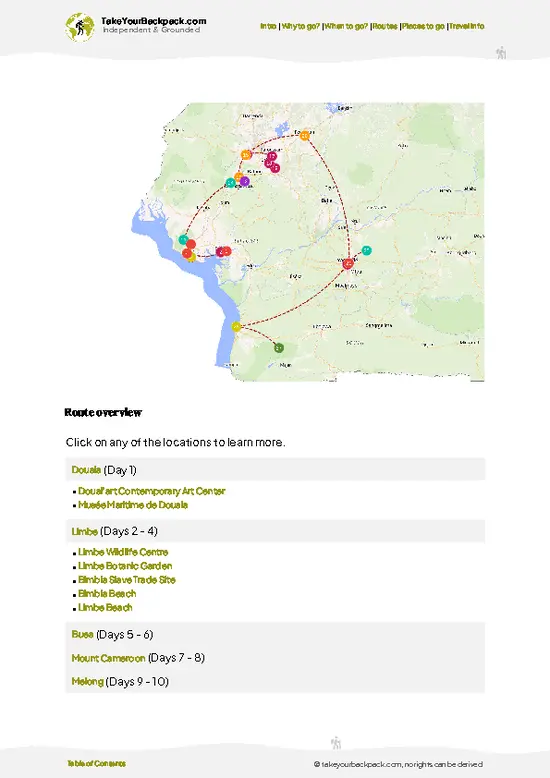
example page 0 from our offline Travel Guide for Cameroon
example page 1 from our offline Travel Guide for Cameroon
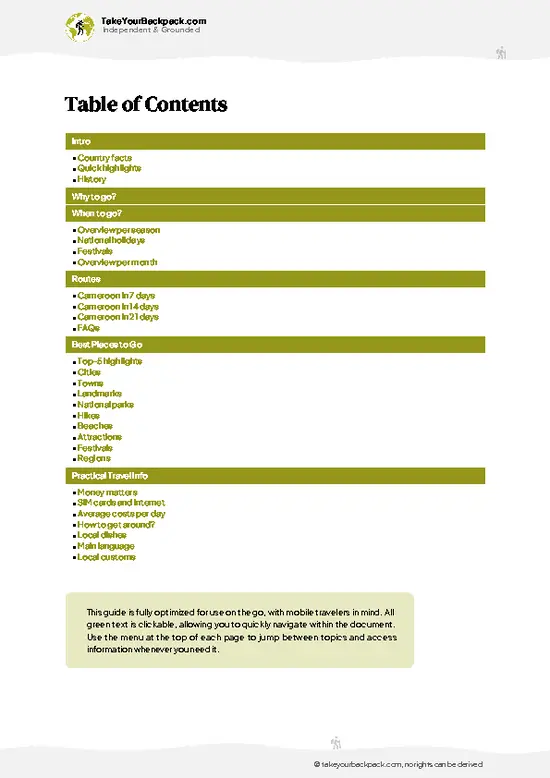
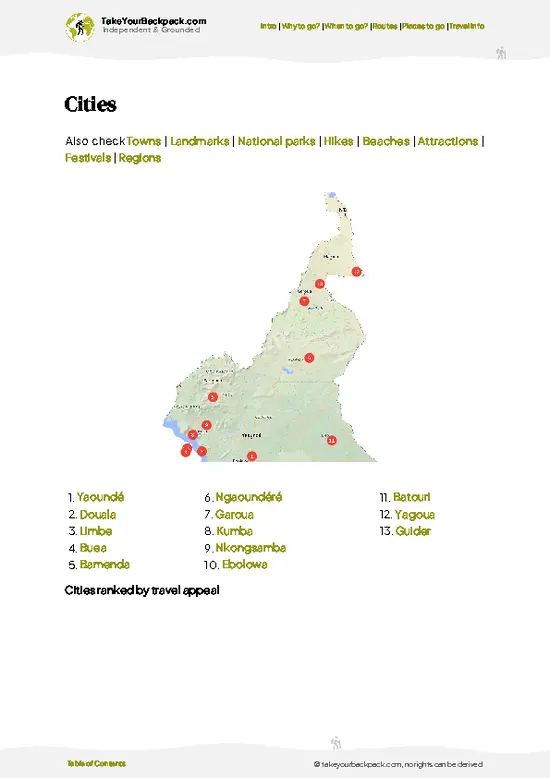
example page 2 from our offline Travel Guide for Cameroon
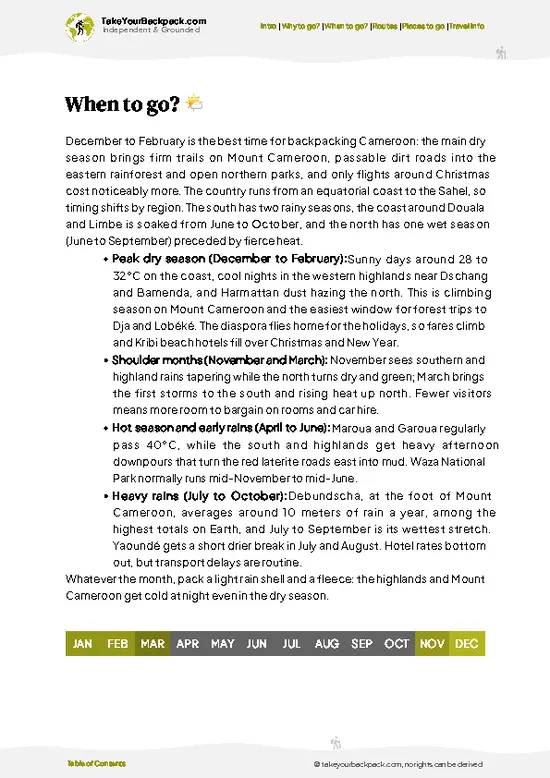
example page 3 from our offline Travel Guide for Cameroon
example page 4 from our offline Travel Guide for Cameroon
example page 5 from our offline Travel Guide for Cameroon
example page 6 from our offline Travel Guide for Cameroon
example page 7 from our offline Travel Guide for Cameroon
Loading the map 🌍
CLICK TO FILTER
cities
towns
landmarks
national parks
hikes
beaches
attractions
festivals
regions
SHOW COUNTRY’S BESTSHOW ALL

✨ Why go?
Ranked #1 national park in Cameroon
Why Waza should be on your travel list

Waza National Park suits independent travelers who want wildlife without a convoy of minibuses. You might share a waterhole with one other vehicle, or none, and that quiet is rare in African parks. Late in the dry season the animals concentrate around a few pools, so a short drive can bring you close to herds of elephants and often giraffes, antelope and birds. Roan antelope and Kordofan giraffe live here, and the park is known for large raptors and waterbirds near the seasonal floodplain. Camping or a simple lodge keeps costs down, and sharing a vehicle with other travelers cuts the biggest expense. The surrounding Far North also rewards a loop through the Mandara Mountains and Maroua’s craft markets, so Waza fits a self-planned route better than a fixed tour. You choose when to stop, how … read more 👉
Waza National Park suits independent travelers who want wildlife without a convoy of minibuses. You might share a waterhole with one other vehicle, or none, and that quiet is rare in African parks. Late in the dry season the animals concentrate around a few pools, so a short drive can bring you close to herds of elephants and often giraffes, antelope and birds. Roan antelope and Kordofan giraffe live here, and the park is known for large raptors and waterbirds near the seasonal floodplain. Camping or a simple lodge keeps costs down, and sharing a vehicle with other travelers cuts the biggest expense. The surrounding Far North also rewards a loop through the Mandara Mountains and Maroua’s craft markets, so Waza fits a self-planned route better than a fixed tour. You choose when to stop, how long to sit and watch, and whether to linger at a waterhole at dusk. Come prepared for heat, dust and long days, and the park pays you back with space and silence.

💡 HighlightsMust-see experiences and standout moments

  1. Elephant waterholes: Late in the dry season, elephants gather at the remaining pools in numbers that make Waza famous. Bring binoculars and sit quietly downwind.
  2. Giraffe plains: Kordofan giraffes browse the open scrub, their patched coats blending with acacia shadows. Early morning offers the best light and activity.
  3. Lion tracking drives: Lions live here, though sightings are not guaranteed. Rangers read tracks and alarm calls, and a patient dawn drive gives the best odds.
  4. Roan and Kordofan antelope: Large antelope graze the grasslands, along with kob and hartebeest, and they are easy to approach from a parked vehicle.
  5. Birdlife at the floodplain: Storks, pelicans, cranes and raptors cluster where seasonal water lingers. Even casual watchers spot dozens of species in a morning.
  6. Sunset waterhole
… read more 👉
  1. Elephant waterholes: Late in the dry season, elephants gather at the remaining pools in numbers that make Waza famous. Bring binoculars and sit quietly downwind.
  2. Giraffe plains: Kordofan giraffes browse the open scrub, their patched coats blending with acacia shadows. Early morning offers the best light and activity.
  3. Lion tracking drives: Lions live here, though sightings are not guaranteed. Rangers read tracks and alarm calls, and a patient dawn drive gives the best odds.
  4. Roan and Kordofan antelope: Large antelope graze the grasslands, along with kob and hartebeest, and they are easy to approach from a parked vehicle.
  5. Birdlife at the floodplain: Storks, pelicans, cranes and raptors cluster where seasonal water lingers. Even casual watchers spot dozens of species in a morning.
  6. Sunset waterhole watch: As heat fades, animals return to drink. Staying until dusk gives a soundtrack of calls and a cooler, golden landscape.
  7. Kalamaloué-style floodplain edge: The park’s open clay flats show the Sahel’s stark horizon, dotted with termite mounds and lone trees, especially striking after a dust-hazed dawn.
The cheapest experience is the sunset waterhole watch, since it needs no extra activity beyond your park entry and a vehicle already in the park.
Spotted a mistake or missing something? Contact us.

🌤️ When to go?When to go for the best experience

  • Peak dry season (December to February): Waza National Park is at its best for wildlife now, with cool mornings around 15 to 20°C (59 to 68°F) and afternoons of 30 to 35°C (86 to 95°F). Harmattan dust haze can flatten photos and distant views.
  • Hot late dry season (March to May): Temperatures climb to 38 to 44°C (100 to 111°F). Animals cluster at the few remaining waterholes, so sightings of elephants and lions are strong, but midday drives are punishing.
  • Rainy season (June to September): Expect 28 to 34°C (82 to 93°F), muddy tracks and tall grass. Many routes close, the park is officially shut for much of it, and lodges drop rates or close.
  • Transition (October to November): Tracks dry out and the grass is still high, so animals are harder to spot. Few other visitors show up.
  • Daylight and crowds:
… read more 👉
  • Peak dry season (December to February): Waza National Park is at its best for wildlife now, with cool mornings around 15 to 20°C (59 to 68°F) and afternoons of 30 to 35°C (86 to 95°F). Harmattan dust haze can flatten photos and distant views.
  • Hot late dry season (March to May): Temperatures climb to 38 to 44°C (100 to 111°F). Animals cluster at the few remaining waterholes, so sightings of elephants and lions are strong, but midday drives are punishing.
  • Rainy season (June to September): Expect 28 to 34°C (82 to 93°F), muddy tracks and tall grass. Many routes close, the park is officially shut for much of it, and lodges drop rates or close.
  • Transition (October to November): Tracks dry out and the grass is still high, so animals are harder to spot. Few other visitors show up.
  • Daylight and crowds: Days stay near 11 to 12 hours year-round. Even in peak months you may share the park with only a handful of vehicles.
Book a guide and vehicle in advance for January or February, when the few available 4x4s get taken first.


source: climatestotravel.comJANJanuary: excellent for travelingFEBFebruary: excellent for travelingMARMarch: highly recommended for travelingAPRApril: highly recommended for travelingMAYMay: fair for travelingJUNJune: fair for travelingJULJuly: fair for travelingAUGAugust: fair for travelingSEPSeptember: fair for travelingOCTOctober: fair for travelingNOVNovember: highly recommended for travelingDECDecember: excellent for traveling
when-to-go

✈️ The backpacker research shortcutCameroon Travel Guide

An offline-friendly backpacking guide with optimized travel routes, ranked highlights, transport advice, and the best areas to stay.
example page 0 from our offline Travel Guide for Cameroon
example page 1 from our offline Travel Guide for Cameroon
example page 2 from our offline Travel Guide for Cameroon
example page 3 from our offline Travel Guide for Cameroon
example page 4 from our offline Travel Guide for Cameroon
example page 5 from our offline Travel Guide for Cameroon
example page 6 from our offline Travel Guide for Cameroon
example page 7 from our offline Travel Guide for Cameroon
The digital guide (351 pages) contains:
✅ 84 highlights, ranked by travel appeal
✅ Optimized 7, 14 & 21-day travel routes
✅ Cities, national parks, landmarks, beaches
✅ How to get around
✅ Offline-friendly for travel without Wi-Fi
👉 Click to see all 30+ guide features

📅 Plan smarter in minutes, not weeks
✅ Month by month travel advice
✅ Festivals & national holidays
✅ Budget expectations

🗺️ Go to the right places, skip the overrated ones
✅ Honest pros & cons of destinations
✅ Top hikes, parks & viewpoints
✅ Lesser-known places most travelers miss
✅ Clear “worth it vs skip it” guidance

🛏️ Travel smoothly without rookie mistakes
✅ Best areas to stay
✅ Transport systems explained simply
✅ Common scams & safety advice
✅ SIM cards, money & practical tips

🌍 Understand the country, not just visit it
✅ Culture & traditions
✅ 52 Essential phrases & customs
✅ Festivals worth planning around
✅ Traveler-friendly historical context
✅ Insights that make places more meaningful

📱 Built for real travel conditions
✅ Fully downloadable PDF
✅ Works completely offline
✅ Optimized for phone use
✅ Useful in remote areas & buses
✅ Everything in one place
Stop searching, start planning
Get instant access to your full guide. 30‑day money-back guarantee.
+ Add another guide for just

By proceeding you agree to our terms.
Sent to your inbox immediately after payment • 100% Secure Checkout
Best Backpacking Travel Advisor 2025 tourism awardBest Backpacking
Travel Advisor
2025
What others say about Take Your Backpack Guides:
⭐⭐⭐⭐⭐
Fantastic, amazing amount of information!
⭐⭐⭐⭐⭐
My goodness this is amazing, it's what I've been looking for hats off too you!
⭐⭐⭐⭐⭐
I think this is absolutely BRILLIANT
⭐⭐⭐⭐
Very complete and informative. It's still missing places, but I gotta to commend you
⭐⭐⭐⭐⭐
This is truly amazing, thank you, can't wait to explore it with my kids!
⭐⭐⭐⭐⭐
Awesome resource, thank you!
⭐⭐⭐⭐⭐
This is amazing! Can't wait to explore the ones I haven't seen
⭐⭐⭐⭐
I love this! Well done, great idea.
⭐⭐⭐⭐⭐
Thanks for taking the time to make this gem!
⭐⭐⭐⭐⭐
This might be the best website I've ever seen.
⭐⭐⭐⭐⭐
Congratulations, and thank you so much for your work; it's incredibly valuable.
⭐⭐⭐⭐
In all seriousness I think you did a great job pointing out the important spots
⭐⭐⭐⭐⭐
10/10 very good
⭐⭐⭐⭐⭐
As someone who's only just starting to visit regularly this is awesome, thank you.
⭐⭐⭐⭐
Thank you very much! I'm going to visit my dad, it's going to be very useful!
⭐⭐⭐⭐⭐
This is really cool! We'll be travelling for the first time and this definitely come in handy.
⭐⭐⭐⭐⭐
You are now our minister of culture, congratulations 👨‍💼
⭐⭐⭐⭐⭐
Just wanted to tell you that this is a pearl! Going to follow your recommendations.
⭐⭐⭐⭐⭐
This is so cool. I'll definitely be using the resource for my travels soon.
⭐⭐⭐⭐⭐
This is very impressive! Good work.
⭐⭐⭐⭐⭐
This is an amazing and informative site. Very well done!

🛏️ Where to stay?Best areas to stay in Cameroon

The most practical bed for a visit is inside the park at Campement de Waza, with the nearby village of Waza as the budget fallback. The campement sits close to the main gate and has simple rooms, some with air conditioning, a restaurant and a bar, at roughly €20 to 45 a night depending on room and season. Rooms can be limited, so reserve through a Maroua tour operator before you arrive. Staying here puts you on the tracks at dawn, when animals are most active.

Outside the park, Waza village has basic guesthouses and a few auberges, usually €8 to 18 a night with fan or bucket showers. Eating is … read more 👉
The most practical bed for a visit is inside the park at Campement de Waza, with the nearby village of Waza as the budget fallback. The campement sits close to the main gate and has simple rooms, some with air conditioning, a restaurant and a bar, at roughly €20 to 45 a night depending on room and season. Rooms can be limited, so reserve through a Maroua tour operator before you arrive. Staying here puts you on the tracks at dawn, when animals are most active.

Outside the park, Waza village has basic guesthouses and a few auberges, usually €8 to 18 a night with fan or bucket showers. Eating is mostly rice, grilled meat and fish from market stalls. Bring a flashlight, as power cuts are common.

Most backpackers base in Maroua, the regional hub in the Far North, roughly 120 km away and about 2.5 to 3 hours by road. It has hostel-style auberges, hotels at €15 to 40, restaurants, an ATM and agencies that arrange 4x4 and guide packages. Kousséri, near the Chad border, and Mora are less practical for this trip. Camping is possible with prior arrangement but you should not pitch a tent anywhere unguided, as wildlife passes through at night.

👛 Costs (as of 22 October 2026)Money, prices, and spending tips

A realistic daily budget for Waza National Park is about €95 once you include the park fee, a guide, vehicle hire and a bed. The vehicle is the big cost, and splitting it with other travelers brings the number down sharply.
CategoryBudget RangeLocal Reality
Entrance fee€5 to 8Paid per person at the gate, with extra charges for a vehicle and camera in some cases.
Guide/ranger€8 to 15A ranger is required on every drive and is paid per outing, plus a tip.
Vehicle hire (4x4)€45 to 90Often arranged from Maroua with fuel. Shared among passengers, this is cheaper per person.
Accommodation (high season)€20 to 45Campement rooms or Waza village guesthouses. Rooms in the village drop to €8 to 18.
Accommodation (low season)€10 to 30Rates ease from June to September, though access is limited.
Food and water€6
… read more 👉
A realistic daily budget for Waza National Park is about €95 once you include the park fee, a guide, vehicle hire and a bed. The vehicle is the big cost, and splitting it with other travelers brings the number down sharply.
CategoryBudget RangeLocal Reality
Entrance fee€5 to 8Paid per person at the gate, with extra charges for a vehicle and camera in some cases.
Guide/ranger€8 to 15A ranger is required on every drive and is paid per outing, plus a tip.
Vehicle hire (4x4)€45 to 90Often arranged from Maroua with fuel. Shared among passengers, this is cheaper per person.
Accommodation (high season)€20 to 45Campement rooms or Waza village guesthouses. Rooms in the village drop to €8 to 18.
Accommodation (low season)€10 to 30Rates ease from June to September, though access is limited.
Food and water€6 to 14Rice, grilled meat and fish at the campement or local stalls. Bottled water costs extra.
Local transport€3 to 10Shared taxis and minibuses link Maroua with Waza, with a last stretch by moto-taxi.
Total Daily Budget€95Cash in local currency is required, and cards are rarely accepted.
⚠️ Prices can change and everyone travels differently, so take this as a rough guide. Hope it helps you plan your adventure!

🥾 TrailsBest hikes in Waza national park

Waza National Park is mainly explored by vehicle with a ranger, because lions and elephants share the open plains and the tracks are too long and hot for casual walking. The terrain is flat, with thorn scrub, seasonal clay pans and grassland, so difficulty is easy but the heat is demanding.
  • Main waterhole loop: A half-day drive on sandy and cracked tracks linking the key pools, ideal for elephants, giraffes and antelope. Start at dawn and plan three to four hours.
  • Floodplain birding circuit: A shorter drive, about two hours, along seasonal wetlands where storks, cranes and raptors gather. Binoculars
… read more 👉
Waza National Park is mainly explored by vehicle with a ranger, because lions and elephants share the open plains and the tracks are too long and hot for casual walking. The terrain is flat, with thorn scrub, seasonal clay pans and grassland, so difficulty is easy but the heat is demanding.
  • Main waterhole loop: A half-day drive on sandy and cracked tracks linking the key pools, ideal for elephants, giraffes and antelope. Start at dawn and plan three to four hours.
  • Floodplain birding circuit: A shorter drive, about two hours, along seasonal wetlands where storks, cranes and raptors gather. Binoculars matter more than fitness.
  • Ranger-led short walks: Brief, supervised strolls near the camp or a safe stop let you track hoofprints and dung. They are gentle, usually under an hour, and depend on ranger judgment.
  • Sunset return drive: A slow late loop as animals come to drink, mostly easy, with long shadows and cooler air.
Getting to Waza National Park usually means a shared taxi or bus to Maroua, then a hired vehicle or local transport toward the park, because public transport does not run inside. An entrance fee applies, typically a few euros (about €5 to 10), plus a compulsory ranger and vehicle charges, which add up. Crowds are minimal, so you can sit long at waterholes. Wildlife viewing is best when water is scarce, and tracks become difficult in the rains. Carry plenty of water, sun protection and cash in the local currency.
⚠️ Hiking info can sometimes be outdated or inaccurate. Before you hit the trail, check the latest conditions with locals. If you do spot anything that's off, I'd love to hear from you, so I can update it for fellow travelers.

🛡️ SafetyStaying Safe: What Travelers Should Know

Waza National Park is manageable if you move with a guide, and you have to, because rangers accompany every vehicle. Heat is the hazard that catches people most often. From March to May, afternoon temperatures can pass 40°C (104°F), so carry at least 3 liters of water per person, wear a hat and long light sleeves, and do your game drives early morning and late afternoon. Tracks are sandy or clay, and after rain they turn to mud, so a high-clearance 4x4 is the right choice.

Elephants, lions, giraffes and hyenas live here. Stay inside the vehicle, keep voices low, and never step out for a photo unless your ranger says it is fine. Elephants near waterholes deserve extra distance. At the campement, walk with a flashlight after dark and zip your tent.

The Far North region has had security concerns … read more 👉
Waza National Park is manageable if you move with a guide, and you have to, because rangers accompany every vehicle. Heat is the hazard that catches people most often. From March to May, afternoon temperatures can pass 40°C (104°F), so carry at least 3 liters of water per person, wear a hat and long light sleeves, and do your game drives early morning and late afternoon. Tracks are sandy or clay, and after rain they turn to mud, so a high-clearance 4x4 is the right choice.

Elephants, lions, giraffes and hyenas live here. Stay inside the vehicle, keep voices low, and never step out for a photo unless your ranger says it is fine. Elephants near waterholes deserve extra distance. At the campement, walk with a flashlight after dark and zip your tent.

The Far North region has had security concerns tied to the Lake Chad basin, so check the latest government travel advice and your operator’s guidance before traveling. Carry ID and a copy of your passport, as checkpoints are frequent, and bring cash, since cards are rarely accepted.

FAQFrequently asked questions about Waza

Two days and one night is enough for Waza National Park if you want a fair chance of seeing elephants, giraffes and antelope. Plan an early morning and late afternoon drive, since midday is hot and quiet. Add a day each way if you are coming from Maroua, about 2.5 to 3 hours by road, and add another day for the Mandara Mountains nearby.
Visiting Waza National Park without your own car is possible, but you still need a vehicle inside the park. Shared taxis and buses run from Maroua to Waza village, and the campement can help arrange a 4x4 with a ranger. Hiring a vehicle usually costs about €45 to 90 a day, so splitting it with other travelers helps.
Yes, Waza National Park charges an entrance fee, roughly €5 to 8 per person, plus a guide fee of around €8 to 15 and a vehicle charge. Rangers are mandatory on drives. Pay in cash at the park gate, and keep your receipts, since the park is open mainly from about November to May.
⚠️ Things can change over time, so always validate details locally before you go.

Other Cameroonian national parks near Waza

Explore more nearby:


💡 Not sure where to go next?
Create a personalized itinerary for Cameroon including Waza and the places that fit your trip.

Generate my itinerary

👉 Discover all national parks

Or checkout all Cameroon has to offer (think cities, towns, villages, national parks, hikes, beaches, festivals)
Country photo of Cameroon

We 💚 feedbackSumming up the experience

Waza National Park pairs well with Maroua’s markets and a loop into the Mandara Mountains, giving you savanna wildlife and highland villages in a single Far North route. I would hire one vehicle in Maroua for the whole circuit and split the cost with other travelers. Bring plenty of water, a scarf for the dust and binoculars for the waterholes.

✍️ Help improve this page!
The information on this page is based on in-depth research, insights shared by experienced travelers, and feedback from the local travel community in Cameroon. While every effort is made to keep the information accurate and current, conditions can change — so if you spot anything incorrect or outdated, please get in touch.


🙋‍♂️ Give feedback

👋 Meet the founderWho’s Behind Take Your Backpack?

Johan, backpacker and founder of TakeYourBackpackHi, I’m Johan (Netherlands 🇳🇱), the creator of TakeYourBackpack. Over the past 3 decades, I’ve backpacked through 90+ countries across six continents, gaining extensive experience with independent travel, long-term trips, and overland routes.

This site is built on a combination of firsthand travel experience and carefully curated insights from other backpackers. Many guides are based on places I’ve personally visited, while others bring together tips, observations, and practical advice shared by trusted travelers I’ve met along the way.

The goal is to provide realistic, experience-driven guidance — not generic itineraries — so you can explore destinations with better context, clearer expectations, and more confidence.