×

Cameroon🇨🇲 | best national parksThe Must-See 10 national parks in Cameroon

Cameroon’s national parks are a tapestry of diverse landscapes and rich wildlife, each offering unique experiences for the backpacker. From the dense rainforests of Korup National Park to the savannahs of Waza, the choice of park shapes your adventure. Seasonal variations, like the rainy season from May to October, can affect accessibility and wildlife visibility, making timing crucial for independent travelers.

Exploring these parks means navigating different vibes—some are bustling with local culture, while others provide solitude in nature. Your selection impacts not just the scenery but also your budget and safety. For instance, parks near urban centers may offer more amenities but can feel touristy, while remote areas demand more preparation and resilience. Understanding these nuances ensures a rewarding journey, allowing you to immerse yourself in Cameroon’s natural beauty and cultural richness.

By Johan Kruseman 🇳🇱 | Updated June 2, 2026
Explore the best hikes in Cameroon

Why go?Key Factors That Shape the Experience

The national parks in Cameroon stand out as a microcosm of Africa’s rich biodiversity and varied landscapes. With a unique blend of mountains, rainforests, and savannas, these parks offer a tapestry of ecosystems that few other countries can match. Cameroon’s geographical position at the crossroads of West and Central Africa creates a melting pot of flora and fauna, making it a hotspot for endemic species. The biodiversity here is staggering; from the elusive cross-river gorillas to vibrant bird species, every corner of these parks pulses with life.

However, accessing these natural wonders can be a double-edged sword. While some parks are relatively easy to reach, others demand a commitment of time and effort. The trade-off is significant: a longer journey often leads to a more immersive … read more 👉
The national parks in Cameroon stand out as a microcosm of Africa’s rich biodiversity and varied landscapes. With a unique blend of mountains, rainforests, and savannas, these parks offer a tapestry of ecosystems that few other countries can match. Cameroon’s geographical position at the crossroads of West and Central Africa creates a melting pot of flora and fauna, making it a hotspot for endemic species. The biodiversity here is staggering; from the elusive cross-river gorillas to vibrant bird species, every corner of these parks pulses with life.

However, accessing these natural wonders can be a double-edged sword. While some parks are relatively easy to reach, others demand a commitment of time and effort. The trade-off is significant: a longer journey often leads to a more immersive experience, where the sights and sounds of the wilderness envelop you. Yet, this can deter travelers seeking quick adventures. The infrastructure varies widely; some areas are well-maintained, while others require navigating rugged paths that challenge even seasoned trekkers.

The climate also plays a crucial role in the experience. The rainy season can transform trails into muddy challenges, but it also brings forth a lushness that enhances the scenery. Understanding the seasonal rhythms is vital for planning a visit.

Culturally, Cameroon’s parks are steeped in history, often intertwined with local communities that rely on these lands for their livelihoods. This connection adds layers to the experience, but it also means that visitors must navigate the complexities of conservation and community needs.

In essence, Cameroon’s national parks are not just destinations; they are a call to adventure, demanding respect and patience while rewarding those who venture deep into their wild heart.
Evaluating the Top Choices
The list of best national parks in Cameroon is created based on landscapes, wildlife, adventure opportunities, facilities, and overall experience. If you feel a national park is missing in this list, please let us know.

When to go?When to Plan Your Trip

Wildlife Visibility
Cameroon’s national parks offer a dynamic wildlife experience, but visibility hinges on the seasons. The dry season, typically from November to February, provides the best opportunities to spot animals. With less foliage and animals congregating around water sources, the chances of encountering wildlife increase significantly.

Rainfall and Trail Conditions
The rainy season, from March to October, transforms the landscape. Trails can become muddy and challenging, making navigation difficult. Heavy rains can also lead to temporary park closures. However, this season brings lush greenery and vibrant ecosystems, ideal for birdwatchers and those seeking a different kind of beauty.

Temperature Extremes
Temperatures can vary widely. The dry months can be hot, with daytime … read more 👉
Wildlife Visibility
Cameroon’s national parks offer a dynamic wildlife experience, but visibility hinges on the seasons. The dry season, typically from November to February, provides the best opportunities to spot animals. With less foliage and animals congregating around water sources, the chances of encountering wildlife increase significantly.

Rainfall and Trail Conditions
The rainy season, from March to October, transforms the landscape. Trails can become muddy and challenging, making navigation difficult. Heavy rains can also lead to temporary park closures. However, this season brings lush greenery and vibrant ecosystems, ideal for birdwatchers and those seeking a different kind of beauty.

Temperature Extremes
Temperatures can vary widely. The dry months can be hot, with daytime highs often exceeding 30°C (86°F). In contrast, the rainy season can bring cooler evenings, but humidity levels soar. This fluctuation affects both comfort and wildlife activity, as many animals are more active during cooler parts of the day.

Optimal Months and Shoulder Seasons
The optimal months for visiting are generally December through February. These months balance good weather with lower humidity. The shoulder seasons, March and October, present trade-offs. While crowds are thinner and costs may drop, the weather can be unpredictable, with sporadic rain affecting trail conditions and visibility.

Peak Periods and Constraints
Peak tourist periods coincide with the dry season, leading to busier trails and potential congestion at popular spots. Travelers should weigh the benefits of vibrant wildlife against the hustle and bustle of peak visitation. Understanding these seasonal patterns is crucial for planning an effective trip to Cameroon’s national parks.

national park hoppingHow to Combine national parks Into One Trip

Combining national parks in Cameroon requires a strategic approach to maximize both adventure and experience. Start by clustering parks regionally. The northern parks, like Waza and Bouba Ndjida, offer savannah landscapes and wildlife, while the southern parks, such as Korup and Limbe, feature lush rainforests and coastal views. This regional grouping allows for smoother travel and less backtracking.

Travel direction matters. Begin in Yaoundé, heading north to explore the arid beauty of the north, then loop back south to dive into the dense jungles. This route not only saves time but also provides a varied experience, from the dry heat of the north to the humid embrace of the south.

Time allocation is crucial. Spend at least two to three days in each park to soak in the atmosphere and engage … read more 👉
Combining national parks in Cameroon requires a strategic approach to maximize both adventure and experience. Start by clustering parks regionally. The northern parks, like Waza and Bouba Ndjida, offer savannah landscapes and wildlife, while the southern parks, such as Korup and Limbe, feature lush rainforests and coastal views. This regional grouping allows for smoother travel and less backtracking.

Travel direction matters. Begin in Yaoundé, heading north to explore the arid beauty of the north, then loop back south to dive into the dense jungles. This route not only saves time but also provides a varied experience, from the dry heat of the north to the humid embrace of the south.

Time allocation is crucial. Spend at least two to three days in each park to soak in the atmosphere and engage in activities like guided hikes or wildlife spotting. Rushing through can lead to missed opportunities, such as a rare animal sighting or a breathtaking sunset.

Common planning mistakes include underestimating travel times. Roads can be rough, and distances may seem short on a map but can take hours to traverse. Flexibility is key; allow extra time for unexpected delays or spontaneous detours.

Trade-offs are inevitable. Opting for speed might mean skimming the surface of each park, while a slower pace allows for deeper connections with the environment. Budget constraints can influence accommodation choices, impacting comfort levels. Prioritize experiences that resonate, whether it’s a night spent under the stars or a local meal shared with villagers.

Ultimately, the reward lies in the journey. Each park offers a unique slice of Cameroon’s diverse ecosystems, and the effort to explore them fully will yield memories that linger long after the trip ends.

The ListMust-Visit national parks in Cameroon

1 Waza National Park

Sahelian savanna, seasonal floodplains, giraffe herds, birdwatching

Travel across open savanna and wetlands, where giraffes graze and migratory birds gather during the brief rainy season.

2 Dja Faunal Reserve

UNESCO World Heritage, intact rainforest, biodiversity hotspot, river boundaries

Navigate a vast, protected rainforest encircled by rivers, home to exceptional biodiversity and recognized for its global ecological value.

cameroon-national-park-dja-faunal-reserve
© Google |

3 Lobéké National Park

forest clearings, lowland rainforest, gorilla tracking, salt licks

Watch forest elephants and gorillas emerge at mineral-rich clearings, surrounded by dense rainforest alive with rare primates and birds.

4 Korup National Park

ancient rainforest, canopy walkways, medicinal plants, endemic wildlife

Cross suspension bridges through one of Africa’s oldest rainforests, discovering rare species and traditional plant uses along the way.

cameroon-national-park-korup-national-park
© Google |

5 Bouba Ndjida National Park

Sudano-Sahelian landscape, giraffe populations, seasonal wetlands, lion territory

Cross dry plains and seasonal marshes, where giraffes browse and lions patrol a landscape shaped by shifting rainfall.

6 Benoue National Park

riverine woodlands, hippo pools, antelope species, safari tracks

Drive along sandy tracks beside the Benoue River, watching hippos and antelope gather at waterholes in open woodland.

7 Campo Ma’an National Park

coastal rainforest, Atlantic beaches, forest elephants, turtle nesting

Walk from dense rainforest to sandy beaches, where elephants roam and sea turtles nest along the Atlantic shore.

8 Faro National Park

rocky hills, open grasslands, large mammals, remote wilderness

Venture into rugged hills and open plains, where elephants and lions roam in a landscape shaped by isolation and wild terrain.

9 Mbam Djerem National Park

savanna-forest transition, seasonal rivers, bird migration, antelope herds

Trace the shifting boundary between forest and savanna, where migratory birds and antelope gather along broad, unpredictable waterways.

10 Nki National Park

untouched rainforest, river gorges, forest elephants, low visitor numbers

Experience deep rainforest solitude, where elephants cross remote rivers and few travelers disturb the quiet of ancient trees.

11 Bakossi National Park

cloud forest, volcanic peaks, endemic plants, butterfly diversity

Ascend volcanic slopes cloaked in cloud forest, where rare plants and butterflies thrive in a cool, moisture-rich environment.

12 Kimbi-Fungom National Park

montane grasslands, gallery forests, cultural diversity, amphibian hotspots

Traverse highland grasslands and forested valleys, encountering diverse cultures and a remarkable variety of frogs and reptiles.

13 Deng Deng National Park

Congo Basin edge, chimpanzee habitat, riverine forest, threatened species

Follow forest trails along the Congo Basin’s edge, seeking rare primates and elusive wildlife in a patchwork of rivers and trees.

14 Ebo Forest Reserve

mountain forest, endemic primates, rare birds, community conservation

Hike through misty mountain forests, searching for unique monkeys and birds found nowhere else, in a landscape shaped by local stewardship.

Think you know Cameroon?

Prove you’re a true local — uncover 4 lesser-known national parks in Cameroon that locals tend to keep to themselves.
Loading the map 🌍

Expert viewWhat You Should Know

Terrain
Cameroon’s national parks are a patchwork of ecosystems, each with its own character. The rugged peaks of the Western Highlands contrast sharply with the dense rainforests of the south. You’ll find yourself navigating steep trails, often slick with mud after a rain, where every step demands attention. The air is thick with the scent of damp earth and foliage, a reminder that you’re deep in nature’s embrace. In the north, savannahs stretch out under a vast sky, where the heat can be oppressive, but the sight of a herd of elephants silhouetted against the horizon makes every bead of sweat worthwhile.

Park Infrastructure
Infrastructure varies widely across parks. Some have well-maintained trails and established campsites, while others require a more adventurous spirit. Expect to encounter … read more 👉
Terrain
Cameroon’s national parks are a patchwork of ecosystems, each with its own character. The rugged peaks of the Western Highlands contrast sharply with the dense rainforests of the south. You’ll find yourself navigating steep trails, often slick with mud after a rain, where every step demands attention. The air is thick with the scent of damp earth and foliage, a reminder that you’re deep in nature’s embrace. In the north, savannahs stretch out under a vast sky, where the heat can be oppressive, but the sight of a herd of elephants silhouetted against the horizon makes every bead of sweat worthwhile.

Park Infrastructure
Infrastructure varies widely across parks. Some have well-maintained trails and established campsites, while others require a more adventurous spirit. Expect to encounter basic facilities in remote areas, often just a simple shelter or a ranger station. This can be a double-edged sword: while it means fewer crowds, it also means you’ll need to be self-sufficient. Bring your own food and water, and be prepared for limited communication. The trade-off here is between comfort and authenticity; the more remote parks offer a raw experience but require more effort to navigate.

Wildlife Activity
Wildlife encounters can be exhilarating but unpredictable. In the rainforests, the cacophony of bird calls and rustling leaves hints at the vibrant life around you. Monkeys swing through the trees, while elusive forest elephants may be just out of sight. In contrast, the northern parks offer a different spectacle: the chance to see lions and leopards in their natural habitat. Timing is crucial; early mornings and late afternoons are prime for spotting wildlife. However, be prepared for the possibility of long stretches without sightings. The thrill of a sudden encounter makes the wait worthwhile, but patience is key.

Time and Budget
To truly appreciate Cameroon’s national parks, aim to visit at least three to four. This allows you to experience the diversity without feeling rushed. Plan for a week or more, depending on your pace and interests. Budget-wise, costs can vary significantly. Some parks charge entrance fees, while others may require permits for guided tours. Factor in transportation, which can be a challenge due to variable road conditions. The trade-off here is between seeing more parks and diving deeper into fewer; a slower pace often yields richer experiences.

Planning and Prioritizing
When planning your itinerary, consider the geographical spread of the parks. The distance between them can be deceptive; what looks close on a map might involve hours of travel on rough roads. Prioritize parks based on your interests—whether it’s wildlife, hiking, or cultural experiences. Research local guides who can enhance your experience with their knowledge of flora and fauna. They can also help navigate cultural nuances, which can be significant in rural areas.

Regional Variation
Each region of Cameroon has its own cultural fabric, which influences your park experience. In the south, you might encounter local communities that are more accustomed to tourism, offering insights into their way of life. In the north, interactions may be more limited, but the raw beauty of the landscape can be a profound experience. Be respectful of local customs, and always ask before taking photos of people. This cultural sensitivity enriches your journey and fosters goodwill.

Safety and Cultural Considerations
Safety is paramount. While most parks are generally safe, it’s wise to stay informed about local conditions. Travel with a guide, especially in less frequented areas, to navigate both the terrain and cultural landscapes. Be aware of wildlife safety protocols; keeping a respectful distance from animals is crucial. Additionally, consider health precautions, such as vaccinations and malaria prophylaxis, before your trip.

The grit of the trails and the thrill of wildlife encounters create a tapestry of experiences that are both challenging and rewarding. Each park offers a unique slice of Cameroon’s natural beauty, and the effort you put in will pay off in moments that linger long after you’ve left. Whether it’s the first glimpse of a mountain gorilla or the quiet satisfaction of reaching a summit, these experiences are what make the journey worthwhile.

✈️ The backpacker research shortcutCameroon Travel Guide

An offline-friendly backpacking guide with optimized travel routes, ranked highlights, transport advice, and the best areas to stay.
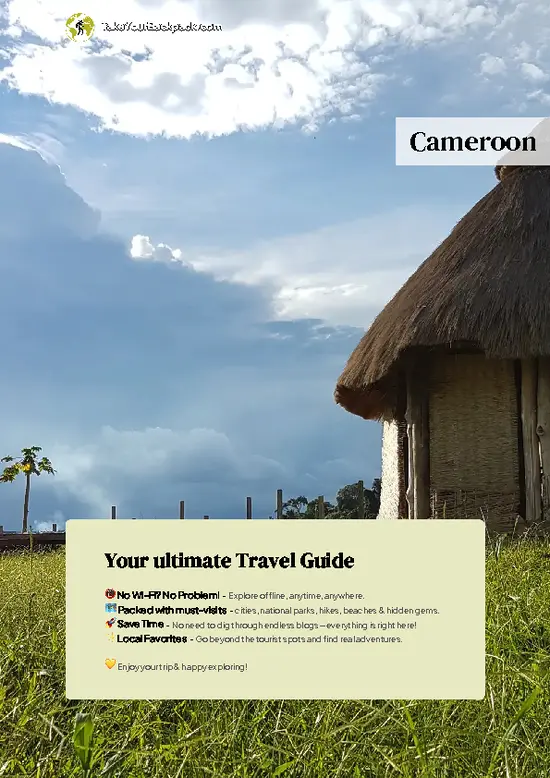
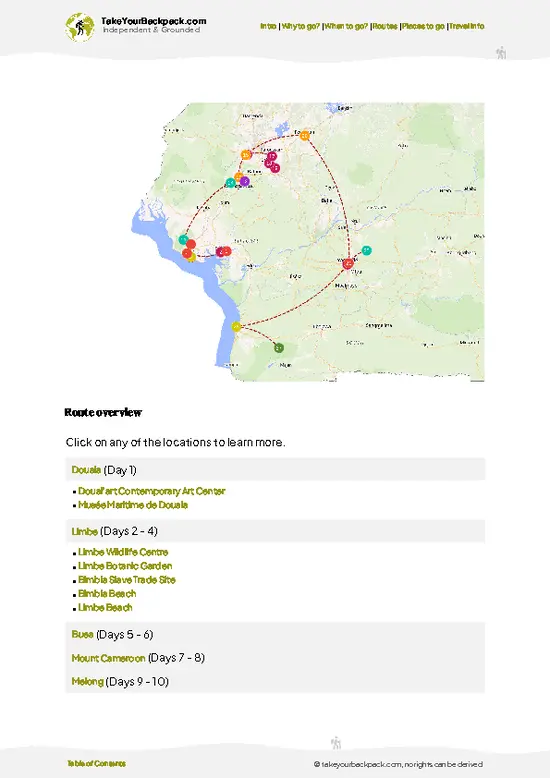
example page 0 from our offline Travel Guide for Cameroon
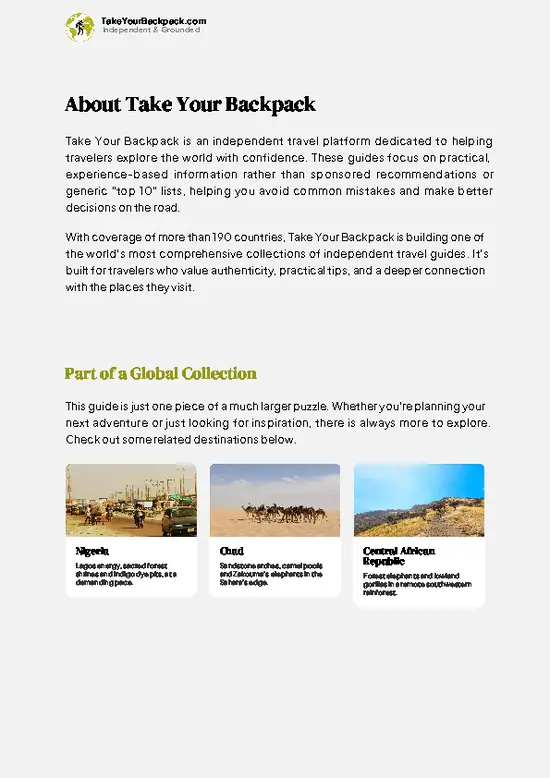
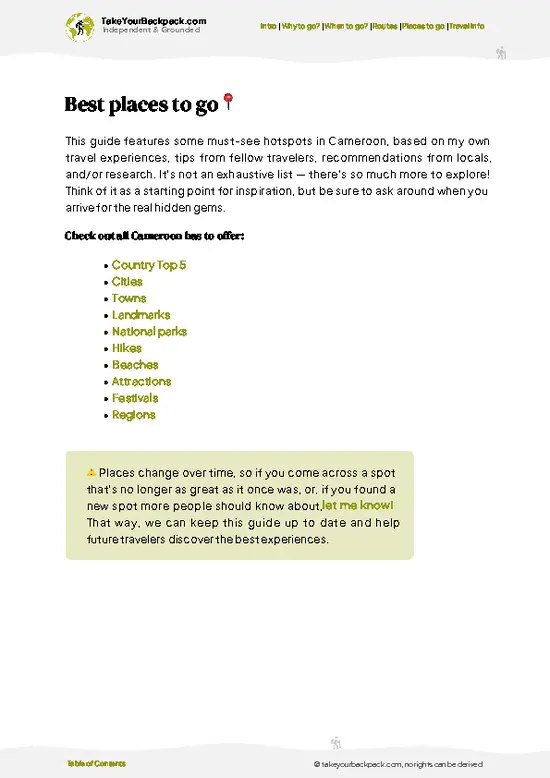
example page 1 from our offline Travel Guide for Cameroon
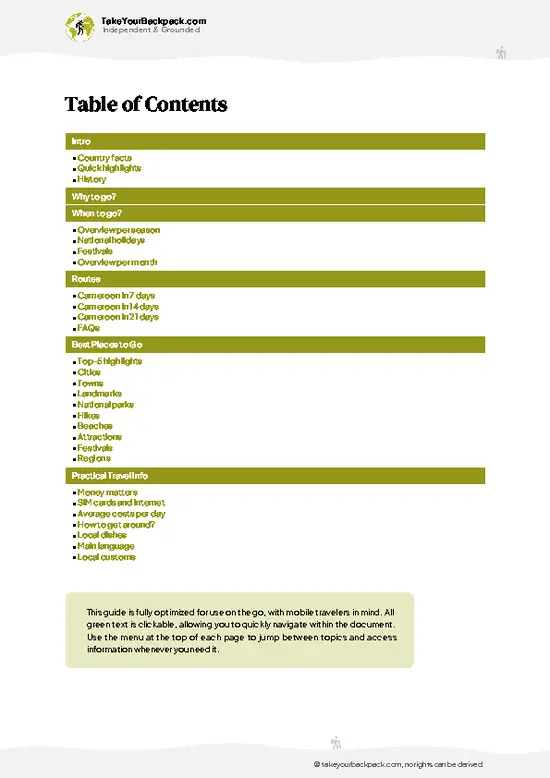
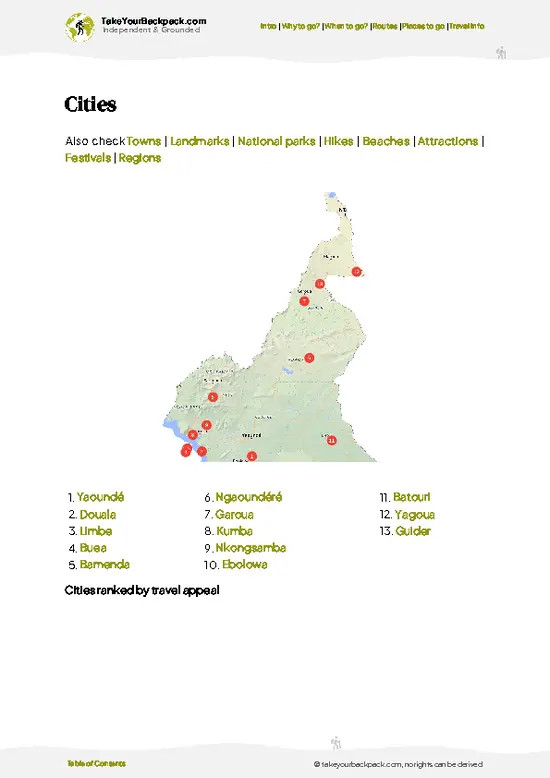
example page 2 from our offline Travel Guide for Cameroon
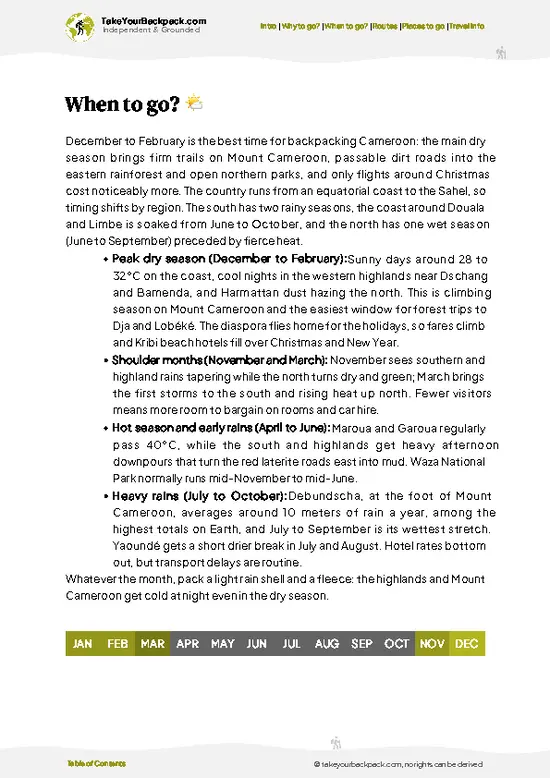
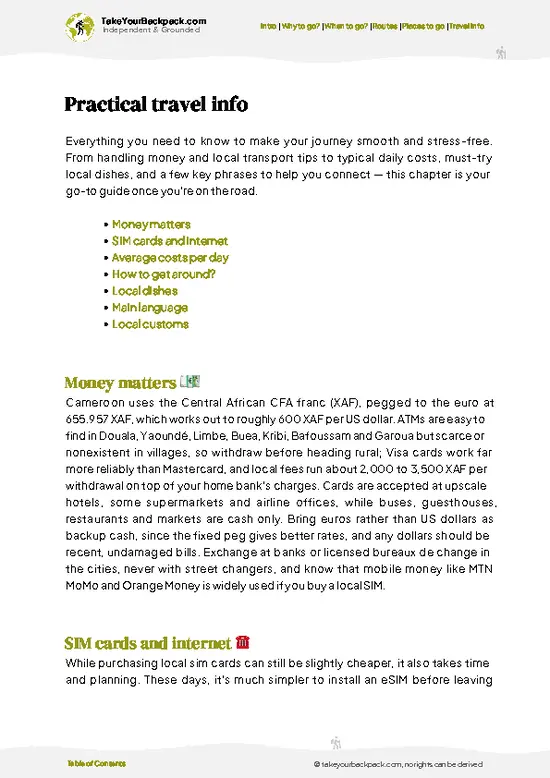
example page 3 from our offline Travel Guide for Cameroon
example page 4 from our offline Travel Guide for Cameroon
example page 5 from our offline Travel Guide for Cameroon
example page 6 from our offline Travel Guide for Cameroon
example page 7 from our offline Travel Guide for Cameroon
The digital guide (383 pages) contains:
95 highlights, ranked by travel appeal
Optimized 7, 14 & 21-day travel routes
Cities, national parks, landmarks, beaches
How to get around
Offline-friendly for travel without Wi-Fi
👉 Click to see all 30+ guide features

📅 Plan smarter in minutes, not weeks
Month by month travel advice
Festivals & national holidays
Budget expectations

🗺️ Go to the right places, skip the overrated ones
Honest pros & cons of destinations
Top hikes, parks & viewpoints
Lesser-known places most travelers miss
Clear “worth it vs skip it” guidance

🛏️ Travel smoothly without rookie mistakes
Best areas to stay
Transport systems explained simply
Common scams & safety advice
SIM cards, money & practical tips

🌍 Understand the country, not just visit it
Culture & traditions
52 Essential phrases & customs
Festivals worth planning around
Traveler-friendly historical context
Insights that make places more meaningful

📱 Built for real travel conditions
Fully downloadable PDF
Works completely offline
Optimized for phone use
Useful in remote areas & buses
Everything in one place
Save weeks of stressful planning
Get instant access to your full guide. 30‑day money-back guarantee.


By proceeding you agree to our terms.
Sent to your inbox immediately after payment • 100% Secure Checkout
Best Backpacking Travel Advisor 2025 tourism awardBest Backpacking
Travel Advisor
2025
What others say about Take Your Backpack Guides:
⭐⭐⭐⭐⭐
Fantastic, amazing amount of information!
⭐⭐⭐⭐⭐
My goodness this is amazing, it's what I've been looking for hats off too you!
⭐⭐⭐⭐⭐
I think this is absolutely BRILLIANT
⭐⭐⭐⭐
Very complete and informative. It's still missing places, but I gotta to commend you
⭐⭐⭐⭐⭐
This is truly amazing, thank you, can't wait to explore it with my kids!
⭐⭐⭐⭐⭐
Awesome resource, thank you!
⭐⭐⭐⭐⭐
This is amazing! Can't wait to explore the ones I haven't seen
⭐⭐⭐⭐
I love this! Well done, great idea.
⭐⭐⭐⭐⭐
Thanks for taking the time to make this gem!
⭐⭐⭐⭐⭐
This might be the best website I've ever seen.
⭐⭐⭐⭐⭐
Congratulations, and thank you so much for your work; it's incredibly valuable.
⭐⭐⭐⭐
In all seriousness I think you did a great job pointing out the important spots
⭐⭐⭐⭐⭐
10/10 very good
⭐⭐⭐⭐⭐
As someone who's only just starting to visit regularly this is awesome, thank you.
⭐⭐⭐⭐
Thank you very much! I'm going to visit my dad, it's going to be very useful!
⭐⭐⭐⭐⭐
This is really cool! We'll be travelling for the first time and this definitely come in handy.
⭐⭐⭐⭐⭐
You are now our minister of culture, congratulations 👨‍💼
⭐⭐⭐⭐⭐
Just wanted to tell you that this is a pearl! Going to follow your recommendations.
⭐⭐⭐⭐⭐
This is so cool. I'll definitely be using the resource for my travels soon.
⭐⭐⭐⭐⭐
This is very impressive! Good work.
⭐⭐⭐⭐⭐
This is an amazing and informative site. Very well done!

🛏️ Where to stay?Where to Base Yourself

Yes — hostels, budget guesthouses and low‑cost hotels are available in Cameroon’s main cities and tourist hubs for backpackers, but they concentrate in Douala, Yaoundé and a few regional towns so expect far fewer options in rural or highland areas and plan accordingly.
In Douala, Akwa offers the widest choice and nightlife with good transport links but only moderate nighttime security; Deïdo is cheapest and closest to markets and bus hubs yet busy and basic with lower safety after dark; Bonapriso gives quieter, safer stays at higher prices.
In Yaoundé, Bastos has safer, quieter expat‑style lodgings that cost more; Mokolo is the cheapest and most central near markets and buses but noisy and … read more 👉
Yes — hostels, budget guesthouses and low‑cost hotels are available in Cameroon’s main cities and tourist hubs for backpackers, but they concentrate in Douala, Yaoundé and a few regional towns so expect far fewer options in rural or highland areas and plan accordingly.
In Douala, Akwa offers the widest choice and nightlife with good transport links but only moderate nighttime security; Deïdo is cheapest and closest to markets and bus hubs yet busy and basic with lower safety after dark; Bonapriso gives quieter, safer stays at higher prices.
In Yaoundé, Bastos has safer, quieter expat‑style lodgings that cost more; Mokolo is the cheapest and most central near markets and buses but noisy and spartan; university areas (Ngoa‑Eké/Melen) host wallet‑friendly guesthouses and lively street food while being noisy and occasionally inconsistent on services.

If you enjoy meeting fellow travelers, consider choosing hostels with high ratings for atmosphere. On the other hand, if you prefer having your own space, a hotel might be a better option.

CameroonExpand Your Journey

👋 Meet the founderWho’s Behind Take Your Backpack?

Johan, backpacker and founder of TakeYourBackpackHi, I’m Johan (Netherlands 🇳🇱), the creator of TakeYourBackpack. Over the past decade, I’ve backpacked through 80+ countries across six continents, gaining extensive experience with independent travel, long-term trips, and overland routes.

This site is built on a combination of firsthand travel experience and carefully curated insights from other backpackers. Many guides are based on places I’ve personally visited, while others bring together tips, observations, and practical advice shared by trusted travelers I’ve met along the way.

The goal is to provide realistic, experience-driven guidance — not generic itineraries — so you can explore destinations with better context, clearer expectations, and more confidence.

Get full Cameroon guide •
Instant download • 95 highlights • Full Offline guide