×

Canada🇨🇦 | hikesJuan de Fuca TrailBotanical Beach tide pools, Sombrio surf, Mystic cave, rainforest ladders | things to do and best time to go

Explore Fundy FootpathExplore Long Range Traverse

Backpacking in Juan de Fuca Trail
👍 Recommendedhike ranked #6
By Johan Kruseman 🇳🇱 | Updated October 23, 2026

Most hikers face one decision here: walk the full trail in four to five days or settle for a day hike from one trailhead, and your fitness and tolerance for mud tip it either way. Juan de Fuca Trail runs along the wild southwest coast of Vancouver Island in British Columbia, Canada, west of Victoria. It is rugged: roots, ladders, slick boardwalks and steep gullies that slow every kilometer. The reward is a string of beaches, sea stacks and old-growth forest, with seals and whales offshore. Public transport is patchy, since shuttles serve the trailheads and the buses stop well short. When I stepped off the shuttle at China Beach, the first thing I met was the smell of wet cedar and kelp, and a low boom of surf pulling me down the path. Gray driftwood logs lay stacked like bones along the cobbles.

Discover everything you want to know in the 📖 Canada Travel Guide.
Best time to go: May - October
Duration: 4 days
Distance: 47 kilometers
Total ascent: 1800 meters


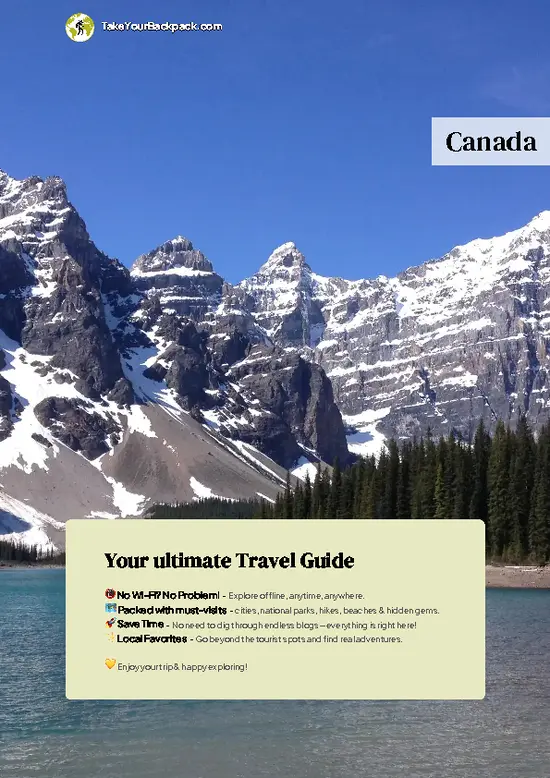
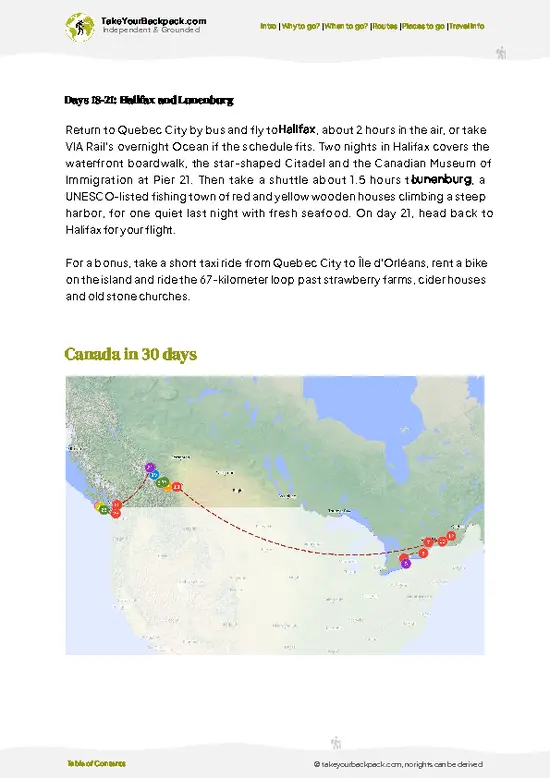
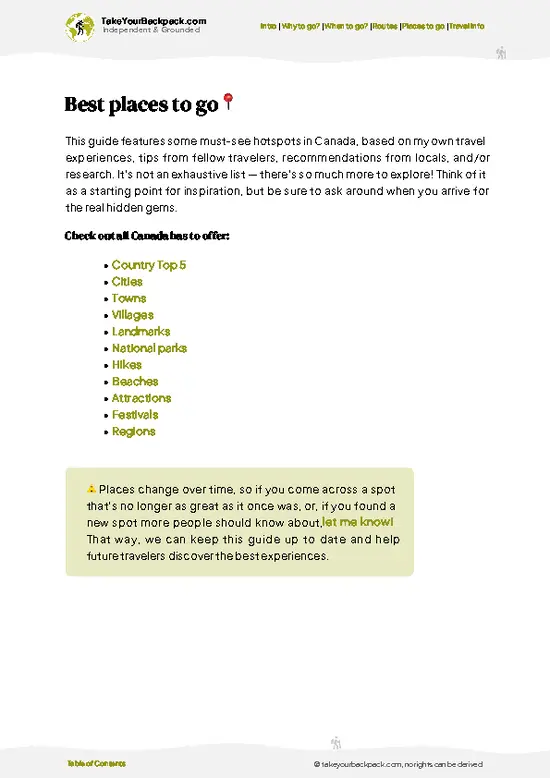
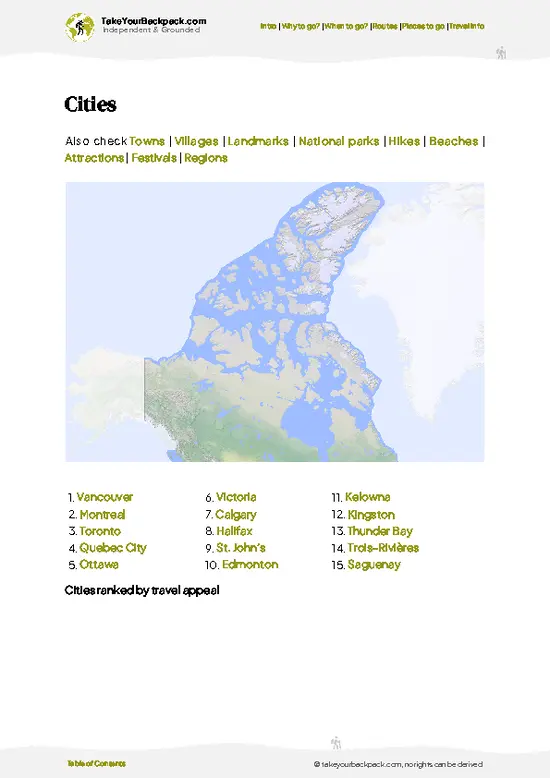
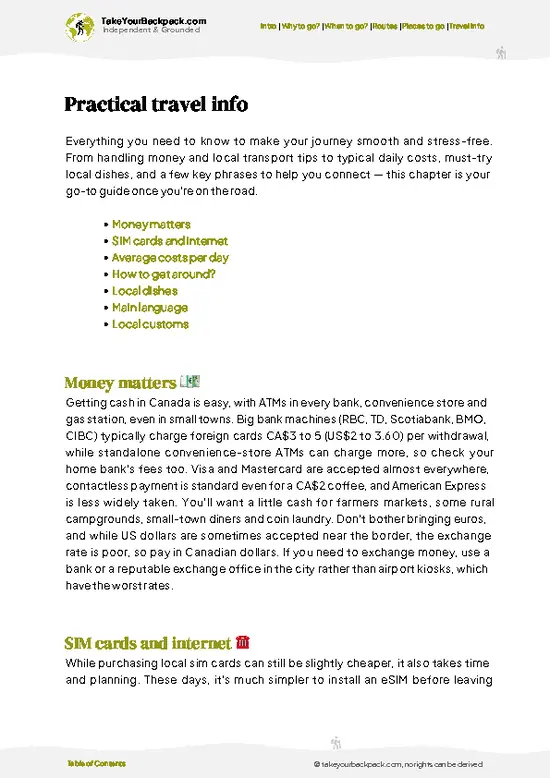
example page 0 from our offline Travel Guide for Canada
example page 1 from our offline Travel Guide for Canada
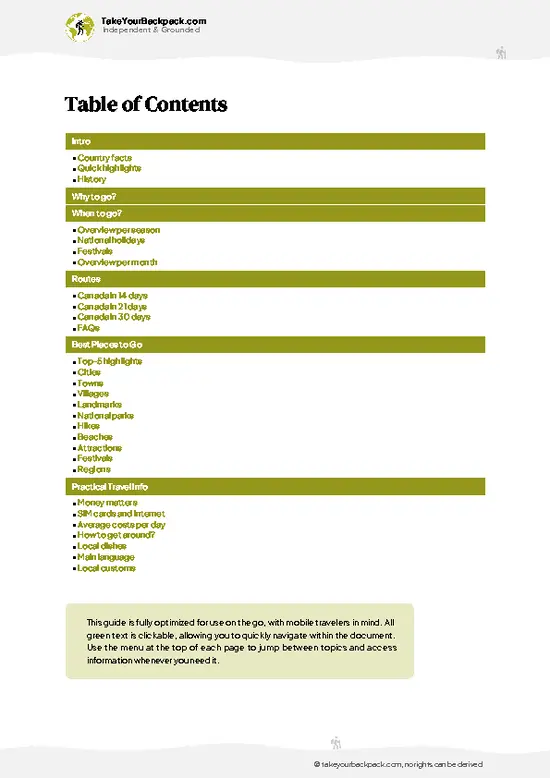
example page 2 from our offline Travel Guide for Canada
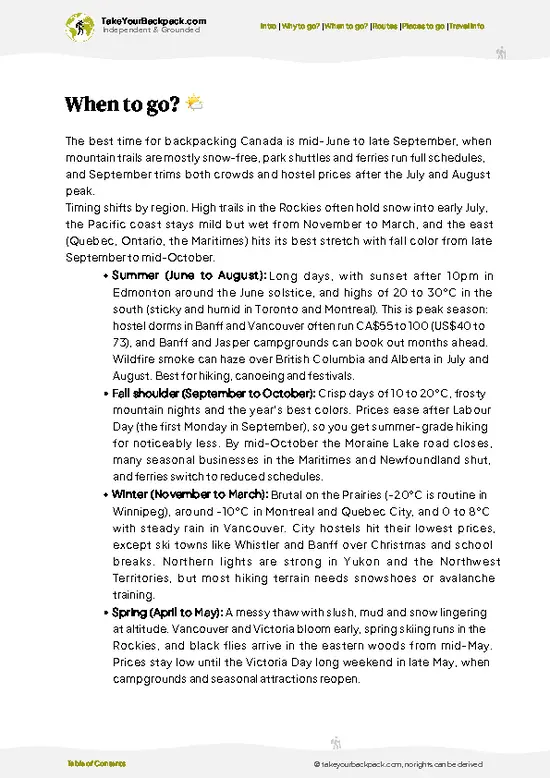
example page 3 from our offline Travel Guide for Canada
example page 4 from our offline Travel Guide for Canada
example page 5 from our offline Travel Guide for Canada
example page 6 from our offline Travel Guide for Canada
example page 7 from our offline Travel Guide for Canada
Loading the map 🌍
CLICK TO FILTER
cities
towns
villages
landmarks
national parks
hikes
beaches
attractions
festivals
regions
SHOW COUNTRY’S BESTSHOW ALL

✨ Why go?
Ranked #6 hike in Canada
Why visitors keep coming back

Juan de Fuca Trail gives backpackers an ocean wilderness walk without the booking scramble or price of its famous northern neighbor, the West Coast Trail. You can commit to the whole route or bite off a section, because four trailheads (China Beach, Sombrio Beach, Parkinson Creek and Botanical Beach) let you pick a one-day outing or a multi-night trek. Camping is simple and cheap, with a handful of beach and forest sites along the way. The coast is the draw: Chin Beach and Sombrio's waterfall and surf break, plus tide pools near Botanical Beach. It also pairs neatly with a Victoria stay, so you can tack a few wild nights onto a Vancouver Island loop and be back in a café within a day of finishing.

💡 HighlightsDon't-miss highlights and experiences

  1. Botanical Beach: The best-known spot on the trail, with deep tide pools full of sea stars, anemones and urchins. Go at low tide, when the sandstone shelf opens up.
  2. Sombrio Beach: A broad cobble and sand beach with a waterfall spilling down the cliff and a popular surf break. The camping here is lively and scenic.
  3. China Beach: The eastern start, with a short forest walk to a sheltered beach and a second waterfall at the far end. It is a gentle introduction to the coast.
  4. Mystic Beach: A cove reached by a suspension bridge, with a waterfall curtain and a cave to explore. It is a short side trip from the trailhead.
  5. Payzant Creek and Chin Beach stretches: Remote sections where the route drops to rocky shoreline and climbs through mossy rainforest, with good odds of spotting seals, eagles and passing
… read more 👉
  1. Botanical Beach: The best-known spot on the trail, with deep tide pools full of sea stars, anemones and urchins. Go at low tide, when the sandstone shelf opens up.
  2. Sombrio Beach: A broad cobble and sand beach with a waterfall spilling down the cliff and a popular surf break. The camping here is lively and scenic.
  3. China Beach: The eastern start, with a short forest walk to a sheltered beach and a second waterfall at the far end. It is a gentle introduction to the coast.
  4. Mystic Beach: A cove reached by a suspension bridge, with a waterfall curtain and a cave to explore. It is a short side trip from the trailhead.
  5. Payzant Creek and Chin Beach stretches: Remote sections where the route drops to rocky shoreline and climbs through mossy rainforest, with good odds of spotting seals, eagles and passing whales.
Juan de Fuca Trail is best met first at Botanical Beach, where a short walk and a low tide show off the coast's richest wildlife.
Spotted a mistake or missing something? Contact us.

Things to do near Juan de Fuca Trail

Ratings based on Tripadvisor reviews. When you book through this link, you support our work at no extra cost to you.

🌤️ When to go?Seasonal considerations and timing

  • Summer (July to early September): The driest window on Vancouver Island’s southwest coast, with daytime highs of 15 to 20°C (59 to 68°F) and cool nights around 8 to 11°C (46 to 52°F). Fog often sits on the beaches until midday. Expect the most hikers and the highest shuttle and campsite demand, and daylight lasts roughly 15 hours in midsummer.
  • Shoulder Months (May, June, late September): Mud is deeper, rain is more frequent, and temperatures run 10 to 16°C (50 to 61°F). Trails are quieter, and June often has stretches of good weather before the summer rush.
  • Winter (November to March): Heavy Pacific storms, highs of 5 to 9°C (41 to 48°F), and only about 8 to 9 hours of daylight. Creeks run high, the shuttle schedule thins, and the route is for experienced hikers only.
Book your camping reservation … read more 👉
  • Summer (July to early September): The driest window on Vancouver Island’s southwest coast, with daytime highs of 15 to 20°C (59 to 68°F) and cool nights around 8 to 11°C (46 to 52°F). Fog often sits on the beaches until midday. Expect the most hikers and the highest shuttle and campsite demand, and daylight lasts roughly 15 hours in midsummer.
  • Shoulder Months (May, June, late September): Mud is deeper, rain is more frequent, and temperatures run 10 to 16°C (50 to 61°F). Trails are quieter, and June often has stretches of good weather before the summer rush.
  • Winter (November to March): Heavy Pacific storms, highs of 5 to 9°C (41 to 48°F), and only about 8 to 9 hours of daylight. Creeks run high, the shuttle schedule thins, and the route is for experienced hikers only.
Book your camping reservation and shuttle early if you want July or August, and aim for a weekday start to avoid the busiest trailheads.


source: climatestotravel.comJANJanuary: below average for travelingFEBFebruary: below average for travelingMARMarch: fair for travelingAPRApril: fair for travelingMAYMay: highly recommended for travelingJUNJune: highly recommended for travelingJULJuly: good for travelingAUGAugust: good for travelingSEPSeptember: highly recommended for travelingOCTOctober: good for travelingNOVNovember: fair for travelingDECDecember: below average for traveling
canada-hike-juan-de-fuca-trail
© Google | Jay Doshi

✈️ The backpacker research shortcutCanada Travel Guide

An offline-friendly backpacking guide with optimized travel routes, ranked highlights, transport advice, and the best areas to stay.
example page 0 from our offline Travel Guide for Canada
example page 1 from our offline Travel Guide for Canada
example page 2 from our offline Travel Guide for Canada
example page 3 from our offline Travel Guide for Canada
example page 4 from our offline Travel Guide for Canada
example page 5 from our offline Travel Guide for Canada
example page 6 from our offline Travel Guide for Canada
example page 7 from our offline Travel Guide for Canada
The digital guide (385 pages) contains:
✅ 125 highlights, ranked by travel appeal
✅ Optimized 14, 21 & 30-day travel routes
✅ Cities, national parks, landmarks, beaches
✅ How to get around
✅ Offline-friendly for travel without Wi-Fi
👉 Click to see all 30+ guide features

📅 Plan smarter in minutes, not weeks
✅ Month by month travel advice
✅ Festivals & national holidays
✅ Budget expectations

🗺️ Go to the right places, skip the overrated ones
✅ Honest pros & cons of destinations
✅ Top hikes, parks & viewpoints
✅ Lesser-known places most travelers miss
✅ Clear “worth it vs skip it” guidance

🛏️ Travel smoothly without rookie mistakes
✅ Best areas to stay
✅ Transport systems explained simply
✅ Common scams & safety advice
✅ SIM cards, money & practical tips

🌍 Understand the country, not just visit it
✅ Culture & traditions
✅ Local customs
✅ Festivals worth planning around
✅ Traveler-friendly historical context
✅ Insights that make places more meaningful

📱 Built for real travel conditions
✅ Fully downloadable PDF
✅ Works completely offline
✅ Optimized for phone use
✅ Useful in remote areas & buses
✅ Everything in one place
Stop searching, start planning
Get instant access to your full guide. 30‑day money-back guarantee.
+ Add another guide for just

By proceeding you agree to our terms.
Sent to your inbox immediately after payment • 100% Secure Checkout
Best Backpacking Travel Advisor 2025 tourism awardBest Backpacking
Travel Advisor
2025
What others say about Take Your Backpack Guides:
⭐⭐⭐⭐⭐
Fantastic, amazing amount of information!
⭐⭐⭐⭐⭐
My goodness this is amazing, it's what I've been looking for hats off too you!
⭐⭐⭐⭐⭐
I think this is absolutely BRILLIANT
⭐⭐⭐⭐
Very complete and informative. It's still missing places, but I gotta to commend you
⭐⭐⭐⭐⭐
This is truly amazing, thank you, can't wait to explore it with my kids!
⭐⭐⭐⭐⭐
Awesome resource, thank you!
⭐⭐⭐⭐⭐
This is amazing! Can't wait to explore the ones I haven't seen
⭐⭐⭐⭐
I love this! Well done, great idea.
⭐⭐⭐⭐⭐
Thanks for taking the time to make this gem!
⭐⭐⭐⭐⭐
This might be the best website I've ever seen.
⭐⭐⭐⭐⭐
Congratulations, and thank you so much for your work; it's incredibly valuable.
⭐⭐⭐⭐
In all seriousness I think you did a great job pointing out the important spots
⭐⭐⭐⭐⭐
10/10 very good
⭐⭐⭐⭐⭐
As someone who's only just starting to visit regularly this is awesome, thank you.
⭐⭐⭐⭐
Thank you very much! I'm going to visit my dad, it's going to be very useful!
⭐⭐⭐⭐⭐
This is really cool! We'll be travelling for the first time and this definitely come in handy.
⭐⭐⭐⭐⭐
You are now our minister of culture, congratulations 👨‍💼
⭐⭐⭐⭐⭐
Just wanted to tell you that this is a pearl! Going to follow your recommendations.
⭐⭐⭐⭐⭐
This is so cool. I'll definitely be using the resource for my travels soon.
⭐⭐⭐⭐⭐
This is very impressive! Good work.
⭐⭐⭐⭐⭐
This is an amazing and informative site. Very well done!

🛏️ Where to stay?Best areas to stay in Canada

If you enjoy meeting fellow travelers, consider choosing hostels with high ratings for atmosphere. On the other hand, if you prefer having your own space, a hotel might be a better option.

🥾 Hike detailsHike details: route, duration, and difficulty of Juan de Fuca Trail

Total Distance: Juan de Fuca Trail covers about 47 kilometers between China Beach and Botanical Beach.
Estimated Duration: Most backpackers take 3 to 5 days, and fit hikers sometimes finish in 2.
Difficulty: Strenuous. Constant ups and downs, roots, mud and ladders make progress slow, even though the elevation figures look modest.
Starting Point: The usual start is China Beach, west of Victoria. Regional buses reach Sooke, and seasonal shuttles or taxis carry hikers on to the trailheads.
Major Landmarks:
  • China Beach: Eastern trailhead and first campsite.
  • Chin Beach: Rocky camp with sea stacks.
  • Sombrio
… read more 👉
Total Distance: Juan de Fuca Trail covers about 47 kilometers between China Beach and Botanical Beach.
Estimated Duration: Most backpackers take 3 to 5 days, and fit hikers sometimes finish in 2.
Difficulty: Strenuous. Constant ups and downs, roots, mud and ladders make progress slow, even though the elevation figures look modest.
Starting Point: The usual start is China Beach, west of Victoria. Regional buses reach Sooke, and seasonal shuttles or taxis carry hikers on to the trailheads.
Major Landmarks:
  • China Beach: Eastern trailhead and first campsite.
  • Chin Beach: Rocky camp with sea stacks.
  • Sombrio Beach: Waterfall, surfers and a large camp.
  • Botanical Beach: Tide pools at the western end.
Terrain and Scenery: Forest tracks, boardwalks, steep gullies, cobble beaches and sandstone shelves. Some sections are easiest on the sand at low tide, so carry a tide table.
Vegetation: Western red cedar, Sitka spruce, hemlock, salal and thick moss.
Wildlife: Black bears, cougars (rare), sea lions, harbor seals, bald eagles, and gray and humpback whales offshore. Store food in the metal lockers at campsites.
⚠️ Hiking info can sometimes be outdated or inaccurate. Before you hit the trail, check the latest conditions with locals. If you do spot anything that's off, I'd love to hear from you, so I can update it for fellow travelers.

🛡️ SafetyScams, Hazards, and Annoyances

The Juan de Fuca Trail is rugged rather than dangerous, but its 47 kilometers (29 miles) of roots, mud, ladders and steep gullies wear down first-timers quickly. Plan on 2 to 2.5 kilometers per hour, not road-walking speeds. Waterproof boots and rain gear are needed even in summer, since coastal fog and sudden rain are routine. Check the tide tables before using the beach sections, because high tide can cut off rocky headlands and make some stretches impassable. Black bears and cougars live here, so store food and scented items in the metal food caches at campsites and make noise in dense forest. Cell service is patchy, so carry a paper map and tell someone your itinerary. Finally, filter or boil all creek water.

FAQTraveler FAQ

Most hikers complete the Juan de Fuca Trail in 3 to 5 days, covering the 47 km (29 mile) route between China Beach and Botanical Beach. Strong hikers can finish in 2 days, though 4 days with camping at spots like Bear Beach or Chin Beach is the common pace. Each day typically involves 10 to 15 km of slow, root-filled terrain.
The Juan de Fuca Trail is rated moderate to strenuous, and it is harder than the distance suggests. Expect steep ups and downs, ladders, deep mud, and slippery boulders along the 47 km route, with the section between Sombrio Beach and Chin Beach among the roughest. Most fit hikers with some backpacking experience manage it, but a pack over 15 kg (33 lb) will slow you down.
No guide is needed, but you must have a camping permit for overnight stays along the Juan de Fuca Trail. Reservations through BC Parks cost about US$10 per person per night in peak season. Day hikers don’t need a permit, though a trailhead fee of around US$5 to 10 may apply at some sites. Many hikers also book the West Coast Trail Express shuttle (around US$40 to 60) to return from Botanical Beach to China Beach.
⚠️ Things can change over time, so always validate details locally before you go.

Other Canadian hikes near Juan de Fuca Trail

Explore more nearby:

  • West Coast Trail—Wooden ladders, Tsusiat Falls, Nitinat ferry, Owen Point caves| 85 km away
  • Berg Lake Trail—Mount Robson, Kinney Lake turquoise, Valley of a Thousand Falls, calving glacier| 617 km away
  • Plain of Six Glaciers Trail—Lake Louise shore, glacier teahouse, Victoria Glacier, pika moraine| 650 km away

💡 Not sure where to go next?
Create a personalized itinerary for Canada including Juan de Fuca Trail and the places that fit your trip.

Generate my itinerary

👉 Discover all hikes

Or checkout all Canada has to offer (think cities, towns, villages, national parks, hikes, beaches, festivals)
Country photo of Canada

We 💚 feedbackParting advice and final tips

Juan de Fuca Trail suits hikers who want a real coastal grind but not a month of planning, and it is good for a first multi-night trip. I would pack gaiters, a tide table and a second pair of dry socks, and I would skip any rushed two-day plan.

✈️ When did I visit Canada?
As part of my 1.5 year travel around the world trip, I visited Canada in 2016.

✍️ Help improve this page!
The information on this page is based on my own backpacking experience in Canada, supplemented with up-to-date research and feedback from other travelers. Travel details can change, so if you notice anything outdated or incomplete, feel free to let me know.


🙋‍♂️ Give feedback

👋 Meet the founderWho’s Behind Take Your Backpack?

Johan, backpacker and founder of TakeYourBackpackHi, I’m Johan (Netherlands 🇳🇱), the creator of TakeYourBackpack. Over the past 3 decades, I’ve backpacked through 90+ countries across six continents, gaining extensive experience with independent travel, long-term trips, and overland routes.

This site is built on a combination of firsthand travel experience and carefully curated insights from other backpackers. Many guides are based on places I’ve personally visited, while others bring together tips, observations, and practical advice shared by trusted travelers I’ve met along the way.

The goal is to provide realistic, experience-driven guidance — not generic itineraries — so you can explore destinations with better context, clearer expectations, and more confidence.