How many hikes to do: I would advise
five to eight hikes across a two to three week trip, with at least one multi-day route if you have the fitness. That number leaves room for rest days, weather delays, and the slow hours spent driving past lakes and ridgelines, where the scale of the country sinks in. Cramming in a dozen sounds efficient, but the cost is aching knees, cold wet gear that never dries, and long highway days that crowd out trail time. For a backpacker, a mix of a few day hikes and one overnight offers the best value, because the overnight delivers the most feeling of remoteness per dollar.
Which kind to prioritize: For
big mountain scenery, the Rockies and Coast Mountains give the most for time, since trailheads are close to towns and day hikes can reach glacier-fed lakes and …
read more 👉 How many hikes to do: I would advise five to eight hikes across a two to three week trip, with at least one multi-day route if you have the fitness. That number leaves room for rest days, weather delays, and the slow hours spent driving past lakes and ridgelines, where the scale of the country sinks in. Cramming in a dozen sounds efficient, but the cost is aching knees, cold wet gear that never dries, and long highway days that crowd out trail time. For a backpacker, a mix of a few day hikes and one overnight offers the best value, because the overnight delivers the most feeling of remoteness per dollar.
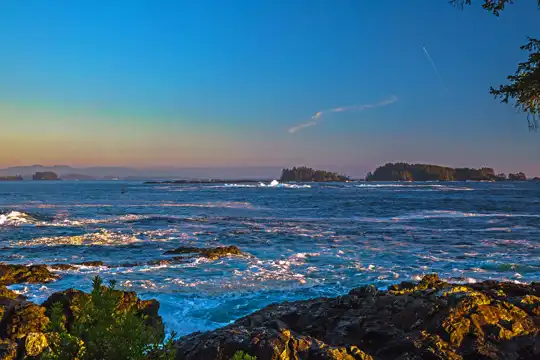
Which kind to prioritize: For big mountain scenery, the Rockies and Coast Mountains give the most for time, since trailheads are close to towns and day hikes can reach glacier-fed lakes and high ridges. The price is crowds and higher lodging costs in summer. For solitude, pick lesser-known provincial parks, the interior ranges of British Columbia, or the Atlantic provinces, where you may share a trail with a handful of walkers and a lot of spruce. For coastal and rainforest walking, the Pacific and Newfoundland coasts offer wet moss, tidal flats, and cliff paths, but demand waterproof layers and patience with rain. If you are new to backcountry travel, start with well-signed day hikes and a first overnight at an established campground, where rangers and other campers are close.
What it costs: Expect US$60 to 120 a day for a budget-minded independent traveler in summer, covering hostel dorms or campsites, groceries, and fuel shared between travelers. Park entry runs about C$11 to 22 per adult per day in national parks, and a Discovery Pass for a year costs around C$75 to 150 depending on household type, which pays off after about seven days of park visits. Backcountry camping permits typically cost C$12 to 20 per person per night, plus a reservation fee for popular routes. A rental car costs roughly US$50 to 100 a day in summer, plus gas, and is the single biggest expense. Guided day hikes run about US$100 to 250, and multi-day guided trips US$250 to 450 a day. A guide is worth the splurge on glaciers or technical terrain, but unnecessary for marked trails. For a two to three week trip, budget US$1,500 to 3,500 on the ground, excluding flights.
Camping is the best value. A tent site costs about C$20 to 40 a night in national parks, against C$150 to 300 for a mid-range room in peak-season Banff or Jasper. It means cold mornings, damp zippers, and the smell of woodsmoke in your hair, but it also puts you at trailheads earlier.
Safety: Bears are the first concern. Carry bear spray (about C$40 to 60 at outdoor shops), keep it where you can grab it quickly, hike in groups, and make noise in thick brush. Store food in lockers or hang it, and cook away from your tent. Rental of bear canisters is available at many parks. Weather changes quickly, so pack a waterproof shell, a warm layer, and a hat even in August, because cold rain at elevation can bring hypothermia. Cell coverage vanishes outside towns, so carry a downloaded map, a whistle, and tell someone your route. Glacial rivers run fast and cold, and crossings can become dangerous after rain or warm days, so scout and turn around if in doubt. Check wildfire and trail-closure reports before every trip, because smoke and fire restrictions can cancel plans with little notice.
Cultural considerations: Much of the land you walk on is Indigenous territory, and some areas are co-managed by First Nations. Obey closures, do not touch or remove cultural sites, and consider supporting Indigenous-led tours where offered. Leave No Trace is the standard: pack out everything, stay on trail, and use designated fire rings only when fires are permitted. Wildlife is not for photos at close range, and the legal distance from bears is usually 100 meters, and 30 meters from other large animals. Politeness on the trail is the norm: a nod or hello when passing, and yielding to uphill hikers, goes a long way.
v2.webp)


 Best Backpacking
.jpg) Hi, I’m Johan (Netherlands 🇳🇱), the creator of TakeYourBackpack. Over the past 3 decades, I’ve backpacked through 90+ countries across six continents, gaining extensive experience with independent travel, long-term trips, and overland routes.
Hi, I’m Johan (Netherlands 🇳🇱), the creator of TakeYourBackpack. Over the past 3 decades, I’ve backpacked through 90+ countries across six continents, gaining extensive experience with independent travel, long-term trips, and overland routes.