×
Banff National Park

Canada🇨🇦 | national parksBanff National Parkalpine lakes, rugged peaks, wildlife corridors | things to do and best time to go

Explore AuyuittuqExplore Cape Breton Highlands National Park

Backpacking in Banff
UNESCO World Heritage site
🏆 Top picknational park ranked #1
By Johan Kruseman 🇳🇱 | Updated June 3, 2026

Most people only realize on day three that Banff’s biggest advantage is how much world-class hiking you can reach without renting a car or burning time on long approaches; the trailheads, shuttles, and town services are unusually tight and efficient for a mountain park. Banff National Park sits in Alberta, in the Canadian Rockies, about 90 minutes west of Calgary. For backpackers, it’s a paradox: jaw-dropping alpine lakes, big-mountain trails, and real wildlife encounters, but wrapped in a very managed, very popular package. You get easy access, clear signage, decent hitchhiking odds, and regular buses, but also entrance fees that add up, crowded hotspots like Lake Louise, and campsites that book out fast. Compared with nearby Jasper, Banff feels busier, more polished, and less wild, but also simpler for a first Canadian Rockies trip. I go to Jasper to feel remote; I go to Banff when I want maximum payoff per hiking day.

Discover everything you want to know in the 📖 Canada Travel Guide.


Get your Canada guide
133 ranked highlights, routes & tips, works offline (518 pages)
Loading the map 🌍
CLICK TO FILTER
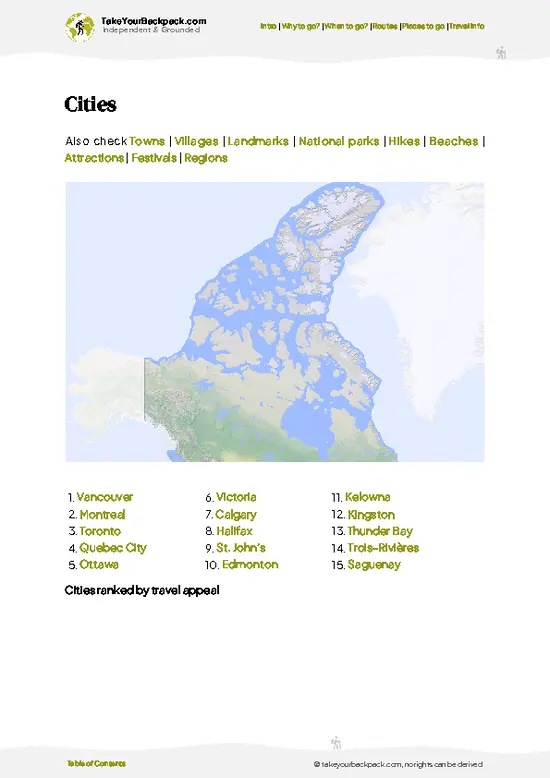
cities
towns
villages
landmarks
national parks
hikes
beaches
attractions
festivals
regions
SHOW COUNTRY’S BESTSHOW ALL

✨ Why go?
Ranked #1 national park in Canada
Reasons people choose to explore here

Backpackers flock to Banff National Park for its blend of independent exploration and stunning landscapes. The park offers a variety of trails, from easy lakeside strolls to challenging mountain ascents, catering to all skill levels. This diversity means you can tailor your adventure to your own pace, making it ideal for self-guided travelers who prefer to set their own itinerary.

Budget-conscious adventurers will appreciate the camping options and nearby hostels. You can pitch a tent under the stars or find a cozy bunk, keeping costs down while still enjoying the park’s natural beauty. Just be aware that some campgrounds fill up quickly, so plan ahead to secure your spot.

While guided tours are available, they often come with a hefty price tag. Many backpackers find that navigating the … read more 👉
Backpackers flock to Banff National Park for its blend of independent exploration and stunning landscapes. The park offers a variety of trails, from easy lakeside strolls to challenging mountain ascents, catering to all skill levels. This diversity means you can tailor your adventure to your own pace, making it ideal for self-guided travelers who prefer to set their own itinerary.

Budget-conscious adventurers will appreciate the camping options and nearby hostels. You can pitch a tent under the stars or find a cozy bunk, keeping costs down while still enjoying the park’s natural beauty. Just be aware that some campgrounds fill up quickly, so plan ahead to secure your spot.

While guided tours are available, they often come with a hefty price tag. Many backpackers find that navigating the park independently not only saves money but also allows for a more personal connection with the environment. You can linger at a breathtaking viewpoint or take an unexpected detour without the constraints of a group.

In short, Banff is a playground for those who value freedom, affordability, and the thrill of the wild.
Want to include Banff National Park in your Canada route?
Create a personalized Canada itinerary that includes Banff National Park and the places that fit your trip — based on your travel style, budget, and available time. Get your route in seconds.

Generate my trip

💡 HighlightsKey sights and experiences for travelers

  • Lake Louise — The picture-postcard turquoise lake framed by Victoria Glacier and the Fairmont chateau; perfect for mirror reflections at dawn, canoeing in summer, and access to classic hikes like the Plain of Six Glaciers. Busy, but for a reason.
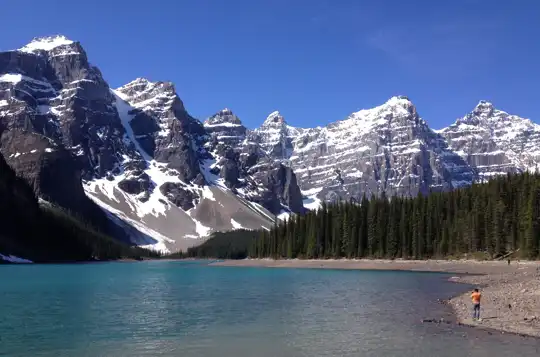
  • Moraine Lake (Valley of the Ten Peaks) — That unreal blue-green bowl set against jagged peaks — iconic moraine rock viewpoints and short hikes. Shows up on every postcard; go early (or late) to beat the crowds and catch the best light. Personal favorite for jaw-dropping alpine symmetry.
  • Peyto Lake & Bow Summit — A sharp viewpoint above a wolf-head shaped, glacier-fed lake — the color and the ridge-line views make it a quick, high-reward stop on the Icefields Parkway. Great for dramatic photos and short walks without a full-day commitment.
  • Larch
read more 👉
  • Lake Louise — The picture-postcard turquoise lake framed by Victoria Glacier and the Fairmont chateau; perfect for mirror reflections at dawn, canoeing in summer, and access to classic hikes like the Plain of Six Glaciers. Busy, but for a reason.
  • Moraine Lake (Valley of the Ten Peaks) — That unreal blue-green bowl set against jagged peaks — iconic moraine rock viewpoints and short hikes. Shows up on every postcard; go early (or late) to beat the crowds and catch the best light. Personal favorite for jaw-dropping alpine symmetry.
  • Peyto Lake & Bow Summit — A sharp viewpoint above a wolf-head shaped, glacier-fed lake — the color and the ridge-line views make it a quick, high-reward stop on the Icefields Parkway. Great for dramatic photos and short walks without a full-day commitment.
  • Larch Valley & Sentinel Pass — A backpacker’s dream in early autumn: golden larches against rocky peaks and glaciers. The trail climbs steadily but rewards you with sweeping alpine bowls and fewer people if you push to Sentinel Pass. Best timing = September for the larches.
  • Plain of Six Glaciers Hike — Starts at Lake Louise and becomes properly wild: moraine fields, close glacier views, teahouse stop and peaks all around. A full-day trail that feels alpine without technical gear — bring layers and patience for switchback climbs.
  • Johnston Canyon & the Ink Pots — Wooden catwalks through narrow, tumbling canyon to dramatic waterfalls, with an optional longer route out to the serene, colourful Ink Pots meadows. Easyish and family-friendly in parts, but the upper trail gives proper solitude and wildflowers.
  • Lake Minnewanka — Big, open glacial lake with boat tours, long shoreline hikes, and real chances to see elk, bighorn sheep, and waterfowl. The nearby Stewart Canyon and Aylmer Pass routes are great if you want fewer crowds and longer backcountry vibes.
Spotted a mistake or missing something? Contact us.

Things to do around Banff National Park

Ratings based on Tripadvisor reviews. When you book through this link, you support our work at no extra cost to you.

🌤️ When to go?Weather, crowds, and seasonal trade-offs


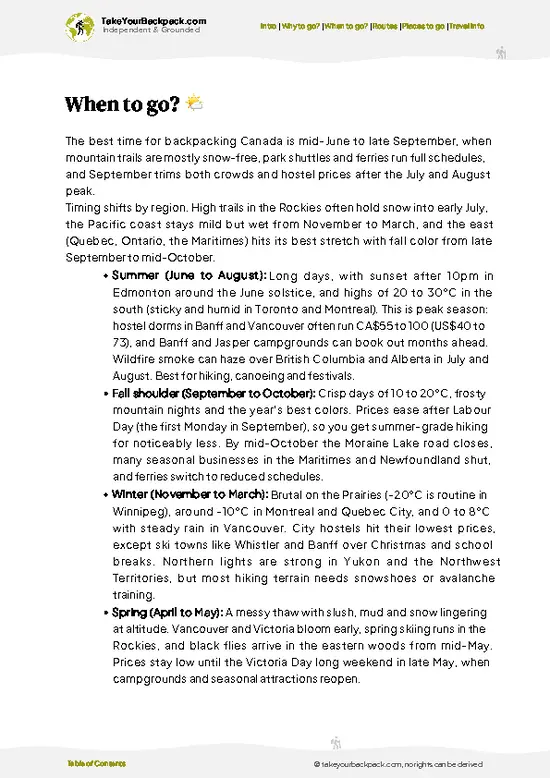
  • Weather: Banff’s weather swings sharply. Summer (June to August) offers mild days around 15-22°C (59-72°F), but nights can dip below 5°C (41°F). Spring and fall bring unpredictable rain and early snow, while winter is brutally cold, often below -15°C (5°F).

  • Temperature: Daytime highs in summer are comfortable for hiking, but be ready for chilly mornings and evenings. Shoulder seasons can surprise you with frost or sudden heat spikes, so layering is non-negotiable.

  • Daylight Hours: Long summer days stretch up to 16 hours, maximizing hiking time. By late fall, daylight shrinks to under 9 hours, limiting safe trekking windows.

  • Crowds: Peak season (July-August) means packed trails and busy campgrounds. Early June or September offers quieter paths and a better chance to enjoy solitude without
read more 👉

  • Weather: Banff’s weather swings sharply. Summer (June to August) offers mild days around 15-22°C (59-72°F), but nights can dip below 5°C (41°F). Spring and fall bring unpredictable rain and early snow, while winter is brutally cold, often below -15°C (5°F).

  • Temperature: Daytime highs in summer are comfortable for hiking, but be ready for chilly mornings and evenings. Shoulder seasons can surprise you with frost or sudden heat spikes, so layering is non-negotiable.

  • Daylight Hours: Long summer days stretch up to 16 hours, maximizing hiking time. By late fall, daylight shrinks to under 9 hours, limiting safe trekking windows.

  • Crowds: Peak season (July-August) means packed trails and busy campgrounds. Early June or September offers quieter paths and a better chance to enjoy solitude without sacrificing weather.

  • Seasonal Activities: Summer is prime for backpacking and water sports. Fall introduces early snow and fewer services. Winter locks most trails but opens up skiing and snowshoeing.

  • Price Fluctuations: Accommodation and permits spike in summer. Booking early is essential. Shoulder seasons often have lower prices and more availability, but some facilities close.


Pro-tip: Aim for late June or early September to dodge crowds and extreme weather, keeping your energy for the trails, not the traffic jams or frostbite.


source: climatestotravel.comJANJanuary: below average for travelingFEBFebruary: below average for travelingMARMarch: fair for travelingAPRApril: fair for travelingMAYMay: good for travelingJUNJune: highly recommended for travelingJULJuly: excellent for travelingAUGAugust: excellent for travelingSEPSeptember: highly recommended for travelingOCTOctober: fair for travelingNOVNovember: below average for travelingDECDecember: below average for traveling
Canada - Banff National Park

✈️ The backpacker research shortcutCanada Travel Guide

An offline-friendly backpacking guide with optimized travel routes, ranked highlights, transport advice, and the best areas to stay.
example page 0 from our offline Travel Guide for Canada
example page 1 from our offline Travel Guide for Canada
example page 2 from our offline Travel Guide for Canada
example page 3 from our offline Travel Guide for Canada
example page 4 from our offline Travel Guide for Canada
example page 5 from our offline Travel Guide for Canada
example page 6 from our offline Travel Guide for Canada
example page 7 from our offline Travel Guide for Canada
The digital guide (518 pages) contains:
133 highlights, ranked by travel appeal
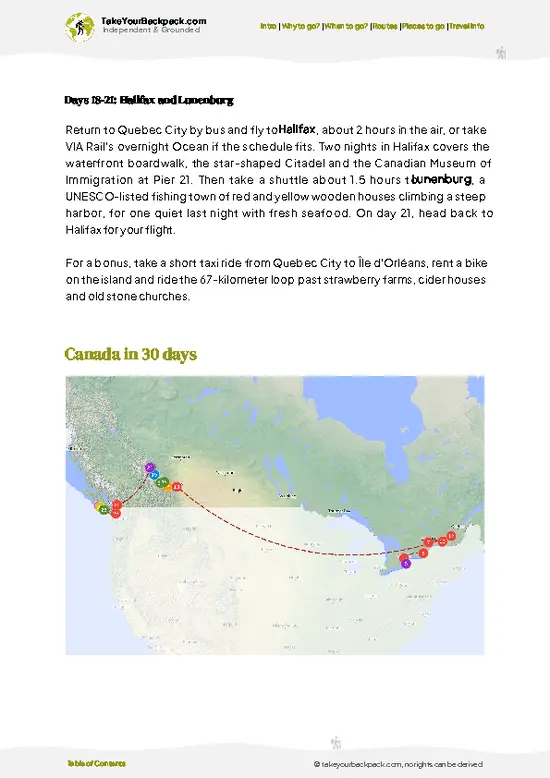
Optimized 14, 21 & 30-day travel routes
Cities, national parks, landmarks, beaches
How to get around
Offline-friendly for travel without Wi-Fi
👉 Click to see all 30+ guide features

📅 Plan smarter in minutes, not weeks
Month by month travel advice
Festivals & national holidays
Budget expectations

🗺️ Go to the right places, skip the overrated ones
Honest pros & cons of destinations
Top hikes, parks & viewpoints
Lesser-known places most travelers miss
Clear “worth it vs skip it” guidance

🛏️ Travel smoothly without rookie mistakes
Best areas to stay
Transport systems explained simply
Common scams & safety advice
SIM cards, money & practical tips

🌍 Understand the country, not just visit it
Culture & traditions
Local customs
Festivals worth planning around
Traveler-friendly historical context
Insights that make places more meaningful

📱 Built for real travel conditions
Fully downloadable PDF
Works completely offline
Optimized for phone use
Useful in remote areas & buses
Everything in one place
Save weeks of stressful planning
Get instant access to your full guide. 30‑day money-back guarantee.


By proceeding you agree to our terms.
Sent to your inbox immediately after payment • 100% Secure Checkout
Best Backpacking Travel Advisor 2025 tourism awardBest Backpacking
Travel Advisor
2025
What others say about Take Your Backpack Guides:
⭐⭐⭐⭐⭐
Fantastic, amazing amount of information!
⭐⭐⭐⭐⭐
My goodness this is amazing, it's what I've been looking for hats off too you!
⭐⭐⭐⭐⭐
I think this is absolutely BRILLIANT
⭐⭐⭐⭐
Very complete and informative. It's still missing places, but I gotta to commend you
⭐⭐⭐⭐⭐
This is truly amazing, thank you, can't wait to explore it with my kids!
⭐⭐⭐⭐⭐
Awesome resource, thank you!
⭐⭐⭐⭐⭐
This is amazing! Can't wait to explore the ones I haven't seen
⭐⭐⭐⭐
I love this! Well done, great idea.
⭐⭐⭐⭐⭐
Thanks for taking the time to make this gem!
⭐⭐⭐⭐⭐
This might be the best website I've ever seen.
⭐⭐⭐⭐⭐
Congratulations, and thank you so much for your work; it's incredibly valuable.
⭐⭐⭐⭐
In all seriousness I think you did a great job pointing out the important spots
⭐⭐⭐⭐⭐
10/10 very good
⭐⭐⭐⭐⭐
As someone who's only just starting to visit regularly this is awesome, thank you.
⭐⭐⭐⭐
Thank you very much! I'm going to visit my dad, it's going to be very useful!
⭐⭐⭐⭐⭐
This is really cool! We'll be travelling for the first time and this definitely come in handy.
⭐⭐⭐⭐⭐
You are now our minister of culture, congratulations 👨‍💼
⭐⭐⭐⭐⭐
Just wanted to tell you that this is a pearl! Going to follow your recommendations.
⭐⭐⭐⭐⭐
This is so cool. I'll definitely be using the resource for my travels soon.
⭐⭐⭐⭐⭐
This is very impressive! Good work.
⭐⭐⭐⭐⭐
This is an amazing and informative site. Very well done!

🛏️ Where to stay?How to pick the right area

When it comes to staying in or near Banff National Park, you have solid options that cater to backpackers without breaking the bank.

Inside the park, the Banff National Park Campgrounds are a prime choice. They offer a range of sites, from basic tent spots to more developed areas with amenities. Tunnel Mountain Campground is particularly popular, thanks to its proximity to town and stunning views. Just remember to reserve early, especially in peak season, as spots fill up fast.

If you prefer a roof over your head, consider the HI Banff Alpine Centre. This hostel is budget-friendly and has a … read more 👉
When it comes to staying in or near Banff National Park, you have solid options that cater to backpackers without breaking the bank.

Inside the park, the Banff National Park Campgrounds are a prime choice. They offer a range of sites, from basic tent spots to more developed areas with amenities. Tunnel Mountain Campground is particularly popular, thanks to its proximity to town and stunning views. Just remember to reserve early, especially in peak season, as spots fill up fast.

If you prefer a roof over your head, consider the HI Banff Alpine Centre. This hostel is budget-friendly and has a social vibe, perfect for meeting fellow travelers. Plus, it’s a short walk from downtown Banff, where you can grab supplies or a meal.

For a bit more comfort, Canmore is a charming town just outside the park. It’s less touristy than Banff and offers a variety of accommodations, from hostels to cozy motels. Staying here can save you some cash while still giving you easy access to the park.

Avoid the pricey hotels in Banff unless you’re splurging for a special occasion. Focus on the experiences in the park, not just where you lay your head.

👛 Costs (as of 20 December 2025)How expensive it really is

Visiting Banff National Park can be a rewarding experience, but it’s essential to be aware of the costs involved to avoid any surprises.

Entrance fees are straightforward. A daily pass for adults is around $10 CAD (approximately $7.50 USD). If you plan to stay longer, consider the Parks Canada Discovery Pass, which costs about $139.40 CAD (around $105 USD) for a full year. This can be a smart investment if you’re exploring multiple parks.

Accommodation varies widely. Camping is a budget-friendly option, with fees ranging from $20 to $40 CAD ($15 to $30 USD) per night, depending on the site and amenities. If you prefer a hotel, expect to pay anywhere from $150 to $400 CAD ($110 to $300 USD) per night, especially during peak season. Booking in advance can help secure better rates.

Food costs … read more 👉
Visiting Banff National Park can be a rewarding experience, but it’s essential to be aware of the costs involved to avoid any surprises.

Entrance fees are straightforward. A daily pass for adults is around $10 CAD (approximately $7.50 USD). If you plan to stay longer, consider the Parks Canada Discovery Pass, which costs about $139.40 CAD (around $105 USD) for a full year. This can be a smart investment if you’re exploring multiple parks.

Accommodation varies widely. Camping is a budget-friendly option, with fees ranging from $20 to $40 CAD ($15 to $30 USD) per night, depending on the site and amenities. If you prefer a hotel, expect to pay anywhere from $150 to $400 CAD ($110 to $300 USD) per night, especially during peak season. Booking in advance can help secure better rates.

Food costs can add up quickly. Dining at casual restaurants will typically set you back about $15 to $30 CAD ($11 to $22 USD) per meal. If you’re looking to save, grocery stores in Banff offer a range of options for cooking your own meals.

Transportation is another factor. If you’re driving, parking fees in the park can be around $10 CAD ($7.50 USD) per day. Public transit options are available, but check schedules and routes to avoid delays.

Lastly, activities like guided tours, rentals for bikes or kayaks, and entrance to attractions can range from $50 to $200 CAD ($37 to $150 USD) depending on what you choose.

Being aware of these costs will help you budget effectively and focus on enjoying the breathtaking landscapes and experiences that Banff has to offer.


source: pc.gc.ca
⚠️ Prices can change and everyone travels differently, so take this as a rough guide. Hope it helps you plan your adventure!

🥾 TrailsBest hikes in Banff national park

Banff National Park is a hiker’s dream, offering a mix of breathtaking scenery, diverse terrain, and a chance to spot some wildlife. From turquoise lakes to rugged mountains, every turn offers a new view that makes the uphill trek worth it. If you’re lucky, you might catch a glimpse of elk or even a bear (from a safe distance, of course). The trails range from leisurely strolls to challenging hikes, so there’s something for everyone.

One standout trail is Lake Agnes Trail. Here are the details:
  • Length: 7 km (4.3 miles)
  • Estimated Duration: 2-3 hours
  • Difficulty Level: Moderate
  • Key Features: Stunning
read more 👉
Banff National Park is a hiker’s dream, offering a mix of breathtaking scenery, diverse terrain, and a chance to spot some wildlife. From turquoise lakes to rugged mountains, every turn offers a new view that makes the uphill trek worth it. If you’re lucky, you might catch a glimpse of elk or even a bear (from a safe distance, of course). The trails range from leisurely strolls to challenging hikes, so there’s something for everyone.

One standout trail is Lake Agnes Trail. Here are the details:
  • Length: 7 km (4.3 miles)
  • Estimated Duration: 2-3 hours
  • Difficulty Level: Moderate
  • Key Features: Stunning views of Lake Agnes, a charming teahouse at the top, and the backdrop of the surrounding peaks.
  • Terrain: Well-maintained trail with some steep sections and rocky patches.

Another option is Plain of Six Glaciers Trail:
  • Length: 14 km (8.7 miles)
  • Estimated Duration: 4-6 hours
  • Difficulty Level: Moderate to Challenging
  • Key Features: Glacial views, the historic teahouse, and the chance to see waterfalls.
  • Terrain: Varied, with some steep inclines and rocky sections.

Getting to Banff is pretty straightforward. If you’re relying on public transport, there are shuttle services from Calgary, which is about 1.5 hours away. Just keep in mind that during peak season, the trails can get quite crowded—especially the popular ones like the ones mentioned. As for entrance fees, there’s a daily charge for park access, but you can also snag a multi-day pass if you plan to stay longer. Just check the current rates before you go. Happy hiking!
⚠️ Hiking info can sometimes be outdated or inaccurate. Before you hit the trail, check the latest conditions with locals. If you do spot anything that's off, I'd love to hear from you, so I can update it for fellow travelers.

🛡️ SafetyScams, Hazards, and Annoyances

Banff National Park is a stunning playground for backpackers, but it’s wise to stay grounded about what to expect. Weather can shift quickly, especially in the mountains. Be prepared for sun, rain, and even snow, regardless of the season. Layer your clothing and pack a reliable rain jacket to stay comfortable.

The terrain varies. Some trails are steep and rocky, demanding careful footing. Navigation can be tricky in less-trafficked areas, so a good map and compass are essential. Don’t underestimate river crossings; they can be swift and cold, especially in spring.

Wildlife is part of the experience, but respect is key. Keep a safe distance from bears and other animals. Carry bear spray and know how to use it.

First-timers often overlook hydration and snacks. Bring enough water and energy … read more 👉
Banff National Park is a stunning playground for backpackers, but it’s wise to stay grounded about what to expect. Weather can shift quickly, especially in the mountains. Be prepared for sun, rain, and even snow, regardless of the season. Layer your clothing and pack a reliable rain jacket to stay comfortable.

The terrain varies. Some trails are steep and rocky, demanding careful footing. Navigation can be tricky in less-trafficked areas, so a good map and compass are essential. Don’t underestimate river crossings; they can be swift and cold, especially in spring.

Wildlife is part of the experience, but respect is key. Keep a safe distance from bears and other animals. Carry bear spray and know how to use it.

First-timers often overlook hydration and snacks. Bring enough water and energy food to keep your spirits high. Timing your hikes is crucial; start early to avoid afternoon storms and crowds. With these practical tips, you’ll preserve your energy and budget for the moments that truly matter.

Other Canadian national parks near Banff

Explore more nearby:


💡 Not sure where to go next?
Create a personalized itinerary for Canada including Banff and the places that fit your trip.

Generate my itinerary

👉 Discover all national parks

Or checkout all Canada has to offer (think cities, towns, villages, national parks, hikes, beaches, festivals)
Country photo of Canada

We 💚 feedbackWhat to keep in mind

Banff National Park is a must-visit for its breathtaking mountain scenery and diverse wildlife. You’ll find yourself captivated by the turquoise lakes and towering peaks. But here’s the catch: it can get crowded, especially in summer. Expect long lines and full campsites. Plan your trips during shoulder seasons or hit the trails early to dodge the crowds. That way, you can truly soak in the beauty without feeling rushed.

✈️ When did I visit Canada?
As part of my 1.5 year travel around the world trip, I visited Canada in 2016.

✍️ Help improve this page!
The information on this page is based on my own backpacking experience in Canada, supplemented with up-to-date research and feedback from other travelers. Travel details can change, so if you notice anything outdated or incomplete, feel free to let me know.


🙋‍♂️ Give feedback

👋 Meet the founderWho’s Behind Take Your Backpack?

Johan, backpacker and founder of TakeYourBackpackHi, I’m Johan (Netherlands 🇳🇱), the creator of TakeYourBackpack. Over the past decade, I’ve backpacked through 80+ countries across six continents, gaining extensive experience with independent travel, long-term trips, and overland routes.

This site is built on a combination of firsthand travel experience and carefully curated insights from other backpackers. Many guides are based on places I’ve personally visited, while others bring together tips, observations, and practical advice shared by trusted travelers I’ve met along the way.

The goal is to provide realistic, experience-driven guidance — not generic itineraries — so you can explore destinations with better context, clearer expectations, and more confidence.

Get full Canada guide •
Instant download • 133 highlights • Full Offline guide