×

Canada🇨🇦 | regionsCanadian MaritimesSeafood ports, tidal bays, lighthouses | things to do and best time to go

Explore Cabot TrailExplore Canadian Prairies

Backpacking in Canadian Maritimes
👍 Recommendedregion ranked #7
By Johan Kruseman 🇳🇱 | Updated June 5, 2026

Everyone thinks the Canadian Maritimes are either foggy fishing villages or cruise-ship ports and nothing in between. That’s lazy. This corner of Atlantic Canada—New Brunswick, Nova Scotia, and Prince Edward Island on the far eastern edge of the country—can be as wild or as cozy as you make it. For backpackers, it’s all about trade-offs: jaw-dropping coasts and real-deal small-town culture, but slower buses, limited hostels, and distances that quietly eat your time. Halifax and Saint John give you pubs, music, and easy logistics; Cape Breton Highlands and Fundy National Park feel like the edge of the world. It’s cheaper and more low-key than Quebec’s big cities, but less connected and more weather-dependent. When it’s good—sun on red cliffs, fiddle music in a church hall—it feels like you’ve slipped behind the tourist curtain.

Discover everything you want to know in the 📖 Canada Travel Guide.


Get your Canada guide
133 ranked highlights, routes & tips, works offline (518 pages)
Loading the map 🌍
CLICK TO FILTER
cities
towns
villages
landmarks
national parks
hikes
beaches
attractions
festivals
regions
SHOW COUNTRY’S BESTSHOW ALL

✨ Why go?
Ranked #7 region in Canada
Why visitors keep coming back

Backpackers flock to the Canadian Maritimes for a blend of variety and ease. Picture this: stunning coastlines, lush forests, and charming towns all within a few hours’ drive. You can soak in the Bay of Fundy’s tidal wonders one day and explore the Acadian culture in Moncton the next, without the hassle of constant relocation.

Transport options are flexible, too. Renting a car or hopping on a bus lets you chase the best views at your own pace. This region is perfect for slow travel, allowing you to savor both nature and culture.

Want to hike in Cape Breton one morning and enjoy fresh lobster in Lunenburg that evening? You can do that. The Maritimes offer a unique chance to mix outdoor adventures with local experiences, making every moment feel rich and rewarding. Embrace the trade-off: … read more 👉
Backpackers flock to the Canadian Maritimes for a blend of variety and ease. Picture this: stunning coastlines, lush forests, and charming towns all within a few hours’ drive. You can soak in the Bay of Fundy’s tidal wonders one day and explore the Acadian culture in Moncton the next, without the hassle of constant relocation.

Transport options are flexible, too. Renting a car or hopping on a bus lets you chase the best views at your own pace. This region is perfect for slow travel, allowing you to savor both nature and culture.

Want to hike in Cape Breton one morning and enjoy fresh lobster in Lunenburg that evening? You can do that. The Maritimes offer a unique chance to mix outdoor adventures with local experiences, making every moment feel rich and rewarding. Embrace the trade-off: a little time spent here means a treasure trove of memories waiting to unfold.
Want to include Canadian Maritimes in your Canada route?
Create a personalized Canada itinerary that includes Canadian Maritimes and the places that fit your trip — based on your travel style, budget, and available time. Get your route in seconds.

Generate my trip

💡 HighlightsThe experiences that define the visit

  1. Cabot Trail & Cape Breton Highlands National Park (Nova Scotia) — A road that feels like a hike: cliffside overlooks, ancient boreal forests, and little Acadian/Gaelic communities squeezed between mountains and the sea. Hike a short section, catch sunrise over the Gulf, and stop at a local bakery for a cinnamon bun — the landscape and culture here are unmistakably Atlantic. (Personal favorite)
  2. Hopewell Rocks / Bay of Fundy Tidal Walks (New Brunswick) — Walk on the ocean floor at low tide among the pepper-pot sea stacks, then watch the same area become a dramatic wall of water hours later. The Fundy tides are the highest in the world; the experience of timing the tides and seeing the shore transform is something you won’t get anywhere else.
  3. Old Town Lunenburg & Working Fishing Waterfront
read more 👉
  1. Cabot Trail & Cape Breton Highlands National Park (Nova Scotia) — A road that feels like a hike: cliffside overlooks, ancient boreal forests, and little Acadian/Gaelic communities squeezed between mountains and the sea. Hike a short section, catch sunrise over the Gulf, and stop at a local bakery for a cinnamon bun — the landscape and culture here are unmistakably Atlantic. (Personal favorite)
  2. Hopewell Rocks / Bay of Fundy Tidal Walks (New Brunswick) — Walk on the ocean floor at low tide among the pepper-pot sea stacks, then watch the same area become a dramatic wall of water hours later. The Fundy tides are the highest in the world; the experience of timing the tides and seeing the shore transform is something you won’t get anywhere else.
  3. Old Town Lunenburg & Working Fishing Waterfront (Nova Scotia) — Colourful Georgian houses, fishing stages, and real boatbuilding still happening: Lunenburg feels like a living postcard. Skip the over-hyped photo ops and chat with a lobsterman or watch a boat being repaired to sense how maritime culture actually runs here.
  4. Joggins Fossil Cliffs (Nova Scotia) — Walkable cliffs rimmed by tidal flats where 300-million-year-old coal-swamp fossils are exposed in situ. You can see fossilized trees and early land animals literally sticking out of the bank — a rare, hands-on geological story of deep time right on the shoreline.
  5. Grand Manan Island (New Brunswick) — hidden gem — A rugged, ferry-access island in the Bay of Fundy that’s quieter than mainland Fundy hotspots. Sea birds, lighthouse hikes, local smoked herring, and some of the best sea-kayaking and whale-watching off the Maritimes — bring a bike and a sea-weather jacket.
  6. Cape Chignecto Provincial Park (Nova Scotia) — hidden gem — Massive sandstone cliffs, sea stacks, and multi-day coastal trails where you can backpack into real solitude. There are no flashy facilities here, just raw coast and campsites that feel earned after the hike.
  7. St. Martins Sea Caves & Fundy Coastal Village (New Brunswick) — hidden gem — A tiny working village with low-tide caves you can walk into, scenic covered bridges, and a lively lobster wharf. It’s a perfect half-day stop that gives you the tactile Fundy experience without the tour-bus crowd.
  8. Annapolis Valley — Tidal Landscapes, Orchards & Farm-to-Table (Nova Scotia) — The Minas Basin tides sculpt the valley and the Acadian-built dykes underpin a unique agricultural landscape; combine that with apple orchards, small wineries, and honest seafood shacks. Eat what’s in season, visit a dyke road, and you’ll see how tidal geography shaped local food and life.
  9. Basin Head & PEI North Shore (Prince Edward Island) — Salt-scented red cliffs, wide beaches, and the “singing sands” at Basin Head make PEI’s shoreline unlike mainland coasts. Mix beach time with visits to small fishing villages and oyster shacks to get the island’s mellow rhythm and taste its sea-to-table specialties.
  10. Digby Harbour & the Scallop Fleet (Nova Scotia) — Early-morning fish markets, scallop boats coming in, and restaurants that celebrate the bay’s famously sweet scallops. It’s as much a working-port experience as a culinary one — catch the low-light bustle and you’ll understand why Digby scallops have Atlantic-wide clout.
Spotted a mistake or missing something? Contact us.

Things to do near Canadian Maritimes

Ratings based on Tripadvisor reviews. When you book through this link, you support our work at no extra cost to you.

⌛️ 5 days5-day itinerary for Canadian Maritimes

Day 1: Halifax


Start your journey in Halifax, the vibrant capital of Nova Scotia. The city’s compact layout makes it easy to explore on foot, allowing you to soak in the maritime history without wasting time. Spend the day wandering the waterfront, visiting the Canadian Museum of Immigration at Pier 21, and indulging in fresh seafood at the local market. This sets the tone for your trip, blending culture and cuisine seamlessly.

Day 2: Peggy’s Cove to Lunenburg


Hit the road early to Peggy’s Cove, just a short drive from Halifax. The iconic lighthouse is a must-see, but don’t rush off. Spend an hour or two enjoying the rugged coastline. Then, continue to Lunenburg, a UNESCO World Heritage site. The drive is scenic, and the town’s colorful buildings and rich shipbuilding history will captivate … read more 👉

Day 1: Halifax


Start your journey in Halifax, the vibrant capital of Nova Scotia. The city’s compact layout makes it easy to explore on foot, allowing you to soak in the maritime history without wasting time. Spend the day wandering the waterfront, visiting the Canadian Museum of Immigration at Pier 21, and indulging in fresh seafood at the local market. This sets the tone for your trip, blending culture and cuisine seamlessly.

Day 2: Peggy’s Cove to Lunenburg


Hit the road early to Peggy’s Cove, just a short drive from Halifax. The iconic lighthouse is a must-see, but don’t rush off. Spend an hour or two enjoying the rugged coastline. Then, continue to Lunenburg, a UNESCO World Heritage site. The drive is scenic, and the town’s colorful buildings and rich shipbuilding history will captivate you. This leg is about savoring the journey, not just the destination.

Day 3: Kejimkujik National Park


Today, you’ll venture inland to Kejimkujik National Park. The park’s trails and lakes offer a different flavor of the Maritimes. Rent a canoe or hike the trails to experience the tranquility of nature. This day is about balance—escaping the tourist crowds while immersing yourself in the wild beauty of Canada.

Day 4: Annapolis Valley


Drive through the Annapolis Valley, known for its wineries and orchards. Stop at a local vineyard for a tasting; it’s a delightful way to break up the drive to your next stop. This area is rich in agriculture, and the fresh produce is a treat.

Day 5: Bay of Fundy


Finish strong at the Bay of Fundy, home to the world’s highest tides. Explore the cliffs and take a guided tour to see the unique marine life. This day encapsulates the essence of the Maritimes—nature’s raw power and beauty.

For an off-path reward, consider a detour to the small fishing village of Mahone Bay. Its charm and local shops are worth the extra time. The must-do day? Day 5 at the Bay of Fundy. It’s the grand finale that ties together the region’s natural wonders, making your trip truly memorable.
Turn your Canadian Maritimes visit into an Canada adventure
Build a complete Canada route with Canadian Maritimes, hidden gems, must-see destinations, and realistic travel times included.

Generate my trip

🌤️ When to go?Seasonal considerations and timing


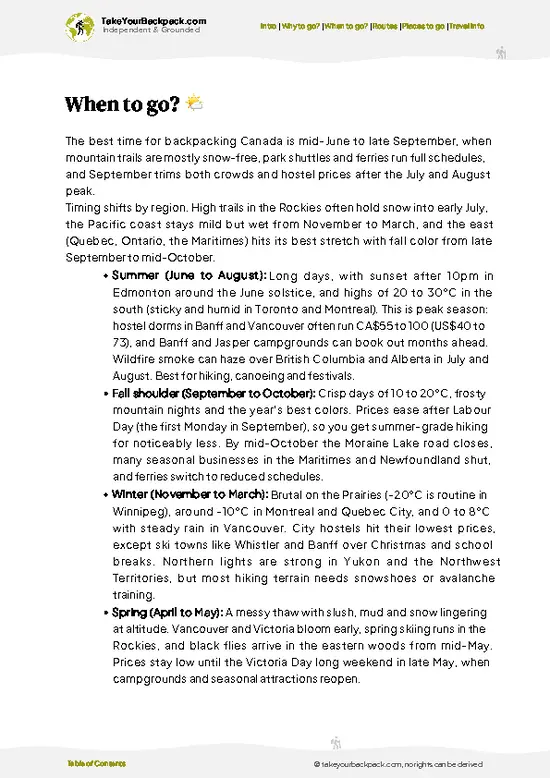
  • Weather: The Maritimes swing from chilly winters (-10°C to -1°C / 14°F to 30°F) to mild summers (15°C to 25°C / 59°F to 77°F). Spring and fall bring unpredictable rain and wind, so pack layers.

  • Temperature: Summer is your sweet spot for warmth without the humidity—think comfortable 20°C to 25°C (68°F to 77°F). Early fall cools down to 10°C-15°C (50°F-59°F), perfect for crisp hikes.

  • Daylight Hours: Long summer days stretch up to 16-17 hours, giving you extra trail time. By late fall, daylight shrinks to 9-10 hours, which means planning your hikes carefully.

  • Crowds: July and August pack the trails and towns with tourists. Shoulder seasons (June and September) offer a quieter vibe without sacrificing too much warmth.

  • Seasonal Activities: Summer is prime for kayaking, whale watching,
read more 👉

  • Weather: The Maritimes swing from chilly winters (-10°C to -1°C / 14°F to 30°F) to mild summers (15°C to 25°C / 59°F to 77°F). Spring and fall bring unpredictable rain and wind, so pack layers.

  • Temperature: Summer is your sweet spot for warmth without the humidity—think comfortable 20°C to 25°C (68°F to 77°F). Early fall cools down to 10°C-15°C (50°F-59°F), perfect for crisp hikes.

  • Daylight Hours: Long summer days stretch up to 16-17 hours, giving you extra trail time. By late fall, daylight shrinks to 9-10 hours, which means planning your hikes carefully.

  • Crowds: July and August pack the trails and towns with tourists. Shoulder seasons (June and September) offer a quieter vibe without sacrificing too much warmth.

  • Seasonal Activities: Summer is prime for kayaking, whale watching, and festivals. Fall turns the forests into fiery color shows and opens up harvest events—think apple picking and seafood feasts.

  • Price Fluctuations: Accommodation and tours spike in high summer. Booking in shoulder seasons can save you 20-30%, plus you dodge the tourist rush.


Pro-tip: Hit the Maritimes in early September—warm days, fewer crowds, and the first hints of fall color make it feel like you’ve got the whole coast to yourself.


source: climatestotravel.comJANJanuary: below average for travelingFEBFebruary: below average for travelingMARMarch: fair for travelingAPRApril: fair for travelingMAYMay: good for travelingJUNJune: highly recommended for travelingJULJuly: good for travelingAUGAugust: good for travelingSEPSeptember: excellent for travelingOCTOctober: highly recommended for travelingNOVNovember: fair for travelingDECDecember: below average for traveling
canada-region-canadian-maritimes
© Google | Chase M

✈️ The backpacker research shortcutCanada Travel Guide

An offline-friendly backpacking guide with optimized travel routes, ranked highlights, transport advice, and the best areas to stay.
example page 0 from our offline Travel Guide for Canada
example page 1 from our offline Travel Guide for Canada
example page 2 from our offline Travel Guide for Canada
example page 3 from our offline Travel Guide for Canada
example page 4 from our offline Travel Guide for Canada
example page 5 from our offline Travel Guide for Canada
example page 6 from our offline Travel Guide for Canada
example page 7 from our offline Travel Guide for Canada
The digital guide (518 pages) contains:
133 highlights, ranked by travel appeal
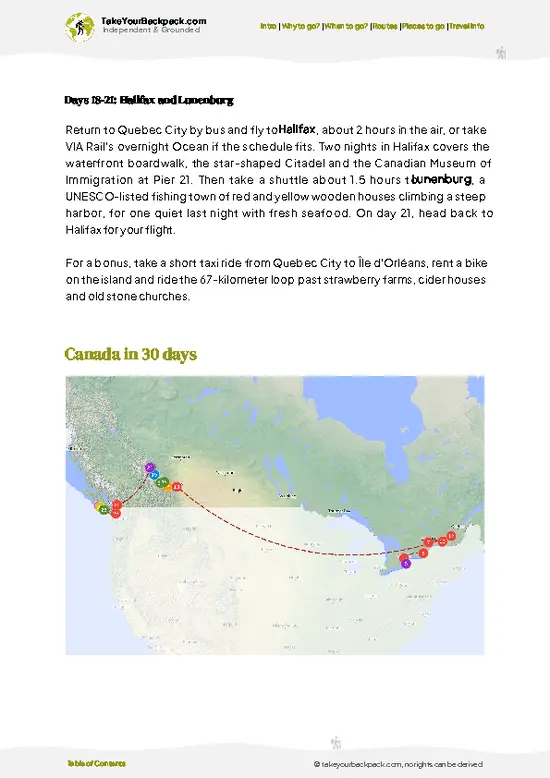
Optimized 14, 21 & 30-day travel routes
Cities, national parks, landmarks, beaches
How to get around
Offline-friendly for travel without Wi-Fi
👉 Click to see all 30+ guide features

📅 Plan smarter in minutes, not weeks
Month by month travel advice
Festivals & national holidays
Budget expectations

🗺️ Go to the right places, skip the overrated ones
Honest pros & cons of destinations
Top hikes, parks & viewpoints
Lesser-known places most travelers miss
Clear “worth it vs skip it” guidance

🛏️ Travel smoothly without rookie mistakes
Best areas to stay
Transport systems explained simply
Common scams & safety advice
SIM cards, money & practical tips

🌍 Understand the country, not just visit it
Culture & traditions
Local customs
Festivals worth planning around
Traveler-friendly historical context
Insights that make places more meaningful

📱 Built for real travel conditions
Fully downloadable PDF
Works completely offline
Optimized for phone use
Useful in remote areas & buses
Everything in one place
Save weeks of stressful planning
Get instant access to your full guide. 30‑day money-back guarantee.


By proceeding you agree to our terms.
Sent to your inbox immediately after payment • 100% Secure Checkout
Best Backpacking Travel Advisor 2025 tourism awardBest Backpacking
Travel Advisor
2025
What others say about Take Your Backpack Guides:
⭐⭐⭐⭐⭐
Fantastic, amazing amount of information!
⭐⭐⭐⭐⭐
My goodness this is amazing, it's what I've been looking for hats off too you!
⭐⭐⭐⭐⭐
I think this is absolutely BRILLIANT
⭐⭐⭐⭐
Very complete and informative. It's still missing places, but I gotta to commend you
⭐⭐⭐⭐⭐
This is truly amazing, thank you, can't wait to explore it with my kids!
⭐⭐⭐⭐⭐
Awesome resource, thank you!
⭐⭐⭐⭐⭐
This is amazing! Can't wait to explore the ones I haven't seen
⭐⭐⭐⭐
I love this! Well done, great idea.
⭐⭐⭐⭐⭐
Thanks for taking the time to make this gem!
⭐⭐⭐⭐⭐
This might be the best website I've ever seen.
⭐⭐⭐⭐⭐
Congratulations, and thank you so much for your work; it's incredibly valuable.
⭐⭐⭐⭐
In all seriousness I think you did a great job pointing out the important spots
⭐⭐⭐⭐⭐
10/10 very good
⭐⭐⭐⭐⭐
As someone who's only just starting to visit regularly this is awesome, thank you.
⭐⭐⭐⭐
Thank you very much! I'm going to visit my dad, it's going to be very useful!
⭐⭐⭐⭐⭐
This is really cool! We'll be travelling for the first time and this definitely come in handy.
⭐⭐⭐⭐⭐
You are now our minister of culture, congratulations 👨‍💼
⭐⭐⭐⭐⭐
Just wanted to tell you that this is a pearl! Going to follow your recommendations.
⭐⭐⭐⭐⭐
This is so cool. I'll definitely be using the resource for my travels soon.
⭐⭐⭐⭐⭐
This is very impressive! Good work.
⭐⭐⭐⭐⭐
This is an amazing and informative site. Very well done!

🛏️ Where to stay?Where staying makes the most sense

In the Canadian Maritimes, you’ve got some stellar options that cater to backpackers looking for safety, social vibes, and budget-friendly experiences.

Start with Halifax, the capital of Nova Scotia. It’s a bustling hub with a vibrant waterfront, packed with bars and cafes where you can easily meet fellow travelers. The historic sites are walkable, and the local music scene is a treat.

Next up, Charlottetown on Prince Edward Island. This charming town is known for its friendly locals and artsy atmosphere. The Confederation Centre of the Arts is a must-see, and the beaches nearby are perfect … read more 👉
In the Canadian Maritimes, you’ve got some stellar options that cater to backpackers looking for safety, social vibes, and budget-friendly experiences.

Start with Halifax, the capital of Nova Scotia. It’s a bustling hub with a vibrant waterfront, packed with bars and cafes where you can easily meet fellow travelers. The historic sites are walkable, and the local music scene is a treat.

Next up, Charlottetown on Prince Edward Island. This charming town is known for its friendly locals and artsy atmosphere. The Confederation Centre of the Arts is a must-see, and the beaches nearby are perfect for a chill day after exploring.

Don’t overlook St. Andrews by-the-Sea in New Brunswick. It’s a quieter spot, but the coastal views are stunning. The town has a laid-back vibe, making it easy to connect with others while enjoying fresh seafood.

Lastly, consider Wolfville, a small town surrounded by vineyards. It’s a hotspot for young travelers, especially during the harvest season. The community is tight-knit, and the local events are a great way to mingle.

Each of these spots offers a unique flavor of the Maritimes, ensuring you’ll have a memorable experience without breaking the bank.

🚌 Getting aroundTransportation options and practical tips

The Canadian Maritimes are a delightful dance of spontaneity and rhythm. Picture this: you’re cruising along the coast, the salty breeze tousling your hair, and the sun dipping low over the Atlantic. Here, schedules are more like suggestions. You can feel the pulse of the region—sometimes it’s a leisurely stroll, other times a mad dash to catch the last ferry. The vibe is relaxed, but don’t mistake that for chaos; it’s a place where intuition guides your journey, and the best experiences often come from following your nose rather than a strict itinerary.


  • Bus Services: Maritime Bus connects major cities like Halifax, Moncton, and Charlottetown. Buses run several times a day, with fares starting around $30. Expect a comfortable ride, but be ready for a few hours of travel—think 2 to 5 hours
read more 👉
The Canadian Maritimes are a delightful dance of spontaneity and rhythm. Picture this: you’re cruising along the coast, the salty breeze tousling your hair, and the sun dipping low over the Atlantic. Here, schedules are more like suggestions. You can feel the pulse of the region—sometimes it’s a leisurely stroll, other times a mad dash to catch the last ferry. The vibe is relaxed, but don’t mistake that for chaos; it’s a place where intuition guides your journey, and the best experiences often come from following your nose rather than a strict itinerary.


  • Bus Services: Maritime Bus connects major cities like Halifax, Moncton, and Charlottetown. Buses run several times a day, with fares starting around $30. Expect a comfortable ride, but be ready for a few hours of travel—think 2 to 5 hours depending on your route.


  • Ferries: The ferry from Saint John to Digby is a must. It operates multiple times daily, with the first sailing around 7 AM and the last around 9 PM. Prices hover around $20 for foot passengers. The ride is about 2 hours, and you’ll be treated to stunning views of the Bay of Fundy.


  • Car Rentals: Renting a car is your golden ticket to freedom. Prices vary, but expect to pay around $50 per day. This option gives you the flexibility to explore hidden coves and charming fishing villages at your own pace. Just remember, the roads can be winding, so take your time.


  • Ride-Sharing: Apps like Uber are available in larger cities like Halifax. Fares are reasonable, typically starting around $10 for short trips. It’s a convenient way to get around without the hassle of parking.


  • Bicycles: If you’re feeling adventurous, consider renting a bike. Many towns offer rentals for about $25 a day. It’s a fantastic way to soak in the scenery, especially along the Confederation Trail.


For a smooth journey across the Maritimes, keep your eyes peeled for local festivals or events. They often come with shuttle services or community rides that can save you money and give you a taste of local life. Embrace the flow, and let the region surprise you!

🍲 FoodEating & Drinking in Canadian Maritimes

In the Canadian Maritimes, food is a celebration of the sea and land. You can’t visit without diving into lobster rolls—sweet, tender meat stuffed into a buttery bun, often enjoyed with a side of crispy fries. Don’t miss the digby scallops, seared to perfection, or the clam chowder that warms you from the inside out, rich and creamy with a hint of smokiness.

For a true local experience, hit up the farmers’ markets. The vibrant stalls overflow with fresh produce, artisanal cheeses, and homemade jams. Grab a beavertail pastry from a street vendor—fried dough topped with cinnamon sugar, it’s a sweet indulgence you’ll crave long after.

When it comes to drinks, sample the local craft beers or a glass of Nova Scotia wine. The region’s vineyards are gaining traction, and sipping a crisp white … read more 👉
In the Canadian Maritimes, food is a celebration of the sea and land. You can’t visit without diving into lobster rolls—sweet, tender meat stuffed into a buttery bun, often enjoyed with a side of crispy fries. Don’t miss the digby scallops, seared to perfection, or the clam chowder that warms you from the inside out, rich and creamy with a hint of smokiness.

For a true local experience, hit up the farmers’ markets. The vibrant stalls overflow with fresh produce, artisanal cheeses, and homemade jams. Grab a beavertail pastry from a street vendor—fried dough topped with cinnamon sugar, it’s a sweet indulgence you’ll crave long after.

When it comes to drinks, sample the local craft beers or a glass of Nova Scotia wine. The region’s vineyards are gaining traction, and sipping a crisp white while overlooking the vineyards is a must.

Dining here is casual. Don’t be surprised if you find yourself sharing a table with locals at a small café. Embrace the slow pace; meals are meant to be savored, not rushed. Remember, it’s all about the experience, so dig in and enjoy the flavors of the Maritimes!

Other Canadian regions near Canadian Maritimes

Explore more nearby:


💡 Not sure where to go next?
Create a personalized itinerary for Canada including Canadian Maritimes and the places that fit your trip.

Generate my itinerary

👉 Discover all regions

Or checkout all Canada has to offer (think cities, towns, villages, national parks, hikes, beaches, festivals)
Country photo of Canada

We 💚 feedbackIs it worth it?

The Canadian Maritimes are a treasure trove of coastal charm and raw beauty. Picture this: fresh lobster rolls and the sound of waves crashing against rugged cliffs. But here’s the kicker—getting around can be a slog. Public transport is sparse, so you might end up renting a car. Embrace the slower pace; it’s part of the experience. Just know that the journey is as much about the views as it is about the time spent getting there.

✈️ When did I visit Canada?
As part of my 1.5 year travel around the world trip, I visited Canada in 2016.

✍️ Help improve this page!
The information on this page is based on my own backpacking experience in Canada, supplemented with up-to-date research and feedback from other travelers. Travel details can change, so if you notice anything outdated or incomplete, feel free to let me know.


🙋‍♂️ Give feedback

👋 Meet the founderWho’s Behind Take Your Backpack?

Johan, backpacker and founder of TakeYourBackpackHi, I’m Johan (Netherlands 🇳🇱), the creator of TakeYourBackpack. Over the past decade, I’ve backpacked through 80+ countries across six continents, gaining extensive experience with independent travel, long-term trips, and overland routes.

This site is built on a combination of firsthand travel experience and carefully curated insights from other backpackers. Many guides are based on places I’ve personally visited, while others bring together tips, observations, and practical advice shared by trusted travelers I’ve met along the way.

The goal is to provide realistic, experience-driven guidance — not generic itineraries — so you can explore destinations with better context, clearer expectations, and more confidence.

Get full Canada guide •
Instant download • 133 highlights • Full Offline guide