×

Canada🇨🇦 | regionsCanadian PrairiesShort-grass prairie, coulees, rock art, bison | things to do and best time to go

Explore Canadian MaritimesExplore Canadian Rockies

Backpacking in Canadian Prairies
👀 For curious travelersregion ranked #11
By Johan Kruseman 🇳🇱 | Updated October 22, 2026

The Prairies are not flat; the land rolls, folds into coulees, and drops into river valleys. The region sits across southern Saskatchewan, Alberta and Manitoba in western Canada, around the 50th parallel. Grain elevators stand like lighthouses, canola blazes yellow, and wind hisses through wheat with a sound like static. It is thin on crowds and big on sky, though distances are long and towns can feel closed by evening. I once trusted my gas gauge on a gravel grid road and coasted into a silent hamlet on fumes. Now I fill up whenever the tank hits half. Services are sparse, so book ahead and carry water.

Discover everything you want to know in the 📖 Canada Travel Guide.


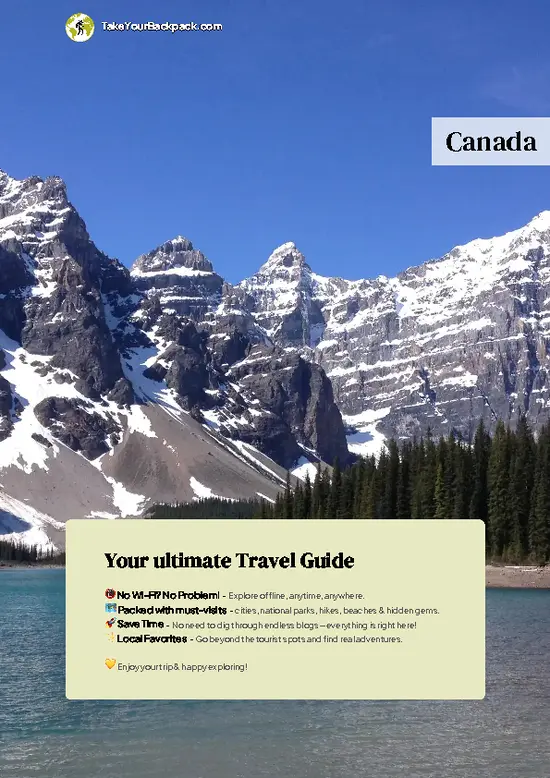
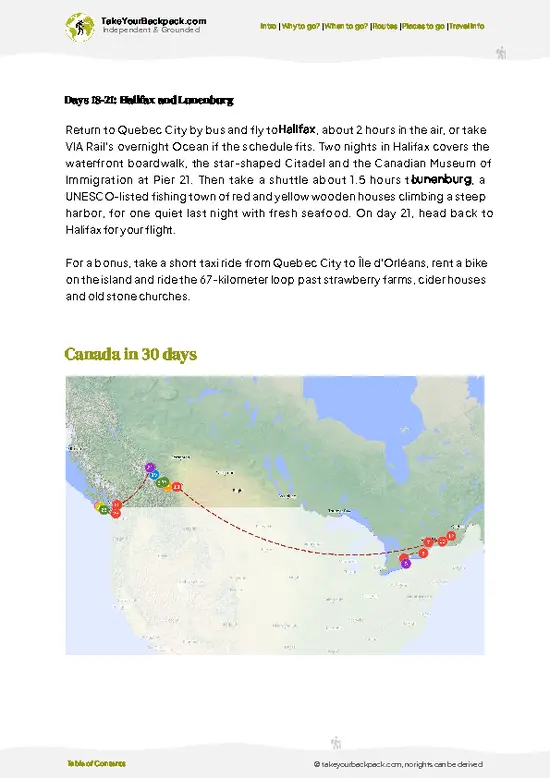
example page 0 from our offline Travel Guide for Canada
example page 1 from our offline Travel Guide for Canada
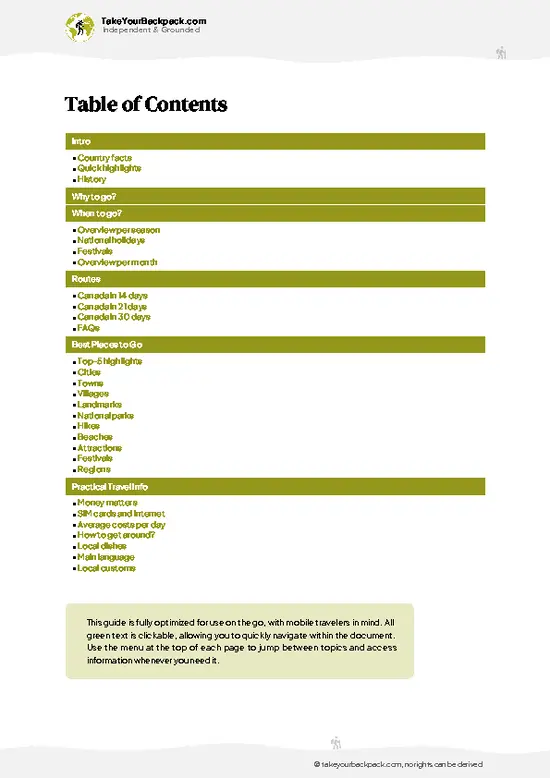
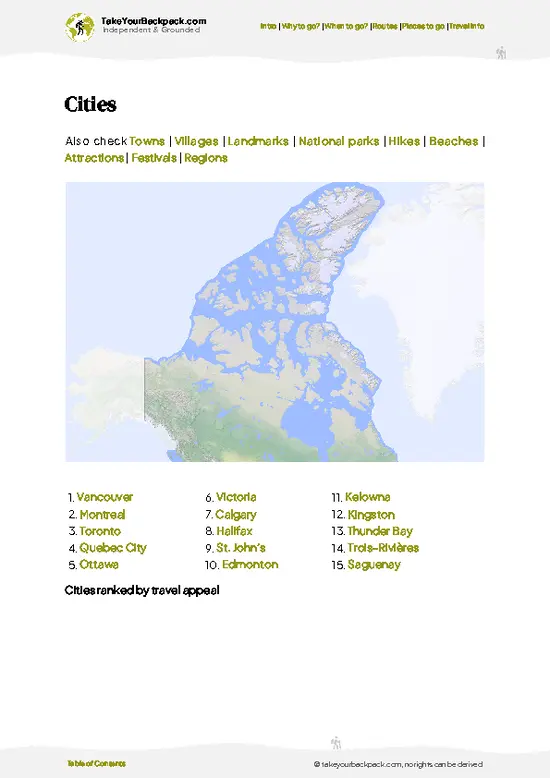
example page 2 from our offline Travel Guide for Canada
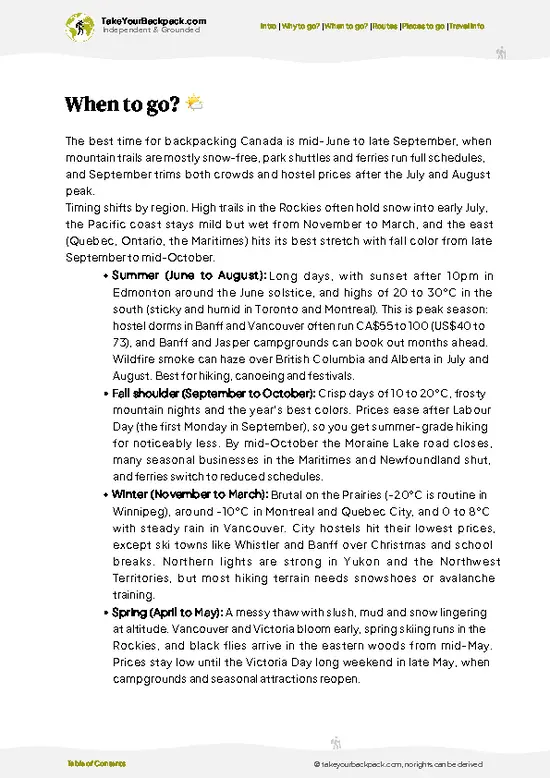
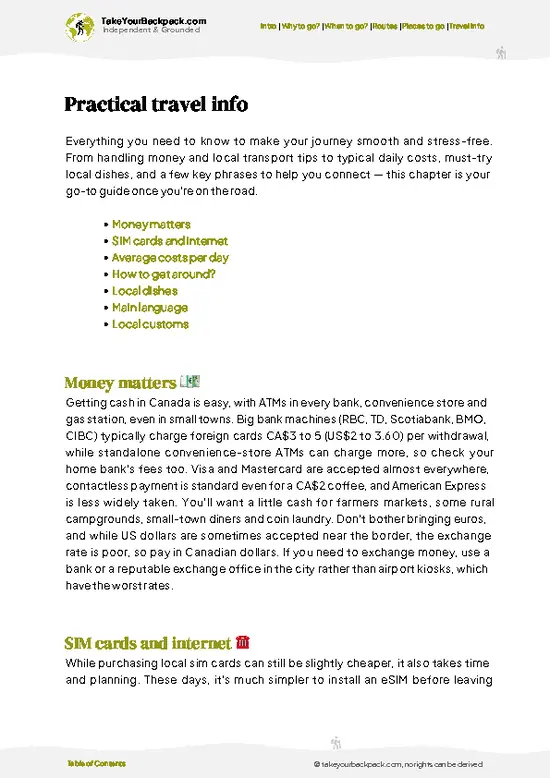
example page 3 from our offline Travel Guide for Canada
example page 4 from our offline Travel Guide for Canada
example page 5 from our offline Travel Guide for Canada
example page 6 from our offline Travel Guide for Canada
example page 7 from our offline Travel Guide for Canada
Loading the map 🌍
CLICK TO FILTER
cities
towns
villages
landmarks
national parks
hikes
beaches
attractions
festivals
regions
SHOW COUNTRY’S BESTSHOW ALL

✨ Why go?
Ranked #11 region in Canada
The unique appeal for travelers

Canadian Prairies rewards backpackers who like space, and two or three reasons carry the case. First, the landscape changes sharply without much travel: Grasslands National Park offers dark skies and bison, while Cypress Hills rises as forested upland out of open plains. Second, the culture is layered and easy to meet. Indigenous heritage sites, Ukrainian and Mennonite villages, and Mountie history sit close together, so you can follow one thread for days at a slow pace. Third, flexibility. Rental cars, long-distance buses and a few rail links let you drop a plan when a town turns out to be good. Add festivals, quiet campsites and farm-town diners, and you get real prairie life, not a staged version.

💡 HighlightsWhat this place is best known for

  1. Grasslands National Park, Saskatchewan. Two blocks of mixed-grass prairie in the south of the province, with black-tailed prairie dog towns, plains bison and some of the darkest skies in Canada. The 70 Mile Butte trail and the Frenchman River Valley are the easy walks. Park entry is about US$5 to 6 for an adult day pass.
  2. Wanuskewin Heritage Park, Saskatoon. A working archaeological site on the South Saskatchewan River where Northern Plains peoples gathered for about 6,000 years. You walk bison-jump and tipi ring sites, and the café serves Indigenous dishes.
  3. Royal Tyrrell Museum, Drumheller. One of the world's great dinosaur collections, set in the Alberta Badlands. The skeleton halls are dark, cool and enormous. Expect to spend three hours.
  4. Dinosaur Provincial Park, Alberta. A UNESCO site of
… read more 👉
  1. Grasslands National Park, Saskatchewan. Two blocks of mixed-grass prairie in the south of the province, with black-tailed prairie dog towns, plains bison and some of the darkest skies in Canada. The 70 Mile Butte trail and the Frenchman River Valley are the easy walks. Park entry is about US$5 to 6 for an adult day pass.
  2. Wanuskewin Heritage Park, Saskatoon. A working archaeological site on the South Saskatchewan River where Northern Plains peoples gathered for about 6,000 years. You walk bison-jump and tipi ring sites, and the café serves Indigenous dishes.
  3. Royal Tyrrell Museum, Drumheller. One of the world's great dinosaur collections, set in the Alberta Badlands. The skeleton halls are dark, cool and enormous. Expect to spend three hours.
  4. Dinosaur Provincial Park, Alberta. A UNESCO site of hoodoos and coulees where fossil beds sit exposed in the ground. Join a guided bus or hike to enter the restricted areas.
  5. Forks National Historic Site, Winnipeg. The meeting of the Red and Assiniboine Rivers has been a trading place for thousands of years. Today it holds a market hall, river paths and the Canadian Museum for Human Rights next door.
  6. Cypress Hills Interprovincial Park. A forested plateau straddling the Alberta and Saskatchewan border, standing well above the surrounding plains. Lodgepole pine, elk, and a dark sky preserve make it a cool, quiet change from the flat country around it.
  7. Riding Mountain National Park, Manitoba. Aspen forest, lakes and an enclosure of plains bison at Lake Audy, about 45 minutes from Wasagaming. Rent a canoe on Clear Lake at Wasagaming.
  8. Moose Jaw Tunnels and Temple Gardens Mineral Spa. Moose Jaw has Prohibition-era tunnel tours and a hot mineral pool open year-round, a good place to soak after dusty roads.
  9. Writing-on-Stone / Áísínai'pi, Alberta. A sacred Blackfoot landscape of sandstone hoodoos along the Milk River, carved with thousands of petroglyphs. The guided tour is the way in to the main rock art area.
  10. Reesor Lake and Maple Creek town. Maple Creek is a small ranching town with old brick storefronts and saloon-style bars. Locals use it as a gateway to Cypress Hills and the back roads around it, and few outsiders linger.
Grasslands National Park and Cypress Hills make a good combination in one day, pairing open prairie in the morning with the cooler forested highlands in the afternoon.
Spotted a mistake or missing something? Contact us.

⌛️ 5 days5-day itinerary for Canadian Prairies

Day 1: Drumheller: Start at the Royal Tyrrell Museum, the one stop not to skip, then walk among the hoodoos. Fly into Calgary and rent a car, because buses between prairie towns are infrequent and the car sets your pace.
Day 2: Head-Smashed-In and Writing-on-Stone: Head south through ranch country. The buffalo jump explains how the plains economy worked, and the rock art ties it to a living culture. Fill the tank in every town you pass.
Day 3: Cypress Hills: Cross into Saskatchewan and slow down. Hike, camp and watch for elk. Services are few, so shop beforehand.
Day 4: Grasslands National Park: Detour south to the park's West Block for bison, badlands and a night sky that feels close enough to touch. It adds a lot and sits near the route.
Day 5: Moose Jaw: Finish with the tunnels and a mineral … read more 👉
Day 1: Drumheller: Start at the Royal Tyrrell Museum, the one stop not to skip, then walk among the hoodoos. Fly into Calgary and rent a car, because buses between prairie towns are infrequent and the car sets your pace.
Day 2: Head-Smashed-In and Writing-on-Stone: Head south through ranch country. The buffalo jump explains how the plains economy worked, and the rock art ties it to a living culture. Fill the tank in every town you pass.
Day 3: Cypress Hills: Cross into Saskatchewan and slow down. Hike, camp and watch for elk. Services are few, so shop beforehand.
Day 4: Grasslands National Park: Detour south to the park's West Block for bison, badlands and a night sky that feels close enough to touch. It adds a lot and sits near the route.
Day 5: Moose Jaw: Finish with the tunnels and a mineral soak, with Regina's airport as your exit.

My pick for the day that justifies the trip is Day 4, when the grasslands go quiet and the stars come out.

🌤️ When to go?Best time to visit Canadian Prairies

July and August are the warmest and busiest months across the Canadian Prairies, and also the most expensive for lodging and campsites.
  • Summer (June to August): Highs run 23 to 30°C (73 to 86°F), with thunderstorms and long evenings for hiking, canoeing and festivals. Campgrounds in Grasslands National Park and Cypress Hills fill up on weekends.
  • Fall (September to October): Highs of 8 to 18°C (46 to 64°F), golden aspen groves, migrating geese and lower rates.
  • Winter (November to March): Highs of -5 to -20°C (23 to -4°F), with cold snaps lower still, short days, aurora viewing and cheap rooms, but road closures happen.
  • Spring (April to May): 5 to 18°C (41 to 64°F), muddy trails, prairie crocus blooms and few visitors.
Book summer campsites several weeks ahead, or visit in early September for warm days and empty trails.

source: climatestotravel.comJANJanuary: below average for travelingFEBFebruary: below average for travelingMARMarch: fair for travelingAPRApril: good for travelingMAYMay: highly recommended for travelingJUNJune: excellent for travelingJULJuly: highly recommended for travelingAUGAugust: highly recommended for travelingSEPSeptember: excellent for travelingOCTOctober: good for travelingNOVNovember: fair for travelingDECDecember: below average for traveling
when-to-go

✈️ The backpacker research shortcutCanada Travel Guide

An offline-friendly backpacking guide with optimized travel routes, ranked highlights, transport advice, and the best areas to stay.
example page 0 from our offline Travel Guide for Canada
example page 1 from our offline Travel Guide for Canada
example page 2 from our offline Travel Guide for Canada
example page 3 from our offline Travel Guide for Canada
example page 4 from our offline Travel Guide for Canada
example page 5 from our offline Travel Guide for Canada
example page 6 from our offline Travel Guide for Canada
example page 7 from our offline Travel Guide for Canada
The digital guide (385 pages) contains:
✅ 125 highlights, ranked by travel appeal
✅ Optimized 14, 21 & 30-day travel routes
✅ Cities, national parks, landmarks, beaches
✅ How to get around
✅ Offline-friendly for travel without Wi-Fi
👉 Click to see all 30+ guide features

📅 Plan smarter in minutes, not weeks
✅ Month by month travel advice
✅ Festivals & national holidays
✅ Budget expectations

🗺️ Go to the right places, skip the overrated ones
✅ Honest pros & cons of destinations
✅ Top hikes, parks & viewpoints
✅ Lesser-known places most travelers miss
✅ Clear “worth it vs skip it” guidance

🛏️ Travel smoothly without rookie mistakes
✅ Best areas to stay
✅ Transport systems explained simply
✅ Common scams & safety advice
✅ SIM cards, money & practical tips

🌍 Understand the country, not just visit it
✅ Culture & traditions
✅ Local customs
✅ Festivals worth planning around
✅ Traveler-friendly historical context
✅ Insights that make places more meaningful

📱 Built for real travel conditions
✅ Fully downloadable PDF
✅ Works completely offline
✅ Optimized for phone use
✅ Useful in remote areas & buses
✅ Everything in one place
Stop searching, start planning
Get instant access to your full guide. 30‑day money-back guarantee.
+ Add another guide for just

By proceeding you agree to our terms.
Sent to your inbox immediately after payment • 100% Secure Checkout
Best Backpacking Travel Advisor 2025 tourism awardBest Backpacking
Travel Advisor
2025
What others say about Take Your Backpack Guides:
⭐⭐⭐⭐⭐
Fantastic, amazing amount of information!
⭐⭐⭐⭐⭐
My goodness this is amazing, it's what I've been looking for hats off too you!
⭐⭐⭐⭐⭐
I think this is absolutely BRILLIANT
⭐⭐⭐⭐
Very complete and informative. It's still missing places, but I gotta to commend you
⭐⭐⭐⭐⭐
This is truly amazing, thank you, can't wait to explore it with my kids!
⭐⭐⭐⭐⭐
Awesome resource, thank you!
⭐⭐⭐⭐⭐
This is amazing! Can't wait to explore the ones I haven't seen
⭐⭐⭐⭐
I love this! Well done, great idea.
⭐⭐⭐⭐⭐
Thanks for taking the time to make this gem!
⭐⭐⭐⭐⭐
This might be the best website I've ever seen.
⭐⭐⭐⭐⭐
Congratulations, and thank you so much for your work; it's incredibly valuable.
⭐⭐⭐⭐
In all seriousness I think you did a great job pointing out the important spots
⭐⭐⭐⭐⭐
10/10 very good
⭐⭐⭐⭐⭐
As someone who's only just starting to visit regularly this is awesome, thank you.
⭐⭐⭐⭐
Thank you very much! I'm going to visit my dad, it's going to be very useful!
⭐⭐⭐⭐⭐
This is really cool! We'll be travelling for the first time and this definitely come in handy.
⭐⭐⭐⭐⭐
You are now our minister of culture, congratulations 👨‍💼
⭐⭐⭐⭐⭐
Just wanted to tell you that this is a pearl! Going to follow your recommendations.
⭐⭐⭐⭐⭐
This is so cool. I'll definitely be using the resource for my travels soon.
⭐⭐⭐⭐⭐
This is very impressive! Good work.
⭐⭐⭐⭐⭐
This is an amazing and informative site. Very well done!

🛏️ Where to stay?How to pick the right area

Saskatoon is the best base for most backpackers, with a walkable river valley, a lively Broadway district and a few budget guesthouses. The riverside trails and café scene make it easy to meet other travelers, and it is the main gateway to Prince Albert National Park.
Regina is quieter but safe, with a compact downtown, Wascana Park and good value for a night or two before heading to Grasslands or Cypress Hills.
Winnipeg suits a longer stay. The Exchange District has historic buildings, bars and live music, while The Forks market is a natural meeting spot. Beds run US$30 to 65.
Medicine Hat and Swift … read more 👉
Saskatoon is the best base for most backpackers, with a walkable river valley, a lively Broadway district and a few budget guesthouses. The riverside trails and café scene make it easy to meet other travelers, and it is the main gateway to Prince Albert National Park.
Regina is quieter but safe, with a compact downtown, Wascana Park and good value for a night or two before heading to Grasslands or Cypress Hills.
Winnipeg suits a longer stay. The Exchange District has historic buildings, bars and live music, while The Forks market is a natural meeting spot. Beds run US$30 to 65.
Medicine Hat and Swift Current work as stopovers, and Moose Jaw is a pleasant overnight with its tunnels and spa. In the countryside, small towns like Maple Creek offer simple lodging and campsites near the hills, though evenings are quiet and you will want your own transport.

🚌 Getting aroundGetting around like a local

From Regina’s or Saskatoon’s downtown bus depot, a local city bus or a 10 to 20 minute walk or short taxi ride (about US$8 to 15) gets you to the center, because prairie cities are low and spread out along grid streets. Across the Canadian Prairies, distances are huge and public transit is thin, so most backpackers combine a few long-haul buses with a rented car or shared rides. Reliability is decent on main highways and poor in small towns.
  • Intercity buses: Service on the Trans-Canada corridor is limited, with Rider Express running Calgary to Regina to Winnipeg for roughly US$50 to 110 each way. Routes are sparse because the population is small, so book online and check schedules, as many towns see only one bus a day or none.
  • Rental car: Roughly US$45 to 90 a day. Grasslands, Cypress Hills
… read more 👉
From Regina’s or Saskatoon’s downtown bus depot, a local city bus or a 10 to 20 minute walk or short taxi ride (about US$8 to 15) gets you to the center, because prairie cities are low and spread out along grid streets. Across the Canadian Prairies, distances are huge and public transit is thin, so most backpackers combine a few long-haul buses with a rented car or shared rides. Reliability is decent on main highways and poor in small towns.
  • Intercity buses: Service on the Trans-Canada corridor is limited, with Rider Express running Calgary to Regina to Winnipeg for roughly US$50 to 110 each way. Routes are sparse because the population is small, so book online and check schedules, as many towns see only one bus a day or none.
  • Rental car: Roughly US$45 to 90 a day. Grasslands, Cypress Hills and Riding Mountain are nearly unreachable otherwise, so split the cost with other travelers. Fuel stations can be 100 km (60 miles) apart, so fill up often. Expect wind that rocks the car, canola fields that smell sharp and sweet, and horizons that never seem to close.
  • Train: VIA Rail’s Canadian runs Toronto to Vancouver through Winnipeg, Saskatoon and Edmonton twice a week. Fares are high (from about US$250 for a segment) and arrivals often come in the middle of the night, so it suits scenery fans more than budget hoppers.
  • Rideshare and hitching: Carpool groups on social media link Calgary, Saskatoon and Winnipeg for US$20 to 50 a seat. Hitching is uncommon and slow on empty highways.
Fix your route around two or three bases, rent from the one with the cheapest pickup, and drive at dawn or evening to avoid wildlife on the road and glare off the flat horizon.

🍲 FoodWhat to Eat & Drink

Start with Saskatoon berry pie, tart and purple, served warm with vanilla ice cream. Perogies with fried onions and sour cream, cabbage rolls and bannock reflect Ukrainian and Indigenous traditions across the Canadian Prairies, and a Winnipeg Goldeye or fresh pickerel from a lake is worth a try. Wheat country also means excellent bread and a growing craft-beer scene, and Prairie Berry fruit wines are a local novelty.
For eating cheaply, head to farmers’ markets on Saturday mornings, diners serving big breakfasts for US$8 to 14 and small-town Ukrainian church suppers in summer. Expect smoky barbecue, thick coffee and chatty servers. Beef is a staple, so a steak sandwich is a fair splurge.
Tipping 15 to 20 percent is expected at sit-down places, and tax is added at the till. Many small towns close … read more 👉
Start with Saskatoon berry pie, tart and purple, served warm with vanilla ice cream. Perogies with fried onions and sour cream, cabbage rolls and bannock reflect Ukrainian and Indigenous traditions across the Canadian Prairies, and a Winnipeg Goldeye or fresh pickerel from a lake is worth a try. Wheat country also means excellent bread and a growing craft-beer scene, and Prairie Berry fruit wines are a local novelty.
For eating cheaply, head to farmers’ markets on Saturday mornings, diners serving big breakfasts for US$8 to 14 and small-town Ukrainian church suppers in summer. Expect smoky barbecue, thick coffee and chatty servers. Beef is a staple, so a steak sandwich is a fair splurge.
Tipping 15 to 20 percent is expected at sit-down places, and tax is added at the till. Many small towns close kitchens by 8 or 9 p.m., so eat early and stock up on groceries before long drives.

FAQTraveler FAQ

Plan 7 to 10 days to see the main highlights of the Canadian Prairies, though a long weekend covers a single city such as Saskatoon or Winnipeg. A week lets you visit Winnipeg, Regina and Saskatoon with a day in Grasslands or Cypress Hills. Add 3 to 4 days if you want Riding Mountain or Prince Albert National Park, since drives between them can take 4 to 6 hours.
Getting around the Canadian Prairies without a car relies on intercity buses, VIA Rail’s Canadian and carpool boards. Rider Express buses connect Calgary, Regina and Winnipeg for roughly US$50 to 110 one way, and rideshare seats cost US$20 to 50. Parks and small towns are hard to reach this way, so plan around cities and use tours or shuttles for outdoor stops.
The Canadian Prairies are known for endless wheat and canola fields, enormous skies, and sunsets and northern lights. Grasslands National Park offers bison, dark skies and rugged badlands, while Winnipeg has the Canadian Museum for Human Rights and The Forks. Cities such as Saskatoon and Regina add festivals, Ukrainian food and summer events, with Calgary and Edmonton on the western edge.
⚠️ Things can change over time, so always validate details locally before you go.

Other Canadian regions near Canadian Prairies

Explore more nearby:

  • Icefields Parkway—Athabasca toe, roadside canyons, Wilcox Pass, Weeping Wall| 821 km away
  • Okanagan Valley—Kettle Valley trestles, lakeside vineyards, semi-desert, rock climbing| 964 km away
  • Canadian Rockies—Turquoise lakes, glacier hikes, Berg Lake, fossil beds| 971 km away

💡 Not sure where to go next?
Create a personalized itinerary for Canada including Canadian Prairies and the places that fit your trip.

Generate my itinerary

👉 Discover all regions

Or checkout all Canada has to offer (think cities, towns, villages, national parks, hikes, beaches, festivals)
Country photo of Canada

We 💚 feedbackFinal thoughts on visiting Canadian Prairies

Canadian Prairies suits about five to seven days, long enough for two or three parks and a prairie town without rushing the drives. I would skip squeezing in the mountains and spend that time on Grasslands and Cypress Hills instead. Pack extra water, and rent a car with a full-size spare.

✈️ When did I visit Canada?
As part of my 1.5 year travel around the world trip, I visited Canada in 2016.

✍️ Help improve this page!
The information on this page is based on my own backpacking experience in Canada, supplemented with up-to-date research and feedback from other travelers. Travel details can change, so if you notice anything outdated or incomplete, feel free to let me know.


🙋‍♂️ Give feedback

👋 Meet the founderWho’s Behind Take Your Backpack?

Johan, backpacker and founder of TakeYourBackpackHi, I’m Johan (Netherlands 🇳🇱), the creator of TakeYourBackpack. Over the past 3 decades, I’ve backpacked through 90+ countries across six continents, gaining extensive experience with independent travel, long-term trips, and overland routes.

This site is built on a combination of firsthand travel experience and carefully curated insights from other backpackers. Many guides are based on places I’ve personally visited, while others bring together tips, observations, and practical advice shared by trusted travelers I’ve met along the way.

The goal is to provide realistic, experience-driven guidance — not generic itineraries — so you can explore destinations with better context, clearer expectations, and more confidence.