×

Canada🇨🇦 | regionsCape Breton IslandHighland headlands, Gaelic fiddles, Pollett’s Cove, inland sea | things to do and best time to go

Explore Canadian RockiesExplore Icefields Parkway

Backpacking in Cape Breton Island
👍 Recommendedregion ranked #5
By Johan Kruseman 🇳🇱 | Updated October 22, 2026

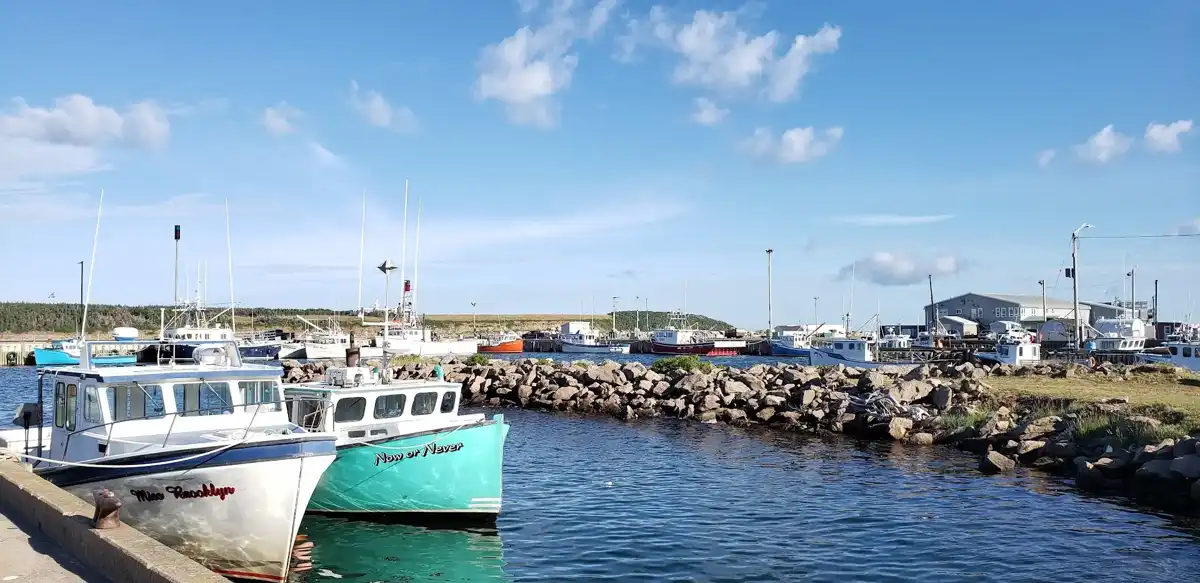
The Cabot Trail is why most people come, a 298-kilometer loop where the road clings to cliffs above the Gulf of St. Lawrence. What gets overlooked is the music: kitchen parties and pub sessions in Mabou, Judique and Chéticamp keep Gaelic and Acadian fiddling alive. Cape Breton Island sits in Canada’s Nova Scotia, reached by the Canso Causeway. I came in on a rental car because buses barely exist here, and at the causeway a sudden smell of kelp and diesel hit as a fiddle tune leaked from a gas station radio. Renting costs more money but saves days of waiting, and for a backpacker it wins over hitching, which is slow and unreliable. Summer brings crowds and pricey beds. Hikers and music lovers will be happy here; anyone wanting nightlife or transit will not.

Discover everything you want to know in the 📖 Canada Travel Guide.


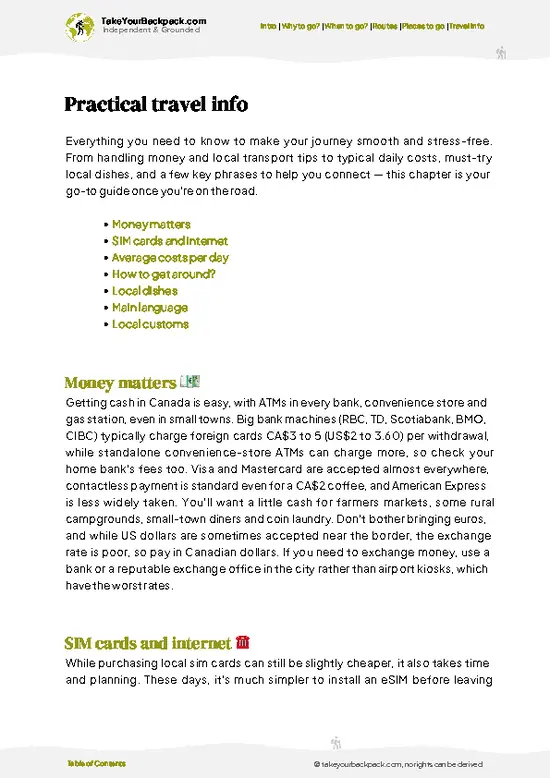
example page 0 from our offline Travel Guide for Canada
example page 1 from our offline Travel Guide for Canada
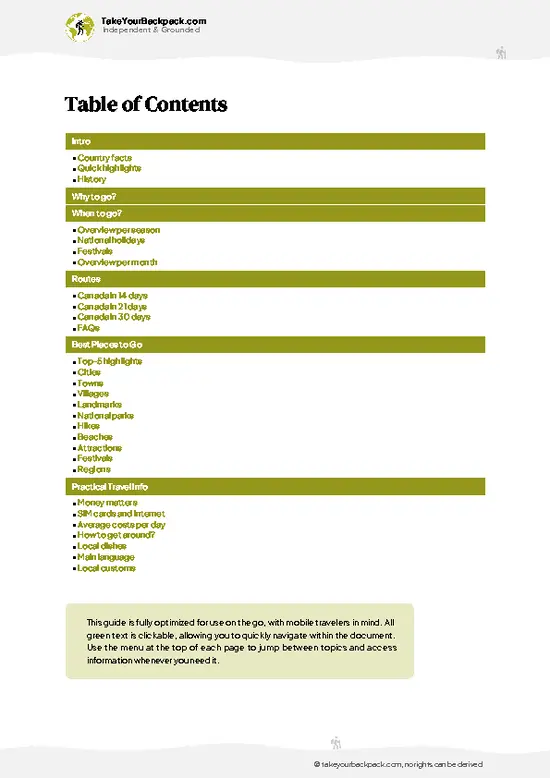
example page 2 from our offline Travel Guide for Canada
example page 3 from our offline Travel Guide for Canada
example page 4 from our offline Travel Guide for Canada
example page 5 from our offline Travel Guide for Canada
example page 6 from our offline Travel Guide for Canada
example page 7 from our offline Travel Guide for Canada
Loading the map 🌍
CLICK TO FILTER
cities
towns
villages
landmarks
national parks
hikes
beaches
attractions
festivals
regions
SHOW COUNTRY’S BESTSHOW ALL

✨ Why go?
Ranked #5 region in Canada
Why visitors keep coming back

Cape Breton Island packs highland hiking, sea kayaking and living folk culture into one drivable loop, so you rarely need to repack your bag for a new scenery. The Cabot Trail links trailheads like Skyline and Franey within a day’s slow driving, and the coast stays in view almost the whole way. Culture comes without a ticket: Chéticamp is Acadian, with hooked rugs and fiddle, while Mabou is Scottish Gaelic, with pub sessions most summer nights. Moving slowly suits the place. Campgrounds sit at the edge of the park, small villages sell lobster rolls from roadside shacks, and you can mix a morning hike with an evening session without rushing anywhere. Moose, bald eagles and pilot whales are common enough that you will plan around them.

💡 HighlightsPlaces and moments you shouldn't skip

  1. Cabot Trail: the signature coastal loop through Cape Breton Highlands National Park, with switchbacks, ocean drops and moose at dusk.
  2. Skyline Trail: a flat 7.5-kilometer out-and-back to a headland boardwalk above the sea, best early to avoid crowds.
  3. Fortress of Louisbourg: a reconstructed 1740s French fortress with costumed staff, cooking fires and cannon fire.
  4. Alexander Graham Bell Museum, Baddeck: Bell’s inventions, kites and hydrofoil hull, beside the Bras d’Or Lake.
  5. Celtic Colours and Mabou Ceilidh: the Red Shoe Pub in Mabou runs live Celtic music, a local favorite for dancing and Gaelic songs.
  6. Franey Trail: a steep climb above Ingonish with a lookout over the Clyburn Valley and the coast.
  7. Meat Cove: a remote fishing hamlet at the island’s northern tip, with a cliffside campground and whale
… read more 👉
  1. Cabot Trail: the signature coastal loop through Cape Breton Highlands National Park, with switchbacks, ocean drops and moose at dusk.
  2. Skyline Trail: a flat 7.5-kilometer out-and-back to a headland boardwalk above the sea, best early to avoid crowds.
  3. Fortress of Louisbourg: a reconstructed 1740s French fortress with costumed staff, cooking fires and cannon fire.
  4. Alexander Graham Bell Museum, Baddeck: Bell’s inventions, kites and hydrofoil hull, beside the Bras d’Or Lake.
  5. Celtic Colours and Mabou Ceilidh: the Red Shoe Pub in Mabou runs live Celtic music, a local favorite for dancing and Gaelic songs.
  6. Franey Trail: a steep climb above Ingonish with a lookout over the Clyburn Valley and the coast.
  7. Meat Cove: a remote fishing hamlet at the island’s northern tip, with a cliffside campground and whale watching from shore.
  8. Celtic Music Interpretive Centre, Judique: a music centre on the Ceilidh Trail with ceilidhs, fiddle workshops and local players sitting in on tunes.
  9. Uisge Ban Falls: a quiet waterfall in a maple glen near Baddeck, reached by a short forest walk that most drivers skip.
  10. Lake O’Law Provincial Park: a quiet lakeside stop on the inland stretch of the Cabot Trail near the Margaree Valley, with picnic tables.
Cape Breton Island’s cheapest highlights are Uisge Ban Falls and Lake O’Law, both free to visit.
Spotted a mistake or missing something? Contact us.

Things to do near Cape Breton Island

Ratings based on Tripadvisor reviews. When you book through this link, you support our work at no extra cost to you.

⌛️ 5 daysHow to make the most of Cape Breton Island

This is a driving-and-hiking stretch, shaped by the lack of public transit, so a car sets the pace.
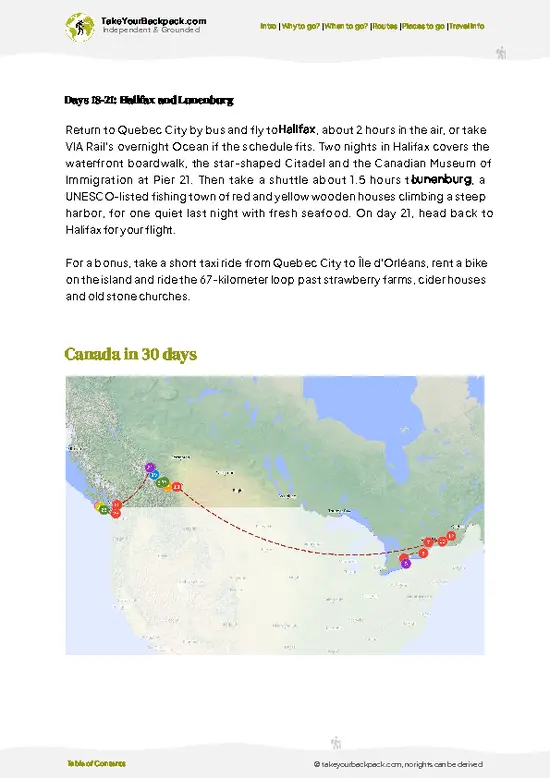
Day 1: Baddeck: Start where Bell worked and sailed on Bras d’Or Lake. Baddeck is the natural gateway to the Cabot Trail, with groceries, a good museum and the quiet falls nearby for a gentle first afternoon.
Day 2: Chéticamp: Drive the western side of the loop to Acadian country. Stop at lookouts as the road climbs, then settle in for seafood and an evening of fiddle music. Booking ahead matters in summer because beds vanish fast.
Day 3: Cape Breton Highlands National Park: Spend the day on the Skyline Trail early, then move on to Franey if your legs allow. The park puts trailheads close together, so you hike twice without extra driving.
Day 4: Meat Cove: The detour north is a slow, unpaved stretch, … read more 👉
This is a driving-and-hiking stretch, shaped by the lack of public transit, so a car sets the pace.
Day 1: Baddeck: Start where Bell worked and sailed on Bras d’Or Lake. Baddeck is the natural gateway to the Cabot Trail, with groceries, a good museum and the quiet falls nearby for a gentle first afternoon.
Day 2: Chéticamp: Drive the western side of the loop to Acadian country. Stop at lookouts as the road climbs, then settle in for seafood and an evening of fiddle music. Booking ahead matters in summer because beds vanish fast.
Day 3: Cape Breton Highlands National Park: Spend the day on the Skyline Trail early, then move on to Franey if your legs allow. The park puts trailheads close together, so you hike twice without extra driving.
Day 4: Meat Cove: The detour north is a slow, unpaved stretch, but it adds cliffs, whales and a camping view that no resort offers. Return in time to sleep near Ingonish.
Day 5: Louisbourg: Finish on the Atlantic side at the fortress, where cooking smoke and costumed guides turn history into something you can smell.
If you only have one day to justify the trip, make it Day 3, because the early Skyline light over the Gulf is the reason the island is famous.

🌤️ When to go?Choosing the right time of year

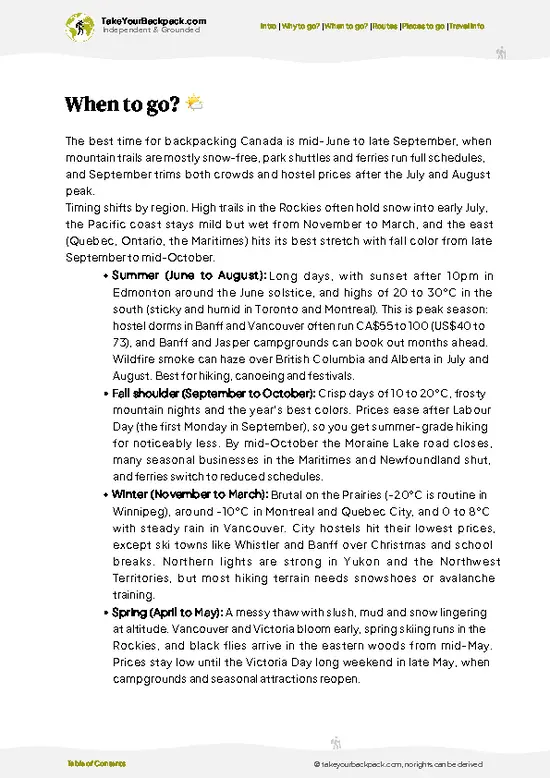
July through September is the window for Cape Breton Island, with the Cabot Trail fully open and the ocean warm enough for a quick swim at Inverness. Here is how the year breaks down.
  • Summer (July to August): Highs run 22 to 25°C (72 to 77°F), nights about 13 to 15°C (55 to 59°F). Daylight lasts roughly 15 hours. Campgrounds in Cape Breton Highlands National Park fill up, and rooms cost the most, often 30 to 50 percent above spring rates. Celtic Colours is not yet on, but kitchen parties and ceilidhs run nightly.
  • Fall (September to October): Highs sit at 12 to 20°C (54 to 68°F). The maples turn red and orange along the Cabot Trail by early to mid October, and Celtic Colours International Festival packs the island's halls that month. Book ahead, since beds vanish.
  • Winter (November to April): Highs
… read more 👉
July through September is the window for Cape Breton Island, with the Cabot Trail fully open and the ocean warm enough for a quick swim at Inverness. Here is how the year breaks down.
  • Summer (July to August): Highs run 22 to 25°C (72 to 77°F), nights about 13 to 15°C (55 to 59°F). Daylight lasts roughly 15 hours. Campgrounds in Cape Breton Highlands National Park fill up, and rooms cost the most, often 30 to 50 percent above spring rates. Celtic Colours is not yet on, but kitchen parties and ceilidhs run nightly.
  • Fall (September to October): Highs sit at 12 to 20°C (54 to 68°F). The maples turn red and orange along the Cabot Trail by early to mid October, and Celtic Colours International Festival packs the island's halls that month. Book ahead, since beds vanish.
  • Winter (November to April): Highs hover at -6 to 3°C (21 to 37°F) with heavy snow. Many hostels, cafés and trailheads close, and the Cabot Trail sees ice. Ski areas such as Cape Smokey operate.
  • Spring (May to June): Highs of 8 to 18°C (46 to 64°F), fog, and black flies. Prices are lowest, but some services open only in mid June.
Aim for the first two weeks of September for warm days and thinner crowds.


source: climatestotravel.comJANJanuary: below average for travelingFEBFebruary: below average for travelingMARMarch: fair for travelingAPRApril: fair for travelingMAYMay: good for travelingJUNJune: excellent for travelingJULJuly: highly recommended for travelingAUGAugust: highly recommended for travelingSEPSeptember: excellent for travelingOCTOctober: good for travelingNOVNovember: fair for travelingDECDecember: below average for traveling
canada-region-cape-breton-island
© Google | Jon Eastman

✈️ The backpacker research shortcutCanada Travel Guide

An offline-friendly backpacking guide with optimized travel routes, ranked highlights, transport advice, and the best areas to stay.
example page 0 from our offline Travel Guide for Canada
example page 1 from our offline Travel Guide for Canada
example page 2 from our offline Travel Guide for Canada
example page 3 from our offline Travel Guide for Canada
example page 4 from our offline Travel Guide for Canada
example page 5 from our offline Travel Guide for Canada
example page 6 from our offline Travel Guide for Canada
example page 7 from our offline Travel Guide for Canada
The digital guide (385 pages) contains:
✅ 125 highlights, ranked by travel appeal
✅ Optimized 14, 21 & 30-day travel routes
✅ Cities, national parks, landmarks, beaches
✅ How to get around
✅ Offline-friendly for travel without Wi-Fi
👉 Click to see all 30+ guide features

📅 Plan smarter in minutes, not weeks
✅ Month by month travel advice
✅ Festivals & national holidays
✅ Budget expectations

🗺️ Go to the right places, skip the overrated ones
✅ Honest pros & cons of destinations
✅ Top hikes, parks & viewpoints
✅ Lesser-known places most travelers miss
✅ Clear “worth it vs skip it” guidance

🛏️ Travel smoothly without rookie mistakes
✅ Best areas to stay
✅ Transport systems explained simply
✅ Common scams & safety advice
✅ SIM cards, money & practical tips

🌍 Understand the country, not just visit it
✅ Culture & traditions
✅ Local customs
✅ Festivals worth planning around
✅ Traveler-friendly historical context
✅ Insights that make places more meaningful

📱 Built for real travel conditions
✅ Fully downloadable PDF
✅ Works completely offline
✅ Optimized for phone use
✅ Useful in remote areas & buses
✅ Everything in one place
Stop searching, start planning
Get instant access to your full guide. 30‑day money-back guarantee.
+ Add another guide for just

By proceeding you agree to our terms.
Sent to your inbox immediately after payment • 100% Secure Checkout
Best Backpacking Travel Advisor 2025 tourism awardBest Backpacking
Travel Advisor
2025
What others say about Take Your Backpack Guides:
⭐⭐⭐⭐⭐
Fantastic, amazing amount of information!
⭐⭐⭐⭐⭐
My goodness this is amazing, it's what I've been looking for hats off too you!
⭐⭐⭐⭐⭐
I think this is absolutely BRILLIANT
⭐⭐⭐⭐
Very complete and informative. It's still missing places, but I gotta to commend you
⭐⭐⭐⭐⭐
This is truly amazing, thank you, can't wait to explore it with my kids!
⭐⭐⭐⭐⭐
Awesome resource, thank you!
⭐⭐⭐⭐⭐
This is amazing! Can't wait to explore the ones I haven't seen
⭐⭐⭐⭐
I love this! Well done, great idea.
⭐⭐⭐⭐⭐
Thanks for taking the time to make this gem!
⭐⭐⭐⭐⭐
This might be the best website I've ever seen.
⭐⭐⭐⭐⭐
Congratulations, and thank you so much for your work; it's incredibly valuable.
⭐⭐⭐⭐
In all seriousness I think you did a great job pointing out the important spots
⭐⭐⭐⭐⭐
10/10 very good
⭐⭐⭐⭐⭐
As someone who's only just starting to visit regularly this is awesome, thank you.
⭐⭐⭐⭐
Thank you very much! I'm going to visit my dad, it's going to be very useful!
⭐⭐⭐⭐⭐
This is really cool! We'll be travelling for the first time and this definitely come in handy.
⭐⭐⭐⭐⭐
You are now our minister of culture, congratulations 👨‍💼
⭐⭐⭐⭐⭐
Just wanted to tell you that this is a pearl! Going to follow your recommendations.
⭐⭐⭐⭐⭐
This is so cool. I'll definitely be using the resource for my travels soon.
⭐⭐⭐⭐⭐
This is very impressive! Good work.
⭐⭐⭐⭐⭐
This is an amazing and informative site. Very well done!

🛏️ Where to stay?Best areas and accommodation options

Baddeck and Chéticamp are the two best bases on Cape Breton Island for backpackers, with Ingonish and Inverness close behind. Baddeck sits on the Bras d’Or Lake, a calm and walkable village with a waterfront boardwalk, small shops and easy access to the eastern Cabot Trail. It is safe, friendly and a handy spot to meet other travelers, and the lake views are lovely at dusk. Chéticamp, on the western shore, is an Acadian fishing town where French is still spoken. It has the best access to the national park’s western trailheads, plus rug-hooking shops and seafood on the wharf. Ingonish suits hikers … read more 👉
Baddeck and Chéticamp are the two best bases on Cape Breton Island for backpackers, with Ingonish and Inverness close behind. Baddeck sits on the Bras d’Or Lake, a calm and walkable village with a waterfront boardwalk, small shops and easy access to the eastern Cabot Trail. It is safe, friendly and a handy spot to meet other travelers, and the lake views are lovely at dusk. Chéticamp, on the western shore, is an Acadian fishing town where French is still spoken. It has the best access to the national park’s western trailheads, plus rug-hooking shops and seafood on the wharf. Ingonish suits hikers because the beach, campgrounds and Middlehead trail are close, though it is spread out and quiet at night. Inverness, with its long beach and a few pubs, is the place for live Celtic music and sunset walks. If you arrive by bus, Sydney is a practical overnight stop, but it is a small city and less social. Campgrounds in the national park are the cheapest way to sleep, typically US$25 to 40 a night, and beds in hostels and guesthouses run about US$35 to 60 in summer. Book ahead for July, August and October.

🚌 Getting aroundHow to get from A to B

Cape Breton Island has no single center, so walking works only inside small towns like Baddeck, Chéticamp or Ingonish, where a main street takes 10 to 15 minutes end to end. Between them, distances stretch to 40 to 100 kilometers (25 to 60 miles) of winding coastal road. Public transit is thin, so most backpackers rent a car, hitchhike or join shuttles, and reliability depends on the season. Summer is easiest, while winter makes everything harder.
  • Rental car: Expect US$45 to 90 a day in summer, plus fuel, and book early since cars run out in July and August. It costs the most money but saves the most time, letting you stop at a lookoff when the fog lifts and the spruce smell hits you. Split among three or four people, it gives a backpacker the best value, and the full Cabot Trail loop of about
… read more 👉
Cape Breton Island has no single center, so walking works only inside small towns like Baddeck, Chéticamp or Ingonish, where a main street takes 10 to 15 minutes end to end. Between them, distances stretch to 40 to 100 kilometers (25 to 60 miles) of winding coastal road. Public transit is thin, so most backpackers rent a car, hitchhike or join shuttles, and reliability depends on the season. Summer is easiest, while winter makes everything harder.
  • Rental car: Expect US$45 to 90 a day in summer, plus fuel, and book early since cars run out in July and August. It costs the most money but saves the most time, letting you stop at a lookoff when the fog lifts and the spruce smell hits you. Split among three or four people, it gives a backpacker the best value, and the full Cabot Trail loop of about 300 kilometers (185 miles) takes a long day or comfortably two.
  • Hitchhiking: Free, and common on the Cabot Trail in summer. Waits can run 20 minutes to a couple of hours, and rain or cold wind makes standing on the shoulder miserable. Traffic thins after dinner, so start early.
  • Bus: Maritime Bus runs Halifax to Sydney (about 5 to 6 hours, US$50 to 80) along the Trans-Canada Highway. It is cheap and comfortable, but it skips the Cabot Trail and the smaller communities. It suits arriving and leaving, not touring.
  • Seasonal shuttles and tours: In summer some operators run Cabot Trail day trips from Baddeck and Cheticamp, usually US$80 to 150. They take away the driving stress but fix your stops and your schedule.
  • Bicycle: Riders tackle the Cabot Trail in 3 to 5 days, feeling every climb up French and Mackenzie Mountains. The salt air and long descents are lovely, but the narrow shoulders and strong wind are hard work. Rentals cost around US$30 to 60 a day.
Fill the tank in Baddeck, Chéticamp or Ingonish before long empty stretches, and drive the loop counterclockwise so you hug the ocean side with the best views.

🍲 FoodEating & Drinking in Cape Breton Island

Seafood leads the table on Cape Breton Island, so start with snow crab, lobster rolls and fish cakes served hot with sweet mustard pickles. Lobster suppers in church halls run US$35 to 55, and lobster rolls from a roadside shack cost around US$18 to 28. In Chéticamp, order Acadian meat pie and fricot, a chicken and potato stew, while the smell of fresh bread drifts from the bakeries. Oatcakes, crumbly and slightly salty, are the island’s standard trail snack and sell for about US$1 to 2 each.
For drinks, look for Glenora, North America’s first single malt distillery, near Inverness, or local craft beer in the pubs. Tasting a flight costs about US$10 to 15.
Backpackers eat at farmers’ markets, village bakeries, takeout seafood shacks and relaxed pubs, where a fiddler may start up without warning. … read more 👉
Seafood leads the table on Cape Breton Island, so start with snow crab, lobster rolls and fish cakes served hot with sweet mustard pickles. Lobster suppers in church halls run US$35 to 55, and lobster rolls from a roadside shack cost around US$18 to 28. In Chéticamp, order Acadian meat pie and fricot, a chicken and potato stew, while the smell of fresh bread drifts from the bakeries. Oatcakes, crumbly and slightly salty, are the island’s standard trail snack and sell for about US$1 to 2 each.
For drinks, look for Glenora, North America’s first single malt distillery, near Inverness, or local craft beer in the pubs. Tasting a flight costs about US$10 to 15.
Backpackers eat at farmers’ markets, village bakeries, takeout seafood shacks and relaxed pubs, where a fiddler may start up without warning. Sit-down meals usually cost US$15 to 30. Kitchen parties and ceilidhs are social, so join in, clap along and keep your phone away. Tipping 15 to 20 percent is normal. Last orders are often early, around 8 or 9 p.m. in small villages, so eat before dark.

FAQTraveler FAQ

Plan 4 to 5 days for Cape Breton Island if you want the Cabot Trail and a few hikes. The loop itself covers about 300 kilometers (185 miles) and takes one long day by car, but stops at Skyline Trail, Chéticamp and Ingonish stretch it to two or three. Add one more day for Fortress of Louisbourg or Inverness, and you have a full week of options.
Getting around Cape Breton Island without a car mostly means hitchhiking, cycling or short-haul shuttles. Maritime Bus connects Halifax to Sydney in 5 to 6 hours for roughly US$50 to 80, but it does not cover the Cabot Trail. In summer, hitching along the trail is common, and guided tours from Baddeck or Chéticamp cost about US$80 to 150 per day. Cyclists usually take 3 to 5 days to complete the loop.
Cape Breton Island is known for the Cabot Trail, a 300-kilometer (185-mile) coastal loop through Cape Breton Highlands National Park. It is also famous for Celtic and Acadian culture, with live fiddle music in pubs and the Celtic Colours festival each October. Other highlights include Fortress of Louisbourg, whale watching, lobster suppers and the Glenora distillery.
⚠️ Things can change over time, so always validate details locally before you go.

Other Canadian regions near Cape Breton Island

Explore more nearby:

  • Cabot Trail—Cliffside loop, moose boardwalks, Acadian harbors, Meat Cove| 47 km away
  • Canadian Maritimes—Fundy tides, fossil cliffs, Acadian dykes, scallop docks| 247 km away
  • Fogo Island—Outports, Brimstone Head, fishing stages, island art| 598 km away

💡 Not sure where to go next?
Create a personalized itinerary for Canada including Cape Breton Island and the places that fit your trip.

Generate my itinerary

👉 Discover all regions

Or checkout all Canada has to offer (think cities, towns, villages, national parks, hikes, beaches, festivals)
Country photo of Canada

We 💚 feedbackSumming up the experience

Cape Breton Island punishes travelers who try to “do” the Cabot Trail in a single day, blurring the lookouts through a windshield. Give it two nights at least, start hikes early, and leave an evening free for a live session. I would also book a campsite ahead in July and August.

✈️ When did I visit Canada?
As part of my 1.5 year travel around the world trip, I visited Canada in 2016.

✍️ Help improve this page!
The information on this page is based on my own backpacking experience in Canada, supplemented with up-to-date research and feedback from other travelers. Travel details can change, so if you notice anything outdated or incomplete, feel free to let me know.


🙋‍♂️ Give feedback

👋 Meet the founderWho’s Behind Take Your Backpack?

Johan, backpacker and founder of TakeYourBackpackHi, I’m Johan (Netherlands 🇳🇱), the creator of TakeYourBackpack. Over the past 3 decades, I’ve backpacked through 90+ countries across six continents, gaining extensive experience with independent travel, long-term trips, and overland routes.

This site is built on a combination of firsthand travel experience and carefully curated insights from other backpackers. Many guides are based on places I’ve personally visited, while others bring together tips, observations, and practical advice shared by trusted travelers I’ve met along the way.

The goal is to provide realistic, experience-driven guidance — not generic itineraries — so you can explore destinations with better context, clearer expectations, and more confidence.