×

Canada🇨🇦 | national parksMingan Archipelago National Park Reservelimestone monoliths, seabird colonies, windswept islets | things to do and best time to go

Explore La Mauricie National ParkExplore Forillon National Park

Backpacking in Mingan Archipelago Reserve
👀 For curious travelersnational park ranked #23
By Johan Kruseman 🇳🇱 | Updated May 12, 2026

Most people only realize after they leave that Mingan quietly saves you money: once you’re out on the islands, there’s almost nothing to spend on, so your daily costs drop to food, camping, and the boat. Sitting on Quebec’s remote Côte-Nord in the Gulf of St. Lawrence, it’s a limestone-archipelago park with short, scenic coastal hikes, seabirds, whales offshore, and moody weather that can shut things down fast. Access is the catch: you’re juggling ferries, small boats, and limited schedules, and that makes last‑minute spontaneity expensive. Entrance and camping fees are reasonable by Canadian standards, but boat shuttles add up and there’s no true shoestring hostel scene, just basic campgrounds and a few modest rooms on the mainland. Compared with nearby heavyweights like Forillon or Saguenay–St. Lawrence, Mingan is quieter, more fragile-feeling, and less “trail network,” more “short walks plus long hours staring at rock pillars and fog,” which is either exactly your thing or a fast route to boredom.

Discover everything you want to know in the 📖 Canada Travel Guide.


Get your Canada guide
131 ranked highlights, routes & tips, works offline (509 pages)
Loading the map 🌍
CLICK TO FILTER
cities
towns
villages
landmarks
national parks
hikes
beaches
attractions
festivals
regions
SHOW COUNTRY’S BESTSHOW ALL

✨ Why go?
Ranked #23 national park in Canada
Reasons people choose to explore here

Backpackers flock to Mingan Archipelago National Park Reserve for its blend of independent exploration and budget-friendly options. With campsites and hostels nearby, you can stretch your dollars while soaking in the stunning coastal scenery. The park offers a variety of trails, from easy walks to more challenging routes, catering to all skill levels. This isn’t a place for rigid tours; it’s designed for self-guided travelers who crave freedom. You can wander among the unique limestone formations and enjoy the solitude of the islands without the constraints of a group. It’s all about embracing nature on your own terms.
Want to include Mingan Archipelago National Park Reserve in your Canada route?
Create a personalized Canada itinerary that includes Mingan Archipelago National Park Reserve and the places that fit your trip — based on your travel style, budget, and available time. Get your route in seconds.

Generate my trip

💡 HighlightsThe experiences that define the visit

  • Limestone monoliths and sea stacks: The park’s signature — bizarre, sculpted towers of limestone rising straight out of the sea. Weather and waves have carved them into pillars, arches and faces; they’re spectacular up close and even better at golden hour when the textures pop.
  • Seabird colonies: Several islands host dense colonies of terns, guillemots/razorbills and other cliff-nesters; you’ll hear the racket before you see them. Atlantic puffins turn up on some islands in summer, so keep an eye on the water and ledges.
  • Kayaking between islands (personal favorite): Paddling through narrow channels lets you study the stacks, sneak up on hauled-out seals and land on quiet shorelines. It’s the best way to feel how intimate and wild this archipelago really is.
  • Marine life and rocky shore
read more 👉
  • Limestone monoliths and sea stacks: The park’s signature — bizarre, sculpted towers of limestone rising straight out of the sea. Weather and waves have carved them into pillars, arches and faces; they’re spectacular up close and even better at golden hour when the textures pop.
  • Seabird colonies: Several islands host dense colonies of terns, guillemots/razorbills and other cliff-nesters; you’ll hear the racket before you see them. Atlantic puffins turn up on some islands in summer, so keep an eye on the water and ledges.
  • Kayaking between islands (personal favorite): Paddling through narrow channels lets you study the stacks, sneak up on hauled-out seals and land on quiet shorelines. It’s the best way to feel how intimate and wild this archipelago really is.
  • Marine life and rocky shore ecosystems: Tide pools, hauled-out harbor seals, and passing small whales or dolphins — plus the chance to spot curious gulls and cormorants. The intertidal life is surprisingly rich for such a harsh coastline.
  • Arctic-alpine and coastal plants: The islands are botanically interesting — you’ll find plants more typical of tundra and rare coastal species clinging to cracks in the limestone. It’s a nice counterpoint to the raw rock and sea.
  • Short hikes and interpretive trails: Several larger islands have easy boardwalks or short loops with interpretive panels about geology and wildlife. Perfect for a relaxed wander and great for photographers who want different vantage points without a long trek.
  • Island-hopping and local culture at Longue-Pointe-de-Mingan: The boat departures and visitor services are based here. The village and short shore walks give context — local guides know the best islands, wildlife patterns and secret photo spots.
Spotted a mistake or missing something? Contact us.

🌤️ When to go?Choosing the right time of year


  • Weather: Summers are mild, ranging from 10-20°C (50-68°F), ideal for hiking and kayaking. Winters plunge below freezing, often -10°C (14°F) or colder, making most trails inaccessible.

  • Daylight Hours: June and July offer long days with up to 18 hours of light, maximizing exploration time. Shoulder seasons see rapidly shortening daylight, limiting activity windows.

  • Crowds: July and August attract the most visitors, especially weekenders. Early June and September are quieter, giving you more solitude on trails and campsites.

  • Seasonal Activities: Summer is prime for birdwatching, boat tours, and exploring sea caves. Late spring and fall bring fewer options but better deals and peacefulness.

  • Price Fluctuations: Accommodation and tours peak in summer, with prices often doubling compared
read more 👉

  • Weather: Summers are mild, ranging from 10-20°C (50-68°F), ideal for hiking and kayaking. Winters plunge below freezing, often -10°C (14°F) or colder, making most trails inaccessible.

  • Daylight Hours: June and July offer long days with up to 18 hours of light, maximizing exploration time. Shoulder seasons see rapidly shortening daylight, limiting activity windows.

  • Crowds: July and August attract the most visitors, especially weekenders. Early June and September are quieter, giving you more solitude on trails and campsites.

  • Seasonal Activities: Summer is prime for birdwatching, boat tours, and exploring sea caves. Late spring and fall bring fewer options but better deals and peacefulness.

  • Price Fluctuations: Accommodation and tours peak in summer, with prices often doubling compared to shoulder seasons. Booking early is crucial to avoid last-minute surges.


Pro-tip: Aim for early June or mid-September to dodge crowds and high prices while still enjoying decent weather and daylight—perfect for a focused, low-stress backpacking trip.


source: climatestotravel.comJANJanuary: below average for travelingFEBFebruary: below average for travelingMARMarch: below average for travelingAPRApril: fair for travelingMAYMay: good for travelingJUNJune: highly recommended for travelingJULJuly: excellent for travelingAUGAugust: highly recommended for travelingSEPSeptember: highly recommended for travelingOCTOctober: good for travelingNOVNovember: fair for travelingDECDecember: below average for traveling
when-to-go

✈️ The backpacker research shortcutCanada Travel Guide

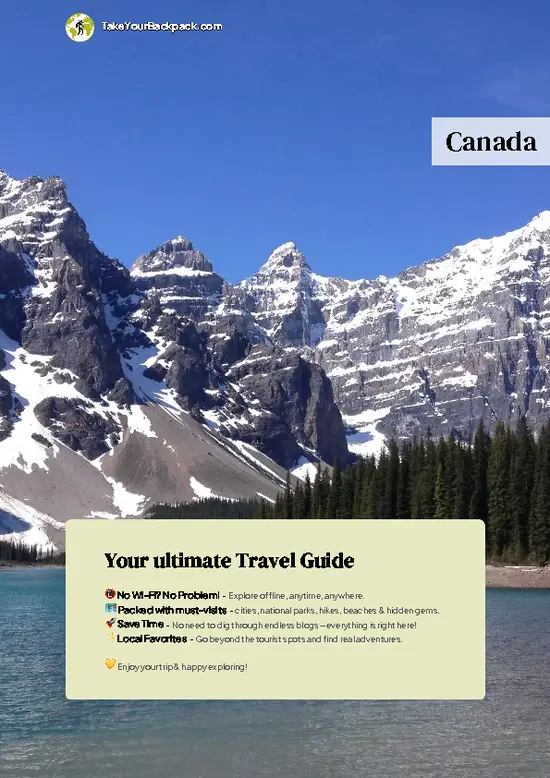
An offline-friendly backpacking guide with optimized travel routes, ranked highlights, transport advice, and the best areas to stay.
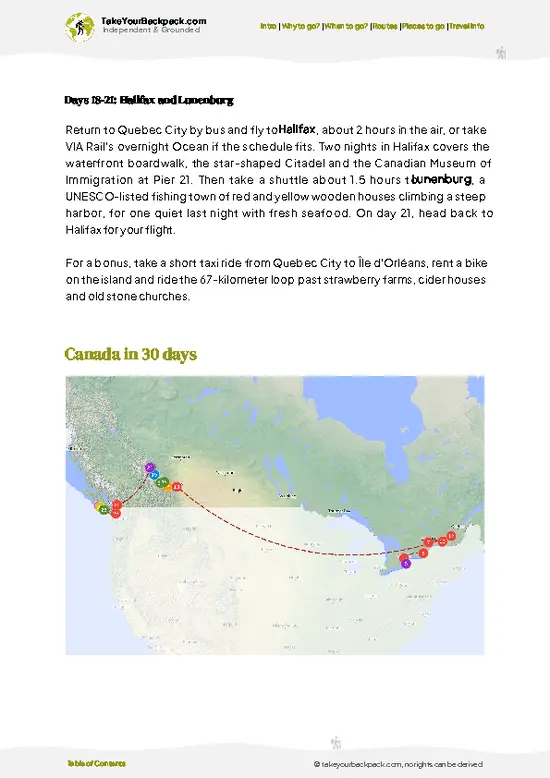
example page 0 from our offline Travel Guide for Canada
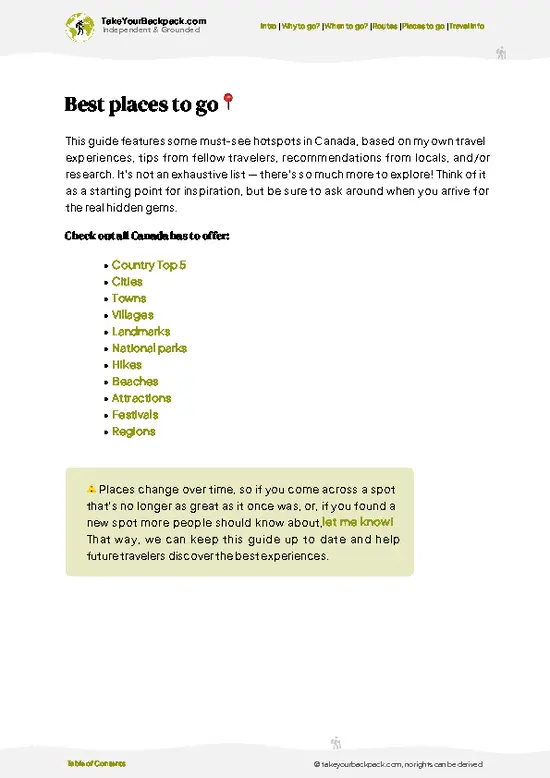
example page 1 from our offline Travel Guide for Canada
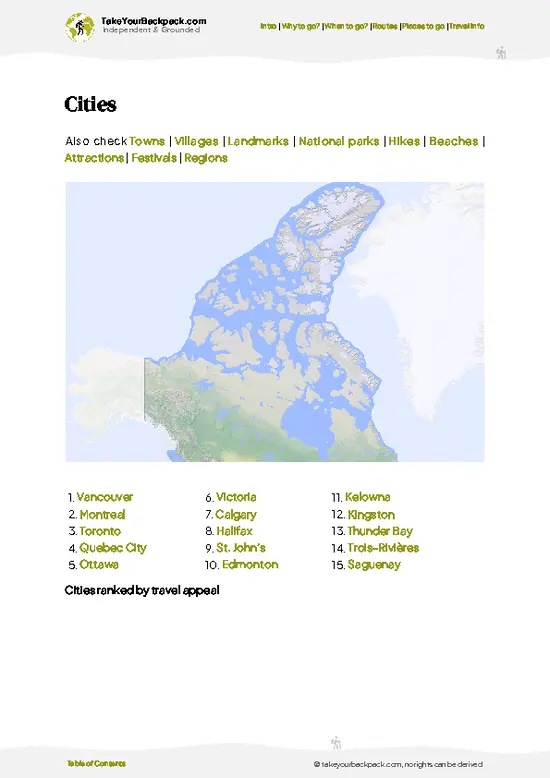
example page 2 from our offline Travel Guide for Canada
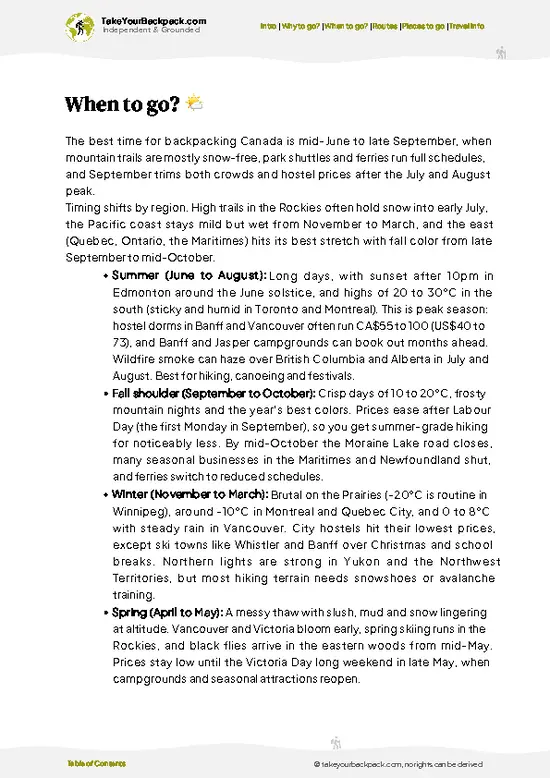
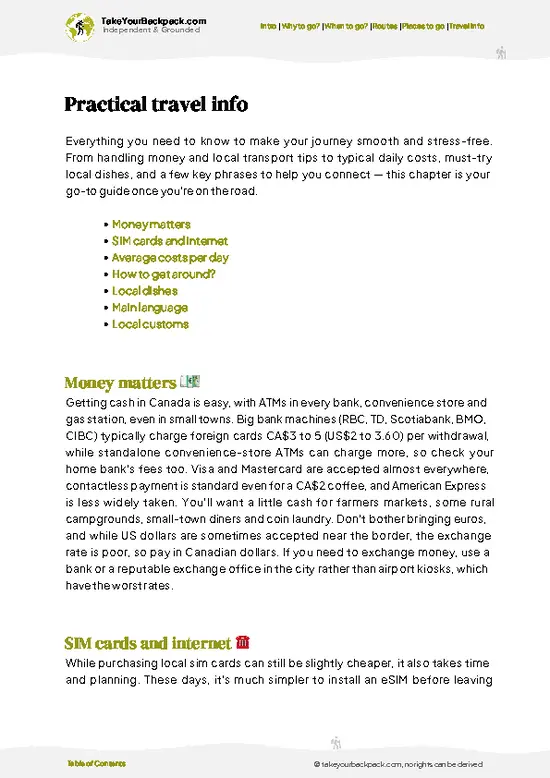
example page 3 from our offline Travel Guide for Canada
example page 4 from our offline Travel Guide for Canada
example page 5 from our offline Travel Guide for Canada
example page 6 from our offline Travel Guide for Canada
example page 7 from our offline Travel Guide for Canada
The digital guide (509 pages) contains:
131 highlights, ranked by travel appeal
Optimized 14, 21 & 30-day travel routes
Cities, national parks, landmarks, beaches
How to get around
Offline-friendly for travel without Wi-Fi
👉 Click to see all 30+ guide features

📅 Plan smarter in minutes, not weeks
Month by month travel advice
Festivals & national holidays
Budget expectations

🗺️ Go to the right places, skip the overrated ones
Honest pros & cons of destinations
Top hikes, parks & viewpoints
Lesser-known places most travelers miss
Clear “worth it vs skip it” guidance

🛏️ Travel smoothly without rookie mistakes
Best areas to stay
Transport systems explained simply
Common scams & safety advice
SIM cards, money & practical tips

🌍 Understand the country, not just visit it
Culture & traditions
Local customs
Festivals worth planning around
Traveler-friendly historical context
Insights that make places more meaningful

📱 Built for real travel conditions
Fully downloadable PDF
Works completely offline
Optimized for phone use
Useful in remote areas & buses
Everything in one place
Save weeks of stressful planning
Get instant access to your full guide. 30‑day money-back guarantee.


By proceeding you agree to our terms.
Sent to your inbox immediately after payment • 100% Secure Checkout
Best Backpacking Travel Advisor 2025 tourism awardBest Backpacking
Travel Advisor
2025
What others say about Take Your Backpack Guides:
⭐⭐⭐⭐⭐
Fantastic, amazing amount of information!
⭐⭐⭐⭐⭐
My goodness this is amazing, it's what I've been looking for hats off too you!
⭐⭐⭐⭐⭐
I think this is absolutely BRILLIANT
⭐⭐⭐⭐
Very complete and informative. It's still missing places, but I gotta to commend you
⭐⭐⭐⭐⭐
This is truly amazing, thank you, can't wait to explore it with my kids!
⭐⭐⭐⭐⭐
Awesome resource, thank you!
⭐⭐⭐⭐⭐
This is amazing! Can't wait to explore the ones I haven't seen
⭐⭐⭐⭐
I love this! Well done, great idea.
⭐⭐⭐⭐⭐
Thanks for taking the time to make this gem!
⭐⭐⭐⭐⭐
This might be the best website I've ever seen.
⭐⭐⭐⭐⭐
Congratulations, and thank you so much for your work; it's incredibly valuable.
⭐⭐⭐⭐
In all seriousness I think you did a great job pointing out the important spots
⭐⭐⭐⭐⭐
10/10 very good
⭐⭐⭐⭐⭐
As someone who's only just starting to visit regularly this is awesome, thank you.
⭐⭐⭐⭐
Thank you very much! I'm going to visit my dad, it's going to be very useful!
⭐⭐⭐⭐⭐
This is really cool! We'll be travelling for the first time and this definitely come in handy.
⭐⭐⭐⭐⭐
You are now our minister of culture, congratulations 👨‍💼
⭐⭐⭐⭐⭐
Just wanted to tell you that this is a pearl! Going to follow your recommendations.
⭐⭐⭐⭐⭐
This is so cool. I'll definitely be using the resource for my travels soon.
⭐⭐⭐⭐⭐
This is very impressive! Good work.
⭐⭐⭐⭐⭐
This is an amazing and informative site. Very well done!

🛏️ Where to stay?Best areas to stay in Canada

Mingan Archipelago National Park Reserve has limited accommodation options within its boundaries. Camping is your best bet if you want to stay close to nature. The park offers several campsites, but be prepared: reservations are essential, especially in peak season.

For a more comfortable stay, head to nearby towns like Longue-Pointe-de-Mingan or Havre-Saint-Pierre. Both have cozy inns and motels that provide a good base for exploring the park.

Keep in mind that dining options can be sparse, so stock up on supplies before you arrive. This way, you can focus on the breathtaking landscapes and … read more 👉
Mingan Archipelago National Park Reserve has limited accommodation options within its boundaries. Camping is your best bet if you want to stay close to nature. The park offers several campsites, but be prepared: reservations are essential, especially in peak season.

For a more comfortable stay, head to nearby towns like Longue-Pointe-de-Mingan or Havre-Saint-Pierre. Both have cozy inns and motels that provide a good base for exploring the park.

Keep in mind that dining options can be sparse, so stock up on supplies before you arrive. This way, you can focus on the breathtaking landscapes and unique rock formations without worrying about logistics.

👛 Costs (as of 29 November 2025)Typical daily expenses

Visiting Mingan Archipelago National Park Reserve in Canada requires some planning to avoid unexpected costs. Here’s what you need to know.

Entry fees for the park are typically around $8 to $10 CAD per adult. If you’re bringing kids, those under 18 usually get in free, which is a nice perk.

If you’re considering a guided tour, prices can vary significantly. Expect to pay between $50 and $100 CAD per person for a half-day tour. Full-day excursions can run from $100 to $200 CAD, depending on the activities included.

For accommodations, camping is an option. Campsites generally range from $20 to $40 CAD per night. If you prefer more comfort, nearby lodges or hotels can cost anywhere from $100 to $250 CAD per night, depending on the season and amenities.

Don’t forget about transportation. … read more 👉
Visiting Mingan Archipelago National Park Reserve in Canada requires some planning to avoid unexpected costs. Here’s what you need to know.

Entry fees for the park are typically around $8 to $10 CAD per adult. If you’re bringing kids, those under 18 usually get in free, which is a nice perk.

If you’re considering a guided tour, prices can vary significantly. Expect to pay between $50 and $100 CAD per person for a half-day tour. Full-day excursions can run from $100 to $200 CAD, depending on the activities included.

For accommodations, camping is an option. Campsites generally range from $20 to $40 CAD per night. If you prefer more comfort, nearby lodges or hotels can cost anywhere from $100 to $250 CAD per night, depending on the season and amenities.

Don’t forget about transportation. If you’re driving, factor in gas prices and potential parking fees. Public transport options are limited, so a rental car might be your best bet, costing around $50 to $100 CAD per day.

Lastly, plan for food. Dining options within the park are limited, so budget for meals either at local restaurants or for groceries if you’re camping. Expect to spend about $10 to $30 CAD per meal, depending on your choices.

Being aware of these costs can help you allocate your budget wisely, ensuring you have the energy and funds for the experiences that truly matter.


source: pc.gc.ca
⚠️ Prices can change and everyone travels differently, so take this as a rough guide. Hope it helps you plan your adventure!

🥾 TrailsPlan your hike in Mingan Archipelago Reserve: routes, terrain, and sights

The Mingan Archipelago National Park Reserve is a gem along the Quebec coast, offering unique hiking opportunities that blend stunning scenery with a bit of adventure. The park is famous for its limestone monoliths and rich biodiversity, making every step worthwhile. You’ll find a mix of coastal trails and island hikes, where the terrain varies from easy beach strolls to more rugged paths. Wildlife is abundant, so keep your eyes peeled for seals lounging on the rocks or birds soaring overhead.

One of the standout trails is the Sentier de la Grande Île. Here’s the scoop:
  • Length: 6 km
  • Estimated Duration:
read more 👉
The Mingan Archipelago National Park Reserve is a gem along the Quebec coast, offering unique hiking opportunities that blend stunning scenery with a bit of adventure. The park is famous for its limestone monoliths and rich biodiversity, making every step worthwhile. You’ll find a mix of coastal trails and island hikes, where the terrain varies from easy beach strolls to more rugged paths. Wildlife is abundant, so keep your eyes peeled for seals lounging on the rocks or birds soaring overhead.

One of the standout trails is the Sentier de la Grande Île. Here’s the scoop:
  • Length: 6 km
  • Estimated Duration: 2-3 hours
  • Difficulty Level: Moderate
  • Key Features: Stunning views of the archipelago, unique rock formations, and diverse plant life
  • Terrain: Mix of sandy paths and rocky sections

Another option is the Sentier de l’Île aux Perroquets:
  • Length: 4 km
  • Estimated Duration: 1.5-2 hours
  • Difficulty Level: Easy
  • Key Features: Lighthouse views, birdwatching opportunities, and beautiful coastal scenery
  • Terrain: Mostly flat with well-maintained paths

Getting to the park isn’t too tricky. You can take a bus from major cities like Quebec City or Montreal to nearby towns, then hop on a ferry to the islands. Keep in mind that it can get a bit crowded during peak summer months, especially on weekends, so aim for early morning hikes if you want some peace. Entrance fees are pretty reasonable, but it’s always good to check the current rates before you head out.
⚠️ Hiking info can sometimes be outdated or inaccurate. Before you hit the trail, check the latest conditions with locals. If you do spot anything that's off, I'd love to hear from you, so I can update it for fellow travelers.

🛡️ SafetyTraveler Safety Guide

Mingan Archipelago National Park Reserve is generally straightforward for backpackers, but a few practical considerations can enhance your experience. Weather can shift quickly, so pack layers and a reliable rain jacket. The terrain is mostly flat with some rocky sections, so sturdy footwear is essential for good footing.

Wildlife encounters are rare, but if you spot a seal or bird, keep your distance. Respect their space. Prepare for tidal changes if you’re exploring the shoreline; timing your hikes around low tide is crucial. With these tips, you’ll preserve your energy and budget for the moments that truly matter.

Other Canadian national parks near Mingan Archipelago Reserve

Explore more nearby:


💡 Not sure where to go next?
Create a personalized itinerary for Canada including Mingan Archipelago Reserve and the places that fit your trip.

Generate my itinerary

👉 Discover all national parks

Or checkout all Canada has to offer (think cities, towns, villages, national parks, hikes, beaches, festivals)
Country photo of Canada

We 💚 feedbackParting advice and final tips

Mingan Archipelago is a treasure for those who crave solitude and stunning coastal landscapes. The unique limestone formations are a photographer’s dream. Just be prepared: access can be tricky, and services are limited. Bring your own supplies and plan ahead to fully enjoy this remote beauty without stress.

✈️ When did I visit Canada?
As part of my 1.5 year travel around the world trip, I visited Canada in 2016.

✍️ Help improve this page!
The information on this page is based on my own backpacking experience in Canada, supplemented with up-to-date research and feedback from other travelers. Travel details can change, so if you notice anything outdated or incomplete, feel free to let me know.


🙋‍♂️ Give feedback

👋 Meet the founderWho’s Behind Take Your Backpack?

Johan, backpacker and founder of TakeYourBackpackHi, I’m Johan (Netherlands 🇳🇱), the creator of TakeYourBackpack. Over the past decade, I’ve backpacked through 80+ countries across six continents, gaining extensive experience with independent travel, long-term trips, and overland routes.

This site is built on a combination of firsthand travel experience and carefully curated insights from other backpackers. Many guides are based on places I’ve personally visited, while others bring together tips, observations, and practical advice shared by trusted travelers I’ve met along the way.

The goal is to provide realistic, experience-driven guidance — not generic itineraries — so you can explore destinations with better context, clearer expectations, and more confidence.

Get full Canada guide •
Instant download • 131 highlights • Full Offline guide