×

Canada🇨🇦 | regionsVancouver IslandOld-growth groves, Pacific surf, Broken Group, Cape Scott | things to do and best time to go

Explore Okanagan ValleyExplore Yukon

Backpacking in Vancouver Island
🏆 Top pickregion ranked #2
By Johan Kruseman 🇳🇱 | Updated October 20, 2026

The decision on Vancouver Island is whether to anchor yourself around Victoria in the south or push up-island toward Tofino and the north, and it tips on how much time you have and whether you own wheels. The island sits off the Pacific coast of British Columbia in Canada, and it is long, wet, green and mostly empty. Victoria has harbor ferries and old brick streets, Tofino has surf and storm-watching, and the rest is logging roads, rainforest and fishing villages. Distances are bigger than the map suggests, and buses are thin. I came off the ferry at Nanaimo and rolled down the window to a wall of cedar and diesel and salt, with gulls arguing over a fish truck, and I knew the pace here would be slow. You get that smell on every trail and every dock. Book ferry reservations ahead in summer, because walk-on is easy but vehicle space vanishes.

Discover everything you want to know in the 📖 Canada Travel Guide.


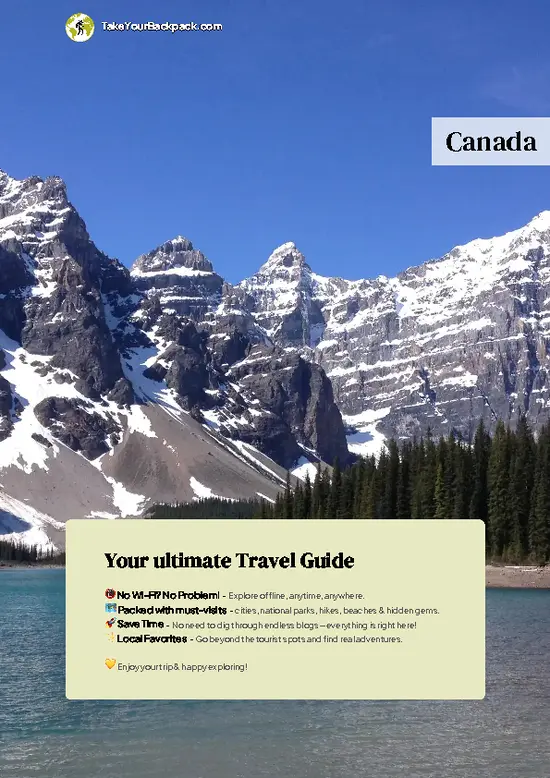
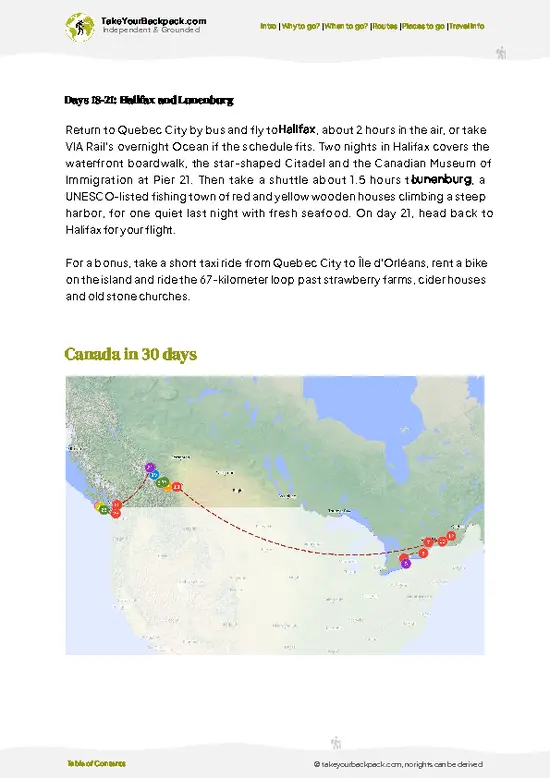
example page 0 from our offline Travel Guide for Canada
example page 1 from our offline Travel Guide for Canada
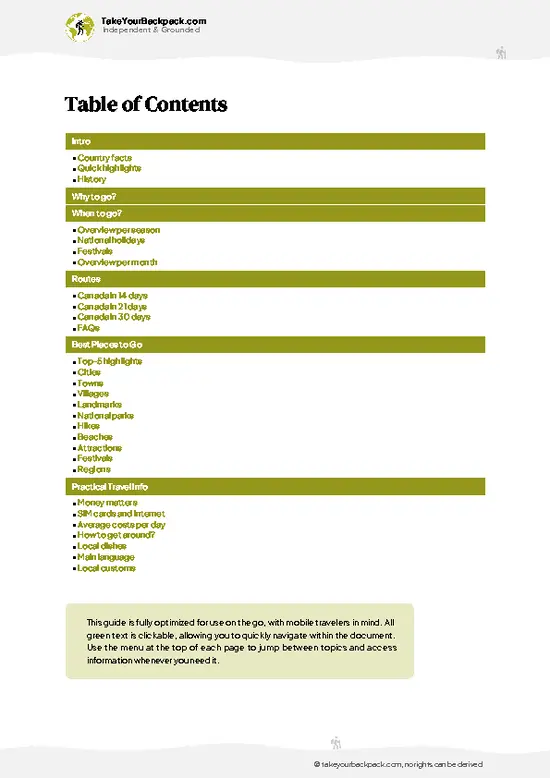
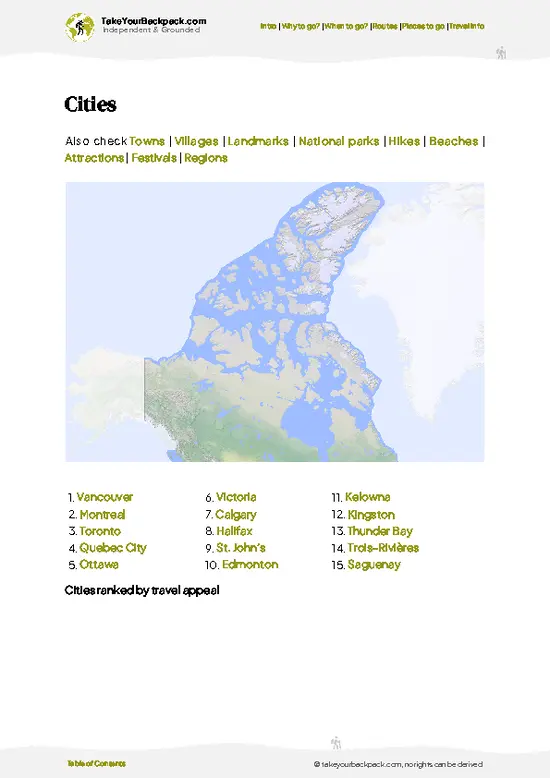
example page 2 from our offline Travel Guide for Canada
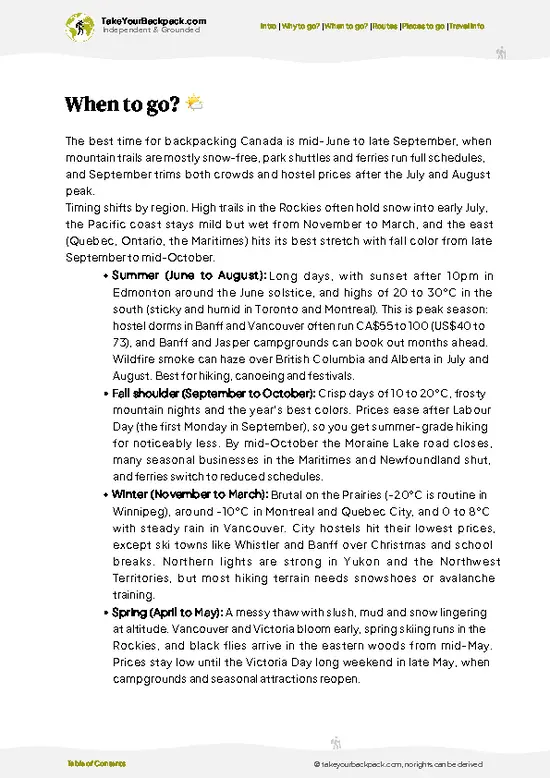
example page 3 from our offline Travel Guide for Canada
example page 4 from our offline Travel Guide for Canada
example page 5 from our offline Travel Guide for Canada
example page 6 from our offline Travel Guide for Canada
example page 7 from our offline Travel Guide for Canada
Loading the map 🌍
CLICK TO FILTER
cities
towns
villages
landmarks
national parks
hikes
beaches
attractions
festivals
regions
SHOW COUNTRY’S BESTSHOW ALL

✨ Why go?
Ranked #2 region in Canada
What sets this place apart

Vancouver Island lets you stack very different landscapes without changing countries, climates or much of your pack. In one loop you can walk the sea-stack beaches of the Pacific Rim National Park Reserve, soak in old-growth groves like Cathedral Grove, and drink coffee in Victoria within a few days of each other. That variety is the main reason backpackers stay a week or two rather than a weekend.

The second reason is the pace. The island runs on one main highway with a handful of side roads, so slow travel happens by default: you stop at a river pool, a bakery, a trailhead. Hitching and carpooling cultures are active among surfers and hikers, which stretches the thin bus network further than it looks. If you rent a car or van, the Highway 4 run across the island to Tofino is among the best … read more 👉
Vancouver Island lets you stack very different landscapes without changing countries, climates or much of your pack. In one loop you can walk the sea-stack beaches of the Pacific Rim National Park Reserve, soak in old-growth groves like Cathedral Grove, and drink coffee in Victoria within a few days of each other. That variety is the main reason backpackers stay a week or two rather than a weekend.

The second reason is the pace. The island runs on one main highway with a handful of side roads, so slow travel happens by default: you stop at a river pool, a bakery, a trailhead. Hitching and carpooling cultures are active among surfers and hikers, which stretches the thin bus network further than it looks. If you rent a car or van, the Highway 4 run across the island to Tofino is among the best drives in Canada, with lakes, a mountain pass and the first sight of open ocean at the end. The reward is solitude on beaches that would be packed anywhere else.

💡 HighlightsDon't-miss highlights and experiences

  1. Butchart Gardens: a former limestone quarry near Victoria turned into sunken gardens, with a Japanese garden and a rose bed that smells strongly in summer. Entry is steep, but the quarry setting is unique.
  2. Inner Harbour, Victoria: ferries, buskers and the Parliament Buildings lit at night, with whale-watching boats leaving from the dock.
  3. Long Beach, Pacific Rim National Park Reserve: a wide, flat 16-kilometer sweep of surf and driftwood near Tofino, good for beginner surfing and long walks.
  4. Cathedral Grove: a short loop in MacMillan Provincial Park among Douglas firs up to 800 years old, right beside the highway and free to visit.
  5. Hot Springs Cove: reached by boat or floatplane from Tofino, with natural pools stepping down a cliff to the surf after a boardwalk through forest.
  6. West Coast Trail:
… read more 👉
  1. Butchart Gardens: a former limestone quarry near Victoria turned into sunken gardens, with a Japanese garden and a rose bed that smells strongly in summer. Entry is steep, but the quarry setting is unique.
  2. Inner Harbour, Victoria: ferries, buskers and the Parliament Buildings lit at night, with whale-watching boats leaving from the dock.
  3. Long Beach, Pacific Rim National Park Reserve: a wide, flat 16-kilometer sweep of surf and driftwood near Tofino, good for beginner surfing and long walks.
  4. Cathedral Grove: a short loop in MacMillan Provincial Park among Douglas firs up to 800 years old, right beside the highway and free to visit.
  5. Hot Springs Cove: reached by boat or floatplane from Tofino, with natural pools stepping down a cliff to the surf after a boardwalk through forest.
  6. West Coast Trail: a demanding 75-kilometer route with ladders, cable cars and tidal crossings, requiring a permit and about six days.
  7. Sooke Potholes: swimming holes carved into sandstone on the Sooke River, popular with locals on hot afternoons and often missed by visitors.
  8. Hornby Island's Tribune Bay: a sandy, shallow beach reached by two ferries from Vancouver Island, warm enough for swimming in summer and lightly visited.
  9. Cumberland: a former coal town with a mountain-bike trail network at the edge of the streets and a small museum of mining history, loved by locals.
  10. Telegraph Cove: a boardwalk village on pilings in the north, where orca and bear tours depart and few tourists venture.
For a first visit, Long Beach near Tofino gives you the island's wild Pacific edge in a single easy stop on Vancouver Island.
Spotted a mistake or missing something? Contact us.

Things to do around Vancouver Island

Ratings based on Tripadvisor reviews. When you book through this link, you support our work at no extra cost to you.

⌛️ 5 daysWhat you can realistically do in a week

Start in Victoria by walking the Inner Harbour at first light, when the ferries are quiet and the light is soft on the water before tour groups arrive. Victoria suits an arrival because the ferry and airport links are here and the old town is best covered on foot.

Day 1: Victoria: Spend the morning on the waterfront and in the old streets, then take a local bus out to Butchart Gardens in the afternoon. Buses run frequently in this corner, so you can move without a car.

Day 2: Sooke: Head west along the coast road to the Sooke Potholes for a swim and a short trail. Services thin out beyond Victoria, so transport pace slows, and a half day here is plenty.

Day 3: Cathedral Grove and Tofino: Cross the island on the single highway to Tofino, stopping at Cathedral Grove on the way to stretch … read more 👉
Start in Victoria by walking the Inner Harbour at first light, when the ferries are quiet and the light is soft on the water before tour groups arrive. Victoria suits an arrival because the ferry and airport links are here and the old town is best covered on foot.

Day 1: Victoria: Spend the morning on the waterfront and in the old streets, then take a local bus out to Butchart Gardens in the afternoon. Buses run frequently in this corner, so you can move without a car.

Day 2: Sooke: Head west along the coast road to the Sooke Potholes for a swim and a short trail. Services thin out beyond Victoria, so transport pace slows, and a half day here is plenty.

Day 3: Cathedral Grove and Tofino: Cross the island on the single highway to Tofino, stopping at Cathedral Grove on the way to stretch your legs under huge firs. The long drive or a limited shuttle dictates this being a full travel day, so treat the road as part of the experience.

Day 4: Long Beach: Walk or surf the wide sands of Long Beach and the forest boardwalks nearby. The weather turns quickly, so keep a layer in your bag.

Day 5: Hot Springs Cove: Detour by water taxi from Tofino to Hot Springs Cove. It adds a full day but keeps you in the same base, with no extra relocation, and ends the trip in warm pools above the surf.

If you only keep one day, make it Day 5: the boat ride through coastal channels and the soak at the cove are what I would build the whole trip around.

🌤️ When to go?Seasonal considerations and timing

  • Summer (July to September): Dry, sunny weather with highs of 20 to 26°C (68 to 79°F) on the east coast, and long evenings of light past 9 p.m. Ferries, campgrounds and Tofino beds fill up and prices peak, so book weeks ahead.
  • Fall (October to November): Storm-watching season arrives on the west coast, with highs of 8 to 14°C (46 to 57°F). Crowds thin and Tofino and Ucluelet rooms drop in price, but rain moves in by November.
  • Winter (December to February): Wet and mild at sea level, 2 to 8°C (36 to 46°F), with heavy snow on the mountains. Skiing at Mount Washington is the draw, and many coastal trails are muddy.
  • Spring (March to June): Gray whales migrate past the west coast from March, and wildflowers and waterfalls peak. Highs climb from 10°C (50°F) to 20°C (68°F), with fewer people and lower
… read more 👉
  • Summer (July to September): Dry, sunny weather with highs of 20 to 26°C (68 to 79°F) on the east coast, and long evenings of light past 9 p.m. Ferries, campgrounds and Tofino beds fill up and prices peak, so book weeks ahead.
  • Fall (October to November): Storm-watching season arrives on the west coast, with highs of 8 to 14°C (46 to 57°F). Crowds thin and Tofino and Ucluelet rooms drop in price, but rain moves in by November.
  • Winter (December to February): Wet and mild at sea level, 2 to 8°C (36 to 46°F), with heavy snow on the mountains. Skiing at Mount Washington is the draw, and many coastal trails are muddy.
  • Spring (March to June): Gray whales migrate past the west coast from March, and wildflowers and waterfalls peak. Highs climb from 10°C (50°F) to 20°C (68°F), with fewer people and lower rates until June.
Aim for June or early September for dry weather without summer rates.


source: climatestotravel.comJANJanuary: below average for travelingFEBFebruary: below average for travelingMARMarch: fair for travelingAPRApril: good for travelingMAYMay: excellent for travelingJUNJune: excellent for travelingJULJuly: good for travelingAUGAugust: good for travelingSEPSeptember: excellent for travelingOCTOctober: highly recommended for travelingNOVNovember: fair for travelingDECDecember: below average for traveling
when-to-go

✈️ The backpacker research shortcutCanada Travel Guide

An offline-friendly backpacking guide with optimized travel routes, ranked highlights, transport advice, and the best areas to stay.
example page 0 from our offline Travel Guide for Canada
example page 1 from our offline Travel Guide for Canada
example page 2 from our offline Travel Guide for Canada
example page 3 from our offline Travel Guide for Canada
example page 4 from our offline Travel Guide for Canada
example page 5 from our offline Travel Guide for Canada
example page 6 from our offline Travel Guide for Canada
example page 7 from our offline Travel Guide for Canada
The digital guide (385 pages) contains:
✅ 125 highlights, ranked by travel appeal
✅ Optimized 14, 21 & 30-day travel routes
✅ Cities, national parks, landmarks, beaches
✅ How to get around
✅ Offline-friendly for travel without Wi-Fi
👉 Click to see all 30+ guide features

📅 Plan smarter in minutes, not weeks
✅ Month by month travel advice
✅ Festivals & national holidays
✅ Budget expectations

🗺️ Go to the right places, skip the overrated ones
✅ Honest pros & cons of destinations
✅ Top hikes, parks & viewpoints
✅ Lesser-known places most travelers miss
✅ Clear “worth it vs skip it” guidance

🛏️ Travel smoothly without rookie mistakes
✅ Best areas to stay
✅ Transport systems explained simply
✅ Common scams & safety advice
✅ SIM cards, money & practical tips

🌍 Understand the country, not just visit it
✅ Culture & traditions
✅ Local customs
✅ Festivals worth planning around
✅ Traveler-friendly historical context
✅ Insights that make places more meaningful

📱 Built for real travel conditions
✅ Fully downloadable PDF
✅ Works completely offline
✅ Optimized for phone use
✅ Useful in remote areas & buses
✅ Everything in one place
Stop searching, start planning
Get instant access to your full guide. 30‑day money-back guarantee.
+ Add another guide for just

By proceeding you agree to our terms.
Sent to your inbox immediately after payment • 100% Secure Checkout
Best Backpacking Travel Advisor 2025 tourism awardBest Backpacking
Travel Advisor
2025
What others say about Take Your Backpack Guides:
⭐⭐⭐⭐⭐
Fantastic, amazing amount of information!
⭐⭐⭐⭐⭐
My goodness this is amazing, it's what I've been looking for hats off too you!
⭐⭐⭐⭐⭐
I think this is absolutely BRILLIANT
⭐⭐⭐⭐
Very complete and informative. It's still missing places, but I gotta to commend you
⭐⭐⭐⭐⭐
This is truly amazing, thank you, can't wait to explore it with my kids!
⭐⭐⭐⭐⭐
Awesome resource, thank you!
⭐⭐⭐⭐⭐
This is amazing! Can't wait to explore the ones I haven't seen
⭐⭐⭐⭐
I love this! Well done, great idea.
⭐⭐⭐⭐⭐
Thanks for taking the time to make this gem!
⭐⭐⭐⭐⭐
This might be the best website I've ever seen.
⭐⭐⭐⭐⭐
Congratulations, and thank you so much for your work; it's incredibly valuable.
⭐⭐⭐⭐
In all seriousness I think you did a great job pointing out the important spots
⭐⭐⭐⭐⭐
10/10 very good
⭐⭐⭐⭐⭐
As someone who's only just starting to visit regularly this is awesome, thank you.
⭐⭐⭐⭐
Thank you very much! I'm going to visit my dad, it's going to be very useful!
⭐⭐⭐⭐⭐
This is really cool! We'll be travelling for the first time and this definitely come in handy.
⭐⭐⭐⭐⭐
You are now our minister of culture, congratulations 👨‍💼
⭐⭐⭐⭐⭐
Just wanted to tell you that this is a pearl! Going to follow your recommendations.
⭐⭐⭐⭐⭐
This is so cool. I'll definitely be using the resource for my travels soon.
⭐⭐⭐⭐⭐
This is very impressive! Good work.
⭐⭐⭐⭐⭐
This is an amazing and informative site. Very well done!

🛏️ Where to stay?Best areas and accommodation options

Victoria is the easiest base for a first night, with the most hostels, a walkable core and plenty of travelers swapping plans in the Inner Harbour and Fisherman’s Wharf area. It is safe late at night and has good public transit. Beds run roughly US$30 to 50 in summer.

Tofino is the social heart of the west coast, with surf schools, hostels near Chesterman Beach and Cox Bay, and evenings spent around fires. It is the priciest town, so book early and expect dorm beds at US$45 to 80 in summer. Ucluelet, 40 minutes south, is quieter and cheaper, good if you want the Wild Pacific Trail and storm-watching … read more 👉
Victoria is the easiest base for a first night, with the most hostels, a walkable core and plenty of travelers swapping plans in the Inner Harbour and Fisherman’s Wharf area. It is safe late at night and has good public transit. Beds run roughly US$30 to 50 in summer.

Tofino is the social heart of the west coast, with surf schools, hostels near Chesterman Beach and Cox Bay, and evenings spent around fires. It is the priciest town, so book early and expect dorm beds at US$45 to 80 in summer. Ucluelet, 40 minutes south, is quieter and cheaper, good if you want the Wild Pacific Trail and storm-watching without the crowds.

Nanaimo works as a midpoint, with a waterfront, a ferry terminal and low-key hostels and guesthouses within walking distance of cafés. Courtenay and Comox suit people heading for Mount Washington skiing or Strathcona Park hiking. Port Alberni is a plain, cheaper stop on the road to the coast. Campers do well all over the island, with provincial park sites at roughly US$20 to 30 a night.

🚌 Getting aroundHow to get around Vancouver Island

Vancouver Island is big, about 460 kilometers (285 miles) from Victoria to Port Hardy, and a car makes it easy, but backpackers do manage with buses, shuttles and thumbs. In Victoria, the downtown bus depot sits steps from the Inner Harbour, a flat 5 to 10 minute walk past old stone buildings and the smell of salt and fried fish. Outside the southeast corridor, services thin out fast.
  • Intercity buses: Island Link runs Victoria to Nanaimo, Campbell River and Port Hardy, plus connections toward Port Alberni and Tofino on set days, with fares of roughly US$20 to 60 per leg. Expect cold air-conditioning and rain streaking the windows, and you arrive in Tofino while the fog is still lifting off the surf.
  • Ferries: BC Ferries link Vancouver to Nanaimo and Victoria (about 1.5 to 2 hours, US$20 to 25
… read more 👉
Vancouver Island is big, about 460 kilometers (285 miles) from Victoria to Port Hardy, and a car makes it easy, but backpackers do manage with buses, shuttles and thumbs. In Victoria, the downtown bus depot sits steps from the Inner Harbour, a flat 5 to 10 minute walk past old stone buildings and the smell of salt and fried fish. Outside the southeast corridor, services thin out fast.
  • Intercity buses: Island Link runs Victoria to Nanaimo, Campbell River and Port Hardy, plus connections toward Port Alberni and Tofino on set days, with fares of roughly US$20 to 60 per leg. Expect cold air-conditioning and rain streaking the windows, and you arrive in Tofino while the fog is still lifting off the surf.
  • Ferries: BC Ferries link Vancouver to Nanaimo and Victoria (about 1.5 to 2 hours, US$20 to 25 foot passenger, more with a vehicle). You stand on the open deck with diesel, gulls and cold wind, watching the Gulf Islands slide past and sometimes orcas.
  • Local transit: Victoria and Nanaimo have city buses at about US$2 to 3 per ride, and the Victoria network reaches Butchart Gardens and Sooke. You get a gentle ride past arbutus trees and sea views for pocket change.
  • Shuttles and rideshares: Seasonal shuttles serve Tofino, Ucluelet and the Pacific Rim, often US$40 to 70 one way, with bike racks on some. Tires crunch gravel at trailheads, and you step out right at the boardwalk to Long Beach.
  • Rental car or campervan: Daily rates run about US$50 to 110 in summer. Highway 4 twists through old-growth forest and past Cathedral Grove, where you can stop beside giant Douglas firs that smell of damp cedar.
Split the bus-only west coast and north and book summer seats a few days early, since the Tofino run sells out.

🍲 FoodLocal Cuisine & Drinks

Start with seafood. Dungeness crab, spot prawns, fresh salmon and halibut come off the boats in Tofino, Ucluelet and Campbell River, and fish and chips eaten on a dock with vinegar-sharp fries and a salty breeze costs about US$12 to 20. Nanaimo bars, the chocolate, custard and coconut slice that started in Nanaimo, turn up in every bakery, rich and sticky and best with black coffee.

For drinks, the craft beer scene is strong in Victoria, Nanaimo and Tofino, with pints around US$6 to 8, and the Cowichan Valley is the island’s wine, cider and mead country, where tasting rooms sit among vineyards and farm stands.

Cheap eating means farmers markets (Moss Street in Victoria on Saturdays, Duncan in summer) where you can buy berries, smoked salmon and warm bread. Food trucks in Tofino serve tacos … read more 👉
Start with seafood. Dungeness crab, spot prawns, fresh salmon and halibut come off the boats in Tofino, Ucluelet and Campbell River, and fish and chips eaten on a dock with vinegar-sharp fries and a salty breeze costs about US$12 to 20. Nanaimo bars, the chocolate, custard and coconut slice that started in Nanaimo, turn up in every bakery, rich and sticky and best with black coffee.

For drinks, the craft beer scene is strong in Victoria, Nanaimo and Tofino, with pints around US$6 to 8, and the Cowichan Valley is the island’s wine, cider and mead country, where tasting rooms sit among vineyards and farm stands.

Cheap eating means farmers markets (Moss Street in Victoria on Saturdays, Duncan in summer) where you can buy berries, smoked salmon and warm bread. Food trucks in Tofino serve tacos and fish burgers for about US$10 to 16, and hostels often have kitchens for self-catering. Coffee shops serve strong, dark roasts.

Tipping is the norm, 15 to 20 percent at sit-down places, as prices on menus exclude tax and tip. Many restaurants close early in small towns, often by 9 p.m., so eat before sunset.

FAQTraveler FAQ

Plan 5 to 7 days to see the highlights of Vancouver Island. Give Victoria 1 to 2 days, then spend 2 to 3 days at Tofino and Ucluelet on the Pacific Rim, and add 1 day for Nanaimo or the Cowichan Valley. With 10 days or more you can add Strathcona Park, Campbell River and the north island toward Port Hardy.
Getting around Vancouver Island without a car is possible but slow outside the southeast. Island Link buses run Victoria to Nanaimo, Campbell River and Port Hardy for roughly US$20 to 60 per leg, and seasonal shuttles reach Tofino for about US$40 to 70. Victoria and Nanaimo have local buses at US$2 to 3 a ride, and BC Ferries connect the island to Vancouver in 1.5 to 2 hours.
Vancouver Island is known for its Pacific Rim coast, with Long Beach, surfing at Tofino and the old-growth forests of Cathedral Grove. Victoria adds Butchart Gardens, the Inner Harbour and afternoon tea. Whale watching for orcas and gray whales runs from March to October, and Strathcona Park and the West Coast Trail (a 75 kilometer, 6 to 7 day trek costing about US$150 to 200 for permits) draw serious hikers.
⚠️ Things can change over time, so always validate details locally before you go.

Other Canadian regions near Vancouver Island

Explore more nearby:

  • Okanagan Valley—Kettle Valley trestles, lakeside vineyards, semi-desert, rock climbing| 433 km away
  • Canadian Rockies—Turquoise lakes, glacier hikes, Berg Lake, fossil beds| 588 km away
  • Icefields Parkway—Athabasca toe, roadside canyons, Wilcox Pass, Weeping Wall| 649 km away

💡 Not sure where to go next?
Create a personalized itinerary for Canada including Vancouver Island and the places that fit your trip.

Generate my itinerary

👉 Discover all regions

Or checkout all Canada has to offer (think cities, towns, villages, national parks, hikes, beaches, festivals)
Country photo of Canada

We 💚 feedbackWhat to keep in mind

Vancouver Island rewards you most in late summer and early September, when fog burns off the west coast by midday and the ocean is warm enough to dip into. I would go then, book ferries early, and pack a rain shell anyway, because the coast can drizzle even in good weather.

✈️ When did I visit Canada?
As part of my 1.5 year travel around the world trip, I visited Canada in 2016.

✍️ Help improve this page!
The information on this page is based on my own backpacking experience in Canada, supplemented with up-to-date research and feedback from other travelers. Travel details can change, so if you notice anything outdated or incomplete, feel free to let me know.


🙋‍♂️ Give feedback

👋 Meet the founderWho’s Behind Take Your Backpack?

Johan, backpacker and founder of TakeYourBackpackHi, I’m Johan (Netherlands 🇳🇱), the creator of TakeYourBackpack. Over the past 3 decades, I’ve backpacked through 90+ countries across six continents, gaining extensive experience with independent travel, long-term trips, and overland routes.

This site is built on a combination of firsthand travel experience and carefully curated insights from other backpackers. Many guides are based on places I’ve personally visited, while others bring together tips, observations, and practical advice shared by trusted travelers I’ve met along the way.

The goal is to provide realistic, experience-driven guidance — not generic itineraries — so you can explore destinations with better context, clearer expectations, and more confidence.