×

Central African Republic🇨🇫 | townsBriamineral resources, displaced communities, central market | things to do and best time to go

Explore ZemioExplore Bouar

Backpacking in Bria
🌟 Highlighttown ranked #9
By Johan Kruseman 🇳🇱 | Updated September 3, 2026

Most travelers only realize after arriving: Bria’s real advantage is its role as a crossroads, not a destination you linger in for days. Smack in the dusty heart of eastern Central African Republic, Bria sits where the red laterite roads from Bangui and the northeast meet, making it a logistical pivot for anyone heading deeper into the wild, diamond-rich hinterlands. The town itself is honest—functional, not pretty. Expect a sun-bleached main drag, a market pulsing with the scent of smoked fish and diesel, and a river that glows gold at dusk but isn’t built for riverside strolls. Bria works best as a practical stopover: a place to regroup, resupply, and catch your breath before pushing on to more remote adventures. You won’t find hostels or a backpacker scene, just a handful of basic guesthouses and the kind of slow, communal evenings where you swap stories with aid workers over tepid beer. Costs are higher than you’d expect for such a rough-edged place, and safety is a real concern—this isn’t a spot for carefree wandering after dark. Compared to the relative bustle of Bambari or the faded colonial charm of Bangassou, Bria feels raw, transient, and a little on edge—more a waypoint than a destination, but a necessary one if you’re chasing the real, unvarnished Central Africa.

Discover everything you want to know in the 📖 Central African Republic Travel Guide.
Safety warning

The current risk level for Central African Republic is high. Check the advice before going.


Get your Central African Republic guide
51 ranked highlights, routes & tips, works offline (229 pages)
Loading the map 🌍
CLICK TO FILTER
cities
towns
landmarks
national parks
hikes
attractions
festivals
regions
SHOW COUNTRY’S BESTSHOW ALL

✨ Why go?
Ranked #9 town in Central African Republic
What sets this place apart

In the heart of the Central African Republic, Bria serves as a vital waypoint for backpackers seeking authentic experiences. Its convenience is undeniable; nestled between lush hiking trails and cultural sites, it’s a launchpad for adventures. The nearby Mongoumba River offers serene spots for a dip, while the surrounding forests invite exploration.

Accommodations here are small-scale, with guesthouses and hostels that foster a friendly atmosphere. You’ll find yourself sharing stories over local dishes like sorghum porridge or grilled fish, the scents of spices wafting through the air. The streets are walkable, allowing you to soak in the local vibe without the rush of a bustling city.

Most travelers linger for a few days, enjoying the slow pace and the chance to connect with fellow adventurers. … read more 👉
In the heart of the Central African Republic, Bria serves as a vital waypoint for backpackers seeking authentic experiences. Its convenience is undeniable; nestled between lush hiking trails and cultural sites, it’s a launchpad for adventures. The nearby Mongoumba River offers serene spots for a dip, while the surrounding forests invite exploration.

Accommodations here are small-scale, with guesthouses and hostels that foster a friendly atmosphere. You’ll find yourself sharing stories over local dishes like sorghum porridge or grilled fish, the scents of spices wafting through the air. The streets are walkable, allowing you to soak in the local vibe without the rush of a bustling city.

Most travelers linger for a few days, enjoying the slow pace and the chance to connect with fellow adventurers. It’s a haven for solo travelers and small groups who appreciate a quieter, more intimate setting. Bria isn’t about nightlife; it’s about the richness of the day-to-day, where every interaction feels meaningful. If you’re looking for a place to recharge before diving deeper into the wild, Bria is your spot.
Want to include Bria in your Central African Republic route?
Create a personalized Central African Republic itinerary that includes Bria and the places that fit your trip — based on your travel style, budget, and available time. Get your route in seconds.

Generate my trip

💡 HighlightsMust-see experiences and standout moments

  • Bria Central Market — The town’s busiest hub: stalls of fresh produce, fabrics, household goods and small diamond traders. Great place to watch daily life, pick up snacks and practice bargaining with friendly (and frank) vendors.
  • Kotto River banks — The river runs through Bria and the banks are where people fish, wash, and meet. Walks at dawn or sunset give a clear feel for local rhythms and simple riverside commerce.
  • Artisanal diamond trading areas — Bria is a traditional regional center for small-scale diamond trade. Visiting (with permission and a local fixer) shows how stones are bought, sorted and valued — a real, if gritty, part of the town’s economy.
  • Prefecture/administrative quarter — As the Haute-Kotto prefectural capital, Bria’s administrative buildings and surrounding streets
read more 👉
  • Bria Central Market — The town’s busiest hub: stalls of fresh produce, fabrics, household goods and small diamond traders. Great place to watch daily life, pick up snacks and practice bargaining with friendly (and frank) vendors.
  • Kotto River banks — The river runs through Bria and the banks are where people fish, wash, and meet. Walks at dawn or sunset give a clear feel for local rhythms and simple riverside commerce.
  • Artisanal diamond trading areas — Bria is a traditional regional center for small-scale diamond trade. Visiting (with permission and a local fixer) shows how stones are bought, sorted and valued — a real, if gritty, part of the town’s economy.
  • Prefecture/administrative quarter — As the Haute-Kotto prefectural capital, Bria’s administrative buildings and surrounding streets reflect its colonial-era layout and contemporary governance; good for a short walk to see local official life and architecture.
  • Main parish church — The principal Catholic church acts as a community center: services, gatherings and simple religious art give insight into an important part of Bria’s social fabric.
  • Grand mosque and prayer area — A focal point for the Muslim community; attending a weekday visit or observing Friday prayers (with respect for local customs) is a way to understand another major thread of Bria life.
  • Bria Airport (regional airstrip) — Low-key but practical: it’s the town’s main aerial gateway, useful to see arrivals/departures and to get panoramic views of the surrounding plain if you time a short visit with flight activity.
  • Riverside food stalls and informal cafés — Not a single named spot but a cluster of small places where grilled fish, local sauces and strong coffee are served. These stalls are where conversation happens and where you’ll taste the town rather than a menu.
  • Stade Municipal (town stadium) and local football matches — On match days the stadium comes alive; watching or joining locals for a game is one of the best ways to connect with community energy and pick up local gossip.
  • Neighborhood walking routes (market quarters, artisan lanes) — A self-guided wander through the campements and craft lanes reveals blacksmiths, carpenters and small workshops that don’t appear in guides but are essential to Bria’s everyday economy.
A few visitable highlights just outside Bria that work well as day trips are the Kotto River rapids and nearby artisanal mining camps, the surrounding villages along the Kotto where you can see rural life, and the road toward Ouadda for a taste of the wider Haute-Kotto countryside — but always check security and get local permission before heading out.
Spotted a mistake or missing something? Contact us.

🏘️ NeighborhoodsWhere things are and how it's laid out

Bria, the bustling heart of Central African Republic, offers a unique blend of culture and adventure. Each neighborhood has its own character, making it essential for backpackers to choose wisely.

Centre Ville: This is the pulse of Bria. It’s where you’ll find local markets bursting with the scent of spices and fresh produce. The vibe is lively, with street vendors and cafes inviting you to linger. Walkability is excellent here, so you can easily explore on foot. Accommodations range from budget hostels to mid-range hotels, making it suitable for both short and longer stays. Nightlife is modest but lively, with a few bars where you can unwind after a day of exploration.

Quartier Kilo: A quieter area, perfect for those seeking a more laid-back experience. The streets are lined with trees, … read more 👉
Bria, the bustling heart of Central African Republic, offers a unique blend of culture and adventure. Each neighborhood has its own character, making it essential for backpackers to choose wisely.

Centre Ville: This is the pulse of Bria. It’s where you’ll find local markets bursting with the scent of spices and fresh produce. The vibe is lively, with street vendors and cafes inviting you to linger. Walkability is excellent here, so you can easily explore on foot. Accommodations range from budget hostels to mid-range hotels, making it suitable for both short and longer stays. Nightlife is modest but lively, with a few bars where you can unwind after a day of exploration.

Quartier Kilo: A quieter area, perfect for those seeking a more laid-back experience. The streets are lined with trees, offering a respite from the hustle. It’s less touristy, which means you’ll get a more authentic feel of local life. Transport options are available, but you might need to rely on taxis for longer distances. This neighborhood is ideal for longer stays, especially if you want to immerse yourself in the local culture.

Quartier A: This area is a bit off the beaten path, providing a glimpse into everyday life in Bria. The atmosphere is relaxed, with local eateries serving hearty meals. It’s walkable, but be prepared for some uneven paths. While nightlife is limited, the sense of community here is palpable. Great for backpackers looking to stay longer and connect with locals.

Navigating Bria is about understanding these neighborhoods. Each offers a different slice of life, making your journey richer and more rewarding.

⌛️ 1 daySeeing the highlights in 24 hours

Bria, a lively town in the Central African Republic, pulses with the rhythm of daily life. It’s not on every traveler’s radar, but that’s part of its charm. The air is thick with the scent of grilled meat from street vendors, and the sounds of laughter and conversation fill the streets. This is a place where you can connect with locals and experience the culture in a genuine way.

Start your morning at the bustling market in the heart of town. The sun filters through the trees, casting dappled light on vibrant stalls brimming with fresh produce, spices, and handmade crafts. Engage with the vendors; their stories add layers to the experience. Grab a local breakfast of cassava and beans, and savor the earthy flavors while you soak in the atmosphere.

In the afternoon, head to the nearby Bimbo … read more 👉
Bria, a lively town in the Central African Republic, pulses with the rhythm of daily life. It’s not on every traveler’s radar, but that’s part of its charm. The air is thick with the scent of grilled meat from street vendors, and the sounds of laughter and conversation fill the streets. This is a place where you can connect with locals and experience the culture in a genuine way.

Start your morning at the bustling market in the heart of town. The sun filters through the trees, casting dappled light on vibrant stalls brimming with fresh produce, spices, and handmade crafts. Engage with the vendors; their stories add layers to the experience. Grab a local breakfast of cassava and beans, and savor the earthy flavors while you soak in the atmosphere.

In the afternoon, head to the nearby Bimbo River. It’s a bit off the beaten path, but the tranquility is worth it. The riverbanks are lined with lush greenery, and you might spot fishermen casting their nets. Take a moment to breathe in the fresh, earthy scent of the water and the surrounding foliage. If you’re feeling adventurous, consider a short hike along the river to explore the natural beauty and perhaps catch a glimpse of local wildlife.

As the sun begins to set, return to Bria and wander through the lively neighborhoods. The streets come alive with music and laughter. Stop by a local eatery for dinner; try the grilled bushmeat, a delicacy here, paired with a cold local beer. The flavors are bold and authentic, a true taste of Central African cuisine.

End your day at a local gathering spot, where you can enjoy the warmth of community. Share stories with locals, and let the rhythm of Bria wrap around you. This day isn’t just about sightseeing; it’s about immersing yourself in the heart of a town that’s rich in culture and connection.
Turn your Bria visit into an Central African Republic adventure
Build a complete Central African Republic route with Bria, hidden gems, must-see destinations, and realistic travel times included.

Generate my trip

🌤️ When to go?Choosing the right time of year


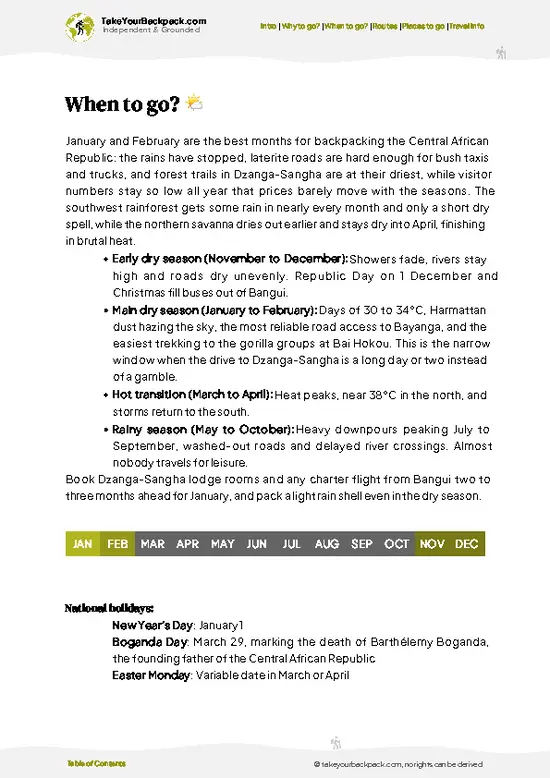
  • Weather: Bria’s climate swings between a wet season from May to October and a dry season from November to April. The wet months bring heavy, often relentless rain that turns roads into mud traps, making travel slow and unpredictable. The dry season offers clearer skies and easier trekking conditions, crucial for backpackers who want to move efficiently and avoid soggy gear.

  • Temperature: Expect daytime highs around 30–35°C (86–95°F) year-round, but humidity spikes during the wet season, making it feel hotter and stickier. Dry season mornings and evenings cool to a more comfortable 20–22°C (68–72°F), perfect for early hikes or campfires without sweating buckets.

  • Daylight Hours: Near the equator, Bria enjoys roughly 12 hours of daylight year-round, with sunrise around 6:00 AM and sunset
read more 👉

  • Weather: Bria’s climate swings between a wet season from May to October and a dry season from November to April. The wet months bring heavy, often relentless rain that turns roads into mud traps, making travel slow and unpredictable. The dry season offers clearer skies and easier trekking conditions, crucial for backpackers who want to move efficiently and avoid soggy gear.

  • Temperature: Expect daytime highs around 30–35°C (86–95°F) year-round, but humidity spikes during the wet season, making it feel hotter and stickier. Dry season mornings and evenings cool to a more comfortable 20–22°C (68–72°F), perfect for early hikes or campfires without sweating buckets.

  • Daylight Hours: Near the equator, Bria enjoys roughly 12 hours of daylight year-round, with sunrise around 6:00 AM and sunset near 6:00 PM. This steady rhythm means you can plan your days with confidence, regardless of season.

  • Crowds: Tourism is sparse in Bria, but the dry season sees a slight uptick as regional travelers arrive. This means more local markets and cultural events but still no overwhelming crowds—ideal for those who want authentic interaction without feeling isolated.

  • Seasonal Activities: The dry season is prime for exploring nearby savannahs and wildlife spotting, as animals gather around shrinking water sources. The wet season transforms the landscape into lush green, but many trails become impassable, limiting exploration options.

  • Price Fluctuations: Accommodation and transport costs dip during the wet season due to lower demand, but the trade-off is tougher logistics and less reliable services. The dry season commands higher prices but rewards you with smoother travel and better access to experiences.


Pro-tip: Aim for the tail end of the dry season (March-April) when the landscape starts to green but the roads are still firm—this sweet spot balances comfort, scenery, and fewer crowds.


source: climatestotravel.comJANJanuary: excellent for travelingFEBFebruary: excellent for travelingMARMarch: excellent for travelingAPRApril: highly recommended for travelingMAYMay: fair for travelingJUNJune: fair for travelingJULJuly: below average for travelingAUGAugust: below average for travelingSEPSeptember: fair for travelingOCTOctober: fair for travelingNOVNovember: highly recommended for travelingDECDecember: excellent for traveling
when-to-go

✈️ The backpacker research shortcutCentral African Republic Travel Guide

An offline-friendly backpacking guide with optimized travel routes, ranked highlights, transport advice, and the best areas to stay.
example page 0 from our offline Travel Guide for Central African Republic
example page 1 from our offline Travel Guide for Central African Republic
example page 2 from our offline Travel Guide for Central African Republic
example page 3 from our offline Travel Guide for Central African Republic
example page 4 from our offline Travel Guide for Central African Republic
example page 5 from our offline Travel Guide for Central African Republic
example page 6 from our offline Travel Guide for Central African Republic
example page 7 from our offline Travel Guide for Central African Republic
The digital guide (229 pages) contains:
51 highlights, ranked by travel appeal
Optimized 5, 10 & 15-day travel routes
Cities, national parks, landmarks, beaches
How to get around
Offline-friendly for travel without Wi-Fi
👉 Click to see all 30+ guide features

📅 Plan smarter in minutes, not weeks
Month by month travel advice
Festivals & national holidays
Budget expectations

🗺️ Go to the right places, skip the overrated ones
Honest pros & cons of destinations
Top hikes, parks & viewpoints
Lesser-known places most travelers miss
Clear “worth it vs skip it” guidance

🛏️ Travel smoothly without rookie mistakes
Best areas to stay
Transport systems explained simply
Common scams & safety advice
SIM cards, money & practical tips

🌍 Understand the country, not just visit it
Culture & traditions
52 Essential phrases & customs
Festivals worth planning around
Traveler-friendly historical context
Insights that make places more meaningful

📱 Built for real travel conditions
Fully downloadable PDF
Works completely offline
Optimized for phone use
Useful in remote areas & buses
Everything in one place
Save weeks of stressful planning
Get instant access to your full guide. 30‑day money-back guarantee.
+ Add another guide for just US$7.80

By proceeding you agree to our terms.
Sent to your inbox immediately after payment • 100% Secure Checkout
Best Backpacking Travel Advisor 2025 tourism awardBest Backpacking
Travel Advisor
2025
What others say about Take Your Backpack Guides:
⭐⭐⭐⭐⭐
Fantastic, amazing amount of information!
⭐⭐⭐⭐⭐
My goodness this is amazing, it's what I've been looking for hats off too you!
⭐⭐⭐⭐⭐
I think this is absolutely BRILLIANT
⭐⭐⭐⭐
Very complete and informative. It's still missing places, but I gotta to commend you
⭐⭐⭐⭐⭐
This is truly amazing, thank you, can't wait to explore it with my kids!
⭐⭐⭐⭐⭐
Awesome resource, thank you!
⭐⭐⭐⭐⭐
This is amazing! Can't wait to explore the ones I haven't seen
⭐⭐⭐⭐
I love this! Well done, great idea.
⭐⭐⭐⭐⭐
Thanks for taking the time to make this gem!
⭐⭐⭐⭐⭐
This might be the best website I've ever seen.
⭐⭐⭐⭐⭐
Congratulations, and thank you so much for your work; it's incredibly valuable.
⭐⭐⭐⭐
In all seriousness I think you did a great job pointing out the important spots
⭐⭐⭐⭐⭐
10/10 very good
⭐⭐⭐⭐⭐
As someone who's only just starting to visit regularly this is awesome, thank you.
⭐⭐⭐⭐
Thank you very much! I'm going to visit my dad, it's going to be very useful!
⭐⭐⭐⭐⭐
This is really cool! We'll be travelling for the first time and this definitely come in handy.
⭐⭐⭐⭐⭐
You are now our minister of culture, congratulations 👨‍💼
⭐⭐⭐⭐⭐
Just wanted to tell you that this is a pearl! Going to follow your recommendations.
⭐⭐⭐⭐⭐
This is so cool. I'll definitely be using the resource for my travels soon.
⭐⭐⭐⭐⭐
This is very impressive! Good work.
⭐⭐⭐⭐⭐
This is an amazing and informative site. Very well done!

🛏️ Where to stay?Where staying makes the most sense

In Bria, the heart of backpacker life pulses strongest around the town center, where the streets hum with local markets and the scent of grilled fish mingles with fresh earth after rain. This area isn’t just about convenience; it’s where you’ll find the safest pockets, thanks to a steady presence of local vendors and community watchfulness that naturally deters trouble. Staying here means you’re steps away from the pulse of daily life—easy to strike up conversations, share a meal, or catch a ride with fellow travelers.

Compared to the quieter, more residential outskirts, the town center offers … read more 👉
In Bria, the heart of backpacker life pulses strongest around the town center, where the streets hum with local markets and the scent of grilled fish mingles with fresh earth after rain. This area isn’t just about convenience; it’s where you’ll find the safest pockets, thanks to a steady presence of local vendors and community watchfulness that naturally deters trouble. Staying here means you’re steps away from the pulse of daily life—easy to strike up conversations, share a meal, or catch a ride with fellow travelers.

Compared to the quieter, more residential outskirts, the town center offers a social vibe that’s crucial for solo backpackers craving connection without sacrificing security. Hostels and budget guesthouses cluster here, often simple but clean, with communal spaces that invite storytelling over shared meals or a cold drink. The streets light up with activity well into the evening, but the atmosphere remains grounded, never overwhelming.

Venture too far from this hub, and you risk losing that balance. Peripheral neighborhoods can feel isolated, with fewer fellow travelers and less reliable infrastructure. In Bria, the town center isn’t just a place to crash—it’s your launchpad for authentic encounters and a smoother, more confident stay.

🚌 Getting aroundTransportation options and practical tips

Bria moves at its own rhythm—less a clockwork town and more a place where time bends to the sun’s arc and the chatter of market vendors. The dusty streets pulse with a mix of purposeful strides and spontaneous stops, where schedules are suggestions and intuition rules. The air carries the scent of fresh cassava and wood smoke, and the light shifts quickly from harsh midday glare to the soft, forgiving hues of late afternoon. Navigating Bria means tuning into this flow: it’s not about rigid timetables but about reading the town’s subtle cues and moving with its natural pace.


  • Walking: The heart of Bria’s transit. Most neighborhoods and markets are within a 20- to 30-minute walk, making your feet the most reliable and cost-effective way to get around. The streets are uneven and often dusty,
read more 👉
Bria moves at its own rhythm—less a clockwork town and more a place where time bends to the sun’s arc and the chatter of market vendors. The dusty streets pulse with a mix of purposeful strides and spontaneous stops, where schedules are suggestions and intuition rules. The air carries the scent of fresh cassava and wood smoke, and the light shifts quickly from harsh midday glare to the soft, forgiving hues of late afternoon. Navigating Bria means tuning into this flow: it’s not about rigid timetables but about reading the town’s subtle cues and moving with its natural pace.


  • Walking: The heart of Bria’s transit. Most neighborhoods and markets are within a 20- to 30-minute walk, making your feet the most reliable and cost-effective way to get around. The streets are uneven and often dusty, so sturdy shoes are a must. Walking lets you soak in the town’s textures—the cracked plaster walls, the calls of street vendors, and the occasional burst of laughter from children playing.


  • Shared Taxis (Taxi Collectifs): These are minibuses or cars that fill up with passengers before leaving. They run mainly from early morning around 6:30 AM until dusk, roughly 6 PM. Fares hover around 500 to 1,000 CFA francs depending on distance. They’re faster than walking but expect stops to pick up or drop off others, so patience is key. The ride is bumpy, the windows often open to the dusty air, and the driver’s playlist is usually local radio or lively chatter.


  • Motorcycle Taxis (Moto-Taxis): The quickest way to dart through Bria’s narrow alleys and avoid traffic jams. Available from dawn to late evening, fares start at about 300 CFA francs for short hops. They’re not the most comfortable, especially on rough roads, but they’re invaluable when time is tight or when you’re carrying a heavy pack. Helmets are rare, so brace yourself for the raw sensory rush of wind, dust, and the town’s smells rushing past.


  • Bicycle Rentals: Less common but worth seeking out if you want to cover more ground without the noise and dust of motorized transport. Rentals cost around 1,000 CFA francs per day. The terrain is mostly flat but can get rough on unpaved roads, so a sturdy bike is essential. Riding lets you control your pace and stop wherever the light or scent of grilled fish or fresh fruit pulls you in.

👛 Costs (as of 3 September 2026)How expensive it really is

Backpacking in Bria, Central African Republic, demands a grounded approach to budgeting, reflecting the town’s remote location and limited tourist infrastructure. Here’s what you can expect to spend daily:
  • Dorm Accommodation: Options are scarce and basic, often in guesthouses rather than formal hostels. Expect to pay around $5 to $10 per night. These places usually have simple beds, shared bathrooms, and minimal amenities, but they offer a safe place to rest after a day in the dusty streets.
  • Meals: Local food is inexpensive but straightforward. Street food or small local eateries serve staples like rice, beans, and grilled meat for about $2 to $5 per meal. Western-style or imported foods are rare and pricier, so sticking to local fare is both authentic and budget-friendly.
  • Local Transport:
read more 👉
Backpacking in Bria, Central African Republic, demands a grounded approach to budgeting, reflecting the town’s remote location and limited tourist infrastructure. Here’s what you can expect to spend daily:
  • Dorm Accommodation: Options are scarce and basic, often in guesthouses rather than formal hostels. Expect to pay around $5 to $10 per night. These places usually have simple beds, shared bathrooms, and minimal amenities, but they offer a safe place to rest after a day in the dusty streets.
  • Meals: Local food is inexpensive but straightforward. Street food or small local eateries serve staples like rice, beans, and grilled meat for about $2 to $5 per meal. Western-style or imported foods are rare and pricier, so sticking to local fare is both authentic and budget-friendly.
  • Local Transport: Transport options are limited and informal. Shared taxis or motorcycle taxis (boda-bodas) are the norm, costing roughly $1 to $3 for short trips within town. Walking is often the best way to absorb the atmosphere and avoid unnecessary expenses.
  • Basic Activities/Entry Fees: Bria isn’t a tourist hotspot, so formal entry fees are minimal or nonexistent. Any local cultural experiences or guided visits will likely be arranged privately and could cost around $5 to $10, depending on negotiation and the nature of the activity.
  • Miscellaneous Expenses: This includes bottled water, snacks, phone credit, and small tips. Budget about $2 to $4 daily, as clean water is essential and not always readily available from taps.

In total, a realistic daily budget for backpacking in Bria ranges from about $15 to $30. This covers the essentials without glossing over the town’s rugged conditions, ensuring you’re prepared for the practical realities while still soaking in the raw, unfiltered experience.
⚠️ Prices can change and everyone travels differently, so take this as a rough guide. Hope it helps you plan your adventure!

🚌 Day tripsWhere to go beyond the main area

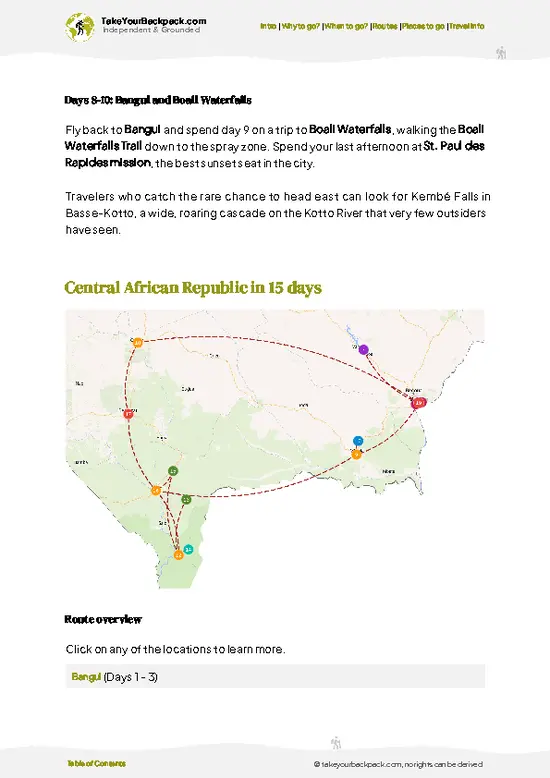
Bria, in the heart of the Central African Republic, serves as a vibrant base for day trips that reveal the raw beauty and culture of the region. Each journey offers a unique glimpse into the landscape and the lives of the people, making the effort worthwhile.

Trip to Dzanga-Sangha National Park
Just a few hours from Bria, Dzanga-Sangha is a treasure trove of biodiversity. The park is famous for its forest elephants and the chance to see gorillas in their natural habitat. The journey takes about four hours by road, so start early to maximize your time. Expect to pay around $10 for transport and a modest fee for park entry. The best time to visit is during the dry season from December to February when wildlife is more active. A common mistake is underestimating the need for a local guide; … read more 👉
Bria, in the heart of the Central African Republic, serves as a vibrant base for day trips that reveal the raw beauty and culture of the region. Each journey offers a unique glimpse into the landscape and the lives of the people, making the effort worthwhile.

Trip to Dzanga-Sangha National Park
Just a few hours from Bria, Dzanga-Sangha is a treasure trove of biodiversity. The park is famous for its forest elephants and the chance to see gorillas in their natural habitat. The journey takes about four hours by road, so start early to maximize your time. Expect to pay around $10 for transport and a modest fee for park entry. The best time to visit is during the dry season from December to February when wildlife is more active. A common mistake is underestimating the need for a local guide; they not only enhance your experience but also help navigate the often tricky trails.

👉 Explore Dzanga-Sangha National Park

Trip to the Chinko River
The Chinko River offers a serene escape into nature, just a three-hour drive from Bria. The river is a lifeline for local wildlife and a perfect spot for birdwatching. Bring your binoculars and a picnic; the scenery is stunning, with lush banks and the sound of water flowing. Costs are minimal—around $5 for transport and nothing for entry. The dry season is ideal for clearer views and easier access. Many first-timers miss the chance to explore the riverbanks; don’t just stay in the vehicle—get out and soak in the atmosphere.


Trip to the Local Markets
For a taste of local life, head to Bria’s bustling markets. You can spend a few hours wandering through stalls filled with vibrant fabrics, spices, and handmade crafts. This trip is free unless you indulge in some local snacks or souvenirs. The best time to visit is early morning when the market is alive with energy and the scent of fresh produce fills the air. A common mistake is rushing through; take your time to chat with vendors and learn about their crafts.


Trip to the Bamingui-Bangoran National Park
A bit further afield, Bamingui-Bangoran National Park is about a five-hour drive from Bria. This park is less frequented, offering a more untouched experience of Central African wildlife. The entry fee is around $10, and the journey is worth it for the chance to see rare species in a stunning landscape. The dry season is best for wildlife sightings. First-timers often overlook the importance of packing enough water and snacks for the long day; don’t let hunger distract you from the adventure.

👉 Explore Bamingui-Bangoran National Park
Want to know what more Central African Republic offers?
The Central African Republic Travel Guide describes 51 highlights, from cities to national parks, from beaches to hikes

Get the Travel Guide -

🛡️ SafetyStaying Safe: What Travelers Should Know

Bria, in the Central African Republic, offers a unique experience, but staying aware enhances your journey. The town is generally safe, but like anywhere, a little caution goes a long way.

When wandering the bustling markets, keep your belongings close. Pickpockets can be a nuisance in crowded areas, especially during peak hours. If you’re solo, consider sticking to well-lit streets after dark. The atmosphere shifts at night; fewer people are around, and it’s easy to lose your bearings.

Scams are rare but can happen. Be wary of overly friendly locals offering unsolicited help; they might expect a tip. Always negotiate prices upfront, whether for a taxi or a souvenir.

Overall, carry yourself with confidence. A friendly smile and a respectful demeanor can open doors, while being aware … read more 👉
Bria, in the Central African Republic, offers a unique experience, but staying aware enhances your journey. The town is generally safe, but like anywhere, a little caution goes a long way.

When wandering the bustling markets, keep your belongings close. Pickpockets can be a nuisance in crowded areas, especially during peak hours. If you’re solo, consider sticking to well-lit streets after dark. The atmosphere shifts at night; fewer people are around, and it’s easy to lose your bearings.

Scams are rare but can happen. Be wary of overly friendly locals offering unsolicited help; they might expect a tip. Always negotiate prices upfront, whether for a taxi or a souvenir.

Overall, carry yourself with confidence. A friendly smile and a respectful demeanor can open doors, while being aware of your surroundings keeps you grounded. Embrace the local culture, but trust your instincts. That balance will lead to a richer experience in Bria.

FAQTraveler FAQ

Bria is primarily a stopover rather than a destination for extended visits due to limited tourist infrastructure and ongoing security concerns. It serves as a transit point for travelers moving through the Central African Republic, especially those heading to remote areas.
One to two days are sufficient in Bria to rest and prepare for onward travel. The town has basic accommodations and markets, but there are few attractions that require more time.
No, Bria cannot be effectively visited as a day trip from a nearby city because it is remote and travel times are long. The nearest major city, Bangui, is over 600 kilometers away, making day trips impractical given road conditions and transport availability.
⚠️ Things can change over time, so always validate details locally before you go.

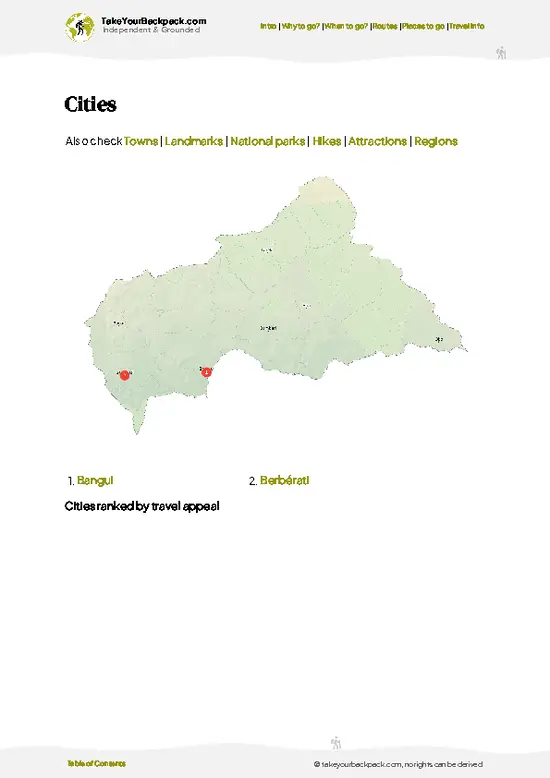
Other Central African towns near Bria

Explore more nearby:

  • Bambari—Ouaka River, bustling market, mining activity| 169 km away
  • Ouadda—eastern trade route, market stalls, arid surroundings| 176 km away
  • Ndele—northern crossroads, market square, ethnic diversity| 255 km away

💡 Not sure where to go next?
Create a personalized itinerary for Central African Republic including Bria and the places that fit your trip.

Generate my itinerary

👉 Discover all towns

Or checkout all Central African Republic has to offer (think cities, towns, villages, national parks, hikes, beaches, festivals)
Country photo of Central African Republic

We 💚 feedbackSumming up the experience

Bria has a raw, unfiltered vibe that pulses with life. The scent of grilled meat wafts through the air as locals gather, sharing stories and laughter. Don’t miss the bustling market; it’s a sensory overload of colors and sounds. The best surprise? The warmth of the people—genuine smiles that make you feel at home. Just a heads-up: be mindful of your surroundings. It’s a place that rewards curiosity but requires a bit of street smarts. Embrace the chaos; it’s part of the charm.

✍️ Help improve this page!
The information on this page is based on in-depth research, insights shared by experienced travelers, and feedback from the local travel community in Central African Republic. While every effort is made to keep the information accurate and current, conditions can change — so if you spot anything incorrect or outdated, please get in touch.


🙋‍♂️ Give feedback

👋 Meet the founderWho’s Behind Take Your Backpack?

Johan, backpacker and founder of TakeYourBackpackHi, I’m Johan (Netherlands 🇳🇱), the creator of TakeYourBackpack. Over the past decade, I’ve backpacked through 80+ countries across six continents, gaining extensive experience with independent travel, long-term trips, and overland routes.

This site is built on a combination of firsthand travel experience and carefully curated insights from other backpackers. Many guides are based on places I’ve personally visited, while others bring together tips, observations, and practical advice shared by trusted travelers I’ve met along the way.

The goal is to provide realistic, experience-driven guidance — not generic itineraries — so you can explore destinations with better context, clearer expectations, and more confidence.

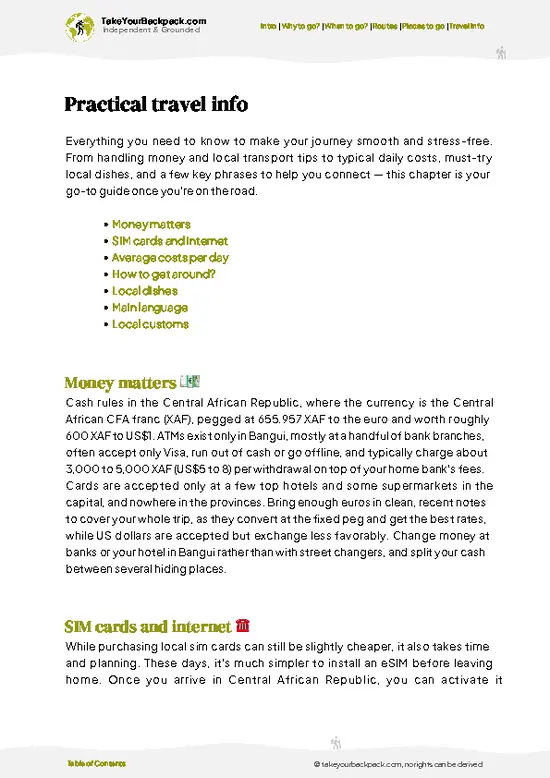
Get full country guide •
Instant download • 51 highlights • Full Offline guide