×

Central African Republic🇨🇫 | townsRafaïremote southeast, forest fringe, small airstrip | things to do and best time to go

Explore BozoumExplore Sibut

Backpacking in Rafaï
👀 For curious travelerstown ranked #21
By Johan Kruseman 🇳🇱 | Updated September 3, 2026

The first real fork in the road for Rafaï is whether to push on or linger—because every hour here is a trade-off between raw, unfiltered Central African life and the comfort of more developed towns. Rafaï sits in the far southeast of the Central African Republic, closer to the Congolese border than to any tourist circuit. The town itself is dusty, slow, and honest: a crossroads for traders, not travelers. You’ll find a market pulsing with local produce and chatter, but little in the way of hostels or nightlife—just the hum of evening fires and the scent of cassava. It’s a practical stopover if you’re heading deeper into the forest or toward Bangassou, but don’t expect much in the way of organized activities or backpacker camaraderie. Getting here means braving rough, sometimes impassable roads; you’ll need patience and a sturdy vehicle, as public transport is rare and unpredictable. Costs are low, but so is comfort. Compared to Bangui or even Bangassou, Rafaï feels more remote, less social, and far more real—rewarding if you want to see the Central African Republic without a filter, but not a place to linger unless you’re chasing solitude or the next leg of a hard-won journey.

Discover everything you want to know in the 📖 Central African Republic Travel Guide.
Safety warning

The current risk level for Central African Republic is high. Check the advice before going.


Get your Central African Republic guide
51 ranked highlights, routes & tips, works offline (229 pages)
Loading the map 🌍
CLICK TO FILTER
cities
towns
landmarks
national parks
hikes
attractions
festivals
regions
SHOW COUNTRY’S BESTSHOW ALL

✨ Why go?
Ranked #21 town in Central African Republic
What makes it a must-see town

Rafaï serves as a gateway for backpackers exploring the Central African Republic. Its walkable streets make it easy to navigate, while small-scale hostels offer a cozy base for weary travelers. The local food scene is vibrant, with street vendors serving up hearty dishes that reflect the region’s culture. Many come here for the nearby hikes and cultural sites, making it a perfect stop for slow travelers and hikers. You’ll find a friendly atmosphere, encouraging connections among solo travelers and small groups. Most stay a few days, soaking in the local vibe before heading deeper into the wild.
Want to include Rafaï in your Central African Republic route?
Create a personalized Central African Republic itinerary that includes Rafaï and the places that fit your trip — based on your travel style, budget, and available time. Get your route in seconds.

Generate my trip

💡 HighlightsPlaces and moments you shouldn't skip

  • Rafaï central market — The chaotic heart of the village where traders sell fresh produce, charcoal, second-hand clothes and local snacks; great for people-watching, buying cheap travel basics and practicing a few words of Sango.
  • Catholic mission compound — A mission church, school and clinic (where present) that tells the story of decades of missionary and humanitarian presence; useful for meeting long-time residents and seeing how education and healthcare are delivered locally.
  • Village mosque — A focal point for daily and Friday prayers; visiting during non-prayer times gives a quiet window into local religious life and community rhythms.
  • Sub-prefecture / administrative square — The local government offices and town square are where public life and announcements happen; useful for understanding
read more 👉
  • Rafaï central market — The chaotic heart of the village where traders sell fresh produce, charcoal, second-hand clothes and local snacks; great for people-watching, buying cheap travel basics and practicing a few words of Sango.
  • Catholic mission compound — A mission church, school and clinic (where present) that tells the story of decades of missionary and humanitarian presence; useful for meeting long-time residents and seeing how education and healthcare are delivered locally.
  • Village mosque — A focal point for daily and Friday prayers; visiting during non-prayer times gives a quiet window into local religious life and community rhythms.
  • Sub-prefecture / administrative square — The local government offices and town square are where public life and announcements happen; useful for understanding local administration and catching events or market spillover.
  • Old gendarmerie/administrative buildings — Weathered colonial-era or post-colonial structures around the town center that reflect Rafaï’s modern history and the changes the region has gone through.
  • Rafaï airstrip — A short dirt runway on the village edge; not a tourist attraction per se, but a good vantage point to see the surrounding landscape and to observe arrivals/departures that connect Rafaï to larger towns.
  • Traditional chief’s compound and village square — The chief’s compound is where customary law is discussed, ceremonies happen and stories are passed on—one of the best places to meet elders and learn local customs (ask permission before entering).
  • Weekly livestock/craft trading spot — On market days a dedicated area for selling goats, poultry and locally made goods springs to life; it’s lively, noisy and very authentic—great for photos and buying simple handicrafts.
  • River crossing / local stream banks — Small bridges, fords or riverbanks used by fishermen and farmers offer a peaceful, everyday look at rural life and can be excellent for a short riverside walk at dawn or dusk.
  • Community health center or clinic — Often run by a mission or NGO, these clinics are not just healthcare spots but social hubs where you can learn about the village’s recent history and humanitarian work (respect visiting rules and privacy).
A few real, visitable highlights a short drive from Rafaï worth day-tripping to include the banks and rapids of the Mbomou River, nearby border villages where cross-border markets happen, and the regional town of Bangassou for a larger market and riverside views.
Spotted a mistake or missing something? Contact us.

🏘️ NeighborhoodsNeighborhood guide to Rafaï

Rafaï offers a unique blend of culture and adventure, making it a fascinating stop for backpackers.

Centre Ville: This is the heart of Rafaï. You’ll find bustling markets and local eateries. The vibe is energetic, perfect for soaking in daily life. Walkability is high, and you can easily navigate the streets. Nightlife is low-key, with a few bars where locals gather. Ideal for short stays, it gives you a taste of the town’s pulse.

Quartier des Artisans: Known for its crafts and workshops, this area has a quieter atmosphere. It’s a great spot to connect with local artisans. Costs here are moderate, and the walkability is decent. Perfect for longer stays if you want to immerse yourself in the local craft scene.

Zone de Santé: This area is more residential and less touristy. It’s quieter, … read more 👉
Rafaï offers a unique blend of culture and adventure, making it a fascinating stop for backpackers.

Centre Ville: This is the heart of Rafaï. You’ll find bustling markets and local eateries. The vibe is energetic, perfect for soaking in daily life. Walkability is high, and you can easily navigate the streets. Nightlife is low-key, with a few bars where locals gather. Ideal for short stays, it gives you a taste of the town’s pulse.

Quartier des Artisans: Known for its crafts and workshops, this area has a quieter atmosphere. It’s a great spot to connect with local artisans. Costs here are moderate, and the walkability is decent. Perfect for longer stays if you want to immerse yourself in the local craft scene.

Zone de Santé: This area is more residential and less touristy. It’s quieter, making it suitable for those seeking peace. Transport access is limited, but it’s a good base for longer stays if you want to explore the surrounding nature.

⌛️ 1 dayA smart one-day plan

Rafaï, a town in the Central African Republic, pulses with the rhythm of everyday life, where the air is thick with the scent of grilled plantains and the chatter of locals fills the streets. Start your morning at the bustling market in the heart of the town. The vibrant colors of fresh produce and handmade crafts create a feast for the eyes. Engage with vendors; their stories add depth to your experience.

As the sun climbs higher, head to the nearby riverbank. Here, you can watch fishermen casting their nets, a scene that captures the essence of local life. It’s a perfect spot for reflection or a quiet moment with a book.

In the afternoon, wander through the residential neighborhoods, where you’ll find the warmth of community life. Stop by a local café for a taste of traditional cassava … read more 👉
Rafaï, a town in the Central African Republic, pulses with the rhythm of everyday life, where the air is thick with the scent of grilled plantains and the chatter of locals fills the streets. Start your morning at the bustling market in the heart of the town. The vibrant colors of fresh produce and handmade crafts create a feast for the eyes. Engage with vendors; their stories add depth to your experience.

As the sun climbs higher, head to the nearby riverbank. Here, you can watch fishermen casting their nets, a scene that captures the essence of local life. It’s a perfect spot for reflection or a quiet moment with a book.

In the afternoon, wander through the residential neighborhoods, where you’ll find the warmth of community life. Stop by a local café for a taste of traditional cassava porridge, a dish that embodies the region’s flavors.

As evening approaches, make your way to the edge of town for a sunset view over the savannah. The sky transforms into a canvas of oranges and purples, a fitting end to your day in Rafaï, where every moment feels like a connection to something deeper.
Turn your Rafaï visit into an Central African Republic adventure
Build a complete Central African Republic route with Rafaï, hidden gems, must-see destinations, and realistic travel times included.

Generate my trip

🌤️ When to go?Weather, crowds, and seasonal trade-offs


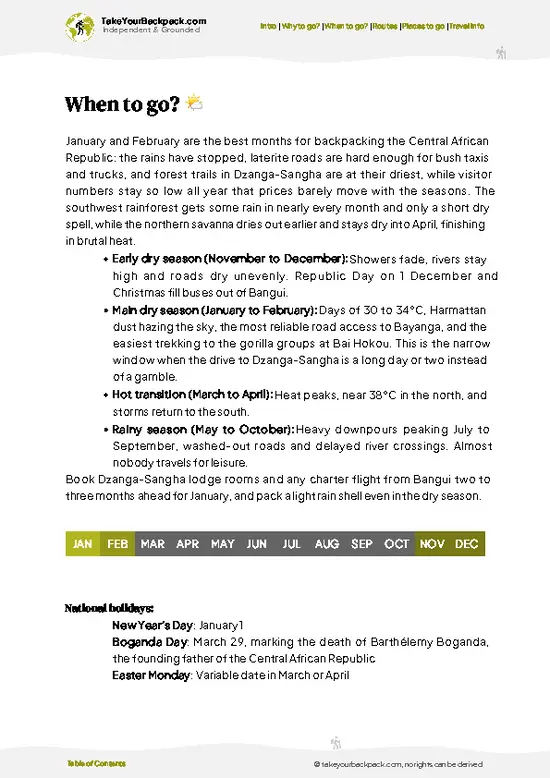
  • Weather: Rafaï’s dry season from November to February offers dusty trails and clear skies, while the wet season (March to October) brings heavy rains that can turn roads into mud traps, making travel tough but the landscape lush.

  • Temperature: Expect highs around 30-35°C (86-95°F) year-round, with nights cooling to 20-22°C (68-72°F). The dry season feels hotter but less oppressive without the humidity.

  • Daylight Hours: Roughly 11-12 hours of daylight year-round, with sunrise near 6:00 AM and sunset around 6:00 PM, giving you solid daylight for trekking and exploring.

  • Crowds: Rafaï sees few tourists anytime, but the dry season attracts slightly more visitors due to easier access and better conditions.

  • Seasonal Activities: Dry months are best for hiking and wildlife spotting; wet months
read more 👉

  • Weather: Rafaï’s dry season from November to February offers dusty trails and clear skies, while the wet season (March to October) brings heavy rains that can turn roads into mud traps, making travel tough but the landscape lush.

  • Temperature: Expect highs around 30-35°C (86-95°F) year-round, with nights cooling to 20-22°C (68-72°F). The dry season feels hotter but less oppressive without the humidity.

  • Daylight Hours: Roughly 11-12 hours of daylight year-round, with sunrise near 6:00 AM and sunset around 6:00 PM, giving you solid daylight for trekking and exploring.

  • Crowds: Rafaï sees few tourists anytime, but the dry season attracts slightly more visitors due to easier access and better conditions.

  • Seasonal Activities: Dry months are best for hiking and wildlife spotting; wet months bring vibrant birdlife but can limit movement.

  • Price Fluctuations: Costs remain stable year-round, but transport and guide fees may rise slightly in the dry season when demand peaks.


Pro-tip: Aim for the early dry season—November or December—when the air is crisp, the earth smells of dust and smoke, and the landscape is waking up from the rains, offering a raw, authentic experience without the mud slog.


source: climatestotravel.comJANJanuary: highly recommended for travelingFEBFebruary: highly recommended for travelingMARMarch: fair for travelingAPRApril: fair for travelingMAYMay: fair for travelingJUNJune: fair for travelingJULJuly: fair for travelingAUGAugust: fair for travelingSEPSeptember: fair for travelingOCTOctober: fair for travelingNOVNovember: excellent for travelingDECDecember: excellent for traveling
when-to-go

✈️ The backpacker research shortcutCentral African Republic Travel Guide

An offline-friendly backpacking guide with optimized travel routes, ranked highlights, transport advice, and the best areas to stay.
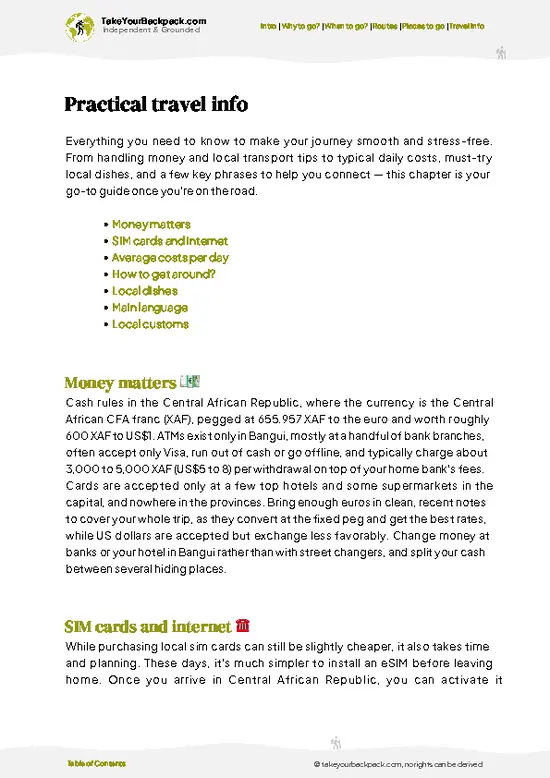
example page 0 from our offline Travel Guide for Central African Republic
example page 1 from our offline Travel Guide for Central African Republic
example page 2 from our offline Travel Guide for Central African Republic
example page 3 from our offline Travel Guide for Central African Republic
example page 4 from our offline Travel Guide for Central African Republic
example page 5 from our offline Travel Guide for Central African Republic
example page 6 from our offline Travel Guide for Central African Republic
example page 7 from our offline Travel Guide for Central African Republic
The digital guide (229 pages) contains:
51 highlights, ranked by travel appeal
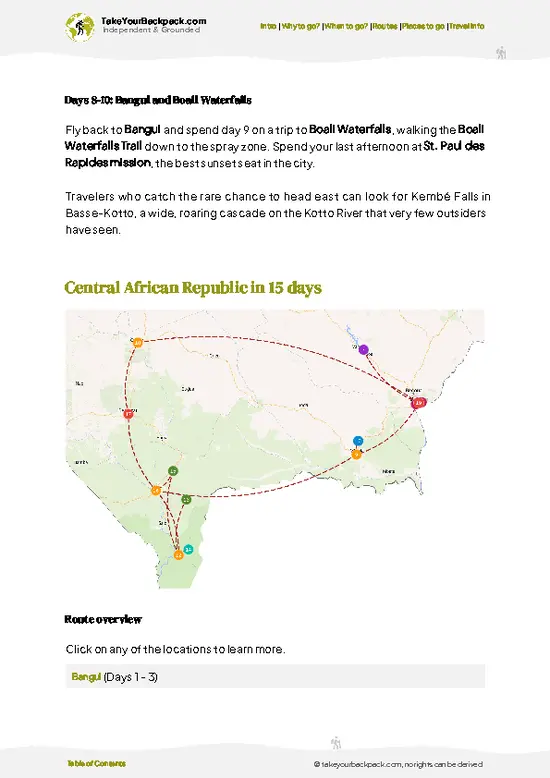
Optimized 5, 10 & 15-day travel routes
Cities, national parks, landmarks, beaches
How to get around
Offline-friendly for travel without Wi-Fi
👉 Click to see all 30+ guide features

📅 Plan smarter in minutes, not weeks
Month by month travel advice
Festivals & national holidays
Budget expectations

🗺️ Go to the right places, skip the overrated ones
Honest pros & cons of destinations
Top hikes, parks & viewpoints
Lesser-known places most travelers miss
Clear “worth it vs skip it” guidance

🛏️ Travel smoothly without rookie mistakes
Best areas to stay
Transport systems explained simply
Common scams & safety advice
SIM cards, money & practical tips

🌍 Understand the country, not just visit it
Culture & traditions
52 Essential phrases & customs
Festivals worth planning around
Traveler-friendly historical context
Insights that make places more meaningful

📱 Built for real travel conditions
Fully downloadable PDF
Works completely offline
Optimized for phone use
Useful in remote areas & buses
Everything in one place
Save weeks of stressful planning
Get instant access to your full guide. 30‑day money-back guarantee.
+ Add another guide for just US$7.80

By proceeding you agree to our terms.
Sent to your inbox immediately after payment • 100% Secure Checkout
Best Backpacking Travel Advisor 2025 tourism awardBest Backpacking
Travel Advisor
2025
What others say about Take Your Backpack Guides:
⭐⭐⭐⭐⭐
Fantastic, amazing amount of information!
⭐⭐⭐⭐⭐
My goodness this is amazing, it's what I've been looking for hats off too you!
⭐⭐⭐⭐⭐
I think this is absolutely BRILLIANT
⭐⭐⭐⭐
Very complete and informative. It's still missing places, but I gotta to commend you
⭐⭐⭐⭐⭐
This is truly amazing, thank you, can't wait to explore it with my kids!
⭐⭐⭐⭐⭐
Awesome resource, thank you!
⭐⭐⭐⭐⭐
This is amazing! Can't wait to explore the ones I haven't seen
⭐⭐⭐⭐
I love this! Well done, great idea.
⭐⭐⭐⭐⭐
Thanks for taking the time to make this gem!
⭐⭐⭐⭐⭐
This might be the best website I've ever seen.
⭐⭐⭐⭐⭐
Congratulations, and thank you so much for your work; it's incredibly valuable.
⭐⭐⭐⭐
In all seriousness I think you did a great job pointing out the important spots
⭐⭐⭐⭐⭐
10/10 very good
⭐⭐⭐⭐⭐
As someone who's only just starting to visit regularly this is awesome, thank you.
⭐⭐⭐⭐
Thank you very much! I'm going to visit my dad, it's going to be very useful!
⭐⭐⭐⭐⭐
This is really cool! We'll be travelling for the first time and this definitely come in handy.
⭐⭐⭐⭐⭐
You are now our minister of culture, congratulations 👨‍💼
⭐⭐⭐⭐⭐
Just wanted to tell you that this is a pearl! Going to follow your recommendations.
⭐⭐⭐⭐⭐
This is so cool. I'll definitely be using the resource for my travels soon.
⭐⭐⭐⭐⭐
This is very impressive! Good work.
⭐⭐⭐⭐⭐
This is an amazing and informative site. Very well done!

🛏️ Where to stay?Best areas to stay in Central African Republic

In Rafaï, the best spot for backpackers is the town center near the market district. This area hums with life from dawn till dusk—vendors shouting, spices mingling with the earthy scent of fresh rain on dirt roads. It’s where locals gather, making it safer and more social than the quieter outskirts. Budget travelers find a handful of simple guesthouses here, offering a chance to connect with other solo adventurers over shared meals or stories under flickering lantern light. Avoid the peripheral neighborhoods; they’re less secure and lack the pulse that gives Rafaï its character. Staying central … read more 👉
In Rafaï, the best spot for backpackers is the town center near the market district. This area hums with life from dawn till dusk—vendors shouting, spices mingling with the earthy scent of fresh rain on dirt roads. It’s where locals gather, making it safer and more social than the quieter outskirts. Budget travelers find a handful of simple guesthouses here, offering a chance to connect with other solo adventurers over shared meals or stories under flickering lantern light. Avoid the peripheral neighborhoods; they’re less secure and lack the pulse that gives Rafaï its character. Staying central means you’re plugged into the town’s rhythm, turning every step into a genuine experience.

🚌 Getting aroundHow to get around Rafaï

Rafaï moves at the pace of the sun—slow, deliberate, and a little unpredictable. The town’s rhythm isn’t dictated by clocks but by the shifting light and the hum of daily life. Streets pulse with the scent of earth and smoke, and locals navigate with a mix of routine and improvisation. Here, rigid schedules are a foreign concept; instead, you’ll find a flow that rewards patience and a keen eye for the right moment to move. Understanding this flow isn’t just about avoiding frustration—it’s the key to blending in and making your journey feel less like a tourist’s checklist and more like a local’s day.


  • Walking: The heart of Rafaï is best explored on foot. Compact and unhurried, the town’s dirt paths invite you to soak in the textures and sounds at your own pace—free, flexible, and the most
read more 👉
Rafaï moves at the pace of the sun—slow, deliberate, and a little unpredictable. The town’s rhythm isn’t dictated by clocks but by the shifting light and the hum of daily life. Streets pulse with the scent of earth and smoke, and locals navigate with a mix of routine and improvisation. Here, rigid schedules are a foreign concept; instead, you’ll find a flow that rewards patience and a keen eye for the right moment to move. Understanding this flow isn’t just about avoiding frustration—it’s the key to blending in and making your journey feel less like a tourist’s checklist and more like a local’s day.


  • Walking: The heart of Rafaï is best explored on foot. Compact and unhurried, the town’s dirt paths invite you to soak in the textures and sounds at your own pace—free, flexible, and the most immersive way to navigate.

  • Shared Minibuses: These operate on a loose schedule, typically starting around 6:30 AM and winding down by 5 PM. They’re cheap (a few hundred CFA francs) but expect cramped seats and frequent stops, perfect for budget travelers who don’t mind a bit of chaos.

  • Motorcycle Taxis (Boda Bodas): Available throughout the day until dusk, these are faster and more nimble than minibuses, costing slightly more but shaving off travel time. Negotiate fares upfront to avoid surprises.

  • Private Car Hire: For those with a bit more to spend, renting a car with a driver offers flexibility and comfort, especially for trips outside town. Prices vary, but it’s the smoothest way to cover rough roads and unpredictable weather.

👛 Costs (as of 3 September 2026)Typical daily expenses

Backpacking in Rafaï, Central African Republic, is a raw, off-the-beaten-path experience where costs reflect the town’s remote and underdeveloped nature. Expect simplicity and scarcity, which shapes every expense.
  • Dorm Accommodation: Rafaï doesn’t have formal hostels or guesthouses with dorms like more touristy spots. Basic lodging options are limited to small local guesthouses or family-run places, often with shared rooms. Prices hover around €5-10 per night, but expect minimal amenities—think a mosquito net, a fan if you’re lucky, and basic bedding.
  • Meals: Food is straightforward and local. Street food or small eateries serve staples like rice, cassava, and grilled fish or chicken. Meals cost about €1-3 each. Fresh fruit and vegetables are seasonal and sometimes scarce, so plan for simple,
read more 👉
Backpacking in Rafaï, Central African Republic, is a raw, off-the-beaten-path experience where costs reflect the town’s remote and underdeveloped nature. Expect simplicity and scarcity, which shapes every expense.
  • Dorm Accommodation: Rafaï doesn’t have formal hostels or guesthouses with dorms like more touristy spots. Basic lodging options are limited to small local guesthouses or family-run places, often with shared rooms. Prices hover around €5-10 per night, but expect minimal amenities—think a mosquito net, a fan if you’re lucky, and basic bedding.
  • Meals: Food is straightforward and local. Street food or small eateries serve staples like rice, cassava, and grilled fish or chicken. Meals cost about €1-3 each. Fresh fruit and vegetables are seasonal and sometimes scarce, so plan for simple, filling meals rather than variety or luxury.
  • Local Transport: Transport options are sparse and informal. Motorbike taxis or shared bush taxis are the norm, with short rides costing around €0.50-1. Longer trips to nearby villages or towns might run €3-5. Walking is often the best way to explore the immediate area, given the rough roads and limited schedules.
  • Basic Activities/Entry Fees: Rafaï isn’t a tourist hub with paid attractions. Most activities involve exploring the natural surroundings or visiting local markets and villages, which are free or might involve a small tip or fee of under €2 if guided by locals. Organized tours are rare and usually arranged privately at higher costs.
  • Miscellaneous Expenses: Budget a small amount for essentials like bottled water (€0.50), phone credit for local SIM cards (€1-2), and occasional supplies. Medical supplies or toiletries might be pricier due to scarcity, so bring what you need from outside.

The total daily budget for backpacking in Rafaï typically ranges between €10 and €20. This reflects the town’s basic infrastructure and limited services but also the chance to immerse yourself in a place where every euro goes directly into local hands and authentic experiences.
⚠️ Prices can change and everyone travels differently, so take this as a rough guide. Hope it helps you plan your adventure!

🚌 Day tripsEasy escapes and nearby places

Rafaï, in the Central African Republic, is a backpacker’s launchpad for unforgettable day trips. The town’s vibrant market and warm locals set the stage for adventures that blend culture and nature.

Trip to the Dzanga-Sangha National Park
Just a couple of hours from Rafaï, this park is a haven for wildlife enthusiasts. Expect to see elephants roaming freely and hear the calls of exotic birds. The entrance fee is around $10, and hiring a local guide will cost you about $20. The best time to visit is during the dry season, from November to April, when the trails are more accessible. A common mistake? Underestimating the park’s size; plan for a full day to soak it all in.
👉 Explore Dzanga-Sangha National Park

Visit to the Bayanga Village
A short drive from Rafaï, Bayanga offers a glimpse … read more 👉
Rafaï, in the Central African Republic, is a backpacker’s launchpad for unforgettable day trips. The town’s vibrant market and warm locals set the stage for adventures that blend culture and nature.

Trip to the Dzanga-Sangha National Park
Just a couple of hours from Rafaï, this park is a haven for wildlife enthusiasts. Expect to see elephants roaming freely and hear the calls of exotic birds. The entrance fee is around $10, and hiring a local guide will cost you about $20. The best time to visit is during the dry season, from November to April, when the trails are more accessible. A common mistake? Underestimating the park’s size; plan for a full day to soak it all in.
👉 Explore Dzanga-Sangha National Park

Visit to the Bayanga Village
A short drive from Rafaï, Bayanga offers a glimpse into local life. The village is known for its traditional crafts and friendly atmosphere. You can spend a few hours exploring and chatting with artisans. Budget around $5 for transport and maybe $10 for souvenirs. The dry season is ideal, as the roads can get muddy during the rains. Many first-timers miss out on the chance to engage with locals—don’t be shy!


Excursion to the Sangha River
The Sangha River is a tranquil escape just an hour away. You can kayak or simply relax by the water, soaking in the lush surroundings. Costs are minimal—about $15 for a kayak rental. The best time is early morning when the mist rises off the water. A common oversight is not bringing enough water; it can get hot out there!
Want to know what more Central African Republic offers?
The Central African Republic Travel Guide describes 51 highlights, from cities to national parks, from beaches to hikes

Get the Travel Guide -

🛡️ SafetySafety Tips and Common Scams in Rafaï

Rafaï is generally safe, but like any place, a bit of awareness goes a long way. Stick to well-lit areas at night, especially if you’re solo. The market can be bustling, and while most vendors are friendly, keep an eye on your belongings; pickpocketing can happen in crowded spots. Be cautious of overly eager guides offering unsolicited help—politely decline and trust your instincts. Carry yourself confidently, and engage with locals; a smile can often disarm potential annoyances. Enjoy the vibrant atmosphere, but stay grounded.

FAQTraveler FAQ

Rafaï is primarily a stopover rather than a destination for extended visits due to limited tourist infrastructure and attractions. It serves as a practical rest point for travelers moving through the southeastern region of the Central African Republic.
One day is generally sufficient to spend in Rafaï, mainly for rest and resupply. The town's small size and limited amenities mean there is little to occupy more time.
No, Rafaï cannot be easily visited as a day trip from a nearby city because it is remote and transport options are limited. The nearest larger town is several hours away by rough roads, making day trips impractical.
⚠️ Things can change over time, so always validate details locally before you go.

Other Central African towns near Rafaï

Explore more nearby:

  • Zemio—border town, airstrip, humanitarian presence| 133 km away
  • Bria—mineral resources, displaced communities, central market| 277 km away
  • Mobaye—border crossing, river ferry, trade post| 313 km away

💡 Not sure where to go next?
Create a personalized itinerary for Central African Republic including Rafaï and the places that fit your trip.

Generate my itinerary

👉 Discover all towns

Or checkout all Central African Republic has to offer (think cities, towns, villages, national parks, hikes, beaches, festivals)
Country photo of Central African Republic

We 💚 feedbackIs it worth it?

Rafaï pulses with a raw, unfiltered energy. The scent of wood smoke mingles with laughter from the market. Don’t miss the local music scene; it’s a delightful surprise. Just be ready for the heat—hydrate often, and embrace the rhythm of life here.

✍️ Help improve this page!
The information on this page is based on in-depth research, insights shared by experienced travelers, and feedback from the local travel community in Central African Republic. While every effort is made to keep the information accurate and current, conditions can change — so if you spot anything incorrect or outdated, please get in touch.


🙋‍♂️ Give feedback

👋 Meet the founderWho’s Behind Take Your Backpack?

Johan, backpacker and founder of TakeYourBackpackHi, I’m Johan (Netherlands 🇳🇱), the creator of TakeYourBackpack. Over the past decade, I’ve backpacked through 80+ countries across six continents, gaining extensive experience with independent travel, long-term trips, and overland routes.

This site is built on a combination of firsthand travel experience and carefully curated insights from other backpackers. Many guides are based on places I’ve personally visited, while others bring together tips, observations, and practical advice shared by trusted travelers I’ve met along the way.

The goal is to provide realistic, experience-driven guidance — not generic itineraries — so you can explore destinations with better context, clearer expectations, and more confidence.

Get full country guide •
Instant download • 51 highlights • Full Offline guide