
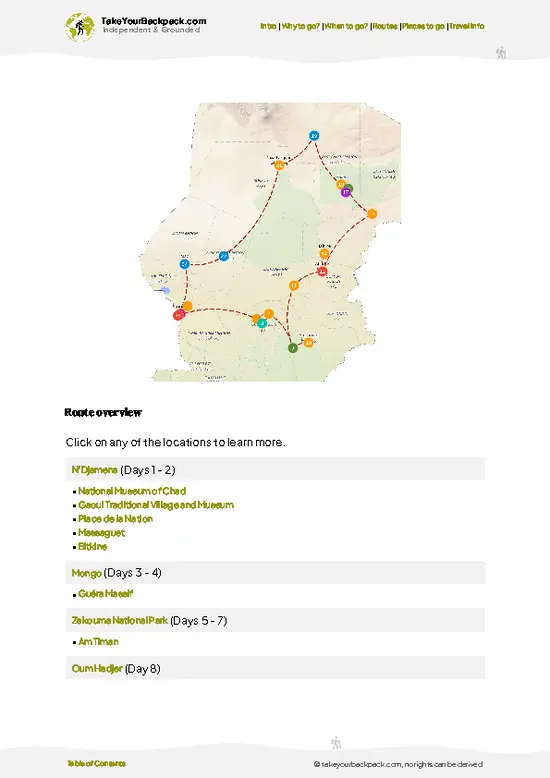
- Grand Marché de Moundou (Central Market) — The city’s busiest hub: stalls stacked with cassava, peanuts, second-hand clothes and local fabrics, plus informal food vendors. Great for people-watching, picking up inexpensive gifts and feeling the city’s rhythm; go in the morning when produce and fish arrivals are busiest.
- Logone riverfront and fish market — The Logone is the lifeline here. Walk the riverbanks to see pirogues, drying fish and the unloading of catches; evenings at the riverfront are especially atmospheric for photos and watching daily trade.
- Brasserie du Logone (Moundou brewery) — An industrial landmark and major local employer. You can admire the brewery’s presence in town, buy locally produced beer, and sometimes arrange a short visit or chat with staff if you ask politely
- Grand Marché de Moundou (Central Market) — The city’s busiest hub: stalls stacked with cassava, peanuts, second-hand clothes and local fabrics, plus informal food vendors. Great for people-watching, picking up inexpensive gifts and feeling the city’s rhythm; go in the morning when produce and fish arrivals are busiest.
- Logone riverfront and fish market — The Logone is the lifeline here. Walk the riverbanks to see pirogues, drying fish and the unloading of catches; evenings at the riverfront are especially atmospheric for photos and watching daily trade.
- Brasserie du Logone (Moundou brewery) — An industrial landmark and major local employer. You can admire the brewery’s presence in town, buy locally produced beer, and sometimes arrange a short visit or chat with staff if you ask politely — a window into Moundou’s economy.
- The diocesan cathedral (seat of the Catholic Diocese of Moundou) — More than architecture: it’s a social center where you can observe community life, attend a service if you want, and see how faith shapes local rhythms.
- Grande Mosquée (central mosque) — A key place for the Muslim community; timing a visit around call-to-prayer gives you a real sense of daily life and the city’s religious diversity (ask permission before entering during prayers).
- Local cotton markets and ginning area — Moundou sits in Chad’s cotton belt. The cotton trade’s visible signs — traders, stacked bales, and nearby ginning facilities — tell the economic story of the region; much of the best insight comes from watching market trade rather than formal tours.
- Stade communal (local football stadium) — If you can catch a match or even a training session, you’ll see how passionate locals are about football. Match days are noisy, friendly and an unforgettable way to plug into community energy.
- Artisan stalls and woodcarvers’ workshops — Scattered near markets and residential quarters, artisans carve, weave baskets and dye fabrics. You won’t find a big tourist craft market, but hunting down these workshops rewards you with authentic, hand-made goods and direct interaction with makers.
- Colonial-era administrative quarter and town center streets — A walking route through the older parts of town reveals French colonial villas, government buildings and low-rise storefronts that together tell Moundou’s 20th-century history; best seen on foot so you can stop and ask locals about particular buildings.
- Ngambai neighborhoods and everyday markets — To understand Moundou’s soul, spend time in the neighborhoods where Ngambai families live and trade: small markets, street food stalls and home workshops offer the most honest cultural insights — be respectful, ask before photographing, and buy something if you can.
Spotted a mistake or missing something? Contact us.

 Best Backpacking

 Hi, I’m Johan (Netherlands 🇳🇱), the creator of TakeYourBackpack. Over the past 3 decades, I’ve backpacked through 90+ countries across six continents, gaining extensive experience with independent travel, long-term trips, and overland routes.