×

Chad🇹🇩 | citiesN’DjamenaChari River, embassies, central mosques, urban sprawl | things to do and best time to go

Explore MoundouExplore Sarh

Backpacking in N’Djamena
🏆 Top pickcity ranked #1
By Johan Kruseman 🇳🇱 | Updated July 26, 2026

A decade ago, N’Djamena was the kind of city where backpackers swapped stories over dusty beers, half-watching for curfews and checkpoints. Today, the capital of Chad—straddling the Chari River on the Cameroon border—still feels raw, but the edges have softened. You’ll find a city that’s more practical than pretty, with wide boulevards, battered taxis, and a pulse that’s equal parts market chaos and military presence. The Grand Mosque and the National Museum offer real substance if you’re curious about Sahelian history, but don’t expect a parade of postcard moments. Meeting other travelers is rare; this isn’t a hostel-hopper’s playground, and solo moments are the norm. Costs are high for what you get—think basic hotels at Paris prices—while safety is a moving target, best navigated with local intel and daylight. Compared to Sarh or Moundou, N’Djamena is busier, pricier, and more intense, but it’s also where Chad’s contradictions are most alive. The vibe? Gritty, unpredictable, and oddly compelling if you like your travel with a side of adrenaline.

Discover everything you want to know in the 📖 Chad Travel Guide.
Safety warning

The current risk level for Chad is high. Check the advice before going.


Get your Chad guide
70 ranked highlights, routes & tips, works offline (294 pages)
Loading the map 🌍
CLICK TO FILTER
cities
towns
landmarks
national parks
hikes
attractions
festivals
regions
SHOW COUNTRY’S BESTSHOW ALL

✨ Why go?
Ranked #1 city in Chad
What sets this place apart

N’Djamena is often overlooked, but it’s a strategic base for backpackers seeking to explore Chad. The city offers a unique blend of affordability and accessibility that makes it a worthwhile stop. Hostels here are budget-friendly, providing a solid place to recharge before heading out on day trips. The food scene is surprisingly diverse, with local markets and eateries serving up delicious dishes that won’t break the bank.

While N’Djamena isn’t a bustling metropolis, it’s walkable, allowing you to soak in the local vibe without the hassle of public transport. The nightlife is low-key but engaging, with a few bars and cafes where you can mingle with locals and fellow travelers.

What really sets N’Djamena apart is its proximity to adventure. It serves as a launchpad for exploring Chad’s stunning … read more 👉
N’Djamena is often overlooked, but it’s a strategic base for backpackers seeking to explore Chad. The city offers a unique blend of affordability and accessibility that makes it a worthwhile stop. Hostels here are budget-friendly, providing a solid place to recharge before heading out on day trips. The food scene is surprisingly diverse, with local markets and eateries serving up delicious dishes that won’t break the bank.

While N’Djamena isn’t a bustling metropolis, it’s walkable, allowing you to soak in the local vibe without the hassle of public transport. The nightlife is low-key but engaging, with a few bars and cafes where you can mingle with locals and fellow travelers.

What really sets N’Djamena apart is its proximity to adventure. It serves as a launchpad for exploring Chad’s stunning landscapes and cultural sites. If you’re looking for a place that balances comfort and value, this city fits the bill. It’s not just a stopover; it’s a chance to immerse yourself in the heart of Chad before diving deeper into the wild.
Want to include N’Djamena in your Chad route?
Create a personalized Chad itinerary that includes N’Djamena and the places that fit your trip — based on your travel style, budget, and available time. Get your route in seconds.

Generate my trip

💡 HighlightsMust-see experiences and standout moments

  • Musée National du Tchad (National Museum) — The best place to get context: displays on Chad’s prehistory, ethnic groups, colonial history and traditional art. Compact, local-curated and genuinely informative if you want more than photos of the city.
  • Grande Mosquée de N’Djamena — A striking landmark on the skyline and a living piece of city life; visiting the outside and nearby streets gives a feel for religious and social rhythms (respectful dress and timing matter).
  • Cathédrale Notre-Dame (Catholic Cathedral) — Handsome colonial-era architecture and a calm interior; the cathedral square is a good spot to watch daily life and local processions when they happen.
  • Grand Marché (Central Market) — Chaos and color: fresh produce, spices, textiles and bartering. You’ll see what people actually
read more 👉
  • Musée National du Tchad (National Museum) — The best place to get context: displays on Chad’s prehistory, ethnic groups, colonial history and traditional art. Compact, local-curated and genuinely informative if you want more than photos of the city.
  • Grande Mosquée de N’Djamena — A striking landmark on the skyline and a living piece of city life; visiting the outside and nearby streets gives a feel for religious and social rhythms (respectful dress and timing matter).
  • Cathédrale Notre-Dame (Catholic Cathedral) — Handsome colonial-era architecture and a calm interior; the cathedral square is a good spot to watch daily life and local processions when they happen.
  • Grand Marché (Central Market) — Chaos and color: fresh produce, spices, textiles and bartering. You’ll see what people actually eat and wear in N’Djamena, and it’s where the city’s pulse is most obvious.
  • Chari River quay and fish market — The riverfront is where boat traffic, fishermen and market stalls meet. Early morning is best: small pirogues, local fish being unloaded and lively riverside trade.
  • Bridge across the Chari to Kousséri — The bridge itself frames views of the river and you can watch cross-border traffic; it’s also the most tangible reminder of N’Djamena’s relationship with neighboring Cameroon.
  • Institut Français du Tchad (French Cultural Centre) — A surprisingly active cultural spot: film screenings, exhibitions and concerts that give a window into contemporary arts and francophone culture in the city.
  • Palais Présidentiel (Presidential Palace) — exterior — Not to go inside, but the palace and its guarded grounds are a landmark for modern Chadian history and political life; good for photos and context about the city’s center of power.
  • Artisan quarter / craft stalls near the market — Small workshops and stalls where you can watch woodcarvers, leatherworkers and textile sellers at work; more honest, local crafts than the touristy trinkets you’ll find elsewhere.
  • Livestock market (Marché aux bestiaux) — A noisy, dust-filled slice of Sahelian commerce where people trade cattle, goats and camels. It’s raw and vivid: great for photos if you’re discreet and respectful of sellers.
For easy day trips outside the city try visiting Kousséri across the bridge (Cameroon), taking short boat or village visits up the Chari to see riverside fishing communities, or heading a short drive to nearby regional markets and livestock trading centers outside N’Djamena.
Spotted a mistake or missing something? Contact us.

Things to do near N’Djamena

Ratings based on Tripadvisor reviews. When you book through this link, you support our work at no extra cost to you.

🏘️ NeighborhoodsWhere things are and how it's laid out

N’Djamena, the capital of Chad, offers a unique blend of culture and chaos. Understanding its neighborhoods can elevate your experience, helping you balance time, money, and comfort.

Centre Ville: This is the heart of N’Djamena. Bustling markets and street vendors create a lively atmosphere. It’s walkable, but be prepared for some hustle. Costs are moderate, with plenty of local eateries. Nightlife is limited, but you can find a few bars. Ideal for short stays; you’ll want to soak in the local vibe quickly.

Chagoua: A quieter residential area, Chagoua is perfect for those seeking a more laid-back experience. It’s less touristy, which means lower costs and a chance to connect with locals. Walkability is decent, but public transport is your best bet for longer distances. Great for longer stays … read more 👉
N’Djamena, the capital of Chad, offers a unique blend of culture and chaos. Understanding its neighborhoods can elevate your experience, helping you balance time, money, and comfort.

Centre Ville: This is the heart of N’Djamena. Bustling markets and street vendors create a lively atmosphere. It’s walkable, but be prepared for some hustle. Costs are moderate, with plenty of local eateries. Nightlife is limited, but you can find a few bars. Ideal for short stays; you’ll want to soak in the local vibe quickly.

Chagoua: A quieter residential area, Chagoua is perfect for those seeking a more laid-back experience. It’s less touristy, which means lower costs and a chance to connect with locals. Walkability is decent, but public transport is your best bet for longer distances. Great for longer stays if you want to immerse yourself in daily life.

Walia: This neighborhood is known for its expat community and slightly higher prices. It offers a mix of local and international dining options. While it’s not the most walkable area, taxis are readily available. Nightlife is more vibrant here, with a few clubs and bars. Suitable for both short and longer stays, especially if you enjoy a mix of cultures.

Guelengdeng: A bit off the beaten path, Guelengdeng is where you’ll find a more authentic side of N’Djamena. Costs are lower, and the area is relatively quiet. Walkability can be tricky, so plan your transport. Ideal for longer stays if you want to explore beyond the tourist spots.

Each neighborhood offers a distinct flavor, allowing you to tailor your experience based on what you value most.

⌛️ 1 day1-day itinerary for N’Djamena

N’Djamena, Chad’s capital, is a vibrant blend of cultures and history, where the Chari River meets the pulse of urban life. This city, often overlooked, offers a unique glimpse into the heart of Central Africa. You can experience the local markets, taste the cuisine, and connect with the people, all while navigating the streets that tell stories of resilience and community.

Start your morning in the bustling district of Chagoua. Grab a breakfast of *boulle*—a local porridge—at a street vendor. The aroma of spices wafts through the air, mingling with the sounds of morning chatter. After fueling up, head to the Grande Mosquée, an architectural marvel that stands as a testament to the city’s Islamic heritage. Spend some time soaking in the atmosphere; the intricate designs and the serene vibe … read more 👉
N’Djamena, Chad’s capital, is a vibrant blend of cultures and history, where the Chari River meets the pulse of urban life. This city, often overlooked, offers a unique glimpse into the heart of Central Africa. You can experience the local markets, taste the cuisine, and connect with the people, all while navigating the streets that tell stories of resilience and community.

Start your morning in the bustling district of Chagoua. Grab a breakfast of *boulle*—a local porridge—at a street vendor. The aroma of spices wafts through the air, mingling with the sounds of morning chatter. After fueling up, head to the Grande Mosquée, an architectural marvel that stands as a testament to the city’s Islamic heritage. Spend some time soaking in the atmosphere; the intricate designs and the serene vibe are a perfect way to ease into the day.

As the sun climbs higher, make your way to the Marché Central. This market is a sensory overload in the best way. You’ll find everything from vibrant textiles to fresh produce. Engage with local vendors; their stories are as rich as the goods they sell. Don’t miss out on sampling *foutou*, a delicious cassava dish, from one of the food stalls.

In the afternoon, stroll along the Chari River. The riverside offers a peaceful contrast to the market’s chaos. You might spot fishermen casting their nets or families enjoying a picnic. This is a great time to reflect on your day and take in the scenery.

As evening approaches, head to the neighborhood of Amdjarass for dinner. Look for a local eatery serving *djerma*, a traditional dish that will leave your taste buds dancing. Afterward, if you’re feeling adventurous, visit the nearby cultural center, where you can often catch live music or dance performances that showcase Chad’s rich heritage.

This day in N’Djamena may not fit the typical tourist mold, but that’s precisely what makes it special. You’ll leave with stories and experiences that are uniquely yours.
Turn your N’Djamena visit into an Chad adventure
Build a complete Chad route with N’Djamena, hidden gems, must-see destinations, and realistic travel times included.

Generate my trip

🌤️ When to go?Weather, crowds, and seasonal trade-offs


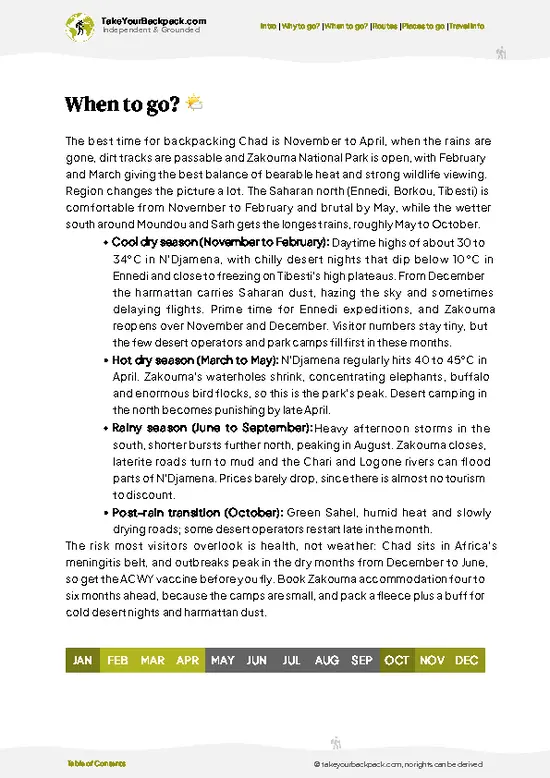
  • Topic: Weather – N’Djamena’s climate is dominated by a long dry season and a short rainy season. The dry season, from November to April, offers clear skies and minimal rain, making it the prime window for backpackers who want to avoid mud and disruptions.

  • Topic: Temperature – Daytime highs during the dry season hover around 30-35°C (86-95°F), which is hot but manageable with early starts and shade. The rainy season cools things down slightly but brings humidity and sporadic heavy showers.

  • Topic: Daylight Hours – Near the equator, daylight is steady year-round, roughly 12 hours per day. This consistency means you don’t have to juggle short days or long nights when planning your hikes or city explorations.

  • Topic: Crowds – Tourist traffic is minimal year-round, but the dry season sees
read more 👉

  • Topic: Weather – N’Djamena’s climate is dominated by a long dry season and a short rainy season. The dry season, from November to April, offers clear skies and minimal rain, making it the prime window for backpackers who want to avoid mud and disruptions.

  • Topic: Temperature – Daytime highs during the dry season hover around 30-35°C (86-95°F), which is hot but manageable with early starts and shade. The rainy season cools things down slightly but brings humidity and sporadic heavy showers.

  • Topic: Daylight Hours – Near the equator, daylight is steady year-round, roughly 12 hours per day. This consistency means you don’t have to juggle short days or long nights when planning your hikes or city explorations.

  • Topic: Crowds – Tourist traffic is minimal year-round, but the dry season sees a slight uptick as regional travelers and aid workers pass through. You’ll rarely feel overwhelmed, even in peak months.

  • Topic: Seasonal Activities – The dry season aligns with cultural festivals and markets, offering a richer local experience. The rainy season limits outdoor activities but can be a quieter, more introspective time to visit.

  • Topic: Price Fluctuations – Accommodation and transport costs peak slightly during the dry season due to demand. The rainy season offers better deals but at the expense of comfort and accessibility.


Pro-tip: Aim for the shoulder months of November or April to balance cooler temperatures, fewer crowds, and better prices—this is when you outsmart the system and get the best of all worlds.


source: climatestotravel.comJANJanuary: excellent for travelingFEBFebruary: excellent for travelingMARMarch: excellent for travelingAPRApril: highly recommended for travelingMAYMay: fair for travelingJUNJune: fair for travelingJULJuly: below average for travelingAUGAugust: below average for travelingSEPSeptember: fair for travelingOCTOctober: fair for travelingNOVNovember: highly recommended for travelingDECDecember: excellent for traveling
when-to-go

✈️ The backpacker research shortcutChad Travel Guide

An offline-friendly backpacking guide with optimized travel routes, ranked highlights, transport advice, and the best areas to stay.
example page 0 from our offline Travel Guide for Chad
example page 1 from our offline Travel Guide for Chad
example page 2 from our offline Travel Guide for Chad
example page 3 from our offline Travel Guide for Chad
example page 4 from our offline Travel Guide for Chad
example page 5 from our offline Travel Guide for Chad
example page 6 from our offline Travel Guide for Chad
example page 7 from our offline Travel Guide for Chad
The digital guide (294 pages) contains:
70 highlights, ranked by travel appeal
Optimized 7, 14 & 21-day travel routes
Cities, national parks, landmarks, beaches
How to get around
Offline-friendly for travel without Wi-Fi
👉 Click to see all 30+ guide features

📅 Plan smarter in minutes, not weeks
Month by month travel advice
Festivals & national holidays
Budget expectations

🗺️ Go to the right places, skip the overrated ones
Honest pros & cons of destinations
Top hikes, parks & viewpoints
Lesser-known places most travelers miss
Clear “worth it vs skip it” guidance

🛏️ Travel smoothly without rookie mistakes
Best areas to stay
Transport systems explained simply
Common scams & safety advice
SIM cards, money & practical tips

🌍 Understand the country, not just visit it
Culture & traditions
52 Essential phrases & customs
Festivals worth planning around
Traveler-friendly historical context
Insights that make places more meaningful

📱 Built for real travel conditions
Fully downloadable PDF
Works completely offline
Optimized for phone use
Useful in remote areas & buses
Everything in one place
Save weeks of stressful planning
Get instant access to your full guide. 30‑day money-back guarantee.


By proceeding you agree to our terms.
Sent to your inbox immediately after payment • 100% Secure Checkout
Best Backpacking Travel Advisor 2025 tourism awardBest Backpacking
Travel Advisor
2025
What others say about Take Your Backpack Guides:
⭐⭐⭐⭐⭐
Fantastic, amazing amount of information!
⭐⭐⭐⭐⭐
My goodness this is amazing, it's what I've been looking for hats off too you!
⭐⭐⭐⭐⭐
I think this is absolutely BRILLIANT
⭐⭐⭐⭐
Very complete and informative. It's still missing places, but I gotta to commend you
⭐⭐⭐⭐⭐
This is truly amazing, thank you, can't wait to explore it with my kids!
⭐⭐⭐⭐⭐
Awesome resource, thank you!
⭐⭐⭐⭐⭐
This is amazing! Can't wait to explore the ones I haven't seen
⭐⭐⭐⭐
I love this! Well done, great idea.
⭐⭐⭐⭐⭐
Thanks for taking the time to make this gem!
⭐⭐⭐⭐⭐
This might be the best website I've ever seen.
⭐⭐⭐⭐⭐
Congratulations, and thank you so much for your work; it's incredibly valuable.
⭐⭐⭐⭐
In all seriousness I think you did a great job pointing out the important spots
⭐⭐⭐⭐⭐
10/10 very good
⭐⭐⭐⭐⭐
As someone who's only just starting to visit regularly this is awesome, thank you.
⭐⭐⭐⭐
Thank you very much! I'm going to visit my dad, it's going to be very useful!
⭐⭐⭐⭐⭐
This is really cool! We'll be travelling for the first time and this definitely come in handy.
⭐⭐⭐⭐⭐
You are now our minister of culture, congratulations 👨‍💼
⭐⭐⭐⭐⭐
Just wanted to tell you that this is a pearl! Going to follow your recommendations.
⭐⭐⭐⭐⭐
This is so cool. I'll definitely be using the resource for my travels soon.
⭐⭐⭐⭐⭐
This is very impressive! Good work.
⭐⭐⭐⭐⭐
This is an amazing and informative site. Very well done!

🛏️ Where to stay?Best areas to stay in Chad

In N’Djamena, the backpacker’s sweet spot lies in the central districts around Avenue Charles de Gaulle and Avenue Félix Éboué. This area strikes a rare balance in a city where comfort and safety can feel like a moving target. It’s where you’ll find a cluster of budget guesthouses and small hostels, the kind that cater to solo travelers and those who want to keep an eye on their wallet without sacrificing a sense of community.

Why this zone? It’s the pulse of the city’s social life for foreigners and locals alike. Streets hum with vendors, cafés, and the occasional impromptu gathering spot where … read more 👉
In N’Djamena, the backpacker’s sweet spot lies in the central districts around Avenue Charles de Gaulle and Avenue Félix Éboué. This area strikes a rare balance in a city where comfort and safety can feel like a moving target. It’s where you’ll find a cluster of budget guesthouses and small hostels, the kind that cater to solo travelers and those who want to keep an eye on their wallet without sacrificing a sense of community.

Why this zone? It’s the pulse of the city’s social life for foreigners and locals alike. Streets hum with vendors, cafés, and the occasional impromptu gathering spot where you can swap stories with fellow travelers or locals. Compared to the outskirts or more residential neighborhoods, this central stretch offers a safer, more walkable environment. You won’t be dodging traffic blindfolded or navigating sketchy alleys after dark.

Hostel options here are limited but reliable, often run by expats or locals who understand the backpacker mindset—basic, clean, and social. The vibe is low-key but welcoming, a place where you can recharge without feeling isolated. If you stray too far into the northern or southern districts, you trade off convenience and safety for a quieter, less connected experience. For a first-timer or solo traveler, that’s a gamble that rarely pays off in N’Djamena. Stick central, stay sharp, and you’ll turn logistics into your advantage.

🚌 Getting aroundHow to get around N’Djamena

N’Djamena moves at its own rhythm—less a clockwork precision and more a pulse you feel in the dust and chatter. It’s a city where schedules exist but bend, where the flow is dictated by the sun’s heat and the hum of engines rather than strict timetables. You’ll find moments of waiting, yes, but also bursts of movement that demand quick decisions. Understanding this flow means recognizing that time, money, and comfort are constantly in negotiation here. Your choices aren’t just about getting from A to B; they’re about reading the city’s tempo and deciding what you’re willing to trade off to keep up or slow down.


  • Walking: The most straightforward and cost-free way to navigate N’Djamena’s compact center. Walking lets you absorb the city’s textures and sounds at your own pace, but the midday
read more 👉
N’Djamena moves at its own rhythm—less a clockwork precision and more a pulse you feel in the dust and chatter. It’s a city where schedules exist but bend, where the flow is dictated by the sun’s heat and the hum of engines rather than strict timetables. You’ll find moments of waiting, yes, but also bursts of movement that demand quick decisions. Understanding this flow means recognizing that time, money, and comfort are constantly in negotiation here. Your choices aren’t just about getting from A to B; they’re about reading the city’s tempo and deciding what you’re willing to trade off to keep up or slow down.


  • Walking: The most straightforward and cost-free way to navigate N’Djamena’s compact center. Walking lets you absorb the city’s textures and sounds at your own pace, but the midday heat can be brutal, so plan your strolls for early morning or late afternoon. It’s slow but unbeatable for immersion and zero expense.


  • Shared Taxis: These are the backbone of local transit—minibuses or cars packed with passengers heading in roughly the same direction. They run from dawn until dusk, typically from 6 a.m. to 6 p.m., and cost a fraction of private taxis. Expect cramped conditions and unpredictable departure times, but they’re fast enough to cover longer distances without breaking the bank.


  • Private Taxis: More comfortable and flexible, private taxis offer door-to-door service any time of day. They’re significantly pricier—think 5 to 10 times the cost of shared taxis—but if you value comfort and speed, especially after dark when shared options dwindle, this is your go-to. Negotiation is key; always agree on a fare before hopping in.


  • Motorcycle Taxis (Boda-Bodas): For quick, nimble trips through traffic or to reach areas less accessible by car, motorcycle taxis are a popular choice. They’re cheap and fast but come with a trade-off in safety and comfort. Helmets are rare, and the ride can be bumpy, so weigh your tolerance for risk against the time saved.


  • City Buses: Limited in number and reliability, city buses are the lowest-cost option for longer distances within N’Djamena. They run on fixed routes but often on irregular schedules, making them less predictable. If you have time to spare and want to stretch your budget, they’re worth considering, but don’t count on them for tight connections.


Mastering N’Djamena’s transit is about reading these trade-offs like a game board. You can save money by squeezing into a shared taxi or city bus, but you’ll sacrifice comfort and some control over your schedule. Opt for private taxis or motorcycle rides, and you gain speed and ease but pay a premium. Walking costs nothing but demands time and stamina. The city’s pulse invites you to pick your rhythm—whether that’s a slow, immersive walk or a fast, strategic jump in a moto. Your best move is the one that fits your style, your budget, and your appetite for adventure.

👛 Costs (as of 28 October 2025)What things cost and how to budget

Backpacking in N’Djamena, Chad, demands a clear-eyed view of what your money buys, especially since the city’s infrastructure and services reflect its developing status. Here’s how your daily expenses typically stack up:
  • Dorm Accommodation (High Season): Expect to pay around $15 to $25 per night. Options are limited and basic, often with shared facilities and minimal amenities, but secure and clean enough for a budget traveler.
  • Dorm Accommodation (Off-Season): Prices can drop to about $10 to $18. Demand falls, so you might negotiate better deals, but quality and availability remain consistent.
  • Meals: Street food and local eateries offer meals for $2 to $5. Western-style restaurants or hotel dining push that to $8 or more. Eating local is both economical and a way to engage with the city’s
read more 👉
Backpacking in N’Djamena, Chad, demands a clear-eyed view of what your money buys, especially since the city’s infrastructure and services reflect its developing status. Here’s how your daily expenses typically stack up:
  • Dorm Accommodation (High Season): Expect to pay around $15 to $25 per night. Options are limited and basic, often with shared facilities and minimal amenities, but secure and clean enough for a budget traveler.
  • Dorm Accommodation (Off-Season): Prices can drop to about $10 to $18. Demand falls, so you might negotiate better deals, but quality and availability remain consistent.
  • Meals: Street food and local eateries offer meals for $2 to $5. Western-style restaurants or hotel dining push that to $8 or more. Eating local is both economical and a way to engage with the city’s flavors.
  • Local Transport: Shared taxis and minibuses cost roughly $0.50 to $1 per ride. They’re crowded and irregular but the cheapest way to get around.
  • City Transport Pass: There is no formal city transport pass system. Budget travelers rely on individual fares or occasional private taxis, which can cost $3 to $5 per trip depending on distance.
  • Basic Activities/Entry Fees: Cultural sites and museums charge between $2 and $5. Organized tours or special excursions are rare and pricier, often requiring private arrangements.
  • Miscellaneous Expenses: Include bottled water, snacks, SIM cards, and small tips, which add up to about $3 to $7 daily. These are essential for comfort and connectivity in a city where infrastructure can be patchy.

In total, a backpacker in N’Djamena should budget roughly $25 to $45 per day. This range balances the bare essentials with a bit of comfort and flexibility, letting you navigate the city without surprises while making smart choices about where to save and where to spend.
⚠️ Prices can change and everyone travels differently, so take this as a rough guide. Hope it helps you plan your adventure!

🚌 Day tripsBest day trips from N’Djamena

N’Djamena serves as a surprisingly strategic base for day trips that reveal the heart of Chad. With a bit of planning, you can dive into rich cultural experiences and stunning landscapes without breaking the bank.

Lake Chad Adventure
Just a couple of hours from N’Djamena, Lake Chad offers a unique glimpse into local life. You can explore the fishing villages, witness traditional fishing methods, and even take a boat ride if the water levels permit. The vibrant atmosphere and the chance to interact with locals make this trip worthwhile. Budget around $10 for transport and a few extra bucks for snacks. The best time to visit is during the dry season, from November to March, when the lake is more accessible. A common mistake? Underestimating the time it takes to get there; leave early to maximize … read more 👉
N’Djamena serves as a surprisingly strategic base for day trips that reveal the heart of Chad. With a bit of planning, you can dive into rich cultural experiences and stunning landscapes without breaking the bank.

Lake Chad Adventure
Just a couple of hours from N’Djamena, Lake Chad offers a unique glimpse into local life. You can explore the fishing villages, witness traditional fishing methods, and even take a boat ride if the water levels permit. The vibrant atmosphere and the chance to interact with locals make this trip worthwhile. Budget around $10 for transport and a few extra bucks for snacks. The best time to visit is during the dry season, from November to March, when the lake is more accessible. A common mistake? Underestimating the time it takes to get there; leave early to maximize your experience.


Goré Island
A short ferry ride from the mainland, Goré Island is a peaceful escape. The island is dotted with historical sites and offers a chance to unwind. You can stroll through the local market, sample fresh fish, and soak in the serene environment. Expect to spend about $15 for the ferry and lunch. The ideal months are from December to February when the weather is cooler. First-timers often overlook the ferry schedule, so check ahead to avoid long waits.


Chad National Museum
For a taste of Chad’s history and culture, the Chad National Museum is a must-visit. Located in N’Djamena, it’s an easy trip that won’t eat into your day. You’ll find fascinating artifacts and exhibits that tell the story of the region. Entry is typically around $2, making it a budget-friendly option. The museum is open year-round, but visiting in the morning helps you beat the heat. A common pitfall? Rushing through without taking the time to engage with the exhibits.


Faya-Largeau
If you’re up for a longer journey, consider a day trip to Faya-Largeau. It’s about a six-hour drive, but the landscapes along the way are breathtaking. You’ll pass through stunning desert scenery and have the chance to meet nomadic tribes. Budget around $30 for transport and snacks. The best time to go is during the cooler months, from November to February. Many first-timers underestimate the drive, so pack plenty of water and snacks to stay comfortable.
👉 Explore Faya-Largeau
Want to know what more Chad offers?
The Chad Travel Guide describes 70 highlights, from cities to national parks, from beaches to hikes

Get the Travel Guide -

🍲 FoodEating & Drinking in N’Djamena

In N’Djamena, the local cuisine is a vibrant tapestry of flavors that tells the story of its people. Dive into sorghum porridge, a staple that’s often served with a spicy sauce made from groundnut or okra. The grilled meat skewers, known as *brochettes*, are a must-try, bursting with smoky flavor and often enjoyed with a side of fresh vegetables.

Street food is where the magic happens. Vendors line the bustling markets, offering everything from fried plantains to spicy bean cakes. The air is thick with the aroma of sizzling spices, and you’ll find locals gathered around, sharing stories and laughter. This is the heart of N’Djamena’s food culture, where every bite is an invitation to connect.

When it comes to drinks, don’t miss out on bissap, a refreshing hibiscus tea that’s both tart and … read more 👉
In N’Djamena, the local cuisine is a vibrant tapestry of flavors that tells the story of its people. Dive into sorghum porridge, a staple that’s often served with a spicy sauce made from groundnut or okra. The grilled meat skewers, known as *brochettes*, are a must-try, bursting with smoky flavor and often enjoyed with a side of fresh vegetables.

Street food is where the magic happens. Vendors line the bustling markets, offering everything from fried plantains to spicy bean cakes. The air is thick with the aroma of sizzling spices, and you’ll find locals gathered around, sharing stories and laughter. This is the heart of N’Djamena’s food culture, where every bite is an invitation to connect.

When it comes to drinks, don’t miss out on bissap, a refreshing hibiscus tea that’s both tart and sweet. It’s a popular choice, especially in the heat of the day. You might also encounter palm wine, a traditional beverage that’s often enjoyed during celebrations.

Etiquette is simple: share your food and drinks. It’s common to see people passing around dishes, reinforcing the communal spirit. Embrace the local customs, and you’ll find that every meal is not just about sustenance but a chance to bond with the vibrant community around you.

🛡️ SafetyScams, Hazards, and Annoyances

N’Djamena is generally safe for travelers, but a few practical tips can enhance your experience. Stay aware in crowded markets like the Grand Marché, where pickpockets may lurk. Keep your belongings close and avoid flashy displays of wealth.

If you’re solo, be cautious at night. Streets can be quiet, and while locals are friendly, it’s wise to stick to well-lit areas and avoid wandering too far from your accommodation.

Scams are rare, but some taxi drivers might try to negotiate inflated fares. Always agree on a price before getting in. Language barriers can lead to misunderstandings, so a few French phrases can go a long way in building rapport and avoiding confusion.

Everyday annoyances include the heat and occasional power outages. Stay hydrated and plan for downtime. Embrace the … read more 👉
N’Djamena is generally safe for travelers, but a few practical tips can enhance your experience. Stay aware in crowded markets like the Grand Marché, where pickpockets may lurk. Keep your belongings close and avoid flashy displays of wealth.

If you’re solo, be cautious at night. Streets can be quiet, and while locals are friendly, it’s wise to stick to well-lit areas and avoid wandering too far from your accommodation.

Scams are rare, but some taxi drivers might try to negotiate inflated fares. Always agree on a price before getting in. Language barriers can lead to misunderstandings, so a few French phrases can go a long way in building rapport and avoiding confusion.

Everyday annoyances include the heat and occasional power outages. Stay hydrated and plan for downtime. Embrace the rhythm of the city; it’s part of the experience. By staying aware and adaptable, you’ll navigate N’Djamena with confidence and ease.

Other Chadian cities near N’Djamena

Explore more nearby:

  • Lere—Lake Léré, fishing villages, borderland| 288 km away
  • Lai—Mayo Kebbi riverbanks, administrative center, regional hospital| 332 km away
  • Moundou—cotton industry, local breweries, southern markets, river access| 408 km away

💡 Not sure where to go next?
Create a personalized itinerary for Chad including N’Djamena and the places that fit your trip.

Generate my itinerary

👉 Discover all cities

Or checkout all Chad has to offer (think cities, towns, villages, national parks, hikes, beaches, festivals)
Country photo of Chad

We 💚 feedbackFinal thoughts on visiting N’Djamena

N’Djamena has a raw energy that’s hard to shake off. The bustling markets pulse with life, and the aroma of street food is a delightful surprise. Don’t miss the local dishes; they’re a true taste of Chad. Just a heads-up: the heat can be relentless, so plan your outings for early morning or late afternoon. Embrace the chaos, and you’ll find moments of genuine connection. This city isn’t polished, but that’s where its charm lies. Dive in, and you might just fall in love.

✍️ Help improve this page!
The information on this page is based on in-depth research, insights shared by experienced travelers, and feedback from the local travel community in Chad. While every effort is made to keep the information accurate and current, conditions can change — so if you spot anything incorrect or outdated, please get in touch.


🙋‍♂️ Give feedback

👋 Meet the founderWho’s Behind Take Your Backpack?

Johan, backpacker and founder of TakeYourBackpackHi, I’m Johan (Netherlands 🇳🇱), the creator of TakeYourBackpack. Over the past decade, I’ve backpacked through 80+ countries across six continents, gaining extensive experience with independent travel, long-term trips, and overland routes.

This site is built on a combination of firsthand travel experience and carefully curated insights from other backpackers. Many guides are based on places I’ve personally visited, while others bring together tips, observations, and practical advice shared by trusted travelers I’ve met along the way.

The goal is to provide realistic, experience-driven guidance — not generic itineraries — so you can explore destinations with better context, clearer expectations, and more confidence.

Get full Chad guide •
Instant download • 70 highlights • Full Offline guide