v2.webp)
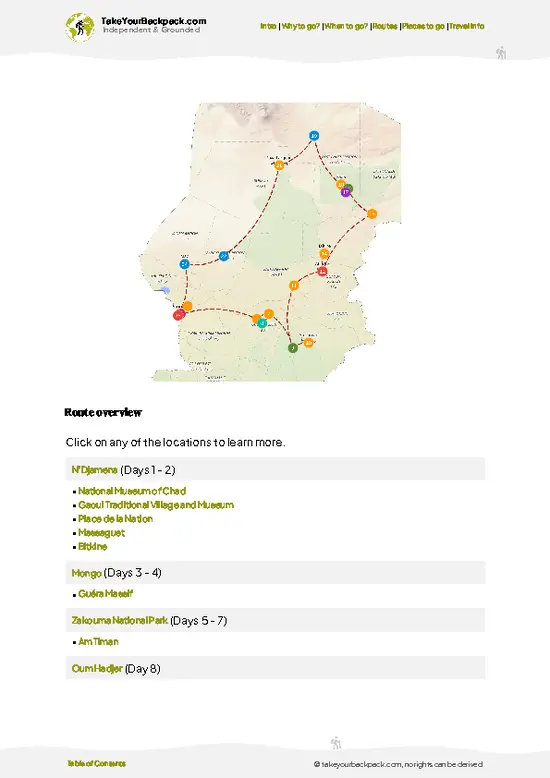
- Marché central de Sarh — The real heartbeat of the city: a sprawling open-air market where vendors sell fresh fish from the Chari, seasonal fruit, cotton textiles and hand-stitched goods. Great for people-watching, bargaining, and finding inexpensive travel gear or local snacks.
- Quai du Chari (riverfront) — A single stretch of waterfront that tells Sarh’s story: fishermen mending nets, pirogues coming and going, and long late-afternoon light that makes the river feel like the city’s living room. Perfect for a slow walk or a cheap boat ride.
- Old colonial quarter (former Fort-Archambault) — Scattered colonial-era buildings and streets that still whisper the town’s French-era name. It’s not a polished tourist site, but wandering this area gives concrete context to Sarh’s history and urban
- Marché central de Sarh — The real heartbeat of the city: a sprawling open-air market where vendors sell fresh fish from the Chari, seasonal fruit, cotton textiles and hand-stitched goods. Great for people-watching, bargaining, and finding inexpensive travel gear or local snacks.
- Quai du Chari (riverfront) — A single stretch of waterfront that tells Sarh’s story: fishermen mending nets, pirogues coming and going, and long late-afternoon light that makes the river feel like the city’s living room. Perfect for a slow walk or a cheap boat ride.
- Old colonial quarter (former Fort-Archambault) — Scattered colonial-era buildings and streets that still whisper the town’s French-era name. It’s not a polished tourist site, but wandering this area gives concrete context to Sarh’s history and urban layout.
- Cathedral (seat of the Diocese of Sarh) — The Catholic diocese is based here, and the cathedral is active and worth a look for its role in community life, weekday services, and the chance to see local congregational culture up close.
- Grande Mosquée de Sarh — The city’s main mosque is an important cultural anchor. Visiting (respectfully, outside prayer times or with permission inside) gives insight into Islamic life in Sarh and the city’s religious mix.
- Stade municipal / grounds — Local football matches and community events happen here. Catching a match is one of the easiest ways to hang with Sarh residents and feel the town’s energy without needing French or Arabic.
- Artisan quarter and craft stalls — Small workshops and sellers specializing in wood carving, woven goods and everyday crafts. Bargain for a locally made souvenir and watch artisans at work—real craft skills, not staged demonstrations.
- Riverside fishing piers and markets — Slightly different from the central market: these are where fish are landed, smoked and traded. It’s a gritty, sensory slice of daily life and great for learning about local foodways.
- Maison des Jeunes / Cultural meeting places — Youth centers and informal cultural hubs where music, storytelling and small performances happen. Drop in to catch local bands rehearsing or community events—often the best way to meet Sarh’s younger crowd.
- Prefecture and town square — The administrative heart of Sarh, where regional government, local announcements and civic life converge. It’s a useful place to observe public life and pick up timetables or notices about markets and festivals.
Spotted a mistake or missing something? Contact us.

 Best Backpacking
.jpg) Hi, I’m Johan (Netherlands 🇳🇱), the creator of TakeYourBackpack. Over the past 3 decades, I’ve backpacked through 90+ countries across six continents, gaining extensive experience with independent travel, long-term trips, and overland routes.
Hi, I’m Johan (Netherlands 🇳🇱), the creator of TakeYourBackpack. Over the past 3 decades, I’ve backpacked through 90+ countries across six continents, gaining extensive experience with independent travel, long-term trips, and overland routes.