
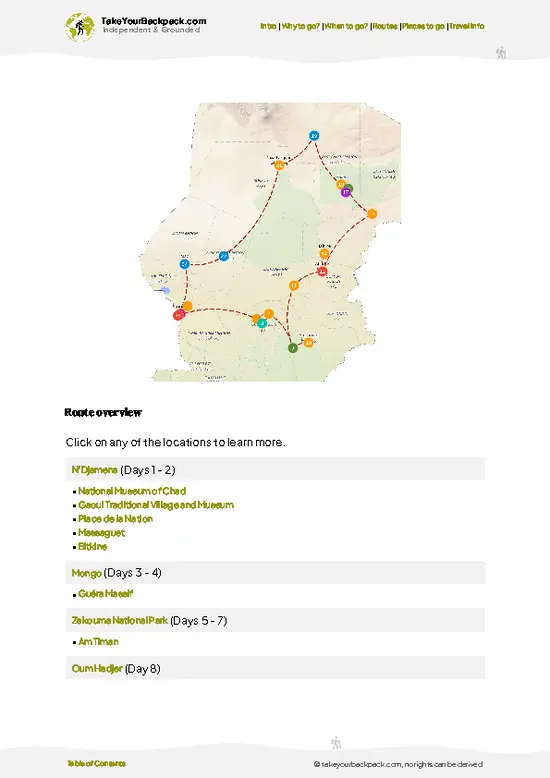
- Laï central market — The real heartbeat of Tandjilé: early-morning stalls of millet, smoked fish, palm oil and brightly woven cloth, plus barter-style bargaining that’s as social as it is transactional. Great for photos, cheap street food and feeling how the region actually lives.
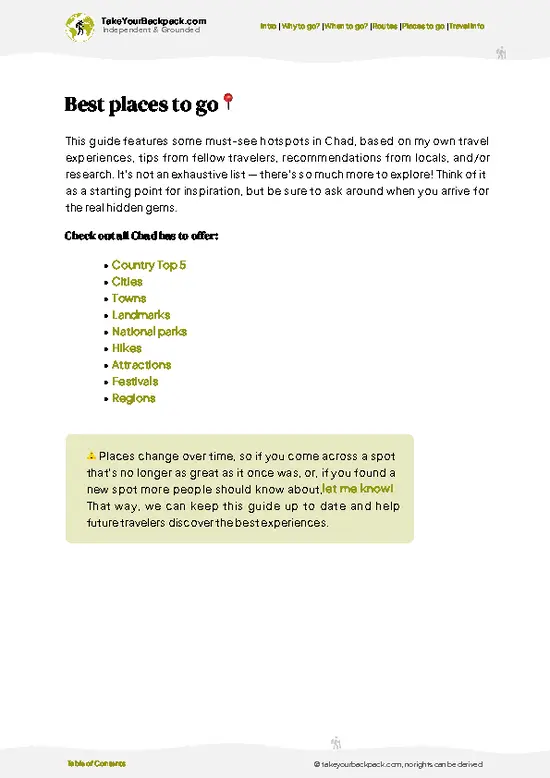
- Kélo market and potters’ quarter — Kélo is the region’s trade crossroads; its market spills into streets and the adjoining pottery quarter still fires large cooking jars the old way. Watch pots being shaped and smoked, and pick up sturdy local ceramics that won’t break on the trail home.
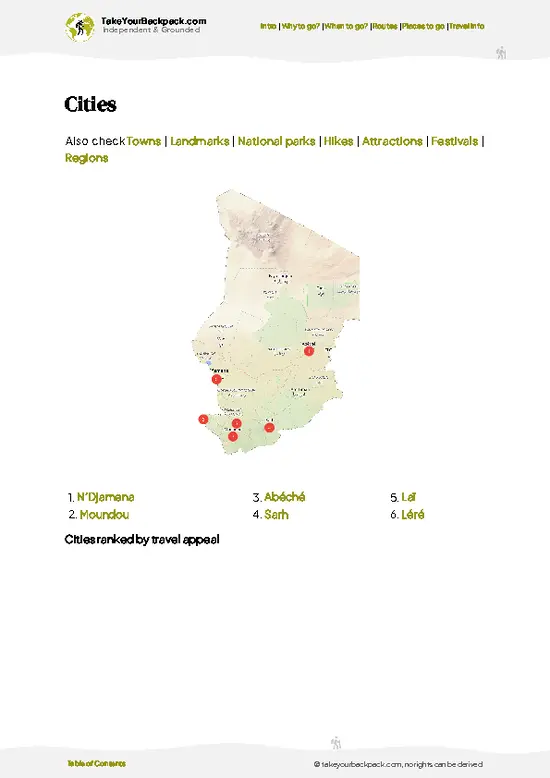
- Sara village homestay clusters (around Laï) — Simple mud-brick compounds, raised granaries and communal meals: staying a night with a Sara household gets you storytelling by firelight, traditional songs and hands-on cooking lessons.
- Laï central market — The real heartbeat of Tandjilé: early-morning stalls of millet, smoked fish, palm oil and brightly woven cloth, plus barter-style bargaining that’s as social as it is transactional. Great for photos, cheap street food and feeling how the region actually lives.
- Kélo market and potters’ quarter — Kélo is the region’s trade crossroads; its market spills into streets and the adjoining pottery quarter still fires large cooking jars the old way. Watch pots being shaped and smoked, and pick up sturdy local ceramics that won’t break on the trail home.
- Sara village homestay clusters (around Laï) — Simple mud-brick compounds, raised granaries and communal meals: staying a night with a Sara household gets you storytelling by firelight, traditional songs and hands-on cooking lessons. This is where the region’s living culture is most palpable.
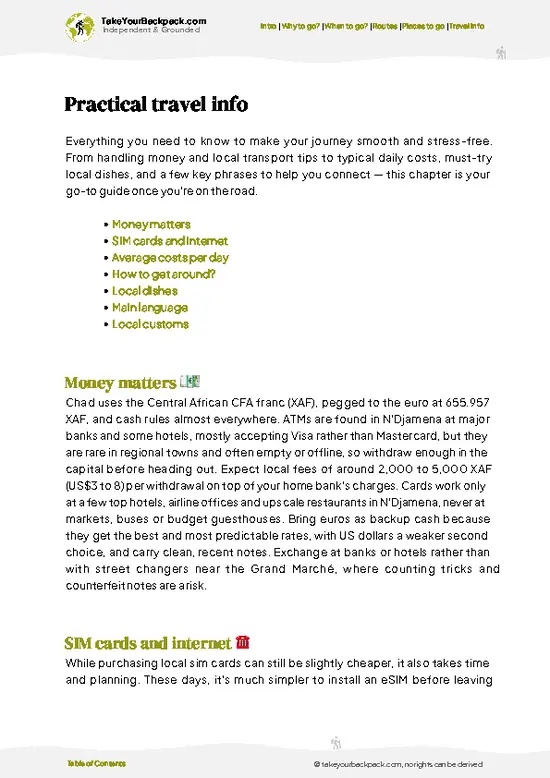
- Baobab groves along the Laï-Kélo road — Not one single famous tree, but stretches of massive, sculptural baobabs dotting the savanna. They’re perfect for sunset silhouettes, quiet picnics and seeing how locals harvest fruit and use bark—an instantly recognizable southern-Chad landscape.
- Seasonal wetlands and rice paddies of Tandjilé — After the rains the flatlands turn into a checkerboard of flooded fields and shallow pools. It’s an intimate agricultural landscape with wading birds, reed beds and hands-on rice-harvest rhythms you won’t see in the desert north.
- Traditional blacksmiths and leather workshops (hidden gem) — Small-town forges and tanning spots where knives, farming tools and leather sandals are still made by hand. You can watch hammering, swap tips with an artisan, and buy a functional keepsake way cheaper than in town stalls.
- Ridge and kopje viewpoints near Laï (hidden gem) — A few low rocky outcrops close to town give surprisingly wide views over the plains. Locals use them for grazing and sunsets; they’re quiet, scenic and almost always empty of other visitors—bring water and insect repellent.
- Weekly village “marchés de brousse” (hidden gem) — Smaller rotating markets in the countryside where traders, herders and farmers converge one day of the week. They’re chaotic, authentic and the best place to taste local snacks, buy handmade tools or watch social life in microcosm.
- Cotton fields and local ginning sheds — Cotton is a backbone crop here; visiting fields during harvest and the small-scale ginning sheds gives a clear picture of rural economics. Farmers are proud and usually happy to explain planting, picking and the simple machines that separate fiber from seed.
- Harvest festivals and community dance nights — Tied to the agricultural calendar, these gatherings feature drums, call-and-response singing, masked dances and communal feasts. They’re timing-dependent but among the most memorable, locally rooted experiences you can have in Tandjilé.
Spotted a mistake or missing something? Contact us.

 Best Backpacking

 Hi, I’m Johan (Netherlands 🇳🇱), the creator of TakeYourBackpack. Over the past 3 decades, I’ve backpacked through 90+ countries across six continents, gaining extensive experience with independent travel, long-term trips, and overland routes.