×

Chad🇹🇩 | regionsSalamatflooded grasslands, Zakouma National Park, migratory wildlife | things to do and best time to go

Explore Lakes of OuniangaExplore Tandjilé

Backpacking in Salamat
🌟 Highlightregion ranked #4
By Johan Kruseman 🇳🇱 | Updated September 3, 2026

Salamat used to be the kind of place where you’d roll in on a battered bush taxi, greeted by nothing but the low hum of cicadas and the occasional herder eyeing you with amused suspicion. Fast-forward to today: the roads are still rough, but word’s out among the more intrepid backpackers. You’ll find Salamat tucked in southeastern Chad, far from the capital’s chaos, where the Chari River braids through floodplains and Zakouma National Park steals the show with elephants and lions that actually outnumber tourists. This isn’t a region for the comfort-seeker—transport is slow, guesthouses are basic, and you’ll pay a premium for anything resembling Western food. But what you lose in convenience, you gain in raw, unfiltered Africa: market towns like Am Timan pulse with local life, and the vibe is refreshingly unpolished compared to the more trafficked south. If you want authenticity over amenities, Salamat delivers—just don’t expect it to hold your hand.

Discover everything you want to know in the 📖 Chad Travel Guide.
Safety warning

The current risk level for Chad is high. Check the advice before going.


Get your Chad guide
70 ranked highlights, routes & tips, works offline (294 pages)
Loading the map 🌍
CLICK TO FILTER
cities
towns
landmarks
national parks
hikes
attractions
festivals
regions
SHOW COUNTRY’S BESTSHOW ALL

✨ Why go?
Ranked #4 region in Chad
What makes it a must-see region

In the heart of Chad, Salamat is a backpacker’s playground, offering a variety of landscapes that keep your adventure fresh. You can hike through the stunning mountains, wander the vast savannas, or chill by the tranquil lakes—all without the hassle of constant relocation. This region is a transport dream; you can hop on a local bus or rent a bike, giving you the freedom to explore at your own pace.

What really sets Salamat apart is the chance to mix nature and culture seamlessly. Spend your mornings trekking, then dive into local markets in the afternoon, tasting street food that tells the story of the land. This slow travel approach lets you soak in the essence of Chad, making every moment feel rich and rewarding.

So, if you’re looking for a place where you can stretch your time and money … read more 👉
In the heart of Chad, Salamat is a backpacker’s playground, offering a variety of landscapes that keep your adventure fresh. You can hike through the stunning mountains, wander the vast savannas, or chill by the tranquil lakes—all without the hassle of constant relocation. This region is a transport dream; you can hop on a local bus or rent a bike, giving you the freedom to explore at your own pace.

What really sets Salamat apart is the chance to mix nature and culture seamlessly. Spend your mornings trekking, then dive into local markets in the afternoon, tasting street food that tells the story of the land. This slow travel approach lets you soak in the essence of Chad, making every moment feel rich and rewarding.

So, if you’re looking for a place where you can stretch your time and money while maximizing comfort, Salamat is your ticket to a high-value experience.
Want to include Salamat in your Chad route?
Create a personalized Chad itinerary that includes Salamat and the places that fit your trip — based on your travel style, budget, and available time. Get your route in seconds.

Generate my trip

💡 HighlightsPlaces and moments you shouldn't skip

  1. Zakouma National Park — The region’s headline draw: a well-known, still-wild savanna where camera-toting travelers can see large herds of elephants, buffalo, giraffes and healthy birdlife. The park’s restoration story and active ranger presence make game drives unusually rewarding for central Africa — fewer crowds, more authentic sightings.
  2. Bahr Salamat Faunal Reserve (the floodplain) — A vast seasonal wetland system that fills and empties with the rains. It’s a migratory lifeline for waterbirds and a green ribbon through the Sahel — best for low-impact boat trips, birding and watching wildlife congregate at the edges when the water retreats.
  3. Am Timan market and riverfront — The regional hub where traders, pastoralists and fishermen meet. The market’s lively mix of livestock trade, woven
read more 👉
  1. Zakouma National Park — The region’s headline draw: a well-known, still-wild savanna where camera-toting travelers can see large herds of elephants, buffalo, giraffes and healthy birdlife. The park’s restoration story and active ranger presence make game drives unusually rewarding for central Africa — fewer crowds, more authentic sightings.
  2. Bahr Salamat Faunal Reserve (the floodplain) — A vast seasonal wetland system that fills and empties with the rains. It’s a migratory lifeline for waterbirds and a green ribbon through the Sahel — best for low-impact boat trips, birding and watching wildlife congregate at the edges when the water retreats.
  3. Am Timan market and riverfront — The regional hub where traders, pastoralists and fishermen meet. The market’s lively mix of livestock trade, woven goods and everyday commerce is one of the clearest places to see Salamat’s cultural rhythms close up — early morning is the best time to soak it in.
  4. Traditional pastoral village visits around Am Timan — Meet cattle camps and nomadic families (Arab and local Sahelian groups) to learn how herders read the land, move seasonally and prepare meals over open fires. It’s a hands-on cultural exchange that you won’t get from a stage-managed “ethnic show.”
  5. Boat and pirogue trips on the Bahr Salamat channels — Hidden gem: local fishermen and boatmen run quiet excursions through braided channels and reedbeds. You’ll float past fishing camps, see waterbirds and get close to the pulse of the floodplain — bring waterproof bags and an experienced local pilot.
  6. Dry-season waterholes and elephant concentrations (Zakouma outskirts) — When rains end the animals compress toward permanent water. Watching herds come into the same pools at dusk is dramatic and distinct to this patchwork of park and floodplain; it’s a natural theatre you won’t easily replicate elsewhere.
  7. Reed islands and breeding grounds for birds — Hidden gem: small vegetated islands in the Bahr Salamat are magnets for nesting herons, pelicans and rarer passerines. They’re best visited with a local guide who knows the safe channels and the timing for breeding displays.
  8. Palmeraies and riverine groves along the floodplain — Hidden gem: shady palm groves that rim the waterways are local resting spots and occasional farm plots. They offer cool walks, intimate birding and a chance to buy simple palm products directly from producers — very local, very tactile.
  9. Nightlife of the floodplain — hippo pools and nocturnal sounds — After dark the floodplain remakes itself: hippos bellow, frogs chorus and predators move along edges. Guided night watches from secure vantage points are unforgettable for the soundscape alone — bring a torch and a calm guide.
  10. Seasonal photo stretches at dusk on the Bahr Salamat backwaters — The light over the flooded grasslands and isolated trees is spectacular for photography. Sunsets turn water and mudflats into reflective canvases with animals silhouetted against the sky — timing and a local helper make all the difference.
Spotted a mistake or missing something? Contact us.

⌛️ 5 days5-day itinerary for Salamat

Day 1: N’Djamena
The journey kicks off in N’Djamena, Chad’s bustling capital. This is where you’ll get your bearings and stock up on essentials. The transport system here is a mix of taxis and buses, but don’t expect a timetable. Instead, embrace the chaos. Grab a local meal at a street vendor; it’s cheap and gives you a taste of the culture. Spend the night here to acclimate and prepare for the adventure ahead.

Day 2: N’Djamena to Sarh
Rise early and hop on a bus to Sarh. This ride is long, but it’s the spine of your journey. The roads are rough, and the scenery shifts from urban to rural. You’ll see the heart of Chad unfold. Sarh is a great base for exploring the surrounding area, so settle in and enjoy a local dish at a family-run restaurant.

Day 3: Sarh to Mongo
Today, you’ll … read more 👉
Day 1: N’Djamena
The journey kicks off in N’Djamena, Chad’s bustling capital. This is where you’ll get your bearings and stock up on essentials. The transport system here is a mix of taxis and buses, but don’t expect a timetable. Instead, embrace the chaos. Grab a local meal at a street vendor; it’s cheap and gives you a taste of the culture. Spend the night here to acclimate and prepare for the adventure ahead.

Day 2: N’Djamena to Sarh
Rise early and hop on a bus to Sarh. This ride is long, but it’s the spine of your journey. The roads are rough, and the scenery shifts from urban to rural. You’ll see the heart of Chad unfold. Sarh is a great base for exploring the surrounding area, so settle in and enjoy a local dish at a family-run restaurant.

Day 3: Sarh to Mongo
Today, you’ll head to Mongo. The transport options are limited, so book your seat in advance. The drive is a chance to witness the landscape change dramatically. Mongo has a laid-back vibe, perfect for a rest day. Explore the local market for unique crafts and soak in the slower pace.

Day 4: Mongo to Abéché
This leg is crucial. Abéché is a cultural hub, and the journey is a test of patience. The roads can be unpredictable, but that’s part of the adventure. Once you arrive, dive into the local history at the museum.

Day 5: Off-Path Reward: Ounianga Lakes
Take a detour to the Ounianga Lakes. This stunning oasis is worth the extra effort. The colors of the lakes are mesmerizing, and it’s a perfect spot for photography.

The must-do day? Day 4 in Abéché. It’s where you’ll truly connect with Chad’s rich culture and history, making the entire trip worthwhile.
Turn your Salamat visit into an Chad adventure
Build a complete Chad route with Salamat, hidden gems, must-see destinations, and realistic travel times included.

Generate my trip

🌤️ When to go?Choosing the right time of year


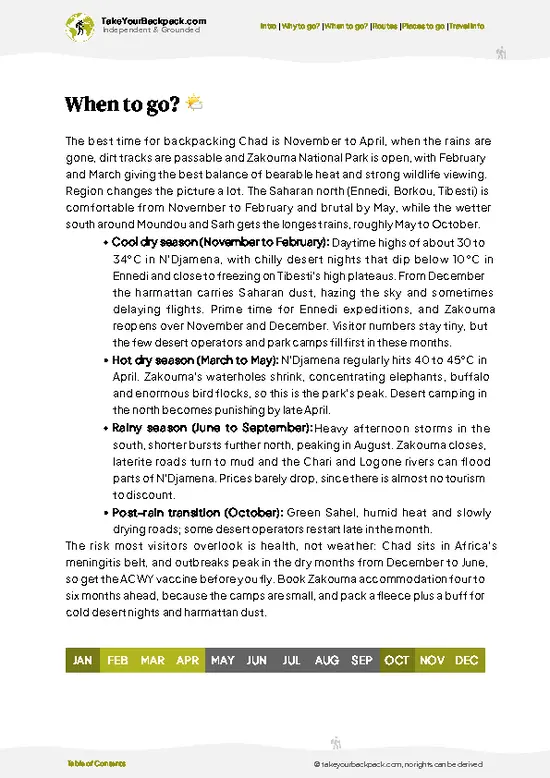
  • Topic: Weather – The dry season from November to April is your golden window. Expect clear skies and almost no rain, perfect for trekking and wildlife spotting. The wet season (May to October) turns the terrain into a muddy slog and floods some routes.

  • Topic: Temperature – Daytime highs in the dry season hover around 30-35°C (86-95°F), manageable with early starts and shade. Nights can dip to 15°C (59°F), so pack layers. The wet season is hotter and more humid, pushing 38°C (100°F), which can drain your energy fast.

  • Topic: Daylight Hours – Near the equator, daylight is steady year-round, roughly 12 hours. Sunrise around 6:00 AM, sunset near 6:00 PM. Use these reliable hours to plan early hikes and avoid midday heat.

  • Topic: Crowds – Salamat is off the beaten path, so crowds are minimal
read more 👉

  • Topic: Weather – The dry season from November to April is your golden window. Expect clear skies and almost no rain, perfect for trekking and wildlife spotting. The wet season (May to October) turns the terrain into a muddy slog and floods some routes.

  • Topic: Temperature – Daytime highs in the dry season hover around 30-35°C (86-95°F), manageable with early starts and shade. Nights can dip to 15°C (59°F), so pack layers. The wet season is hotter and more humid, pushing 38°C (100°F), which can drain your energy fast.

  • Topic: Daylight Hours – Near the equator, daylight is steady year-round, roughly 12 hours. Sunrise around 6:00 AM, sunset near 6:00 PM. Use these reliable hours to plan early hikes and avoid midday heat.

  • Topic: Crowds – Salamat is off the beaten path, so crowds are minimal year-round. However, the dry season attracts a handful of wildlife enthusiasts and researchers, so expect a few more faces but nothing overwhelming.

  • Topic: Seasonal Activities – Dry season means better access to Zakouma National Park and easier river crossings. Wildlife is more concentrated around waterholes, upping your chances for sightings. Wet season floods limit access but bring lush landscapes and bird migrations.

  • Topic: Price Fluctuations – Expect higher prices during the dry season due to demand and better conditions. The wet season offers lower rates but comes with travel hassles and fewer services.


Pro-tip: Arrive just as the dry season kicks in (November) to catch the landscape waking up, fewer tourists, and snag better deals before the peak rush.


source: climatestotravel.comJANJanuary: excellent for travelingFEBFebruary: excellent for travelingMARMarch: excellent for travelingAPRApril: excellent for travelingMAYMay: fair for travelingJUNJune: fair for travelingJULJuly: below average for travelingAUGAugust: below average for travelingSEPSeptember: fair for travelingOCTOctober: fair for travelingNOVNovember: highly recommended for travelingDECDecember: excellent for traveling
when-to-go

✈️ The backpacker research shortcutChad Travel Guide

An offline-friendly backpacking guide with optimized travel routes, ranked highlights, transport advice, and the best areas to stay.
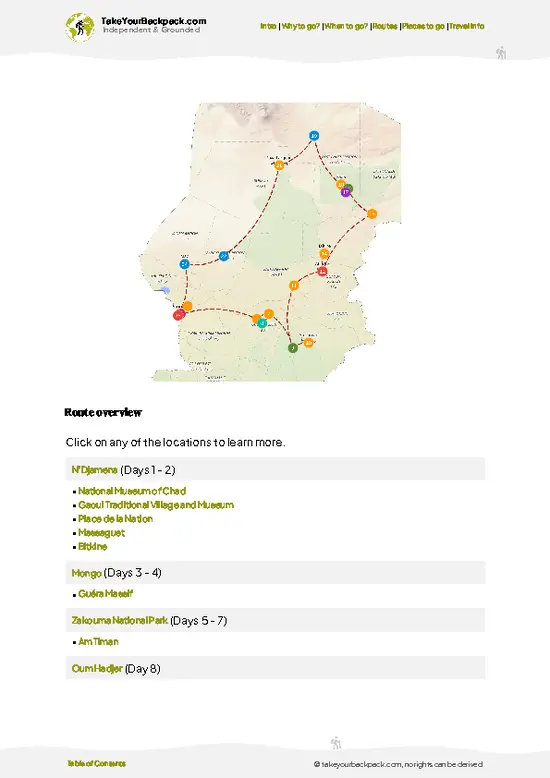
example page 0 from our offline Travel Guide for Chad
example page 1 from our offline Travel Guide for Chad
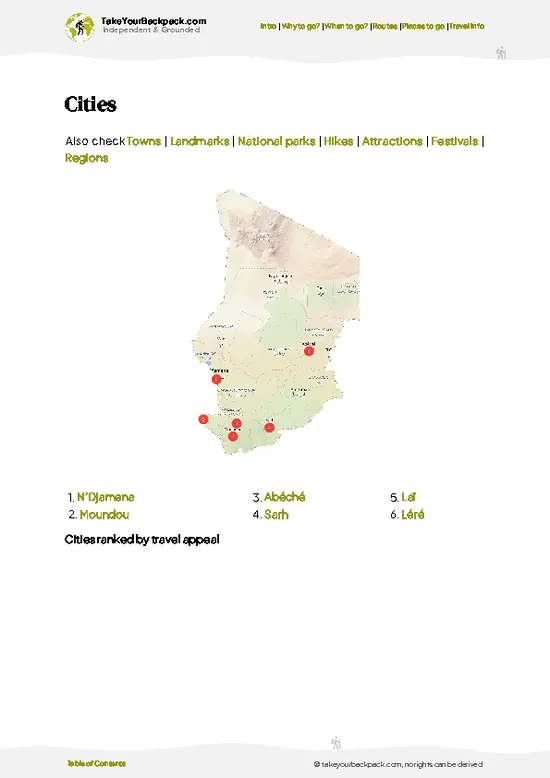
example page 2 from our offline Travel Guide for Chad
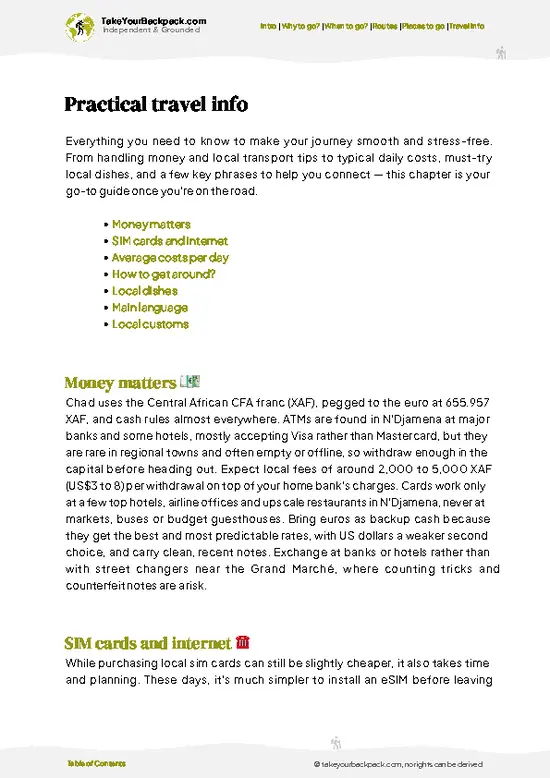
example page 3 from our offline Travel Guide for Chad
example page 4 from our offline Travel Guide for Chad
example page 5 from our offline Travel Guide for Chad
example page 6 from our offline Travel Guide for Chad
example page 7 from our offline Travel Guide for Chad
The digital guide (294 pages) contains:
70 highlights, ranked by travel appeal
Optimized 7, 14 & 21-day travel routes
Cities, national parks, landmarks, beaches
How to get around
Offline-friendly for travel without Wi-Fi
👉 Click to see all 30+ guide features

📅 Plan smarter in minutes, not weeks
Month by month travel advice
Festivals & national holidays
Budget expectations

🗺️ Go to the right places, skip the overrated ones
Honest pros & cons of destinations
Top hikes, parks & viewpoints
Lesser-known places most travelers miss
Clear “worth it vs skip it” guidance

🛏️ Travel smoothly without rookie mistakes
Best areas to stay
Transport systems explained simply
Common scams & safety advice
SIM cards, money & practical tips

🌍 Understand the country, not just visit it
Culture & traditions
52 Essential phrases & customs
Festivals worth planning around
Traveler-friendly historical context
Insights that make places more meaningful

📱 Built for real travel conditions
Fully downloadable PDF
Works completely offline
Optimized for phone use
Useful in remote areas & buses
Everything in one place
Save weeks of stressful planning
Get instant access to your full guide. 30‑day money-back guarantee.
+ Add another guide for just US$7.80

By proceeding you agree to our terms.
Sent to your inbox immediately after payment • 100% Secure Checkout
Best Backpacking Travel Advisor 2025 tourism awardBest Backpacking
Travel Advisor
2025
What others say about Take Your Backpack Guides:
⭐⭐⭐⭐⭐
Fantastic, amazing amount of information!
⭐⭐⭐⭐⭐
My goodness this is amazing, it's what I've been looking for hats off too you!
⭐⭐⭐⭐⭐
I think this is absolutely BRILLIANT
⭐⭐⭐⭐
Very complete and informative. It's still missing places, but I gotta to commend you
⭐⭐⭐⭐⭐
This is truly amazing, thank you, can't wait to explore it with my kids!
⭐⭐⭐⭐⭐
Awesome resource, thank you!
⭐⭐⭐⭐⭐
This is amazing! Can't wait to explore the ones I haven't seen
⭐⭐⭐⭐
I love this! Well done, great idea.
⭐⭐⭐⭐⭐
Thanks for taking the time to make this gem!
⭐⭐⭐⭐⭐
This might be the best website I've ever seen.
⭐⭐⭐⭐⭐
Congratulations, and thank you so much for your work; it's incredibly valuable.
⭐⭐⭐⭐
In all seriousness I think you did a great job pointing out the important spots
⭐⭐⭐⭐⭐
10/10 very good
⭐⭐⭐⭐⭐
As someone who's only just starting to visit regularly this is awesome, thank you.
⭐⭐⭐⭐
Thank you very much! I'm going to visit my dad, it's going to be very useful!
⭐⭐⭐⭐⭐
This is really cool! We'll be travelling for the first time and this definitely come in handy.
⭐⭐⭐⭐⭐
You are now our minister of culture, congratulations 👨‍💼
⭐⭐⭐⭐⭐
Just wanted to tell you that this is a pearl! Going to follow your recommendations.
⭐⭐⭐⭐⭐
This is so cool. I'll definitely be using the resource for my travels soon.
⭐⭐⭐⭐⭐
This is very impressive! Good work.
⭐⭐⭐⭐⭐
This is an amazing and informative site. Very well done!

🛏️ Where to stay?Best areas to stay in Chad

In the Salamat region of Chad, a few spots stand out for backpackers looking for safety, social vibes, and budget-friendly options.

First up, Sarh. This bustling city is the capital of the region and a hub for travelers. You’ll find a mix of local markets and street food that’s both delicious and easy on the wallet. The atmosphere is lively, making it a great place to meet fellow backpackers.

Next, consider Moundou. It’s a bit off the beaten path but offers a genuine taste of Chadian life. The local community is welcoming, and you can easily strike up conversations with residents. Plus, the … read more 👉
In the Salamat region of Chad, a few spots stand out for backpackers looking for safety, social vibes, and budget-friendly options.

First up, Sarh. This bustling city is the capital of the region and a hub for travelers. You’ll find a mix of local markets and street food that’s both delicious and easy on the wallet. The atmosphere is lively, making it a great place to meet fellow backpackers.

Next, consider Moundou. It’s a bit off the beaten path but offers a genuine taste of Chadian life. The local community is welcoming, and you can easily strike up conversations with residents. Plus, the surrounding landscapes are perfect for day hikes.

Don’t overlook Bongor. This small town is quieter, but it’s a fantastic base for exploring nearby natural wonders. The slower pace allows for deeper connections with locals, and you’ll find plenty of opportunities to share stories over a cup of tea.

Each of these spots offers a unique flavor of Chad, ensuring you get the most out of your experience without breaking the bank.

🚌 Getting aroundHow to get around Salamat

In Salamat, the rhythm of travel dances between the structured and the spontaneous. Picture this: dusty roads winding through vast landscapes, where the clock ticks less like a metronome and more like a heartbeat. Schedules? They exist, but they’re more like suggestions. Locals hop on and off transport as they please, creating a flow that feels both chaotic and liberating. You’ll find yourself embracing the unpredictability, where every ride is an adventure and every delay a chance to soak in the vibrant life around you.

Here’s the lowdown on getting around Salamat without breaking the bank:


  • Shared Taxis: These are your go-to for quick hops. They usually run from early morning until sunset, with prices around 1,000-2,000 CFA depending on distance. Expect a bumpy ride, but you’ll get to
read more 👉
In Salamat, the rhythm of travel dances between the structured and the spontaneous. Picture this: dusty roads winding through vast landscapes, where the clock ticks less like a metronome and more like a heartbeat. Schedules? They exist, but they’re more like suggestions. Locals hop on and off transport as they please, creating a flow that feels both chaotic and liberating. You’ll find yourself embracing the unpredictability, where every ride is an adventure and every delay a chance to soak in the vibrant life around you.

Here’s the lowdown on getting around Salamat without breaking the bank:


  • Shared Taxis: These are your go-to for quick hops. They usually run from early morning until sunset, with prices around 1,000-2,000 CFA depending on distance. Expect a bumpy ride, but you’ll get to know your fellow passengers quickly.


  • Buses: The backbone of intercity travel. They leave when full, which can mean waiting a while. Prices range from 2,500-5,000 CFA. Comfort varies, but you’ll get a solid dose of local culture along the way. Just be prepared for a few unexpected stops!


  • Motorbike Taxis (Boda-bodas): Ideal for short distances. They’re fast and can weave through traffic like a pro. Prices start at around 500 CFA. Just hold on tight and enjoy the breeze—this is the thrill ride of Salamat!


  • Private Hire Cars: If you’re feeling a bit flush, this is the way to go. Prices can range from 10,000 CFA and up, depending on your negotiation skills. You’ll get comfort and flexibility, but it’s a splurge compared to other options.


For a master tactical tip: always negotiate your fare before you hop in. This isn’t just about saving money; it’s about establishing a rapport. A friendly chat can turn a simple ride into a memorable experience. Embrace the chaos, and let the journey unfold!

🍲 FoodEating & Drinking in Salamat

In Salamat, Chad, food is a vibrant tapestry of flavors that tells the story of its people. Dive into sorghum porridge, a staple that’s often served with a spicy sauce made from ground peanuts and tomatoes. The grilled meat skewers, known as brochettes, are a must-try, bursting with smoky flavor and often enjoyed with a side of spicy chili sauce.

Street food is where the magic happens. Markets buzz with vendors selling fritters and fried plantains, their aromas mingling in the air. Grab a seat at a local café and sip on bissap, a refreshing hibiscus drink that’s both tart and sweet, perfect for cooling off in the heat.

Dining here is a communal affair. Expect to share dishes, and don’t be surprised if you’re invited to join a table. Use your right hand for eating—it’s customary and shows … read more 👉
In Salamat, Chad, food is a vibrant tapestry of flavors that tells the story of its people. Dive into sorghum porridge, a staple that’s often served with a spicy sauce made from ground peanuts and tomatoes. The grilled meat skewers, known as brochettes, are a must-try, bursting with smoky flavor and often enjoyed with a side of spicy chili sauce.

Street food is where the magic happens. Markets buzz with vendors selling fritters and fried plantains, their aromas mingling in the air. Grab a seat at a local café and sip on bissap, a refreshing hibiscus drink that’s both tart and sweet, perfect for cooling off in the heat.

Dining here is a communal affair. Expect to share dishes, and don’t be surprised if you’re invited to join a table. Use your right hand for eating—it’s customary and shows respect. Embrace the slow pace; meals are meant to be savored, not rushed. This is where you’ll find the heart of Salamat, in every bite and every shared laugh.

FAQFrequently asked questions about Salamat

4 to 5 days are sufficient to explore Salamat, allowing time to visit Zakouma National Park and surrounding villages. This duration covers wildlife viewing and cultural experiences without rushing.
Getting around Salamat without a car is challenging; options include hiring local motorbikes or using shared bush taxis. Walking is possible for short distances, but public transport is limited and unreliable.
Salamat is known for Zakouma National Park, one of Africa's best wildlife reserves, famous for elephants, lions, and bird species. It is a key destination for eco-tourism and conservation efforts in Chad.
⚠️ Things can change over time, so always validate details locally before you go.

Other Chadian regions near Salamat

Explore more nearby:

  • Tandjilé—cotton fields, rural crossroads, weekly markets| 55 km away
  • Chari-Baguirmi—river floodplains, millet fields, traditional villages| 397 km away
  • Kanem—date palm groves, historic caravan routes, clay settlements| 552 km away

💡 Not sure where to go next?
Create a personalized itinerary for Chad including Salamat and the places that fit your trip.

Generate my itinerary

👉 Discover all regions

Or checkout all Chad has to offer (think cities, towns, villages, national parks, hikes, beaches, festivals)
Country photo of Chad

We 💚 feedbackFinal thoughts on visiting Salamat

Salamat’s vibe is raw and real. You’ll feel the pulse of life here, especially at the bustling market where the scent of spices dances in the air. The best surprise? The warmth of the locals; they’ll invite you into their world if you show genuine interest. Just a heads-up: the heat can be relentless. Stay hydrated and pace yourself. Embrace the chaos, and you’ll find moments that stick with you long after you leave.

✍️ Help improve this page!
The information on this page is based on in-depth research, insights shared by experienced travelers, and feedback from the local travel community in Chad. While every effort is made to keep the information accurate and current, conditions can change — so if you spot anything incorrect or outdated, please get in touch.


🙋‍♂️ Give feedback

👋 Meet the founderWho’s Behind Take Your Backpack?

Johan, backpacker and founder of TakeYourBackpackHi, I’m Johan (Netherlands 🇳🇱), the creator of TakeYourBackpack. Over the past decade, I’ve backpacked through 80+ countries across six continents, gaining extensive experience with independent travel, long-term trips, and overland routes.

This site is built on a combination of firsthand travel experience and carefully curated insights from other backpackers. Many guides are based on places I’ve personally visited, while others bring together tips, observations, and practical advice shared by trusted travelers I’ve met along the way.

The goal is to provide realistic, experience-driven guidance — not generic itineraries — so you can explore destinations with better context, clearer expectations, and more confidence.

Get full Chad guide •
Instant download • 70 highlights • Full Offline guide