×

Chile🇨🇱 | national parksCabo de Hornos National ParkCape Horn cliff, albatross sculpture, Drake Passage, naval lighthouse | things to do and best time to go

Explore Pampa Linda TrailExplore Conguillío National Park

Backpacking in Cabo de Hornos
👀 For curious travelersnational park ranked #18
By Johan Kruseman 🇳🇱 | Updated October 19, 2026

The albatross memorial on Hornos Island, a steel sculpture with the silhouette of a bird cut out of two upright plates, is the park's best-known landmark, and it sits just above the landing stairs. The park lies at the southern tip of Chile, in the Magallanes region. I expected a lighthouse and a rock; what surprised me was how green and mossy the island interior is. Landing is weather-dependent, so experienced travelers book several sailing days in Puerto Williams rather than one.

Discover everything you want to know in the 📖 Chile Travel Guide.


example page 0 from our offline Travel Guide for Chile
example page 1 from our offline Travel Guide for Chile
example page 2 from our offline Travel Guide for Chile
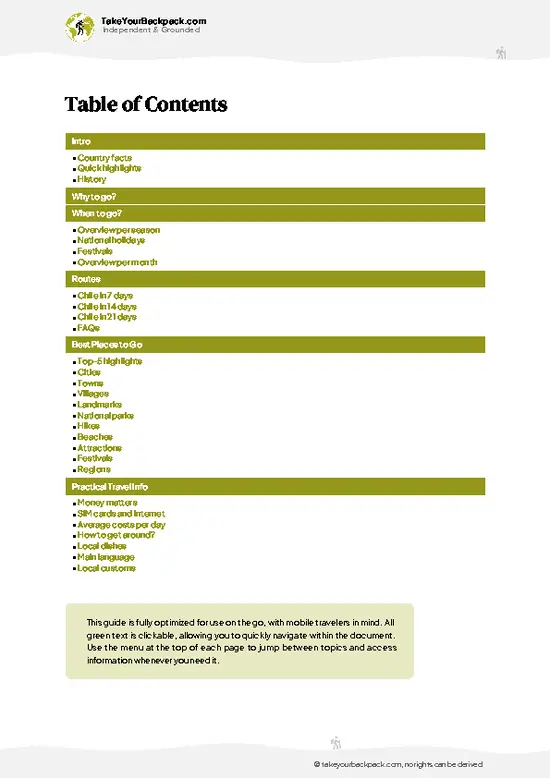
example page 3 from our offline Travel Guide for Chile
example page 4 from our offline Travel Guide for Chile
example page 5 from our offline Travel Guide for Chile
example page 6 from our offline Travel Guide for Chile
example page 7 from our offline Travel Guide for Chile
Loading the map 🌍
CLICK TO FILTER
cities
towns
villages
landmarks
national parks
hikes
beaches
attractions
festivals
regions
SHOW COUNTRY’S BESTSHOW ALL

✨ Why go?
Ranked #18 national park in Chile
The unique appeal for travelers

Cabo de Hornos National Park draws backpackers who want the end of the continent without a cruise-ship price tag. Independent travelers can reach it by arranging a sailing from Puerto Williams, where small-boat skippers and hostel owners trade information face to face. The payoff is the Hornos Island landing, with its 160-plus wooden steps up from the shore, and the chance to pair it with the Dientes de Navarino circuit nearby. Self-guided hikers fit this place better than tour groups.

💡 HighlightsWhat this place is best known for

  1. Cape Horn headland: the 425-meter-high black cliff that closes the Americas, seen from the water or from the island top.
  2. Albatross Monument: a steel sculpture honoring sailors lost rounding the cape, with the bird shape cut through the metal.
  3. Cape Horn Lighthouse and chapel: a small working naval station with a lighthouse and a tiny wooden chapel, staffed by a navy family.
  4. Wooden staircase and boardwalk: a long climb from the landing that leads across mossy heath to the monument.
  5. Drake Passage views: open ocean where Atlantic and Pacific meet, famous for swell and sudden squalls.
  6. Albatrosses and petrels: black-browed albatrosses and giant petrels follow boats across the channel.
  7. Magellanic penguins and sea lions: sometimes seen on nearby islets during the crossing.
The Albatross Monument and the … read more 👉
  1. Cape Horn headland: the 425-meter-high black cliff that closes the Americas, seen from the water or from the island top.
  2. Albatross Monument: a steel sculpture honoring sailors lost rounding the cape, with the bird shape cut through the metal.
  3. Cape Horn Lighthouse and chapel: a small working naval station with a lighthouse and a tiny wooden chapel, staffed by a navy family.
  4. Wooden staircase and boardwalk: a long climb from the landing that leads across mossy heath to the monument.
  5. Drake Passage views: open ocean where Atlantic and Pacific meet, famous for swell and sudden squalls.
  6. Albatrosses and petrels: black-browed albatrosses and giant petrels follow boats across the channel.
  7. Magellanic penguins and sea lions: sometimes seen on nearby islets during the crossing.
The Albatross Monument and the lighthouse chapel pair easily in one landing, since the boardwalk connects them in a short walk.
Spotted a mistake or missing something? Contact us.

🌤️ When to go?Weather, crowds, and seasonal trade-offs

  • Summer (December to February): Highs of 10 to 14°C (50 to 57°F), nearly 17 hours of daylight, the calmest crossings and the most visitors. Prices peak.
  • Shoulder (October to November, March to April): 4 to 10°C (39 to 50°F), fewer people, but landings on Isla Hornos are often canceled by swell.
  • Winter (May to September): Around 0 to 6°C (32 to 43°F), under 8 hours of light, snow squalls, and few or no tours. Costs drop.
Book your Puerto Williams boat for January and keep a spare day for weather.

source: climatestotravel.comJANJanuary: excellent for travelingFEBFebruary: excellent for travelingMARMarch: highly recommended for travelingAPRApril: good for travelingMAYMay: fair for travelingJUNJune: below average for travelingJULJuly: below average for travelingAUGAugust: below average for travelingSEPSeptember: fair for travelingOCTOctober: good for travelingNOVNovember: highly recommended for travelingDECDecember: excellent for traveling
chile-national-park-cabo-de-hornos-national-park
© Google | Luis Gomez

✈️ The backpacker research shortcutChile Travel Guide

An offline-friendly backpacking guide with optimized travel routes, ranked highlights, transport advice, and the best areas to stay.
example page 0 from our offline Travel Guide for Chile
example page 1 from our offline Travel Guide for Chile
example page 2 from our offline Travel Guide for Chile
example page 3 from our offline Travel Guide for Chile
example page 4 from our offline Travel Guide for Chile
example page 5 from our offline Travel Guide for Chile
example page 6 from our offline Travel Guide for Chile
example page 7 from our offline Travel Guide for Chile
The digital guide (333 pages) contains:
✅ 107 highlights, ranked by travel appeal
✅ Optimized 7, 14 & 21-day travel routes
✅ Cities, national parks, landmarks, beaches
✅ How to get around
✅ Offline-friendly for travel without Wi-Fi
👉 Click to see all 30+ guide features

📅 Plan smarter in minutes, not weeks
✅ Month by month travel advice
✅ Festivals & national holidays
✅ Budget expectations

🗺️ Go to the right places, skip the overrated ones
✅ Honest pros & cons of destinations
✅ Top hikes, parks & viewpoints
✅ Lesser-known places most travelers miss
✅ Clear “worth it vs skip it” guidance

🛏️ Travel smoothly without rookie mistakes
✅ Best areas to stay
✅ Transport systems explained simply
✅ Common scams & safety advice
✅ SIM cards, money & practical tips

🌍 Understand the country, not just visit it
✅ Culture & traditions
✅ 52 Essential phrases & customs
✅ Festivals worth planning around
✅ Traveler-friendly historical context
✅ Insights that make places more meaningful

📱 Built for real travel conditions
✅ Fully downloadable PDF
✅ Works completely offline
✅ Optimized for phone use
✅ Useful in remote areas & buses
✅ Everything in one place
Stop searching, start planning
Get instant access to your full guide. 30‑day money-back guarantee.
+ Add another guide for just

By proceeding you agree to our terms.
Sent to your inbox immediately after payment • 100% Secure Checkout
Best Backpacking Travel Advisor 2025 tourism awardBest Backpacking
Travel Advisor
2025
What others say about Take Your Backpack Guides:
⭐⭐⭐⭐⭐
Fantastic, amazing amount of information!
⭐⭐⭐⭐⭐
My goodness this is amazing, it's what I've been looking for hats off too you!
⭐⭐⭐⭐⭐
I think this is absolutely BRILLIANT
⭐⭐⭐⭐
Very complete and informative. It's still missing places, but I gotta to commend you
⭐⭐⭐⭐⭐
This is truly amazing, thank you, can't wait to explore it with my kids!
⭐⭐⭐⭐⭐
Awesome resource, thank you!
⭐⭐⭐⭐⭐
This is amazing! Can't wait to explore the ones I haven't seen
⭐⭐⭐⭐
I love this! Well done, great idea.
⭐⭐⭐⭐⭐
Thanks for taking the time to make this gem!
⭐⭐⭐⭐⭐
This might be the best website I've ever seen.
⭐⭐⭐⭐⭐
Congratulations, and thank you so much for your work; it's incredibly valuable.
⭐⭐⭐⭐
In all seriousness I think you did a great job pointing out the important spots
⭐⭐⭐⭐⭐
10/10 very good
⭐⭐⭐⭐⭐
As someone who's only just starting to visit regularly this is awesome, thank you.
⭐⭐⭐⭐
Thank you very much! I'm going to visit my dad, it's going to be very useful!
⭐⭐⭐⭐⭐
This is really cool! We'll be travelling for the first time and this definitely come in handy.
⭐⭐⭐⭐⭐
You are now our minister of culture, congratulations 👨‍💼
⭐⭐⭐⭐⭐
Just wanted to tell you that this is a pearl! Going to follow your recommendations.
⭐⭐⭐⭐⭐
This is so cool. I'll definitely be using the resource for my travels soon.
⭐⭐⭐⭐⭐
This is very impressive! Good work.
⭐⭐⭐⭐⭐
This is an amazing and informative site. Very well done!

🛏️ Where to stay?Where staying makes the most sense

Nobody sleeps inside Cabo de Hornos National Park; the only residents are the Chilean Navy lighthouse keepers on Isla Hornos. Your base is Puerto Williams, the nearest town, on Isla Navarino. Expect hostels and family-run residenciales at US$30 to 70 a night, plus a few pricier lodges. Many travelers also sleep aboard the sailing yachts and expedition vessels that visit the park, which include bunks in the fare. Puerto Williams is a 30 to 40 minute flight or a multi-day ferry from Punta Arenas, so book ahead in summer.

👛 Costs (as of 19 October 2026)Money, prices, and spending tips

Cabo de Hornos National Park costs roughly US$200 to 330 a day for one traveler, because reaching Isla Hornos means a boat or cruise from Puerto Williams, with no road access and no budget-bus option. The park itself is on Hornos Island, and landings depend on sea conditions.
CategoryBudget RangeLocal Reality
Entrance feeUS$0 to 10Fee is usually folded into the tour price. Pay in Chilean pesos or by card where accepted.
Boat or tour to Cape HornUS$150 to 250Day sailings from Puerto Williams run on a private yacht or charter boat, so costs are shared by group size.
Accommodation (high season)US$25 to 50Hostels and guesthouses in Puerto Williams. Book early for December to February.
Local transportUS$5 to 15Taxis and colectivos around Puerto Williams. Ferry or flight from Punta Arenas is extra.
Food
… read more 👉
Cabo de Hornos National Park costs roughly US$200 to 330 a day for one traveler, because reaching Isla Hornos means a boat or cruise from Puerto Williams, with no road access and no budget-bus option. The park itself is on Hornos Island, and landings depend on sea conditions.
CategoryBudget RangeLocal Reality
Entrance feeUS$0 to 10Fee is usually folded into the tour price. Pay in Chilean pesos or by card where accepted.
Boat or tour to Cape HornUS$150 to 250Day sailings from Puerto Williams run on a private yacht or charter boat, so costs are shared by group size.
Accommodation (high season)US$25 to 50Hostels and guesthouses in Puerto Williams. Book early for December to February.
Local transportUS$5 to 15Taxis and colectivos around Puerto Williams. Ferry or flight from Punta Arenas is extra.
Food and suppliesUS$15 to 30Groceries are pricey because everything arrives by sea or air.
Total Daily BudgetUS$200 to 330Lower end assumes a shared boat and self-catering.
⚠️ Prices can change and everyone travels differently, so take this as a rough guide. Hope it helps you plan your adventure!

🥾 TrailsScenic routes and wildlife spotting in Cabo de Hornos

Cabo de Hornos National Park has no long trail network; the walking is concentrated on Hornos Island, and the real trekking sits across the water on Navarino Island.
  • Hornos Island boardwalk: roughly 1 km each way, about 1 hour including photos, easy. A wooden stair climbs from the landing, then planks cross moss, lichen and wind-bent shrubs to the lighthouse and monument.
  • Wildlife: albatrosses, petrels, cormorants, and sometimes dolphins or whales on the crossing.
  • Dientes de Navarino Circuit: about 53 km, 4 to 5 days, hard. It is not inside the park but starts from Puerto Williams and gives rugged
… read more 👉
Cabo de Hornos National Park has no long trail network; the walking is concentrated on Hornos Island, and the real trekking sits across the water on Navarino Island.
  • Hornos Island boardwalk: roughly 1 km each way, about 1 hour including photos, easy. A wooden stair climbs from the landing, then planks cross moss, lichen and wind-bent shrubs to the lighthouse and monument.
  • Wildlife: albatrosses, petrels, cormorants, and sometimes dolphins or whales on the crossing.
  • Dientes de Navarino Circuit: about 53 km, 4 to 5 days, hard. It is not inside the park but starts from Puerto Williams and gives rugged ridgelines, lakes, and bogs.
  • Terrain: wet, windy, exposed; waterproof layers matter on every outing.
Cabo de Hornos National Park is reached only by boat from Puerto Williams, a sailing of about 90 nautical miles each way that is usually done as a multi-day yacht voyage. No public transport serves it. Landings are controlled by the Chilean navy and weather, so they are sometimes canceled. Crowds are tiny, usually a single boat group at a time. Entry is usually included in the boat charter, and some operators add a small park fee.
⚠️ Hiking info can sometimes be outdated or inaccurate. Before you hit the trail, check the latest conditions with locals. If you do spot anything that's off, I'd love to hear from you, so I can update it for fellow travelers.

🛡️ SafetyScams, Hazards, and Annoyances

The main hazard around Cabo de Hornos National Park is the sea. Williwaw gusts and swell are why landings on Isla Hornos are canceled so often, so accept the skipper’s call and keep a spare day. Once ashore, a boardwalk and stairs lead to the lighthouse, and wet steps are slippery, so wear grippy boots. Bring a windproof shell, warm layers and gloves even in January, since cold hits fast when wind and spray combine. Seabirds and sea lions are best watched from a distance.

FAQTraveler FAQ

Plan on 3 to 4 days for Cabo de Hornos National Park, which includes the trip to Puerto Williams. The sailing to Isla Hornos covers about 90 nautical miles each way and is usually done as a multi-day yacht voyage, and weather can delay it. Add a day or two for the Dientes de Navarino trek if you have time.
No, a car is no use here, because Cabo de Hornos National Park is reached only by boat or yacht from Puerto Williams. Fly or ferry from Punta Arenas to Puerto Williams, then book a sailing or expedition trip. Sailings run mostly November to March and depend on the weather.
Yes, entry is controlled by CONAF, but most visitors pay nothing separately because the fee is bundled into the boat fare. Cabo de Hornos National Park landings are made only with authorized operators from Puerto Williams. Sailing trips are multi-day, with five-day yacht voyages from about €2,500 per person.
⚠️ Things can change over time, so always validate details locally before you go.

Other Chilean national parks near Cabo de Hornos

Explore more nearby:


💡 Not sure where to go next?
Create a personalized itinerary for Chile including Cabo de Hornos and the places that fit your trip.

Generate my itinerary

👉 Discover all national parks

Or checkout all Chile has to offer (think cities, towns, villages, national parks, hikes, beaches, festivals)
Country photo of Chile

We 💚 feedbackSumming up the experience

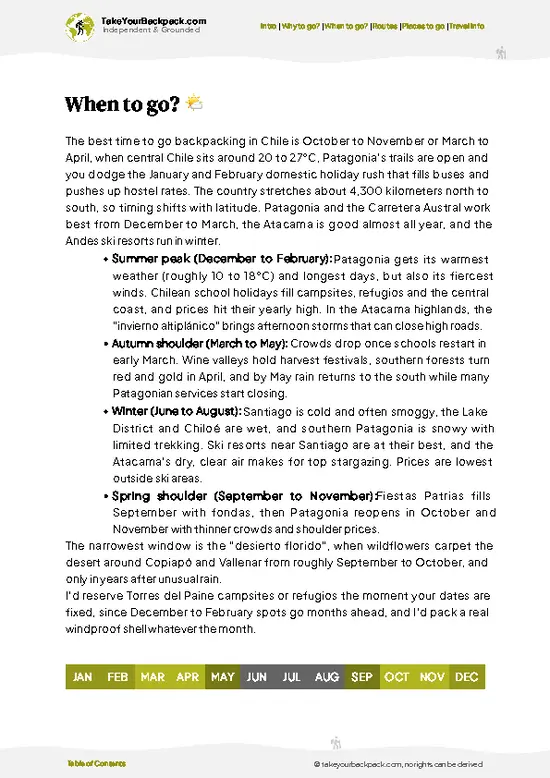
Cabo de Hornos National Park is best in the austral summer, December to February, when calmer windows and long daylight make a landing more likely. I would sail in the early morning and keep a spare day in Puerto Williams, because the weather decides everything.

✈️ When did I visit Chile?
I have visited Chile, together with Argentina, in September 2012.

✍️ Help improve this page!
The information on this page is based on my own backpacking experience in Chile, supplemented with up-to-date research and feedback from other travelers. Travel details can change, so if you notice anything outdated or incomplete, feel free to let me know.


🙋‍♂️ Give feedback

👋 Meet the founderWho’s Behind Take Your Backpack?

Johan, backpacker and founder of TakeYourBackpackHi, I’m Johan (Netherlands 🇳🇱), the creator of TakeYourBackpack. Over the past 3 decades, I’ve backpacked through 90+ countries across six continents, gaining extensive experience with independent travel, long-term trips, and overland routes.

This site is built on a combination of firsthand travel experience and carefully curated insights from other backpackers. Many guides are based on places I’ve personally visited, while others bring together tips, observations, and practical advice shared by trusted travelers I’ve met along the way.

The goal is to provide realistic, experience-driven guidance — not generic itineraries — so you can explore destinations with better context, clearer expectations, and more confidence.