×

Chile🇨🇱 | landmarksCañón del Río BlancoMilky glacial river, fractured canyon walls, gated valley road, hydroelectric works | things to do and best time to go

Explore Cascada de las ÁnimasExplore Cerro San Cristóbal

Backpacking in Cañón del Río Blanco
By Johan Kruseman 🇳🇱 | Updated October 19, 2026

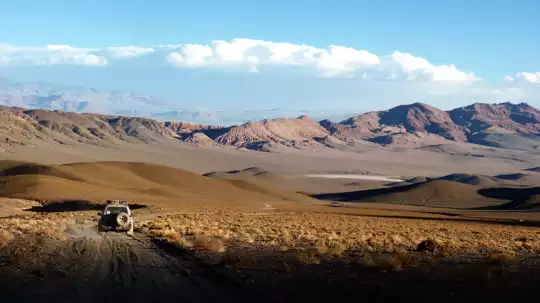
Cañón del Río Blanco sits inside a working hydroelectric and mining landscape, so access is controlled and you cannot simply wander in from the road. It lies in Chile’s Valparaíso Region, in the Andes east of Los Andes and near the Argentine border, on the route toward the Los Andes and Río Blanco area. The canyon’s walls are steep, the river runs milky from glacial silt, and the crowds are thin because the approach is long and gated in places. Costs stay low unless you hire a guide or a driver. A man at a roadside stand once told me, “Ask at the gate before you walk, they decide the day.” He was right, and that is why I confirm access first. A first day works best as an early start, a slow drive up the valley, a gate check, then a few hours on foot along the river.

Discover everything you want to know in the 📖 Chile Travel Guide.


example page 0 from our offline Travel Guide for Chile
example page 1 from our offline Travel Guide for Chile
example page 2 from our offline Travel Guide for Chile
example page 3 from our offline Travel Guide for Chile
example page 4 from our offline Travel Guide for Chile
example page 5 from our offline Travel Guide for Chile
example page 6 from our offline Travel Guide for Chile
example page 7 from our offline Travel Guide for Chile
Loading the map 🌍
CLICK TO FILTER
cities
towns
villages
landmarks
national parks
hikes
beaches
attractions
festivals
regions
SHOW COUNTRY’S BESTSHOW ALL

✨ Why go?
Ranked #99 unique site in Chile
What sets this place apart

Cañón del Río Blanco rewards people who want Andean rock and glacial water without the queues of Torres del Paine or the lakes further south. Its main draw is the contrast: a pale, silt-heavy river cutting through steep Andean walls only a few hours from Santiago, with almost no other backpackers on the trail. Because the valley is part of an active industrial zone, you get a look at how Chile’s mining and hydropower economy sits beside wild terrain, which few scenic spots show so plainly.
The place also fits a wider route well. It pairs with the Aconcagua Valley wine towns and the border road toward Argentina, so you can add it to a trip between the capital and Mendoza without much detour. Treat it as a half-day or full-day outing, not a destination for a week. If you value quiet and are happy … read more 👉
Cañón del Río Blanco rewards people who want Andean rock and glacial water without the queues of Torres del Paine or the lakes further south. Its main draw is the contrast: a pale, silt-heavy river cutting through steep Andean walls only a few hours from Santiago, with almost no other backpackers on the trail. Because the valley is part of an active industrial zone, you get a look at how Chile’s mining and hydropower economy sits beside wild terrain, which few scenic spots show so plainly.
The place also fits a wider route well. It pairs with the Aconcagua Valley wine towns and the border road toward Argentina, so you can add it to a trip between the capital and Mendoza without much detour. Treat it as a half-day or full-day outing, not a destination for a week. If you value quiet and are happy to sort out permission and transport beforehand, it is one of the more private Andean canyons within reach of the capital.

💡 HighlightsMust-see experiences and standout moments

  1. The Río Blanco itself: the milky, glacier-fed river is the signature sight, colored by fine rock flour that gives the canyon its name.
  2. The canyon walls: steep, fractured Andean rock rising on both sides, with layered colors that change as the valley narrows.
  3. The access road along the valley: a slow drive where the landscape shifts from orchards near Los Andes to bare, high mountain terrain.
  4. Riverside walking sections: where permitted, short stretches on foot let you hear the water and see the silt swirl against the boulders.
  5. Hydroelectric infrastructure: pipes, intakes and works that show how the river powers the region, an unusual sight inside a scenic canyon.
  6. Birdwatching and wildlife: condors sometimes ride the updrafts above the ridges, and smaller Andean birds work the river edges.
  7. Photography
… read more 👉
  1. The Río Blanco itself: the milky, glacier-fed river is the signature sight, colored by fine rock flour that gives the canyon its name.
  2. The canyon walls: steep, fractured Andean rock rising on both sides, with layered colors that change as the valley narrows.
  3. The access road along the valley: a slow drive where the landscape shifts from orchards near Los Andes to bare, high mountain terrain.
  4. Riverside walking sections: where permitted, short stretches on foot let you hear the water and see the silt swirl against the boulders.
  5. Hydroelectric infrastructure: pipes, intakes and works that show how the river powers the region, an unusual sight inside a scenic canyon.
  6. Birdwatching and wildlife: condors sometimes ride the updrafts above the ridges, and smaller Andean birds work the river edges.
  7. Photography stops on the bends: the tight turns give clean frames of river, rock and snow-streaked peaks beyond.
Allow half a day for the drive and a short walk, or a full day if you stop at several viewpoints and walk the riverside sections at an easy pace.
Spotted a mistake or missing something? Contact us.

Things to do near Cañón del Río Blanco

Ratings based on Tripadvisor reviews. When you book through this link, you support our work at no extra cost to you.

🌤️ When to go?Weather, crowds, and seasonal trade-offs

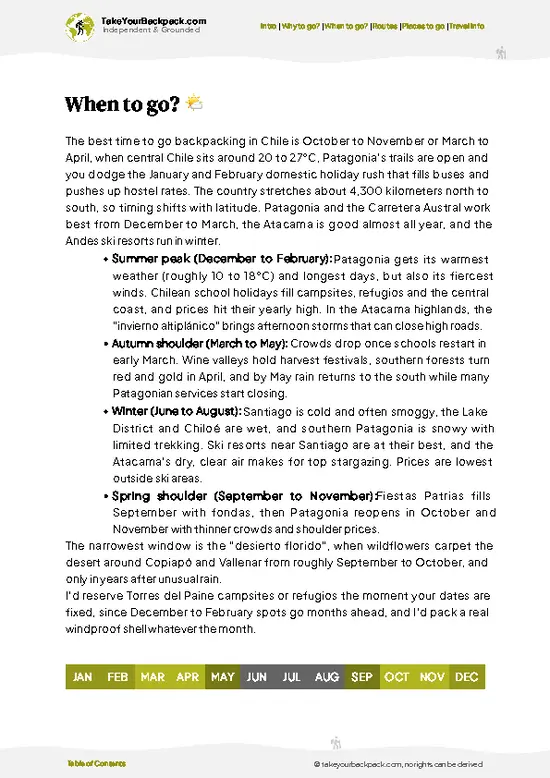
Late October to April is the window for hiking Cañón del Río Blanco, when the trail and river crossings are open and the Andean valley north of Los Andes is dry.
  • Summer (Dec to Feb): Dry and sunny, with daytime highs of 25 to 32°C (77 to 90°F) in the valley and cool nights near 8 to 12°C (46 to 54°F) higher up. Days run long, about 14 hours of light. Weekends are busiest and rates for lodging rise.
  • Autumn (Mar to Apr): Stable weather, highs of 18 to 25°C (64 to 77°F), quieter trails, and golden poplars along the river.
  • Winter (Jun to Aug): Snow and cold, with highs of 5 to 12°C (41 to 54°F) and nights below freezing. Access can close and daylight drops to about 10 hours.
  • Spring (Sep to Nov): Snowmelt raises the river, so crossings can be tricky early on. Wildflowers appear and crowds stay thin.
… read more 👉
Late October to April is the window for hiking Cañón del Río Blanco, when the trail and river crossings are open and the Andean valley north of Los Andes is dry.
  • Summer (Dec to Feb): Dry and sunny, with daytime highs of 25 to 32°C (77 to 90°F) in the valley and cool nights near 8 to 12°C (46 to 54°F) higher up. Days run long, about 14 hours of light. Weekends are busiest and rates for lodging rise.
  • Autumn (Mar to Apr): Stable weather, highs of 18 to 25°C (64 to 77°F), quieter trails, and golden poplars along the river.
  • Winter (Jun to Aug): Snow and cold, with highs of 5 to 12°C (41 to 54°F) and nights below freezing. Access can close and daylight drops to about 10 hours.
  • Spring (Sep to Nov): Snowmelt raises the river, so crossings can be tricky early on. Wildflowers appear and crowds stay thin.
Go midweek in March for the best mix of dry trails, low prices and empty campsites.


source: climatestotravel.comJANJanuary: excellent for travelingFEBFebruary: excellent for travelingMARMarch: highly recommended for travelingAPRApril: good for travelingMAYMay: fair for travelingJUNJune: below average for travelingJULJuly: below average for travelingAUGAugust: below average for travelingSEPSeptember: fair for travelingOCTOctober: good for travelingNOVNovember: highly recommended for travelingDECDecember: excellent for traveling
chile-unique-site-canon-del-rio-blanco
© Google |

✈️ The backpacker research shortcutChile Travel Guide

An offline-friendly backpacking guide with optimized travel routes, ranked highlights, transport advice, and the best areas to stay.
example page 0 from our offline Travel Guide for Chile
example page 1 from our offline Travel Guide for Chile
example page 2 from our offline Travel Guide for Chile
example page 3 from our offline Travel Guide for Chile
example page 4 from our offline Travel Guide for Chile
example page 5 from our offline Travel Guide for Chile
example page 6 from our offline Travel Guide for Chile
example page 7 from our offline Travel Guide for Chile
The digital guide (333 pages) contains:
✅ 107 highlights, ranked by travel appeal
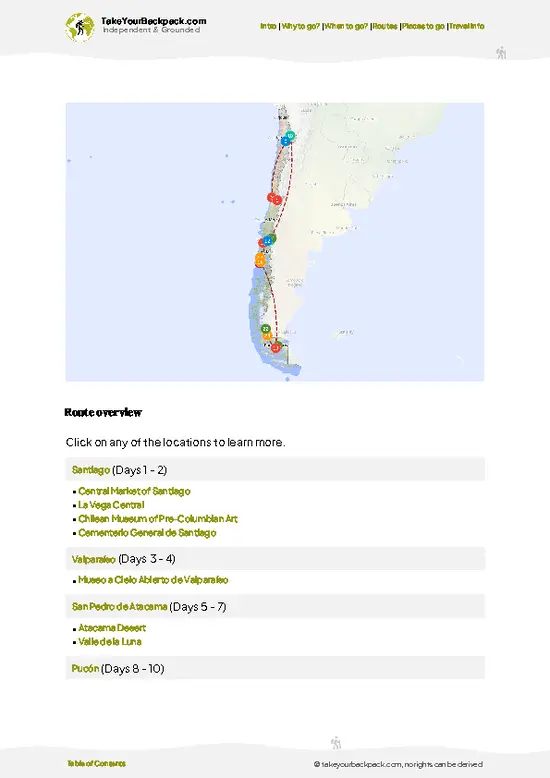
✅ Optimized 7, 14 & 21-day travel routes
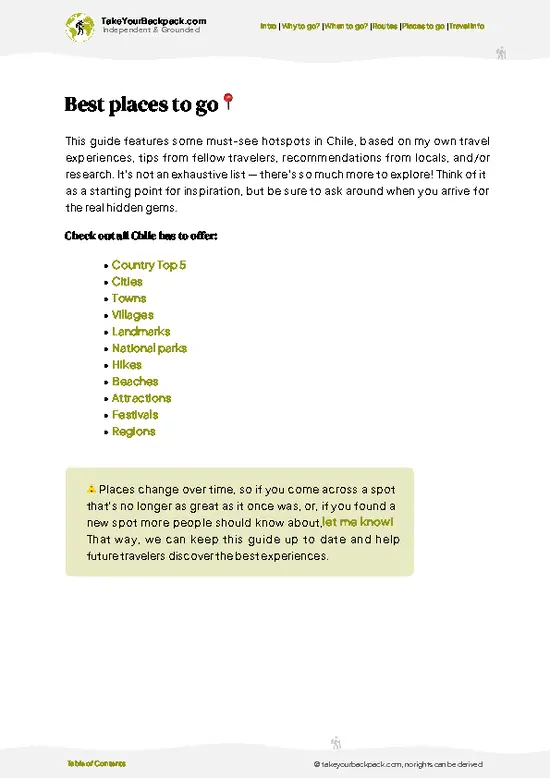
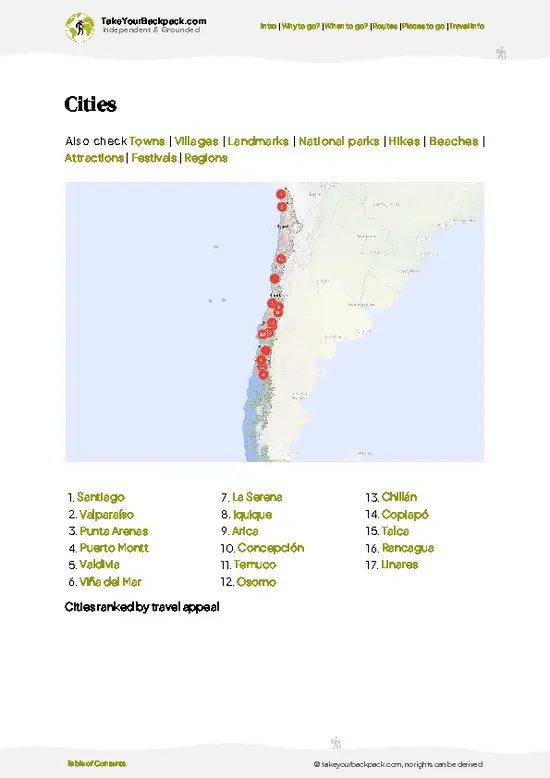
✅ Cities, national parks, landmarks, beaches
✅ How to get around
✅ Offline-friendly for travel without Wi-Fi
👉 Click to see all 30+ guide features

📅 Plan smarter in minutes, not weeks
✅ Month by month travel advice
✅ Festivals & national holidays
✅ Budget expectations

🗺️ Go to the right places, skip the overrated ones
✅ Honest pros & cons of destinations
✅ Top hikes, parks & viewpoints
✅ Lesser-known places most travelers miss
✅ Clear “worth it vs skip it” guidance

🛏️ Travel smoothly without rookie mistakes
✅ Best areas to stay
✅ Transport systems explained simply
✅ Common scams & safety advice
✅ SIM cards, money & practical tips

🌍 Understand the country, not just visit it
✅ Culture & traditions
✅ 52 Essential phrases & customs
✅ Festivals worth planning around
✅ Traveler-friendly historical context
✅ Insights that make places more meaningful

📱 Built for real travel conditions
✅ Fully downloadable PDF
✅ Works completely offline
✅ Optimized for phone use
✅ Useful in remote areas & buses
✅ Everything in one place
Stop searching, start planning
Get instant access to your full guide. 30‑day money-back guarantee.
+ Add another guide for just

By proceeding you agree to our terms.
Sent to your inbox immediately after payment • 100% Secure Checkout
Best Backpacking Travel Advisor 2025 tourism awardBest Backpacking
Travel Advisor
2025
What others say about Take Your Backpack Guides:
⭐⭐⭐⭐⭐
Fantastic, amazing amount of information!
⭐⭐⭐⭐⭐
My goodness this is amazing, it's what I've been looking for hats off too you!
⭐⭐⭐⭐⭐
I think this is absolutely BRILLIANT
⭐⭐⭐⭐
Very complete and informative. It's still missing places, but I gotta to commend you
⭐⭐⭐⭐⭐
This is truly amazing, thank you, can't wait to explore it with my kids!
⭐⭐⭐⭐⭐
Awesome resource, thank you!
⭐⭐⭐⭐⭐
This is amazing! Can't wait to explore the ones I haven't seen
⭐⭐⭐⭐
I love this! Well done, great idea.
⭐⭐⭐⭐⭐
Thanks for taking the time to make this gem!
⭐⭐⭐⭐⭐
This might be the best website I've ever seen.
⭐⭐⭐⭐⭐
Congratulations, and thank you so much for your work; it's incredibly valuable.
⭐⭐⭐⭐
In all seriousness I think you did a great job pointing out the important spots
⭐⭐⭐⭐⭐
10/10 very good
⭐⭐⭐⭐⭐
As someone who's only just starting to visit regularly this is awesome, thank you.
⭐⭐⭐⭐
Thank you very much! I'm going to visit my dad, it's going to be very useful!
⭐⭐⭐⭐⭐
This is really cool! We'll be travelling for the first time and this definitely come in handy.
⭐⭐⭐⭐⭐
You are now our minister of culture, congratulations 👨‍💼
⭐⭐⭐⭐⭐
Just wanted to tell you that this is a pearl! Going to follow your recommendations.
⭐⭐⭐⭐⭐
This is so cool. I'll definitely be using the resource for my travels soon.
⭐⭐⭐⭐⭐
This is very impressive! Good work.
⭐⭐⭐⭐⭐
This is an amazing and informative site. Very well done!

🛏️ Where to stay?Where staying makes the most sense

Los Andes is the best base for Cañón del Río Blanco, a regional city of about 70,000 people roughly 30 to 45 minutes by road from the canyon. It has the cheapest beds, supermarkets, ATMs and the bus terminal with frequent services to Santiago (about 1.5 hours) and Mendoza-bound coaches. Budget guesthouses and simple hostels cluster around the center and Plaza de Armas, and the area is walkable and calm in the evening, which suits solo travelers.

San Felipe, about 15 minutes farther, is a quieter alternative with a handful of family-run residenciales and a local market where you can stock up on … read more 👉
Los Andes is the best base for Cañón del Río Blanco, a regional city of about 70,000 people roughly 30 to 45 minutes by road from the canyon. It has the cheapest beds, supermarkets, ATMs and the bus terminal with frequent services to Santiago (about 1.5 hours) and Mendoza-bound coaches. Budget guesthouses and simple hostels cluster around the center and Plaza de Armas, and the area is walkable and calm in the evening, which suits solo travelers.

San Felipe, about 15 minutes farther, is a quieter alternative with a handful of family-run residenciales and a local market where you can stock up on fruit and bread. It feels less touristy, but the social scene is thin.

Near the canyon itself, informal campsites and a few rustic cabins are available in the Río Blanco valley. They put you on the trail early and under dark skies, though you must carry food and water and company is limited to fellow hikers. Many backpackers prefer a night in Los Andes first, then a camping stay to meet other travelers heading up the valley.

👛 Costs (as of 19 October 2026)How expensive it really is

Expect to spend about US$48 a day at Cañón del Río Blanco, with lodging in Los Andes as the biggest cost.
CategoryBudget RangeLocal Reality
Accommodation (high season)US$15 to 25Dorm or basic guesthouse room in Los Andes; camping costs less, around US$5 to 10.
Accommodation (low season)US$10 to 20Discounts are common midweek and in autumn.
FoodUS$10 to 15Set lunch (menú del día) runs US$5 to 8; self-catering from supermarkets is cheaper.
Local transportUS$4 to 10Colectivos and local buses from Los Andes toward the valley are cheap; a taxi to the trailhead costs more.
Access and entryUS$0 to 5Access to the canyon is mostly on private or community land, so small fees may apply. Pay in cash.
ExtrasUS$3 to 8Snacks, water purification, and a guide if you want one for longer treks.
Total Daily BudgetUS$48Based
… read more 👉
Expect to spend about US$48 a day at Cañón del Río Blanco, with lodging in Los Andes as the biggest cost.
CategoryBudget RangeLocal Reality
Accommodation (high season)US$15 to 25Dorm or basic guesthouse room in Los Andes; camping costs less, around US$5 to 10.
Accommodation (low season)US$10 to 20Discounts are common midweek and in autumn.
FoodUS$10 to 15Set lunch (menú del día) runs US$5 to 8; self-catering from supermarkets is cheaper.
Local transportUS$4 to 10Colectivos and local buses from Los Andes toward the valley are cheap; a taxi to the trailhead costs more.
Access and entryUS$0 to 5Access to the canyon is mostly on private or community land, so small fees may apply. Pay in cash.
ExtrasUS$3 to 8Snacks, water purification, and a guide if you want one for longer treks.
Total Daily BudgetUS$48Based on high-season lodging, mid-range food and transport.


source: chile.travel
⚠️ Prices can change and everyone travels differently, so take this as a rough guide. Hope it helps you plan your adventure!

FAQFrequently asked questions about Cañón del Río Blanco

Cañón del Río Blanco is a river canyon in the Andes of Chile’s Valparaíso Region, in the Los Andes area. Its steep rock walls and clear glacial-fed river attract hikers, campers and anglers. The valley sits at roughly 1,000 to 2,000 meters and leads toward higher Andean terrain near the Argentine border.
Plan one full day for a round-trip hike in Cañón del Río Blanco, or two days if you want to camp. Short walks along the lower valley take 3 to 5 hours. Add a travel day for the road from Santiago, which takes about 2 hours each way.
Take a bus from Santiago to Los Andes, about 1.5 hours and US$5 to 8. From there, a taxi or local transport covers the remaining 30 to 45 minutes to the canyon. Cañón del Río Blanco has no regular public service to the trailhead, so a rental car from Santiago gives the most flexibility.
⚠️ Things can change over time, so always validate details locally before you go.

Other Chilean landmarks near Cañón del Río Blanco

Explore more nearby:

  • Cerro San Cristóbal—Funicular and cable car, summit Virgin, city-basin views, hillside gardens and pools| 106 km away
  • Cascada de las Ánimas—Private canyon reserve, stream cascades, snowmelt pools, horseback and rafting| 135 km away
  • Ojos del Salado—6,893 m summit, crater pond, Refugio Atacama, flamingo lagoons| 624 km away

💡 Not sure where to go next?
Create a personalized itinerary for Chile including Cañón del Río Blanco and the places that fit your trip.

Generate my itinerary

👉 Discover all landmarks

Or checkout all Chile has to offer (think cities, towns, villages, national parks, hikes, beaches, festivals)
Country photo of Chile

We 💚 feedbackIs it worth it?

Cañón del Río Blanco suits a single full day, and I would not plan more unless you are pairing it with the wine towns nearby. Confirm access before you set out and bring your own water and food. If the gate is closed, shift to the lower valley and keep the day flexible.

✈️ When did I visit Chile?
I have visited Chile, together with Argentina, in September 2012.

✍️ Help improve this page!
The information on this page is based on my own backpacking experience in Chile, supplemented with up-to-date research and feedback from other travelers. Travel details can change, so if you notice anything outdated or incomplete, feel free to let me know.


🙋‍♂️ Give feedback

👋 Meet the founderWho’s Behind Take Your Backpack?

Johan, backpacker and founder of TakeYourBackpackHi, I’m Johan (Netherlands 🇳🇱), the creator of TakeYourBackpack. Over the past 3 decades, I’ve backpacked through 90+ countries across six continents, gaining extensive experience with independent travel, long-term trips, and overland routes.

This site is built on a combination of firsthand travel experience and carefully curated insights from other backpackers. Many guides are based on places I’ve personally visited, while others bring together tips, observations, and practical advice shared by trusted travelers I’ve met along the way.

The goal is to provide realistic, experience-driven guidance — not generic itineraries — so you can explore destinations with better context, clearer expectations, and more confidence.