×

Chile🇨🇱 | festivalsFestival Internacional de Documentales de Santiago (FIDOCS)urban screenings, documentary focus, filmmaker talks | things to do and best time to go

Explore Tapati Rapa NuiExplore Festival Internacional de Jazz de Providencia

Backpacking in Internacional de Documentales de Santiago (FIDOCS)
👌 Worth visitingfestival ranked #11
By Johan Kruseman 🇳🇱 | Updated September 4, 2026

A decade ago, FIDOCS felt like a scrappy cinephile bunker: folding chairs, lukewarm coffee, directors arguing in the hallway, and you sneaking into free screenings with a crumpled program in your pocket. Today it’s sharper and more curated, but still rooted in Santiago’s brainy core, mainly around downtown cultural centers and cinemas in the capital of Chile. This is a documentary film festival, not a music blowout, so expect Q&As, panel talks, and long, quiet shots instead of mosh pits. The crowd skews students, filmmakers, and politically curious travelers; the vibe is intense but welcoming if you actually like thinking. It usually runs several days, enough to build a rhythm between screenings and street food. Worth it if you’re into Latin American documentary and want to see Chile’s questions on screen, not just in museums.

Discover everything you want to know in the 📖 Chile Travel Guide.


Get your Chile guide
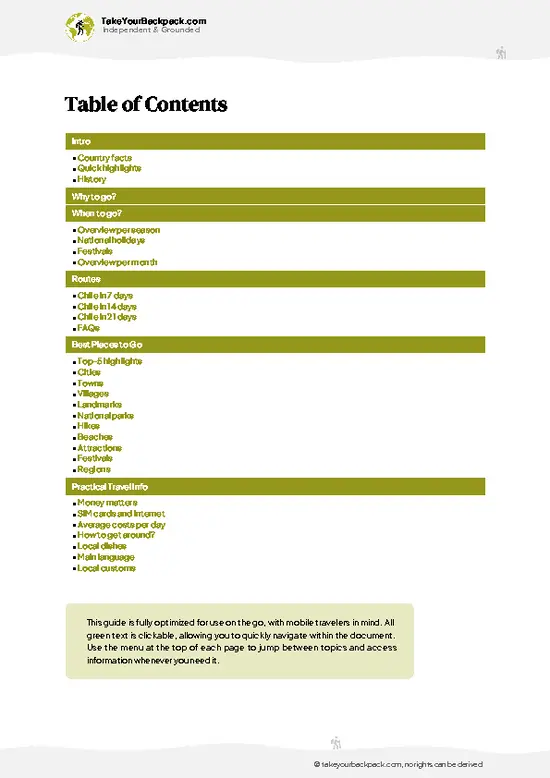
114 ranked highlights, routes & tips, works offline (449 pages)
Loading the map 🌍
CLICK TO FILTER
cities
towns
villages
landmarks
national parks
hikes
beaches
attractions
festivals
regions
SHOW COUNTRY’S BESTSHOW ALL

✨ Why go?
Ranked #11 festival in Chile
What makes this festival worth celebrating

Backpackers flock to the Festival Internacional de Documentales de Santiago (FIDOCS) for a burst of social energy and cultural immersion. This festival isn’t just about films; it’s a temporary community where you connect with locals and fellow travelers, sharing stories over popcorn and pisco. The atmosphere buzzes with creativity, making it a perfect pit stop on your journey through Chile.

Affordability is another draw. Compared to similar events worldwide, FIDOCS offers a rich experience without breaking the bank. You can dive into thought-provoking documentaries while keeping your budget intact, leaving more room for those spontaneous adventures.

Planning your route around this festival means weaving a vibrant thread into your travel tapestry, enriching your experience and preserving … read more 👉
Backpackers flock to the Festival Internacional de Documentales de Santiago (FIDOCS) for a burst of social energy and cultural immersion. This festival isn’t just about films; it’s a temporary community where you connect with locals and fellow travelers, sharing stories over popcorn and pisco. The atmosphere buzzes with creativity, making it a perfect pit stop on your journey through Chile.

Affordability is another draw. Compared to similar events worldwide, FIDOCS offers a rich experience without breaking the bank. You can dive into thought-provoking documentaries while keeping your budget intact, leaving more room for those spontaneous adventures.

Planning your route around this festival means weaving a vibrant thread into your travel tapestry, enriching your experience and preserving your energy for the moments that truly matter. Don’t miss out on this chance to engage with the heart of Santiago!
Want to include Festival Internacional de Documentales de Santiago (FIDOCS) in your Chile route?
Create a personalized Chile itinerary that includes Festival Internacional de Documentales de Santiago (FIDOCS) and the places that fit your trip — based on your travel style, budget, and available time. Get your route in seconds.

Generate my trip

💡 HighlightsTop highlights of Internacional de Documentales de Santiago (FIDOCS)

  • Rigorous, Latino-forward curation: FIDOCS doesn’t chase big names — it cherry-picks bold voices from Chile and across Latin America alongside sharp international work. That mix gives you a sense of current regional debates and artistic risks you won’t easily see at a mainstream fest.
  • Direct access to filmmakers — Q&As and masterclasses: The festival is built so you can actually talk to the people behind the films. Intimate Q&As, workshops and panel discussions mean you leave with context, practical tips, and stories that change how you watch a documentary.
  • Unconventional venues and community screenings (personal favorite): Park screenings, cultural centers, small arthouse cinemas and neighborhood outreach programs make the city part of the program. It turns watching into an event — you’ll
read more 👉
  • Rigorous, Latino-forward curation: FIDOCS doesn’t chase big names — it cherry-picks bold voices from Chile and across Latin America alongside sharp international work. That mix gives you a sense of current regional debates and artistic risks you won’t easily see at a mainstream fest.
  • Direct access to filmmakers — Q&As and masterclasses: The festival is built so you can actually talk to the people behind the films. Intimate Q&As, workshops and panel discussions mean you leave with context, practical tips, and stories that change how you watch a documentary.
  • Unconventional venues and community screenings (personal favorite): Park screenings, cultural centers, small arthouse cinemas and neighborhood outreach programs make the city part of the program. It turns watching into an event — you’ll meet locals, catch impromptu conversations, and feel the films in a living city, not just a multiplex.
  • Thematic retrospectives and archival programming: FIDOCS often frames contemporary films alongside restorations or curated retrospectives, which gives historical depth. It’s a great way to understand local memory, political threads, and how form has evolved in the region.
  • Industry and networking spaces — labs and co-production forums: For emerging filmmakers and curious festival-goers, the industry tracks are where projects get shaped and partnerships form. It’s low-key but effective: producers, directors and programmers circulate in the same cafés and sessions, so real collaborations can start over a coffee.
Spotted a mistake or missing something? Contact us.

Things to do around Festival Internacional de Documentales de Santiago (FIDOCS)

Ratings based on Tripadvisor reviews. When you book through this link, you support our work at no extra cost to you.

🌤️ When to go?When is the celebration of Festival Internacional de Documentales de Santiago (FIDOCS)?


  • Weather: Santiago’s spring (September to November) offers mild, dry days perfect for wandering between screenings without overheating or rain dampening your plans. Summers can scorch past 30°C (86°F), making long days outdoors a sweat test.

  • Temperature: Spring temps hover around 15-25°C (59-77°F), ideal for layering. Winter nights dip below 5°C (41°F), which can chill your festival vibe if you’re not prepared.

  • Daylight Hours: Spring stretches daylight to about 12-13 hours, giving you ample time to explore the city’s art scenes before and after films. Winter shortens days to 9-10 hours, squeezing your adventure window.

  • Crowds: The festival draws cinephiles year-round, but spring sees a balanced crowd—enough buzz to energize without the claustrophobia of peak summer tourism.

  • Seasonal
read more 👉

  • Weather: Santiago’s spring (September to November) offers mild, dry days perfect for wandering between screenings without overheating or rain dampening your plans. Summers can scorch past 30°C (86°F), making long days outdoors a sweat test.

  • Temperature: Spring temps hover around 15-25°C (59-77°F), ideal for layering. Winter nights dip below 5°C (41°F), which can chill your festival vibe if you’re not prepared.

  • Daylight Hours: Spring stretches daylight to about 12-13 hours, giving you ample time to explore the city’s art scenes before and after films. Winter shortens days to 9-10 hours, squeezing your adventure window.

  • Crowds: The festival draws cinephiles year-round, but spring sees a balanced crowd—enough buzz to energize without the claustrophobia of peak summer tourism.

  • Seasonal Activities: Spring unlocks outdoor cafés and street art tours, complementing the indoor festival experience. Summer’s heat can limit daytime strolls, pushing you indoors more often.

  • Price Fluctuations: Accommodation and flights dip outside peak summer (December-February), so booking for spring can save you serious pesos while still enjoying great weather and festival energy.


Pro-tip: Aim for early spring to catch the festival’s fresh buzz, avoid the summer scorch, and keep your budget lean—your feet and wallet will thank you.


source: climatestotravel.comJANJanuary: not recommended for travelingFEBFebruary: not recommended for travelingMARMarch: not recommended for travelingAPRApril: not recommended for travelingMAYMay: not recommended for travelingJUNJune: not recommended for travelingJULJuly: not recommended for travelingAUGAugust: not recommended for travelingSEPSeptember: excellent for travelingOCTOctober: not recommended for travelingNOVNovember: not recommended for travelingDECDecember: not recommended for traveling

✈️ The backpacker research shortcutChile Travel Guide

An offline-friendly backpacking guide with optimized travel routes, ranked highlights, transport advice, and the best areas to stay.
example page 0 from our offline Travel Guide for Chile
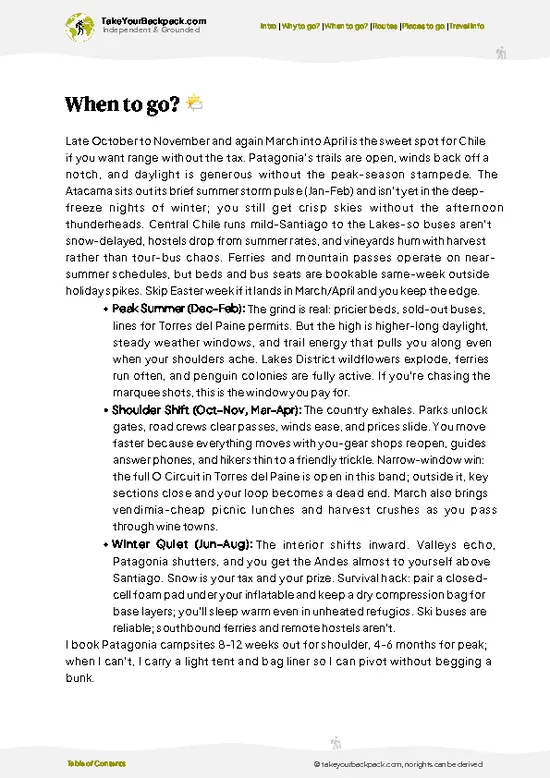
example page 1 from our offline Travel Guide for Chile
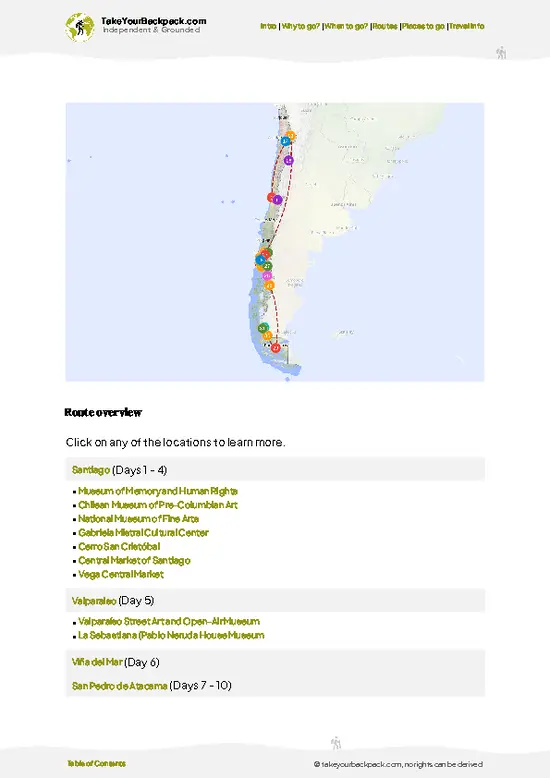
example page 2 from our offline Travel Guide for Chile
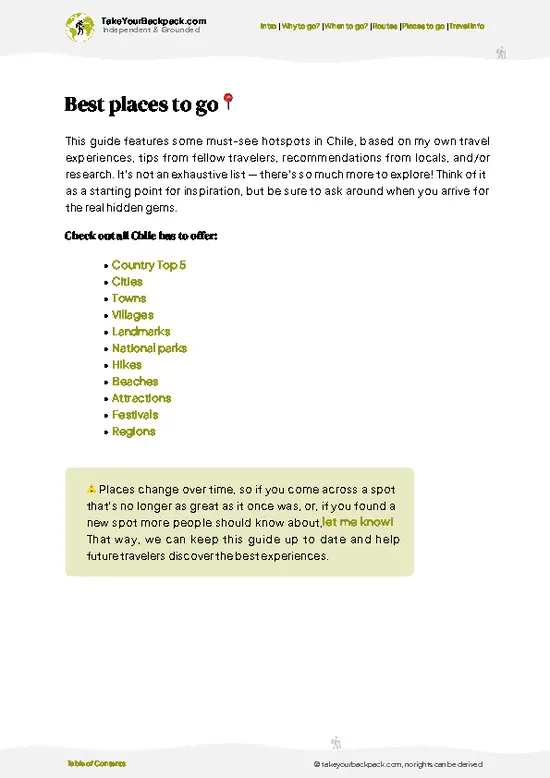
example page 3 from our offline Travel Guide for Chile
example page 4 from our offline Travel Guide for Chile
example page 5 from our offline Travel Guide for Chile
example page 6 from our offline Travel Guide for Chile
example page 7 from our offline Travel Guide for Chile
The digital guide (449 pages) contains:
114 highlights, ranked by travel appeal
Optimized 7, 14 & 21-day travel routes
Cities, national parks, landmarks, beaches
How to get around
Offline-friendly for travel without Wi-Fi
👉 Click to see all 30+ guide features

📅 Plan smarter in minutes, not weeks
Month by month travel advice
Festivals & national holidays
Budget expectations

🗺️ Go to the right places, skip the overrated ones
Honest pros & cons of destinations
Top hikes, parks & viewpoints
Lesser-known places most travelers miss
Clear “worth it vs skip it” guidance

🛏️ Travel smoothly without rookie mistakes
Best areas to stay
Transport systems explained simply
Common scams & safety advice
SIM cards, money & practical tips

🌍 Understand the country, not just visit it
Culture & traditions
52 Essential phrases & customs
Festivals worth planning around
Traveler-friendly historical context
Insights that make places more meaningful

📱 Built for real travel conditions
Fully downloadable PDF
Works completely offline
Optimized for phone use
Useful in remote areas & buses
Everything in one place
Save weeks of stressful planning
Get instant access to your full guide. 30‑day money-back guarantee.
+ Add another guide for just US$7.80

By proceeding you agree to our terms.
Sent to your inbox immediately after payment • 100% Secure Checkout
Best Backpacking Travel Advisor 2025 tourism awardBest Backpacking
Travel Advisor
2025
What others say about Take Your Backpack Guides:
⭐⭐⭐⭐⭐
Fantastic, amazing amount of information!
⭐⭐⭐⭐⭐
My goodness this is amazing, it's what I've been looking for hats off too you!
⭐⭐⭐⭐⭐
I think this is absolutely BRILLIANT
⭐⭐⭐⭐
Very complete and informative. It's still missing places, but I gotta to commend you
⭐⭐⭐⭐⭐
This is truly amazing, thank you, can't wait to explore it with my kids!
⭐⭐⭐⭐⭐
Awesome resource, thank you!
⭐⭐⭐⭐⭐
This is amazing! Can't wait to explore the ones I haven't seen
⭐⭐⭐⭐
I love this! Well done, great idea.
⭐⭐⭐⭐⭐
Thanks for taking the time to make this gem!
⭐⭐⭐⭐⭐
This might be the best website I've ever seen.
⭐⭐⭐⭐⭐
Congratulations, and thank you so much for your work; it's incredibly valuable.
⭐⭐⭐⭐
In all seriousness I think you did a great job pointing out the important spots
⭐⭐⭐⭐⭐
10/10 very good
⭐⭐⭐⭐⭐
As someone who's only just starting to visit regularly this is awesome, thank you.
⭐⭐⭐⭐
Thank you very much! I'm going to visit my dad, it's going to be very useful!
⭐⭐⭐⭐⭐
This is really cool! We'll be travelling for the first time and this definitely come in handy.
⭐⭐⭐⭐⭐
You are now our minister of culture, congratulations 👨‍💼
⭐⭐⭐⭐⭐
Just wanted to tell you that this is a pearl! Going to follow your recommendations.
⭐⭐⭐⭐⭐
This is so cool. I'll definitely be using the resource for my travels soon.
⭐⭐⭐⭐⭐
This is very impressive! Good work.
⭐⭐⭐⭐⭐
This is an amazing and informative site. Very well done!

🛏️ Where to stay?Best areas and accommodation options

Stay close to the heart of Santiago during the Festival Internacional de Documentales de Santiago (FIDOCS) for an electric experience. The neighborhoods of Bellavista and Lastarria are your best bets.

Bellavista pulses with life. Street art splashes color on every corner, and the nightlife buzzes with energy. You’ll find plenty of bars and eateries where you can swap stories with fellow travelers. It’s safe and vibrant, perfect for solo backpackers looking to connect.

Lastarria, on the other hand, offers a more laid-back vibe. Cobblestone streets lead you to quaint cafés and artisan markets. … read more 👉
Stay close to the heart of Santiago during the Festival Internacional de Documentales de Santiago (FIDOCS) for an electric experience. The neighborhoods of Bellavista and Lastarria are your best bets.

Bellavista pulses with life. Street art splashes color on every corner, and the nightlife buzzes with energy. You’ll find plenty of bars and eateries where you can swap stories with fellow travelers. It’s safe and vibrant, perfect for solo backpackers looking to connect.

Lastarria, on the other hand, offers a more laid-back vibe. Cobblestone streets lead you to quaint cafés and artisan markets. It’s a haven for those who appreciate culture and creativity. Plus, it’s just a short walk to the festival venues, saving you time and energy for the films.

Both areas are well-connected by public transport, so you can easily explore the city. Choose wisely, and you’ll preserve your budget and spirit for the moments that truly matter.

👛 Costs (as of 4 September 2026)Typical daily expenses

The Festival Internacional de Documentales de Santiago (FIDOCS) is a vibrant celebration of documentary filmmaking, but navigating the costs can be tricky. Here’s how to budget effectively for this experience.
  • Festival Tickets: Expect to pay between $5 to $15 USD per screening. A full festival pass might set you back around $50 to $100 USD, depending on the number of films and events included. Grab your tickets early to avoid last-minute price hikes.
  • Accommodation: Options vary widely. Budget hostels can cost around $15 to $30 USD per night, while mid-range hotels range from $50 to $100 USD. For a more local experience, consider Airbnb, where you might find cozy spots starting at $30 USD.
  • Local Transport: Santiago’s public transport is efficient. A single metro ticket costs about $1.20 USD. If
read more 👉
The Festival Internacional de Documentales de Santiago (FIDOCS) is a vibrant celebration of documentary filmmaking, but navigating the costs can be tricky. Here’s how to budget effectively for this experience.
  • Festival Tickets: Expect to pay between $5 to $15 USD per screening. A full festival pass might set you back around $50 to $100 USD, depending on the number of films and events included. Grab your tickets early to avoid last-minute price hikes.
  • Accommodation: Options vary widely. Budget hostels can cost around $15 to $30 USD per night, while mid-range hotels range from $50 to $100 USD. For a more local experience, consider Airbnb, where you might find cozy spots starting at $30 USD.
  • Local Transport: Santiago’s public transport is efficient. A single metro ticket costs about $1.20 USD. If you plan to hop around frequently, consider a monthly transport card for about $30 USD. Rideshares like Uber are also available, with typical fares ranging from $3 to $10 USD depending on distance.
  • Food & Drinks: Street food is a steal, with meals costing around $3 to $7 USD. Sit-down restaurants will run you about $10 to $25 USD per meal. Don’t forget to budget for drinks; local beers are around $2 to $5 USD, while a glass of wine can be $5 to $10 USD.
  • Miscellaneous Expenses: Set aside $10 to $20 USD for souvenirs or unexpected costs. This could include festival merchandise or a spontaneous outing. Always good to have a cushion!

Planning ahead will keep your energy high and your budget intact, allowing you to dive into the festival without the stress of hidden costs.


source: chile.travel
⚠️ Prices can change and everyone travels differently, so take this as a rough guide. Hope it helps you plan your adventure!

🍲 FoodEating & Drinking in Internacional de Documentales de Santiago (FIDOCS)

At the Festival Internacional de Documentales de Santiago (FIDOCS), food and drink pulse with local flavor. You’ll find empanadas sizzling at stalls, their flaky crusts bursting with savory fillings like cheese or spicy meat. Don’t miss the chance to try pastel de choclo, a corn pie that’s a Chilean classic, layered with ground meat and olives.

For drinks, grab a terremoto, a sweet, frothy concoction of pipeño (a local wine) and pineapple ice cream. It’s a festival favorite that packs a punch and is perfect for cooling off.

Etiquette here is laid-back but communal. Expect to share tables and swap bites with fellow festival-goers. Lines can get long, so be patient and chat with those around you; it’s part of the experience. Bring cash for food stalls, as not all vendors accept cards. Serving … read more 👉
At the Festival Internacional de Documentales de Santiago (FIDOCS), food and drink pulse with local flavor. You’ll find empanadas sizzling at stalls, their flaky crusts bursting with savory fillings like cheese or spicy meat. Don’t miss the chance to try pastel de choclo, a corn pie that’s a Chilean classic, layered with ground meat and olives.

For drinks, grab a terremoto, a sweet, frothy concoction of pipeño (a local wine) and pineapple ice cream. It’s a festival favorite that packs a punch and is perfect for cooling off.

Etiquette here is laid-back but communal. Expect to share tables and swap bites with fellow festival-goers. Lines can get long, so be patient and chat with those around you; it’s part of the experience. Bring cash for food stalls, as not all vendors accept cards. Serving sizes are generous, so pace yourself and savor each bite. This festival isn’t just about the films; it’s a feast for the senses.

FAQTraveler FAQ

FIDOCS usually takes place in August each year, lasting about 10 days. The exact dates can vary slightly from year to year.
Attending FIDOCS is generally free for most screenings and events, though some special sessions or workshops may have a small fee, typically under $10 USD.
Yes, it is recommended to get tickets in advance, especially for popular screenings and workshops, as they can sell out quickly. Tickets are often available online a few weeks before the festival starts.
⚠️ Things can change over time, so always validate details locally before you go.

Other Chilean festivals near Internacional de Documentales de Santiago (FIDOCS)

Explore more nearby:


💡 Not sure where to go next?
Create a personalized itinerary for Chile including Internacional de Documentales de Santiago (FIDOCS) and the places that fit your trip.

Generate my itinerary

👉 Discover all festivals

Or checkout all Chile has to offer (think cities, towns, villages, national parks, hikes, beaches, festivals)
Country photo of Chile

We 💚 feedbackKey takeaways before you go

Santiago’s FIDOCS is a treasure trove of raw storytelling that’ll ignite your passion for documentaries. You’ll meet filmmakers and fellow enthusiasts, sparking conversations that linger long after the credits roll. Just be ready for the crowds; they can drain your energy if you’re not strategic about your schedule. Embrace the chaos, and you’ll find the real magic in the moments between screenings.

✈️ When did I visit Chile?
I have visited Chile, together with Argentina, in September 2012.

✍️ Help improve this page!
The information on this page is based on my own backpacking experience in Chile, supplemented with up-to-date research and feedback from other travelers. Travel details can change, so if you notice anything outdated or incomplete, feel free to let me know.


🙋‍♂️ Give feedback

👋 Meet the founderWho’s Behind Take Your Backpack?

Johan, backpacker and founder of TakeYourBackpackHi, I’m Johan (Netherlands 🇳🇱), the creator of TakeYourBackpack. Over the past decade, I’ve backpacked through 80+ countries across six continents, gaining extensive experience with independent travel, long-term trips, and overland routes.

This site is built on a combination of firsthand travel experience and carefully curated insights from other backpackers. Many guides are based on places I’ve personally visited, while others bring together tips, observations, and practical advice shared by trusted travelers I’ve met along the way.

The goal is to provide realistic, experience-driven guidance — not generic itineraries — so you can explore destinations with better context, clearer expectations, and more confidence.

Get full Chile guide •
Instant download • 114 highlights • Full Offline guide