×

Chile🇨🇱 | festivalsTapati Rapa Nuiisland rituals, body painting, ancestral competitions | things to do and best time to go

Explore La TiranaExplore Festival Internacional de Documentales de Santiago (FIDOCS)

Backpacking in Tapati Rapa Nui
🏆 Top pickfestival ranked #1
By Johan Kruseman 🇳🇱 | Updated June 2, 2026

Tapati Rapa Nui is not for people who want a tidy, air‑conditioned cultural show with fixed seats, clean schedules, and predictable prices. It’s chaotic, physical, and logistically awkward. But that’s exactly why backpackers win here: you trade comfort for raw access to a living Polynesian culture that’s still fighting to define itself on its own terms. The festival happens on Rapa Nui (Easter Island), a Chilean territory way out in the Pacific, administratively part of the Valparaíso region but spiritually its own world.

Tapati is a two‑week cultural competition, usually in early February, where local clans battle through traditional sports, dance, and music to crown a queen. Think pounding drums, haka‑style chants, horse races, body paint, and families out until late, not EDM stages or influencer photo ops. The crowd skews local with a thin layer of travelers who worked hard to get there. It’s worth it if you want immersion and don’t mind paying in logistics, time, and legwork instead of VIP passes.

Discover everything you want to know in the 📖 Chile Travel Guide.


Get your Chile guide
119 ranked highlights, routes & tips, works offline (471 pages)
Loading the map 🌍
CLICK TO FILTER
cities
towns
villages
landmarks
national parks
hikes
beaches
attractions
festivals
regions
SHOW COUNTRY’S BESTSHOW ALL

✨ Why go?
Ranked #1 festival in Chile
What sets this place apart

Backpackers flock to Tapati Rapa Nui in Chile for a reason: it’s a cultural explosion that transforms the island into a vibrant playground. This festival isn’t just an event; it’s a temporary community where you can dive headfirst into the rich traditions of the Rapa Nui people. Imagine the social energy crackling around you as locals and travelers unite in dance, music, and art.

Planning your route around this festival isn’t just smart; it’s essential for those seeking authentic experiences. You’ll find that the affordability of Tapati stands out compared to similar global events. Instead of draining your budget, you can invest in immersive activities like traditional canoe races or craft workshops, all while soaking up the island’s unique vibe.

Plus, it fits seamlessly into longer travel … read more 👉
Backpackers flock to Tapati Rapa Nui in Chile for a reason: it’s a cultural explosion that transforms the island into a vibrant playground. This festival isn’t just an event; it’s a temporary community where you can dive headfirst into the rich traditions of the Rapa Nui people. Imagine the social energy crackling around you as locals and travelers unite in dance, music, and art.

Planning your route around this festival isn’t just smart; it’s essential for those seeking authentic experiences. You’ll find that the affordability of Tapati stands out compared to similar global events. Instead of draining your budget, you can invest in immersive activities like traditional canoe races or craft workshops, all while soaking up the island’s unique vibe.

Plus, it fits seamlessly into longer travel plans. Whether you’re exploring the mysterious moai or hiking the rugged coastline, Tapati adds a layer of excitement that enhances your journey. Don’t miss out on this chance to connect with the heart of Rapa Nui—your energy and budget will thank you later.
Want to include Tapati Rapa Nui in your Chile route?
Create a personalized Chile itinerary that includes Tapati Rapa Nui and the places that fit your trip — based on your travel style, budget, and available time. Get your route in seconds.

Generate my trip

💡 HighlightsWhat this place is best known for

  1. Traditional dance and music (Ura, haka and chant) — The heart of Tapati. Groups from across the island compete with dramatic choreography, percussion-driven chants and intricate costumes made from local feathers and tapa. It’s visceral and loud in the best way: you can feel the rhythm in your ribs, and the stories they tell are a direct link to Rapa Nui history and myth. (Personal favorite — I’ll gladly stand in the dust for a full evening of this.)
  2. Strength and skill competitions — These are not spectator sports you’ll see at a mall: think traditional tests of endurance and technique — canoe sprints, horse displays, stone-lifting and spear/throwing contests. They come straight out of the island’s practical past, so the moves are both impressive and meaningful, not just showy.
  3. Coronation,
read more 👉
  1. Traditional dance and music (Ura, haka and chant) — The heart of Tapati. Groups from across the island compete with dramatic choreography, percussion-driven chants and intricate costumes made from local feathers and tapa. It’s visceral and loud in the best way: you can feel the rhythm in your ribs, and the stories they tell are a direct link to Rapa Nui history and myth. (Personal favorite — I’ll gladly stand in the dust for a full evening of this.)
  2. Strength and skill competitions — These are not spectator sports you’ll see at a mall: think traditional tests of endurance and technique — canoe sprints, horse displays, stone-lifting and spear/throwing contests. They come straight out of the island’s practical past, so the moves are both impressive and meaningful, not just showy.
  3. Coronation, parades and the “reign” ritual — Each Tapati crowns a king and queen who act as cultural ambassadors during the festival. The selection and procession are full of pageantry, rivalries and storytelling; watching locals celebrate their leaders gives a great window into community ties and island politics (the friendly kind).
  4. Crafts, carving, tattooing and hands-on workshops — Local artisans set up stalls and demos on everything from wood carving and traditional carving motifs to body painting and tattooing practices. It’s one of the best chances to see how moai miniatures, jewelry and woven goods are made — and often you can sit down and try a technique yourself.
  5. Communal feasts, local food and the island backdrop — Tapati isn’t just performance; it’s also about sharing food cooked the old way (earth ovens and coastal grills), seafood and tubers. Combine that with parades that pass moai, basalt platforms and cliffside views, and the whole festival feels like a living tradition staged inside a postcard.
Spotted a mistake or missing something? Contact us.

Things to do near Tapati Rapa Nui

Ratings based on Tripadvisor reviews. When you book through this link, you support our work at no extra cost to you.

🌤️ When to go?When is the celebration of Tapati Rapa Nui?


  • Topic: Weather and Temperature – The Tapati Rapa Nui festival runs in early February, right in the heart of Easter Island’s summer. Expect highs around 26°C (79°F) and lows near 20°C (68°F). It’s warm but not stifling, perfect for long days outdoors without overheating.

  • Topic: Daylight Hours – February offers roughly 13 hours of daylight, giving you plenty of time to soak in the festival’s full range of activities. The long evenings mean you can chase the sun from one event to the next without rushing.

  • Topic: Crowds – This is peak festival season, so expect a surge of visitors. The island’s small size means crowds feel concentrated, but that buzz is part of the experience. Book accommodations early to dodge last-minute price spikes and sold-out rooms.

  • Topic: Seasonal Activities
read more 👉

  • Topic: Weather and Temperature – The Tapati Rapa Nui festival runs in early February, right in the heart of Easter Island’s summer. Expect highs around 26°C (79°F) and lows near 20°C (68°F). It’s warm but not stifling, perfect for long days outdoors without overheating.

  • Topic: Daylight Hours – February offers roughly 13 hours of daylight, giving you plenty of time to soak in the festival’s full range of activities. The long evenings mean you can chase the sun from one event to the next without rushing.

  • Topic: Crowds – This is peak festival season, so expect a surge of visitors. The island’s small size means crowds feel concentrated, but that buzz is part of the experience. Book accommodations early to dodge last-minute price spikes and sold-out rooms.

  • Topic: Seasonal Activities – Tapati is packed with traditional competitions, music, and dance that only happen during this window. Missing February means missing the core cultural pulse of the island.

  • Topic: Price Fluctuations – Prices for flights and lodging climb sharply in January and February. Lock in your travel months ahead to avoid paying a premium. Off-season (May to September) is cheaper but misses the festival entirely.


Pro-tip: Time your arrival a day or two before the festival kicks off to acclimate and snag better deals on last-minute gear or tours—jumping in fresh keeps your energy high for the full cultural sprint.


source: climatestotravel.comJANJanuary: not recommended for travelingFEBFebruary: excellent for travelingMARMarch: not recommended for travelingAPRApril: not recommended for travelingMAYMay: not recommended for travelingJUNJune: not recommended for travelingJULJuly: not recommended for travelingAUGAugust: not recommended for travelingSEPSeptember: not recommended for travelingOCTOctober: not recommended for travelingNOVNovember: not recommended for travelingDECDecember: not recommended for traveling

✈️ The backpacker research shortcutChile Travel Guide

An offline-friendly backpacking guide with optimized travel routes, ranked highlights, transport advice, and the best areas to stay.
example page 0 from our offline Travel Guide for Chile
example page 1 from our offline Travel Guide for Chile
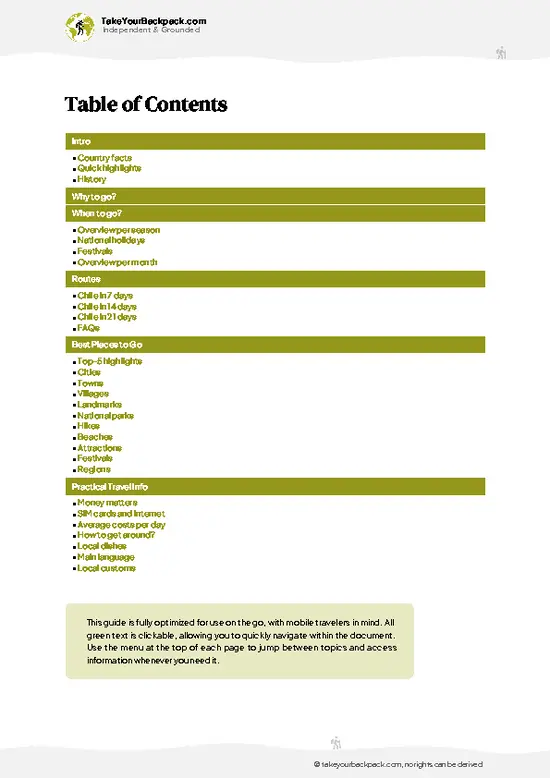
example page 2 from our offline Travel Guide for Chile
example page 3 from our offline Travel Guide for Chile
example page 4 from our offline Travel Guide for Chile
example page 5 from our offline Travel Guide for Chile
example page 6 from our offline Travel Guide for Chile
example page 7 from our offline Travel Guide for Chile
The digital guide (471 pages) contains:
119 highlights, ranked by travel appeal
Optimized 7, 14 & 21-day travel routes
Cities, national parks, landmarks, beaches
How to get around
Offline-friendly for travel without Wi-Fi
👉 Click to see all 30+ guide features

📅 Plan smarter in minutes, not weeks
Month by month travel advice
Festivals & national holidays
Budget expectations

🗺️ Go to the right places, skip the overrated ones
Honest pros & cons of destinations
Top hikes, parks & viewpoints
Lesser-known places most travelers miss
Clear “worth it vs skip it” guidance

🛏️ Travel smoothly without rookie mistakes
Best areas to stay
Transport systems explained simply
Common scams & safety advice
SIM cards, money & practical tips

🌍 Understand the country, not just visit it
Culture & traditions
52 Essential phrases & customs
Festivals worth planning around
Traveler-friendly historical context
Insights that make places more meaningful

📱 Built for real travel conditions
Fully downloadable PDF
Works completely offline
Optimized for phone use
Useful in remote areas & buses
Everything in one place
Save weeks of stressful planning
Get instant access to your full guide. 30‑day money-back guarantee.


By proceeding you agree to our terms.
Sent to your inbox immediately after payment • 100% Secure Checkout
Best Backpacking Travel Advisor 2025 tourism awardBest Backpacking
Travel Advisor
2025
What others say about Take Your Backpack Guides:
⭐⭐⭐⭐⭐
Fantastic, amazing amount of information!
⭐⭐⭐⭐⭐
My goodness this is amazing, it's what I've been looking for hats off too you!
⭐⭐⭐⭐⭐
I think this is absolutely BRILLIANT
⭐⭐⭐⭐
Very complete and informative. It's still missing places, but I gotta to commend you
⭐⭐⭐⭐⭐
This is truly amazing, thank you, can't wait to explore it with my kids!
⭐⭐⭐⭐⭐
Awesome resource, thank you!
⭐⭐⭐⭐⭐
This is amazing! Can't wait to explore the ones I haven't seen
⭐⭐⭐⭐
I love this! Well done, great idea.
⭐⭐⭐⭐⭐
Thanks for taking the time to make this gem!
⭐⭐⭐⭐⭐
This might be the best website I've ever seen.
⭐⭐⭐⭐⭐
Congratulations, and thank you so much for your work; it's incredibly valuable.
⭐⭐⭐⭐
In all seriousness I think you did a great job pointing out the important spots
⭐⭐⭐⭐⭐
10/10 very good
⭐⭐⭐⭐⭐
As someone who's only just starting to visit regularly this is awesome, thank you.
⭐⭐⭐⭐
Thank you very much! I'm going to visit my dad, it's going to be very useful!
⭐⭐⭐⭐⭐
This is really cool! We'll be travelling for the first time and this definitely come in handy.
⭐⭐⭐⭐⭐
You are now our minister of culture, congratulations 👨‍💼
⭐⭐⭐⭐⭐
Just wanted to tell you that this is a pearl! Going to follow your recommendations.
⭐⭐⭐⭐⭐
This is so cool. I'll definitely be using the resource for my travels soon.
⭐⭐⭐⭐⭐
This is very impressive! Good work.
⭐⭐⭐⭐⭐
This is an amazing and informative site. Very well done!

🛏️ Where to stay?Best areas and accommodation options

When you’re gearing up for the vibrant chaos of Tapati Rapa Nui, your choice of where to stay can make or break your experience. Head straight for Hanga Roa. This bustling hub is the heartbeat of the festival, and it’s where the action unfolds. You’ll find a mix of budget-friendly hostels and guesthouses that cater to solo travelers and backpackers. The vibe is social, with communal spaces that spark conversations and friendships.

Stay close to the oceanfront for stunning sunsets and easy access to festival events. The energy here is contagious, and you’ll be surrounded by fellow adventurers … read more 👉
When you’re gearing up for the vibrant chaos of Tapati Rapa Nui, your choice of where to stay can make or break your experience. Head straight for Hanga Roa. This bustling hub is the heartbeat of the festival, and it’s where the action unfolds. You’ll find a mix of budget-friendly hostels and guesthouses that cater to solo travelers and backpackers. The vibe is social, with communal spaces that spark conversations and friendships.

Stay close to the oceanfront for stunning sunsets and easy access to festival events. The energy here is contagious, and you’ll be surrounded by fellow adventurers who share your passion for exploration.

Another option is to look for accommodations near the local market. This area buzzes with life, offering a taste of authentic island culture. You’ll find food stalls, artisan crafts, and a chance to mingle with locals. Just be mindful of noise levels; the market can get lively, especially during festival days.

Avoid the tourist traps that promise luxury but drain your wallet. Instead, embrace the charm of these local spots. They’ll keep your budget intact and your spirit high, allowing you to dive into the festival’s vibrant offerings without a hitch.

👛 Costs (as of 16 January 2026)Typical daily expenses

The Tapati Rapa Nui festival in Chile is a vibrant celebration of culture, but navigating the costs can feel like a maze. Here’s how to budget effectively for this unique experience.
  • Festival Tickets: Expect to pay around $20 to $50 for a full festival pass. Individual events may vary, so check the schedule. Some performances are free, but the premium events are worth the splurge for the full experience.
  • Accommodation: Prices range from $30 for a basic hostel bed to $150 for a mid-range hotel. Book early; options fill up fast. Consider staying in a guesthouse for a more local vibe and potentially lower rates.
  • Local Transport: Budget about $5 to $15 per day for local buses or shared taxis. Renting a bike is also a great way to explore the island, costing around $10 per day. Walking
read more 👉
The Tapati Rapa Nui festival in Chile is a vibrant celebration of culture, but navigating the costs can feel like a maze. Here’s how to budget effectively for this unique experience.
  • Festival Tickets: Expect to pay around $20 to $50 for a full festival pass. Individual events may vary, so check the schedule. Some performances are free, but the premium events are worth the splurge for the full experience.
  • Accommodation: Prices range from $30 for a basic hostel bed to $150 for a mid-range hotel. Book early; options fill up fast. Consider staying in a guesthouse for a more local vibe and potentially lower rates.
  • Local Transport: Budget about $5 to $15 per day for local buses or shared taxis. Renting a bike is also a great way to explore the island, costing around $10 per day. Walking is free and offers a chance to soak in the scenery.
  • Food & Drinks: Meals can range from $5 for street food to $20 at a sit-down restaurant. Local specialties are a must-try, and you can save by eating where the locals do. Don’t forget to budget for drinks; a beer or local wine will set you back about $3 to $8.
  • Miscellaneous Expenses: Set aside $50 to $100 for souvenirs, tips, and unexpected costs. This festival is all about immersion, so you might want to participate in workshops or buy local crafts.

Keep these figures in mind as you plan. Staying flexible and aware of your spending will help you focus on the vibrant experiences that make Tapati Rapa Nui unforgettable.


source: chile.travel
⚠️ Prices can change and everyone travels differently, so take this as a rough guide. Hope it helps you plan your adventure!

🍲 FoodLocal Flavors for Backpackers

At the Tapati Rapa Nui festival, food and drink are as vibrant as the celebrations themselves. Picture stalls brimming with local specialties like curanto, a hearty dish of meat, seafood, and vegetables cooked in an underground oven. You’ll also find empanadas stuffed with fresh fish or savory meats, each bite bursting with flavor. Don’t miss out on pisco sour, the island’s signature cocktail, tangy and refreshing, perfect for washing down those rich flavors.

For an authentic experience, dive into the traditional dishes served by local families. They often share their recipes passed down through generations, making every bite a taste of history. Be ready to share your food; it’s a common practice here. You might find yourself swapping bites with fellow festival-goers, creating a sense of … read more 👉
At the Tapati Rapa Nui festival, food and drink are as vibrant as the celebrations themselves. Picture stalls brimming with local specialties like curanto, a hearty dish of meat, seafood, and vegetables cooked in an underground oven. You’ll also find empanadas stuffed with fresh fish or savory meats, each bite bursting with flavor. Don’t miss out on pisco sour, the island’s signature cocktail, tangy and refreshing, perfect for washing down those rich flavors.

For an authentic experience, dive into the traditional dishes served by local families. They often share their recipes passed down through generations, making every bite a taste of history. Be ready to share your food; it’s a common practice here. You might find yourself swapping bites with fellow festival-goers, creating a sense of community that’s hard to beat.

Lines can get long, especially for the most popular stalls, so bring some cash—not all vendors accept cards. Serving sizes can vary, so don’t hesitate to ask for recommendations on what to try. Embrace the chaos, savor the flavors, and let the festival’s energy fuel your adventure. This is where the heart of Rapa Nui truly beats, and every dish tells a story.

Other Chilean festivals near Tapati Rapa Nui

Explore more nearby:


💡 Not sure where to go next?
Create a personalized itinerary for Chile including Tapati Rapa Nui and the places that fit your trip.

Generate my itinerary

👉 Discover all festivals

Or checkout all Chile has to offer (think cities, towns, villages, national parks, hikes, beaches, festivals)
Country photo of Chile

We 💚 feedbackParting advice and final tips

The energy at Tapati Rapa Nui is electric. You’re not just a spectator; you’re part of something alive, a celebration of culture that pulses through the island. But here’s the kicker: accommodations can be pricey and fill up fast. Plan ahead to avoid the scramble. Embrace the challenge of navigating this vibrant chaos, and you’ll find the real treasure lies in the connections you make and the stories you’ll carry home.

✈️ When did I visit Chile?
I have visited Chile, together with Argentina, in September 2012.

✍️ Help improve this page!
The information on this page is based on my own backpacking experience in Chile, supplemented with up-to-date research and feedback from other travelers. Travel details can change, so if you notice anything outdated or incomplete, feel free to let me know.


🙋‍♂️ Give feedback

👋 Meet the founderWho’s Behind Take Your Backpack?

Johan, backpacker and founder of TakeYourBackpackHi, I’m Johan (Netherlands 🇳🇱), the creator of TakeYourBackpack. Over the past decade, I’ve backpacked through 80+ countries across six continents, gaining extensive experience with independent travel, long-term trips, and overland routes.

This site is built on a combination of firsthand travel experience and carefully curated insights from other backpackers. Many guides are based on places I’ve personally visited, while others bring together tips, observations, and practical advice shared by trusted travelers I’ve met along the way.

The goal is to provide realistic, experience-driven guidance — not generic itineraries — so you can explore destinations with better context, clearer expectations, and more confidence.

Get full Chile guide •
Instant download • 119 highlights • Full Offline guide