×

Chile🇨🇱 | national parksLaguna San Rafael National ParkCalving glacier, iceberg lagoon, Aysén fjords, boat access only | things to do and best time to go

Explore Rapa Nui National ParkExplore Corcovado National Park

Backpacking in Laguna San Rafael
🏆 Top picknational park ranked #4
By Johan Kruseman 🇳🇱 | Updated October 18, 2026

The practical advantage here is that the glacier comes to you: San Rafael Glacier calves straight into a lagoon, so no technical climbing is needed to see ice. Laguna San Rafael National Park sits in Chile’s Aysén Region, in Patagonia, southwest of Coyhaique, and no road reaches it. That is why almost everyone arrives by boat or small plane, and why experienced travelers book a crossing with enough days to spare for weather delays. The park is wild and rainy, with temperate rainforest, fjords and icebergs, but hiking is limited to short paths near the landing point. The wildlife includes sea lions, dolphins and birds. Crowds are thin, though cruise passengers briefly fill the lagoon. I recall the engines cutting out among floating ice, and the glacier’s blue face appearing at the end of the channel, bigger and closer than any photo suggests. A first day usually means a long crossing, a zodiac ride toward the ice wall, and a short walk ashore.

Discover everything you want to know in the 📖 Chile Travel Guide.


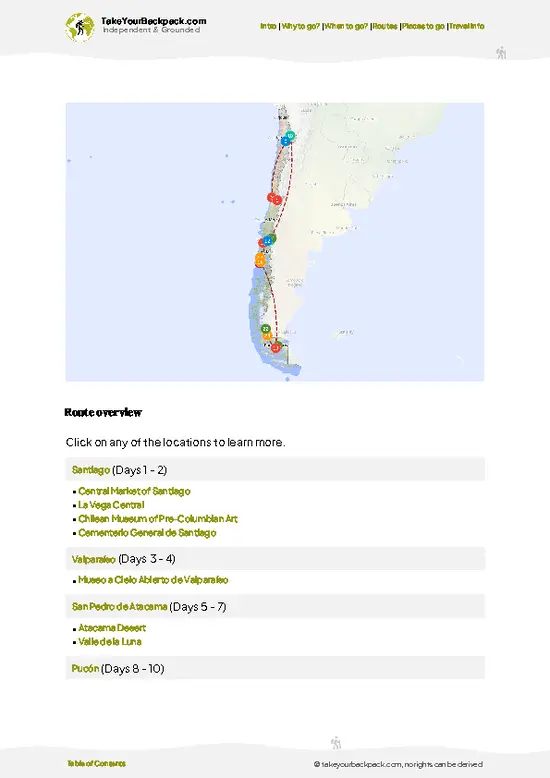
example page 0 from our offline Travel Guide for Chile
example page 1 from our offline Travel Guide for Chile
example page 2 from our offline Travel Guide for Chile
example page 3 from our offline Travel Guide for Chile
example page 4 from our offline Travel Guide for Chile
example page 5 from our offline Travel Guide for Chile
example page 6 from our offline Travel Guide for Chile
example page 7 from our offline Travel Guide for Chile
Loading the map 🌍
CLICK TO FILTER
cities
towns
villages
landmarks
national parks
hikes
beaches
attractions
festivals
regions
SHOW COUNTRY’S BESTSHOW ALL

✨ Why go?
Ranked #4 national park in Chile
What makes it a must-see national park

Laguna San Rafael National Park draws backpackers who want ice without an expedition. The big attraction is the San Rafael Glacier, a tidewater glacier that drops into the lagoon, sending off icebergs you can hear crack before you see them. Getting there is part of the appeal, since the route runs through the Aysén fjords, where waterfalls fall from forested walls and the boat passes small fishing settlements. The park suits independent travelers who like to piece together their own logistics, though you will still need a boat or flight, as there is no way to hike in. Backcountry trekking is serious and mostly for expeditions, so most visitors treat it as a short, intense stop on a longer Carretera Austral trip. Pair it with Puerto Chacabuco or Puerto Río Tranquilo and you get a trip with … read more 👉
Laguna San Rafael National Park draws backpackers who want ice without an expedition. The big attraction is the San Rafael Glacier, a tidewater glacier that drops into the lagoon, sending off icebergs you can hear crack before you see them. Getting there is part of the appeal, since the route runs through the Aysén fjords, where waterfalls fall from forested walls and the boat passes small fishing settlements. The park suits independent travelers who like to piece together their own logistics, though you will still need a boat or flight, as there is no way to hike in. Backcountry trekking is serious and mostly for expeditions, so most visitors treat it as a short, intense stop on a longer Carretera Austral trip. Pair it with Puerto Chacabuco or Puerto Río Tranquilo and you get a trip with real variety. If you want a place to tick off quickly, look elsewhere, but if you like remote scenery, this is memorable.

💡 HighlightsMust-see experiences and standout moments

  1. San Rafael Glacier: The reason anyone comes. A wall of blue ice at the head of the lagoon, with steady creaking and occasional calving. Zodiac boats get you reasonably close.
  2. Laguna San Rafael: The lagoon is full of icebergs in many shapes and shades of blue and white, drifting with wind and tide.
  3. Aysén Fjords and Moraleda Channel: The approach by sea passes steep, forested shores, waterfalls and, with luck, dolphins or sea birds.
  4. Temperate rainforest: Short walks near the landing area pass dense, dripping forest with moss, ferns and southern beech.
  5. Wildlife watching: Sea lions, Chilean dolphins, cormorants and steamer ducks are the usual sightings. Huemul deer live here but are rarely seen.
  6. Flightseeing over the Northern Patagonian Ice Field: Small planes from the Aysén region give a view of the
… read more 👉
  1. San Rafael Glacier: The reason anyone comes. A wall of blue ice at the head of the lagoon, with steady creaking and occasional calving. Zodiac boats get you reasonably close.
  2. Laguna San Rafael: The lagoon is full of icebergs in many shapes and shades of blue and white, drifting with wind and tide.
  3. Aysén Fjords and Moraleda Channel: The approach by sea passes steep, forested shores, waterfalls and, with luck, dolphins or sea birds.
  4. Temperate rainforest: Short walks near the landing area pass dense, dripping forest with moss, ferns and southern beech.
  5. Wildlife watching: Sea lions, Chilean dolphins, cormorants and steamer ducks are the usual sightings. Huemul deer live here but are rarely seen.
  6. Flightseeing over the Northern Patagonian Ice Field: Small planes from the Aysén region give a view of the ice field and the glacier’s full length. It is pricey but the best way to grasp the scale.
  7. Iceberg viewing from the shore: Quiet corners near the landing let you watch ice drift by without a boat engine in earshot.
If time is short, skip the shore walks and put your energy into the glacier zodiac trip.
Spotted a mistake or missing something? Contact us.

Things to do around Laguna San Rafael National Park

Ratings based on Tripadvisor reviews. When you book through this link, you support our work at no extra cost to you.

🌤️ When to go?Choosing the right time of year

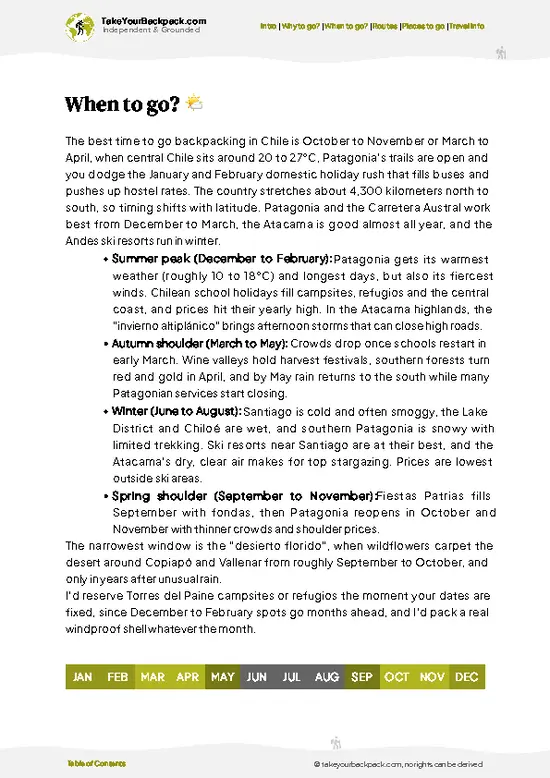
  • Summer (December to February): Highs of 14 to 18°C (57 to 64°F), the longest daylight (about 16 hours) and the most stable boat and flight operations. Rain still falls on roughly half the days. This is peak season, so cruise prices are highest and space sells out.
  • Shoulder months (October to November, March to April): Temperatures of 6 to 14°C (43 to 57°F), 10 to 14 hours of light, fewer passengers on the boats and some discounted departures. Rain and wind are frequent.
  • Winter (May to September): Highs of 3 to 8°C (37 to 46°F), as little as 8 hours of daylight, heavy rain and snow on the heights. Most scheduled cruises stop or run rarely, and the park is close to inaccessible.
Book your passage as early as possible for January and February, and keep two spare days in the plan, because weather often delays departures.

source: climatestotravel.comJANJanuary: excellent for travelingFEBFebruary: excellent for travelingMARMarch: highly recommended for travelingAPRApril: fair for travelingMAYMay: below average for travelingJUNJune: below average for travelingJULJuly: below average for travelingAUGAugust: below average for travelingSEPSeptember: fair for travelingOCTOctober: fair for travelingNOVNovember: good for travelingDECDecember: highly recommended for traveling
chile-national-park-laguna-san-rafael-national-park
© Google |

✈️ The backpacker research shortcutChile Travel Guide

An offline-friendly backpacking guide with optimized travel routes, ranked highlights, transport advice, and the best areas to stay.
example page 0 from our offline Travel Guide for Chile
example page 1 from our offline Travel Guide for Chile
example page 2 from our offline Travel Guide for Chile
example page 3 from our offline Travel Guide for Chile
example page 4 from our offline Travel Guide for Chile
example page 5 from our offline Travel Guide for Chile
example page 6 from our offline Travel Guide for Chile
example page 7 from our offline Travel Guide for Chile
The digital guide (333 pages) contains:
✅ 107 highlights, ranked by travel appeal
✅ Optimized 7, 14 & 21-day travel routes
✅ Cities, national parks, landmarks, beaches
✅ How to get around
✅ Offline-friendly for travel without Wi-Fi
👉 Click to see all 30+ guide features

📅 Plan smarter in minutes, not weeks
✅ Month by month travel advice
✅ Festivals & national holidays
✅ Budget expectations

🗺️ Go to the right places, skip the overrated ones
✅ Honest pros & cons of destinations
✅ Top hikes, parks & viewpoints
✅ Lesser-known places most travelers miss
✅ Clear “worth it vs skip it” guidance

🛏️ Travel smoothly without rookie mistakes
✅ Best areas to stay
✅ Transport systems explained simply
✅ Common scams & safety advice
✅ SIM cards, money & practical tips

🌍 Understand the country, not just visit it
✅ Culture & traditions
✅ 52 Essential phrases & customs
✅ Festivals worth planning around
✅ Traveler-friendly historical context
✅ Insights that make places more meaningful

📱 Built for real travel conditions
✅ Fully downloadable PDF
✅ Works completely offline
✅ Optimized for phone use
✅ Useful in remote areas & buses
✅ Everything in one place
Stop searching, start planning
Get instant access to your full guide. 30‑day money-back guarantee.
+ Add another guide for just

By proceeding you agree to our terms.
Sent to your inbox immediately after payment • 100% Secure Checkout
Best Backpacking Travel Advisor 2025 tourism awardBest Backpacking
Travel Advisor
2025
What others say about Take Your Backpack Guides:
⭐⭐⭐⭐⭐
Fantastic, amazing amount of information!
⭐⭐⭐⭐⭐
My goodness this is amazing, it's what I've been looking for hats off too you!
⭐⭐⭐⭐⭐
I think this is absolutely BRILLIANT
⭐⭐⭐⭐
Very complete and informative. It's still missing places, but I gotta to commend you
⭐⭐⭐⭐⭐
This is truly amazing, thank you, can't wait to explore it with my kids!
⭐⭐⭐⭐⭐
Awesome resource, thank you!
⭐⭐⭐⭐⭐
This is amazing! Can't wait to explore the ones I haven't seen
⭐⭐⭐⭐
I love this! Well done, great idea.
⭐⭐⭐⭐⭐
Thanks for taking the time to make this gem!
⭐⭐⭐⭐⭐
This might be the best website I've ever seen.
⭐⭐⭐⭐⭐
Congratulations, and thank you so much for your work; it's incredibly valuable.
⭐⭐⭐⭐
In all seriousness I think you did a great job pointing out the important spots
⭐⭐⭐⭐⭐
10/10 very good
⭐⭐⭐⭐⭐
As someone who's only just starting to visit regularly this is awesome, thank you.
⭐⭐⭐⭐
Thank you very much! I'm going to visit my dad, it's going to be very useful!
⭐⭐⭐⭐⭐
This is really cool! We'll be travelling for the first time and this definitely come in handy.
⭐⭐⭐⭐⭐
You are now our minister of culture, congratulations 👨‍💼
⭐⭐⭐⭐⭐
Just wanted to tell you that this is a pearl! Going to follow your recommendations.
⭐⭐⭐⭐⭐
This is so cool. I'll definitely be using the resource for my travels soon.
⭐⭐⭐⭐⭐
This is very impressive! Good work.
⭐⭐⭐⭐⭐
This is an amazing and informative site. Very well done!

🛏️ Where to stay?How to pick the right area

No hotels exist inside Laguna San Rafael National Park, so you sleep on the boat or in a town on the mainland. Most visitors join a multi-day cruise from Puerto Chacabuco (near Puerto Aysén) or Puerto Montt, and the ship cabin is your bed. Cabins on these trips usually come as part of the package.

Puerto Chacabuco itself is just a port. Backpackers do better in Coyhaique, the regional hub about 80 km (1.5 hours) away, with hostels and guesthouses at roughly US$20 to 35 for a dorm bed or basic room, plus supermarkets for stocking up. Puerto Aysén is smaller, with a few cheap residenciales at US$25 … read more 👉
No hotels exist inside Laguna San Rafael National Park, so you sleep on the boat or in a town on the mainland. Most visitors join a multi-day cruise from Puerto Chacabuco (near Puerto Aysén) or Puerto Montt, and the ship cabin is your bed. Cabins on these trips usually come as part of the package.

Puerto Chacabuco itself is just a port. Backpackers do better in Coyhaique, the regional hub about 80 km (1.5 hours) away, with hostels and guesthouses at roughly US$20 to 35 for a dorm bed or basic room, plus supermarkets for stocking up. Puerto Aysén is smaller, with a few cheap residenciales at US$25 to 40.

Some visitors fly over the glacier from Coyhaique or Puerto Río Tranquilo, then sleep in Puerto Río Tranquilo, a lakeside village on the Carretera Austral with hostels and campsites at US$10 to 30. Camping within the park is not a realistic option for most travelers because there are no road links and few formal sites. Book Coyhaique beds ahead in January and February.

👛 Costs (as of 18 October 2026)How expensive it really is

A realistic budget for Laguna San Rafael National Park is about US$330 to 560 per day, and nearly all of it is the boat or flight to get there. Travelers pay in Chilean pesos on the mainland, though cruise operators often quote in US dollars.
CategoryBudget RangeLocal Reality
Entrance feeUS$15 to 30Charged to foreigners, often bundled into the cruise price; Chilean residents pay less.
Cruise or boat transportUS$250 to 400Multi-day sailings from Puerto Chacabuco or Puerto Montt; the price usually includes a cabin and meals, and the rate is per day.
Accommodation (high season)US$20 to 40Hostel beds or guesthouses in Coyhaique before or after the trip; cabins are included on the boat.
Local transportUS$10 to 25Buses between Coyhaique and Puerto Chacabuco run about US$3 to 6; transfers and taxis add
… read more 👉
A realistic budget for Laguna San Rafael National Park is about US$330 to 560 per day, and nearly all of it is the boat or flight to get there. Travelers pay in Chilean pesos on the mainland, though cruise operators often quote in US dollars.
CategoryBudget RangeLocal Reality
Entrance feeUS$15 to 30Charged to foreigners, often bundled into the cruise price; Chilean residents pay less.
Cruise or boat transportUS$250 to 400Multi-day sailings from Puerto Chacabuco or Puerto Montt; the price usually includes a cabin and meals, and the rate is per day.
Accommodation (high season)US$20 to 40Hostel beds or guesthouses in Coyhaique before or after the trip; cabins are included on the boat.
Local transportUS$10 to 25Buses between Coyhaique and Puerto Chacabuco run about US$3 to 6; transfers and taxis add to the total.
Food and suppliesUS$15 to 30Supermarket snacks and a few meals in Coyhaique; onboard meals are covered by the package.
Optional flight or tourUS$20 to 35Daily allowance for extras such as hot drinks, rain gear rental or small excursions.
Total Daily BudgetUS$330 to 560Winter sailings are rarer and prices vary, so book early for summer.
⚠️ Prices can change and everyone travels differently, so take this as a rough guide. Hope it helps you plan your adventure!

🥾 TrailsBest hikes in Laguna San Rafael national park

Laguna San Rafael National Park has little in the way of formal hiking, and that is part of how it works. Most visitors arrive by boat or plane, and the walking is short and close to the landing area. The terrain is wet, with mud, roots and moss, and rain is common in any season.
  • Landing area walks: Short forest paths near the shore take about 30 to 60 minutes. They are easy, flat in places and muddy in others, and pass dense rainforest with views toward the lagoon.
  • Glacier viewpoints: Informal spots along the lagoon edge give views of the ice front. Distances are short and difficulty is low, but
… read more 👉
Laguna San Rafael National Park has little in the way of formal hiking, and that is part of how it works. Most visitors arrive by boat or plane, and the walking is short and close to the landing area. The terrain is wet, with mud, roots and moss, and rain is common in any season.
  • Landing area walks: Short forest paths near the shore take about 30 to 60 minutes. They are easy, flat in places and muddy in others, and pass dense rainforest with views toward the lagoon.
  • Glacier viewpoints: Informal spots along the lagoon edge give views of the ice front. Distances are short and difficulty is low, but footing can be slippery.
  • Boat excursions: Zodiac trips take you across the lagoon toward the ice wall. They are the main activity and typically last 1 to 2 hours.
  • Backcountry routes: Longer treks across the ice field and valleys exist but are for experienced, well-equipped groups, usually with guides, and are not casual hikes.
  • Wildlife: Look for sea lions, dolphins, cormorants and steamer ducks around the water, and watch for huemul deer in quieter areas.
Access is the real challenge. There is no road, so you need a boat from Puerto Chacabuco or a flight into the area, and public transport only gets you as far as the departure points. Crowds are modest, although the lagoon can feel busy when a large cruise arrives. Park entry carries a fee, usually included in boat packages, so confirm when booking. Bring waterproof layers and sturdy boots, and allow spare days for weather.
⚠️ Hiking info can sometimes be outdated or inaccurate. Before you hit the trail, check the latest conditions with locals. If you do spot anything that's off, I'd love to hear from you, so I can update it for fellow travelers.

🛡️ SafetySafety Tips and Common Scams in Laguna San Rafael

The main hazards at Laguna San Rafael National Park are cold, wet weather and rough water rather than wildlife. Rain is near constant, so waterproof layers, a warm hat and spare dry socks matter even in summer. Most visits are by boat or plane, and operators can cancel or delay for wind and low cloud, so build slack into your schedule.

On the lagoon, zodiac boats approach the glacier with guides, and you must keep to their instructions because calving ice sends waves and brash across the water. Stay seated and never go closer than the crew permits. Trails on land are limited and muddy, with slippery roots and boardwalks.

Wildlife is mostly sea lions, birds and the occasional dolphin, none of which is a concern if you keep your distance. First-timers often underestimate motion sickness on … read more 👉
The main hazards at Laguna San Rafael National Park are cold, wet weather and rough water rather than wildlife. Rain is near constant, so waterproof layers, a warm hat and spare dry socks matter even in summer. Most visits are by boat or plane, and operators can cancel or delay for wind and low cloud, so build slack into your schedule.

On the lagoon, zodiac boats approach the glacier with guides, and you must keep to their instructions because calving ice sends waves and brash across the water. Stay seated and never go closer than the crew permits. Trails on land are limited and muddy, with slippery roots and boardwalks.

Wildlife is mostly sea lions, birds and the occasional dolphin, none of which is a concern if you keep your distance. First-timers often underestimate motion sickness on open crossings, so bring tablets and eat lightly beforehand.

FAQTraveler FAQ

Plan on three to four days for Laguna San Rafael National Park, because the trip is mostly travel. Cruises from Puerto Chacabuco or Puerto Montt usually run 3 to 5 days, with a single day on the lagoon itself. A sightseeing flight from Coyhaique takes about 1.5 hours round trip but gives far less time at the glacier.
Yes, you can reach Laguna San Rafael National Park without a car, and in fact there is no road to it. Cruises depart from Puerto Chacabuco, about 1.5 hours by bus from Coyhaique, and from Puerto Montt. Small planes fly over the glacier from Coyhaique or Puerto Río Tranquilo for roughly US$200 to 400 per person.
Yes, Laguna San Rafael National Park charges an entrance fee managed by CONAF, roughly US$15 to 30 for foreign visitors. Most cruise operators include it in the ticket, so check before booking. No hiking permit is needed for the boat landing, and Chilean residents pay a lower rate.
⚠️ Things can change over time, so always validate details locally before you go.

Other Chilean national parks near Laguna San Rafael

Explore more nearby:


💡 Not sure where to go next?
Create a personalized itinerary for Chile including Laguna San Rafael and the places that fit your trip.

Generate my itinerary

👉 Discover all national parks

Or checkout all Chile has to offer (think cities, towns, villages, national parks, hikes, beaches, festivals)
Country photo of Chile

We 💚 feedbackParting advice and final tips

Laguna San Rafael National Park is best for travelers who like remote landscapes and don’t mind paying for access. If you want long hikes, it will disappoint, but if a close glacier and fjord crossing is the goal, it delivers. I would bring a rain shell, keep the schedule loose, and take the boat rather than rushing a flight.

✈️ When did I visit Chile?
I have visited Chile, together with Argentina, in September 2012.

✍️ Help improve this page!
The information on this page is based on my own backpacking experience in Chile, supplemented with up-to-date research and feedback from other travelers. Travel details can change, so if you notice anything outdated or incomplete, feel free to let me know.


🙋‍♂️ Give feedback

👋 Meet the founderWho’s Behind Take Your Backpack?

Johan, backpacker and founder of TakeYourBackpackHi, I’m Johan (Netherlands 🇳🇱), the creator of TakeYourBackpack. Over the past 3 decades, I’ve backpacked through 90+ countries across six continents, gaining extensive experience with independent travel, long-term trips, and overland routes.

This site is built on a combination of firsthand travel experience and carefully curated insights from other backpackers. Many guides are based on places I’ve personally visited, while others bring together tips, observations, and practical advice shared by trusted travelers I’ve met along the way.

The goal is to provide realistic, experience-driven guidance — not generic itineraries — so you can explore destinations with better context, clearer expectations, and more confidence.