×

Chile🇨🇱 | national parksQueulat National Parkhanging glacier, temperate rainforest, misty fjords | things to do and best time to go

Explore Alerce Andino National ParkExplore Huerquehue National Park

Backpacking in Queulat
🌟 Highlightnational park ranked #6
By Johan Kruseman 🇳🇱 | Updated May 28, 2026

Your boots sink into the soaked boardwalk, rain drumming on your hood, while a cold draft rolls off the hanging glacier and cuts straight through your fleece. The forest smells like wet bark and moss, and every time the clouds lift for three seconds you get a flash of blue ice high above the valley. This is Queulat National Park, on the Carretera Austral in Chile’s Aysén region, and it rewards patience more than hype. Trails range from easy miradores to steeper slogs toward the Ventisquero Colgante viewpoints, with dense temperate rainforest, waterfalls, and decent chances of spotting birds but not much big wildlife. It’s cheaper and less organized than Torres del Paine, wilder and wetter than Pumalín, and more compact than Cerro Castillo. Access is straightforward by road, but buses are limited, entrance fees creep up, and camping is basic, muddy, and often booked out in high season. The vibe is quiet, damp, and slightly improvised—great if you like moody landscapes and don’t need perfect infrastructure.

Discover everything you want to know in the 📖 Chile Travel Guide.


Get your Chile guide
119 ranked highlights, routes & tips, works offline (471 pages)
Loading the map 🌍
CLICK TO FILTER
cities
towns
villages
landmarks
national parks
hikes
beaches
attractions
festivals
regions
SHOW COUNTRY’S BESTSHOW ALL

✨ Why go?
Ranked #6 national park in Chile
Why visitors keep coming back

Backpackers flock to Queulat National Park for its blend of independent exploration and stunning landscapes. This park is a haven for those who prefer to roam freely rather than stick to guided tours. The trail variety is impressive, ranging from easy walks to challenging hikes that lead to breathtaking views of glaciers and lush forests.

Budget-conscious travelers appreciate the camping options available, with several sites that allow you to pitch a tent under the stars. If you prefer a roof over your head, there are hostels nearby that cater to backpackers, offering a cozy place to recharge without breaking the bank.

Self-guided adventurers will find the park well-marked, making it easy to navigate without a guide. Just be aware of the weather; it can change rapidly, so pack accordingly. … read more 👉
Backpackers flock to Queulat National Park for its blend of independent exploration and stunning landscapes. This park is a haven for those who prefer to roam freely rather than stick to guided tours. The trail variety is impressive, ranging from easy walks to challenging hikes that lead to breathtaking views of glaciers and lush forests.

Budget-conscious travelers appreciate the camping options available, with several sites that allow you to pitch a tent under the stars. If you prefer a roof over your head, there are hostels nearby that cater to backpackers, offering a cozy place to recharge without breaking the bank.

Self-guided adventurers will find the park well-marked, making it easy to navigate without a guide. Just be aware of the weather; it can change rapidly, so pack accordingly. The real beauty of Queulat lies in its ability to offer a rich experience without the constraints of organized tours, allowing you to connect with nature on your own terms.
Want to include Queulat National Park in your Chile route?
Create a personalized Chile itinerary that includes Queulat National Park and the places that fit your trip — based on your travel style, budget, and available time. Get your route in seconds.

Generate my trip

💡 HighlightsDon't-miss highlights and experiences

  • Ventisquero Colgante (Hanging Glacier): The park’s showstopper — a glacier that literally hangs over a cliff and feeds a thunderous waterfall. It’s reachable by a short, well-built trail and boardwalk with spectacular close-up views; I’ll admit this is my personal favorite because nothing beats that mix of ice, water and sheer drama.
  • Laguna Témpanos: A small glacial lagoon dotted with floating icebergs (témpanos) that glow turquoise on sunny days. The easy walk to the shore is perfect for photos and quiet wildlife watching — bring a windproof jacket and your patience.
  • Mirador Ventisquero trail and boardwalks: Short, user-friendly trails cut through mossy temperate rainforest and end at polished viewpoints of the hanging glacier and valley. They’re ideal if you want big scenery without
read more 👉
  • Ventisquero Colgante (Hanging Glacier): The park’s showstopper — a glacier that literally hangs over a cliff and feeds a thunderous waterfall. It’s reachable by a short, well-built trail and boardwalk with spectacular close-up views; I’ll admit this is my personal favorite because nothing beats that mix of ice, water and sheer drama.
  • Laguna Témpanos: A small glacial lagoon dotted with floating icebergs (témpanos) that glow turquoise on sunny days. The easy walk to the shore is perfect for photos and quiet wildlife watching — bring a windproof jacket and your patience.
  • Mirador Ventisquero trail and boardwalks: Short, user-friendly trails cut through mossy temperate rainforest and end at polished viewpoints of the hanging glacier and valley. They’re ideal if you want big scenery without committing to a long trek.
  • Puyuhuapi fjord and boat excursions: Accessing parts of the park by boat opens a whole different angle — sea cliffs, hidden coves and the base of the hanging glacier seen from the water. Boats also give good chances to spot seabirds and marine mammals.
  • Valdivian temperate rainforest: Thick, ancient forest full of ferns, lichens and giant beech trees — the green here is intense. The trails feel primeval; you’ll hear waterfalls and bird calls more than cars, which is the whole point.
  • Waterfalls and rivers (including the Queulat River): Rushing rivers carve bright, rocky channels and feed a series of scenic cascades — great for dramatic photos and short refreshment stops on hikes. Many viewpoints are an easy add-on between trail sections.
  • Wildlife and birding spots: Expect a mix of coastal and forest species — seabirds, dolphins and sea lions in the fjords, and songbirds, woodpeckers and small mammals in the woods. Not a guaranteed wildlife safari, but good binoculars will pay off.
Spotted a mistake or missing something? Contact us.

🌤️ When to go?Best time to explore Queulat


  • Weather: The best window is from November to March when rain eases up. Outside this, persistent rain and wind can turn trails into mud baths and make camping miserable.

  • Temperature: Summer highs hover around 15-20°C (59-68°F), comfortable for hiking. Winters plunge to 0-5°C (32-41°F), with frost and snow making some paths impassable.

  • Daylight Hours: In summer, expect up to 16 hours of daylight—perfect for long treks. Winter days shrink to about 8 hours, limiting exploration time and increasing risk if you’re slow.

  • Crowds: Peak season brings more visitors, especially in January and February. If you want solitude, aim for late spring or early autumn, but be ready for more unpredictable weather.

  • Seasonal Activities: Summer allows full access to trails, waterfalls, and boat tours. Winter
read more 👉

  • Weather: The best window is from November to March when rain eases up. Outside this, persistent rain and wind can turn trails into mud baths and make camping miserable.

  • Temperature: Summer highs hover around 15-20°C (59-68°F), comfortable for hiking. Winters plunge to 0-5°C (32-41°F), with frost and snow making some paths impassable.

  • Daylight Hours: In summer, expect up to 16 hours of daylight—perfect for long treks. Winter days shrink to about 8 hours, limiting exploration time and increasing risk if you’re slow.

  • Crowds: Peak season brings more visitors, especially in January and February. If you want solitude, aim for late spring or early autumn, but be ready for more unpredictable weather.

  • Seasonal Activities: Summer allows full access to trails, waterfalls, and boat tours. Winter restricts access, and some services close, so plan accordingly if you want to kayak or fish.

  • Price Fluctuations: Accommodation and transport costs spike in summer. Booking early helps, but off-season rates can be significantly lower—just weigh that against weather challenges.


Pro-tip: Prioritize late spring or early autumn for a balance of manageable weather, fewer crowds, and better prices—just pack for sudden rain and chilly nights.


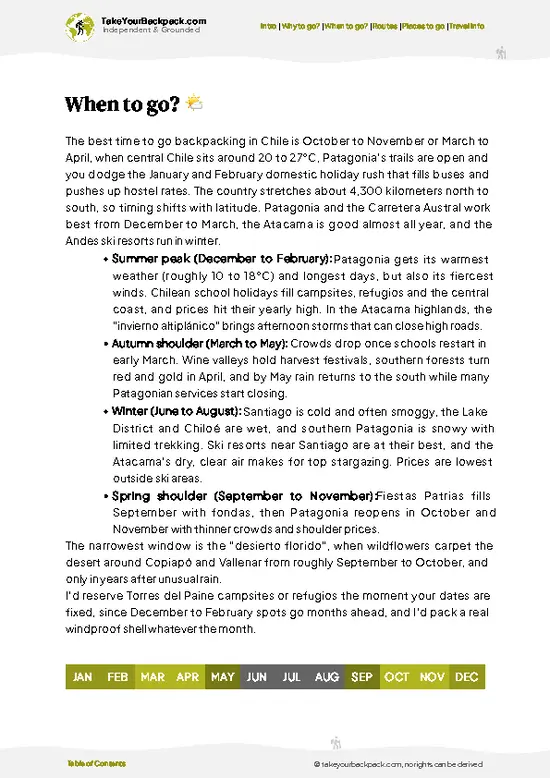
source: climatestotravel.comJANJanuary: excellent for travelingFEBFebruary: excellent for travelingMARMarch: highly recommended for travelingAPRApril: good for travelingMAYMay: good for travelingJUNJune: fair for travelingJULJuly: below average for travelingAUGAugust: below average for travelingSEPSeptember: good for travelingOCTOctober: highly recommended for travelingNOVNovember: highly recommended for travelingDECDecember: excellent for traveling
when-to-go

✈️ The backpacker research shortcutChile Travel Guide

An offline-friendly backpacking guide with optimized travel routes, ranked highlights, transport advice, and the best areas to stay.
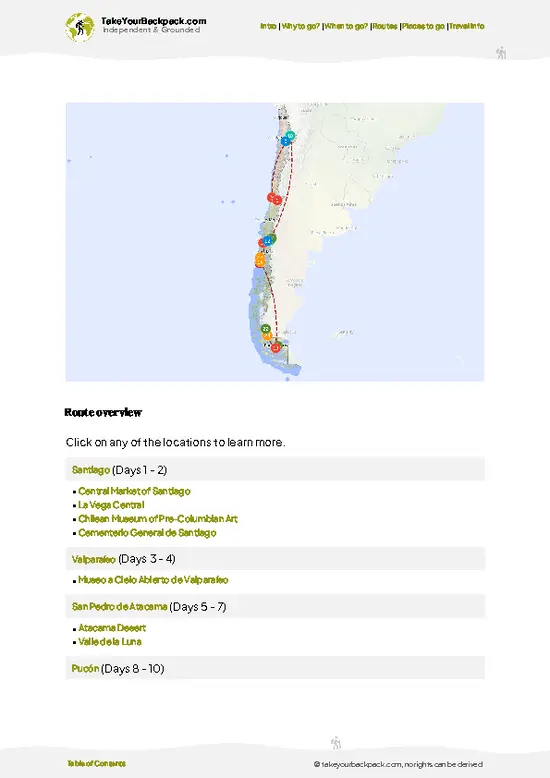
example page 0 from our offline Travel Guide for Chile
example page 1 from our offline Travel Guide for Chile
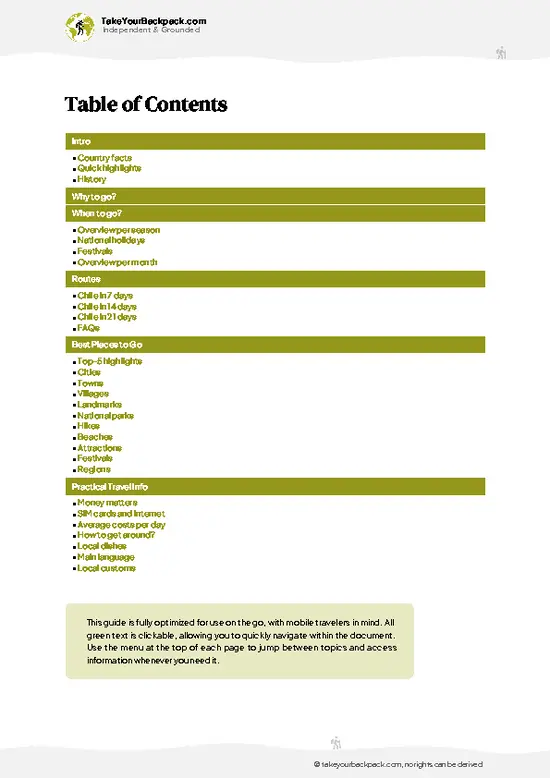
example page 2 from our offline Travel Guide for Chile
example page 3 from our offline Travel Guide for Chile
example page 4 from our offline Travel Guide for Chile
example page 5 from our offline Travel Guide for Chile
example page 6 from our offline Travel Guide for Chile
example page 7 from our offline Travel Guide for Chile
The digital guide (471 pages) contains:
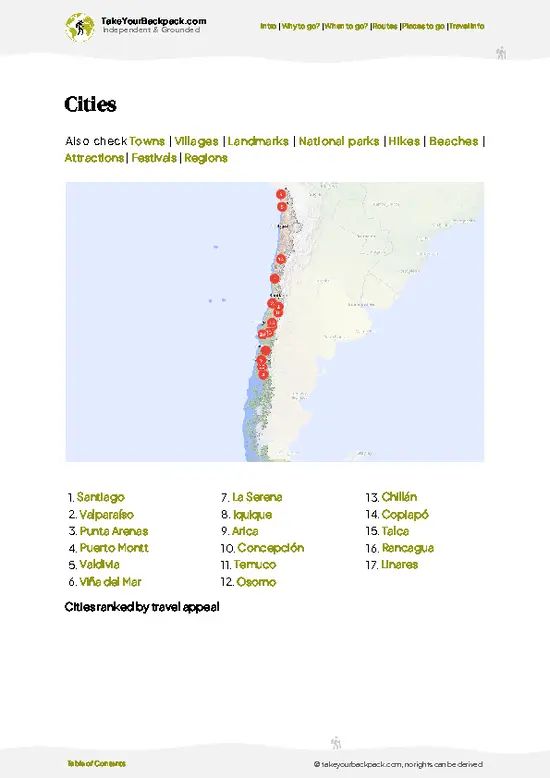
119 highlights, ranked by travel appeal
Optimized 7, 14 & 21-day travel routes
Cities, national parks, landmarks, beaches
How to get around
Offline-friendly for travel without Wi-Fi
👉 Click to see all 30+ guide features

📅 Plan smarter in minutes, not weeks
Month by month travel advice
Festivals & national holidays
Budget expectations

🗺️ Go to the right places, skip the overrated ones
Honest pros & cons of destinations
Top hikes, parks & viewpoints
Lesser-known places most travelers miss
Clear “worth it vs skip it” guidance

🛏️ Travel smoothly without rookie mistakes
Best areas to stay
Transport systems explained simply
Common scams & safety advice
SIM cards, money & practical tips

🌍 Understand the country, not just visit it
Culture & traditions
52 Essential phrases & customs
Festivals worth planning around
Traveler-friendly historical context
Insights that make places more meaningful

📱 Built for real travel conditions
Fully downloadable PDF
Works completely offline
Optimized for phone use
Useful in remote areas & buses
Everything in one place
Save weeks of stressful planning
Get instant access to your full guide. 30‑day money-back guarantee.


By proceeding you agree to our terms.
Sent to your inbox immediately after payment • 100% Secure Checkout
Best Backpacking Travel Advisor 2025 tourism awardBest Backpacking
Travel Advisor
2025
What others say about Take Your Backpack Guides:
⭐⭐⭐⭐⭐
Fantastic, amazing amount of information!
⭐⭐⭐⭐⭐
My goodness this is amazing, it's what I've been looking for hats off too you!
⭐⭐⭐⭐⭐
I think this is absolutely BRILLIANT
⭐⭐⭐⭐
Very complete and informative. It's still missing places, but I gotta to commend you
⭐⭐⭐⭐⭐
This is truly amazing, thank you, can't wait to explore it with my kids!
⭐⭐⭐⭐⭐
Awesome resource, thank you!
⭐⭐⭐⭐⭐
This is amazing! Can't wait to explore the ones I haven't seen
⭐⭐⭐⭐
I love this! Well done, great idea.
⭐⭐⭐⭐⭐
Thanks for taking the time to make this gem!
⭐⭐⭐⭐⭐
This might be the best website I've ever seen.
⭐⭐⭐⭐⭐
Congratulations, and thank you so much for your work; it's incredibly valuable.
⭐⭐⭐⭐
In all seriousness I think you did a great job pointing out the important spots
⭐⭐⭐⭐⭐
10/10 very good
⭐⭐⭐⭐⭐
As someone who's only just starting to visit regularly this is awesome, thank you.
⭐⭐⭐⭐
Thank you very much! I'm going to visit my dad, it's going to be very useful!
⭐⭐⭐⭐⭐
This is really cool! We'll be travelling for the first time and this definitely come in handy.
⭐⭐⭐⭐⭐
You are now our minister of culture, congratulations 👨‍💼
⭐⭐⭐⭐⭐
Just wanted to tell you that this is a pearl! Going to follow your recommendations.
⭐⭐⭐⭐⭐
This is so cool. I'll definitely be using the resource for my travels soon.
⭐⭐⭐⭐⭐
This is very impressive! Good work.
⭐⭐⭐⭐⭐
This is an amazing and informative site. Very well done!

🛏️ Where to stay?Where staying makes the most sense

Queulat National Park is a wild, breathtaking expanse, but finding the right place to stay can make or break your experience. Inside the park, options are limited. The main choice is the Queulat Lodge, a rustic spot that offers basic amenities and a chance to connect with fellow hikers. It’s a great base for exploring the park’s trails, but book ahead—space fills quickly, especially in peak season.

If you prefer more options, head to Puerto Cisnes, about an hour away. This small coastal town has a few hostels and guesthouses that cater to backpackers. Places like Hostal El Mirador provide a cozy … read more 👉
Queulat National Park is a wild, breathtaking expanse, but finding the right place to stay can make or break your experience. Inside the park, options are limited. The main choice is the Queulat Lodge, a rustic spot that offers basic amenities and a chance to connect with fellow hikers. It’s a great base for exploring the park’s trails, but book ahead—space fills quickly, especially in peak season.

If you prefer more options, head to Puerto Cisnes, about an hour away. This small coastal town has a few hostels and guesthouses that cater to backpackers. Places like Hostal El Mirador provide a cozy atmosphere and local insights. Staying here gives you the chance to experience local life while still being close to the park.

Another option is Futrono, a bit further away but worth considering for its charm and variety of accommodations. Just keep in mind that traveling to the park from here requires more planning.

Avoid the temptation to skimp on accommodations; a good night’s sleep is essential for tackling those demanding trails. Prioritize comfort and proximity to the park to maximize your adventure.

👛 Costs (as of 10 January 2026)Money, prices, and spending tips

Visiting Queulat National Park in Chile can be a rewarding experience, but it’s essential to be aware of the costs involved to avoid any surprises.

Entrance fees to the park typically range from $5 to $10 USD per person. This fee grants you access to the park’s trails and facilities. If you plan to camp, expect to pay an additional $5 to $10 USD per night for a campsite.

Transportation is another factor. If you’re driving, budget for fuel costs, which can vary but generally hover around $1.20 to $1.50 USD per liter. If you’re relying on public transport, bus fares from nearby towns like Puyuhuapi can cost around $10 to $15 USD one way.

Food options within the park are limited. If you’re bringing your own supplies, plan for about $10 to $15 USD per day for groceries. Dining out in nearby … read more 👉
Visiting Queulat National Park in Chile can be a rewarding experience, but it’s essential to be aware of the costs involved to avoid any surprises.

Entrance fees to the park typically range from $5 to $10 USD per person. This fee grants you access to the park’s trails and facilities. If you plan to camp, expect to pay an additional $5 to $10 USD per night for a campsite.

Transportation is another factor. If you’re driving, budget for fuel costs, which can vary but generally hover around $1.20 to $1.50 USD per liter. If you’re relying on public transport, bus fares from nearby towns like Puyuhuapi can cost around $10 to $15 USD one way.

Food options within the park are limited. If you’re bringing your own supplies, plan for about $10 to $15 USD per day for groceries. Dining out in nearby towns can range from $10 to $25 USD per meal, depending on the restaurant.

Lastly, consider any guided tours or activities. These can add anywhere from $30 to $100 USD, depending on the experience.

Being aware of these costs will help you allocate your budget wisely, ensuring you have the energy and funds for the experiences that truly matter.


source: conaf.cl
⚠️ Prices can change and everyone travels differently, so take this as a rough guide. Hope it helps you plan your adventure!

🥾 TrailsHiking Queulat national park: highlights and difficulty

Queulat National Park is a gem in Chile, known for its stunning landscapes and diverse ecosystems. The park features lush temperate rainforests, dramatic glaciers, and breathtaking views of the hanging glaciers of the Queulat Massif. Wildlife is abundant here, with chances to spot everything from quirky pudús (the world’s smallest deer) to soaring condors. The terrain varies from gentle paths to more challenging ascents, making it suitable for hikers of different skill levels.

One of the standout trails is the Laguna de los Cóndores. Here’s the scoop:
  • Trail Name: Laguna de los Cóndores
  • Length:
read more 👉
Queulat National Park is a gem in Chile, known for its stunning landscapes and diverse ecosystems. The park features lush temperate rainforests, dramatic glaciers, and breathtaking views of the hanging glaciers of the Queulat Massif. Wildlife is abundant here, with chances to spot everything from quirky pudús (the world’s smallest deer) to soaring condors. The terrain varies from gentle paths to more challenging ascents, making it suitable for hikers of different skill levels.

One of the standout trails is the Laguna de los Cóndores. Here’s the scoop:
  • Trail Name: Laguna de los Cóndores
  • Length: 4 km
  • Estimated Duration: 2-3 hours
  • Difficulty Level: Moderate
  • Key Features: Stunning views of the lake, lush vegetation, and a chance to see condors soaring above
  • Terrain: Mostly well-marked paths with some steep sections

Another popular option is the Sendero al Glaciar:
  • Trail Name: Sendero al Glaciar
  • Length: 10 km
  • Estimated Duration: 5-6 hours
  • Difficulty Level: Challenging
  • Key Features: Close-up views of the glacier, unique flora, and a diverse array of landscapes
  • Terrain: Rocky paths, some muddy areas, and steep climbs

Getting to Queulat National Park is fairly straightforward. You can catch a bus from Puerto Cisnes or Puyuhuapi, which are the nearest towns. The buses are usually reliable, but it’s good to check schedules ahead of time. As for crowds, the park can get busy, especially during peak season (December to February), so if you’re after some solitude, aim for the shoulder months. There’s a small entrance fee, but it’s worth every peso for the views and experiences you’ll have. Just remember to pack out what you pack in; leave no trace, and you’ll help keep this place pristine.
⚠️ Hiking info can sometimes be outdated or inaccurate. Before you hit the trail, check the latest conditions with locals. If you do spot anything that's off, I'd love to hear from you, so I can update it for fellow travelers.

🛡️ SafetySafety Tips and Common Scams in Queulat

Queulat National Park offers a rewarding experience, but it’s wise to stay grounded about its realities. Weather can shift quickly; sunny mornings can turn into rain by afternoon. Dress in layers and carry a waterproof jacket.

The trails vary in steepness and can be muddy, especially after rain. Good footwear is essential; sturdy hiking boots with good grip will save you from slips. Navigation is generally straightforward, but keep a map handy—cell service is spotty.

Wildlife encounters are rare but possible. If you see a guanaco or a condor, enjoy the moment from a distance. Feeding wildlife is a no-go; it disrupts their natural behavior.

Many first-timers underestimate the park’s elevation. Take your time to acclimatize, especially if you’re coming from sea level. Respect trail etiquette: … read more 👉
Queulat National Park offers a rewarding experience, but it’s wise to stay grounded about its realities. Weather can shift quickly; sunny mornings can turn into rain by afternoon. Dress in layers and carry a waterproof jacket.

The trails vary in steepness and can be muddy, especially after rain. Good footwear is essential; sturdy hiking boots with good grip will save you from slips. Navigation is generally straightforward, but keep a map handy—cell service is spotty.

Wildlife encounters are rare but possible. If you see a guanaco or a condor, enjoy the moment from a distance. Feeding wildlife is a no-go; it disrupts their natural behavior.

Many first-timers underestimate the park’s elevation. Take your time to acclimatize, especially if you’re coming from sea level. Respect trail etiquette: yield to those climbing uphill and keep noise to a minimum. This way, you preserve the park’s tranquility and your own energy for the stunning views ahead.

Other Chilean national parks near Queulat

Explore more nearby:


💡 Not sure where to go next?
Create a personalized itinerary for Chile including Queulat and the places that fit your trip.

Generate my itinerary

👉 Discover all national parks

Or checkout all Chile has to offer (think cities, towns, villages, national parks, hikes, beaches, festivals)
Country photo of Chile

We 💚 feedbackParting advice and final tips

Queulat National Park is a slice of raw beauty, where the hanging glaciers and lush forests create a stunning backdrop for adventure. But be prepared: the weather can be unpredictable. Rain can roll in without warning, so pack your gear wisely. Embrace the elements, and you’ll find that the park’s wild spirit is worth every drop. Just remember, a little grit goes a long way in making those breathtaking views even more rewarding.

✈️ When did I visit Chile?
I have visited Chile, together with Argentina, in September 2012.

✍️ Help improve this page!
The information on this page is based on my own backpacking experience in Chile, supplemented with up-to-date research and feedback from other travelers. Travel details can change, so if you notice anything outdated or incomplete, feel free to let me know.


🙋‍♂️ Give feedback

👋 Meet the founderWho’s Behind Take Your Backpack?

Johan, backpacker and founder of TakeYourBackpackHi, I’m Johan (Netherlands 🇳🇱), the creator of TakeYourBackpack. Over the past decade, I’ve backpacked through 80+ countries across six continents, gaining extensive experience with independent travel, long-term trips, and overland routes.

This site is built on a combination of firsthand travel experience and carefully curated insights from other backpackers. Many guides are based on places I’ve personally visited, while others bring together tips, observations, and practical advice shared by trusted travelers I’ve met along the way.

The goal is to provide realistic, experience-driven guidance — not generic itineraries — so you can explore destinations with better context, clearer expectations, and more confidence.

Get full Chile guide •
Instant download • 119 highlights • Full Offline guide