×

Chile🇨🇱 | citiesPuerto MonttAngelmó stalls, curanto, Reloncaví Sound, Chiloé gateway | things to do and best time to go

Explore OsornoExplore Festival Internacional de la Canción de Viña del Mar

Backpacking in Puerto Montt
🏆 Top pickcity ranked #5
By Johan Kruseman 🇳🇱 | Updated October 19, 2026

The decision most travelers face in Puerto Montt is whether to stay a night or push straight on to Chiloé or the Carretera Austral, and the ferry and bus timetables tip it either way. Puerto Montt sits in the Lake District in the south of Chile, on the Reloncaví Sound. It is a working port, so it is a transport hub first and a destination second. Experienced travelers book onward legs before arriving, because summer seats fill and the city exists to move people south. I expected a grim bus-station town. What surprised me was Angelmó, where smoke from fish stalls drifted over sea lions begging scraps beside the boats, and lunch cost less than the coffee I had planned. Puerto Montt suits food-driven travelers and route planners. It won’t suit anyone wanting a pretty old town.

Discover everything you want to know in the 📖 Chile Travel Guide.


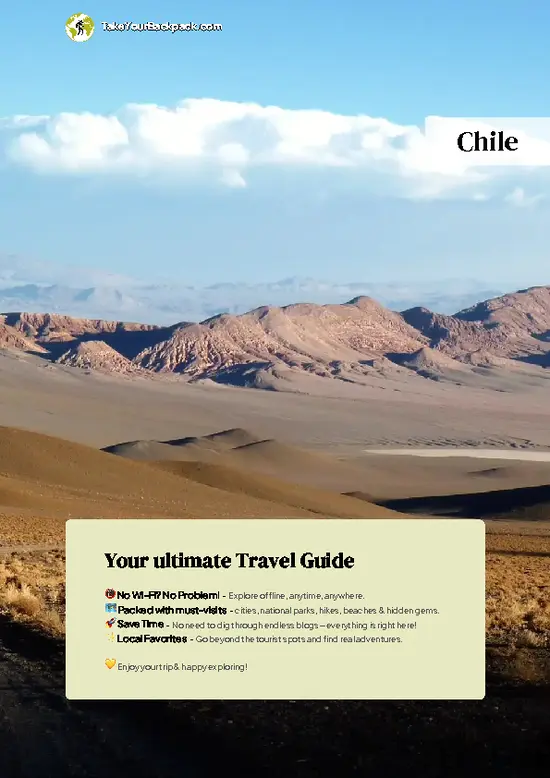
example page 0 from our offline Travel Guide for Chile
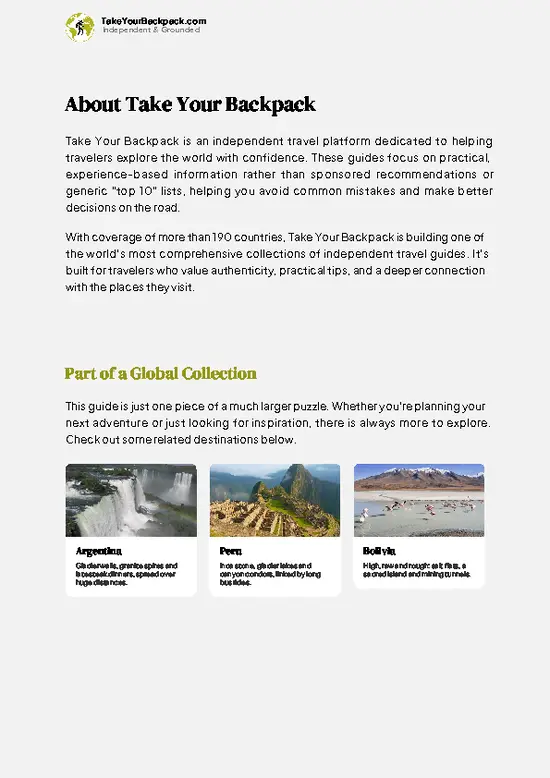
example page 1 from our offline Travel Guide for Chile
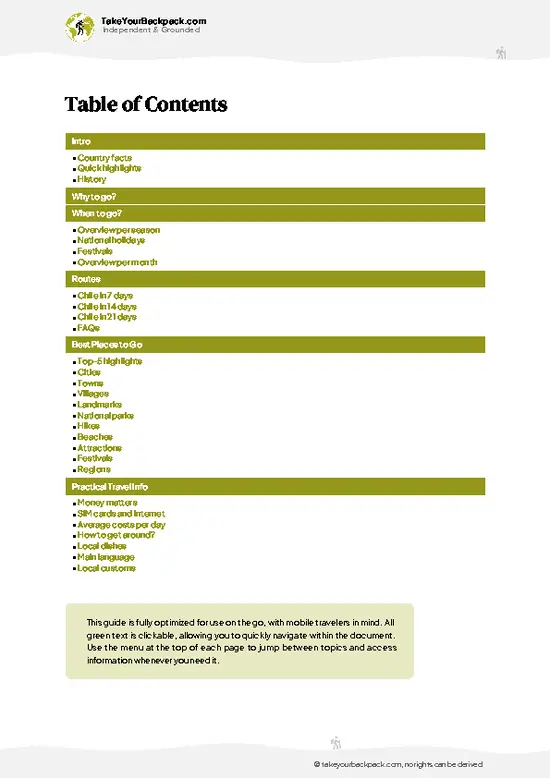
example page 2 from our offline Travel Guide for Chile
example page 3 from our offline Travel Guide for Chile
example page 4 from our offline Travel Guide for Chile
example page 5 from our offline Travel Guide for Chile
example page 6 from our offline Travel Guide for Chile
example page 7 from our offline Travel Guide for Chile
Loading the map 🌍
CLICK TO FILTER
cities
towns
villages
landmarks
national parks
hikes
beaches
attractions
festivals
regions
SHOW COUNTRY’S BESTSHOW ALL

✨ Why go?
Ranked #5 city in Chile
Reasons people choose to visit here

Puerto Montt works for backpackers because it is where northern Chile’s roads and rails run out and the Carretera Austral begins. Buses arrive from Santiago and Bariloche, and ferries leave south, so most routes pass through whether you plan it or not. That makes it a practical place to restock, book transport, do laundry and pick up gear. Hostels cluster near the waterfront and the hillside above it, and many hosts know the ferry schedules well. Food is the other real draw: the Angelmó fish market and its cheap smoky kitchens serve some of the best seafood in the south. Volcanoes such as Osorno and Calbuco loom over day trips, which gives you flexibility if weather closes in. The downside is that the city itself is gray, hilly and not especially pretty. Treat it as one or two nights, long … read more 👉
Puerto Montt works for backpackers because it is where northern Chile’s roads and rails run out and the Carretera Austral begins. Buses arrive from Santiago and Bariloche, and ferries leave south, so most routes pass through whether you plan it or not. That makes it a practical place to restock, book transport, do laundry and pick up gear. Hostels cluster near the waterfront and the hillside above it, and many hosts know the ferry schedules well. Food is the other real draw: the Angelmó fish market and its cheap smoky kitchens serve some of the best seafood in the south. Volcanoes such as Osorno and Calbuco loom over day trips, which gives you flexibility if weather closes in. The downside is that the city itself is gray, hilly and not especially pretty. Treat it as one or two nights, long enough to eat well and sort logistics, then move on.

💡 HighlightsTop highlights of Puerto Montt

  1. Angelmó Fish Market and Caleta: The city’s best-known stop, with stalls of smoked salmon, sea urchin and crafts, plus small kitchens serving curanto and fish soup. Go at lunchtime on a weekday. Browsing is free, meals run about US$7 to 12, and 1.5 to 2 hours is enough.
  2. Costanera and Waterfront Walk: A long seafront promenade with views across the sound toward Calbuco volcano. Late afternoon is best for clear light. Free, 1 hour.
  3. Iglesia Catedral: Built in 1856 from alerce wood, it is the oldest building in the city and has a neoclassical look. Visit in the morning. Free, 20 to 30 minutes.
  4. Museo Juan Pablo II: A small museum on the history of the region and the German colonization of the area. Open most weekdays. Entry is around US$1 to 3, 45 minutes.
  5. Isla Tenglo: A short boat hop from Angelmó
… read more 👉
  1. Angelmó Fish Market and Caleta: The city’s best-known stop, with stalls of smoked salmon, sea urchin and crafts, plus small kitchens serving curanto and fish soup. Go at lunchtime on a weekday. Browsing is free, meals run about US$7 to 12, and 1.5 to 2 hours is enough.
  2. Costanera and Waterfront Walk: A long seafront promenade with views across the sound toward Calbuco volcano. Late afternoon is best for clear light. Free, 1 hour.
  3. Iglesia Catedral: Built in 1856 from alerce wood, it is the oldest building in the city and has a neoclassical look. Visit in the morning. Free, 20 to 30 minutes.
  4. Museo Juan Pablo II: A small museum on the history of the region and the German colonization of the area. Open most weekdays. Entry is around US$1 to 3, 45 minutes.
  5. Isla Tenglo: A short boat hop from Angelmó to a hilltop with sound views, a small chapel and seafood shacks. Best on clear days. The boat costs about US$1 to 2, and 2 hours covers it.
  6. Pueblito Melipulli: A cluster of wooden craft shops on the road to Angelmó selling wool sweaters, socks and carved goods at fair prices. Browsing takes 30 to 45 minutes and is free.
Nearby day trips include Parque Nacional Vicente Pérez Rosales, Frutillar, Puerto Varas, Calbuco and the Chiloé gateway at Pargua.
Pueblito Melipulli is the easiest to overlook, tucked beside the main road to Angelmó.
Spotted a mistake or missing something? Contact us.

Things to do in Puerto Montt

Ratings based on Tripadvisor reviews. When you book through this link, you support our work at no extra cost to you.

🏘️ NeighborhoodsNeighborhood guide to Puerto Montt

Puerto Montt sprawls along a bay, and the useful parts for backpackers sit in a few compact pockets, so you rarely need more than your feet and the occasional local bus.
  • Centro and the Costanera: The grid of streets behind the waterfront holds banks, bus offices, supermarkets and cheap set-lunch places. The Costanera promenade is flat and walkable, and the sea breeze explains why locals walk it even in drizzle. Carry a rain shell rather than an umbrella, since the wind wins.
  • Angelmó: A fishing port and market about 3 km west of the center. The fish stalls, smoked goods and wool crafts are here, along with small cookshops serving seafood stews. Go at lunch, when the cookshops are busy and the food turns over fast. Take a colectivo or bus along the coastal road instead of walking it, because the
… read more 👉
Puerto Montt sprawls along a bay, and the useful parts for backpackers sit in a few compact pockets, so you rarely need more than your feet and the occasional local bus.
  • Centro and the Costanera: The grid of streets behind the waterfront holds banks, bus offices, supermarkets and cheap set-lunch places. The Costanera promenade is flat and walkable, and the sea breeze explains why locals walk it even in drizzle. Carry a rain shell rather than an umbrella, since the wind wins.
  • Angelmó: A fishing port and market about 3 km west of the center. The fish stalls, smoked goods and wool crafts are here, along with small cookshops serving seafood stews. Go at lunch, when the cookshops are busy and the food turns over fast. Take a colectivo or bus along the coastal road instead of walking it, because the stretch is dull and traffic is heavy.
  • Puerto Varas direction (Costanera east): The eastern edge of town has malls, a long shoreline and quieter residential streets. It is less interesting to explore, but it is where buses to the lakes pass.
  • Pelluco: A seaside district east of the center with a beach strip, bars and restaurants that stay open later than downtown. Evenings are the draw, and a short taxi ride home is smarter than waiting for late buses.

⌛️ 1 daySeeing the highlights in 24 hours

8:30 AM: Angelmó Fish Market. Start here because the stalls are at their freshest and the lunch crowds have not arrived. Look at the smoked fish and shellfish, then try a bowl of fish soup. Walk along the shore road afterward.
10:30 AM: Isla Tenglo. Take a small boat from the Angelmó dock to this island. Climb to the lookout for views over the sound, and meet the families who run the seafood shacks. Return by boat after about an hour and a half.
1:00 PM: Pueblito Melipulli. Walk or catch a local colectivo toward the center and browse the wool and wood stalls. Prices are fairer here than in most of the souvenir shops downtown.
2:30 PM: Lunch in a local picada. Head to a small family-run spot a few blocks uphill from the main square, where office workers eat set menus of grilled fish or stew, a … read more 👉
8:30 AM: Angelmó Fish Market. Start here because the stalls are at their freshest and the lunch crowds have not arrived. Look at the smoked fish and shellfish, then try a bowl of fish soup. Walk along the shore road afterward.
10:30 AM: Isla Tenglo. Take a small boat from the Angelmó dock to this island. Climb to the lookout for views over the sound, and meet the families who run the seafood shacks. Return by boat after about an hour and a half.
1:00 PM: Pueblito Melipulli. Walk or catch a local colectivo toward the center and browse the wool and wood stalls. Prices are fairer here than in most of the souvenir shops downtown.
2:30 PM: Lunch in a local picada. Head to a small family-run spot a few blocks uphill from the main square, where office workers eat set menus of grilled fish or stew, a good value for a hearty meal.
4:00 PM: Iglesia Catedral and Plaza de Armas. Look at the alerce-wood façade and relax on the square. It is a short walk from lunch.
5:30 PM: Hillside streets above the center. Few visitors go uphill into the residential streets, where wooden houses with shingled walls cling to the slopes and open onto views of the sound.
7:30 PM: Costanera. Walk down to the waterfront promenade for a relaxed stroll and a pisco sour or craft beer at a harbor bar.

🌤️ When to go?Best time to visit Puerto Montt

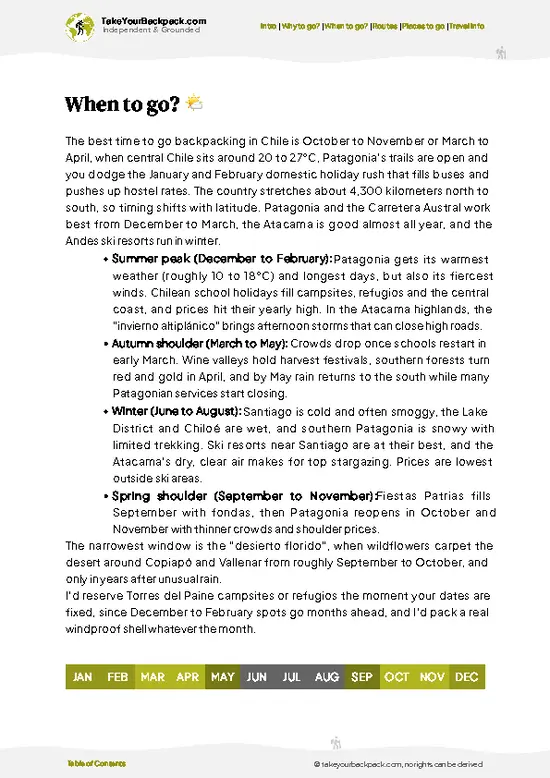
Summer, December to February, is the easiest window for hiking and boat trips, though rain can show up in any month.
  • Summer (Dec to Feb): Highs of 17 to 21°C (63 to 70°F), lows around 8°C (46°F), and very long daylight, often past 9 pm. Crowds and prices peak, especially in January.
  • Autumn (Mar to May): Highs fall from 17°C to 12°C (63 to 54°F). Rain increases, but March and early April are often calm with lower prices.
  • Winter (Jun to Aug): Highs of 9 to 11°C (48 to 52°F), lows near 3°C (37°F), wet and windy with short days. Beds are cheapest, but some boat and park services thin out.
  • Spring (Sep to Nov): Highs of 11 to 16°C (52 to 61°F), changeable skies, and blooming gardens. Crowds stay small until November.
Book January beds and buses a few weeks ahead, or visit in early March to dodge both the crowds and the worst rain.

source: climatestotravel.comJANJanuary: excellent for travelingFEBFebruary: excellent for travelingMARMarch: highly recommended for travelingAPRApril: fair for travelingMAYMay: fair for travelingJUNJune: below average for travelingJULJuly: below average for travelingAUGAugust: below average for travelingSEPSeptember: fair for travelingOCTOctober: good for travelingNOVNovember: highly recommended for travelingDECDecember: excellent for traveling
chile-city-puerto-montt
© Google |

✈️ The backpacker research shortcutChile Travel Guide

An offline-friendly backpacking guide with optimized travel routes, ranked highlights, transport advice, and the best areas to stay.
example page 0 from our offline Travel Guide for Chile
example page 1 from our offline Travel Guide for Chile
example page 2 from our offline Travel Guide for Chile
example page 3 from our offline Travel Guide for Chile
example page 4 from our offline Travel Guide for Chile
example page 5 from our offline Travel Guide for Chile
example page 6 from our offline Travel Guide for Chile
example page 7 from our offline Travel Guide for Chile
The digital guide (333 pages) contains:
✅ 107 highlights, ranked by travel appeal
✅ Optimized 7, 14 & 21-day travel routes
✅ Cities, national parks, landmarks, beaches
✅ How to get around
✅ Offline-friendly for travel without Wi-Fi
👉 Click to see all 30+ guide features

📅 Plan smarter in minutes, not weeks
✅ Month by month travel advice
✅ Festivals & national holidays
✅ Budget expectations

🗺️ Go to the right places, skip the overrated ones
✅ Honest pros & cons of destinations
✅ Top hikes, parks & viewpoints
✅ Lesser-known places most travelers miss
✅ Clear “worth it vs skip it” guidance

🛏️ Travel smoothly without rookie mistakes
✅ Best areas to stay
✅ Transport systems explained simply
✅ Common scams & safety advice
✅ SIM cards, money & practical tips

🌍 Understand the country, not just visit it
✅ Culture & traditions
✅ 52 Essential phrases & customs
✅ Festivals worth planning around
✅ Traveler-friendly historical context
✅ Insights that make places more meaningful

📱 Built for real travel conditions
✅ Fully downloadable PDF
✅ Works completely offline
✅ Optimized for phone use
✅ Useful in remote areas & buses
✅ Everything in one place
Stop searching, start planning
Get instant access to your full guide. 30‑day money-back guarantee.
+ Add another guide for just

By proceeding you agree to our terms.
Sent to your inbox immediately after payment • 100% Secure Checkout
Best Backpacking Travel Advisor 2025 tourism awardBest Backpacking
Travel Advisor
2025
What others say about Take Your Backpack Guides:
⭐⭐⭐⭐⭐
Fantastic, amazing amount of information!
⭐⭐⭐⭐⭐
My goodness this is amazing, it's what I've been looking for hats off too you!
⭐⭐⭐⭐⭐
I think this is absolutely BRILLIANT
⭐⭐⭐⭐
Very complete and informative. It's still missing places, but I gotta to commend you
⭐⭐⭐⭐⭐
This is truly amazing, thank you, can't wait to explore it with my kids!
⭐⭐⭐⭐⭐
Awesome resource, thank you!
⭐⭐⭐⭐⭐
This is amazing! Can't wait to explore the ones I haven't seen
⭐⭐⭐⭐
I love this! Well done, great idea.
⭐⭐⭐⭐⭐
Thanks for taking the time to make this gem!
⭐⭐⭐⭐⭐
This might be the best website I've ever seen.
⭐⭐⭐⭐⭐
Congratulations, and thank you so much for your work; it's incredibly valuable.
⭐⭐⭐⭐
In all seriousness I think you did a great job pointing out the important spots
⭐⭐⭐⭐⭐
10/10 very good
⭐⭐⭐⭐⭐
As someone who's only just starting to visit regularly this is awesome, thank you.
⭐⭐⭐⭐
Thank you very much! I'm going to visit my dad, it's going to be very useful!
⭐⭐⭐⭐⭐
This is really cool! We'll be travelling for the first time and this definitely come in handy.
⭐⭐⭐⭐⭐
You are now our minister of culture, congratulations 👨‍💼
⭐⭐⭐⭐⭐
Just wanted to tell you that this is a pearl! Going to follow your recommendations.
⭐⭐⭐⭐⭐
This is so cool. I'll definitely be using the resource for my travels soon.
⭐⭐⭐⭐⭐
This is very impressive! Good work.
⭐⭐⭐⭐⭐
This is an amazing and informative site. Very well done!

🛏️ Where to stay?Best areas to stay in Chile

Stay in the center near the Costanera and bus terminal if you want the cheapest beds and easiest onward travel. Dorms and budget guesthouses cluster within a 10 minute walk of the terminal, so early departures are simple and you avoid taxi fares with a pack. The streets are busy by day, calm after dark, and the main streets stay reasonably lit and populated until late. Expect some traffic noise on the arterial roads, so ask for a room away from the street.
Pelluco is the second option. It is a short bus or colectivo ride east, quieter and more residential, with a handful of guesthouses and a beach … read more 👉
Stay in the center near the Costanera and bus terminal if you want the cheapest beds and easiest onward travel. Dorms and budget guesthouses cluster within a 10 minute walk of the terminal, so early departures are simple and you avoid taxi fares with a pack. The streets are busy by day, calm after dark, and the main streets stay reasonably lit and populated until late. Expect some traffic noise on the arterial roads, so ask for a room away from the street.
Pelluco is the second option. It is a short bus or colectivo ride east, quieter and more residential, with a handful of guesthouses and a beach strip. It suits you if you want to sleep better and don’t mind a commute, though bar noise can carry on weekends and late-night transport is limited.
Many backpackers go straight to Puerto Varas, about 20 km away, where hostel choice is wider. Puerto Montt’s own beds are cheaper and make more sense when you have a ferry or an early bus out. In January and February, book a few weeks ahead because the budget stock is small.

🚌 Getting aroundHow to get around Puerto Montt

The costliest mistake is taking a taxi for the Angelmó run or the trip to nearby towns when frequent buses and shared taxis cover them for a fraction of the fare. Puerto Montt’s center is walkable, but hills and wet weather make short hops tempting, and the ring road is congested at rush hour. Public transport is cheap and reliable enough, just not well signposted.
  • Walking: Free, and the right choice inside the center and along the Costanera. The streets slope steeply toward the bay, so plan routes downhill on the way out and expect a climb back.
  • Local buses and colectivos: Fares run about US$0.70 to 1.10. Colectivos on fixed routes, including those to Angelmó, are quicker and cost a little more. Services thin out after about 10 pm, so check the last run before a late dinner.
  • Regional buses:
… read more 👉
The costliest mistake is taking a taxi for the Angelmó run or the trip to nearby towns when frequent buses and shared taxis cover them for a fraction of the fare. Puerto Montt’s center is walkable, but hills and wet weather make short hops tempting, and the ring road is congested at rush hour. Public transport is cheap and reliable enough, just not well signposted.
  • Walking: Free, and the right choice inside the center and along the Costanera. The streets slope steeply toward the bay, so plan routes downhill on the way out and expect a climb back.
  • Local buses and colectivos: Fares run about US$0.70 to 1.10. Colectivos on fixed routes, including those to Angelmó, are quicker and cost a little more. Services thin out after about 10 pm, so check the last run before a late dinner.
  • Regional buses: The main terminal on the waterfront is the hub for Puerto Varas (US$1.50 to 2.50, 25 to 40 minutes), Frutillar, Osorno and Chiloé. Buy tickets at the counter, since walk-up fares are the same as online and seats rarely sell out outside January.
  • Taxis and ride apps: A ride within the city usually costs US$3 to 7. Use them at night or with heavy bags, and agree on the fare or insist on the meter. Apps can be patchy, so keep a taxi stand number handy.
  • Ferries: Boats leave from nearby Pargua for Chiloé, and from Puerto Montt itself for long-distance routes south. Book the long routes weeks ahead in summer because vehicle and cabin space is limited, and check sailing days, since services depend on weather.

👛 Costs (as of 19 October 2026)Travel costs and budget guide for Puerto Montt

Puerto Montt costs a backpacker about US$44 to 62 a day, and the table totals US$55 using high-season dorm prices. Prices are in US dollars, though you pay in Chilean pesos, and the south is a little cheaper than Santiago.
CategoryBudget RangeLocal Reality
Dorm bed (high season, Dec to Feb)US$14 to 20Beds fill up fast in January, so book a few days ahead. Breakfast is often included.
Dorm bed (off-season)US$10 to 15Easy to find a bed on arrival from April to October, and some hostels will haggle for longer stays.
MealsUS$12 to 18A set lunch (menú del día) runs US$5 to 8. Fresh seafood stews at the Angelmó market stalls cost US$7 to 10.
Local transportUS$1 to 3City buses and colectivos charge about US$0.80 to 1.20 a ride.
City transport passNot availableNo visitor pass exists, so you pay per ride
… read more 👉
Puerto Montt costs a backpacker about US$44 to 62 a day, and the table totals US$55 using high-season dorm prices. Prices are in US dollars, though you pay in Chilean pesos, and the south is a little cheaper than Santiago.
CategoryBudget RangeLocal Reality
Dorm bed (high season, Dec to Feb)US$14 to 20Beds fill up fast in January, so book a few days ahead. Breakfast is often included.
Dorm bed (off-season)US$10 to 15Easy to find a bed on arrival from April to October, and some hostels will haggle for longer stays.
MealsUS$12 to 18A set lunch (menú del día) runs US$5 to 8. Fresh seafood stews at the Angelmó market stalls cost US$7 to 10.
Local transportUS$1 to 3City buses and colectivos charge about US$0.80 to 1.20 a ride.
City transport passNot availableNo visitor pass exists, so you pay per ride in cash.
Basic activities and entry feesUS$3 to 12Most of the waterfront, Angelmó and the craft shops of Pueblito Melipulli are free. Boat trips and Calbuco-area outings add to the total.
MiscellaneousUS$3 to 6Laundry, SIM data, snacks, and a few coffees.
Total Daily BudgetUS$55High-season dorm plus average meals, transport, activities and extras.
Buy lunch as the set menu and cook dinner in the hostel kitchen using produce from the fruit and vegetable stalls to cut food costs by roughly a third.


source: chile.travel
⚠️ Prices can change and everyone travels differently, so take this as a rough guide. Hope it helps you plan your adventure!

🚌 Day tripsExploring the surroundings

Puerto Montt works well as a base, because buses to the lakes, volcanoes and Chiloé run all day and every trip below returns the same evening.Puerto Varas and Lago Llanquihue: Lakeside streets, German-style houses and a view of Volcán Osorno make this the easy first outing. Buses take 25 to 40 minutes and cost US$1.50 to 2.50. Many first-timers only stay an hour, but a lakeshore walk and a coffee take half a day. Clear mornings are best.
👉 Explore Puerto VarasFrutillar: This lakeside town is known for its wooden German colonial buildings and a long, calm waterfront. Buses take about 1 hour and cost US$3 to 4. Come on a dry day, and try the kuchen at local cafés, which is a main reason to go.
👉 Explore FrutillarCalbuco: A fishing town on an island linked by causeway, about 1 hour away by bus … read more 👉
Puerto Montt works well as a base, because buses to the lakes, volcanoes and Chiloé run all day and every trip below returns the same evening.Puerto Varas and Lago Llanquihue: Lakeside streets, German-style houses and a view of Volcán Osorno make this the easy first outing. Buses take 25 to 40 minutes and cost US$1.50 to 2.50. Many first-timers only stay an hour, but a lakeshore walk and a coffee take half a day. Clear mornings are best.
👉 Explore Puerto VarasFrutillar: This lakeside town is known for its wooden German colonial buildings and a long, calm waterfront. Buses take about 1 hour and cost US$3 to 4. Come on a dry day, and try the kuchen at local cafés, which is a main reason to go.
👉 Explore FrutillarCalbuco: A fishing town on an island linked by causeway, about 1 hour away by bus for US$2 to 3. It has working docks, wooden churches and seafood at low prices, with almost no tourists. Check return bus times before wandering off.
Parque Nacional Vicente Pérez Rosales: Boat and trail access to Petrohué Falls and Lago Todos los Santos. Allow 1.5 to 2 hours each way via Puerto Varas, with buses to Petrohué costing roughly US$3 to 6 and park entry around US$5 to 10. Go between November and March, and leave early so you are not stuck waiting for the last return bus.

🍲 FoodLocal Cuisine & Drinks

Seafood is the point here, and the best of it comes from the port. At Angelmó, cookshops serve curanto, a Chilote stew of shellfish, meat and potatoes, and cazuela de mariscos, a hot, briny soup that suits the damp weather. Try erizos (sea urchin) and locos if you like adventurous flavors, and look for milcao and chapalele, potato breads from Chiloé cooking.
Smoked fish, cochayuyo seaweed and merkén spice blends fill the market stalls and make cheap, packable souvenirs. A set lunch in a cookshop costs roughly US$7 to 12, and the central streets have bakeries and sandwich counters for cheaper bites.
German settlers shaped the region’s sweets, so expect kuchen and berry cakes in cafés, and craft beer in the bars around Pelluco. Eat seafood at lunch, when stock is freshest, and go early, since cookshops fill up quickly.

🛡️ SafetyStaying Safe: What Travelers Should Know

Puerto Montt is calm for a port city, and most problems are petty theft rather than violence. Watch your bag at the bus terminal, in the Angelmó market crowds and on busy buses, where pickpockets and bag-slashers work. Keep valuables in a front pocket and don’t leave a phone on a café table. The streets around the terminal and some upper neighborhoods feel rough after dark, so take a taxi rather than walking. Solo travelers, including women, generally have an easy time, but avoid empty streets late at night. Car break-ins occur, so leave nothing visible in a parked vehicle. At Angelmó, agree on prices before ordering at cookshops and check your change. The bigger annoyance is weather, so carry waterproofs rather than worry about people.

FAQFrequently asked questions about Puerto Montt

Two to three days covers Puerto Montt itself and the nearest day trips. Spend half a day at the Angelmó market and the Costanera, then use the others for Puerto Varas, Frutillar or Petrohué, each reachable in 25 minutes to 2 hours by bus. Add more days if you plan to continue to Chiloé or the Carretera Austral.
Puerto Montt is reasonably safe for solo backpackers, with petty theft the main risk. Keep an eye on bags at the bus terminal and Angelmó market, and take a taxi (US$3 to 7) rather than walking empty streets late at night. Daytime exploring is easy and the center is busy until evening.
Puerto Montt is known for its seafood, especially at the Angelmó port market, and for being the gateway to the Lake District, Chiloé and Patagonia. The Carretera Austral starts to the south, and ferries leave for southern Chile. Volcán Osorno and Lago Llanquihue are within about 1 hour by bus.
⚠️ Things can change over time, so always validate details locally before you go.

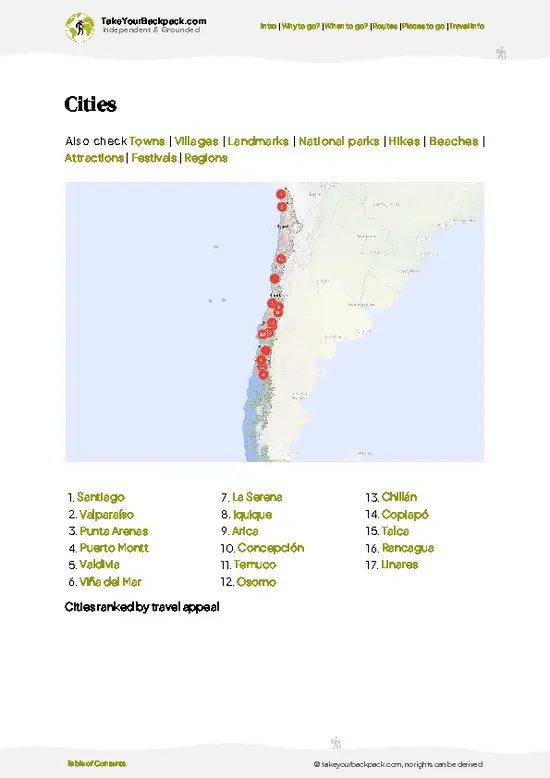
Other Chilean cities near Puerto Montt

Explore more nearby:

  • Osorno—German kuchen, wooden settler houses, Huilliche history, river fort| 100 km away
  • Valdivia—Sea lions, river market, Corral fort, Kunstmann brewery| 185 km away
  • Temuco—Mapuche silverwork, Feria Libre, steam locomotives, rain-dark streets| 305 km away

💡 Not sure where to go next?
Create a personalized itinerary for Chile including Puerto Montt and the places that fit your trip.

Generate my itinerary

👉 Discover all cities

Or checkout all Chile has to offer (think cities, towns, villages, national parks, hikes, beaches, festivals)
Country photo of Chile

We 💚 feedbackIs it worth it?

Puerto Montt works best as the hinge between the Lake District and the south, so I would pair it with Puerto Varas or Frutillar on the way in and Chiloé or the Carretera Austral on the way out. Skip the long stay. Book your onward ferry first, then spend your spare evening on a plate of fish at Angelmó.

✈️ When did I visit Chile?
I have visited Chile, together with Argentina, in September 2012.

✍️ Help improve this page!
The information on this page is based on my own backpacking experience in Chile, supplemented with up-to-date research and feedback from other travelers. Travel details can change, so if you notice anything outdated or incomplete, feel free to let me know.


🙋‍♂️ Give feedback

👋 Meet the founderWho’s Behind Take Your Backpack?

Johan, backpacker and founder of TakeYourBackpackHi, I’m Johan (Netherlands 🇳🇱), the creator of TakeYourBackpack. Over the past 3 decades, I’ve backpacked through 90+ countries across six continents, gaining extensive experience with independent travel, long-term trips, and overland routes.

This site is built on a combination of firsthand travel experience and carefully curated insights from other backpackers. Many guides are based on places I’ve personally visited, while others bring together tips, observations, and practical advice shared by trusted travelers I’ve met along the way.

The goal is to provide realistic, experience-driven guidance — not generic itineraries — so you can explore destinations with better context, clearer expectations, and more confidence.