×

Chile🇨🇱 | townsPuerto NatalesTorres del Paine gateway, windblown fjord, corrugated houses | things to do and best time to go

Explore FrutillarExplore San Fernando

Backpacking in Puerto Natales
🌟 Highlighttown ranked #5
By Johan Kruseman 🇳🇱 | Updated July 30, 2026

Most people only realize after they leave that Puerto Natales is where you should have done all your gear tweaks and food planning for Patagonia, because it’s the last place with real choice before the wilderness tax kicks in. This small, wind-scrubbed port town sits in far southern Chile, in the Magallanes region, on the edge of the Última Esperanza fjord, a few hours north of Punta Arenas by bus. It’s not a “city break”; it’s a staging ground. You come here to launch into Torres del Paine, boat trips, and nearby day hikes, then recover over cheap empanadas and supermarket pasta. The center is compact and walkable, with hostels, gear shops, and cafés where backpacks pile by the door and trip plans spread across wooden tables. Nights are more gear-drying than bar-hopping, but it’s easy to meet other hikers. Compared with Punta Arenas, Puerto Natales feels smaller, more scenic, more single‑mindedly focused on the trail ahead.

Discover everything you want to know in the 📖 Chile Travel Guide.


Get your Chile guide
114 ranked highlights, routes & tips, works offline (449 pages)
Loading the map 🌍
CLICK TO FILTER
cities
towns
villages
landmarks
national parks
hikes
beaches
attractions
festivals
regions
SHOW COUNTRY’S BESTSHOW ALL

✨ Why go?
Ranked #5 town in Chile
What makes this town worth visiting

Puerto Natales serves as a gateway for backpackers heading to Torres del Paine National Park, making it a strategic stopover. The convenience of its location means you can easily access stunning hikes and breathtaking landscapes without the hassle of long travel days. The town’s walkable streets invite exploration, with cozy cafés and local eateries offering hearty meals that fuel your adventures.

You’ll find a range of small-scale hostels and guesthouses, fostering a friendly, communal atmosphere. This is where solo travelers and small groups mingle, sharing stories over a shared kitchen or a communal fire. The vibe is relaxed, encouraging you to linger a bit longer than planned.

While many backpackers come for just a night or two, those who stay longer often find themselves enchanted … read more 👉
Puerto Natales serves as a gateway for backpackers heading to Torres del Paine National Park, making it a strategic stopover. The convenience of its location means you can easily access stunning hikes and breathtaking landscapes without the hassle of long travel days. The town’s walkable streets invite exploration, with cozy cafés and local eateries offering hearty meals that fuel your adventures.

You’ll find a range of small-scale hostels and guesthouses, fostering a friendly, communal atmosphere. This is where solo travelers and small groups mingle, sharing stories over a shared kitchen or a communal fire. The vibe is relaxed, encouraging you to linger a bit longer than planned.

While many backpackers come for just a night or two, those who stay longer often find themselves enchanted by the local culture and the surrounding beauty. The scent of fresh bread from local bakeries fills the air, and the views of the fjords are a constant reminder of nature’s grandeur.

Whether you’re a slow traveler soaking in the scenery or a hiker gearing up for the trails, Puerto Natales offers a perfect blend of practicality and charm, making it a worthwhile stop on your journey.
Want to include Puerto Natales in your Chile route?
Create a personalized Chile itinerary that includes Puerto Natales and the places that fit your trip — based on your travel style, budget, and available time. Get your route in seconds.

Generate my trip

💡 HighlightsMust-see experiences and standout moments

  • Muelle Histórico (Historic Pier) — A simple wooden pier that feels like the town’s lungs: you get close to the water, watch local boats, and it’s one of the best spots for that clean Patagonia light at sunrise or sunset.
  • Paseo Costanera (Waterfront Promenade) — A flat, wind-whipped stroll along the Señoret Channel with benches, views of the Balmaceda peaks across the water, seabirds, and cafes where locals hang out — great for a relaxed first-hour-in-town vibe.
  • Plaza de Armas / Plaza de los Pioneros — The town square where people meet, vendors set up, and you can feel Puerto Natales’ small-town rhythm; a handy orientation point and a good place to watch everyday life.
  • Museo Histórico Municipal — Small but dense: exhibits on regional settlement, ranching, maritime history and indigenous
read more 👉
  • Muelle Histórico (Historic Pier) — A simple wooden pier that feels like the town’s lungs: you get close to the water, watch local boats, and it’s one of the best spots for that clean Patagonia light at sunrise or sunset.
  • Paseo Costanera (Waterfront Promenade) — A flat, wind-whipped stroll along the Señoret Channel with benches, views of the Balmaceda peaks across the water, seabirds, and cafes where locals hang out — great for a relaxed first-hour-in-town vibe.
  • Plaza de Armas / Plaza de los Pioneros — The town square where people meet, vendors set up, and you can feel Puerto Natales’ small-town rhythm; a handy orientation point and a good place to watch everyday life.
  • Museo Histórico Municipal — Small but dense: exhibits on regional settlement, ranching, maritime history and indigenous presence. It’s the quickest, most grounded way to learn how this place evolved from estancias and whaling to the tourism hub it is now.
  • Iglesia Sagrado Corazón — A modest, well-kept wooden church that’s meaningful for local community life; it’s worth a look for architecture, stained glass, and the chance to observe quieter village rhythms.
  • Monumento al Viento (Wind Monument) — That characterful sculpture on the waterfront sums up Patagonia in one piece of metal: dramatic, a little stubborn, and photogenic. It’s a fun, local landmark and photo stop.
  • Mirador Cerro Dorotea — A short hike or quick drive takes you up to a viewpoint with sweeping panoramas over Puerto Natales, the fjord, and surrounding peaks. It’s excellent for orientation, photos, and a short breath of real Patagonia without leaving the town area.
  • Mercado Municipal (Fish Market) — Raw, lively, and edible: vendors sell fresh catch, smoked fish, shellfish and simple ready-to-eat snacks. Visiting gives you a direct taste (literally) of the local economy and is great for cheap, honest food.
  • Aldea Artesanal & Small Galleries — Clustered artisan stalls and independent shops sell locally spun wool, handcrafts, and small contemporary works. Good for picking up authentic souvenirs and supporting local makers — and for conversation with the artists when they’re around.
  • Cementerio Municipal — Not typical tourist fodder, but the cemetery tells stories of settlers, maritime families and the hard life here; the graves, simple mausoleums and the views across the water make it a reflective, culturally revealing stop.
A few solid day trips just outside town: Torres del Paine National Park, Cueva del Milodón Natural Monument, boat trips to Balmaceda & Serrano glaciers and the historic Puerto Bories / Ex-Frigorífico site — Cueva del Milodón is my personal favorite for how immediate and surprising the landscape and prehistory feel on a half-day visit.
Spotted a mistake or missing something? Contact us.

Things to do around Puerto Natales

Ratings based on Tripadvisor reviews. When you book through this link, you support our work at no extra cost to you.

🏘️ NeighborhoodsWhere things are and how it's laid out

Puerto Natales is a gateway to Patagonia’s wild beauty, and each neighborhood offers a unique flavor for backpackers. Here’s how to navigate this charming town.

Centro
This is the heart of Puerto Natales. You’ll find affordable hostels, cozy cafes, and local shops. The vibe is lively, especially in the evenings when travelers gather for a drink. Everything is walkable, making it easy to stock up on supplies or grab a bite. Perfect for short stays, as you can quickly access transport to Torres del Paine.

Puerto Bories
A bit quieter, this area features stunning views of the fjord. It’s less touristy, which means you can soak in the local atmosphere. Accommodations here are often a bit pricier, but the peace is worth it. Ideal for longer stays if you want to escape the hustle and focus … read more 👉
Puerto Natales is a gateway to Patagonia’s wild beauty, and each neighborhood offers a unique flavor for backpackers. Here’s how to navigate this charming town.

Centro
This is the heart of Puerto Natales. You’ll find affordable hostels, cozy cafes, and local shops. The vibe is lively, especially in the evenings when travelers gather for a drink. Everything is walkable, making it easy to stock up on supplies or grab a bite. Perfect for short stays, as you can quickly access transport to Torres del Paine.

Puerto Bories
A bit quieter, this area features stunning views of the fjord. It’s less touristy, which means you can soak in the local atmosphere. Accommodations here are often a bit pricier, but the peace is worth it. Ideal for longer stays if you want to escape the hustle and focus on nature. Transport options are limited, so be prepared to walk or bike.

Villa las Estrellas
This neighborhood is a hidden treasure, known for its rustic charm and proximity to the waterfront. It’s a bit farther from the main action, but the tranquility is a trade-off for the stunning views. Great for those looking to recharge after trekking. You’ll need to plan your transport carefully, as it’s less accessible.

El Estero
This area is perfect for those who want a mix of local life and convenience. It’s a short walk to the center but offers a quieter atmosphere. You’ll find budget-friendly hostels and a few local eateries. Ideal for both short and longer stays, with decent transport links to the main attractions.

⌛️ 1 day1-day itinerary for Puerto Natales

Puerto Natales is a small, vibrant town that serves as the gateway to the breathtaking Torres del Paine National Park. With its rugged mountains and the shimmering waters of the Last Hope Sound, this place has a raw beauty that feels like a well-kept secret. The air is crisp, and the scent of the sea mingles with the earthy aroma of the surrounding forests.

Start your day with a hearty breakfast at Café Artimaña, where the warm, buttery pastries and rich coffee will fuel your adventures. The café is tucked away in a cozy corner, and the local art on the walls adds a personal touch. Afterward, take a stroll along the waterfront promenade. The morning light dances on the water, and you can watch fishermen casting their lines while the distant peaks of the Andes loom majestically.

In the afternoon, … read more 👉
Puerto Natales is a small, vibrant town that serves as the gateway to the breathtaking Torres del Paine National Park. With its rugged mountains and the shimmering waters of the Last Hope Sound, this place has a raw beauty that feels like a well-kept secret. The air is crisp, and the scent of the sea mingles with the earthy aroma of the surrounding forests.

Start your day with a hearty breakfast at Café Artimaña, where the warm, buttery pastries and rich coffee will fuel your adventures. The café is tucked away in a cozy corner, and the local art on the walls adds a personal touch. Afterward, take a stroll along the waterfront promenade. The morning light dances on the water, and you can watch fishermen casting their lines while the distant peaks of the Andes loom majestically.

In the afternoon, head to the historic neighborhood of Puerto Natales, where colorful wooden houses tell stories of the town’s past. Visit the Museo Histórico, a small but fascinating spot that dives into the region’s history, from indigenous cultures to the sheep farming boom. It’s often overlooked by tourists, but the insights you gain here will enrich your understanding of the area.

For a unique experience, venture to the nearby Cueva del Milodón Natural Monument. Just a short bus ride away, this site features impressive caves and a replica of the giant prehistoric sloth that once roamed the region. The hike through the lush landscape is invigorating, and the cool shade of the caves offers a refreshing break.

As the sun sets, make your way to the Plaza de Armas. Grab a local craft beer at one of the nearby bars, and soak in the atmosphere as locals gather to share stories. The sky transforms into a canvas of oranges and purples, and you’ll feel the pulse of this charming town. Puerto Natales is more than a stopover; it’s a place that invites you to linger and explore.
Turn your Puerto Natales visit into an Chile adventure
Build a complete Chile route with Puerto Natales, hidden gems, must-see destinations, and realistic travel times included.

Generate my trip

🌤️ When to go?When to go for the best experience


  • Weather: Puerto Natales sits in Patagonia’s cold embrace. Summer (December to February) offers the mildest weather, hovering around 10-15°C (50-59°F), but expect sudden wind gusts that can chill you to the bone. Winter months plunge temperatures near freezing, often below 0°C (32°F), making trails icy and less accessible.

  • Daylight Hours: Summer gifts you with up to 17 hours of daylight—perfect for squeezing in long hikes and late sunsets over the fjords. In contrast, winter days shrink to about 7 hours, limiting exploration time and making early starts essential.

  • Crowds: Peak season means more travelers, especially in January. Trails and hostels fill up fast, so booking ahead is a must. Shoulder seasons (October-November, March-April) offer quieter trails and a more intimate connection
read more 👉

  • Weather: Puerto Natales sits in Patagonia’s cold embrace. Summer (December to February) offers the mildest weather, hovering around 10-15°C (50-59°F), but expect sudden wind gusts that can chill you to the bone. Winter months plunge temperatures near freezing, often below 0°C (32°F), making trails icy and less accessible.

  • Daylight Hours: Summer gifts you with up to 17 hours of daylight—perfect for squeezing in long hikes and late sunsets over the fjords. In contrast, winter days shrink to about 7 hours, limiting exploration time and making early starts essential.

  • Crowds: Peak season means more travelers, especially in January. Trails and hostels fill up fast, so booking ahead is a must. Shoulder seasons (October-November, March-April) offer quieter trails and a more intimate connection with the landscape.

  • Seasonal Activities: Summer unlocks kayaking, horseback riding, and boat tours to glaciers. Winter’s harsher conditions limit these but reward you with stark, snow-dusted vistas and solitude that few get to experience.

  • Price Fluctuations: Expect prices for accommodation and tours to spike in summer. Shoulder seasons bring better deals without sacrificing too much on weather, making them a sweet spot for budget-conscious adventurers.


Pro-tip: Aim for late spring or early autumn—when the air smells of pine and earth, the crowds thin, and the light lingers just long enough to savor every step without racing the clock.


source: climatestotravel.comJANJanuary: highly recommended for travelingFEBFebruary: highly recommended for travelingMARMarch: highly recommended for travelingAPRApril: highly recommended for travelingMAYMay: fair for travelingJUNJune: below average for travelingJULJuly: below average for travelingAUGAugust: fair for travelingSEPSeptember: good for travelingOCTOctober: highly recommended for travelingNOVNovember: highly recommended for travelingDECDecember: highly recommended for traveling
when-to-go

✈️ The backpacker research shortcutChile Travel Guide

An offline-friendly backpacking guide with optimized travel routes, ranked highlights, transport advice, and the best areas to stay.
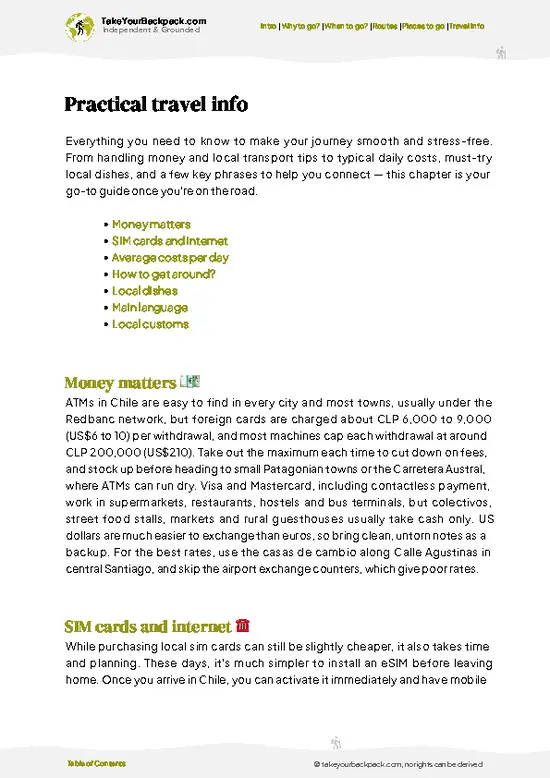
example page 0 from our offline Travel Guide for Chile
example page 1 from our offline Travel Guide for Chile
example page 2 from our offline Travel Guide for Chile
example page 3 from our offline Travel Guide for Chile
example page 4 from our offline Travel Guide for Chile
example page 5 from our offline Travel Guide for Chile
example page 6 from our offline Travel Guide for Chile
example page 7 from our offline Travel Guide for Chile
The digital guide (449 pages) contains:
114 highlights, ranked by travel appeal
Optimized 7, 14 & 21-day travel routes
Cities, national parks, landmarks, beaches
How to get around
Offline-friendly for travel without Wi-Fi
👉 Click to see all 30+ guide features

📅 Plan smarter in minutes, not weeks
Month by month travel advice
Festivals & national holidays
Budget expectations

🗺️ Go to the right places, skip the overrated ones
Honest pros & cons of destinations
Top hikes, parks & viewpoints
Lesser-known places most travelers miss
Clear “worth it vs skip it” guidance

🛏️ Travel smoothly without rookie mistakes
Best areas to stay
Transport systems explained simply
Common scams & safety advice
SIM cards, money & practical tips

🌍 Understand the country, not just visit it
Culture & traditions
52 Essential phrases & customs
Festivals worth planning around
Traveler-friendly historical context
Insights that make places more meaningful

📱 Built for real travel conditions
Fully downloadable PDF
Works completely offline
Optimized for phone use
Useful in remote areas & buses
Everything in one place
Save weeks of stressful planning
Get instant access to your full guide. 30‑day money-back guarantee.


By proceeding you agree to our terms.
Sent to your inbox immediately after payment • 100% Secure Checkout
Best Backpacking Travel Advisor 2025 tourism awardBest Backpacking
Travel Advisor
2025
What others say about Take Your Backpack Guides:
⭐⭐⭐⭐⭐
Fantastic, amazing amount of information!
⭐⭐⭐⭐⭐
My goodness this is amazing, it's what I've been looking for hats off too you!
⭐⭐⭐⭐⭐
I think this is absolutely BRILLIANT
⭐⭐⭐⭐
Very complete and informative. It's still missing places, but I gotta to commend you
⭐⭐⭐⭐⭐
This is truly amazing, thank you, can't wait to explore it with my kids!
⭐⭐⭐⭐⭐
Awesome resource, thank you!
⭐⭐⭐⭐⭐
This is amazing! Can't wait to explore the ones I haven't seen
⭐⭐⭐⭐
I love this! Well done, great idea.
⭐⭐⭐⭐⭐
Thanks for taking the time to make this gem!
⭐⭐⭐⭐⭐
This might be the best website I've ever seen.
⭐⭐⭐⭐⭐
Congratulations, and thank you so much for your work; it's incredibly valuable.
⭐⭐⭐⭐
In all seriousness I think you did a great job pointing out the important spots
⭐⭐⭐⭐⭐
10/10 very good
⭐⭐⭐⭐⭐
As someone who's only just starting to visit regularly this is awesome, thank you.
⭐⭐⭐⭐
Thank you very much! I'm going to visit my dad, it's going to be very useful!
⭐⭐⭐⭐⭐
This is really cool! We'll be travelling for the first time and this definitely come in handy.
⭐⭐⭐⭐⭐
You are now our minister of culture, congratulations 👨‍💼
⭐⭐⭐⭐⭐
Just wanted to tell you that this is a pearl! Going to follow your recommendations.
⭐⭐⭐⭐⭐
This is so cool. I'll definitely be using the resource for my travels soon.
⭐⭐⭐⭐⭐
This is very impressive! Good work.
⭐⭐⭐⭐⭐
This is an amazing and informative site. Very well done!

🛏️ Where to stay?Choosing the right base

Puerto Natales is small but layered, and where you drop your pack shapes your whole experience. The heart for backpackers is the downtown core, especially around Avenida España and the streets that fan out from it. This area hums with life—hostels cluster here, so you’re never far from a fellow traveler’s laugh or a last-minute trek buddy. The streets are safe, well-lit, and lined with cafés and small shops where you can snag local empanadas or a strong coffee to fuel your next adventure.

Choosing to stay here means you’re steps from the ferry terminal and bus stops that launch you toward Torres … read more 👉
Puerto Natales is small but layered, and where you drop your pack shapes your whole experience. The heart for backpackers is the downtown core, especially around Avenida España and the streets that fan out from it. This area hums with life—hostels cluster here, so you’re never far from a fellow traveler’s laugh or a last-minute trek buddy. The streets are safe, well-lit, and lined with cafés and small shops where you can snag local empanadas or a strong coffee to fuel your next adventure.

Choosing to stay here means you’re steps from the ferry terminal and bus stops that launch you toward Torres del Paine. That convenience is gold because the town’s charm is in its rugged access to wild Patagonia, not in sprawling urban comforts. The vibe is casual, with a mix of solo travelers swapping stories and groups gearing up for hikes. It’s social without being overwhelming, a perfect balance for anyone who wants to connect but also recharge.

Venture outside this zone, and you’ll find quieter residential areas that feel more isolated and less practical for backpackers. The downtown pulse keeps you plugged in, making it easier to navigate logistics and soak in the crisp Patagonian air without losing the buzz of community.

🚌 Getting aroundMoving around without the hassle

Puerto Natales moves at the pace of the wind off the fjords—unpredictable, brisk, and a little wild. It’s not a place where you’ll find strict timetables etched in stone; instead, the town flows with a mix of local intuition and seasonal rhythms. Mornings bring a quiet buzz as fishermen unload their catch and cafes fill with the scent of fresh coffee and salty air. Afternoons can stretch lazily, with the sun dipping low and casting long shadows over the dusty streets. If you want to catch a bus or a boat, you’ll need to be flexible but ready to move fast when the moment comes. This isn’t a place for rigid plans; it rewards those who read the signs—the shifting light, the chatter at the market, the sudden gusts that hint at a weather change. Understanding this flow is your first step to mastering … read more 👉
Puerto Natales moves at the pace of the wind off the fjords—unpredictable, brisk, and a little wild. It’s not a place where you’ll find strict timetables etched in stone; instead, the town flows with a mix of local intuition and seasonal rhythms. Mornings bring a quiet buzz as fishermen unload their catch and cafes fill with the scent of fresh coffee and salty air. Afternoons can stretch lazily, with the sun dipping low and casting long shadows over the dusty streets. If you want to catch a bus or a boat, you’ll need to be flexible but ready to move fast when the moment comes. This isn’t a place for rigid plans; it rewards those who read the signs—the shifting light, the chatter at the market, the sudden gusts that hint at a weather change. Understanding this flow is your first step to mastering Puerto Natales.


  • Walking: The heart of Puerto Natales is compact enough to explore on foot. The town’s flat streets and waterfront paths make walking the most reliable and free way to get around. Early mornings and late afternoons offer the best light for wandering, with the scent of pine and seaweed thick in the air.


  • Local Buses: These run primarily between the town center and nearby neighborhoods or the bus terminal. They start around 7:00 AM and taper off by 9:00 PM. Tickets cost under $2 USD, but schedules can be loose—buses often leave when full rather than on the clock. Expect a slow, bumpy ride with locals chatting and the occasional dog hopping on.


  • Shuttle Vans to Torres del Paine: For budget travelers aiming to hit the park, shared shuttles are your best bet. They depart early, around 7:30 AM, and return late afternoon. Prices hover around $15-$20 USD one way. Vans are cramped but efficient, with drivers who know the back roads and the best drop-off points, saving you time and the headache of navigating on your own.


  • Taxi Services: Taxis are plentiful but pricier, usually starting around $5 USD for short trips. They’re useful if you’re carrying heavy gear or need to make a tight connection. Drivers often wait for you, which can be a lifesaver when schedules are unpredictable, but always agree on the fare upfront to avoid surprises.


  • Boat Tours and Ferries: While not daily transit, boats connect Puerto Natales to nearby fjords and estancias. These trips run mostly in the high season (October to April) and require booking a day ahead. Prices vary but expect around $30-$50 USD. The salty breeze, the splash of cold water, and the chance to spot sea lions or glaciers make this a transit option that doubles as an experience.

👛 Costs (as of 30 July 2026)Travel costs and budget guide for Puerto Natales

Backpacking in Puerto Natales, Chile, comes with a price tag that reflects its remote location and status as the gateway to Torres del Paine. It’s not dirt cheap, but with some savvy choices, you can keep costs reasonable while soaking in the crisp Patagonian air.
  • Dorm Accommodation: Expect to pay between $15 and $30 USD per night for a bed in a shared dorm. Hostels here are basic but clean, often with heating—a must when the wind bites. Booking ahead in high season is crucial; prices spike and availability thins fast.
  • Meals: Eating out leans toward the pricey side. A simple meal at a local café or small restaurant will run you about $8 to $15 USD. Groceries for self-catering can bring that down, with a week’s worth of basics costing around $25 to $35 USD if you shop at the local supermarket.
read more 👉
Backpacking in Puerto Natales, Chile, comes with a price tag that reflects its remote location and status as the gateway to Torres del Paine. It’s not dirt cheap, but with some savvy choices, you can keep costs reasonable while soaking in the crisp Patagonian air.
  • Dorm Accommodation: Expect to pay between $15 and $30 USD per night for a bed in a shared dorm. Hostels here are basic but clean, often with heating—a must when the wind bites. Booking ahead in high season is crucial; prices spike and availability thins fast.
  • Meals: Eating out leans toward the pricey side. A simple meal at a local café or small restaurant will run you about $8 to $15 USD. Groceries for self-catering can bring that down, with a week’s worth of basics costing around $25 to $35 USD if you shop at the local supermarket. Fresh bread, cheese, and fruit are staples.
  • Local Transport: Puerto Natales is compact, so walking covers most ground. For longer hauls, like the bus to Torres del Paine, budget $10 to $20 USD one way. Taxis are available but not often necessary unless you’re hauling heavy gear or traveling late.
  • Basic Activities/Entry Fees: The big draw is Torres del Paine National Park, with an entrance fee around $35 USD for foreign visitors. Other local sights, like the Cueva del Milodón, charge about $10 USD. Guided tours or boat trips start at $40 USD and climb from there, so plan accordingly.
  • Miscellaneous Expenses: Think water refills, snacks, occasional laundry, or a coffee break. These small costs add up to roughly $5 to $10 USD daily. Wi-Fi is often included in hostels but can be patchy, so consider a local SIM card if you need reliable internet.

All told, a realistic daily budget for backpacking in Puerto Natales ranges from about $40 to $75 USD. This covers the essentials without skimping on comfort or experiences. The chill in the air and the rugged landscape make every dollar feel like an investment in a wild, unforgettable corner of the world.


source: chile.travel
⚠️ Prices can change and everyone travels differently, so take this as a rough guide. Hope it helps you plan your adventure!

🚌 Day tripsBest day trips from Puerto Natales

Puerto Natales is your launchpad for some of the most exhilarating day trips in Chilean Patagonia. The town itself buzzes with a laid-back vibe, where the scent of fresh bread wafts from bakeries and the mountains loom like guardians in the distance. Here’s how to make the most of your time.

Torres del Paine National Park
This iconic park is a must-see. The trek to the base of the Torres (the towers) is a challenge, but the view is worth every step. Expect to spend around 12 hours for the round trip, including travel time. Buses leave early in the morning, and you can snag a ticket for about $15. The best months are from October to April when the weather is milder. A common rookie mistake? Underestimating the wind; it can knock you off your feet. Dress in layers and brace yourself for a … read more 👉
Puerto Natales is your launchpad for some of the most exhilarating day trips in Chilean Patagonia. The town itself buzzes with a laid-back vibe, where the scent of fresh bread wafts from bakeries and the mountains loom like guardians in the distance. Here’s how to make the most of your time.

Torres del Paine National Park
This iconic park is a must-see. The trek to the base of the Torres (the towers) is a challenge, but the view is worth every step. Expect to spend around 12 hours for the round trip, including travel time. Buses leave early in the morning, and you can snag a ticket for about $15. The best months are from October to April when the weather is milder. A common rookie mistake? Underestimating the wind; it can knock you off your feet. Dress in layers and brace yourself for a wild ride.
👉 Explore Torres del Paine National Park

Milodon Cave
Just a short bus ride away, the Milodon Cave offers a fascinating glimpse into prehistoric life. You can explore the cave and its surroundings in about 2-3 hours. Entry is around $10, and the bus fare is minimal. Spring and summer are ideal for this trip, as the trails are more accessible. Many first-timers rush through; take your time to soak in the eerie atmosphere and the stories etched in the rock.


Puerto Natales to the Serrano River
For a more relaxed day, consider a boat trip on the Serrano River. This journey takes you through stunning fjords and glaciers, with the chance to spot wildlife like condors and guanacos. The round trip lasts about 6 hours, with costs around $50. Late spring to early fall is best for this adventure. A common misstep is not bringing a camera; the views are postcard-perfect, and you’ll want to capture every moment.


Laguna Azul
This lesser-known spot is a tranquil escape from the crowds. The turquoise waters reflect the mountains, creating a serene backdrop for a picnic. It takes about 1.5 hours to get there by bus, and the fare is around $10. Late spring is particularly beautiful, with wildflowers blooming. Many backpackers overlook this gem, but it’s a perfect place to unwind and recharge.


Each of these trips offers a unique slice of Patagonia, making Puerto Natales not just a stopover, but a gateway to adventure.
Want to know what more Chile offers?
The Chile Travel Guide describes 114 highlights, from cities to national parks, from beaches to hikes

Get the Travel Guide -

🛡️ SafetyScams, Hazards, and Annoyances

Puerto Natales is generally safe, but like any travel destination, a little awareness goes a long way. The waterfront area, with its charming views of the fjords, is a popular spot, but keep an eye on your belongings, especially during busy hours. Pickpockets can be a concern in crowded places, so wear a crossbody bag and keep your valuables close.

If you’re wandering solo at night, stick to well-lit streets and avoid quiet alleys. The town has a friendly vibe, but it’s always smart to trust your instincts.

Scams are rare, but be cautious with overly friendly locals offering unsolicited help. If someone approaches you with a deal that sounds too good to be true—like discounted tours—take a moment to verify.

Everyday annoyances can include the occasional language barrier, so brush up on … read more 👉
Puerto Natales is generally safe, but like any travel destination, a little awareness goes a long way. The waterfront area, with its charming views of the fjords, is a popular spot, but keep an eye on your belongings, especially during busy hours. Pickpockets can be a concern in crowded places, so wear a crossbody bag and keep your valuables close.

If you’re wandering solo at night, stick to well-lit streets and avoid quiet alleys. The town has a friendly vibe, but it’s always smart to trust your instincts.

Scams are rare, but be cautious with overly friendly locals offering unsolicited help. If someone approaches you with a deal that sounds too good to be true—like discounted tours—take a moment to verify.

Everyday annoyances can include the occasional language barrier, so brush up on basic Spanish phrases. This not only helps in navigating but also opens doors to genuine interactions. Embrace the quirks, and you’ll find the charm in every moment.

Other Chilean towns near Puerto Natales

Explore more nearby:

  • Cochrane—Remote outpost, Baker River, wild reserves| 498 km away
  • Coyhaique—Patagonian steppe, fly fishing, mountain backdrop| 685 km away
  • Puerto Aysén—Rainy climate, river port, suspension bridge| 703 km away

💡 Not sure where to go next?
Create a personalized itinerary for Chile including Puerto Natales and the places that fit your trip.

Generate my itinerary

👉 Discover all towns

Or checkout all Chile has to offer (think cities, towns, villages, national parks, hikes, beaches, festivals)
Country photo of Chile

We 💚 feedbackWhat to keep in mind

Puerto Natales is your gateway to Torres del Paine, where the jagged peaks pierce the sky and the air is crisp with adventure. The town buzzes with a laid-back vibe, perfect for unwinding after a trek. But be ready for the wind—it can whip through the streets like a freight train, making those cozy cafes a welcome refuge. Embrace it; the raw beauty here is worth every gust.

✈️ When did I visit Chile?
I have visited Chile, together with Argentina, in September 2012.

✍️ Help improve this page!
The information on this page is based on my own backpacking experience in Chile, supplemented with up-to-date research and feedback from other travelers. Travel details can change, so if you notice anything outdated or incomplete, feel free to let me know.


🙋‍♂️ Give feedback

👋 Meet the founderWho’s Behind Take Your Backpack?

Johan, backpacker and founder of TakeYourBackpackHi, I’m Johan (Netherlands 🇳🇱), the creator of TakeYourBackpack. Over the past decade, I’ve backpacked through 80+ countries across six continents, gaining extensive experience with independent travel, long-term trips, and overland routes.

This site is built on a combination of firsthand travel experience and carefully curated insights from other backpackers. Many guides are based on places I’ve personally visited, while others bring together tips, observations, and practical advice shared by trusted travelers I’ve met along the way.

The goal is to provide realistic, experience-driven guidance — not generic itineraries — so you can explore destinations with better context, clearer expectations, and more confidence.

Get full Chile guide •
Instant download • 114 highlights • Full Offline guide