×

Chile🇨🇱 | citiesSantiagoAndean backdrop, urban parks, diverse neighborhoods | things to do and best time to go

Explore RancaguaExplore Valparaiso

Backpacking in Santiago
🏆 Top pickcity ranked #1
By Johan Kruseman 🇳🇱 | Updated June 15, 2026

Everyone talks about Santiago as a gateway to Patagonia or Atacama, like it’s just an airport with delusions of grandeur. The real game, though, is how you use Santiago itself to balance your time, money, and comfort before you launch into the rest of Chile. Sitting roughly in the middle of this long, skinny country, pressed between the Andes and the coastal range, it’s your logistical command center whether you like it or not.

For backpackers, Santiago is solid rather than mind-blowing. You get good museums, a few handsome historic buildings around Plaza de Armas, hilltop parks like Cerro San Cristóbal for city views, and nightlife in Bellavista and Barrio Italia that can easily eat your budget. It’s safer and more organized than Valparaíso, less charming than smaller towns, but easier for buses, flights, and gear. Hostels are social without being chaotic, costs are mid-range for South America, and the overall vibe is urban, efficient, and a bit serious—great for resetting, planning, and meeting people before you chase the wilder parts of Chile.

Discover everything you want to know in the 📖 Chile Travel Guide.


Get your Chile guide
120 ranked highlights, routes & tips, works offline (471 pages)
Loading the map 🌍
CLICK TO FILTER
cities
towns
villages
landmarks
national parks
hikes
beaches
attractions
festivals
regions
SHOW COUNTRY’S BESTSHOW ALL

✨ Why go?
Ranked #1 city in Chile
The unique appeal for travelers

Santiago is a backpacker’s hub that balances time, money, and comfort seamlessly. It’s a city where you can dive into local culture without breaking the bank. The hostel scene is vibrant, offering everything from social atmospheres to quiet retreats, making it easy to meet fellow travelers or recharge solo.

You’ll find affordable food options that range from street vendors to cozy cafes, allowing you to savor authentic Chilean flavors without overspending. The city is incredibly walkable, with neighborhoods that invite exploration. You can wander through markets, parks, and street art districts, soaking in the local vibe without needing a taxi.

Santiago also serves as a basecamp for day trips to the Andes or the coast, maximizing your adventure time. Plus, the nightlife is lively, with … read more 👉
Santiago is a backpacker’s hub that balances time, money, and comfort seamlessly. It’s a city where you can dive into local culture without breaking the bank. The hostel scene is vibrant, offering everything from social atmospheres to quiet retreats, making it easy to meet fellow travelers or recharge solo.

You’ll find affordable food options that range from street vendors to cozy cafes, allowing you to savor authentic Chilean flavors without overspending. The city is incredibly walkable, with neighborhoods that invite exploration. You can wander through markets, parks, and street art districts, soaking in the local vibe without needing a taxi.

Santiago also serves as a basecamp for day trips to the Andes or the coast, maximizing your adventure time. Plus, the nightlife is lively, with bars and clubs that cater to all tastes, ensuring your evenings are just as exciting as your days.

If you’re looking for a city that offers a mix of high-value experiences and easy onward travel, Santiago is more than just a stopover; it’s a strategic point in your backpacking journey.
Want to include Santiago in your Chile route?
Create a personalized Chile itinerary that includes Santiago and the places that fit your trip — based on your travel style, budget, and available time. Get your route in seconds.

Generate my trip

💡 HighlightsDon't-miss highlights and experiences

  1. Cerro San Cristóbal (Parque Metropolitano) — Big green lung of the city with a funicular, the giant Virgen statue, and unbeatable panoramic views of Santiago and the Andes; great for a hike, a picnic, or a quick ride up to watch the sunset.
  2. Plaza de Armas — The historic core where the Catedral Metropolitana sits, street performers and vendors mill about, and you can feel the colonial pulse of Santiago while jumping between cafes and nearby museums.
  3. La Moneda Palace & Centro Cultural La Moneda — The presidential palace and its subterranean cultural center combine political history with rotating free exhibitions; worthwhile for the architecture, the guided-tour options, and the changing-of-the-guard ritual on specific days.
  4. Museo de la Memoria y los Derechos Humanos — A sober, deeply affecting
read more 👉
  1. Cerro San Cristóbal (Parque Metropolitano) — Big green lung of the city with a funicular, the giant Virgen statue, and unbeatable panoramic views of Santiago and the Andes; great for a hike, a picnic, or a quick ride up to watch the sunset.
  2. Plaza de Armas — The historic core where the Catedral Metropolitana sits, street performers and vendors mill about, and you can feel the colonial pulse of Santiago while jumping between cafes and nearby museums.
  3. La Moneda Palace & Centro Cultural La Moneda — The presidential palace and its subterranean cultural center combine political history with rotating free exhibitions; worthwhile for the architecture, the guided-tour options, and the changing-of-the-guard ritual on specific days.
  4. Museo de la Memoria y los Derechos Humanos — A sober, deeply affecting museum about the Pinochet years and human rights in Chile; heavy subject matter, but essential for understanding modern Chilean society.
  5. Museo Chileno de Arte Precolombino — One of the best collections of pre-Columbian art in Latin America housed in a restored colonial building near Plaza de Armas; compact, beautifully presented, and illuminating for the region’s indigenous histories.
  6. Barrio Bellavista & La Chascona — The city’s colorful bohemian quarter full of street art, bars, and restaurants; pop into Pablo Neruda’s quirky house-museum La Chascona to see the poet’s eccentric collections and get a feel for Chilean literary culture.
  7. Mercado Central — A lively seafood market where you can watch fishmongers work and sit down to fresh seafood classics (think caldillo de congrio or ceviche) without breaking the bank; very touristy but still authentically noisy and delicious.
  8. Barrio Lastarria & Parque Forestal — A compact arts-and-cafe neighborhood beside the park, with independent cinemas, street-book stalls, weekend craft markets, and the nearby Museo Nacional de Bellas Artes; perfect for slow wandering and people-watching.
  9. Cerro Santa Lucía — A small historic hill right in the city center with ornate stairways, little terraces and lookout points; quick to climb, very photogenic, and handy for a quiet break amid downtown bustle.
  10. La Vega Central — A sprawling, chaotic wholesale market where local shoppers and restaurants source produce; loud, colorful, cheap—ideal if you want real Chilean market energy and cheap street food (empanadas, fresh fruit, sándwiches).
For easy day trips outside the city try Valparaíso, Viña del Mar, the Casablanca wine valley and Cajón del Maipo — my personal favorite is Valparaíso.
Spotted a mistake or missing something? Contact us.

Things to do in Santiago

Ratings based on Tripadvisor reviews. When you book through this link, you support our work at no extra cost to you.

🏘️ NeighborhoodsKey areas and districts to know

Santiago is a city that thrives on contrasts, making it a playground for backpackers. Each neighborhood offers a unique flavor, so let’s break down the options.

Bellavista: This is the artsy heart of Santiago. Expect vibrant street art and a bohemian vibe. It’s walkable, with plenty of bars and restaurants. Nightlife is buzzing, perfect for those who want to mingle. Prices are moderate, making it suitable for both short and longer stays.

Lastarria: A cultural hotspot, Lastarria is known for its galleries and theaters. The vibe is laid-back yet sophisticated. It’s easy to navigate on foot, and you’ll find cozy cafes for a quiet afternoon. Costs can be a bit higher here, but the experience is worth it for art lovers. Ideal for short stays.

Providencia: This area strikes a balance between … read more 👉
Santiago is a city that thrives on contrasts, making it a playground for backpackers. Each neighborhood offers a unique flavor, so let’s break down the options.

Bellavista: This is the artsy heart of Santiago. Expect vibrant street art and a bohemian vibe. It’s walkable, with plenty of bars and restaurants. Nightlife is buzzing, perfect for those who want to mingle. Prices are moderate, making it suitable for both short and longer stays.

Lastarria: A cultural hotspot, Lastarria is known for its galleries and theaters. The vibe is laid-back yet sophisticated. It’s easy to navigate on foot, and you’ll find cozy cafes for a quiet afternoon. Costs can be a bit higher here, but the experience is worth it for art lovers. Ideal for short stays.

Providencia: This area strikes a balance between residential comfort and urban convenience. It’s walkable, with parks and shopping options. The nightlife is more subdued, making it great for those who prefer a quieter experience. Prices vary, but you can find good deals. Suitable for both short and long visits.

Centro Histórico: The historical center is where Santiago’s past meets its present. It’s bustling, with plenty of transport options. You’ll find museums and markets, but it can get crowded. Costs are generally lower, making it a budget-friendly choice. Best for short stays, especially if you want to soak in the sights quickly.

Las Condes: This is the upscale side of Santiago. Expect modern amenities and a polished vibe. It’s less walkable, but public transport is accessible. Nightlife is more refined, catering to a different crowd. Prices are higher, so it’s better for longer stays if you want comfort and convenience.

Choose wisely based on your priorities, and you’ll unlock the best Santiago has to offer.

⌛️ 1 dayHow to make the most of one day

Santiago, Chile, is a city where the Andes loom large, both literally and metaphorically. It’s a vibrant blend of history, culture, and modernity, with street art splashed across walls and bustling markets alive with the scent of fresh empanadas. Spend a day here, and you’ll find that every corner has a story to tell.

Start your morning in the bohemian neighborhood of Bellavista. Grab a coffee at a local café—try Café del Patio for a cozy vibe—and pair it with a pastry. After fueling up, stroll through the streets, admiring the colorful murals and quirky shops. Don’t miss La Chascona, Pablo Neruda’s whimsical house, where you can peek into the poet’s life and enjoy the lush gardens.

As the sun climbs higher, make your way to the Plaza de Armas, the heart of the city. Here, you can soak in … read more 👉
Santiago, Chile, is a city where the Andes loom large, both literally and metaphorically. It’s a vibrant blend of history, culture, and modernity, with street art splashed across walls and bustling markets alive with the scent of fresh empanadas. Spend a day here, and you’ll find that every corner has a story to tell.

Start your morning in the bohemian neighborhood of Bellavista. Grab a coffee at a local café—try Café del Patio for a cozy vibe—and pair it with a pastry. After fueling up, stroll through the streets, admiring the colorful murals and quirky shops. Don’t miss La Chascona, Pablo Neruda’s whimsical house, where you can peek into the poet’s life and enjoy the lush gardens.

As the sun climbs higher, make your way to the Plaza de Armas, the heart of the city. Here, you can soak in the historical architecture, including the Metropolitan Cathedral. Take a moment to people-watch; locals gather here, and you’ll get a real sense of Santiago’s pulse. For lunch, head to Mercado Central, where you can savor fresh seafood. The grilled octopus is a must-try, and the lively atmosphere adds to the experience.

In the afternoon, venture to the Lastarria neighborhood. This area is often overlooked by tourists but is a treasure trove of art galleries and boutiques. Visit the Museo de Artes Visuales, which showcases contemporary Chilean art. Afterward, wander through Parque Forestal, a green oasis perfect for a leisurely stroll.

As evening approaches, make your way to the Cerro San Cristóbal. The hike up is invigorating, and the panoramic views of the city against the backdrop of the Andes are breathtaking. If you’re feeling adventurous, take the funicular down. For dinner, head to the nearby Bellavista area again, where you can find a plethora of restaurants. Try a local favorite, like La Casa en el Aire, for a taste of traditional Chilean cuisine.

By the end of the day, you’ll have tasted the essence of Santiago—its culture, its flavors, and its spirit—making your one-day adventure feel rich and fulfilling.
Turn your Santiago visit into an Chile adventure
Build a complete Chile route with Santiago, hidden gems, must-see destinations, and realistic travel times included.

Generate my trip

🌤️ When to go?Best time to visit Santiago


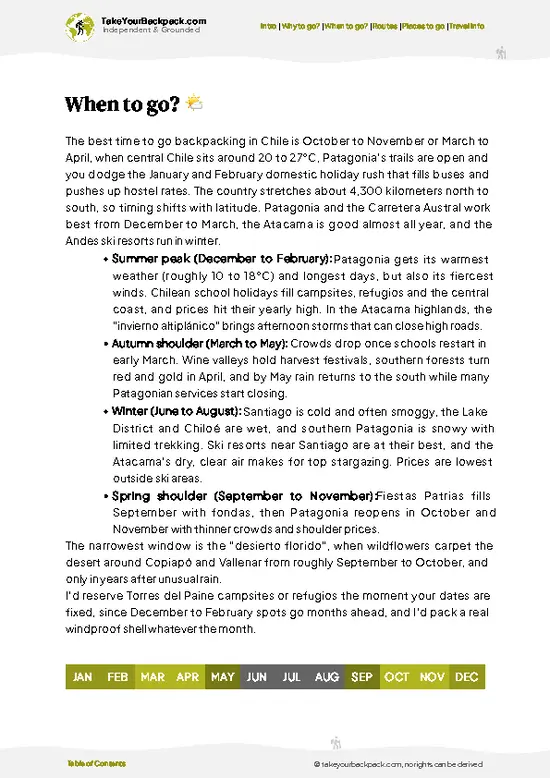
  • Weather: Santiago’s Mediterranean climate means dry summers and wet winters. From December to February, expect clear skies and almost no rain, perfect for trekking and city strolls. Winters (June to August) bring rain and chill, with temperatures dipping to 5°C (41°F), which can limit outdoor plans.

  • Temperature: Summer highs hover around 29°C (84°F), ideal for long days outside but can get hot midday. Spring and autumn offer a comfortable 15-25°C (59-77°F), balancing warmth and freshness without the summer scorch.

  • Daylight Hours: Summer days stretch to about 14 hours, giving you more daylight for adventures. Winter shrinks daylight to roughly 10 hours, so plan your hikes and city tours accordingly.

  • Crowds: Peak tourist season aligns with summer, so expect busier streets and higher
read more 👉

  • Weather: Santiago’s Mediterranean climate means dry summers and wet winters. From December to February, expect clear skies and almost no rain, perfect for trekking and city strolls. Winters (June to August) bring rain and chill, with temperatures dipping to 5°C (41°F), which can limit outdoor plans.

  • Temperature: Summer highs hover around 29°C (84°F), ideal for long days outside but can get hot midday. Spring and autumn offer a comfortable 15-25°C (59-77°F), balancing warmth and freshness without the summer scorch.

  • Daylight Hours: Summer days stretch to about 14 hours, giving you more daylight for adventures. Winter shrinks daylight to roughly 10 hours, so plan your hikes and city tours accordingly.

  • Crowds: Peak tourist season aligns with summer, so expect busier streets and higher prices. Shoulder seasons (spring and autumn) see fewer tourists, letting you enjoy the city’s vibe without the crush.

  • Seasonal Activities: Summer opens up outdoor festivals, vineyard tours, and mountain hikes. Winter invites skiing in the nearby Andes but limits city exploration due to cold and rain.

  • Price Fluctuations: Accommodation and flights spike in summer, especially December and January. Booking in shoulder seasons can save you 20-40%, making your budget stretch further without sacrificing experience.


Pro-tip: Aim for late spring or early autumn—mild weather, manageable crowds, and better prices create the sweet spot where comfort and value meet.


source: climatestotravel.comJANJanuary: highly recommended for travelingFEBFebruary: highly recommended for travelingMARMarch: highly recommended for travelingAPRApril: excellent for travelingMAYMay: good for travelingJUNJune: fair for travelingJULJuly: fair for travelingAUGAugust: fair for travelingSEPSeptember: highly recommended for travelingOCTOctober: excellent for travelingNOVNovember: highly recommended for travelingDECDecember: highly recommended for traveling
chile-city-santiago
© Google |

✈️ The backpacker research shortcutChile Travel Guide

An offline-friendly backpacking guide with optimized travel routes, ranked highlights, transport advice, and the best areas to stay.
example page 0 from our offline Travel Guide for Chile
example page 1 from our offline Travel Guide for Chile
example page 2 from our offline Travel Guide for Chile
example page 3 from our offline Travel Guide for Chile
example page 4 from our offline Travel Guide for Chile
example page 5 from our offline Travel Guide for Chile
example page 6 from our offline Travel Guide for Chile
example page 7 from our offline Travel Guide for Chile
The digital guide (471 pages) contains:
120 highlights, ranked by travel appeal
Optimized 7, 14 & 21-day travel routes
Cities, national parks, landmarks, beaches
How to get around
Offline-friendly for travel without Wi-Fi
👉 Click to see all 30+ guide features

📅 Plan smarter in minutes, not weeks
Month by month travel advice
Festivals & national holidays
Budget expectations

🗺️ Go to the right places, skip the overrated ones
Honest pros & cons of destinations
Top hikes, parks & viewpoints
Lesser-known places most travelers miss
Clear “worth it vs skip it” guidance

🛏️ Travel smoothly without rookie mistakes
Best areas to stay
Transport systems explained simply
Common scams & safety advice
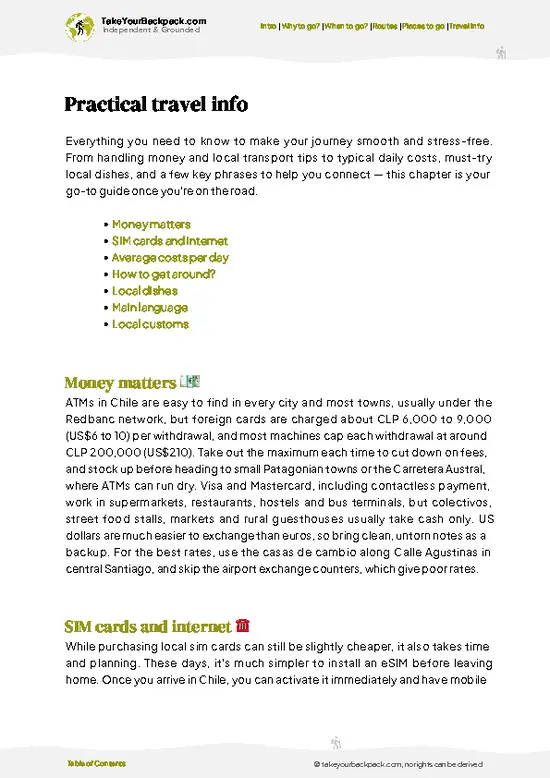
SIM cards, money & practical tips

🌍 Understand the country, not just visit it
Culture & traditions
52 Essential phrases & customs
Festivals worth planning around
Traveler-friendly historical context
Insights that make places more meaningful

📱 Built for real travel conditions
Fully downloadable PDF
Works completely offline
Optimized for phone use
Useful in remote areas & buses
Everything in one place
Save weeks of stressful planning
Get instant access to your full guide. 30‑day money-back guarantee.


By proceeding you agree to our terms.
Sent to your inbox immediately after payment • 100% Secure Checkout
Best Backpacking Travel Advisor 2025 tourism awardBest Backpacking
Travel Advisor
2025
What others say about Take Your Backpack Guides:
⭐⭐⭐⭐⭐
Fantastic, amazing amount of information!
⭐⭐⭐⭐⭐
My goodness this is amazing, it's what I've been looking for hats off too you!
⭐⭐⭐⭐⭐
I think this is absolutely BRILLIANT
⭐⭐⭐⭐
Very complete and informative. It's still missing places, but I gotta to commend you
⭐⭐⭐⭐⭐
This is truly amazing, thank you, can't wait to explore it with my kids!
⭐⭐⭐⭐⭐
Awesome resource, thank you!
⭐⭐⭐⭐⭐
This is amazing! Can't wait to explore the ones I haven't seen
⭐⭐⭐⭐
I love this! Well done, great idea.
⭐⭐⭐⭐⭐
Thanks for taking the time to make this gem!
⭐⭐⭐⭐⭐
This might be the best website I've ever seen.
⭐⭐⭐⭐⭐
Congratulations, and thank you so much for your work; it's incredibly valuable.
⭐⭐⭐⭐
In all seriousness I think you did a great job pointing out the important spots
⭐⭐⭐⭐⭐
10/10 very good
⭐⭐⭐⭐⭐
As someone who's only just starting to visit regularly this is awesome, thank you.
⭐⭐⭐⭐
Thank you very much! I'm going to visit my dad, it's going to be very useful!
⭐⭐⭐⭐⭐
This is really cool! We'll be travelling for the first time and this definitely come in handy.
⭐⭐⭐⭐⭐
You are now our minister of culture, congratulations 👨‍💼
⭐⭐⭐⭐⭐
Just wanted to tell you that this is a pearl! Going to follow your recommendations.
⭐⭐⭐⭐⭐
This is so cool. I'll definitely be using the resource for my travels soon.
⭐⭐⭐⭐⭐
This is very impressive! Good work.
⭐⭐⭐⭐⭐
This is an amazing and informative site. Very well done!

🛏️ Where to stay?Best areas to stay in Chile

Santiago’s backpacker sweet spot is undeniably the Bellavista neighborhood. It’s the city’s social hub for budget travelers, mixing safety with a lively, youthful energy that makes solo travel feel less like a solo mission. Bellavista’s streets pulse with street art, affordable eateries, and bars where you can swap stories with fellow wanderers. Hostels cluster here, offering everything from dorms to private rooms, so you get options without sacrificing your wallet or your chance to meet people.

Compared to downtown Santiago, Bellavista feels less corporate and more relaxed. Downtown has its … read more 👉
Santiago’s backpacker sweet spot is undeniably the Bellavista neighborhood. It’s the city’s social hub for budget travelers, mixing safety with a lively, youthful energy that makes solo travel feel less like a solo mission. Bellavista’s streets pulse with street art, affordable eateries, and bars where you can swap stories with fellow wanderers. Hostels cluster here, offering everything from dorms to private rooms, so you get options without sacrificing your wallet or your chance to meet people.

Compared to downtown Santiago, Bellavista feels less corporate and more relaxed. Downtown has its perks—close to museums and transport—but it’s busier, less intimate, and the nightlife is more subdued. Plus, downtown’s safety at night can be hit-or-miss, which is a crucial factor when you’re carrying your gear and your peace of mind.

Another contender is Lastarria, a bit quieter but still buzzing with cafes, theaters, and a bohemian vibe. It’s a solid choice if you want a balance between social life and chill time. Hostels here tend to be smaller, which means fewer crowds but a more curated vibe.

In short, Bellavista wins for the classic backpacker experience: safe streets, social hostels, and a vibe that keeps you engaged without draining your budget or your energy. It’s the place where logistics and lifestyle sync up perfectly for the savvy traveler.

🚌 Getting aroundHow to get from A to B

Santiago moves like a city caught between two tempos: the sharp tick of a clock and the ebb of spontaneous street life. The mornings are regimented, with commuters flowing in tight streams toward office towers and metro stations, all synchronized to the city’s pulse of work and deadlines. But as the day unfolds, that rigid rhythm loosens. Sidewalk vendors pop up, conversations spill onto plazas, and the city’s chaotic intuition takes over. For a traveler, this means your transit choices aren’t just about getting from A to B—they’re about deciding how much time, money, and comfort you’re willing to trade to tap into Santiago’s dual nature.


  • Metro: The backbone of Santiago’s transit, the metro runs from about 6 AM to midnight. It’s fast, reliable, and dirt cheap—around 800 CLP (about $1 USD)
read more 👉
Santiago moves like a city caught between two tempos: the sharp tick of a clock and the ebb of spontaneous street life. The mornings are regimented, with commuters flowing in tight streams toward office towers and metro stations, all synchronized to the city’s pulse of work and deadlines. But as the day unfolds, that rigid rhythm loosens. Sidewalk vendors pop up, conversations spill onto plazas, and the city’s chaotic intuition takes over. For a traveler, this means your transit choices aren’t just about getting from A to B—they’re about deciding how much time, money, and comfort you’re willing to trade to tap into Santiago’s dual nature.


  • Metro: The backbone of Santiago’s transit, the metro runs from about 6 AM to midnight. It’s fast, reliable, and dirt cheap—around 800 CLP (about $1 USD) per ride. The trains are clean and air-conditioned, making it the best balance of speed and comfort for budget travelers. Expect rush hour crowds, but the frequency (every 3-5 minutes) keeps things moving.


  • Transantiago Buses: These buses cover the city extensively but come with a trade-off. They’re slower and less predictable than the metro, especially during peak hours when traffic snarls. Fares are similar to the metro, but comfort varies wildly—some buses are modern and quiet, others are cramped and noisy. Use them if you want to save money and don’t mind sacrificing time or comfort.


  • Walking: Santiago’s downtown is surprisingly walkable, with wide sidewalks and plenty of shade trees. Walking costs nothing and lets you soak in the city’s street life, but it’s only practical for short distances or when you want to explore neighborhoods like Bellavista or Lastarria. Factor in the summer heat or winter chill—comfort here depends on the weather and your stamina.


  • Taxi and Ride-Sharing (Uber, Didi): These offer door-to-door convenience and comfort but at a steep price compared to public transit. Expect to pay 3-5 times more than a bus or metro ride. They’re best for late-night trips or when you’re hauling heavy gear. Traffic can turn a quick ride into a slow crawl, so time savings aren’t guaranteed.


  • Bicycle: Santiago has been expanding its bike lanes, especially in central areas. Renting a bike is affordable and gives you freedom to move at your own pace without the hassle of traffic jams. It’s a solid middle ground—more comfort and speed than walking, less money and stress than taxis. Just watch out for busy intersections and hills.


Understanding these options as a trade-off matrix—where time, money, and comfort are the currencies—lets you play Santiago’s transit system like a pro. Want to save cash and don’t mind a slower pace? Bus and walking are your allies. Need speed and comfort but can stretch your budget? The metro or a bike rental will serve you well. And if you’re juggling heavy bags or late hours, taxis and ride-shares are your safety net, albeit an expensive one. The city’s flow rewards those who see transit not as a chore but as a strategic choice in the game of travel.

👛 Costs (as of 23 January 2026)Travel costs and budget guide for Santiago

Backpacking in Santiago, Chile, comes with a clear set of trade-offs between time, money, and comfort. Knowing the numbers upfront lets you play the system smartly, picking what’s worth your cash and what’s not.
  • Dorm Accommodation (High Season): Expect to pay around $12 to $18 USD per night. High season means more tourists, so prices tick up, especially in popular neighborhoods like Bellavista or Lastarria.
  • Dorm Accommodation (Off-Season): Dropping to about $8 to $12 USD per night, off-season rates give you a break but might come with fewer social vibes or less availability in top spots.
  • Meals: Street food and casual eateries run about $3 to $7 USD per meal. If you’re hitting local markets or small restaurants, you can eat well without breaking $15 a day. Splurging on a nicer sit-down meal
read more 👉
Backpacking in Santiago, Chile, comes with a clear set of trade-offs between time, money, and comfort. Knowing the numbers upfront lets you play the system smartly, picking what’s worth your cash and what’s not.
  • Dorm Accommodation (High Season): Expect to pay around $12 to $18 USD per night. High season means more tourists, so prices tick up, especially in popular neighborhoods like Bellavista or Lastarria.
  • Dorm Accommodation (Off-Season): Dropping to about $8 to $12 USD per night, off-season rates give you a break but might come with fewer social vibes or less availability in top spots.
  • Meals: Street food and casual eateries run about $3 to $7 USD per meal. If you’re hitting local markets or small restaurants, you can eat well without breaking $15 a day. Splurging on a nicer sit-down meal jumps the cost significantly.
  • Local Transport: Single metro or bus rides cost roughly $0.80 to $1.00 USD. Santiago’s public transport is efficient, so hopping on and off is cheap and fast, saving you time and taxi fares.
  • City Transport Pass: A rechargeable Bip! card for unlimited metro and bus rides costs about $30 USD for a week, which is a solid deal if you’re moving around a lot.
  • Basic Activities/Entry Fees: Museums and cultural sites typically charge between $3 and $7 USD. Some parks and viewpoints are free, so you can mix paid and no-cost options to balance your budget.
  • Miscellaneous Expenses: Think water, snacks, occasional coffee, or small souvenirs—budget around $5 to $10 USD daily. These add up but are manageable with a bit of discipline.

Add it all up, and you’re looking at roughly $25 to $50 USD per day, depending on how much you lean into comfort or scrimp on extras. Santiago rewards those who know where to spend smartly: a few dollars more on a good hostel or a cultural entry can transform your experience, while savvy use of public transport and street food keeps your wallet happy.


source: chile.travel
⚠️ Prices can change and everyone travels differently, so take this as a rough guide. Hope it helps you plan your adventure!

🚌 Day tripsBest day trips from Santiago

Santiago, Chile, is a fantastic launchpad for day trips that blend adventure with cultural immersion. You can easily escape the city’s hustle and bustle while diving into the stunning landscapes and rich history of the surrounding areas. Here are some top-notch day trips that every backpacker should consider.

Valparaíso
Just a couple of hours from Santiago, Valparaíso is a colorful port city that feels like a living canvas. Its steep hills are adorned with vibrant street art and quirky architecture. Stroll through the winding streets, grab a coffee at a local café, and soak in the bohemian vibe. The train ride is budget-friendly, costing around $5 each way, and the best time to visit is during the warmer months from October to March. A common mistake? Skipping the funiculars that take you … read more 👉
Santiago, Chile, is a fantastic launchpad for day trips that blend adventure with cultural immersion. You can easily escape the city’s hustle and bustle while diving into the stunning landscapes and rich history of the surrounding areas. Here are some top-notch day trips that every backpacker should consider.

Valparaíso
Just a couple of hours from Santiago, Valparaíso is a colorful port city that feels like a living canvas. Its steep hills are adorned with vibrant street art and quirky architecture. Stroll through the winding streets, grab a coffee at a local café, and soak in the bohemian vibe. The train ride is budget-friendly, costing around $5 each way, and the best time to visit is during the warmer months from October to March. A common mistake? Skipping the funiculars that take you up the hills for breathtaking views.


Cajón del Maipo
For those craving nature, Cajón del Maipo is a paradise just an hour away. This stunning canyon offers hiking, hot springs, and the chance to see the majestic Andes up close. You can spend the day hiking to the Embalse El Yeso reservoir or relaxing in the hot springs. Expect to spend around $15 on transportation and entry fees. The best time to go is in spring or fall when the weather is mild. Many first-timers underestimate the chill in the air, so pack layers!


Pomaire
If you’re into local crafts and cuisine, Pomaire is a must-visit. This charming village is famous for its pottery and traditional Chilean dishes, like empanadas and pastel de choclo. It’s only about an hour from Santiago, making it an easy trip. You can enjoy a hearty meal for around $10 and browse the artisan shops without breaking the bank. The best time to visit is on weekends when the market is bustling. A common oversight is not trying the local food; it’s a highlight!


San José de Maipo
Another gem in the Cajón del Maipo region, San José de Maipo offers a mix of adventure and relaxation. You can hike, bike, or simply enjoy the riverside scenery. It’s about an hour from Santiago, and you can easily spend less than $20 on transportation and activities. Spring and summer are ideal for outdoor fun. Many backpackers miss the chance to explore the local trails, so don’t just stick to the main roads.


La Campana National Park
A bit further afield, La Campana National Park is worth the trip for its hiking trails and diverse flora and fauna. It’s about an hour and a half from Santiago, with entry fees around $5. The best time to visit is during the cooler months when the trails are less crowded. First-timers often underestimate the park’s size, so plan your hike accordingly to avoid getting lost.
Want to know what more Chile offers?
The Chile Travel Guide describes 120 highlights, from cities to national parks, from beaches to hikes

Get the Travel Guide -

🍲 FoodLocal Cuisine & Drinks

In Santiago, food and drink are a vibrant part of the city’s pulse. You can’t visit without trying empanadas, those flaky pastries filled with everything from savory meat to cheese and spinach. Grab one from a street vendor, and you’ll experience the joy of a warm, crispy bite that’s both comforting and energizing.

Then there’s pastel de choclo, a corn pie that layers ground meat, olives, and hard-boiled eggs, topped with a sweet corn mixture. It’s a dish that tells stories of home and tradition, often enjoyed in casual eateries where locals gather.

For drinks, don’t miss pisco sour, a cocktail that’s a staple in Chilean culture. The mix of pisco, lime juice, sugar, and egg white creates a frothy delight that’s both refreshing and potent. Sip it at a local bar, where the atmosphere buzzes … read more 👉
In Santiago, food and drink are a vibrant part of the city’s pulse. You can’t visit without trying empanadas, those flaky pastries filled with everything from savory meat to cheese and spinach. Grab one from a street vendor, and you’ll experience the joy of a warm, crispy bite that’s both comforting and energizing.

Then there’s pastel de choclo, a corn pie that layers ground meat, olives, and hard-boiled eggs, topped with a sweet corn mixture. It’s a dish that tells stories of home and tradition, often enjoyed in casual eateries where locals gather.

For drinks, don’t miss pisco sour, a cocktail that’s a staple in Chilean culture. The mix of pisco, lime juice, sugar, and egg white creates a frothy delight that’s both refreshing and potent. Sip it at a local bar, where the atmosphere buzzes with laughter and chatter.

Eating customs here lean towards sharing. It’s common to order a variety of dishes to pass around the table, fostering a sense of community. And don’t forget to embrace the tercer tiempo—the third time—where meals extend into conversation and connection, often over a glass of wine or a round of beers.

In Santiago, every bite and sip is a chance to dive deeper into the local culture. Embrace it!

🛡️ SafetyStaying Safe: What Travelers Should Know

Santiago is generally safe for backpackers, but a bit of awareness goes a long way. Stick to well-lit areas, especially in neighborhoods like Bellavista and Lastarria after dark. These spots are lively, but it’s wise to keep your wits about you. If you’re solo, consider using rideshare apps instead of walking late at night.

Common scams include the classic distraction technique. Someone might bump into you while an accomplice swipes your bag. Stay alert in crowded places like Plaza de Armas and markets. Keep your belongings close, ideally in a front-facing pack.

Annoyances can pop up, too. Street vendors can be persistent, but a polite “no, gracias” usually does the trick. Taxis can sometimes overcharge tourists, so use an app or ask for a fare estimate before getting in.

By staying … read more 👉
Santiago is generally safe for backpackers, but a bit of awareness goes a long way. Stick to well-lit areas, especially in neighborhoods like Bellavista and Lastarria after dark. These spots are lively, but it’s wise to keep your wits about you. If you’re solo, consider using rideshare apps instead of walking late at night.

Common scams include the classic distraction technique. Someone might bump into you while an accomplice swipes your bag. Stay alert in crowded places like Plaza de Armas and markets. Keep your belongings close, ideally in a front-facing pack.

Annoyances can pop up, too. Street vendors can be persistent, but a polite “no, gracias” usually does the trick. Taxis can sometimes overcharge tourists, so use an app or ask for a fare estimate before getting in.

By staying aware and carrying yourself confidently, you’ll navigate Santiago smoothly, enjoying its vibrant culture without unnecessary stress.

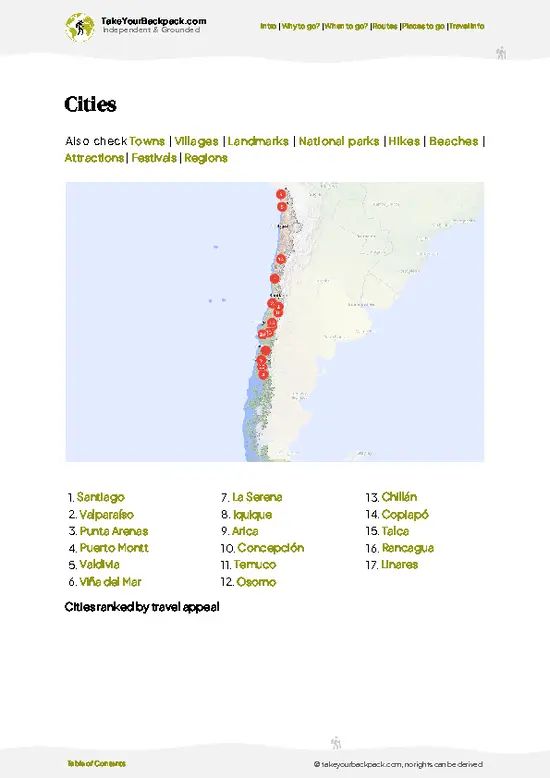
Other Chilean cities near Santiago

Explore more nearby:

  • Melipilla—farmland, rodeo arenas, small-town plazas| 58 km away
  • Rancagua—mining heritage, central plazas, agricultural markets| 80 km away
  • Viña del Mar—urban beaches, casino, manicured gardens| 95 km away

💡 Not sure where to go next?
Create a personalized itinerary for Chile including Santiago and the places that fit your trip.

Generate my itinerary

👉 Discover all cities

Or checkout all Chile has to offer (think cities, towns, villages, national parks, hikes, beaches, festivals)
Country photo of Chile

We 💚 feedbackKey takeaways before you go

Santiago is a city that pulses with energy and culture, where you can sip a pisco sour while gazing at the Andes. The street art is a canvas of stories, and the food scene is a delightful adventure. But be ready for the smog; it can be a real downer, especially if you’re sensitive to air quality. Embrace the grit, and you’ll find the heart of Chile beating strong.

✈️ When did I visit Chile?
I have visited Chile, together with Argentina, in September 2012.

✍️ Help improve this page!
The information on this page is based on my own backpacking experience in Chile, supplemented with up-to-date research and feedback from other travelers. Travel details can change, so if you notice anything outdated or incomplete, feel free to let me know.


🙋‍♂️ Give feedback

👋 Meet the founderWho’s Behind Take Your Backpack?

Johan, backpacker and founder of TakeYourBackpackHi, I’m Johan (Netherlands 🇳🇱), the creator of TakeYourBackpack. Over the past decade, I’ve backpacked through 80+ countries across six continents, gaining extensive experience with independent travel, long-term trips, and overland routes.

This site is built on a combination of firsthand travel experience and carefully curated insights from other backpackers. Many guides are based on places I’ve personally visited, while others bring together tips, observations, and practical advice shared by trusted travelers I’ve met along the way.

The goal is to provide realistic, experience-driven guidance — not generic itineraries — so you can explore destinations with better context, clearer expectations, and more confidence.

Get full Chile guide •
Instant download • 120 highlights • Full Offline guide