×

Chile🇨🇱 | citiesValparaísoHillside funiculars, street-art lanes, Neruda’s La Sebastiana, harbor boats | things to do and best time to go

Explore SantiagoExplore Valdivia

Backpacking in Valparaíso
UNESCO World Heritage site
🏆 Top pickcity ranked #2
By Johan Kruseman 🇳🇱 | Updated October 19, 2026

The ascensores of Valparaíso, the creaky funiculars that climb its hills, still take a coin or a card at a little booth at the bottom, and the wooden cabins at Ascensor Concepción tilt at an angle that makes your stomach register the slope before your eyes do. The city sits on Chile’s central coast, about 120 kilometers west of Santiago, and it is best known for its steep, graffiti-covered hills and its crumbling port glamour. It suits backpackers who like texture, street art and walking uphill, and it frustrates anyone who wants tidy, flat and polished. One afternoon I bought a completo, a hot dog drowned in avocado and mayonnaise, for about US$3 from a stall near Plaza Sotomayor, and it beat the US$12 sit-down lunch two blocks away because it was quicker, cheaper and messier in the right way. Take the stall, keep the money for a funicular ride and a pisco sour at sunset. Before you go, pack shoes with real grip, because the cobbles get slick.

Discover everything you want to know in the 📖 Chile Travel Guide.


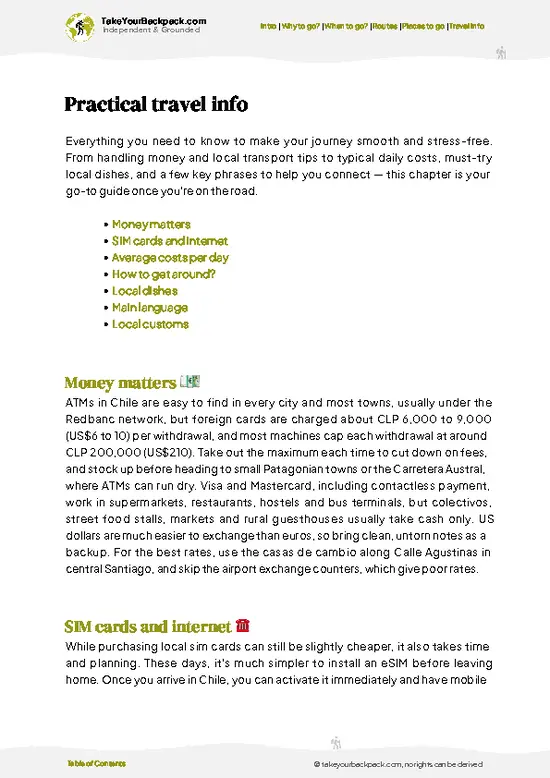
example page 0 from our offline Travel Guide for Chile
example page 1 from our offline Travel Guide for Chile
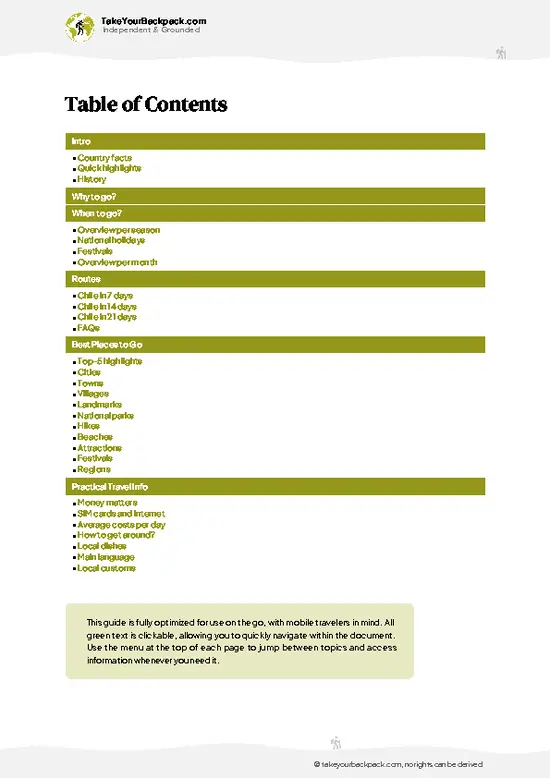
example page 2 from our offline Travel Guide for Chile
example page 3 from our offline Travel Guide for Chile
example page 4 from our offline Travel Guide for Chile
example page 5 from our offline Travel Guide for Chile
example page 6 from our offline Travel Guide for Chile
example page 7 from our offline Travel Guide for Chile
Loading the map 🌍
CLICK TO FILTER
cities
towns
villages
landmarks
national parks
hikes
beaches
attractions
festivals
regions
SHOW COUNTRY’S BESTSHOW ALL

✨ Why go?
Ranked #2 city in Chile
The unique appeal for travelers

Valparaíso earns its place on a Chile route because the entire city is a walk-through gallery, and you do not need a tour to see it. Dozens of hills hold murals, stairways and tilted houses in clashing colors, so a free wander can fill two full days without repeating a street. The hostel scene is the second draw. Many occupy old hillside mansions in the neighborhoods of Cerro Alegre and Cerro Concepción, which means a terrace with a harbor view comes with the bunk, and the communal kitchens make it easy to find people to share a bus to Viña del Mar or a night out with. Food and nightlife cluster in the flat port area and around Cerro Bellavista, with small seafood joints, dive bars and live music most nights. It is also a smart basecamp when you want a breather from Santiago, since buses run … read more 👉
Valparaíso earns its place on a Chile route because the entire city is a walk-through gallery, and you do not need a tour to see it. Dozens of hills hold murals, stairways and tilted houses in clashing colors, so a free wander can fill two full days without repeating a street. The hostel scene is the second draw. Many occupy old hillside mansions in the neighborhoods of Cerro Alegre and Cerro Concepción, which means a terrace with a harbor view comes with the bunk, and the communal kitchens make it easy to find people to share a bus to Viña del Mar or a night out with. Food and nightlife cluster in the flat port area and around Cerro Bellavista, with small seafood joints, dive bars and live music most nights. It is also a smart basecamp when you want a breather from Santiago, since buses run constantly between the two. If you need national parks or empty trails, this is not your stop. If you want grit, color and a harbor that never goes quiet, it is worth building in a few nights.

💡 HighlightsWhat this place is best known for

  1. Ascensores (funiculars): The city’s best-known icon, with several of the old hillside lifts still running, including Concepción, Artillería and Reina Victoria. A ride costs roughly US$0.30 to 0.50 and takes a couple of minutes. Go in the morning when cabins are quiet; allow 1 to 2 hours to ride a few.
  2. Cerro Alegre and Cerro Concepción: Pastel Victorian houses, galleries, cafés and the densest street art. Free to wander, best in the morning light or late afternoon. Allow 2 to 3 hours.
  3. La Sebastiana: Poet Pablo Neruda’s tall, eccentric house on Cerro Bellavista, packed with odd collections and a sweeping view. Entry is about US$9 to 10, with an audio guide included. Allow 1 to 1.5 hours; weekday mornings are calmer.
  4. Paseo Gervasoni and Paseo Atkinson: Two viewing promenades on Cerro Concepción,
… read more 👉
  1. Ascensores (funiculars): The city’s best-known icon, with several of the old hillside lifts still running, including Concepción, Artillería and Reina Victoria. A ride costs roughly US$0.30 to 0.50 and takes a couple of minutes. Go in the morning when cabins are quiet; allow 1 to 2 hours to ride a few.
  2. Cerro Alegre and Cerro Concepción: Pastel Victorian houses, galleries, cafés and the densest street art. Free to wander, best in the morning light or late afternoon. Allow 2 to 3 hours.
  3. La Sebastiana: Poet Pablo Neruda’s tall, eccentric house on Cerro Bellavista, packed with odd collections and a sweeping view. Entry is about US$9 to 10, with an audio guide included. Allow 1 to 1.5 hours; weekday mornings are calmer.
  4. Paseo Gervasoni and Paseo Atkinson: Two viewing promenades on Cerro Concepción, lined with cafés. Free to walk, lovely near dusk. Allow 30 to 45 minutes.
  5. Plaza Sotomayor and the Monumento a los Héroes de Iquique: The port’s formal square, ringed by the Navy headquarters and a crypt beneath the monument. Free, open daytime, 30 minutes.
  6. Museo a Cielo Abierto (Open Air Museum): A trail of murals by Chilean artists along Cerro Bellavista’s lanes. Free, best in daylight, 1 to 2 hours.
  7. Harbor boat tour: Small boats leave from Muelle Prat and circle navy ships and sea lions. Expect US$3 to 5 for about 30 to 40 minutes, best on a clear morning.
  8. Palacio Baburizza (Museo de Bellas Artes): An Art Nouveau mansion on Cerro Alegre, reached by the Paseo Yugoslavo. Entry for foreign visitors is about US$6, with 45 minutes enough. Closed Mondays.
Viña del Mar, Concón’s dunes and Isla Negra, Neruda’s coastal house, all make easy day trips from the city. If time is short, skip the harbor boat tour and spend it on the hills.
Spotted a mistake or missing something? Contact us.

Things to do in Valparaíso

Ratings based on Tripadvisor reviews. When you book through this link, you support our work at no extra cost to you.

🏘️ NeighborhoodsUnderstanding the local layout

Valparaíso spreads over about 40 hills above a narrow flat strip, so the area you pick decides how many staircases and ascensores you climb each day. Here is how the main areas compare.
  • El Plan: The flat downtown around Plaza Sotomayor and Avenida Pedro Montt has the port, banks, cheap lunch counters and the Mercado Cardonal. It is the easiest area to walk, but it empties and feels rough after dark. Use it by day for errands and food, not as a base for wandering.
  • Cerro Alegre: The most photographed hill, with painted houses, galleries, cafés and wine bars along its steep lanes. It is pricey for a coffee, yet the best value for a first afternoon because everything sits within a few flat blocks. Take the Reina Victoria or Peral ascensor up.
  • Cerro Concepción: Right next to Alegre, quieter and slightly
… read more 👉
Valparaíso spreads over about 40 hills above a narrow flat strip, so the area you pick decides how many staircases and ascensores you climb each day. Here is how the main areas compare.
  • El Plan: The flat downtown around Plaza Sotomayor and Avenida Pedro Montt has the port, banks, cheap lunch counters and the Mercado Cardonal. It is the easiest area to walk, but it empties and feels rough after dark. Use it by day for errands and food, not as a base for wandering.
  • Cerro Alegre: The most photographed hill, with painted houses, galleries, cafés and wine bars along its steep lanes. It is pricey for a coffee, yet the best value for a first afternoon because everything sits within a few flat blocks. Take the Reina Victoria or Peral ascensor up.
  • Cerro Concepción: Right next to Alegre, quieter and slightly cheaper, with the best views over the bay from Paseo Gervasoni and Paseo Atkinson. Combine both hills in one walk and you save a half day.
  • Cerro Bellavista: Home to La Sebastiana, Neruda’s house, and a cluster of murals in the Museo a Cielo Abierto. It is residential and calm, and a longer, steeper climb, so go by colectivo or on foot downhill.
  • Cerro Florida and Cerro Cárcel: Cárcel is a former prison turned cultural park, with free events and good views. Florida has a neighborhood feel. Both cost nothing to visit and reward a downhill stroll.

⌛️ 1 daySeeing the highlights in 24 hours

9:00 AM, Cerro Concepción via Ascensor Concepción: Start with the oldest funicular still running, and do not skip it. Ride up, then walk the Paseo Gervasoni and Paseo Atkinson for harbor views over coffee at a terrace café. It is worth doing early because the light is soft and the lanes are empty.

10:45 AM, Cerro Alegre murals: Stroll downhill through the neighboring lanes, past painted stairways and the Palacio Baburizza. Wander without a map for the best finds. It is a short walk between the two hills.

12:30 PM, Lunch near Plaza Echaurren: Drop to the old port and eat fresh fish or a plate of seafood at a plain market-style joint. The area looks rough around the edges, but it is where locals eat.

2:00 PM, Plaza Sotomayor and Muelle Prat: Walk a few minutes to the navy monument and the … read more 👉
9:00 AM, Cerro Concepción via Ascensor Concepción: Start with the oldest funicular still running, and do not skip it. Ride up, then walk the Paseo Gervasoni and Paseo Atkinson for harbor views over coffee at a terrace café. It is worth doing early because the light is soft and the lanes are empty.

10:45 AM, Cerro Alegre murals: Stroll downhill through the neighboring lanes, past painted stairways and the Palacio Baburizza. Wander without a map for the best finds. It is a short walk between the two hills.

12:30 PM, Lunch near Plaza Echaurren: Drop to the old port and eat fresh fish or a plate of seafood at a plain market-style joint. The area looks rough around the edges, but it is where locals eat.

2:00 PM, Plaza Sotomayor and Muelle Prat: Walk a few minutes to the navy monument and the pier, then take a short boat loop if you want to see the cargo cranes and sea lions up close.

3:30 PM, Cementerio de Disidentes and Cementerio 1: Climb Cerro Panteón to see the graveyards of Protestants and early foreign residents. Few tourists come, and the weathered tombs and city views make it quiet and absorbing. Stay on the main paths and go before late afternoon.

5:30 PM, Cerro Bellavista: Walk the Open Air Museum murals, then reach La Sebastiana if it is still open, or simply enjoy the neighborhood’s steep lanes.

7:30 PM, Dinner and a pisco sour: Head back down to the flat streets near Avenida Almirante Montt and pick a bar with live music. Take a taxi back up the hill after dark.

🌤️ When to go?Weather, crowds, and seasonal trade-offs

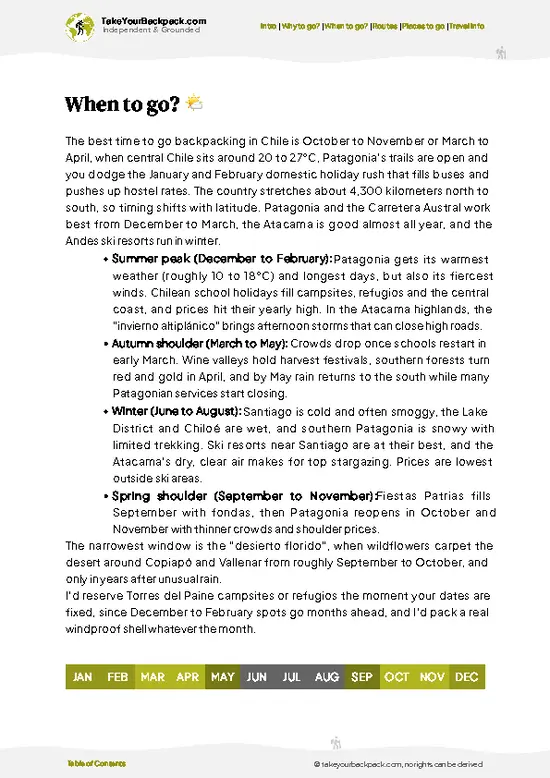
Late spring through early autumn, roughly November to March, gives Valparaíso its driest, sunniest weather.
  • Summer (Dec to Feb): Highs of 20 to 25°C (68 to 77°F), nights near 12°C (54°F), and long daylight past 9 pm. The coast is crowded, especially in January, and dorm prices climb. New Year’s fireworks over the bay draw huge crowds.
  • Autumn (Mar to May): Highs of 17 to 23°C (63 to 73°F), clearer skies, fewer people and lower prices. Hill walking is at its best.
  • Winter (Jun to Aug): Highs of 13 to 16°C (55 to 61°F), lows near 7°C (45°F), with most of the rain and strong wind. Daylight ends around 6 pm, and steep stairs get slick. Beds are cheapest.
  • Spring (Sep to Nov): Highs of 15 to 20°C (59 to 68°F), mild and often overcast in the morning with coastal fog (camanchaca) that burns off by midday.
… read more 👉
Late spring through early autumn, roughly November to March, gives Valparaíso its driest, sunniest weather.
  • Summer (Dec to Feb): Highs of 20 to 25°C (68 to 77°F), nights near 12°C (54°F), and long daylight past 9 pm. The coast is crowded, especially in January, and dorm prices climb. New Year’s fireworks over the bay draw huge crowds.
  • Autumn (Mar to May): Highs of 17 to 23°C (63 to 73°F), clearer skies, fewer people and lower prices. Hill walking is at its best.
  • Winter (Jun to Aug): Highs of 13 to 16°C (55 to 61°F), lows near 7°C (45°F), with most of the rain and strong wind. Daylight ends around 6 pm, and steep stairs get slick. Beds are cheapest.
  • Spring (Sep to Nov): Highs of 15 to 20°C (59 to 68°F), mild and often overcast in the morning with coastal fog (camanchaca) that burns off by midday.
Book ahead for New Year’s Eve, and pack a windbreaker whatever the month.


source: climatestotravel.comJANJanuary: highly recommended for travelingFEBFebruary: highly recommended for travelingMARMarch: highly recommended for travelingAPRApril: highly recommended for travelingMAYMay: fair for travelingJUNJune: fair for travelingJULJuly: below average for travelingAUGAugust: below average for travelingSEPSeptember: good for travelingOCTOctober: highly recommended for travelingNOVNovember: highly recommended for travelingDECDecember: highly recommended for traveling
when-to-go

✈️ The backpacker research shortcutChile Travel Guide

An offline-friendly backpacking guide with optimized travel routes, ranked highlights, transport advice, and the best areas to stay.
example page 0 from our offline Travel Guide for Chile
example page 1 from our offline Travel Guide for Chile
example page 2 from our offline Travel Guide for Chile
example page 3 from our offline Travel Guide for Chile
example page 4 from our offline Travel Guide for Chile
example page 5 from our offline Travel Guide for Chile
example page 6 from our offline Travel Guide for Chile
example page 7 from our offline Travel Guide for Chile
The digital guide (333 pages) contains:
✅ 107 highlights, ranked by travel appeal
✅ Optimized 7, 14 & 21-day travel routes
✅ Cities, national parks, landmarks, beaches
✅ How to get around
✅ Offline-friendly for travel without Wi-Fi
👉 Click to see all 30+ guide features

📅 Plan smarter in minutes, not weeks
✅ Month by month travel advice
✅ Festivals & national holidays
✅ Budget expectations

🗺️ Go to the right places, skip the overrated ones
✅ Honest pros & cons of destinations
✅ Top hikes, parks & viewpoints
✅ Lesser-known places most travelers miss
✅ Clear “worth it vs skip it” guidance

🛏️ Travel smoothly without rookie mistakes
✅ Best areas to stay
✅ Transport systems explained simply
✅ Common scams & safety advice
✅ SIM cards, money & practical tips

🌍 Understand the country, not just visit it
✅ Culture & traditions
✅ 52 Essential phrases & customs
✅ Festivals worth planning around
✅ Traveler-friendly historical context
✅ Insights that make places more meaningful

📱 Built for real travel conditions
✅ Fully downloadable PDF
✅ Works completely offline
✅ Optimized for phone use
✅ Useful in remote areas & buses
✅ Everything in one place
Stop searching, start planning
Get instant access to your full guide. 30‑day money-back guarantee.
+ Add another guide for just

By proceeding you agree to our terms.
Sent to your inbox immediately after payment • 100% Secure Checkout
Best Backpacking Travel Advisor 2025 tourism awardBest Backpacking
Travel Advisor
2025
What others say about Take Your Backpack Guides:
⭐⭐⭐⭐⭐
Fantastic, amazing amount of information!
⭐⭐⭐⭐⭐
My goodness this is amazing, it's what I've been looking for hats off too you!
⭐⭐⭐⭐⭐
I think this is absolutely BRILLIANT
⭐⭐⭐⭐
Very complete and informative. It's still missing places, but I gotta to commend you
⭐⭐⭐⭐⭐
This is truly amazing, thank you, can't wait to explore it with my kids!
⭐⭐⭐⭐⭐
Awesome resource, thank you!
⭐⭐⭐⭐⭐
This is amazing! Can't wait to explore the ones I haven't seen
⭐⭐⭐⭐
I love this! Well done, great idea.
⭐⭐⭐⭐⭐
Thanks for taking the time to make this gem!
⭐⭐⭐⭐⭐
This might be the best website I've ever seen.
⭐⭐⭐⭐⭐
Congratulations, and thank you so much for your work; it's incredibly valuable.
⭐⭐⭐⭐
In all seriousness I think you did a great job pointing out the important spots
⭐⭐⭐⭐⭐
10/10 very good
⭐⭐⭐⭐⭐
As someone who's only just starting to visit regularly this is awesome, thank you.
⭐⭐⭐⭐
Thank you very much! I'm going to visit my dad, it's going to be very useful!
⭐⭐⭐⭐⭐
This is really cool! We'll be travelling for the first time and this definitely come in handy.
⭐⭐⭐⭐⭐
You are now our minister of culture, congratulations 👨‍💼
⭐⭐⭐⭐⭐
Just wanted to tell you that this is a pearl! Going to follow your recommendations.
⭐⭐⭐⭐⭐
This is so cool. I'll definitely be using the resource for my travels soon.
⭐⭐⭐⭐⭐
This is very impressive! Good work.
⭐⭐⭐⭐⭐
This is an amazing and informative site. Very well done!

🛏️ Where to stay?Best areas and accommodation options

Cerro Alegre and Cerro Concepción are the best bases for a budget stay in Valparaíso, with the densest cluster of hostels and guesthouses in the city. Dorm beds usually run US$12 to 22, and private rooms fill up quickly in January and February, so book ahead then.
Both hills are walkable at night within their main streets. They are well lit, busy with restaurants until late, and the common sense of keeping to the main paths after dark applies. Noise comes mostly from bars on weekends, so ask for a room at the back if you sleep lightly. Transport is easy: ascensores at the bottom of the hills take … read more 👉
Cerro Alegre and Cerro Concepción are the best bases for a budget stay in Valparaíso, with the densest cluster of hostels and guesthouses in the city. Dorm beds usually run US$12 to 22, and private rooms fill up quickly in January and February, so book ahead then.
Both hills are walkable at night within their main streets. They are well lit, busy with restaurants until late, and the common sense of keeping to the main paths after dark applies. Noise comes mostly from bars on weekends, so ask for a room at the back if you sleep lightly. Transport is easy: ascensores at the bottom of the hills take you to El Plan, and colectivos run along the ridge.
Cerro Bellavista is the quieter second choice, with fewer hostels and a more local feel, and it is a good fit if you want sleep over social life. The climb with a backpack is steep, so arrive by colectivo.
I would avoid sleeping in El Plan near the port. It is flat and convenient for the bus terminal, but the streets empty out at night and offer little life outside working hours.

🚌 Getting aroundHow to get from A to B

From the Valparaíso bus terminal on Avenida Pedro Montt, the center is a 10 to 15 minute walk along flat streets, or a short ride on any trolley or micro heading to Plaza Sotomayor. Buses from Santiago take about 1 hour 45 minutes to 2 hours and cost US$6 to 10. The city is hilly and compact, and the ground-level downtown is easy to cover, but the hills punish anyone who tries to do everything on foot. Public transport is frequent, cheap and rarely on a strict timetable, so plan for a little waiting.
  • Walking: Free, and the only way to see the murals and alleys of Cerro Alegre and Concepción. Stairs are steep, so wear real shoes and do hills in a loop, going up by transport and down on foot.
  • Ascensores: Historic funiculars connecting El Plan to the hills, costing about US$0.30 to 0.50 per ride.
… read more 👉
From the Valparaíso bus terminal on Avenida Pedro Montt, the center is a 10 to 15 minute walk along flat streets, or a short ride on any trolley or micro heading to Plaza Sotomayor. Buses from Santiago take about 1 hour 45 minutes to 2 hours and cost US$6 to 10. The city is hilly and compact, and the ground-level downtown is easy to cover, but the hills punish anyone who tries to do everything on foot. Public transport is frequent, cheap and rarely on a strict timetable, so plan for a little waiting.
  • Walking: Free, and the only way to see the murals and alleys of Cerro Alegre and Concepción. Stairs are steep, so wear real shoes and do hills in a loop, going up by transport and down on foot.
  • Ascensores: Historic funiculars connecting El Plan to the hills, costing about US$0.30 to 0.50 per ride. They save you roughly 10 to 15 minutes of climbing per hill, and they are the best value for the money. Hours run from about 7 am to 11 pm, and some close for maintenance.
  • Micros and trolleybuses: Municipal buses and electric trolleys cost about US$0.70 to 1. Hill micros mostly take cash, while trolleybuses take bank cards and QR codes. They cover longer distances such as Plaza Sotomayor to Cerro Bellavista. They are slower than colectivos in traffic, but the trolleys are the cheapest way along the flat strip.
  • Colectivos: Shared taxis on fixed routes, costing US$1 to 1.50. Faster than micros and they climb directly up the hill, so they suit tired legs at night. They are crowded, and you must know the route number.
  • Metro (Merval): Runs along the coast to Viña del Mar for about US$0.80 to 1.30, in around 20 to 25 minutes. It is the most comfortable and predictable option for the coastal trip, and runs until about 10:30 pm.
For most backpackers, the best combination is walking downhill, taking an ascensor up, and using the Merval for the coast. Taxis and rideshares work, but they cost five to ten times more for short rides.

👛 Costs (as of 19 October 2026)Money, prices, and spending tips

A backpacker in Valparaíso needs roughly US$60 to 68 a day, and about US$68 in high season for a mid-range backpacker spending.
CategoryBudget RangeLocal Reality
Dorm accommodation (high season)US$15 to 25Dec to Feb on Cerro Alegre and Concepción; book ahead.
Dorm accommodation (off-season)US$10 to 16June to August has many open beds and discounts.
MealsUS$15 to 25Set lunch at US$5 to 8, a street completo under US$3, dinner US$8 to 12.
Local transportUS$2 to 4Ascensores, micros and colectivos at US$0.30 to 1.50 a ride.
City transport passUS$2 to 3No pass is needed: micros take cash, and trolleybuses, ascensores and the Merval take bank cards or QR codes.
Basic activities and entry feesUS$5 to 12La Sebastiana costs about US$8 to 10; many murals and viewpoints are free; walking tours run on tips.
MiscellaneousUS$5
… read more 👉
A backpacker in Valparaíso needs roughly US$60 to 68 a day, and about US$68 in high season for a mid-range backpacker spending.
CategoryBudget RangeLocal Reality
Dorm accommodation (high season)US$15 to 25Dec to Feb on Cerro Alegre and Concepción; book ahead.
Dorm accommodation (off-season)US$10 to 16June to August has many open beds and discounts.
MealsUS$15 to 25Set lunch at US$5 to 8, a street completo under US$3, dinner US$8 to 12.
Local transportUS$2 to 4Ascensores, micros and colectivos at US$0.30 to 1.50 a ride.
City transport passUS$2 to 3No pass is needed: micros take cash, and trolleybuses, ascensores and the Merval take bank cards or QR codes.
Basic activities and entry feesUS$5 to 12La Sebastiana costs about US$8 to 10; many murals and viewpoints are free; walking tours run on tips.
MiscellaneousUS$5 to 10Laundry, a pisco sour at US$4 to 6, SIM card or snacks.
Total Daily BudgetUS$60 to 68Using the high season dorm rate in the mid range of each category.
Eat your main meal at lunch, since the set menu costs about half what the same food costs at dinner.


source: chile.travel
⚠️ Prices can change and everyone travels differently, so take this as a rough guide. Hope it helps you plan your adventure!

🚌 Day tripsBest day trips from Valparaíso

Valparaíso sits on the central coast, so most worthwhile day trips are an easy bus, Metro or colectivo ride away and you are back for dinner.
Viña del Mar:
The Merval train takes about 20 to 25 minutes and costs under US$1.50 each way. Come for the long beaches, Jardín Botánico Nacional and the Quinta Vergara park. A common mistake is going on a January weekend, when beaches are packed. Weekday mornings are calmer, and the whole day can cost US$10 to 15.
👉 Explore Viña del Mar
Isla Negra:
Pablo Neruda’s ocean-side house sits about 1.5 hours south by bus, with fares around US$4 to 6 each way. Entry is roughly US$10 to 15 and the visit is by timed guided tour, so reserve in advance, since walk-ups are often turned away. Any month works, though winter mornings can be foggy.

Concón:
About 40 minutes … read more 👉
Valparaíso sits on the central coast, so most worthwhile day trips are an easy bus, Metro or colectivo ride away and you are back for dinner.
Viña del Mar:
The Merval train takes about 20 to 25 minutes and costs under US$1.50 each way. Come for the long beaches, Jardín Botánico Nacional and the Quinta Vergara park. A common mistake is going on a January weekend, when beaches are packed. Weekday mornings are calmer, and the whole day can cost US$10 to 15.
👉 Explore Viña del Mar
Isla Negra:
Pablo Neruda’s ocean-side house sits about 1.5 hours south by bus, with fares around US$4 to 6 each way. Entry is roughly US$10 to 15 and the visit is by timed guided tour, so reserve in advance, since walk-ups are often turned away. Any month works, though winter mornings can be foggy.

Concón:
About 40 minutes north by bus or colectivo for US$1.50 to 3. The draw is the dunes, the seafood restaurants along Caleta Higuerillas and the cliff-edge views. Go at lunch, and budget US$12 to 20 for a fish plate and transport.

Casablanca Valley:
This wine valley is around 45 minutes inland by bus for US$3 to 4. Cool-climate whites, especially sauvignon blanc, are the specialty. Tastings cost US$10 to 25 and most need a booking. The harvest from March to April is the best moment, and the common mistake is trying to walk between wineries, which are far apart.

🍲 FoodLocal Flavors for Backpackers

Valparaíso’s food comes from the port, so seafood is the focus. Order chupe de jaiba, a rich baked crab stew with bread and cheese, or reineta, a local white fish, fried or grilled. Machas a la parmesana (razor clams under melted cheese) is a staple at the harbor. Look for caldillo de congrio, a congrio eel soup, which Neruda wrote an ode to.
For a cheap lunch, the Mercado Cardonal in El Plan has stalls serving fixed-price set menus (the menú del día) for about US$5 to 8, and the second floor is full of small seafood counters. Late at night, local students go for a chorrillana, a mound of fries topped with beef, fried onions and eggs, which is easy to share between two or three. A completo, a loaded hot dog with avocado and tomato, costs under US$3 and works as a quick snack.
For drinks, the … read more 👉
Valparaíso’s food comes from the port, so seafood is the focus. Order chupe de jaiba, a rich baked crab stew with bread and cheese, or reineta, a local white fish, fried or grilled. Machas a la parmesana (razor clams under melted cheese) is a staple at the harbor. Look for caldillo de congrio, a congrio eel soup, which Neruda wrote an ode to.
For a cheap lunch, the Mercado Cardonal in El Plan has stalls serving fixed-price set menus (the menú del día) for about US$5 to 8, and the second floor is full of small seafood counters. Late at night, local students go for a chorrillana, a mound of fries topped with beef, fried onions and eggs, which is easy to share between two or three. A completo, a loaded hot dog with avocado and tomato, costs under US$3 and works as a quick snack.
For drinks, the bars of Cerro Alegre and Concepción serve pisco sour, and locals favor borgoña, red wine with strawberries, and terremoto, a sweet white fermented wine with pineapple ice cream, which is stronger than it tastes. Craft beer is available on the hills.

🛡️ SafetySafety Tips and Common Scams in Valparaíso

Valparaíso is manageable for backpackers, and most problems are petty theft rather than violence. Phones and cameras get snatched in crowded ascensores, on the Plaza Sotomayor area and along the busy tourist streets, so keep them in a front pocket and avoid holding them out near the curb. El Plan around the port and the lower edges of the hills, particularly Cerro Cordillera and the area near the bus terminal, can feel sketchy after dark, and the stairs between hills are poorly lit. Take a colectivo or app taxi for the last stretch home rather than climbing alone. Solo travelers, women included, move around the main tourist hills at night without difficulty if they stay on the lit streets. Stray dogs are everywhere and mostly friendly. Protests sometimes bring tear gas into downtown, so step … read more 👉
Valparaíso is manageable for backpackers, and most problems are petty theft rather than violence. Phones and cameras get snatched in crowded ascensores, on the Plaza Sotomayor area and along the busy tourist streets, so keep them in a front pocket and avoid holding them out near the curb. El Plan around the port and the lower edges of the hills, particularly Cerro Cordillera and the area near the bus terminal, can feel sketchy after dark, and the stairs between hills are poorly lit. Take a colectivo or app taxi for the last stretch home rather than climbing alone. Solo travelers, women included, move around the main tourist hills at night without difficulty if they stay on the lit streets. Stray dogs are everywhere and mostly friendly. Protests sometimes bring tear gas into downtown, so step away from large crowds. Do not leave anything in a hostel common area, and keep a photocopy of your passport.

FAQFrequently asked questions about Valparaíso

Two to three days is enough for Valparaíso, with one full day for the hills of Cerro Alegre, Concepción and Bellavista, and another for the port and the Museo a Cielo Abierto. Add a third day for Viña del Mar, 25 minutes by Merval train for under US$1.50, or Isla Negra, about 1.5 hours away. Santiago is just under 2 hours by bus for US$6 to 10.
Valparaíso is reasonably safe for solo backpackers who use ordinary caution, and most incidents are pickpocketing or phone snatching. Stay on the lit streets of Cerro Alegre and Concepción after dark, and take a colectivo or app taxi (US$2 to 5) for steep or empty stretches. Avoid wandering El Plan near the port at night. Hostels on the main hills make it easy to meet other travelers.
Valparaíso is known for its steep hills painted with murals and bright houses, its historic funiculars (ascensores) and its UNESCO-listed old quarter. Pablo Neruda’s house, La Sebastiana, costs about US$8 to 10, and the port serves fresh seafood such as chupe de jaiba. The city also has a lively street art and nightlife scene, and it hosts large New Year’s fireworks over the bay.
⚠️ Things can change over time, so always validate details locally before you go.

Other Chilean cities near Valparaíso

Explore more nearby:

  • Viña del Mar—Floral clock, moai museum, Castillo Wulff, palm-lined grid| 7 km away
  • Santiago—Andes backdrop, Lastarria lanes, Vega market, memory museum| 98 km away
  • Rancagua—Rodeo ring, 1814 battle sites, copper region, Andes base| 149 km away

💡 Not sure where to go next?
Create a personalized itinerary for Chile including Valparaíso and the places that fit your trip.

Generate my itinerary

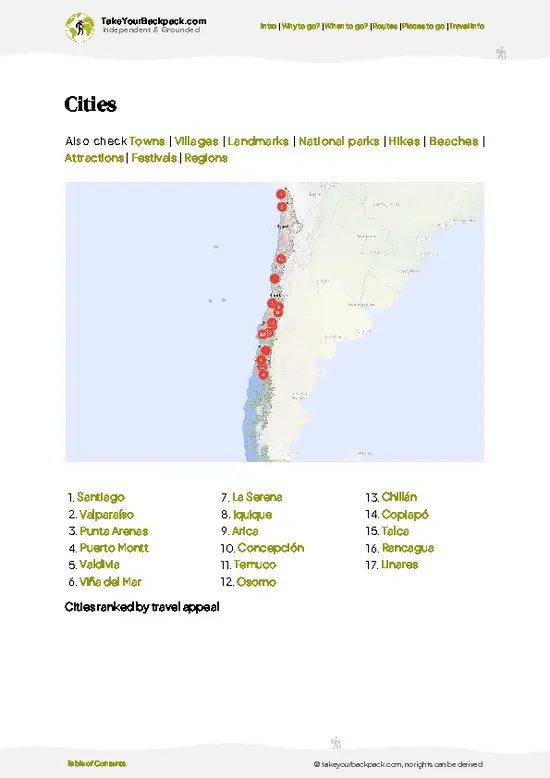
👉 Discover all cities

Or checkout all Chile has to offer (think cities, towns, villages, national parks, hikes, beaches, festivals)
Country photo of Chile

We 💚 feedbackFinal thoughts on visiting Valparaíso

Valparaíso works best with three nights: one day for the hills, one for Neruda and the port, and one to wander with no plan or ride out to the coast. Two nights feels rushed, and a week turns repetitive. I would book a hostel on Cerro Alegre or Concepción and bring shoes with proper tread.

✈️ When did I visit Chile?
I have visited Chile, together with Argentina, in September 2012.

✍️ Help improve this page!
The information on this page is based on my own backpacking experience in Chile, supplemented with up-to-date research and feedback from other travelers. Travel details can change, so if you notice anything outdated or incomplete, feel free to let me know.


🙋‍♂️ Give feedback

👋 Meet the founderWho’s Behind Take Your Backpack?

Johan, backpacker and founder of TakeYourBackpackHi, I’m Johan (Netherlands 🇳🇱), the creator of TakeYourBackpack. Over the past 3 decades, I’ve backpacked through 90+ countries across six continents, gaining extensive experience with independent travel, long-term trips, and overland routes.

This site is built on a combination of firsthand travel experience and carefully curated insights from other backpackers. Many guides are based on places I’ve personally visited, while others bring together tips, observations, and practical advice shared by trusted travelers I’ve met along the way.

The goal is to provide realistic, experience-driven guidance — not generic itineraries — so you can explore destinations with better context, clearer expectations, and more confidence.