×

China🇨🇳 | unique sitesAncient City of Ping Yao
Ming walls, courtyard homes, old banking halls | things to do and best time to go

Explore ZhujiajiaoExplore Badain Jaran Desert

Backpacking in Ancient City of Ping Yao
UNESCO World Heritage site
🌟 Highlightunique site ranked #8
By Johan Kruseman 🇳🇱 | last update: 11 April, 2026

Everyone shows up to Pingyao for the “perfect ancient wall shot,” then spends half the day dodging selfie sticks on the main street. The wall is cool, sure, but what actually matters here is how intact the whole Ming–Qing era city grid still feels once you step two lanes away from the souvenir drag. The Ancient City of Pingyao sits in central Shanxi province, between Taiyuan and Linfen, and it’s one of the easiest places in China to time-travel on a backpacker budget. Cheap guesthouses in courtyard homes, strong night-photo potential, and heavy-duty history. The downsides: tour groups, ticket packages that feel nickel-and-dime, and air quality that can be rough. But catch it on a quiet weekday evening, and the atmosphere hits hard.

Discover everything you want to know in the 📖 China Travel Guide.
Loading the map 🌍
CLICK TO FILTER
city
town
unique site
national park
hike
beach
attraction
festival
region
SHOW COUNTRY‘S BESTSHOW ALL

✨ Why go?
Ranked #8 unique site in China
The unique appeal for travelers

The Ancient City of Ping Yao is a must-stop for backpackers who crave authenticity over Instagram filters. Yes, it can get crowded, especially during peak seasons, but the rich history and well-preserved architecture make it worth your time. You’ll wander through narrow streets lined with traditional courtyard homes that transport you back to the Ming and Qing dynasties.

Costs are low; you can explore the city for a fraction of what you’d spend in more commercialized spots. Plus, it fits perfectly into a broader route through Shanxi Province, making it easy to combine with visits to Taiyuan or Mount Wutai.

The real magic lies in the local culture—try the street food, chat with the artisans, and soak in the atmosphere. It’s not just a stop; it’s a deep dive into China’s soul.
Get the complete Travel Guide for China
Everything organized for offline planning — routes, highlights, costs & tips

See what’s inside 👉

Get the Travel Guide -
  1. Well-preserved City Wall: An almost-complete Ming-era defensive ring you can walk on — think crenellations, watchtowers and rooftops lined up for miles. Best at sunrise or sunset when the light warms the old bricks and the views over the tiled roofs are unforgettable. (Personal favorite — it’s the quickest way to get a sense of the whole town.)
  2. Ming-Qing Street (Ancient Commercial Street): The main spine of the old city, with original shopfronts and wooden facades that actually date back centuries. It still hums with teahouses, snack stalls and craftsmen selling carved wood or paper cuts — great for people-watching and small souvenirs.
  3. Rishengchang Draft Bank Museum: The birthplace of modern Chinese banking. The original bank building houses ledgers, drafts and displays that explain how
  4. read more 👉
  1. Well-preserved City Wall: An almost-complete Ming-era defensive ring you can walk on — think crenellations, watchtowers and rooftops lined up for miles. Best at sunrise or sunset when the light warms the old bricks and the views over the tiled roofs are unforgettable. (Personal favorite — it’s the quickest way to get a sense of the whole town.)
  2. Ming-Qing Street (Ancient Commercial Street): The main spine of the old city, with original shopfronts and wooden facades that actually date back centuries. It still hums with teahouses, snack stalls and craftsmen selling carved wood or paper cuts — great for people-watching and small souvenirs.
  3. Rishengchang Draft Bank Museum: The birthplace of modern Chinese banking. The original bank building houses ledgers, drafts and displays that explain how money and credit circulated across the empire — surprisingly lively history for anyone who likes how things worked, not just how they looked.
  4. Pingyao County Yamen (Ancient Government Office): One of the most complete county government complexes surviving from imperial China. Courtrooms, judges’ offices, holding cells and official seals give a real feel for local administration in the Qing era — very cinematic and oddly tangible.
  5. Shuanglin Temple: A short ride out of the walls but part of the same World Heritage package — its painted clay sculptures (many from the Song and Yuan periods) are astonishingly well-preserved and colorfully expressive. It’s quieter than the town and worth the detour for the art alone.
  6. Merchant Courtyards and Traditional Residences: Step inside wealthy merchant homes to see layered courtyards, carved beams and domestic life frozen in wood and stone. These courtyards show how trade wealth translated into architecture and private ritual — intimate, detailed, and very human.
  7. Lanterned Night Strolls and Local Street Food: The old streets take on a mellow, lantern-lit mood after dark. Try local snacks (roujiamo-style buns, fried skewers, candied fruit) and wander alleys where the crowds thin out — simple, atmospheric, and the best way to end a day in the walls.
Spotted a mistake or missing something? Contact me.

🌤️ When to go?Best time to visit Ancient City of Ping Yao


  • Weather: Ping Yao’s climate swings hard. Spring and autumn bring mild, dry days perfect for wandering—think 15-22°C (59-72°F). Summers scorch, hitting 30°C+ (86°F+), and winters bite below freezing, often under 0°C (32°F), making cobblestone streets slippery and less fun.

  • Daylight Hours: Peak daylight stretches from April to September, giving you 12-14 hours to soak in the old town’s atmosphere. Winter days shrink to about 9-10 hours, limiting exploration time.

  • Crowds: National holidays and weekends pack the streets with tour groups and selfie sticks. Visit midweek in shoulder seasons to dodge the crush and actually enjoy the vibe without elbowing through crowds.

  • Seasonal Activities: Autumn hosts the Ping Yao International Photography Festival, a rare cultural treat. Spring offers
  • read more 👉

  • Weather: Ping Yao’s climate swings hard. Spring and autumn bring mild, dry days perfect for wandering—think 15-22°C (59-72°F). Summers scorch, hitting 30°C+ (86°F+), and winters bite below freezing, often under 0°C (32°F), making cobblestone streets slippery and less fun.

  • Daylight Hours: Peak daylight stretches from April to September, giving you 12-14 hours to soak in the old town’s atmosphere. Winter days shrink to about 9-10 hours, limiting exploration time.

  • Crowds: National holidays and weekends pack the streets with tour groups and selfie sticks. Visit midweek in shoulder seasons to dodge the crush and actually enjoy the vibe without elbowing through crowds.

  • Seasonal Activities: Autumn hosts the Ping Yao International Photography Festival, a rare cultural treat. Spring offers temple fairs and local markets bursting with fresh produce and crafts, adding layers to your experience beyond the usual tourist loop.

  • Price Fluctuations: Accommodation and tours spike during Golden Week (early October) and Chinese New Year. Booking outside these windows saves you serious cash and hassle.


Pro-tip: Aim for late April or early October—cool temps, manageable crowds, and authentic local life without the inflated prices.


source: climatestotravel.comJANJanuary: fair for travelingFEBFebruary: fair for travelingMARMarch: good for travelingAPRApril: excellent for travelingMAYMay: highly recommended for travelingJUNJune: highly recommended for travelingJULJuly: fair for travelingAUGAugust: fair for travelingSEPSeptember: highly recommended for travelingOCTOctober: excellent for travelingNOVNovember: good for travelingDECDecember: fair for traveling
china-unique-site-ancient-city-of-ping-yao
© Google |

✈️ The ultimate backpacker shortcutChina Travel Guide

Skip weeks of research and hit the road with confidence. Get 410 pages of proven routes, transport advice, and real safety insights—built for your phone and 100% offline-ready.
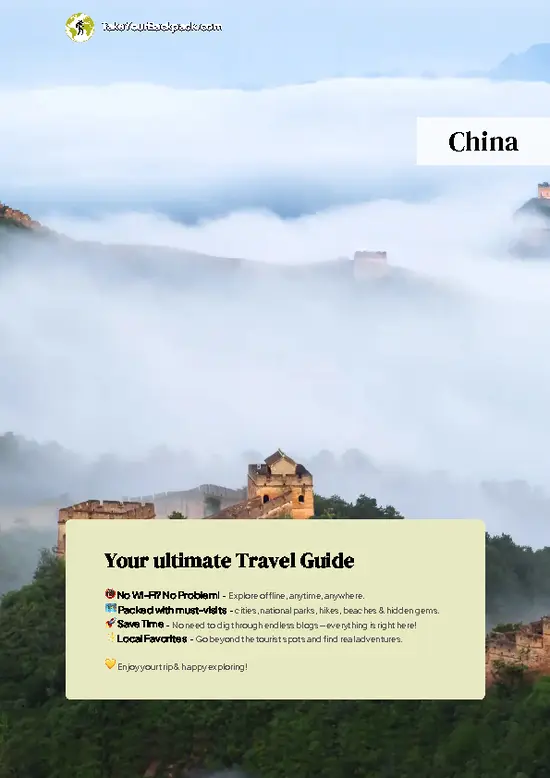
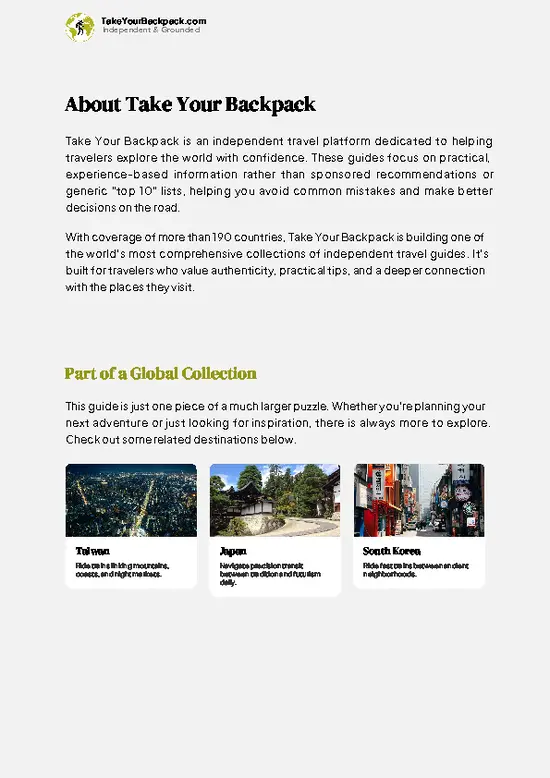
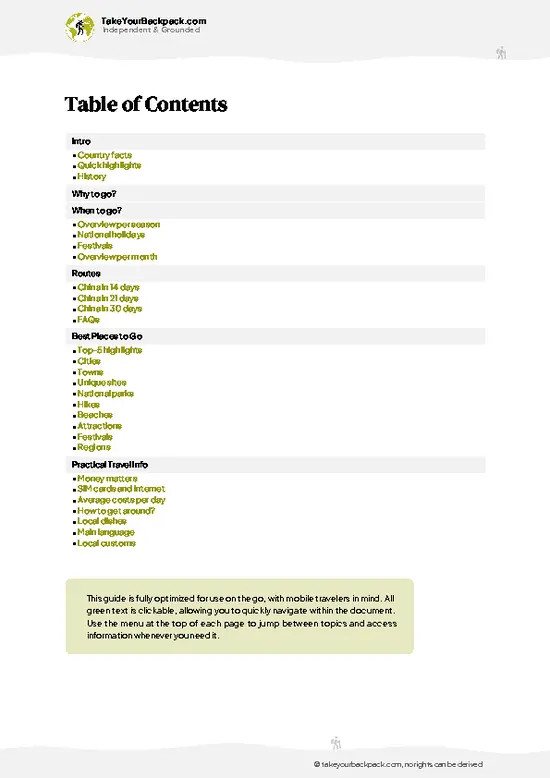
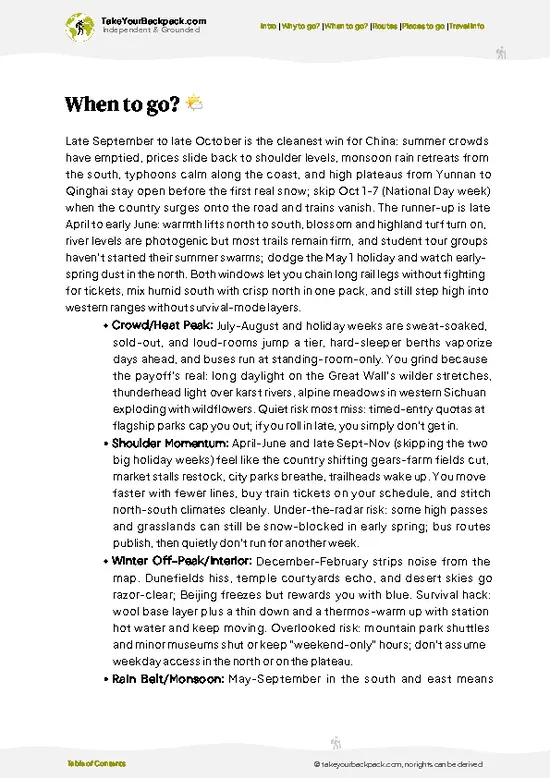
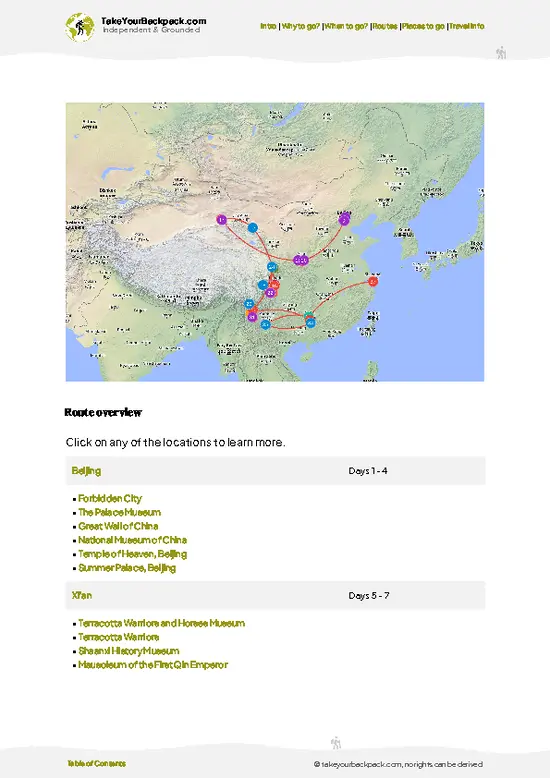
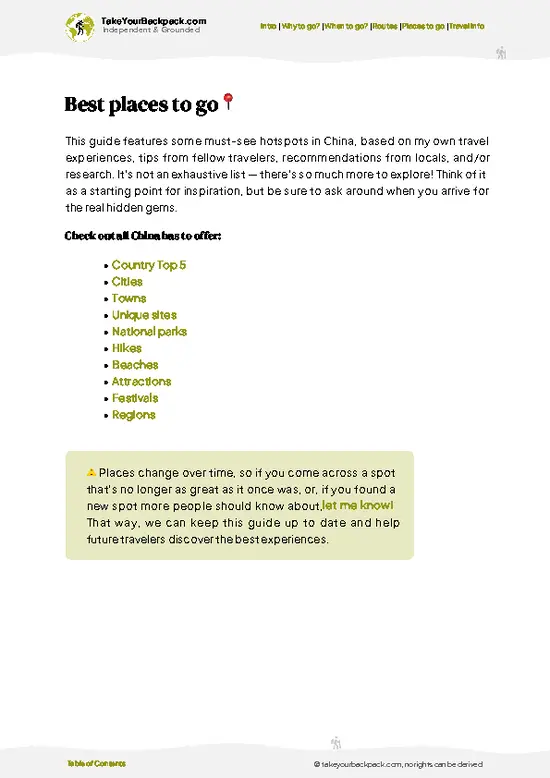
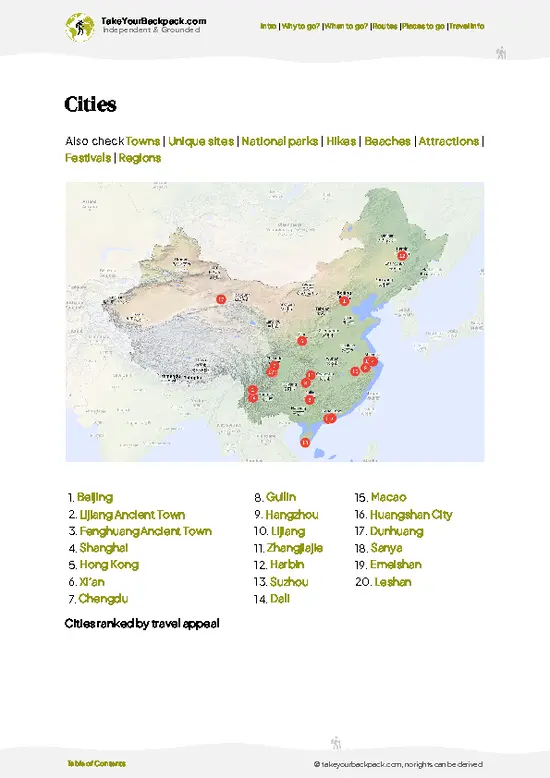
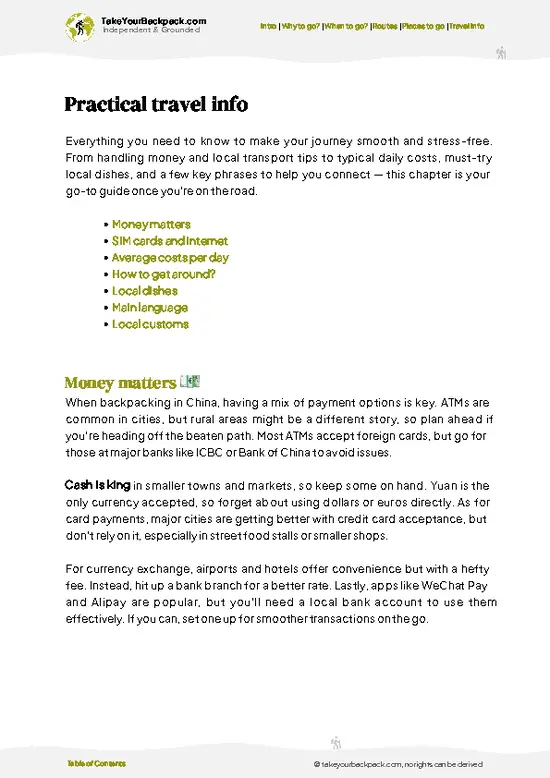
example page 0 from our offline Travel Guide for Chinaexample page 1 from our offline Travel Guide for Chinaexample page 2 from our offline Travel Guide for Chinaexample page 3 from our offline Travel Guide for Chinaexample page 4 from our offline Travel Guide for China
🎒 Your 410-page offline travel companion
14, 21 & 30-day routes paced for real travel
139 ranked highlights with honest skip-it advice
Logistics solved: Best areas to stay & transport
Safety blueprints: Common local scams to avoid
No Wi-Fi? No problem: Phone-optimized offline PDF
👉 See all 30+ guide features

📅 Plan smarter in minutes, not weeks
Realistic travel times & pacing
Best months per region
Festivals & national holidays
Budget expectations

🗺️ Go to the right places, skip the overrated ones
139 ranked highlights across the country
Hidden gems beyond the tourist trail
Honest pros & cons of destinations
Top hikes, parks & viewpoints
Lesser-known places most travelers miss
Clear “worth it vs skip it” guidance

🛏️ Travel smoothly without rookie mistakes
Best areas to stay
Transport systems explained simply
Local transport tradeoffs
Common scams & safety advice
SIM cards, money & practical tips
What to expect before arrival

🌍 Understand the country, not just visit it
Culture & traditions
52 Essential phrases & customs
Festivals worth planning around
Traveler-friendly historical context
Insights that make places more meaningful

📱 Built for real travel conditions
Fully downloadable PDF
Works completely offline
Optimized for phone use
Useful in remote areas & buses
Everything in one place
Save weeks of stressful planning
Get instant access to the full guide directly. 30-day money-back guarantee.


Sent to your inbox immediately after payment • 100% Secure Checkout
Best Backpacking Travel Advisor 2025 tourism awardBest Backpacking
Travel Advisor
2025
What others say about Take Your Backpack Guides:
⭐⭐⭐⭐⭐
Fantastic, amazing amount of information!
⭐⭐⭐⭐⭐
My goodness this is amazing, it's what I've been looking for hats off too you!
⭐⭐⭐⭐⭐
I think this is absolutely BRILLIANT
⭐⭐⭐⭐
Very complete and informative. It's still missing places, but I gotta to commend you
⭐⭐⭐⭐⭐
This is truly amazing, thank you, can't wait to explore it with my kids!
⭐⭐⭐⭐⭐
Awesome resource, thank you!
⭐⭐⭐⭐⭐
This is amazing! Can't wait to explore the ones I haven't seen
⭐⭐⭐⭐
I love this! Well done, great idea.
⭐⭐⭐⭐⭐
Thanks for taking the time to make this gem!
⭐⭐⭐⭐⭐
This might be the best website I've ever seen.
⭐⭐⭐⭐⭐
Congratulations, and thank you so much for your work; it's incredibly valuable.
⭐⭐⭐⭐
In all seriousness I think you did a great job pointing out the important spots
⭐⭐⭐⭐⭐
10/10 very good
⭐⭐⭐⭐⭐
As someone who's only just starting to visit regularly this is awesome, thank you.
⭐⭐⭐⭐
Thank you very much! I'm going to visit my dad, it's going to be very useful!
⭐⭐⭐⭐⭐
This is really cool! We'll be travelling for the first time and this definitely come in handy.
⭐⭐⭐⭐⭐
You are now our minister of culture, congratulations 👨‍💼
⭐⭐⭐⭐⭐
Just wanted to tell you that this is a pearl! Going to follow your recommendations.
⭐⭐⭐⭐⭐
This is so cool. I'll definitely be using the resource for my travels soon.
⭐⭐⭐⭐⭐
This is very impressive! Good work.
⭐⭐⭐⭐⭐
This is an amazing and informative site. Very well done!

🛏️ Where to stay?Where staying makes the most sense

Staying near the Ancient City of Ping Yao is all about finding that sweet spot between authenticity and accessibility. The old town itself is a maze of ancient architecture, so look for accommodations right within the city walls. This area buzzes with backpackers, making it easy to meet fellow travelers over a shared meal or a game of cards.

Head to the east side for a more laid-back vibe. It’s quieter, yet still close enough to the main attractions. You’ll find cozy guesthouses that offer a glimpse into local life.

Avoid the tourist traps that charge a premium for a view. Instead, seek out … read more 👉
Staying near the Ancient City of Ping Yao is all about finding that sweet spot between authenticity and accessibility. The old town itself is a maze of ancient architecture, so look for accommodations right within the city walls. This area buzzes with backpackers, making it easy to meet fellow travelers over a shared meal or a game of cards.

Head to the east side for a more laid-back vibe. It’s quieter, yet still close enough to the main attractions. You’ll find cozy guesthouses that offer a glimpse into local life.

Avoid the tourist traps that charge a premium for a view. Instead, seek out places with communal spaces where you can swap stories and tips. Safety is generally solid here, but stick to well-lit areas at night.

Ping Yao’s charm lies in its streets, so don’t just crash—explore. The real magic happens when you wander off the beaten path.

👛 Costs (as of 13 January 2025)Travel costs and budget guide for Ancient City of Ping Yao

Visiting the Ancient City of Ping Yao can be a rewarding experience, but it’s essential to know what you’re getting into financially. Here’s a breakdown of typical costs you can expect:
  • Entrance Fees: The entrance fee for the Ancient City is around €20 ($22). This ticket grants you access to various historical sites within the city. It’s worth it for the history, but be prepared for crowds, especially during peak seasons.
  • Accommodation: Expect to pay between €30 and €80 ($33 to $88) per night for a decent hotel or guesthouse. Prices vary based on location and amenities. Staying within the city walls can be pricier but offers a more immersive experience.
  • Food: Meals can range from €5 to €15 ($5.50 to $16.50) depending on where you eat. Street food is cheap and delicious, while sit-down restaurants
  • read more 👉
Visiting the Ancient City of Ping Yao can be a rewarding experience, but it’s essential to know what you’re getting into financially. Here’s a breakdown of typical costs you can expect:
  • Entrance Fees: The entrance fee for the Ancient City is around €20 ($22). This ticket grants you access to various historical sites within the city. It’s worth it for the history, but be prepared for crowds, especially during peak seasons.
  • Accommodation: Expect to pay between €30 and €80 ($33 to $88) per night for a decent hotel or guesthouse. Prices vary based on location and amenities. Staying within the city walls can be pricier but offers a more immersive experience.
  • Food: Meals can range from €5 to €15 ($5.50 to $16.50) depending on where you eat. Street food is cheap and delicious, while sit-down restaurants will cost more. Don’t skip the local specialties; they’re a highlight.
  • Transportation: If you’re traveling from nearby cities, a bus or train will cost around €10 to €20 ($11 to $22). Once in Ping Yao, walking is the best way to explore. Taxis are available but can add up if you’re not careful.
  • Souvenirs: Budget around €10 to €30 ($11 to $33) for local crafts and keepsakes. Bargaining is common, so don’t hesitate to negotiate prices at markets.

Be ready for a mix of touristy spots and genuine local culture. The crowds can be overwhelming, but the history and charm of Ping Yao make it a worthwhile stop.
⚠️ Prices can change and everyone travels differently, so take this as a rough guide. Hope it helps you plan your adventure!

Other Chinese unique sites near Ancient City of Ping Yao

Explore more nearby:

  • Mount Wutai—Five peaks, Buddhist temples, alpine meadows| 237 km away
  • Yungang Grottoes—Rock-cut caves, colossal Buddhas, sandstone cliffs| 335 km away
  • Terracotta Warriors—Buried army, clay soldiers, Qin dynasty tomb| 407 km away

👉 Discover all unique sites

Or checkout all China has to offer (think cities, towns, villages, national parks, hikes, beaches, festivals)
Country photo of China
film
0
0
0a
Great Wall of China
film
1
1
1a
Forbidden City
Pixabay
film
2
2
2a
Terracotta Warriors
Pixabay
film
3
3
3a
Mount Emei Scenic Area (Leshan Giant Buddha)
film
4
4
4a
Dali ancient town
film
5
5
5a
Honghe Hani Rice Terraces
film
6
6
6a
Yungang Grottoes

I 💚 feedbackIs it worth it?

Ping Yao is a time capsule, a place where ancient architecture whispers stories of trade and culture. You’ll feel the pulse of history in every cobblestone. But brace yourself for the crowds; it can feel like a theme park at times. Still, if you dig deeper, the local food stalls and quiet temples reveal the city’s true heart. That’s where the real magic happens.

✈️ When did I visit China?
As part of my 1.5 year travel around the world trip, I visited China in August 2015, coming from Mongolia by the TransMongolia Express.

✍️ Help improve this page!
The information on this page is based on my own backpacking experience in China, supplemented with up-to-date research and feedback from other travelers. Travel details can change, so if you notice anything outdated or incomplete, feel free to let me know.


🙋‍♂️ Give feedback

👋 Meet the authorWho’s Behind Take Your Backpack?

Johan, backpacker and founder of TakeYourBackpackHi, I’m Johan (Netherlands 🇳🇱), the creator of TakeYourBackpack. Over the past decade, I’ve backpacked through 80+ countries across six continents, gaining extensive experience with independent travel, long-term trips, and overland routes.

This site is built on a combination of firsthand travel experience and carefully curated insights from other backpackers. Many guides are based on places I’ve personally visited, while others bring together tips, observations, and practical advice shared by trusted travelers I’ve met along the way.

The goal is to provide realistic, experience-driven guidance — not generic itineraries — so you can explore destinations with better context, clearer expectations, and more confidence.

Get Full Country Guide |
Instant download • 139 highlights • Full Offline guide