v2.webp)
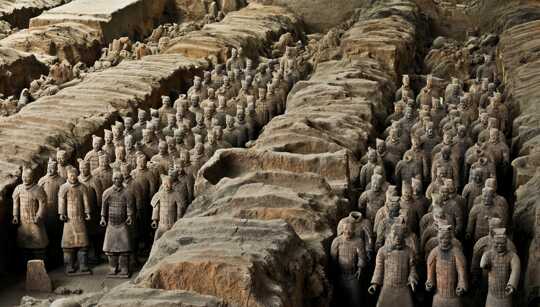

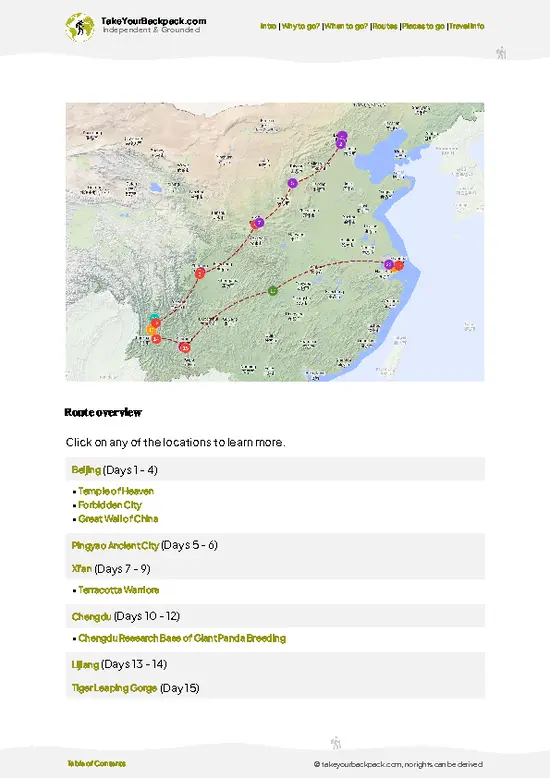

- Pit 1 — The Main Battle Formation: The heart-stopper — the largest pit with thousands of warriors arrayed as if frozen mid-battle. The scale hits you hard: rows upon rows of life-sized figures, and seeing it in person gives the best sense of why this site is UNESCO-famous. (Personal favorite — it’s where the spectacle really sinks in.)
- Pit 2 — Mixed Forces and Tactical Layout: More chaotic but fascinating — Pit 2 shows combined arms: infantry, cavalry, chariots and archers arranged in realistic battlefield formations. It’s great for spotting different unit types and imagining how Qin’s army was organized.
- Pit 3 — The Command Center and Generals: Smaller and more intimate, this pit holds high-ranking officers and a few intact horses — basically the brain of the army. Because it’s compact,
- Pit 1 — The Main Battle Formation: The heart-stopper — the largest pit with thousands of warriors arrayed as if frozen mid-battle. The scale hits you hard: rows upon rows of life-sized figures, and seeing it in person gives the best sense of why this site is UNESCO-famous. (Personal favorite — it’s where the spectacle really sinks in.)
- Pit 2 — Mixed Forces and Tactical Layout: More chaotic but fascinating — Pit 2 shows combined arms: infantry, cavalry, chariots and archers arranged in realistic battlefield formations. It’s great for spotting different unit types and imagining how Qin’s army was organized.
- Pit 3 — The Command Center and Generals: Smaller and more intimate, this pit holds high-ranking officers and a few intact horses — basically the brain of the army. Because it’s compact, you can study facial expressions and rank markers more closely.
- Bronze Chariots and Horses (Hall): These gleaming, finely cast bronze pieces (including a rare two-horse chariot) are some of the best-preserved metalwork from the era. They contrast nicely with the earthen warriors and show another side of Qin craftsmanship.
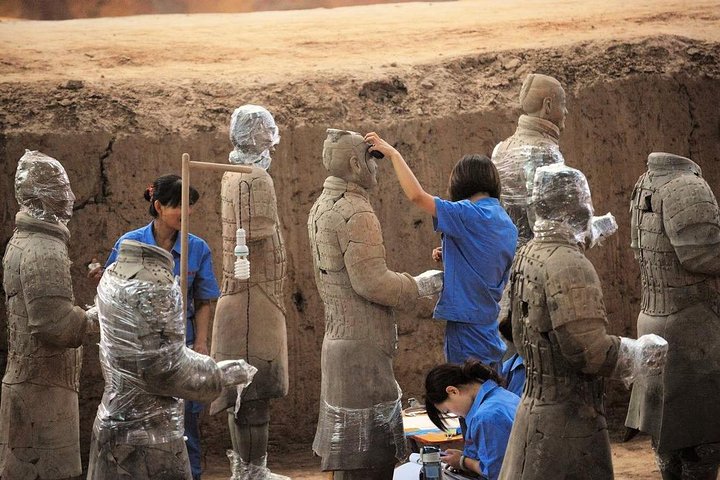
- Restoration and Conservation Area: You can often see conservators working on fragments — reassembling, cleaning, and stabilizing figures and pigments. It’s a neat, behind-the-scenes look at archaeology in action and explains why some pieces look restored while others are raw excavations.
- The Emperor’s Mausoleum Mound: The sealed earth mound where Qin Shi Huang is buried looms nearby — you can’t go in, but the mystery is tangible. It’s a reminder that the warriors were part of a grand funerary complex meant to mirror an imperial world underground.
- Individualized Faces and Original Paint Traces: Walk close and you’ll notice almost every warrior has a unique face, hairstyle, or uniform detail — not mass-manufactured clones. Also look for tiny fragments of original pigments; the warriors were once vividly painted, which is a striking thought.
Spotted a mistake or missing something? Contact us.

2-Day Xi'an Sightseeing All-Inclusive Private Custom-Made Combo Tour

Terracotta Warriors Ticket with Professional English Guide

Xi'an: Terracotta Army & City Highlights Private Day Tour

Xi’an Private Terracotta Army Half-Day Tour

Xian Terracotta Warriors and City Wall Private Day Tour

Private Full-Day Xi'an Highlights Tour with Pickup and Lunch

Best Xi'an Private Day Tour with Terracotta Warrior Entry Ticket Option

Flexible Xian Terracotta Warriors Private Day Tour Non-shopping
Terracotta Warriors, City Wall and Muslim Food Street

 Best Backpacking
.jpg) Hi, I’m Johan (Netherlands 🇳🇱), the creator of TakeYourBackpack. Over the past 3 decades, I’ve backpacked through 90+ countries across six continents, gaining extensive experience with independent travel, long-term trips, and overland routes.
Hi, I’m Johan (Netherlands 🇳🇱), the creator of TakeYourBackpack. Over the past 3 decades, I’ve backpacked through 90+ countries across six continents, gaining extensive experience with independent travel, long-term trips, and overland routes.