v2.webp)
- Forbidden City (Palace Museum) — The imperial heart of China for almost 500 years: endless courtyards, painted beams, and galleries of imperial treasures. Walk the central axis to really feel the scale and the politics carved into the architecture (tickets and early arrival recommended).
- Tiananmen Square — A massive civic plaza that’s the stage for modern Chinese history: the Monument to the People’s Heroes, the Great Hall of the People, and the changing of the guard at the Mausoleum make it visceral rather than abstract.
- Temple of Heaven — An imperial ritual complex set in a lively park where Beijingers sing, dance, do tai chi and play cards. The Hall of Prayer for Good Harvests is a graceful, symbolic space that’s stunning in the morning light.
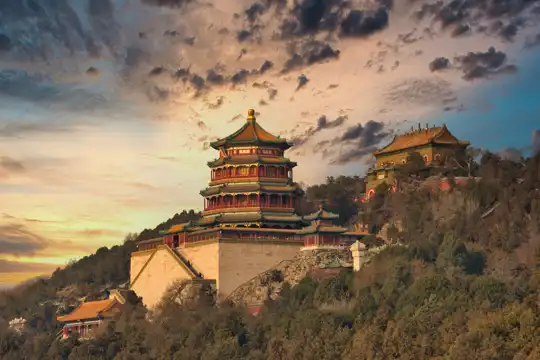
- Summer Palace (Yiheyuan) — Lakes, willow-lined
- Forbidden City (Palace Museum) — The imperial heart of China for almost 500 years: endless courtyards, painted beams, and galleries of imperial treasures. Walk the central axis to really feel the scale and the politics carved into the architecture (tickets and early arrival recommended).
- Tiananmen Square — A massive civic plaza that’s the stage for modern Chinese history: the Monument to the People’s Heroes, the Great Hall of the People, and the changing of the guard at the Mausoleum make it visceral rather than abstract.
- Temple of Heaven — An imperial ritual complex set in a lively park where Beijingers sing, dance, do tai chi and play cards. The Hall of Prayer for Good Harvests is a graceful, symbolic space that’s stunning in the morning light.
- Summer Palace (Yiheyuan) — Lakes, willow-lined promenades, and imperial pavilions built for escaping the heat. Rent a little boat on Kunming Lake, walk the Long Corridor, and you’ll see why emperors loved this place.
- Yonghe (Lama) Temple — One of Beijing’s most atmospheric religious sites: richly carved halls, giant Buddha statues and real devotees. It’s active, fragrant with incense, and a great place to observe living Tibetan-Buddhist practice in the city.
- Jingshan Park — A small, steep hill with the best rooftop view over the Forbidden City. Climb for sunset or early morning; the panorama gives context to Beijing’s old city layout better than any guidebook map.
- Hutongs around Shichahai / Houhai — Narrow lanes, courtyard homes, bike shops, and old teahouses. Wander away from Nanluoguxiang’s busiest strip into the quieter hutongs to see everyday life, local markets, and small courtyard cafés.
- 798 Art District — Converted factories full of contemporary galleries, murals and weird sculptures. It’s where Beijing’s present-day creative scene meets casual cafés and designer shops—good for a lazy afternoon of people-watching and experimental art.
- Prince Gong’s Mansion (Gong Wang Fu) — A well-preserved Qing-dynasty noble residence with intimate gardens and ornate reception rooms. Less crowded than imperial sites but loaded with atmosphere; good for getting a sense of elite domestic life.
- Panjiayuan Antique Market — A sprawling weekend flea market where you can bargain for antiques, jade, stamps, folk art and quirky souvenirs. It’s chaotic in the best way and offers a hands-on slice of Beijing’s material culture.
Spotted a mistake or missing something? Contact us.

Beijing: Mutianyu Great Wall Private Tour

Beijing to Xi'an See Terracotta Warriors with Bullet Train Round Trip Transfer

Beijing Capital Airport Layover Mutianyu Great Wall Private Tour

All-inclusive Private Day Tour to Mutianyu Great Wall

Beijing :Mutianyu Great Wall and Summer Palace Private Tour

Beijing Mutianyu Great Wall Private Tour with Options

Mutianyu Great Wall Private Day Tour With English-Speaking Driver

Private Tour to Mutianyu Great Wall, Tiananmen Square and Forbidden City

Beijing :Forbidden City and Mutianyu Great Wall Private Tour

 Best Backpacking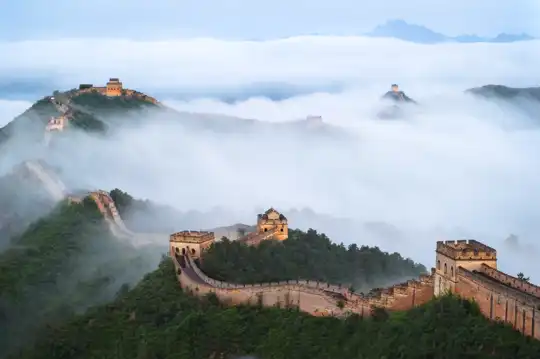
.jpg) Hi, I’m Johan (Netherlands 🇳🇱), the creator of TakeYourBackpack. Over the past 3 decades, I’ve backpacked through 90+ countries across six continents, gaining extensive experience with independent travel, long-term trips, and overland routes.
Hi, I’m Johan (Netherlands 🇳🇱), the creator of TakeYourBackpack. Over the past 3 decades, I’ve backpacked through 90+ countries across six continents, gaining extensive experience with independent travel, long-term trips, and overland routes.