
×

China🇨🇳 | citiesDaliBai minority, mountain backdrop, lakeside town | things to do and best time to go

Explore Xi’anExplore Kunming

Backpacking in Dali
🌟 Highlightcity ranked #12
By Johan Kruseman 🇳🇱 | Updated June 17, 2026

You land in Yunnan and hit your first real fork: do you base yourself in Dali Old Town, with its cobbled lanes and backpacker buzz, or escape to quieter Xizhou or Shaxi for more authenticity and fewer bars? That choice shapes your whole trip. Dali sits on the shores of Erhai Lake in western Yunnan, between Kunming and Lijiang, and it’s one of China’s easiest soft-landings for independent travelers. The old town is pretty, a bit overdeveloped, but still worth it for the city walls, Cangshan hikes, lake loops by scooter, and easy hostel meetups. It’s cheaper and more relaxed than Lijiang, safer than it feels at 2 a.m., and just touristy enough that you’ll never feel stuck or alone.

Discover everything you want to know in the 📖 China Travel Guide.


Get your China guide
139 ranked highlights, routes & tips, works offline (496 pages)
Loading the map 🌍
CLICK TO FILTER
cities
towns
landmarks
national parks
hikes
beaches
attractions
festivals
regions
SHOW COUNTRY’S BESTSHOW ALL

✨ Why go?
Ranked #12 city in China
What makes it a must-see city

Dali is a strategic stop for backpackers, blending affordability with a laid-back vibe. The hostels here are not just budget-friendly; they foster a community atmosphere, perfect for meeting fellow travelers. You’ll find a variety of food options, from street stalls to cozy cafes, serving everything from local specialties to international fare. The city’s walkability makes it easy to explore, with charming streets that invite you to wander.

Dali also serves as a solid basecamp for day trips to nearby attractions, allowing you to maximize your time without the hassle of constant packing and unpacking. The nightlife is vibrant yet relaxed, offering a mix of bars and live music venues that cater to all tastes. Plus, onward travel is a breeze, connecting you to other parts of Yunnan and beyond. … read more 👉
Dali is a strategic stop for backpackers, blending affordability with a laid-back vibe. The hostels here are not just budget-friendly; they foster a community atmosphere, perfect for meeting fellow travelers. You’ll find a variety of food options, from street stalls to cozy cafes, serving everything from local specialties to international fare. The city’s walkability makes it easy to explore, with charming streets that invite you to wander.

Dali also serves as a solid basecamp for day trips to nearby attractions, allowing you to maximize your time without the hassle of constant packing and unpacking. The nightlife is vibrant yet relaxed, offering a mix of bars and live music venues that cater to all tastes. Plus, onward travel is a breeze, connecting you to other parts of Yunnan and beyond.

If you’re seeking a balance of culture, comfort, and convenience, Dali fits the bill, making it more than just a quick stop on your journey.
Want to include Dali in your China route?
Create a personalized China itinerary that includes Dali and the places that fit your trip — based on your travel style, budget, and available time. Get your route in seconds.

Generate my trip

💡 HighlightsDon't-miss highlights and experiences

  • Three Pagodas (Chongsheng Temple) — The unmistakable tripod pagodas are the photo you’ve seen a thousand times, but visiting lets you wander the restored temple grounds, see Tang-Song era brickwork up close, and understand Dali’s role as a Buddhist center.
  • Dali Ancient Town (Dayan) — Narrow lanes, Bai-style wooden eaves, street-side tea houses and souvenir stalls: it’s where local life, crafts and backpacker energy mix. Great for wandering, people-watching and sampling Bai snacks.
  • Cangshan Mountain & Cableway — Hop the cable car up for sweeping Erhai views, then walk trails like the Jade Belt Road and visit Zhonghe Pavilion. It’s cooling, green, and feels miles away from the old town in ten minutes.
  • Erhai Lake (lakeshore routes & boat trips) — The lake shapes Dali’s rhythm. Rent a bike
read more 👉
  • Three Pagodas (Chongsheng Temple) — The unmistakable tripod pagodas are the photo you’ve seen a thousand times, but visiting lets you wander the restored temple grounds, see Tang-Song era brickwork up close, and understand Dali’s role as a Buddhist center.
  • Dali Ancient Town (Dayan) — Narrow lanes, Bai-style wooden eaves, street-side tea houses and souvenir stalls: it’s where local life, crafts and backpacker energy mix. Great for wandering, people-watching and sampling Bai snacks.
  • Cangshan Mountain & Cableway — Hop the cable car up for sweeping Erhai views, then walk trails like the Jade Belt Road and visit Zhonghe Pavilion. It’s cooling, green, and feels miles away from the old town in ten minutes.
  • Erhai Lake (lakeshore routes & boat trips) — The lake shapes Dali’s rhythm. Rent a bike for a shoreline spin, take a short public boat to the nearby islets, or just sit on the shore and watch fishermen and birds — scenery that’s simple but addictive.
  • Xizhou Ancient Town & Morning Market — A quieter Bai town inside Dali’s orbit: well-preserved courtyard houses, lively morning markets where you can try zhámi (local rice snacks), and family-run dyeing workshops demonstrating traditional batik.
  • Zhoucheng Village (周城) — Lesser-known than Xizhou but rich: narrow alleys, Bai frescoes and old clan houses. It’s a real slice of rural town life without the tourist trimmings, ideal for photographing everyday architecture and local crafts.
  • Butterfly Spring (Hudie Quan) — Small, pretty spring at Cangshan’s foot (near Xizhou) where butterflies gather in season. It’s compact, peaceful, and a nice contrast to the busy old town — bring a camera and patience for the insects.
  • Wuhua Tower (Five-Flower Tower) & Old City Walls — Part of Dali’s defensive history; climb the tower for a rooftop view over the old town and Erhai, and appreciate the mix of defensive stonework and elegant Bai ornamentation.
  • Dali Museum (local history & archaeology) — Compact but worthwhile: good displays on Bai culture, local archaeology and the region’s religious history. Handy if you want context after wandering temples and villages.
  • Foreigner Street & Night Market — Not a museum piece, but vital for the vibe: overcrowded bars, grilled street food, live music and bargain shopping. It’s touristy, yes, but also where travelers meet and Dali’s nocturnal energy lives.
If you’ve got more time, good day trips just outside Dali include Weishan Ancient Town, Shaxi Ancient Town and (for a longer day) Lijiang — my personal favorite to explore as a day trip is Weishan for its low-key atmosphere and genuine streetscape.
Spotted a mistake or missing something? Contact us.

Things to do in Dali

Ratings based on Tripadvisor reviews. When you book through this link, you support our work at no extra cost to you.

🏘️ NeighborhoodsWhere things are and how it's laid out

Dali is a captivating blend of culture and nature, perfect for backpackers seeking both adventure and relaxation. Here’s a breakdown of key neighborhoods to help you navigate your stay.

Old Town: This is the heart of Dali, where ancient architecture meets vibrant street life. Expect a lively atmosphere with plenty of cafes and shops. It’s walkable, making it easy to explore. Prices can be higher here, especially for accommodations, but the convenience is worth it. Ideal for short stays, you’ll find nightlife buzzing, especially on weekends.

Erhai Lake Area: For a more tranquil vibe, head to the lakeside. The views are stunning, and you can rent bikes to explore the shoreline. Accommodations are generally more affordable, and it’s perfect for longer stays if you want to unwind. The area is … read more 👉
Dali is a captivating blend of culture and nature, perfect for backpackers seeking both adventure and relaxation. Here’s a breakdown of key neighborhoods to help you navigate your stay.

Old Town: This is the heart of Dali, where ancient architecture meets vibrant street life. Expect a lively atmosphere with plenty of cafes and shops. It’s walkable, making it easy to explore. Prices can be higher here, especially for accommodations, but the convenience is worth it. Ideal for short stays, you’ll find nightlife buzzing, especially on weekends.

Erhai Lake Area: For a more tranquil vibe, head to the lakeside. The views are stunning, and you can rent bikes to explore the shoreline. Accommodations are generally more affordable, and it’s perfect for longer stays if you want to unwind. The area is quieter, making it great for those who prefer peace over nightlife.

Xiaguan: This is the more local side of Dali, with a bustling market scene and authentic eateries. Prices are lower, and it’s less touristy. While it’s a bit further from the main attractions, public transport is accessible. This area suits longer stays where you can immerse yourself in local life.

Choose wisely based on your priorities, and you’ll unlock the best of Dali.

⌛️ 1 dayHow to make the most of one day

Dali, China, is a captivating blend of ancient culture and stunning natural beauty, nestled between the Cangshan Mountains and Erhai Lake. It’s a place where the pace slows down, allowing you to soak in the vibrant local life and rich history.

Start your morning in the Old Town, where cobblestone streets wind through traditional Bai architecture. Grab a cup of locally brewed coffee at one of the charming cafés. The aroma of fresh pastries fills the air, and you can’t go wrong with a slice of the region’s famous yogurt cake. After breakfast, wander through the local market. The colors and sounds are a feast for the senses, with vendors selling everything from handmade crafts to fresh produce.

In the afternoon, head to Erhai Lake. Rent a bike and cycle along the scenic paths that hug the … read more 👉
Dali, China, is a captivating blend of ancient culture and stunning natural beauty, nestled between the Cangshan Mountains and Erhai Lake. It’s a place where the pace slows down, allowing you to soak in the vibrant local life and rich history.

Start your morning in the Old Town, where cobblestone streets wind through traditional Bai architecture. Grab a cup of locally brewed coffee at one of the charming cafés. The aroma of fresh pastries fills the air, and you can’t go wrong with a slice of the region’s famous yogurt cake. After breakfast, wander through the local market. The colors and sounds are a feast for the senses, with vendors selling everything from handmade crafts to fresh produce.

In the afternoon, head to Erhai Lake. Rent a bike and cycle along the scenic paths that hug the shoreline. Stop at the quaint village of Xizhou, where you can explore the Bai culture and perhaps even catch a glimpse of traditional tie-dyeing techniques. This area is often overlooked by tourists, but it offers a genuine experience of local life.

As evening approaches, return to Dali’s Old Town. The streets come alive with lanterns, and you’ll find plenty of restaurants serving delicious local dishes. Try the grilled fish from the lake; it’s a must. After dinner, find a cozy spot to enjoy a local performance of traditional Bai music.

Dali is not just a destination; it’s a chance to connect with a slower, richer way of life. Embrace it fully, and you’ll leave with memories that linger long after you’ve returned home.
Turn your Dali visit into an China adventure
Build a complete China route with Dali, hidden gems, must-see destinations, and realistic travel times included.

Generate my trip

🌤️ When to go?Choosing the right time of year


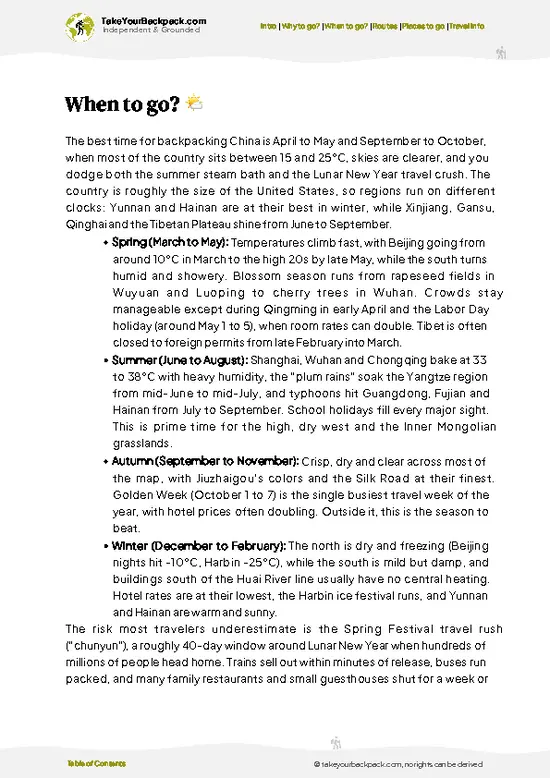
  • Weather: Dali enjoys mild weather from April to October, with spring and autumn offering the most pleasant conditions. Winters can be chilly, dipping to around 5°C (41°F), while summers hover near 25°C (77°F) but bring occasional rain.

  • Temperature: Expect comfortable daytime highs between 18-25°C (64-77°F) in peak months. Nights cool down, especially in spring and autumn, so layering is key.

  • Daylight Hours: Longer days from May to August provide up to 13-14 hours of light, perfect for extended hikes and exploring the old town without rushing.

  • Crowds: Peak tourist season aligns with Chinese national holidays and summer months, swelling crowds and prices. Visiting in shoulder seasons like April or September means fewer tourists and a more relaxed vibe.

  • Seasonal Activities: Spring
read more 👉

  • Weather: Dali enjoys mild weather from April to October, with spring and autumn offering the most pleasant conditions. Winters can be chilly, dipping to around 5°C (41°F), while summers hover near 25°C (77°F) but bring occasional rain.

  • Temperature: Expect comfortable daytime highs between 18-25°C (64-77°F) in peak months. Nights cool down, especially in spring and autumn, so layering is key.

  • Daylight Hours: Longer days from May to August provide up to 13-14 hours of light, perfect for extended hikes and exploring the old town without rushing.

  • Crowds: Peak tourist season aligns with Chinese national holidays and summer months, swelling crowds and prices. Visiting in shoulder seasons like April or September means fewer tourists and a more relaxed vibe.

  • Seasonal Activities: Spring brings blooming flowers and vibrant markets, while autumn offers harvest festivals and clear skies ideal for lake views and mountain treks.

  • Price Fluctuations: Accommodation and transport costs spike during July, August, and major holidays. Booking in shoulder seasons can save you 20-30% without sacrificing experience quality.


Pro-tip: Aim for late April or early October—sweet spots where weather, crowd size, and prices align to maximize comfort and value.


source: climatestotravel.comJANJanuary: fair for travelingFEBFebruary: fair for travelingMARMarch: good for travelingAPRApril: excellent for travelingMAYMay: highly recommended for travelingJUNJune: highly recommended for travelingJULJuly: good for travelingAUGAugust: good for travelingSEPSeptember: excellent for travelingOCTOctober: excellent for travelingNOVNovember: good for travelingDECDecember: fair for traveling
when-to-go

✈️ The backpacker research shortcutChina Travel Guide

An offline-friendly backpacking guide with optimized travel routes, ranked highlights, transport advice, and the best areas to stay.
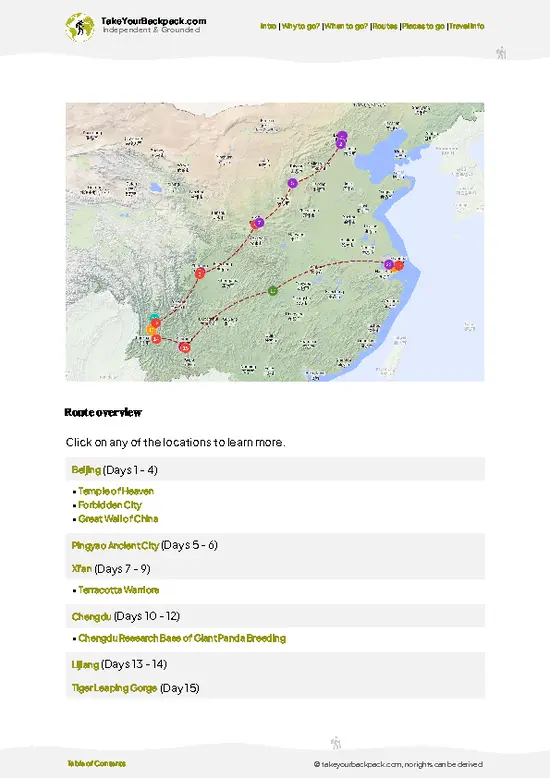
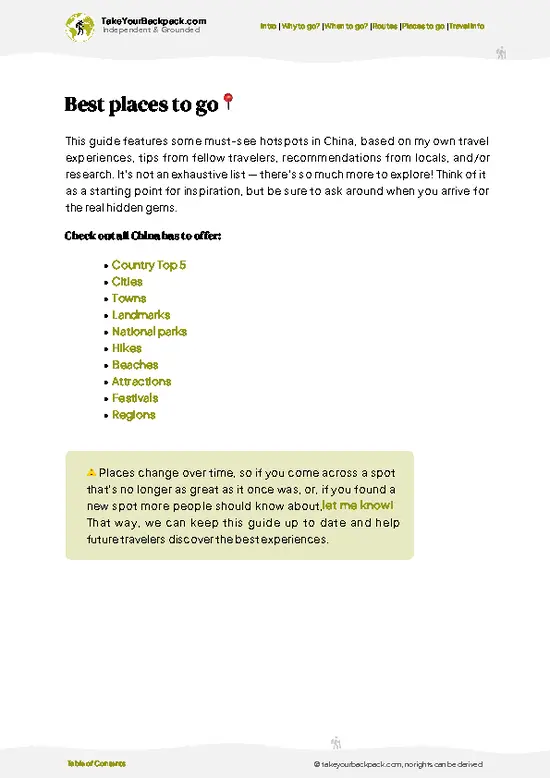
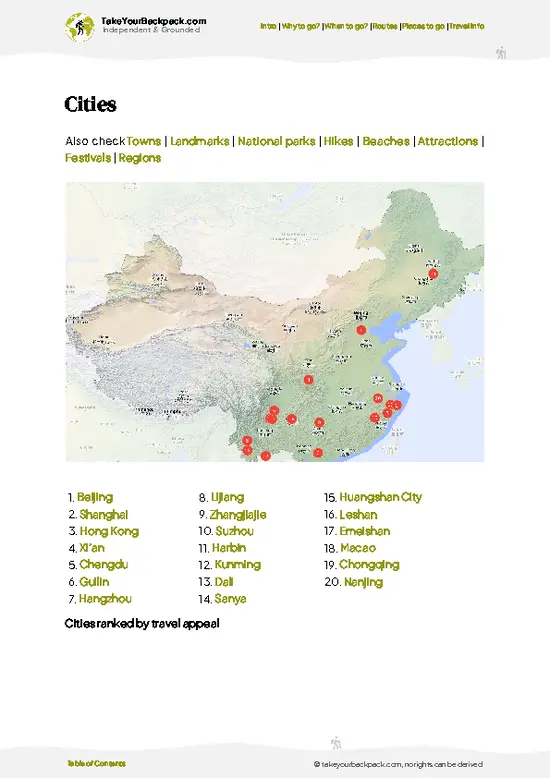
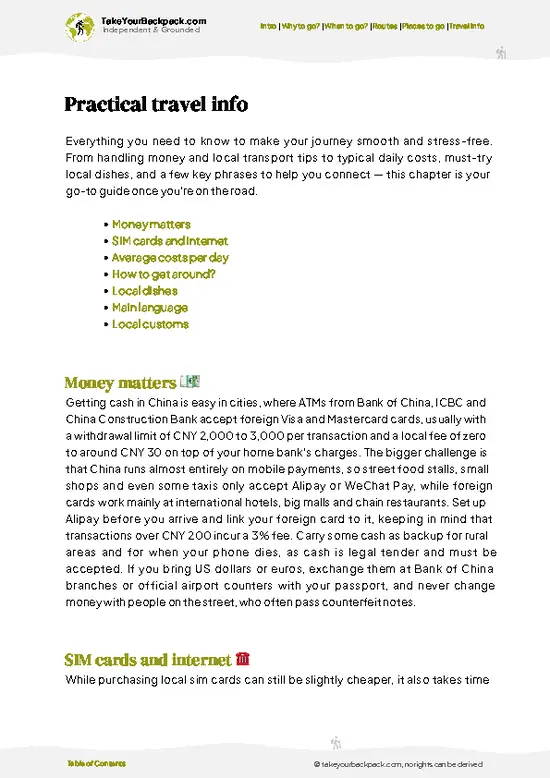
example page 0 from our offline Travel Guide for China
example page 1 from our offline Travel Guide for China
example page 2 from our offline Travel Guide for China
example page 3 from our offline Travel Guide for China
example page 4 from our offline Travel Guide for China
example page 5 from our offline Travel Guide for China
example page 6 from our offline Travel Guide for China
example page 7 from our offline Travel Guide for China
The digital guide (496 pages) contains:
139 highlights, ranked by travel appeal
Optimized 14, 21 & 30-day travel routes
Cities, national parks, landmarks, beaches
How to get around
Offline-friendly for travel without Wi-Fi
👉 Click to see all 30+ guide features

📅 Plan smarter in minutes, not weeks
Month by month travel advice
Festivals & national holidays
Budget expectations

🗺️ Go to the right places, skip the overrated ones
Honest pros & cons of destinations
Top hikes, parks & viewpoints
Lesser-known places most travelers miss
Clear “worth it vs skip it” guidance

🛏️ Travel smoothly without rookie mistakes
Best areas to stay
Transport systems explained simply
Common scams & safety advice
SIM cards, money & practical tips

🌍 Understand the country, not just visit it
Culture & traditions
52 Essential phrases & customs
Festivals worth planning around
Traveler-friendly historical context
Insights that make places more meaningful

📱 Built for real travel conditions
Fully downloadable PDF
Works completely offline
Optimized for phone use
Useful in remote areas & buses
Everything in one place
Save weeks of stressful planning
Get instant access to your full guide. 30‑day money-back guarantee.


By proceeding you agree to our terms.
Sent to your inbox immediately after payment • 100% Secure Checkout
Best Backpacking Travel Advisor 2025 tourism awardBest Backpacking
Travel Advisor
2025
What others say about Take Your Backpack Guides:
⭐⭐⭐⭐⭐
Fantastic, amazing amount of information!
⭐⭐⭐⭐⭐
My goodness this is amazing, it's what I've been looking for hats off too you!
⭐⭐⭐⭐⭐
I think this is absolutely BRILLIANT
⭐⭐⭐⭐
Very complete and informative. It's still missing places, but I gotta to commend you
⭐⭐⭐⭐⭐
This is truly amazing, thank you, can't wait to explore it with my kids!
⭐⭐⭐⭐⭐
Awesome resource, thank you!
⭐⭐⭐⭐⭐
This is amazing! Can't wait to explore the ones I haven't seen
⭐⭐⭐⭐
I love this! Well done, great idea.
⭐⭐⭐⭐⭐
Thanks for taking the time to make this gem!
⭐⭐⭐⭐⭐
This might be the best website I've ever seen.
⭐⭐⭐⭐⭐
Congratulations, and thank you so much for your work; it's incredibly valuable.
⭐⭐⭐⭐
In all seriousness I think you did a great job pointing out the important spots
⭐⭐⭐⭐⭐
10/10 very good
⭐⭐⭐⭐⭐
As someone who's only just starting to visit regularly this is awesome, thank you.
⭐⭐⭐⭐
Thank you very much! I'm going to visit my dad, it's going to be very useful!
⭐⭐⭐⭐⭐
This is really cool! We'll be travelling for the first time and this definitely come in handy.
⭐⭐⭐⭐⭐
You are now our minister of culture, congratulations 👨‍💼
⭐⭐⭐⭐⭐
Just wanted to tell you that this is a pearl! Going to follow your recommendations.
⭐⭐⭐⭐⭐
This is so cool. I'll definitely be using the resource for my travels soon.
⭐⭐⭐⭐⭐
This is very impressive! Good work.
⭐⭐⭐⭐⭐
This is an amazing and informative site. Very well done!

🛏️ Where to stay?Best areas and accommodation options

Dali’s backpacker sweet spot is the Old Town area, especially around the South Gate. This neighborhood nails the balance between safety and social buzz. Streets here are pedestrian-friendly, lined with guesthouses, cafes, and bars where solo travelers naturally converge. It’s where you’ll find the pulse of budget backpacking—easy to meet others without the chaos of a party district.

Compared to the newer parts of Dali, which feel more residential and quiet, Old Town offers a compact, walkable layout that saves time and transport costs. You’re trading a bit of modern polish for authentic local … read more 👉
Dali’s backpacker sweet spot is the Old Town area, especially around the South Gate. This neighborhood nails the balance between safety and social buzz. Streets here are pedestrian-friendly, lined with guesthouses, cafes, and bars where solo travelers naturally converge. It’s where you’ll find the pulse of budget backpacking—easy to meet others without the chaos of a party district.

Compared to the newer parts of Dali, which feel more residential and quiet, Old Town offers a compact, walkable layout that saves time and transport costs. You’re trading a bit of modern polish for authentic local flavor and a lively, communal vibe. Hostels cluster here, so you get options without hunting, and the atmosphere encourages lingering over tea or swapping stories under lantern light.

If you stray too far north or east, you’ll hit quieter, less touristy zones that are cheaper but isolate you from the social scene. For a solo backpacker, Old Town’s mix of safety, social energy, and budget-friendly lodging is the winning formula.

🚌 Getting aroundHow to get around Dali

Dali moves at a pace that’s more about rhythm than rigid timetables. It’s a city where the old town’s cobblestones invite you to slow down, but the outskirts pulse with the steady hum of buses and scooters weaving through traffic. Here, time isn’t just measured by clocks but by the flow of people and the shifting light over Erhai Lake. You’ll find that comfort often means blending into this flow, balancing your budget with the city’s natural tempo rather than forcing a strict schedule.


  • Walking: The ultimate budget option and the best way to soak in Dali’s character. The old town is compact and pedestrian-friendly, making it easy to cover major sights on foot. No cost, zero emissions, and you control the pace—just watch your step on uneven stones.

  • Public Bus: Runs roughly from 6:30 AM
read more 👉
Dali moves at a pace that’s more about rhythm than rigid timetables. It’s a city where the old town’s cobblestones invite you to slow down, but the outskirts pulse with the steady hum of buses and scooters weaving through traffic. Here, time isn’t just measured by clocks but by the flow of people and the shifting light over Erhai Lake. You’ll find that comfort often means blending into this flow, balancing your budget with the city’s natural tempo rather than forcing a strict schedule.


  • Walking: The ultimate budget option and the best way to soak in Dali’s character. The old town is compact and pedestrian-friendly, making it easy to cover major sights on foot. No cost, zero emissions, and you control the pace—just watch your step on uneven stones.

  • Public Bus: Runs roughly from 6:30 AM to 9:30 PM, costing around 1-2 RMB per ride. It’s slow but reliable, connecting the old town with the new city and the lakeside. Expect basic comfort and frequent stops, so it’s a trade-off between price and time.

  • Shared Electric Scooters: Available via apps, these scooters cost about 1 RMB to unlock plus 0.5 RMB per minute. They’re faster than walking and more flexible than buses but require some balance and local traffic savvy. Great for short hops when you want to save time without splurging on taxis.

  • Taxi: Starting fare around 8 RMB, with rides within the city usually under 20 RMB. Taxis offer door-to-door comfort and speed but at a higher cost. Best for late nights or when you’re hauling gear, not for budget travelers who want to stretch every yuan.


Understanding these options is like mastering a game board: each move costs you time, money, or comfort. Your win comes from knowing when to walk, when to hop on a bus, and when to grab a scooter—turning Dali’s flow into your advantage rather than a constraint.

👛 Costs (as of 2 February 2025)What things cost and how to budget

Backpacking in Dali, China, offers a fascinating balance between affordability and comfort, but knowing where your money goes helps you play the system smartly.
  • Dorm Accommodation (High Season): Expect to pay around $8 to $12 per night in popular hostels during peak travel months (spring and autumn). These places often fill fast, so booking ahead can save you from last-minute price hikes or settling for less comfortable spots.
  • Dorm Accommodation (Off-Season): In the quieter months, prices drop to about $5 to $8 per night. The trade-off is fewer fellow travelers and sometimes chillier dorms, but you gain more breathing room and often friendlier hostel vibes.
  • Meals: Street food and local eateries dominate here. Budget $3 to $6 per meal if you stick to staples like rice noodles, dumplings,
read more 👉
Backpacking in Dali, China, offers a fascinating balance between affordability and comfort, but knowing where your money goes helps you play the system smartly.
  • Dorm Accommodation (High Season): Expect to pay around $8 to $12 per night in popular hostels during peak travel months (spring and autumn). These places often fill fast, so booking ahead can save you from last-minute price hikes or settling for less comfortable spots.
  • Dorm Accommodation (Off-Season): In the quieter months, prices drop to about $5 to $8 per night. The trade-off is fewer fellow travelers and sometimes chillier dorms, but you gain more breathing room and often friendlier hostel vibes.
  • Meals: Street food and local eateries dominate here. Budget $3 to $6 per meal if you stick to staples like rice noodles, dumplings, or local Yunnan specialties. Splurging on a nicer sit-down meal might push you to $8 or $10, but it’s rarely necessary to eat well.
  • Local Transport: Buses and shared bikes are your go-to. A single bus ride costs about $0.30 to $0.50, while bike rentals hover around $1 to $2 per day. Walking is often the best way to soak in the old town’s charm, saving you cash and adding to the experience.
  • City Transport Pass: Dali doesn’t have a formal city transport pass system like bigger Chinese cities. Instead, budget around $2 to $3 daily if you plan to use buses multiple times or rent a bike for extended periods.
  • Basic Activities/Entry Fees: Many temples and museums charge modest fees, typically $2 to $5. The famous Erhai Lake boat trips or entrance to the Three Pagodas area can cost $5 to $10. Prioritize what excites you most; skipping some paid sites won’t diminish the vibe.
  • Miscellaneous Expenses: Think snacks, bottled water, occasional laundry, or a coffee. Around $2 to $5 daily covers these small but necessary extras without breaking the bank.

All told, a savvy backpacker in Dali can expect to spend roughly $15 to $30 per day, depending on season and personal comfort choices. This range lets you stretch your budget without feeling like you’re missing out on the city’s unique character. The key is balancing when to save (off-season dorms, street food) and when to invest a bit more (entry fees, occasional splurges) to keep the trip both affordable and rich in experience.
⚠️ Prices can change and everyone travels differently, so take this as a rough guide. Hope it helps you plan your adventure!

🚌 Day tripsExploring the surroundings

Dali, China, is a backpacker’s dream base for day trips, offering a mix of culture, nature, and adventure without breaking the bank. Here are some standout options that pack a punch.

Erhai Lake
Just a 30-minute bus ride from Dali, Erhai Lake is a serene escape. Rent a bike and pedal along the lakeshore, stopping at quaint fishing villages and local markets. The views of the Cangshan Mountains reflecting on the water are a photographer’s delight. Budget around 50 RMB for bike rental and snacks. Early morning is the best time to avoid crowds and catch the sunrise. A common mistake? Skipping the small villages; they offer authentic experiences that the main tourist spots lack.


Cangshan Mountains
A quick 20-minute ride gets you to the Cangshan cable car station. The hike offers breathtaking … read more 👉
Dali, China, is a backpacker’s dream base for day trips, offering a mix of culture, nature, and adventure without breaking the bank. Here are some standout options that pack a punch.

Erhai Lake
Just a 30-minute bus ride from Dali, Erhai Lake is a serene escape. Rent a bike and pedal along the lakeshore, stopping at quaint fishing villages and local markets. The views of the Cangshan Mountains reflecting on the water are a photographer’s delight. Budget around 50 RMB for bike rental and snacks. Early morning is the best time to avoid crowds and catch the sunrise. A common mistake? Skipping the small villages; they offer authentic experiences that the main tourist spots lack.


Cangshan Mountains
A quick 20-minute ride gets you to the Cangshan cable car station. The hike offers breathtaking vistas and diverse flora. Opt for the trail that leads to the iconic Nanzhao Island for a mix of culture and nature. Expect to spend about 150 RMB for the cable car and entrance fees. Spring and autumn are ideal for mild weather. First-timers often underestimate the trail’s length; pack snacks and water for the journey.


Shaxi Ancient Town
About an hour from Dali, Shaxi is a slice of history. This ancient trading post is less commercialized than others, allowing you to wander cobblestone streets and explore local temples. A round-trip bus ticket costs around 60 RMB. Visit on weekdays to avoid the weekend crowds. Many newcomers miss the local tea houses; they’re perfect for a break and a taste of local culture.
👉 Explore Shaxi Ancient Town

Xizhou Village
Just 30 minutes away, Xizhou is famous for its Bai architecture and traditional morning markets. Join a cooking class to learn about local cuisine, or simply stroll through the village. Budget around 100 RMB for a class or a hearty meal. The best time to visit is early morning when the market buzzes with life. A rookie mistake? Not trying the local yogurt; it’s a must!


Dali Old Town
While technically in Dali, the Old Town deserves a mention. Spend a day exploring its narrow streets, artisan shops, and vibrant food stalls. It’s a great way to soak in the local culture without traveling far. Expect to spend around 80 RMB on food and souvenirs. Visit during the late afternoon for a lively atmosphere. Newcomers often overlook the side alleys; that’s where the real charm lies.
Want to know what more China offers?
The China Travel Guide describes 139 highlights, from cities to national parks, from beaches to hikes

Get the Travel Guide -

🍲 FoodEating & Drinking in Dali

In Dali, food and drink are a vibrant part of the experience, blending local flavors with a laid-back atmosphere. Signature dishes like Dali-style grilled fish and crossing-the-bridge noodles are must-tries. The fish, often caught fresh from Erhai Lake, is seasoned simply yet deliciously, while the noodles come with a rich broth and a colorful array of toppings.

Backpackers will find themselves drawn to bustling street markets and food stalls. The air is thick with the aroma of spices and grilled meats, inviting you to sample everything from spicy skewers to handmade dumplings. Casual eateries dot the landscape, where you can sit on low stools, share a table, and soak in the lively chatter around you.

When it comes to drinks, don’t miss the local pu-erh tea. It’s not just a beverage; it’s … read more 👉
In Dali, food and drink are a vibrant part of the experience, blending local flavors with a laid-back atmosphere. Signature dishes like Dali-style grilled fish and crossing-the-bridge noodles are must-tries. The fish, often caught fresh from Erhai Lake, is seasoned simply yet deliciously, while the noodles come with a rich broth and a colorful array of toppings.

Backpackers will find themselves drawn to bustling street markets and food stalls. The air is thick with the aroma of spices and grilled meats, inviting you to sample everything from spicy skewers to handmade dumplings. Casual eateries dot the landscape, where you can sit on low stools, share a table, and soak in the lively chatter around you.

When it comes to drinks, don’t miss the local pu-erh tea. It’s not just a beverage; it’s a ritual. Expect to see tea houses where you can sip slowly, appreciating the earthy flavors while engaging in conversation. Remember, sharing food is a sign of friendship here, so don’t hesitate to offer a taste or two. Embrace the communal spirit, and you’ll find that every meal is a celebration.

🛡️ SafetyStaying Safe: What Travelers Should Know

Dali is generally safe, but like any destination, a little awareness goes a long way. The Old Town can get crowded, especially around popular spots like the Three Pagodas. Keep an eye on your belongings, particularly in bustling markets.

If you’re solo and out at night, stick to well-lit areas and avoid wandering too far from the main streets. Most locals are friendly, but be cautious with overly eager vendors; they might try to upsell you or lead you to overpriced shops.

Common scams include “too-good-to-be-true” tour offers or taxi drivers who don’t use the meter. Always agree on a price beforehand or use ride-hailing apps. Carry yourself confidently, and trust your instincts. A little savvy goes a long way in making your experience smooth and enjoyable.

Other Chinese cities near Dali

Explore more nearby:

  • Lijiang—canal network, Naxi culture, old town squares| 139 km away
  • Lijiang Ancient Town—Stone bridges, Naxi courtyards, mountain backdrop| 141 km away
  • Lincang—tea mountains, border trade, Dai villages| 192 km away

💡 Not sure where to go next?
Create a personalized itinerary for China including Dali and the places that fit your trip.

Generate my itinerary

👉 Discover all cities

Or checkout all China has to offer (think cities, towns, villages, national parks, hikes, beaches, festivals)
Country photo of China

We 💚 feedbackIs it worth it?

Dali’s charm lies in its blend of ancient culture and stunning landscapes. Strolling through the old town, you’ll feel the pulse of history and creativity. But be ready for crowds, especially during peak seasons. It can feel a bit touristy, which might dampen the authentic vibe you’re after. Embrace the chaos, though; it’s part of the experience. Just know when to seek quieter corners for a breather.

✈️ When did I visit China?
As part of my 1.5 year travel around the world trip, I visited China in August 2015, coming from Mongolia by the TransMongolia Express.

✍️ Help improve this page!
The information on this page is based on my own backpacking experience in China, supplemented with up-to-date research and feedback from other travelers. Travel details can change, so if you notice anything outdated or incomplete, feel free to let me know.


🙋‍♂️ Give feedback

👋 Meet the founderWho’s Behind Take Your Backpack?

Johan, backpacker and founder of TakeYourBackpackHi, I’m Johan (Netherlands 🇳🇱), the creator of TakeYourBackpack. Over the past decade, I’ve backpacked through 80+ countries across six continents, gaining extensive experience with independent travel, long-term trips, and overland routes.

This site is built on a combination of firsthand travel experience and carefully curated insights from other backpackers. Many guides are based on places I’ve personally visited, while others bring together tips, observations, and practical advice shared by trusted travelers I’ve met along the way.

The goal is to provide realistic, experience-driven guidance — not generic itineraries — so you can explore destinations with better context, clearer expectations, and more confidence.

Get full China guide •
Instant download • 139 highlights • Full Offline guide