×

China🇨🇳 | citiesGuangzhouCantonese food, wholesale markets, Pearl River | things to do and best time to go

Explore JinzhouExplore Shenzhen

Backpacking in Guangzhou
By Johan Kruseman 🇳🇱 | Updated September 4, 2026

Guangzhou’s biggest surprise? It’s one of China’s most affordable megacities for backpackers—cheaper than Shanghai, with street food that rivals Bangkok for both price and punch. Sitting in the humid heart of southern China, just upriver from Hong Kong, Guangzhou is a city where ancient temples and colonial-era shophouses elbow up against neon-lit skyscrapers. For backpackers, the city is a paradox: easy to navigate thanks to a slick metro, but rarely on the Southeast Asia party circuit. You’ll find the Chen Clan Ancestral Hall’s intricate woodwork, the leafy escape of Shamian Island, and the wild, late-night dim sum scene in old Xiguan. Hostels are cheap, but don’t expect to stumble into a crowd of fellow travelers—Guangzhou is more business hub than backpacker crossroads. It’s safe, fast-paced, and a bit businesslike, but if you’re after real Cantonese culture (and can handle a little humidity), it’s a city that rewards curiosity and a willingness to wander.

Discover everything you want to know in the 📖 China Travel Guide.


Get your China guide
130 ranked highlights, routes & tips, works offline (463 pages)
Loading the map 🌍
CLICK TO FILTER
cities
towns
landmarks
national parks
hikes
beaches
attractions
festivals
regions
SHOW COUNTRY’S BESTSHOW ALL

✨ Why go?
Ranked #99 city in China
Why Guangzhou should be on your travel list

Guangzhou isn’t just another stop on the map—it’s a strategic hub for backpackers who want to maximize their China experience without wasting time or money. The city’s real draw lies in its balance of value and variety. You get a solid mix of affordable hostels that don’t skimp on comfort, making it a smart basecamp. From here, day trips to nearby spots are easy and budget-friendly, so you can stretch your itinerary without stretching your wallet. The city itself is surprisingly walkable, which means you’re not burning cash on taxis or metro fares just to explore. Food options run the gamut from street stalls to casual eateries, offering authentic flavors without the tourist markup—perfect for those who want to eat well without fuss. Nightlife is lively but not overwhelming, giving you a chance … read more 👉
Guangzhou isn’t just another stop on the map—it’s a strategic hub for backpackers who want to maximize their China experience without wasting time or money. The city’s real draw lies in its balance of value and variety. You get a solid mix of affordable hostels that don’t skimp on comfort, making it a smart basecamp. From here, day trips to nearby spots are easy and budget-friendly, so you can stretch your itinerary without stretching your wallet. The city itself is surprisingly walkable, which means you’re not burning cash on taxis or metro fares just to explore. Food options run the gamut from street stalls to casual eateries, offering authentic flavors without the tourist markup—perfect for those who want to eat well without fuss. Nightlife is lively but not overwhelming, giving you a chance to unwind without feeling like you’re in a party capital. Plus, Guangzhou’s transport connections are top-notch, with fast trains and flights that keep your onward travel smooth and efficient. If you’re the kind of traveler who values smart logistics over flashy sightseeing, Guangzhou fits neatly into your route as a practical, comfortable, and culturally rich stop—not a destination to linger too long but one that pays off in saved time and gained experiences.
Want to include Guangzhou in your China route?
Create a personalized China itinerary that includes Guangzhou and the places that fit your trip — based on your travel style, budget, and available time. Get your route in seconds.

Generate my trip

💡 HighlightsThe experiences that define the visit

Canton Tower
Guangzhou’s skyline is a flex, and the Canton Tower is its exclamation point. This is not just a tall building—it’s a vertical playground. The observation decks (especially at dusk) deliver a 360-degree sweep of the city’s sprawl, the Pearl River, and the endless parade of neon. If you’re feeling bold, the Bubble Tram (a glass pod circling the rim) is a test of nerves and a camera’s best friend. Expect to spend 1.5-2 hours. Entry is around 150-250 RMB depending on how high you go and which extras you choose. Evenings are busiest but the city lights are worth the crowd.


Chen Clan Ancestral Hall (Chen Clan Academy)
This isn’t just a museum—it’s a masterclass in Lingnan architecture and folk art. Every inch is carved, painted, or tiled with stories. The woodwork alone is a doctoral … read more 👉
Canton Tower
Guangzhou’s skyline is a flex, and the Canton Tower is its exclamation point. This is not just a tall building—it’s a vertical playground. The observation decks (especially at dusk) deliver a 360-degree sweep of the city’s sprawl, the Pearl River, and the endless parade of neon. If you’re feeling bold, the Bubble Tram (a glass pod circling the rim) is a test of nerves and a camera’s best friend. Expect to spend 1.5-2 hours. Entry is around 150-250 RMB depending on how high you go and which extras you choose. Evenings are busiest but the city lights are worth the crowd.


Chen Clan Ancestral Hall (Chen Clan Academy)
This isn’t just a museum—it’s a masterclass in Lingnan architecture and folk art. Every inch is carved, painted, or tiled with stories. The woodwork alone is a doctoral thesis in patience. It’s compact but dense; you’ll want at least an hour to let the details sink in. Entry is about 10 RMB. Go in the morning to dodge tour groups and catch the light filtering through the courtyards.


Shamian Island
A stroll here is a time warp. Shamian’s leafy boulevards and colonial mansions are a legacy of Guangzhou’s foreign concession era. It’s a rare slice of Europe in southern China, but with Cantonese grandmas doing tai chi under banyan trees. Free to wander, and best enjoyed early morning or late afternoon when the light is soft and the crowds thin. Give yourself 1-2 hours to soak up the atmosphere, grab a coffee, and people-watch.


Qingping Traditional Medicine Market
This is where Guangzhou’s old soul lives. The market is a living encyclopedia of Chinese medicine—herbs, roots, dried sea creatures, and things you’ll never identify. It’s not sanitized for tourists, and that’s the point. Free to enter, but bring small cash if you want to sample or buy. Allow 45 minutes to an hour. Mornings are liveliest, but avoid lunchtime when some stalls close.


Yuexiu Park & Five Rams Statue
Yuexiu Park is Guangzhou’s green lung, sprawling and lively, with lakes, pagodas, and locals playing cards or practicing opera. The Five Rams Statue is the city’s mythic mascot—legend says these stone rams saved Guangzhou from famine. Entry is free, and you can easily spend 1-2 hours wandering. Early morning is peak local flavor, but late afternoon is cooler and less crowded.


Huacheng Square & Guangzhou Library
This is the city’s modern heart—a vast plaza ringed by architectural showpieces, including the Guangzhou Opera House and the Library. The square buzzes at night with families, skaters, and light shows. The Library is a cool, quiet escape with impressive design and occasional art exhibits. Free entry. Plan for 1-1.5 hours, especially after sunset when the city’s LED obsession is in full swing.


Guangzhou’s city core is dense with rewards, but if you want to stretch your legs, day trips to the Kaiping Diaolou (fortified watchtowers), the ancient water town of Shawan, or the lush Baiyun Mountain are all within easy reach. Personally, the Kaiping Diaolou—those surreal, castle-like towers rising from rice paddies—are my favorite for a day of pure discovery.
Spotted a mistake or missing something? Contact us.

Things to do in Guangzhou

Ratings based on Tripadvisor reviews. When you book through this link, you support our work at no extra cost to you.

🏘️ NeighborhoodsNeighborhood guide to Guangzhou

Guangzhou’s urban sprawl can feel like a puzzle, but knowing where to drop your pack makes all the difference. Here’s a quick breakdown of the key neighborhoods, so you can pick your base with eyes wide open.

Tianhe
This is Guangzhou’s modern heartbeat—skyscrapers, shopping malls, and a subway hub that plugs you into the city and beyond. It’s pricier than other areas but offers comfort and convenience. Nightlife here leans toward upscale bars and clubs, not the backpacker dive scene. If you want efficient transport and don’t mind paying a bit more for a polished stay, Tianhe is your go-to. Best for short to medium stays where time is tight.

Yuexiu
The historic core, where old meets new in a dense, walkable grid. Streets buzz with street food stalls, markets, and local life that’s raw … read more 👉
Guangzhou’s urban sprawl can feel like a puzzle, but knowing where to drop your pack makes all the difference. Here’s a quick breakdown of the key neighborhoods, so you can pick your base with eyes wide open.

Tianhe
This is Guangzhou’s modern heartbeat—skyscrapers, shopping malls, and a subway hub that plugs you into the city and beyond. It’s pricier than other areas but offers comfort and convenience. Nightlife here leans toward upscale bars and clubs, not the backpacker dive scene. If you want efficient transport and don’t mind paying a bit more for a polished stay, Tianhe is your go-to. Best for short to medium stays where time is tight.

Yuexiu
The historic core, where old meets new in a dense, walkable grid. Streets buzz with street food stalls, markets, and local life that’s raw and real. Accommodation ranges from budget hostels to mid-range hotels. Transport access is solid, with multiple metro lines. Nightlife is low-key but authentic—think tea houses and local pubs rather than tourist traps. Ideal for travelers who want to soak in Guangzhou’s character without breaking the bank.

Haizhu
A quieter, more residential vibe with pockets of nightlife around Zhujiang New Town. It’s less touristy, so prices drop, but you’ll need to rely on public transit to reach main attractions. Walkability varies; some parts are sprawling, so plan accordingly. This area suits longer stays where you want to live like a local and don’t mind trading a bit of convenience for cost savings.

Liwan
The old town’s soul, packed with traditional markets and Cantonese culture. It’s a sensory overload in the best way but less polished for tourists. Accommodation is basic but cheap. Streets can be chaotic, and transport links are decent but not as seamless as Tianhe or Yuexiu. Perfect for adventurous backpackers who prioritize cultural immersion over comfort or speed.

Each neighborhood demands a trade-off between comfort, cost, and time. Your choice shapes the whole trip—so pick the spot that aligns with your travel rhythm and priorities.

⌛️ 1 dayWhat you can realistically do in a day

Guangzhou is a city that wears its history and modernity like a well-tailored suit—sharp, confident, and layered with surprises. It’s not just a sprawling metropolis; it’s a place where Cantonese culture pulses through every street corner, from ancient temples to gleaming skyscrapers. If you only have one day here, the key is to embrace a rhythm that balances the old with the new, the bustling with the contemplative.

Start your morning in the Liwan District, where the old city’s soul lingers. Wander through the Qingping Market, a sensory overload of herbs, spices, and local life that feels like stepping into a living museum. It’s not polished for tourists, which means you get the real deal—vendors shouting, the scent of dried seafood in the air, and the occasional curious glance from locals. … read more 👉
Guangzhou is a city that wears its history and modernity like a well-tailored suit—sharp, confident, and layered with surprises. It’s not just a sprawling metropolis; it’s a place where Cantonese culture pulses through every street corner, from ancient temples to gleaming skyscrapers. If you only have one day here, the key is to embrace a rhythm that balances the old with the new, the bustling with the contemplative.

Start your morning in the Liwan District, where the old city’s soul lingers. Wander through the Qingping Market, a sensory overload of herbs, spices, and local life that feels like stepping into a living museum. It’s not polished for tourists, which means you get the real deal—vendors shouting, the scent of dried seafood in the air, and the occasional curious glance from locals. From there, stroll over to Shamian Island, a quiet colonial-era enclave with tree-lined avenues and European architecture. It’s a peaceful contrast to the market chaos and perfect for a slow coffee break.

By afternoon, shift gears to the Zhujiang New Town area. This is Guangzhou’s financial heart, where glass towers reflect the sky and the Pearl River cuts through the city like a silver ribbon. Visit the Canton Tower—not just for the view, but for the way it redefines the skyline. If you want to skip the usual tourist crush, head to the nearby Huacheng Square, where locals gather and the modern cityscape feels less like a postcard and more like a living, breathing organism. Grab lunch at a nearby dim sum spot—nothing fancy, just authentic Cantonese bites that fuel your next move.

Evening calls for a dive into the Haizhu District, specifically the Haizhu Wholesale Market area. It’s off the standard tourist map but worth the detour. Here, you’ll find street food stalls and night markets buzzing with energy, where the city’s working pulse beats strongest. Try some street-style Cantonese snacks and soak in the unfiltered local vibe. If you’re up for it, a nighttime stroll along the Pearl River promenade wraps the day with shimmering reflections and a reminder that Guangzhou is a city of contrasts—ancient and modern, chaotic and calm, all in one day’s journey.
Turn your Guangzhou visit into an China adventure
Build a complete China route with Guangzhou, hidden gems, must-see destinations, and realistic travel times included.

Generate my trip

🌤️ When to go?Weather, crowds, and seasonal trade-offs


  • Weather: Guangzhou’s subtropical climate means hot, humid summers and mild winters. From June to August, temperatures soar to 28-33°C (82-91°F) with heavy rainfall, making outdoor exploration sticky and soggy. The best weather hits between October and December, when it’s cooler and drier, around 19-24°C (66-75°F).

  • Temperature: Winters (December to February) are mild, averaging 13-19°C (55-66°F), perfect if you dislike heat but want to avoid cold. Spring (March to May) warms up quickly, but humidity creeps in by late April, so early spring is a sweet spot.

  • Daylight Hours: Daylight stretches from about 11 hours in winter to nearly 14 hours in summer. Longer days in spring and autumn give you more daylight for wandering without the oppressive heat of summer.

  • Crowds: National holidays
read more 👉

  • Weather: Guangzhou’s subtropical climate means hot, humid summers and mild winters. From June to August, temperatures soar to 28-33°C (82-91°F) with heavy rainfall, making outdoor exploration sticky and soggy. The best weather hits between October and December, when it’s cooler and drier, around 19-24°C (66-75°F).

  • Temperature: Winters (December to February) are mild, averaging 13-19°C (55-66°F), perfect if you dislike heat but want to avoid cold. Spring (March to May) warms up quickly, but humidity creeps in by late April, so early spring is a sweet spot.

  • Daylight Hours: Daylight stretches from about 11 hours in winter to nearly 14 hours in summer. Longer days in spring and autumn give you more daylight for wandering without the oppressive heat of summer.

  • Crowds: National holidays like the Chinese New Year (January/February) and Golden Week (first week of October) pack the city with domestic tourists. Avoid these if you want quieter streets and better deals.

  • Seasonal Activities: Autumn hosts the Guangzhou International Light Festival and food fairs, adding cultural punch without the heat. Spring offers blooming parks and fewer tourists, making it ideal for relaxed sightseeing.

  • Price Fluctuations: Accommodation and flights spike during major holidays and summer vacation. Booking in shoulder seasons like March-April or October-November can save you serious cash without sacrificing experience.


Pro-tip: Aim for late autumn—October to November—when the weather cools, crowds thin, and prices dip. You get the city’s pulse without sweating through your shirt or your wallet.


source: climatestotravel.comJANJanuary: good for travelingFEBFebruary: fair for travelingMARMarch: highly recommended for travelingAPRApril: highly recommended for travelingMAYMay: good for travelingJUNJune: fair for travelingJULJuly: below average for travelingAUGAugust: below average for travelingSEPSeptember: good for travelingOCTOctober: excellent for travelingNOVNovember: excellent for travelingDECDecember: highly recommended for traveling
when-to-go

✈️ The backpacker research shortcutChina Travel Guide

An offline-friendly backpacking guide with optimized travel routes, ranked highlights, transport advice, and the best areas to stay.
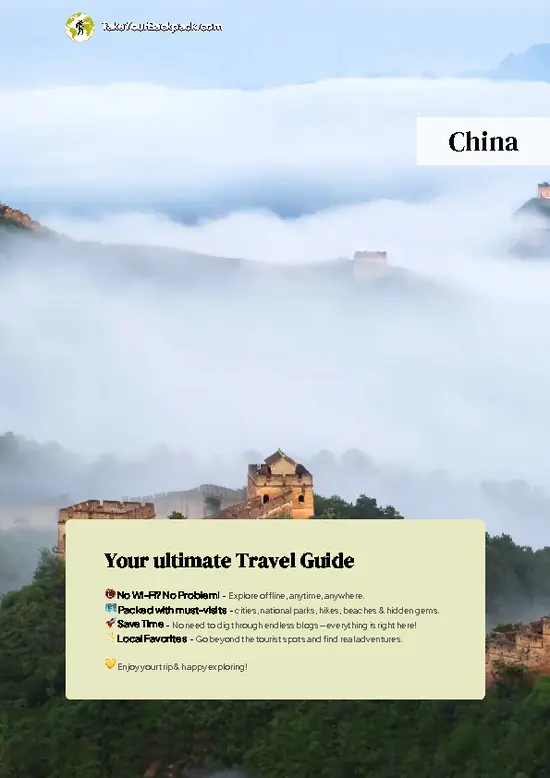
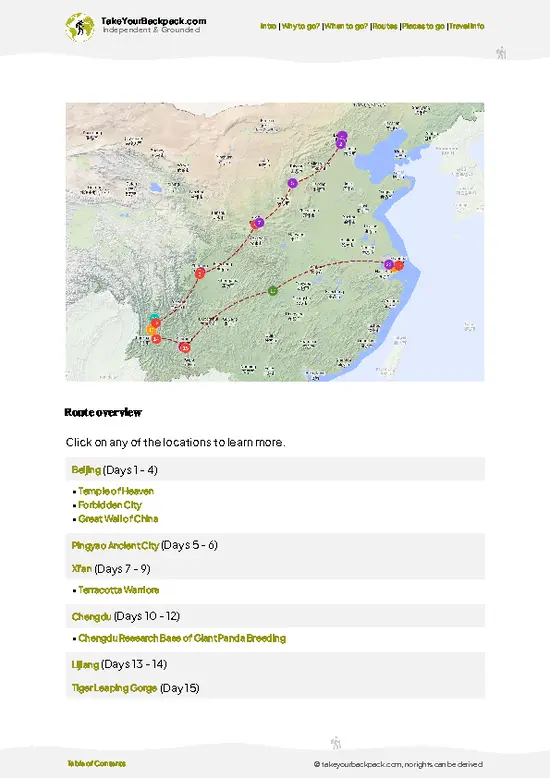
example page 0 from our offline Travel Guide for China
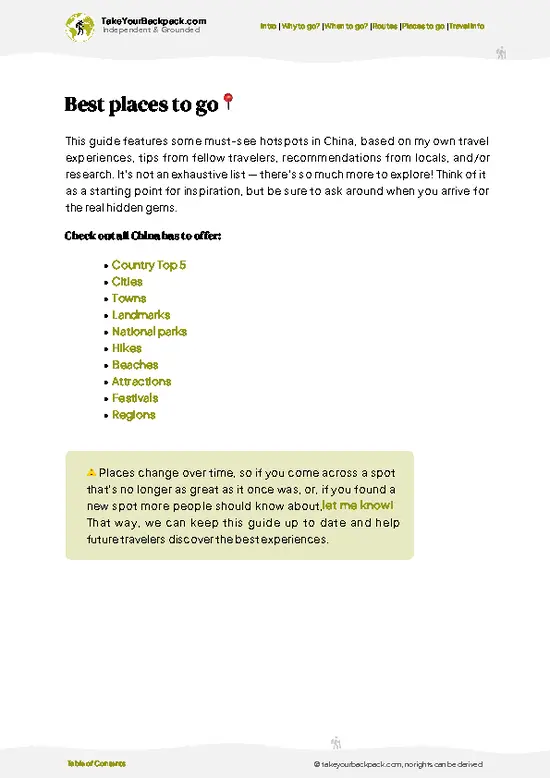
example page 1 from our offline Travel Guide for China
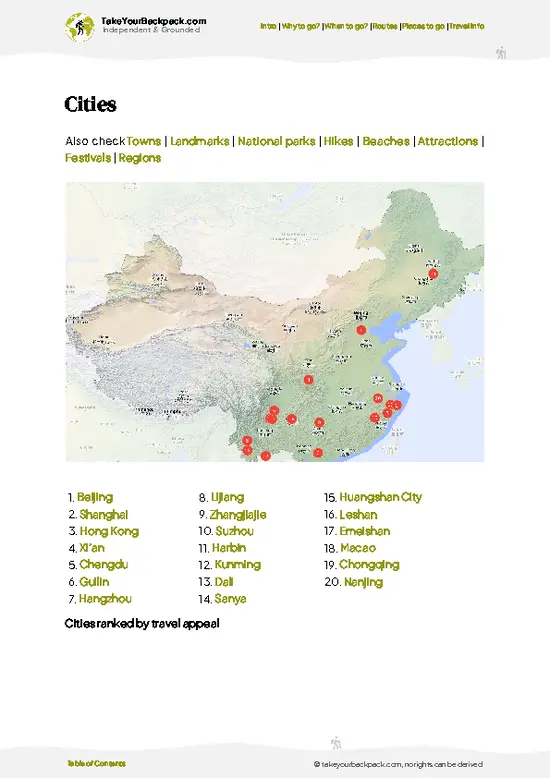
example page 2 from our offline Travel Guide for China
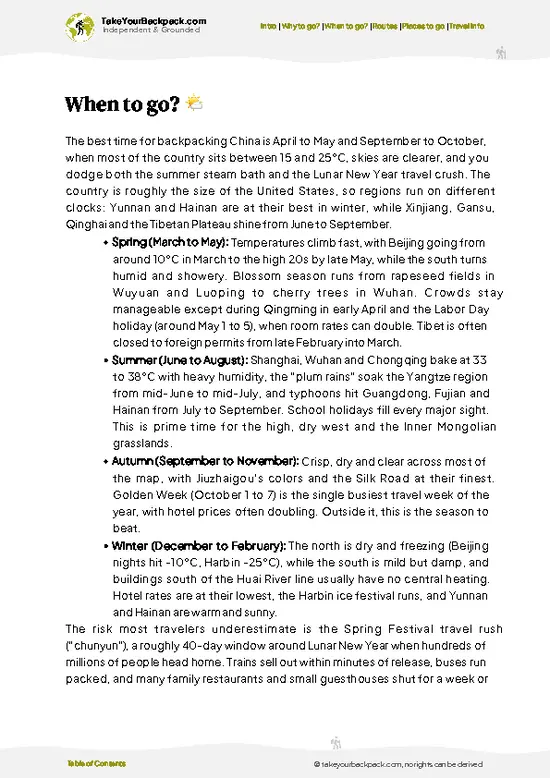
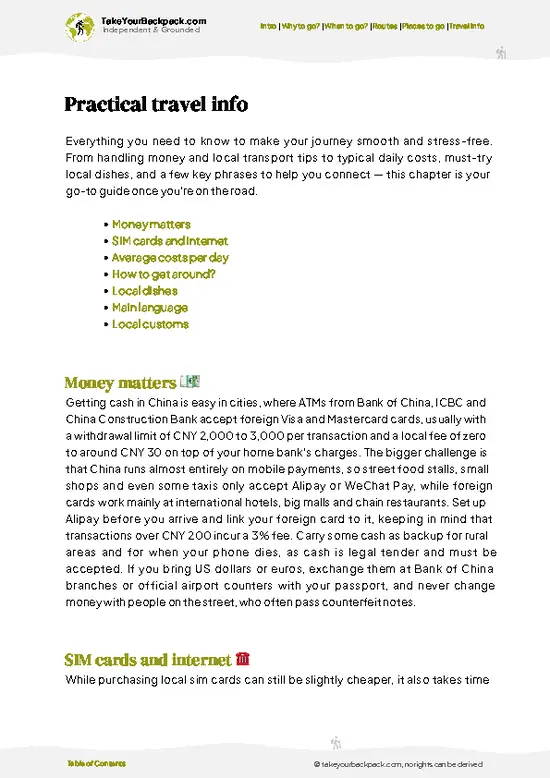
example page 3 from our offline Travel Guide for China
example page 4 from our offline Travel Guide for China
example page 5 from our offline Travel Guide for China
example page 6 from our offline Travel Guide for China
example page 7 from our offline Travel Guide for China
The digital guide (463 pages) contains:
130 highlights, ranked by travel appeal
Optimized 14, 21 & 30-day travel routes
Cities, national parks, landmarks, beaches
How to get around
Offline-friendly for travel without Wi-Fi
👉 Click to see all 30+ guide features

📅 Plan smarter in minutes, not weeks
Month by month travel advice
Festivals & national holidays
Budget expectations

🗺️ Go to the right places, skip the overrated ones
Honest pros & cons of destinations
Top hikes, parks & viewpoints
Lesser-known places most travelers miss
Clear “worth it vs skip it” guidance

🛏️ Travel smoothly without rookie mistakes
Best areas to stay
Transport systems explained simply
Common scams & safety advice
SIM cards, money & practical tips

🌍 Understand the country, not just visit it
Culture & traditions
52 Essential phrases & customs
Festivals worth planning around
Traveler-friendly historical context
Insights that make places more meaningful

📱 Built for real travel conditions
Fully downloadable PDF
Works completely offline
Optimized for phone use
Useful in remote areas & buses
Everything in one place
Save weeks of stressful planning
Get instant access to your full guide. 30‑day money-back guarantee.
+ Add another guide for just R$44.25

By proceeding you agree to our terms.
Sent to your inbox immediately after payment • 100% Secure Checkout
Best Backpacking Travel Advisor 2025 tourism awardBest Backpacking
Travel Advisor
2025
What others say about Take Your Backpack Guides:
⭐⭐⭐⭐⭐
Fantastic, amazing amount of information!
⭐⭐⭐⭐⭐
My goodness this is amazing, it's what I've been looking for hats off too you!
⭐⭐⭐⭐⭐
I think this is absolutely BRILLIANT
⭐⭐⭐⭐
Very complete and informative. It's still missing places, but I gotta to commend you
⭐⭐⭐⭐⭐
This is truly amazing, thank you, can't wait to explore it with my kids!
⭐⭐⭐⭐⭐
Awesome resource, thank you!
⭐⭐⭐⭐⭐
This is amazing! Can't wait to explore the ones I haven't seen
⭐⭐⭐⭐
I love this! Well done, great idea.
⭐⭐⭐⭐⭐
Thanks for taking the time to make this gem!
⭐⭐⭐⭐⭐
This might be the best website I've ever seen.
⭐⭐⭐⭐⭐
Congratulations, and thank you so much for your work; it's incredibly valuable.
⭐⭐⭐⭐
In all seriousness I think you did a great job pointing out the important spots
⭐⭐⭐⭐⭐
10/10 very good
⭐⭐⭐⭐⭐
As someone who's only just starting to visit regularly this is awesome, thank you.
⭐⭐⭐⭐
Thank you very much! I'm going to visit my dad, it's going to be very useful!
⭐⭐⭐⭐⭐
This is really cool! We'll be travelling for the first time and this definitely come in handy.
⭐⭐⭐⭐⭐
You are now our minister of culture, congratulations 👨‍💼
⭐⭐⭐⭐⭐
Just wanted to tell you that this is a pearl! Going to follow your recommendations.
⭐⭐⭐⭐⭐
This is so cool. I'll definitely be using the resource for my travels soon.
⭐⭐⭐⭐⭐
This is very impressive! Good work.
⭐⭐⭐⭐⭐
This is an amazing and informative site. Very well done!

🛏️ Where to stay?How to pick the right area

Guangzhou’s backpacker sweet spot is the Yuexiu District, especially around Beijing Road and the nearby Huanshi Road. This area strikes a smart balance between budget and convenience. It’s safe, bustling with local life, and packed with affordable hostels that cater to solo travelers and small groups. You’ll find a social vibe here without the chaos of tourist traps—think lively street markets, local eateries, and easy access to public transit. It’s a place where you can plug into the city’s rhythm without feeling like a fish out of water.

Compared to the more upscale Tianhe District, which leans … read more 👉
Guangzhou’s backpacker sweet spot is the Yuexiu District, especially around Beijing Road and the nearby Huanshi Road. This area strikes a smart balance between budget and convenience. It’s safe, bustling with local life, and packed with affordable hostels that cater to solo travelers and small groups. You’ll find a social vibe here without the chaos of tourist traps—think lively street markets, local eateries, and easy access to public transit. It’s a place where you can plug into the city’s rhythm without feeling like a fish out of water.

Compared to the more upscale Tianhe District, which leans heavily toward business travelers and luxury stays, Yuexiu offers a more grounded, authentic experience without sacrificing comfort. It’s also a better bet than the older Liwan District, which, while rich in history, can feel a bit scattered and less backpacker-friendly in terms of social spaces and hostel density.

If you’re playing the trade-off game, Yuexiu gives you solid comfort and social opportunities without blowing your budget or wasting time on long commutes. The hostels here tend to be clean, safe, and well-connected, making it easy to explore Guangzhou’s sprawling urban landscape. It’s the kind of neighborhood where you can meet fellow travelers, grab a cheap bite, and still feel like you’re living the city, not just passing through it.

🚌 Getting aroundGetting around like a local

Guangzhou moves like a river with both currents and eddies—there’s a pulse of precision beneath the surface chaos. It’s a city where the clock matters, but so does the human rhythm. You’ll find the metro trains running like clockwork, slicing through the city’s veins with surgical efficiency. Yet, on the streets, scooters weave unpredictably, and buses sometimes pause for a moment of local negotiation. The flow here demands you read between the lines: schedules are real, but so is the improvisation. Your choices between time, money, and comfort will shape how you tap into this dynamic.


  • Metro (Guangzhou Metro): Runs from 6:00 AM to midnight, with trains every 2-5 minutes during peak hours. Tickets cost between 2 to 7 CNY depending on distance. Fast and reliable, it’s the backbone for covering
read more 👉
Guangzhou moves like a river with both currents and eddies—there’s a pulse of precision beneath the surface chaos. It’s a city where the clock matters, but so does the human rhythm. You’ll find the metro trains running like clockwork, slicing through the city’s veins with surgical efficiency. Yet, on the streets, scooters weave unpredictably, and buses sometimes pause for a moment of local negotiation. The flow here demands you read between the lines: schedules are real, but so is the improvisation. Your choices between time, money, and comfort will shape how you tap into this dynamic.


  • Metro (Guangzhou Metro): Runs from 6:00 AM to midnight, with trains every 2-5 minutes during peak hours. Tickets cost between 2 to 7 CNY depending on distance. Fast and reliable, it’s the backbone for covering long distances quickly without breaking the bank. Expect clean, air-conditioned cars and clear signage in English, making it a no-brainer for budget travelers who value speed and comfort.


  • City Buses: Operating roughly from 5:30 AM to 11:00 PM, fares hover around 2 CNY flat. Buses cover areas the metro doesn’t reach, but they’re slower and less predictable due to traffic. Comfort is basic—crowded during rush hours, no air conditioning on some lines. Ideal if you want to save money and don’t mind sacrificing time or a bit of ease.


  • Shared Electric Scooters: Available 24/7 via apps like Meituan or Didi, costing about 1-2 CNY per kilometer. They offer a flexible, quick way to navigate short distances or bridge gaps between transit stops. Comfort depends on your balance and the weather, but they’re a fun, cost-effective option if you’re confident on two wheels and want to dodge traffic snarls.


  • Walking: Guangzhou’s neighborhoods are dense and vibrant, making walking a surprisingly efficient choice for short hops. It costs nothing and lets you soak in street-level details missed by faster transport. The trade-off is time and energy, especially in the summer heat and humidity. But if you’re after authentic encounters and micro-adventures, this is your go-to.


  • Taxi and Ride-Hailing (Didi): Starting fare around 12 CNY, with rides typically costing 20-50 CNY within central areas. Available 24/7, taxis offer door-to-door comfort and speed but at a higher price. Traffic jams can erode your time advantage, so this is a choice when comfort and convenience outweigh budget constraints.

👛 Costs (as of 4 September 2026)How expensive it really is

Backpacking in Guangzhou offers a range of affordable options for independent travelers.
  • Dorm accommodation: In high season, expect to pay around USD10 to 15 per night; off-season prices can drop to USD7 to 12.
  • Meals: Street food and local eateries typically cost between USD3 to 7 per meal, making it easy to eat well on a budget.
  • Local transport: Single metro or bus rides usually cost USD0.30 to 0.50, ideal for short trips around the city.
  • City transport pass: A daily metro pass can be purchased for about USD3 to 5, offering unlimited rides and convenience.
  • Basic activities/entry fees: Many cultural sites and museums charge between USD2 to 6 for entry, with some free options available.
  • Miscellaneous expenses: Budget around USD2 to 5 for essentials like bottled water, snacks, or minor incidentals.
read more 👉
Backpacking in Guangzhou offers a range of affordable options for independent travelers.
  • Dorm accommodation: In high season, expect to pay around USD10 to 15 per night; off-season prices can drop to USD7 to 12.
  • Meals: Street food and local eateries typically cost between USD3 to 7 per meal, making it easy to eat well on a budget.
  • Local transport: Single metro or bus rides usually cost USD0.30 to 0.50, ideal for short trips around the city.
  • City transport pass: A daily metro pass can be purchased for about USD3 to 5, offering unlimited rides and convenience.
  • Basic activities/entry fees: Many cultural sites and museums charge between USD2 to 6 for entry, with some free options available.
  • Miscellaneous expenses: Budget around USD2 to 5 for essentials like bottled water, snacks, or minor incidentals.
Overall, a daily budget of USD25 to 50 covers basic accommodation, food, transport, and activities comfortably. Guangzhou’s efficient public transport and affordable street food make it a practical and enjoyable city for budget travelers.


source: numbeo.com
⚠️ Prices can change and everyone travels differently, so take this as a rough guide. Hope it helps you plan your adventure!

🚌 Day tripsShort trips worth adding

Guangzhou is a strategic hub for backpackers who want to stretch their legs beyond the city limits without the hassle of overnight packing or expensive transfers. It’s a place where time, money, and comfort balance out neatly, letting you squeeze in rich experiences without burning out.

Chimelong Safari Park
If you’re craving a wild day without venturing too far, Chimelong Safari Park is a solid pick. It’s about a 45-minute metro and bus combo from central Guangzhou, making it a manageable morning start. The park’s ticket is around 200 RMB, which might seem steep on a tight budget, but it’s worth it for the scale and variety of animals you’ll see roaming in large, naturalistic enclosures. Avoid weekends if you can—crowds turn the experience into a slow shuffle. Spring and autumn offer the … read more 👉
Guangzhou is a strategic hub for backpackers who want to stretch their legs beyond the city limits without the hassle of overnight packing or expensive transfers. It’s a place where time, money, and comfort balance out neatly, letting you squeeze in rich experiences without burning out.

Chimelong Safari Park
If you’re craving a wild day without venturing too far, Chimelong Safari Park is a solid pick. It’s about a 45-minute metro and bus combo from central Guangzhou, making it a manageable morning start. The park’s ticket is around 200 RMB, which might seem steep on a tight budget, but it’s worth it for the scale and variety of animals you’ll see roaming in large, naturalistic enclosures. Avoid weekends if you can—crowds turn the experience into a slow shuffle. Spring and autumn offer the best weather, keeping you comfortable while you explore.


Foshan’s Ancestral Temple
Just 30 minutes by metro, Foshan’s Ancestral Temple is a dive into Guangdong’s cultural roots without the tourist crush of Guangzhou’s main sites. Entry is cheap, usually under 20 RMB, and the temple complex is a compact walk, so you won’t waste time or energy. The intricate wood carvings and traditional lion dance performances (if you time it right) give you a genuine feel for local heritage. Midweek visits are ideal to dodge crowds, and the cooler months make wandering the open courtyards more pleasant. First-timers often underestimate how quickly you can cover the site, so don’t overpack your day here.


Qingyuan’s Huangteng Gorge
For a nature fix that’s a bit more adventurous, Huangteng Gorge in Qingyuan is reachable in about two hours by bus or a mix of train and local transport. It’s a budget-friendly escape with entrance fees around 50 RMB and offers hiking trails, waterfalls, and cliff jumping for the brave. The gorge is best visited in late spring or early autumn when the water levels are safe and the weather isn’t punishing. The trade-off here is time—two hours each way—but the payoff is a refreshing contrast to city life. Many travelers skip this because of the travel time, but if you’re okay with an early start, it’s a high-value day trip.


Shamian Island
A quick 20-minute taxi or metro ride drops you on Shamian Island, a peaceful enclave with colonial architecture and leafy streets. It’s free to wander, making it a perfect low-cost, low-effort break from Guangzhou’s urban buzz. The island’s charm lies in its quiet cafes and riverside views, best enjoyed in the late afternoon when the light softens and the crowds thin. Don’t expect a packed itinerary here; it’s a place to slow down and soak in a different pace. The common mistake is rushing through—this trip rewards those who linger.


Each of these trips from Guangzhou offers a distinct flavor of the region, balancing travel time and cost with comfort and experience. You’re not just ticking boxes; you’re choosing how to invest your day, whether it’s culture, nature, or a simple change of scenery.
Want to know what more China offers?
The China Travel Guide describes 130 highlights, from cities to national parks, from beaches to hikes

Get the Travel Guide -

🍲 FoodWhat to Eat & Drink

Guangzhou’s food scene is a playground for your taste buds, especially if you’re chasing authentic Cantonese flavors. Think dim sum that’s more than just a meal—it’s a ritual of tiny steamed dumplings, silky rice rolls, and crispy pork buns, each bite bursting with delicate balance. Don’t miss the slow-cooked soups, a local obsession, simmered for hours to extract deep, nourishing flavors that feel like a warm handshake from the city itself.

Backpackers usually dive into the chaos of bustling wet markets and street stalls where the air is thick with the scent of charred meats and fresh herbs. These spots aren’t polished, but that’s the point—they’re where locals gather, chatter, and eat with gusto. Casual eateries here serve up hearty bowls of wonton noodles or roasted goose, dishes that … read more 👉
Guangzhou’s food scene is a playground for your taste buds, especially if you’re chasing authentic Cantonese flavors. Think dim sum that’s more than just a meal—it’s a ritual of tiny steamed dumplings, silky rice rolls, and crispy pork buns, each bite bursting with delicate balance. Don’t miss the slow-cooked soups, a local obsession, simmered for hours to extract deep, nourishing flavors that feel like a warm handshake from the city itself.

Backpackers usually dive into the chaos of bustling wet markets and street stalls where the air is thick with the scent of charred meats and fresh herbs. These spots aren’t polished, but that’s the point—they’re where locals gather, chatter, and eat with gusto. Casual eateries here serve up hearty bowls of wonton noodles or roasted goose, dishes that hit the spot without draining your wallet. For drinks, forget fancy cocktails; grab a cold Tsingtao or a sweet, milky tea from a street vendor, perfect for cooling down after a spicy bite.

Eating in Guangzhou is social and unhurried. Sharing plates is the norm, and it’s polite to try a bit of everything offered. Slurping noodles isn’t just accepted—it’s encouraged, a sign you’re enjoying the meal. And if you’re invited to toast, raise your glass with a firm “Ganbei!”—it’s the local cheers, and skipping it might ruffle feathers. Here, food and drink aren’t just fuel; they’re a way to plug into the city’s rhythm and warmth.

🛡️ SafetyScams, Hazards, and Annoyances

Guangzhou is generally safe for backpackers, but like any major city, it rewards a sharp eye and a calm demeanor. Crowded spots like Beijing Road and the markets around Shangxiajiu can get overwhelming, and that’s where pickpockets might test your vigilance. Keep your valuables close and avoid flashing expensive gear. Solo travelers, especially at night, should stick to well-lit, busy streets—areas like Zhujiang New Town are lively and secure after dark, but the outskirts can feel deserted and less predictable.

Scams here aren’t elaborate but can be persistent: expect the occasional overenthusiastic street vendor or taxi driver who might try to inflate prices. A firm, polite “no, thank you” works wonders. Also, watch for counterfeit goods in markets—if a deal sounds too good to be true, … read more 👉
Guangzhou is generally safe for backpackers, but like any major city, it rewards a sharp eye and a calm demeanor. Crowded spots like Beijing Road and the markets around Shangxiajiu can get overwhelming, and that’s where pickpockets might test your vigilance. Keep your valuables close and avoid flashing expensive gear. Solo travelers, especially at night, should stick to well-lit, busy streets—areas like Zhujiang New Town are lively and secure after dark, but the outskirts can feel deserted and less predictable.

Scams here aren’t elaborate but can be persistent: expect the occasional overenthusiastic street vendor or taxi driver who might try to inflate prices. A firm, polite “no, thank you” works wonders. Also, watch for counterfeit goods in markets—if a deal sounds too good to be true, it probably is. The key is blending confidence with courtesy; walk with purpose, know your route, and you’ll navigate Guangzhou’s rhythm without a hitch. This city’s real challenge is its pace, not its peril.

FAQFrequently asked questions about Guangzhou

3 to 4 days are sufficient to explore Guangzhou's main attractions, including the Canton Tower, Shamian Island, and the Chen Clan Ancestral Hall. This allows time for local markets and trying Cantonese cuisine. More days are needed if planning day trips to nearby cities like Foshan.
Yes, Guangzhou is generally safe for solo backpackers. The city has a low crime rate in tourist areas, and public transport is reliable and well-connected. Standard precautions like avoiding poorly lit areas at night and securing belongings are advised.
Guangzhou is known for its Cantonese cuisine, including dim sum and seafood, as well as its role as a major trading port and manufacturing hub. It is also famous for the Canton Fair, the largest trade fair in China, held twice a year in April and October.
⚠️ Things can change over time, so always validate details locally before you go.

Other Chinese cities near Guangzhou

Explore more nearby:

  • Shenzhen—tech hub, modern skyline, border with Hong Kong| 104 km away
  • Macao—Portuguese heritage, casinos, colonial facades| 107 km away
  • Guilin—karst peaks, Li River, rural villages| 385 km away

💡 Not sure where to go next?
Create a personalized itinerary for China including Guangzhou and the places that fit your trip.

Generate my itinerary

👉 Discover all cities

Or checkout all China has to offer (think cities, towns, villages, national parks, hikes, beaches, festivals)
Country photo of China

We 💚 feedbackWhat to keep in mind

Guangzhou nails it when it comes to blending old-school charm with a relentless, modern pulse—think centuries-old markets rubbing shoulders with skyscrapers that light up the night sky. That mix alone makes it worth your time. But heads up: the city’s sheer size and traffic can chew up hours you might want for exploring. If you’re not strategic about when and how you move around, you’ll spend more time stuck than soaking it all in.

✈️ When did I visit China?
As part of my 1.5 year travel around the world trip, I visited China in August 2015, coming from Mongolia by the TransMongolia Express.

✍️ Help improve this page!
The information on this page is based on my own backpacking experience in China, supplemented with up-to-date research and feedback from other travelers. Travel details can change, so if you notice anything outdated or incomplete, feel free to let me know.


🙋‍♂️ Give feedback

👋 Meet the founderWho’s Behind Take Your Backpack?

Johan, backpacker and founder of TakeYourBackpackHi, I’m Johan (Netherlands 🇳🇱), the creator of TakeYourBackpack. Over the past decade, I’ve backpacked through 80+ countries across six continents, gaining extensive experience with independent travel, long-term trips, and overland routes.

This site is built on a combination of firsthand travel experience and carefully curated insights from other backpackers. Many guides are based on places I’ve personally visited, while others bring together tips, observations, and practical advice shared by trusted travelers I’ve met along the way.

The goal is to provide realistic, experience-driven guidance — not generic itineraries — so you can explore destinations with better context, clearer expectations, and more confidence.

Get full China guide •
Instant download • 130 highlights • Full Offline guide