×

China🇨🇳 | citiesShenzhentech hub, modern skyline, border with Hong Kong | things to do and best time to go

Explore GuangzhouExplore Chongqing

Backpacking in Shenzhen
👍 Recommendedcity ranked #22
By Johan Kruseman 🇳🇱 | Updated September 4, 2026

Picture this: you’ve just landed in Shenzhen, and you’re staring down the choice between a lightning-fast, pricy high-speed train to the city center or a slow, dirt-cheap bus that eats up your afternoon. This is Shenzhen in a nutshell—a city that forces you to weigh time, money, and comfort at every turn. Sitting just north of Hong Kong, Shenzhen is China’s poster child for rapid transformation: a tech metropolis built almost overnight, where glass towers and neon malls crowd out the old fishing villages. For backpackers, it’s a paradox. The city is safe, efficient, and loaded with quirky museums (like the mind-bending Dafen Oil Painting Village) and sprawling parks, but it’s not the place for ancient temples or postcard alleys. Meeting other travelers can be hit-or-miss; hostels exist, but the scene is quieter than in nearby Guangzhou. Costs are mid-range—cheaper than Hong Kong, pricier than most of mainland China. The vibe? Hyper-modern, ambitious, and a little impersonal, but if you love urban puzzles and want to see China’s future in real time, Shenzhen is a fascinating stop.

Discover everything you want to know in the 📖 China Travel Guide.


Get your China guide
130 ranked highlights, routes & tips, works offline (463 pages)
Loading the map 🌍
CLICK TO FILTER
cities
towns
landmarks
national parks
hikes
beaches
attractions
festivals
regions
SHOW COUNTRY’S BESTSHOW ALL

✨ Why go?
Ranked #22 city in China
Reasons people choose to visit here

Shenzhen isn’t your typical backpacker magnet, but that’s exactly why it works. It’s a city that plays the role of a strategic basecamp rather than a destination you linger in for weeks. The real win here is how Shenzhen balances comfort and convenience without demanding a premium price. Hostels and budget accommodations are plentiful and modern, making it easy to recharge before heading out. The city’s walkability is surprisingly good for a place this size, so you can explore neighborhoods without wasting time or money on taxis. Food options range from street stalls to affordable restaurants, offering a solid taste of local flavors without the tourist markup.

What really tips the scale is Shenzhen’s role as a launchpad for day trips and onward travel. It’s a transport hub with fast trains … read more 👉
Shenzhen isn’t your typical backpacker magnet, but that’s exactly why it works. It’s a city that plays the role of a strategic basecamp rather than a destination you linger in for weeks. The real win here is how Shenzhen balances comfort and convenience without demanding a premium price. Hostels and budget accommodations are plentiful and modern, making it easy to recharge before heading out. The city’s walkability is surprisingly good for a place this size, so you can explore neighborhoods without wasting time or money on taxis. Food options range from street stalls to affordable restaurants, offering a solid taste of local flavors without the tourist markup.

What really tips the scale is Shenzhen’s role as a launchpad for day trips and onward travel. It’s a transport hub with fast trains and buses connecting you to nearby highlights and border crossings, saving you hours compared to starting from bigger cities like Guangzhou or Hong Kong. Nightlife here is low-key but lively enough to unwind after a day of trekking or city hopping. If your trip is about maximizing time and value while keeping comfort in check, Shenzhen fits neatly into a backpacking route as a practical, no-nonsense stopover rather than a long-haul stay.
Want to include Shenzhen in your China route?
Create a personalized China itinerary that includes Shenzhen and the places that fit your trip — based on your travel style, budget, and available time. Get your route in seconds.

Generate my trip

💡 HighlightsThe experiences that define the visit

Ping An Finance Centre Observation Deck
Shenzhen’s vertical ambition is best understood from the 116th floor of the Ping An Finance Centre. This is not just a skyscraper; it’s a statement. The observation deck delivers a dizzying, 360-degree sweep of the city’s relentless sprawl, the green veins of parks, and—on a clear day—the distant shimmer of Hong Kong. The price of admission (about 200 RMB) buys you a shortcut to the city’s sense of scale. Expect to spend 60-90 minutes. Go late afternoon for the golden hour, but brace for crowds. If you want the city’s pulse in one panoramic hit, this is the trade: money and a bit of patience for a memory that recalibrates your sense of urban possibility.

OCT Loft Creative Culture Park
This is where Shenzhen’s creative class rewrites the city’s narrative. … read more 👉
Ping An Finance Centre Observation Deck
Shenzhen’s vertical ambition is best understood from the 116th floor of the Ping An Finance Centre. This is not just a skyscraper; it’s a statement. The observation deck delivers a dizzying, 360-degree sweep of the city’s relentless sprawl, the green veins of parks, and—on a clear day—the distant shimmer of Hong Kong. The price of admission (about 200 RMB) buys you a shortcut to the city’s sense of scale. Expect to spend 60-90 minutes. Go late afternoon for the golden hour, but brace for crowds. If you want the city’s pulse in one panoramic hit, this is the trade: money and a bit of patience for a memory that recalibrates your sense of urban possibility.

OCT Loft Creative Culture Park
This is where Shenzhen’s creative class rewrites the city’s narrative. Once a cluster of factories, now a sprawl of galleries, indie bookstores, design shops, and coffee dens. You’re not here for a checklist; you’re here to wander, to eavesdrop on design students, to stumble into a pop-up exhibition or a jazz set in a repurposed warehouse. Entry is free, but coffee and curiosity are your currency. Give it 2-3 hours, especially late afternoon into evening when the place hums. The trade-off: time and a bit of walking for a sense of Shenzhen’s restless, youthful energy.

Dafen Oil Painting Village
A living paradox: thousands of artists painting everything from Van Gogh knockoffs to original canvases, all in a dense grid of studios and alleys. It’s a crash course in the city’s manufacturing-meets-art DNA. You can commission a portrait, chat with painters, or just marvel at the sheer volume of creativity on tap. Free to enter, but you’ll want to budget for a small artwork (from 100 RMB up). Allow 1-2 hours, mornings are quieter. The trade: comfort (it’s hot, crowded, and gloriously chaotic) for a direct encounter with the city’s entrepreneurial spirit.

Lianhua Mountain Park
Shenzhen’s lungs and its living room. Locals picnic, fly kites, and climb the gentle hill for a breezy, open-air view of the city skyline and the bronze statue of Deng Xiaoping. It’s a rare patch of calm in a city that rarely stops. Free entry, and you can do the round-trip walk in 1-2 hours. Early morning or late afternoon is best for shade and people-watching. The only cost is a bit of sweat and the reward is a slice of everyday Shenzhen.

Shenzhen Museum (Futian)
If you want to decode how a fishing village became a tech metropolis in one generation, this is your Rosetta Stone. The exhibits are sharp, bilingual, and honest about the city’s breakneck transformation. Free entry, and you’ll need 1-2 hours to do it justice. Go on a weekday to avoid school groups. The trade: time indoors for a mental map of the city’s DNA.

Dongmen Pedestrian Street
This is Shenzhen in full sensory overload: neon, street food, bargain fashion, and crowds that never thin. It’s not for the faint of heart, but if you want to taste the city’s working-class hustle, this is the arena. Free to enter, but you’ll want cash for snacks (10-30 RMB) and impulse buys. Evenings are peak chaos. Give it 1-2 hours, and wear your most forgiving shoes. The trade: comfort and personal space for a jolt of pure local flavor.

For day trips, the beaches of Dameisha, the ancient walled village of Dapeng Fortress, and the lush trails of Wutong Mountain are all within striking distance—Dapeng Fortress is my personal favorite for its time-warped alleys and sea breezes.
Spotted a mistake or missing something? Contact us.

Things to do in Shenzhen

Ratings based on Tripadvisor reviews. When you book through this link, you support our work at no extra cost to you.

🏘️ NeighborhoodsNeighborhood guide to Shenzhen

Shenzhen is a sprawling metropolis where each neighborhood offers a distinct flavor and trade-offs between cost, convenience, and comfort. Knowing where to base yourself can turn a chaotic city into a strategic playground.

Luohu: The classic backpacker hub. It’s where you’ll find budget hostels, easy access to Hong Kong via the border, and a bustling market scene. The vibe is gritty but lively, perfect if you want to dive into street food and local life without breaking the bank. Walkability is decent, and public transport connections are solid. Nightlife is low-key but authentic. Ideal for short stays or those prioritizing cost and border convenience over comfort.

Nanshan: This is Shenzhen’s tech and innovation heart, with a more polished, modern feel. Prices here lean higher, especially … read more 👉
Shenzhen is a sprawling metropolis where each neighborhood offers a distinct flavor and trade-offs between cost, convenience, and comfort. Knowing where to base yourself can turn a chaotic city into a strategic playground.

Luohu: The classic backpacker hub. It’s where you’ll find budget hostels, easy access to Hong Kong via the border, and a bustling market scene. The vibe is gritty but lively, perfect if you want to dive into street food and local life without breaking the bank. Walkability is decent, and public transport connections are solid. Nightlife is low-key but authentic. Ideal for short stays or those prioritizing cost and border convenience over comfort.

Nanshan: This is Shenzhen’s tech and innovation heart, with a more polished, modern feel. Prices here lean higher, especially for accommodation, but you get cleaner streets, green spaces, and a quieter atmosphere. It’s less walkable unless you’re near the subway, but transport links are excellent. Nightlife is more upscale and sparse. Best for longer stays if you want a balance of comfort and city access, but don’t mind spending a bit more.

Futian: The administrative and commercial core. It’s a maze of skyscrapers, shopping malls, and government offices. Accommodation ranges from budget to mid-tier, but expect a more corporate vibe. Walkability is good around the central business district, and the metro system is a major plus. Nightlife is a mix of bars and clubs, leaning toward business crowds. Great for travelers who want efficient transport and don’t mind a less cozy environment.

Shekou: A former expat enclave with a relaxed waterfront feel. It’s quieter, with cafes and international eateries, but prices are higher and walkability varies. Transport is decent but less central. Nightlife is mellow, focusing on bars and restaurants rather than clubs. Perfect if you want a break from the urban rush and can afford a bit more comfort.

Each neighborhood demands a trade-off: Luohu for budget and border access, Nanshan for modern comfort, Futian for transport efficiency, and Shekou for relaxed vibes. Your choice shapes your Shenzhen experience—pick your priorities and own the city.

⌛️ 1 dayWhat you can realistically do in a day

Shenzhen is a city that often gets overshadowed by its glitzy neighbor Hong Kong, but it’s a fascinating place where rapid innovation meets pockets of surprising calm. It’s a city built on ambition, with soaring skyscrapers and sprawling tech hubs, yet it also offers green spaces and cultural corners that reveal a different side of modern China. If you’ve got just one day, the trick is to balance the high-energy urban pulse with moments that let you breathe in the city’s evolving character.

Start your morning in the Futian district, the heart of Shenzhen’s business and cultural scene. Here, the Shenzhen Museum offers a sharp, well-curated look at the city’s transformation from a fishing village to a tech powerhouse. It’s not just history; it’s a story of relentless change, and it sets the … read more 👉
Shenzhen is a city that often gets overshadowed by its glitzy neighbor Hong Kong, but it’s a fascinating place where rapid innovation meets pockets of surprising calm. It’s a city built on ambition, with soaring skyscrapers and sprawling tech hubs, yet it also offers green spaces and cultural corners that reveal a different side of modern China. If you’ve got just one day, the trick is to balance the high-energy urban pulse with moments that let you breathe in the city’s evolving character.

Start your morning in the Futian district, the heart of Shenzhen’s business and cultural scene. Here, the Shenzhen Museum offers a sharp, well-curated look at the city’s transformation from a fishing village to a tech powerhouse. It’s not just history; it’s a story of relentless change, and it sets the tone for understanding the city’s DNA. Afterward, wander through the nearby Lianhuashan Park. Climbing to the top rewards you with a sweeping view of the city’s skyline, a reminder of how far Shenzhen has come in just a few decades.

By afternoon, shift gears to the OCT Loft Creative Culture Park in Nanshan. This area used to be industrial warehouses but now buzzes with art studios, quirky cafes, and indie shops. It’s a refreshing break from the corporate gloss and a spot where you can soak up local creativity without the tourist crowds. Grab lunch here—there are plenty of options that mix international flavors with local flair.

As evening falls, head to the Shekou neighborhood. It’s a bit off the standard tourist radar but worth the detour. The vibe here is relaxed, with a waterfront promenade perfect for a stroll and plenty of seafood restaurants where you can enjoy fresh catches without the tourist markup. Watching the sunset over the Pearl River estuary while sampling local dishes feels like a quiet victory after a day of urban exploration.

This itinerary keeps you grounded in just two main areas, so you’re not sprinting across the city but savoring its layers. Shenzhen’s charm isn’t just in ticking off sights—it’s in feeling the pulse of a city that’s always reinventing itself, and knowing you’ve caught a glimpse of its real rhythm.
Turn your Shenzhen visit into an China adventure
Build a complete China route with Shenzhen, hidden gems, must-see destinations, and realistic travel times included.

Generate my trip

🌤️ When to go?Weather, crowds, and seasonal trade-offs


  • Weather: Shenzhen’s subtropical climate means hot, humid summers and mild winters. From June to August, expect temperatures around 28-33°C (82-91°F) with heavy rain and typhoon risks. Spring (March to May) and autumn (September to November) offer more stable, pleasant weather.

  • Temperature: Winters (December to February) are mild, hovering around 13-20°C (55-68°F), making it comfortable for walking but less vibrant in greenery. Spring and autumn hit the sweet spot with highs between 20-28°C (68-82°F), perfect for outdoor exploration without sweating buckets.

  • Daylight Hours: Shenzhen enjoys roughly 11-13 hours of daylight year-round. The longest days are in June and July, giving you more time to squeeze in sightseeing, while shorter winter days mean planning your hikes and city walks
read more 👉

  • Weather: Shenzhen’s subtropical climate means hot, humid summers and mild winters. From June to August, expect temperatures around 28-33°C (82-91°F) with heavy rain and typhoon risks. Spring (March to May) and autumn (September to November) offer more stable, pleasant weather.

  • Temperature: Winters (December to February) are mild, hovering around 13-20°C (55-68°F), making it comfortable for walking but less vibrant in greenery. Spring and autumn hit the sweet spot with highs between 20-28°C (68-82°F), perfect for outdoor exploration without sweating buckets.

  • Daylight Hours: Shenzhen enjoys roughly 11-13 hours of daylight year-round. The longest days are in June and July, giving you more time to squeeze in sightseeing, while shorter winter days mean planning your hikes and city walks more tightly.

  • Crowds: Peak tourist season aligns with Chinese public holidays like Golden Week in early October and Lunar New Year in late January or February. Avoid these if you want fewer crowds and better accommodation deals.

  • Seasonal Activities: Autumn hosts Shenzhen’s outdoor festivals and flower shows, while spring brings blooming parks and coastal breezes. Summer’s heavy rains limit outdoor plans but open up indoor cultural venues and shopping sprees.

  • Price Fluctuations: Accommodation and flights spike during national holidays and summer vacation months (July-August). Visiting in shoulder seasons like March-April or late October offers better rates and a more relaxed vibe.


Pro-tip: Aim for late March to early May or late September to early November—these windows balance weather, crowd size, and cost, letting you experience Shenzhen’s energy without the sweat or the stampede.


source: climatestotravel.comJANJanuary: good for travelingFEBFebruary: good for travelingMARMarch: highly recommended for travelingAPRApril: excellent for travelingMAYMay: highly recommended for travelingJUNJune: fair for travelingJULJuly: fair for travelingAUGAugust: fair for travelingSEPSeptember: highly recommended for travelingOCTOctober: excellent for travelingNOVNovember: highly recommended for travelingDECDecember: good for traveling
when-to-go

✈️ The backpacker research shortcutChina Travel Guide

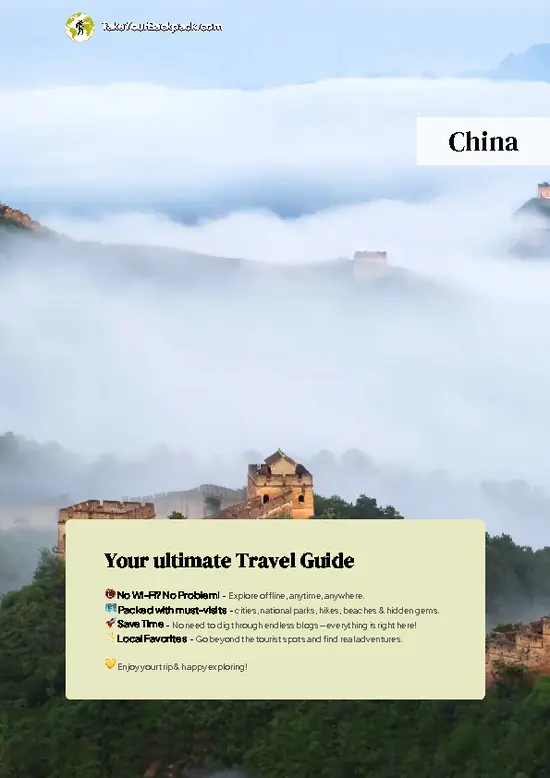
An offline-friendly backpacking guide with optimized travel routes, ranked highlights, transport advice, and the best areas to stay.
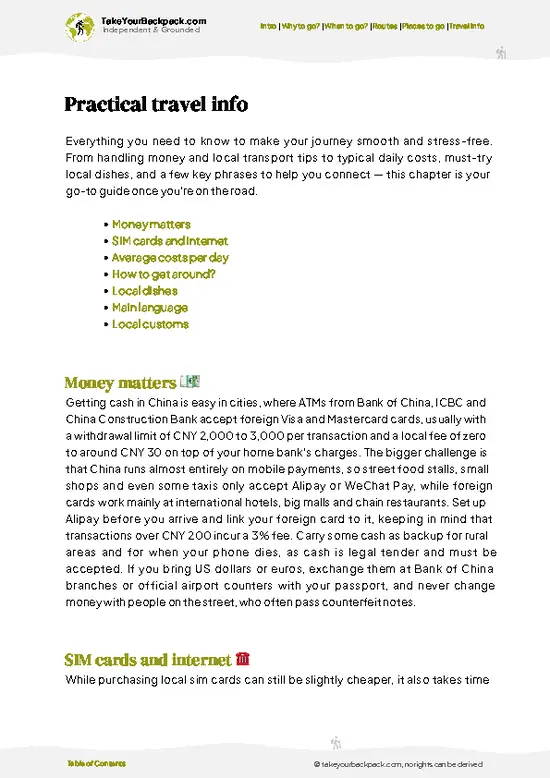
example page 0 from our offline Travel Guide for China
example page 1 from our offline Travel Guide for China
example page 2 from our offline Travel Guide for China
example page 3 from our offline Travel Guide for China
example page 4 from our offline Travel Guide for China
example page 5 from our offline Travel Guide for China
example page 6 from our offline Travel Guide for China
example page 7 from our offline Travel Guide for China
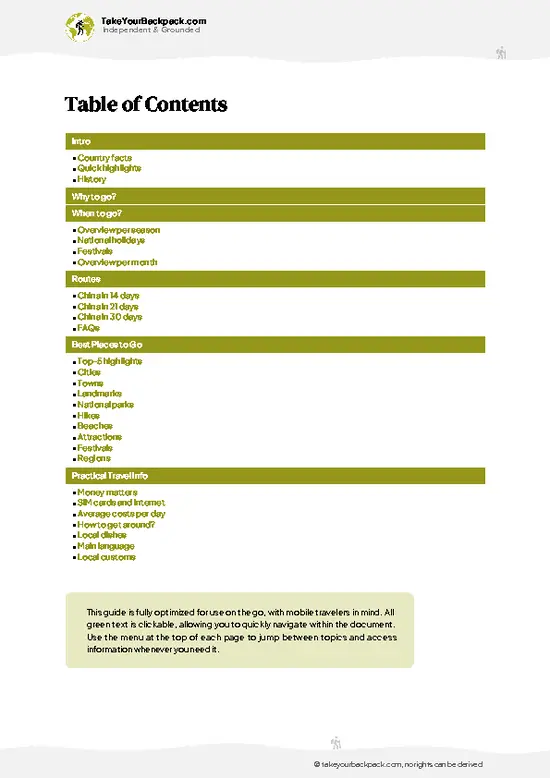
The digital guide (463 pages) contains:
130 highlights, ranked by travel appeal
Optimized 14, 21 & 30-day travel routes
Cities, national parks, landmarks, beaches
How to get around
Offline-friendly for travel without Wi-Fi
👉 Click to see all 30+ guide features

📅 Plan smarter in minutes, not weeks
Month by month travel advice
Festivals & national holidays
Budget expectations

🗺️ Go to the right places, skip the overrated ones
Honest pros & cons of destinations
Top hikes, parks & viewpoints
Lesser-known places most travelers miss
Clear “worth it vs skip it” guidance

🛏️ Travel smoothly without rookie mistakes
Best areas to stay
Transport systems explained simply
Common scams & safety advice
SIM cards, money & practical tips

🌍 Understand the country, not just visit it
Culture & traditions
52 Essential phrases & customs
Festivals worth planning around
Traveler-friendly historical context
Insights that make places more meaningful

📱 Built for real travel conditions
Fully downloadable PDF
Works completely offline
Optimized for phone use
Useful in remote areas & buses
Everything in one place
Save weeks of stressful planning
Get instant access to your full guide. 30‑day money-back guarantee.
+ Add another guide for just US$7.80

By proceeding you agree to our terms.
Sent to your inbox immediately after payment • 100% Secure Checkout
Best Backpacking Travel Advisor 2025 tourism awardBest Backpacking
Travel Advisor
2025
What others say about Take Your Backpack Guides:
⭐⭐⭐⭐⭐
Fantastic, amazing amount of information!
⭐⭐⭐⭐⭐
My goodness this is amazing, it's what I've been looking for hats off too you!
⭐⭐⭐⭐⭐
I think this is absolutely BRILLIANT
⭐⭐⭐⭐
Very complete and informative. It's still missing places, but I gotta to commend you
⭐⭐⭐⭐⭐
This is truly amazing, thank you, can't wait to explore it with my kids!
⭐⭐⭐⭐⭐
Awesome resource, thank you!
⭐⭐⭐⭐⭐
This is amazing! Can't wait to explore the ones I haven't seen
⭐⭐⭐⭐
I love this! Well done, great idea.
⭐⭐⭐⭐⭐
Thanks for taking the time to make this gem!
⭐⭐⭐⭐⭐
This might be the best website I've ever seen.
⭐⭐⭐⭐⭐
Congratulations, and thank you so much for your work; it's incredibly valuable.
⭐⭐⭐⭐
In all seriousness I think you did a great job pointing out the important spots
⭐⭐⭐⭐⭐
10/10 very good
⭐⭐⭐⭐⭐
As someone who's only just starting to visit regularly this is awesome, thank you.
⭐⭐⭐⭐
Thank you very much! I'm going to visit my dad, it's going to be very useful!
⭐⭐⭐⭐⭐
This is really cool! We'll be travelling for the first time and this definitely come in handy.
⭐⭐⭐⭐⭐
You are now our minister of culture, congratulations 👨‍💼
⭐⭐⭐⭐⭐
Just wanted to tell you that this is a pearl! Going to follow your recommendations.
⭐⭐⭐⭐⭐
This is so cool. I'll definitely be using the resource for my travels soon.
⭐⭐⭐⭐⭐
This is very impressive! Good work.
⭐⭐⭐⭐⭐
This is an amazing and informative site. Very well done!

🛏️ Where to stay?Best areas and accommodation options

Shenzhen’s sprawling urban landscape can feel like a maze, but for backpackers, the choice of neighborhood boils down to a strategic trade-off between accessibility, budget, and social energy. The clear winner for budget travelers and solo backpackers is the Luohu district. It’s the gateway for cross-border travelers from Hong Kong, which means it’s buzzing with hostels that cater to a diverse, international crowd. Safety here is solid, thanks to heavy police presence and well-lit streets, so you can roam without the usual city jitters. The vibe is practical but lively—think bustling markets, … read more 👉
Shenzhen’s sprawling urban landscape can feel like a maze, but for backpackers, the choice of neighborhood boils down to a strategic trade-off between accessibility, budget, and social energy. The clear winner for budget travelers and solo backpackers is the Luohu district. It’s the gateway for cross-border travelers from Hong Kong, which means it’s buzzing with hostels that cater to a diverse, international crowd. Safety here is solid, thanks to heavy police presence and well-lit streets, so you can roam without the usual city jitters. The vibe is practical but lively—think bustling markets, street food stalls, and easy access to public transit that connects you to the rest of Shenzhen without draining your wallet or time.

Compare this to Futian, the city’s central business district. It’s cleaner and more modern but leans toward pricier accommodations and a more corporate crowd. Socially, it’s quieter for backpackers, and hostels are fewer, pushing you toward expensive hotels or serviced apartments. The trade-off here is comfort and convenience at a higher cost, with less of the spontaneous social buzz that makes backpacking fun.

Nanshan, home to tech hubs and universities, offers a middle ground. It’s safe and has some budget options, but it’s more spread out, so expect longer transit times. The social scene is more local and less backpacker-focused, which can be a plus or minus depending on your style.

In short, Luohu nails the balance of budget, safety, and social energy. It’s where you get the most bang for your buck and the best chance to meet fellow travelers without sacrificing comfort or time. The other districts serve specific needs but come with clear trade-offs that savvy backpackers should weigh carefully.

🚌 Getting aroundGetting around like a local

Shenzhen moves like a high-speed train with a mind of its own—part precision, part improvisation. It’s a city built on rapid growth and relentless energy, where schedules are tight but the pulse is unpredictable. You’ll find a grid of order beneath the surface chaos, a system designed to keep millions flowing smoothly, yet it’s flexible enough to let you slip through the cracks if you know where to look. Time, money, and comfort don’t just trade places here—they dance, sometimes in sync, sometimes stepping on each other’s toes. Mastering Shenzhen’s transit is about reading the rhythm and choosing your battles wisely.


  • Metro: The backbone of Shenzhen’s transit, running from 6:30 AM to midnight. Fares start at about 2 RMB and scale with distance, making it a fast, reliable, and affordable
read more 👉
Shenzhen moves like a high-speed train with a mind of its own—part precision, part improvisation. It’s a city built on rapid growth and relentless energy, where schedules are tight but the pulse is unpredictable. You’ll find a grid of order beneath the surface chaos, a system designed to keep millions flowing smoothly, yet it’s flexible enough to let you slip through the cracks if you know where to look. Time, money, and comfort don’t just trade places here—they dance, sometimes in sync, sometimes stepping on each other’s toes. Mastering Shenzhen’s transit is about reading the rhythm and choosing your battles wisely.


  • Metro: The backbone of Shenzhen’s transit, running from 6:30 AM to midnight. Fares start at about 2 RMB and scale with distance, making it a fast, reliable, and affordable way to cover long distances. Trains arrive every 2-5 minutes during peak hours, offering a clean, air-conditioned ride that’s a solid balance of speed and comfort.


  • City Buses: Covering almost every corner, buses cost between 2 to 4 RMB, but expect slower travel due to traffic and frequent stops. They run roughly from 6 AM to 10 PM. Buses are less comfortable—crowded and sometimes hot—but they’re unbeatable for budget travelers aiming to reach spots beyond the metro’s reach without breaking the bank.


  • Taxis and Ride-Hailing (Didi): Starting fares hover around 10 RMB, with prices rising quickly during rush hours or longer trips. Taxis offer door-to-door convenience and comfort but can get stuck in traffic, turning a quick trip into a slow crawl. Ride-hailing apps add a layer of predictability and cashless payment, but both options demand a bigger slice of your budget.


  • Walking: Often overlooked but surprisingly effective in Shenzhen’s dense neighborhoods like Futian and Luohu. Walking costs nothing and lets you soak in the city’s street-level energy, but it’s only practical for short distances or when you want to explore local markets and eateries. The city’s hot, humid climate can make this a sweaty choice, so plan accordingly.


  • Bicycle and E-Scooter Rentals: A growing option for short hops, with prices around 1-2 RMB per 30 minutes. These offer a sweet spot between speed and cost, especially for last-mile connections. Shenzhen’s bike lanes are improving but remain inconsistent, so comfort and safety vary depending on the neighborhood.

👛 Costs (as of 4 September 2026)What things cost and how to budget

Backpacking in Shenzhen offers a range of budget options that can keep your daily expenses manageable. Here's a breakdown of typical costs:
  • Dorm accommodation: In high season, expect to pay around USD12 to 20 per night, while off-season rates can drop to USD8 to 15.
  • Meals: Street food and local eateries offer meals for about USD3 to 7 each, with daily food costs averaging USD10 to 15.
  • Local transport: Single bus or metro rides cost roughly USD0.50 to 1.00, with daily travel expenses around USD2 to 4.
  • City transport pass: A daily metro pass is available for about USD4 to 5, which is convenient if you plan multiple trips.
  • Basic activities/entry fees: Many parks and museums charge between USD2 to 8 for entry, so budgeting USD5 to 10 daily for activities is reasonable.
  • Miscellaneous expenses: This includes
read more 👉
Backpacking in Shenzhen offers a range of budget options that can keep your daily expenses manageable. Here's a breakdown of typical costs:
  • Dorm accommodation: In high season, expect to pay around USD12 to 20 per night, while off-season rates can drop to USD8 to 15.
  • Meals: Street food and local eateries offer meals for about USD3 to 7 each, with daily food costs averaging USD10 to 15.
  • Local transport: Single bus or metro rides cost roughly USD0.50 to 1.00, with daily travel expenses around USD2 to 4.
  • City transport pass: A daily metro pass is available for about USD4 to 5, which is convenient if you plan multiple trips.
  • Basic activities/entry fees: Many parks and museums charge between USD2 to 8 for entry, so budgeting USD5 to 10 daily for activities is reasonable.
  • Miscellaneous expenses: This includes water, snacks, and small purchases, typically around USD3 to 6 per day.

Total daily budget for backpackers in Shenzhen generally falls between USD30 and 60. This range covers comfortable dorm stays, meals, transport, and some sightseeing without stretching your wallet.


source: numbeo.com
⚠️ Prices can change and everyone travels differently, so take this as a rough guide. Hope it helps you plan your adventure!

🚌 Day tripsBest day trips from Shenzhen

Shenzhen is a powerhouse for day-trippers because it’s a launchpad into a mix of urban buzz, cultural quirks, and nature escapes—all within a couple of hours. You’re not just saving on accommodation; you’re gaining a strategic advantage in time and variety.

Dapeng Fortress
This Ming-era walled town feels like stepping into a living history book, with its stone streets and ancient architecture preserved against the modern sprawl. It’s about an hour and a half by bus from Shenzhen’s city center, costing less than $5 round-trip. The fortress itself is free to explore, but budget a few yuan for snacks or a quick local meal. Spring and autumn are perfect here—avoid the summer heat and humidity that can sap your energy. First-timers often rush through, missing the quiet alleys and local markets … read more 👉
Shenzhen is a powerhouse for day-trippers because it’s a launchpad into a mix of urban buzz, cultural quirks, and nature escapes—all within a couple of hours. You’re not just saving on accommodation; you’re gaining a strategic advantage in time and variety.

Dapeng Fortress
This Ming-era walled town feels like stepping into a living history book, with its stone streets and ancient architecture preserved against the modern sprawl. It’s about an hour and a half by bus from Shenzhen’s city center, costing less than $5 round-trip. The fortress itself is free to explore, but budget a few yuan for snacks or a quick local meal. Spring and autumn are perfect here—avoid the summer heat and humidity that can sap your energy. First-timers often rush through, missing the quiet alleys and local markets that reveal the real charm. Take your time and soak in the slower pace.


Xiaomeisha Beach
If you need a break from concrete and neon, Xiaomeisha offers a surprisingly accessible coastal retreat just 40 minutes from Shenzhen by metro and bus, with total transport costs under $3. The beach is clean and less touristy than nearby Dameisha, making it a better value for your downtime. Early mornings or late afternoons are ideal to dodge crowds and the midday sun. Don’t expect luxury resorts here; it’s a simple spot where you can swim, picnic, or just watch fishing boats drift by. Pack your own food to keep costs down and avoid the overpriced stalls.


Hakka Tulou Clusters in Meizhou
This one’s a bit of a stretch—around three hours by train and bus—but it’s a rare glimpse into the communal living structures of the Hakka people, a UNESCO World Heritage site. For about $15-$20 total transport, you get a full day immersed in architecture and culture unlike anywhere else in Guangdong. The best window is autumn when the weather is crisp and the tulou are framed by harvest colors. Many skip this trip due to the travel time, but if you’re after something off the beaten path without overnighting, it’s a high-value trade-off. Just start early and pack snacks; public transport options dwindle late in the day.


Wutong Mountain
If you want to stretch your legs without leaving Shenzhen, Wutong Mountain is your go-to. It’s a solid two-hour hike up and down, accessible by metro and bus for under $4 total. The summit rewards you with panoramic views of the city and coastline, a reminder that Shenzhen’s urban jungle sits right next to real wilderness. Avoid weekends if you want solitude; locals flock here for exercise and picnics. Bring water and sturdy shoes—many underestimate the steep sections and end up turning back early. The best time is autumn or winter when the air is clear and the bugs are fewer.


Each of these trips balances time, cost, and comfort differently, but all deliver a payoff that’s more than just ticking a box. Shenzhen’s transport network is efficient and affordable, letting you tailor your day trips to exactly how much energy and money you want to spend—turning logistics into a game you can win.
Want to know what more China offers?
The China Travel Guide describes 130 highlights, from cities to national parks, from beaches to hikes

Get the Travel Guide -

🍲 FoodEating & Drinking in Shenzhen

Shenzhen’s food scene is a playground for your taste buds, where Cantonese roots meet bold, inventive twists. Don’t miss the chance to dive into seafood dim sum—think fresh shrimp dumplings that pop with juice and silky rice rolls that melt on your tongue. The city’s signature, salt-baked chicken, offers a crispy, fragrant crust hiding tender meat inside, a perfect example of how simple ingredients get elevated here.

Backpackers will find their rhythm in the bustling night markets and street food stalls, where sizzling woks and fragrant spices fill the air. These spots are alive with locals grabbing quick bites, so you’re not just eating—you’re stepping into daily life. Casual noodle shops and small eateries serve up bowls of beef brisket noodles or congee that warm you after a long day of … read more 👉
Shenzhen’s food scene is a playground for your taste buds, where Cantonese roots meet bold, inventive twists. Don’t miss the chance to dive into seafood dim sum—think fresh shrimp dumplings that pop with juice and silky rice rolls that melt on your tongue. The city’s signature, salt-baked chicken, offers a crispy, fragrant crust hiding tender meat inside, a perfect example of how simple ingredients get elevated here.

Backpackers will find their rhythm in the bustling night markets and street food stalls, where sizzling woks and fragrant spices fill the air. These spots are alive with locals grabbing quick bites, so you’re not just eating—you’re stepping into daily life. Casual noodle shops and small eateries serve up bowls of beef brisket noodles or congee that warm you after a long day of exploring. For drinks, the local tea culture is strong—grab a cup of pu’er or oolong tea brewed fresh, or try a quirky bubble tea with unexpected flavors that locals swear by.

Eating in Shenzhen is social and unpretentious. Sharing dishes is the norm, so don’t hesitate to dig in family-style. Expect chopsticks to be your best friend, and a quick nod or smile goes a long way in the lively, sometimes noisy dining rooms. Here, food isn’t just fuel—it’s a conversation starter, a way to connect, and a delicious puzzle to solve with every bite.

🛡️ SafetyStaying Safe: What Travelers Should Know

Shenzhen is broadly safe for backpackers, but like any major city, it rewards a sharp eye and a calm demeanor. The city’s sprawling tech hubs and busy markets can overwhelm, especially around Luohu and Huaqiangbei, where crowds and fast-paced commerce create ripe conditions for pickpockets. Keep your valuables close and avoid flashy displays of cash or gadgets. Solo travelers, particularly at night, should stick to well-lit, populated areas—Shenzhen’s nightlife is lively but not a free-for-all. Taxis can be a minor headache; insist on meters or use ride-hailing apps to avoid inflated fares. Scams here are less about outright theft and more about subtle hustles—like inflated prices in tourist-heavy spots or vendors pushing low-quality knockoffs. The best defense is a confident, polite refusal … read more 👉
Shenzhen is broadly safe for backpackers, but like any major city, it rewards a sharp eye and a calm demeanor. The city’s sprawling tech hubs and busy markets can overwhelm, especially around Luohu and Huaqiangbei, where crowds and fast-paced commerce create ripe conditions for pickpockets. Keep your valuables close and avoid flashy displays of cash or gadgets. Solo travelers, particularly at night, should stick to well-lit, populated areas—Shenzhen’s nightlife is lively but not a free-for-all. Taxis can be a minor headache; insist on meters or use ride-hailing apps to avoid inflated fares. Scams here are less about outright theft and more about subtle hustles—like inflated prices in tourist-heavy spots or vendors pushing low-quality knockoffs. The best defense is a confident, polite refusal and a readiness to walk away. Shenzhen’s efficiency and orderliness mean annoyances are usually small and manageable, not threats. Stay aware, move with purpose, and you’ll find the city’s pulse more invigorating than intimidating.

FAQCommon questions from travelers

3 to 4 days are sufficient to explore Shenzhen's main attractions including Window of the World, Splendid China Folk Village, and the vibrant shopping districts. This allows time for both cultural sites and modern urban experiences.
Yes, Shenzhen is generally safe for solo backpackers with low crime rates and good public transportation. Standard precautions apply, especially in crowded areas and at night.
Shenzhen is known for its rapid economic growth, high-tech industry, and modern architecture. It is also famous for being a major manufacturing hub and a gateway to Hong Kong.
⚠️ Things can change over time, so always validate details locally before you go.

Other Chinese cities near Shenzhen

Explore more nearby:

  • Macao—Portuguese heritage, casinos, colonial facades| 65 km away
  • Guangzhou—Cantonese food, wholesale markets, Pearl River| 104 km away
  • Haikou—volcanic parks, old port, Hainan cuisine| 487 km away

💡 Not sure where to go next?
Create a personalized itinerary for China including Shenzhen and the places that fit your trip.

Generate my itinerary

👉 Discover all cities

Or checkout all China has to offer (think cities, towns, villages, national parks, hikes, beaches, festivals)
Country photo of China

We 💚 feedbackSumming up the experience

Shenzhen is a masterclass in rapid urban evolution—its skyline and tech scene pulse with a future-forward energy that’s rare anywhere else. If you’re curious about China’s leap into modernity, this city delivers a front-row seat. But don’t expect the laid-back charm of older cities; Shenzhen’s pace can feel relentless, and its sprawling layout means you’ll spend more time navigating transit than lingering in cozy corners. It’s a trade-off worth knowing before you dive in.

✈️ When did I visit China?
As part of my 1.5 year travel around the world trip, I visited China in August 2015, coming from Mongolia by the TransMongolia Express.

✍️ Help improve this page!
The information on this page is based on my own backpacking experience in China, supplemented with up-to-date research and feedback from other travelers. Travel details can change, so if you notice anything outdated or incomplete, feel free to let me know.


🙋‍♂️ Give feedback

👋 Meet the founderWho’s Behind Take Your Backpack?

Johan, backpacker and founder of TakeYourBackpackHi, I’m Johan (Netherlands 🇳🇱), the creator of TakeYourBackpack. Over the past decade, I’ve backpacked through 80+ countries across six continents, gaining extensive experience with independent travel, long-term trips, and overland routes.

This site is built on a combination of firsthand travel experience and carefully curated insights from other backpackers. Many guides are based on places I’ve personally visited, while others bring together tips, observations, and practical advice shared by trusted travelers I’ve met along the way.

The goal is to provide realistic, experience-driven guidance — not generic itineraries — so you can explore destinations with better context, clearer expectations, and more confidence.

Get full China guide •
Instant download • 130 highlights • Full Offline guide