×

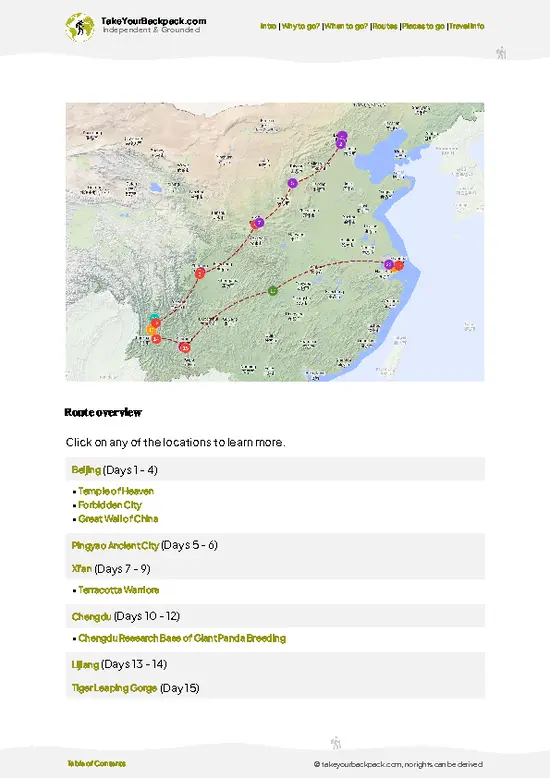
China🇨🇳 | landmarksHonghe Hani Rice TerracesLayered paddies, Hani villages, misty valleys | things to do and best time to go

Explore Great Wall of ChinaExplore Huangshan Mountain

Backpacking in Honghe Hani Rice Terraces
UNESCO World Heritage site
👌 Worth visitingunique site ranked #16
By Johan Kruseman 🇳🇱 | Updated May 28, 2026

Everyone chases that one perfect sunrise shot over the Honghe Hani Rice Terraces, then gets annoyed when the clouds, haze, or tour groups don’t cooperate. The real payoff isn’t the postcard; it’s wandering the Hani villages, hearing water channels gurgle past mud-brick houses, and realizing this whole mountainside is a 1,000‑year engineering project still feeding people. Down in southern Yunnan, near Yuanyang in Honghe Prefecture, it’s remote, cheap once you arrive, and light on nightlife but heavy on slow, earthy atmosphere. Expect some ticket fees, scattered viewpoints, basic buses, and a lot of “wow” that sneaks up on you between photos, not during them.

Discover everything you want to know in the 📖 China Travel Guide.


Get your China guide
139 ranked highlights, routes & tips, works offline (496 pages)
Loading the map 🌍
CLICK TO FILTER
cities
towns
landmarks
national parks
hikes
beaches
attractions
festivals
regions
SHOW COUNTRY’S BESTSHOW ALL

✨ Why go?
Ranked #16 unique site in China
Why Honghe Hani Rice Terraces should be on your travel list

The Honghe Hani Rice Terraces in China are a must-see for backpackers who crave authenticity. Yes, the crowds can be overwhelming, especially during peak seasons, but the effort to navigate them is worth it. These terraces are not just a pretty picture; they tell a story of centuries-old agricultural practices and the Hani people’s deep connection to the land.

You can explore the village life nearby, where you’ll find locals still using traditional methods. The cost is low—entry fees are minimal, and you can find budget accommodations. Plus, they fit seamlessly into a broader route through Yunnan, making them a natural stop between other stunning sites. This isn’t just a photo op; it’s a chance to experience a living culture.
Want to include Honghe Hani Rice Terraces in your China route?
Create a personalized China itinerary that includes Honghe Hani Rice Terraces and the places that fit your trip — based on your travel style, budget, and available time. Get your route in seconds.

Generate my trip

💡 HighlightsThe experiences that define the visit

  • Duoyishu Viewpoint — The classic postcard shot: hundreds of terraces stacked like ripples and mirror-like when they’re flooded. Best for sunrise — light hits the curves and you get that crazy interplay of gold, water and shadow. (Personal favorite — you can’t beat the quiet at first light.)
  • Laohuzui / “Tiger Mouth” Terrace — Dramatic, sweeping curves that look engineered for drama. From the right angle it’s a huge crescent; the scale and red-soil contrast make it one of the most sculptural terraces in the valley.
  • Bada Terraces — Less crowded than Duoyishu but just as photogenic, with layered steps that glow during sunrise and sunset. Good for panoramas and for seeing how terraces change color through the day.
  • Sea of Clouds & Light Shows — When the valley fills with mist in the cool months
read more 👉
  • Duoyishu Viewpoint — The classic postcard shot: hundreds of terraces stacked like ripples and mirror-like when they’re flooded. Best for sunrise — light hits the curves and you get that crazy interplay of gold, water and shadow. (Personal favorite — you can’t beat the quiet at first light.)
  • Laohuzui / “Tiger Mouth” Terrace — Dramatic, sweeping curves that look engineered for drama. From the right angle it’s a huge crescent; the scale and red-soil contrast make it one of the most sculptural terraces in the valley.
  • Bada Terraces — Less crowded than Duoyishu but just as photogenic, with layered steps that glow during sunrise and sunset. Good for panoramas and for seeing how terraces change color through the day.
  • Sea of Clouds & Light Shows — When the valley fills with mist in the cool months you get floating clouds between terrace bands and dramatic shafts of light. It’s atmospheric, constantly changing, and why many people time visits for winter/spring mornings.
  • Hani Villages & Living Cultural Landscape — Terraces aren’t an empty museum — they’re worked by Hani communities. Visit villages like Xinjie to see traditional houses, festivals, and everyday farming life; the terraces are part of a living cultural system, not just scenery.
  • Traditional Irrigation & Ancient Engineering — The water channels, contour farming and communal irrigation have been maintained for centuries (the whole landscape is UNESCO-listed). It’s an impressive, low-tech ecological system that keeps terraces green and productive.
  • Walks, Homestays & Working-Season Scenes — Hike between terraces, stay with a local family, and time your trip for planting or harvest to watch farmers at work — it’s the best way to feel the place. Night markets, simple local food and early-morning labor scenes add real texture to the visit.
Spotted a mistake or missing something? Contact us.

🌤️ When to go?Choosing the right time of year


  • Weather: The terraces shine after the spring rains, from April to June, when paddies brim with water, reflecting the sky. Avoid the heavy monsoon months of July and August; slippery trails and soggy gear kill the vibe.

  • Temperature: Spring and autumn offer mild temps—15-25°C (59-77°F)—perfect for hiking without sweating buckets or freezing your toes off.

  • Daylight Hours: Longer days in late spring and early summer give you more time to explore and catch golden hour shots without rushing.

  • Crowds: Peak season is May and October. Expect tour groups and selfie sticks. For a quieter, more authentic experience, hit the shoulder months like late March or early November.

  • Seasonal Activities: Planting season (April-May) and harvest time (September-October) are when locals work the terraces,
read more 👉

  • Weather: The terraces shine after the spring rains, from April to June, when paddies brim with water, reflecting the sky. Avoid the heavy monsoon months of July and August; slippery trails and soggy gear kill the vibe.

  • Temperature: Spring and autumn offer mild temps—15-25°C (59-77°F)—perfect for hiking without sweating buckets or freezing your toes off.

  • Daylight Hours: Longer days in late spring and early summer give you more time to explore and catch golden hour shots without rushing.

  • Crowds: Peak season is May and October. Expect tour groups and selfie sticks. For a quieter, more authentic experience, hit the shoulder months like late March or early November.

  • Seasonal Activities: Planting season (April-May) and harvest time (September-October) are when locals work the terraces, offering a rare glimpse into traditional Hani culture.

  • Price Fluctuations: Accommodation and transport costs spike during peak months. Booking off-season can save you a solid chunk of cash.


Pro-tip: Time your visit for late April—water-filled terraces, manageable crowds, and local farmers in action make it the real deal, not just a postcard.


source: climatestotravel.comJANJanuary: fair for travelingFEBFebruary: fair for travelingMARMarch: good for travelingAPRApril: excellent for travelingMAYMay: highly recommended for travelingJUNJune: highly recommended for travelingJULJuly: below average for travelingAUGAugust: below average for travelingSEPSeptember: good for travelingOCTOctober: highly recommended for travelingNOVNovember: good for travelingDECDecember: fair for traveling
china-unique-site-honghe-hani-rice-terraces
© Google |

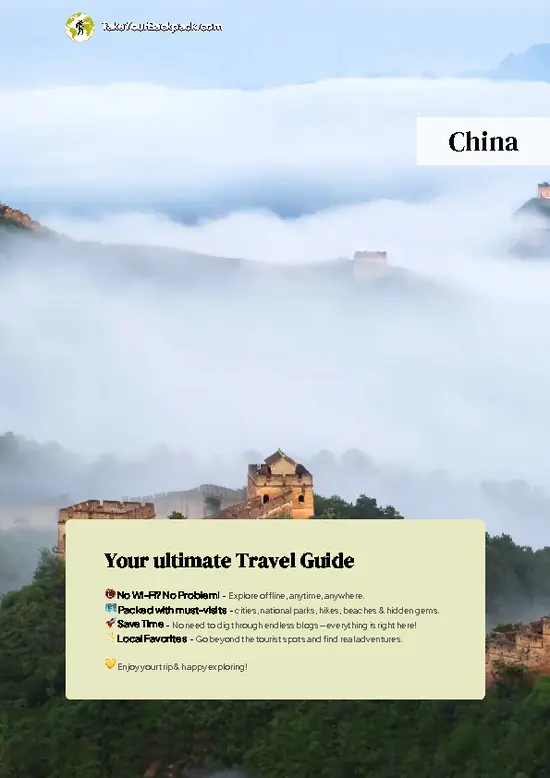
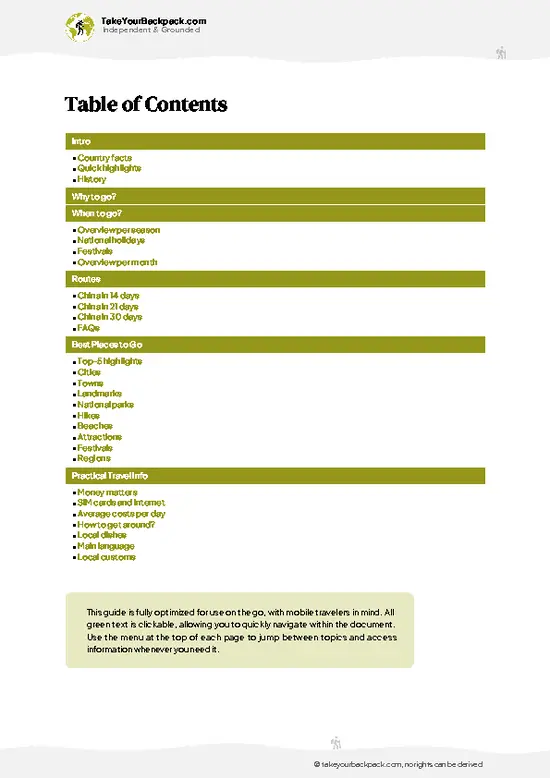
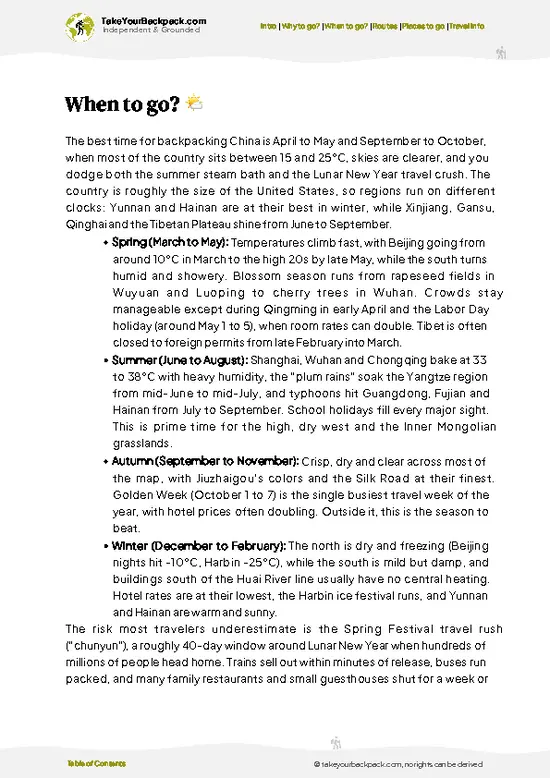
✈️ The backpacker research shortcutChina Travel Guide

An offline-friendly backpacking guide with optimized travel routes, ranked highlights, transport advice, and the best areas to stay.
example page 0 from our offline Travel Guide for China
example page 1 from our offline Travel Guide for China
example page 2 from our offline Travel Guide for China
example page 3 from our offline Travel Guide for China
example page 4 from our offline Travel Guide for China
example page 5 from our offline Travel Guide for China
example page 6 from our offline Travel Guide for China
example page 7 from our offline Travel Guide for China
The digital guide (496 pages) contains:
139 highlights, ranked by travel appeal
Optimized 14, 21 & 30-day travel routes
Cities, national parks, landmarks, beaches
How to get around
Offline-friendly for travel without Wi-Fi
👉 Click to see all 30+ guide features

📅 Plan smarter in minutes, not weeks
Month by month travel advice
Festivals & national holidays
Budget expectations

🗺️ Go to the right places, skip the overrated ones
Honest pros & cons of destinations
Top hikes, parks & viewpoints
Lesser-known places most travelers miss
Clear “worth it vs skip it” guidance

🛏️ Travel smoothly without rookie mistakes
Best areas to stay
Transport systems explained simply
Common scams & safety advice
SIM cards, money & practical tips

🌍 Understand the country, not just visit it
Culture & traditions
52 Essential phrases & customs
Festivals worth planning around
Traveler-friendly historical context
Insights that make places more meaningful

📱 Built for real travel conditions
Fully downloadable PDF
Works completely offline
Optimized for phone use
Useful in remote areas & buses
Everything in one place
Save weeks of stressful planning
Get instant access to your full guide. 30‑day money-back guarantee.


By proceeding you agree to our terms.
Sent to your inbox immediately after payment • 100% Secure Checkout
Best Backpacking Travel Advisor 2025 tourism awardBest Backpacking
Travel Advisor
2025
What others say about Take Your Backpack Guides:
⭐⭐⭐⭐⭐
Fantastic, amazing amount of information!
⭐⭐⭐⭐⭐
My goodness this is amazing, it's what I've been looking for hats off too you!
⭐⭐⭐⭐⭐
I think this is absolutely BRILLIANT
⭐⭐⭐⭐
Very complete and informative. It's still missing places, but I gotta to commend you
⭐⭐⭐⭐⭐
This is truly amazing, thank you, can't wait to explore it with my kids!
⭐⭐⭐⭐⭐
Awesome resource, thank you!
⭐⭐⭐⭐⭐
This is amazing! Can't wait to explore the ones I haven't seen
⭐⭐⭐⭐
I love this! Well done, great idea.
⭐⭐⭐⭐⭐
Thanks for taking the time to make this gem!
⭐⭐⭐⭐⭐
This might be the best website I've ever seen.
⭐⭐⭐⭐⭐
Congratulations, and thank you so much for your work; it's incredibly valuable.
⭐⭐⭐⭐
In all seriousness I think you did a great job pointing out the important spots
⭐⭐⭐⭐⭐
10/10 very good
⭐⭐⭐⭐⭐
As someone who's only just starting to visit regularly this is awesome, thank you.
⭐⭐⭐⭐
Thank you very much! I'm going to visit my dad, it's going to be very useful!
⭐⭐⭐⭐⭐
This is really cool! We'll be travelling for the first time and this definitely come in handy.
⭐⭐⭐⭐⭐
You are now our minister of culture, congratulations 👨‍💼
⭐⭐⭐⭐⭐
Just wanted to tell you that this is a pearl! Going to follow your recommendations.
⭐⭐⭐⭐⭐
This is so cool. I'll definitely be using the resource for my travels soon.
⭐⭐⭐⭐⭐
This is very impressive! Good work.
⭐⭐⭐⭐⭐
This is an amazing and informative site. Very well done!

🛏️ Where to stay?Choosing the right base

Stay around the village of Xinjie for a genuine experience near the Honghe Hani Rice Terraces. This area buzzes with backpackers, making it easy to connect with fellow travelers. You’ll find budget-friendly guesthouses that offer a warm welcome and local insights.

The vibe here is relaxed, with plenty of communal spaces to swap stories over a cup of local tea.

If you want to escape the crowds, consider the smaller villages like Laojie or Bada. They’re quieter and provide stunning views without the tourist hustle.

Just be ready for some steep walks; the terraces are best explored on foot. … read more 👉
Stay around the village of Xinjie for a genuine experience near the Honghe Hani Rice Terraces. This area buzzes with backpackers, making it easy to connect with fellow travelers. You’ll find budget-friendly guesthouses that offer a warm welcome and local insights.

The vibe here is relaxed, with plenty of communal spaces to swap stories over a cup of local tea.

If you want to escape the crowds, consider the smaller villages like Laojie or Bada. They’re quieter and provide stunning views without the tourist hustle.

Just be ready for some steep walks; the terraces are best explored on foot. The real magic lies in the sunrise over the fields, a sight that Instagram can’t capture. Embrace the journey, and you’ll find the authentic heart of this place.

👛 Costs (as of 12 January 2025)Money, prices, and spending tips

Visiting the Honghe Hani Rice Terraces is a unique experience, but it comes with its own set of costs that you should be aware of.
  • Entrance Fee: Expect to pay around €5 to €10 (approximately $5 to $11) for entry. This fee grants you access to the terraces and the surrounding areas. It’s a small price for the breathtaking views, but keep in mind that it can get crowded, especially during peak tourist seasons.
  • Transportation: Getting to the terraces can vary widely. If you’re coming from Kunming, a bus ticket will cost you about €10 to €15 ($11 to $17). Private taxis or rideshare options can run you €50 to €100 ($55 to $110), depending on your negotiation skills and the distance. Factor in local transport costs once you arrive, which can add another €5 to €10 ($5 to $11) for shuttles or local
read more 👉
Visiting the Honghe Hani Rice Terraces is a unique experience, but it comes with its own set of costs that you should be aware of.
  • Entrance Fee: Expect to pay around €5 to €10 (approximately $5 to $11) for entry. This fee grants you access to the terraces and the surrounding areas. It’s a small price for the breathtaking views, but keep in mind that it can get crowded, especially during peak tourist seasons.
  • Transportation: Getting to the terraces can vary widely. If you’re coming from Kunming, a bus ticket will cost you about €10 to €15 ($11 to $17). Private taxis or rideshare options can run you €50 to €100 ($55 to $110), depending on your negotiation skills and the distance. Factor in local transport costs once you arrive, which can add another €5 to €10 ($5 to $11) for shuttles or local buses.
  • Accommodation: Options range from budget hostels at around €10 to €20 ($11 to $22) per night to mid-range hotels costing €30 to €60 ($33 to $66). If you want a more authentic experience, consider staying in a local guesthouse, which can be found for about €15 to €30 ($17 to $33) per night. Prices can spike during festivals, so book ahead.
  • Food: Meals can be quite affordable. Street food or local eateries will set you back about €2 to €5 ($2 to $6) per meal. If you prefer dining in a restaurant, expect to pay around €10 to €20 ($11 to $22) for a decent meal. Don’t miss trying the local Hani cuisine; it’s a highlight of the trip.
  • Guided Tours: If you want to dive deeper into the culture and history, consider a guided tour. Prices typically range from €20 to €50 ($22 to $55) per person, depending on the length and inclusions. This can be a worthwhile investment to enhance your understanding of the terraces and the Hani people.

Be prepared for the crowds, especially during peak seasons. The terraces are stunning, but they attract a lot of visitors. The real magic lies in the early mornings or late afternoons when the light hits just right, and the tourists thin out.


source: chinatravel.com
⚠️ Prices can change and everyone travels differently, so take this as a rough guide. Hope it helps you plan your adventure!

Other Chinese landmarks near Honghe Hani Rice Terraces

Explore more nearby:


💡 Not sure where to go next?
Create a personalized itinerary for China including Honghe Hani Rice Terraces and the places that fit your trip.

Generate my itinerary

👉 Discover all landmarks

Or checkout all China has to offer (think cities, towns, villages, national parks, hikes, beaches, festivals)
Country photo of China

We 💚 feedbackSumming up the experience

The Honghe Hani Rice Terraces are a breathtaking testament to human ingenuity. Standing on those layered fields at sunrise, you feel the pulse of history. But let’s be real: the crowds can be overwhelming, especially during peak season. If you can time your visit right, the magic is worth the hustle. Just be prepared for the hustle.

✈️ When did I visit China?
As part of my 1.5 year travel around the world trip, I visited China in August 2015, coming from Mongolia by the TransMongolia Express.

✍️ Help improve this page!
The information on this page is based on my own backpacking experience in China, supplemented with up-to-date research and feedback from other travelers. Travel details can change, so if you notice anything outdated or incomplete, feel free to let me know.


🙋‍♂️ Give feedback

👋 Meet the founderWho’s Behind Take Your Backpack?

Johan, backpacker and founder of TakeYourBackpackHi, I’m Johan (Netherlands 🇳🇱), the creator of TakeYourBackpack. Over the past decade, I’ve backpacked through 80+ countries across six continents, gaining extensive experience with independent travel, long-term trips, and overland routes.

This site is built on a combination of firsthand travel experience and carefully curated insights from other backpackers. Many guides are based on places I’ve personally visited, while others bring together tips, observations, and practical advice shared by trusted travelers I’ve met along the way.

The goal is to provide realistic, experience-driven guidance — not generic itineraries — so you can explore destinations with better context, clearer expectations, and more confidence.

Get full China guide •
Instant download • 139 highlights • Full Offline guide