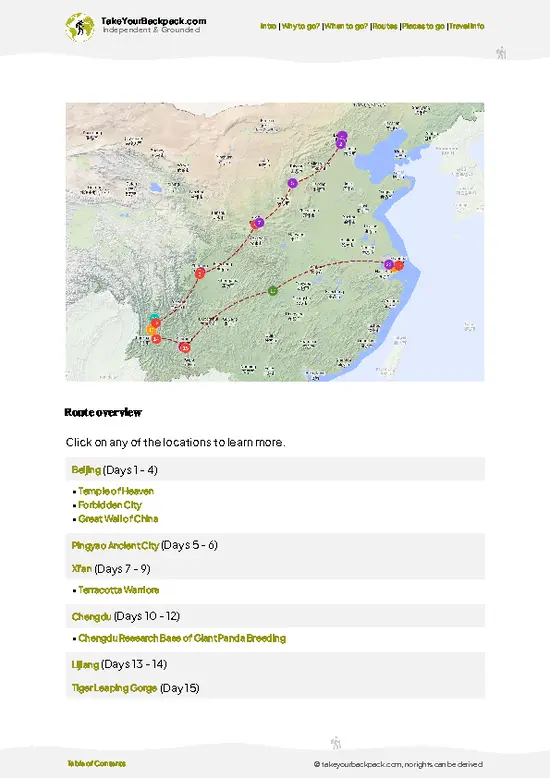
×
Great Wall of China

China🇨🇳 | landmarksGreat Wall of ChinaWatchtowers, mountain ridges, stone ramparts | things to do and best time to go

Explore Grand CanalExplore Honghe Hani Rice Terraces

Backpacking in Great Wall of China
UNESCO World Heritage site
🏆 Top pickunique site ranked #1
By Johan Kruseman 🇳🇱 | Updated June 3, 2026

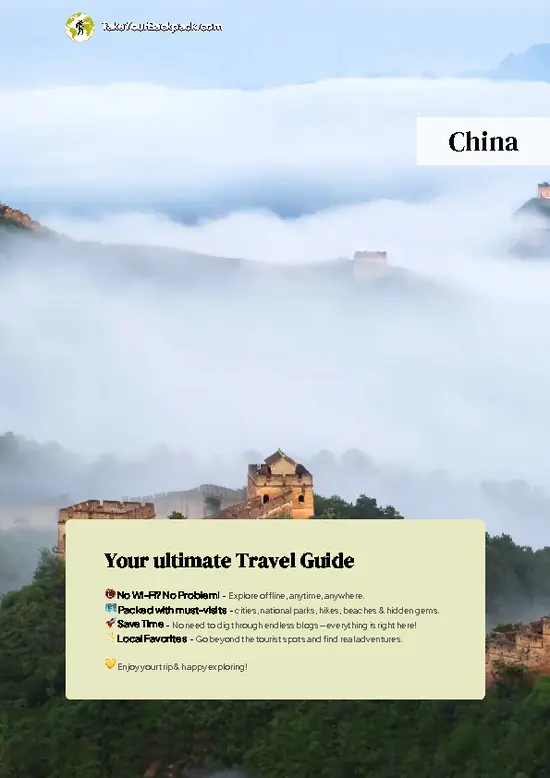
Everyone arrives thinking the Great Wall is one clean, empty ridge line where you’ll stroll alone like a movie hero. It’s not. It’s a broken, sprawling system of walls and fortifications snaking across northern China, with the most visited sections sitting in the mountains outside Beijing in Hebei province. As a backpacker, you’re not coming here for solitude at Badaling or Mutianyu; you’re coming for the gut-punch of standing on stone that once guarded an empire while tour groups jostle for the same selfie. The wow-factor is real, especially on the wilder, semi-restored stretches where the bricks crumble and the crowds thin, but buses, tickets, and cable cars add up fast. Accessibility is great from Beijing, authenticity less so on the polished bits. Still, when the haze lifts and the wall rolls away over ridge after ridge, it earns its world-wonder status in about three seconds.

Discover everything you want to know in the 📖 China Travel Guide.


Get your China guide
139 ranked highlights, routes & tips, works offline (496 pages)
Loading the map 🌍
CLICK TO FILTER
cities
towns
landmarks
national parks
hikes
beaches
attractions
festivals
regions
SHOW COUNTRY’S BESTSHOW ALL

✨ Why go?
Ranked #1 unique site in China
Why Great Wall of China should be on your travel list

The Great Wall of China isn’t just a tourist trap; it’s a monumental experience that demands your attention. Yes, it’s crowded, especially at the popular sections like Badaling, but don’t let that deter you. The sheer scale of this ancient structure is mind-blowing. Walking along the wall, you’re not just seeing bricks; you’re stepping into history, feeling the weight of centuries.

The effort-to-reward ratio is solid. Sure, you’ll sweat a bit on those steep climbs, but the panoramic views are worth every drop. For backpackers, it’s a low-cost adventure. Entry fees are minimal, and you can easily find budget-friendly hostels nearby. Plus, the wall fits perfectly into a broader route through northern China, allowing you to explore nearby gems like Miyun or Jinshanling without backtracking.
read more 👉
The Great Wall of China isn’t just a tourist trap; it’s a monumental experience that demands your attention. Yes, it’s crowded, especially at the popular sections like Badaling, but don’t let that deter you. The sheer scale of this ancient structure is mind-blowing. Walking along the wall, you’re not just seeing bricks; you’re stepping into history, feeling the weight of centuries.

The effort-to-reward ratio is solid. Sure, you’ll sweat a bit on those steep climbs, but the panoramic views are worth every drop. For backpackers, it’s a low-cost adventure. Entry fees are minimal, and you can easily find budget-friendly hostels nearby. Plus, the wall fits perfectly into a broader route through northern China, allowing you to explore nearby gems like Miyun or Jinshanling without backtracking.

What makes it truly special is the authenticity you can find away from the main tourist spots. Seek out the less-traveled sections for a more intimate experience. Here, you can connect with locals, enjoy a quiet moment, and soak in the real magic of this world wonder. It’s not just a photo op; it’s a journey that enriches your soul.
Want to include Great Wall of China in your China route?
Create a personalized China itinerary that includes Great Wall of China and the places that fit your trip — based on your travel style, budget, and available time. Get your route in seconds.

Generate my trip

💡 HighlightsMust-see experiences and standout moments

  • Badaling: The most famous, heavily restored stretch and the one postcards use — easy to reach from Beijing and very walkable. It’s the classic “Great Wall” experience for first-timers who want broad views and lots of facilities, but expect big crowds.
  • Mutianyu: Restored towers with fewer tourists than Badaling, lush forested slopes and a convenient cable car (plus a fun toboggan option down). Great for a relaxed half-day visit that still feels scenic and photogenic.
  • Jinshanling — my personal favorite: A beautiful mix of restored and wild sections, lots of intact watchtowers, and sweeping ridge-line views. It’s perfect for a long day hike or an overnight camp nearby — dramatic without the hordes.
  • Jiankou: Raw, steep, and wildly photogenic — cliffs, jagged stonework and unrestored sections
read more 👉
  • Badaling: The most famous, heavily restored stretch and the one postcards use — easy to reach from Beijing and very walkable. It’s the classic “Great Wall” experience for first-timers who want broad views and lots of facilities, but expect big crowds.
  • Mutianyu: Restored towers with fewer tourists than Badaling, lush forested slopes and a convenient cable car (plus a fun toboggan option down). Great for a relaxed half-day visit that still feels scenic and photogenic.
  • Jinshanling — my personal favorite: A beautiful mix of restored and wild sections, lots of intact watchtowers, and sweeping ridge-line views. It’s perfect for a long day hike or an overnight camp nearby — dramatic without the hordes.
  • Jiankou: Raw, steep, and wildly photogenic — cliffs, jagged stonework and unrestored sections that look like a fantasy set. Not for casual walkers; this one’s for experienced hikers or photographers who don’t mind a bit of exposure and chaos.
  • Simatai: One of the steeper, more intact Ming-era stretches with dramatic vertical walls and a believable “ancient fortress” vibe; night tours are possible and very atmospheric. It also connects well with Jinshanling for a longer trek.
  • Gubeikou: Plenty of ruined stretches, real military history and almost no tourist infrastructure — you’ll find authentic atmosphere, local villages and sections that still show battle scars. Feels like stepping into history rather than a theme park.
  • Huanghuacheng: The “water section” where the Wall meets lakes and a reservoir, with towers that dip into the water and quiet trails along the shore. It’s uniquely scenic and much less crowded — a good choice if you want something different and peaceful.
Spotted a mistake or missing something? Contact us.

Things to do around Great Wall of China

Ratings based on Tripadvisor reviews. When you book through this link, you support our work at no extra cost to you.

🌤️ When to go?Choosing the right time of year


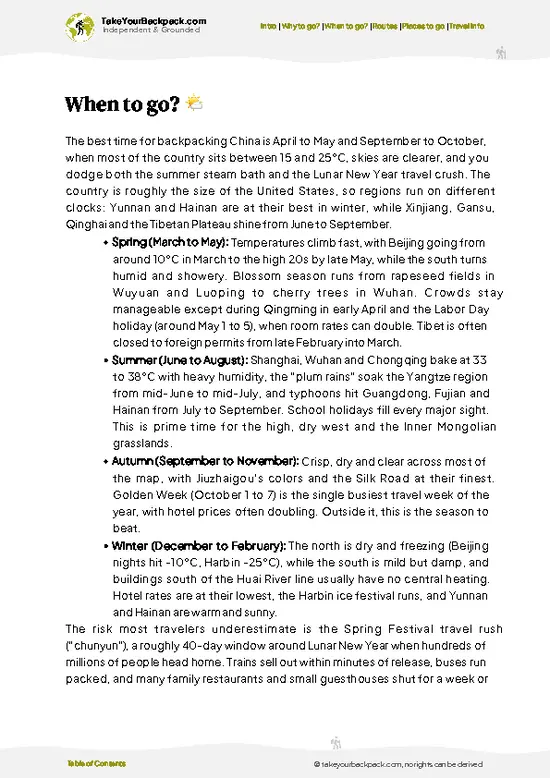
  • Weather: Spring (April-May) and autumn (September-October) offer the best weather—mild, dry, and clear. Summers scorch with highs around 30-35°C (86-95°F), turning the wall into a sweaty slog. Winters plunge below freezing, often under 0°C (32°F), making the stone slippery and the experience brutal.

  • Temperature: Expect comfortable hiking temps in spring and fall, averaging 15-22°C (59-72°F). Avoid summer heatwaves and winter chills unless you’re into extreme conditions.

  • Daylight Hours: Spring and fall provide balanced daylight—about 10-12 hours—enough for a solid trek without rushing. Winter days are short, summer days long but often too hot.

  • Crowds: Peak tourist season hits in summer and Chinese national holidays, turning popular sections like Badaling into a human traffic jam. Spring
read more 👉

  • Weather: Spring (April-May) and autumn (September-October) offer the best weather—mild, dry, and clear. Summers scorch with highs around 30-35°C (86-95°F), turning the wall into a sweaty slog. Winters plunge below freezing, often under 0°C (32°F), making the stone slippery and the experience brutal.

  • Temperature: Expect comfortable hiking temps in spring and fall, averaging 15-22°C (59-72°F). Avoid summer heatwaves and winter chills unless you’re into extreme conditions.

  • Daylight Hours: Spring and fall provide balanced daylight—about 10-12 hours—enough for a solid trek without rushing. Winter days are short, summer days long but often too hot.

  • Crowds: Peak tourist season hits in summer and Chinese national holidays, turning popular sections like Badaling into a human traffic jam. Spring and fall weekdays are your best bet for fewer crowds and a more authentic vibe.

  • Seasonal Activities: Autumn brings golden foliage that adds a dramatic backdrop to the wall’s rugged stones. Spring’s blooming wildflowers soften the harsh landscape, offering a rare contrast to the ancient fortifications.

  • Price Fluctuations: Entrance fees stay steady year-round, but accommodation and transport costs spike during peak seasons and holidays. Booking off-peak saves you serious cash and hassle.


Pro-tip: Aim for late September on a weekday—cool temps, fewer tourists, and the wall framed by autumn colors. It’s the sweet spot where the Great Wall sheds its postcard clichés and shows you its raw, unfiltered soul.


source: climatestotravel.comJANJanuary: below average for travelingFEBFebruary: below average for travelingMARMarch: good for travelingAPRApril: excellent for travelingMAYMay: excellent for travelingJUNJune: fair for travelingJULJuly: fair for travelingAUGAugust: fair for travelingSEPSeptember: excellent for travelingOCTOctober: excellent for travelingNOVNovember: good for travelingDECDecember: below average for traveling
China - Great Wall of China

✈️ The backpacker research shortcutChina Travel Guide

An offline-friendly backpacking guide with optimized travel routes, ranked highlights, transport advice, and the best areas to stay.
example page 0 from our offline Travel Guide for China
example page 1 from our offline Travel Guide for China
example page 2 from our offline Travel Guide for China
example page 3 from our offline Travel Guide for China
example page 4 from our offline Travel Guide for China
example page 5 from our offline Travel Guide for China
example page 6 from our offline Travel Guide for China
example page 7 from our offline Travel Guide for China
The digital guide (496 pages) contains:
139 highlights, ranked by travel appeal
Optimized 14, 21 & 30-day travel routes
Cities, national parks, landmarks, beaches
How to get around
Offline-friendly for travel without Wi-Fi
👉 Click to see all 30+ guide features

📅 Plan smarter in minutes, not weeks
Month by month travel advice
Festivals & national holidays
Budget expectations

🗺️ Go to the right places, skip the overrated ones
Honest pros & cons of destinations
Top hikes, parks & viewpoints
Lesser-known places most travelers miss
Clear “worth it vs skip it” guidance

🛏️ Travel smoothly without rookie mistakes
Best areas to stay
Transport systems explained simply
Common scams & safety advice
SIM cards, money & practical tips

🌍 Understand the country, not just visit it
Culture & traditions
52 Essential phrases & customs
Festivals worth planning around
Traveler-friendly historical context
Insights that make places more meaningful

📱 Built for real travel conditions
Fully downloadable PDF
Works completely offline
Optimized for phone use
Useful in remote areas & buses
Everything in one place
Save weeks of stressful planning
Get instant access to your full guide. 30‑day money-back guarantee.


By proceeding you agree to our terms.
Sent to your inbox immediately after payment • 100% Secure Checkout
Best Backpacking Travel Advisor 2025 tourism awardBest Backpacking
Travel Advisor
2025
What others say about Take Your Backpack Guides:
⭐⭐⭐⭐⭐
Fantastic, amazing amount of information!
⭐⭐⭐⭐⭐
My goodness this is amazing, it's what I've been looking for hats off too you!
⭐⭐⭐⭐⭐
I think this is absolutely BRILLIANT
⭐⭐⭐⭐
Very complete and informative. It's still missing places, but I gotta to commend you
⭐⭐⭐⭐⭐
This is truly amazing, thank you, can't wait to explore it with my kids!
⭐⭐⭐⭐⭐
Awesome resource, thank you!
⭐⭐⭐⭐⭐
This is amazing! Can't wait to explore the ones I haven't seen
⭐⭐⭐⭐
I love this! Well done, great idea.
⭐⭐⭐⭐⭐
Thanks for taking the time to make this gem!
⭐⭐⭐⭐⭐
This might be the best website I've ever seen.
⭐⭐⭐⭐⭐
Congratulations, and thank you so much for your work; it's incredibly valuable.
⭐⭐⭐⭐
In all seriousness I think you did a great job pointing out the important spots
⭐⭐⭐⭐⭐
10/10 very good
⭐⭐⭐⭐⭐
As someone who's only just starting to visit regularly this is awesome, thank you.
⭐⭐⭐⭐
Thank you very much! I'm going to visit my dad, it's going to be very useful!
⭐⭐⭐⭐⭐
This is really cool! We'll be travelling for the first time and this definitely come in handy.
⭐⭐⭐⭐⭐
You are now our minister of culture, congratulations 👨‍💼
⭐⭐⭐⭐⭐
Just wanted to tell you that this is a pearl! Going to follow your recommendations.
⭐⭐⭐⭐⭐
This is so cool. I'll definitely be using the resource for my travels soon.
⭐⭐⭐⭐⭐
This is very impressive! Good work.
⭐⭐⭐⭐⭐
This is an amazing and informative site. Very well done!

🛏️ Where to stay?Choosing the right base

Staying near the Great Wall of China? You’ve got options, but let’s cut through the fluff.

First up, Mutianyu. This section is less crowded than Badaling, and you’ll find a mix of guesthouses and hostels that cater to backpackers. The vibe here is chill, with plenty of opportunities to meet fellow travelers. Plus, the views? They’re jaw-dropping. You can hike up to the wall and avoid the tourist rush, especially if you start early.

Then there’s Jinshanling. This area is a bit more remote, which means fewer tourists and a more authentic experience. You’ll find homestays that offer a glimpse … read more 👉
Staying near the Great Wall of China? You’ve got options, but let’s cut through the fluff.

First up, Mutianyu. This section is less crowded than Badaling, and you’ll find a mix of guesthouses and hostels that cater to backpackers. The vibe here is chill, with plenty of opportunities to meet fellow travelers. Plus, the views? They’re jaw-dropping. You can hike up to the wall and avoid the tourist rush, especially if you start early.

Then there’s Jinshanling. This area is a bit more remote, which means fewer tourists and a more authentic experience. You’ll find homestays that offer a glimpse into local life. The hiking here is rugged and rewarding. It’s perfect for those who want to escape the crowds and soak in the history without the Instagram filters.

Lastly, consider Beijing’s Dongcheng District. It’s a bit of a trek to the wall, but it’s a backpacker hub. You’ll find cheap eats, vibrant markets, and a lively social scene. It’s a great base for day trips to the wall while enjoying the city’s pulse.

Each area has its charm, but remember: the real magic lies in the journey, not just the destination.

👛 Costs (as of 18 January 2025)Travel costs and budget guide for Great Wall of China

Visiting the Great Wall of China can be a mixed bag of costs, but knowing what to expect will help you navigate the experience without getting blindsided.
  • Entrance Fees: Depending on the section you choose, entrance fees range from €5 to €10 ($6 to $12). Popular spots like Badaling are pricier, while less-visited areas like Jiankou are cheaper but may require more effort to reach.
  • Transportation: Getting to the Wall can vary widely. A bus from Beijing to Badaling costs about €3 ($4). If you opt for a private driver or taxi, expect to pay around €50 to €100 ($60 to $120) for a round trip. The convenience comes at a price, but it saves time.
  • Guided Tours: If you want a deeper dive into the history and culture, guided tours can range from €30 to €100 ($35 to $120) per person. This often includes
read more 👉
Visiting the Great Wall of China can be a mixed bag of costs, but knowing what to expect will help you navigate the experience without getting blindsided.
  • Entrance Fees: Depending on the section you choose, entrance fees range from €5 to €10 ($6 to $12). Popular spots like Badaling are pricier, while less-visited areas like Jiankou are cheaper but may require more effort to reach.
  • Transportation: Getting to the Wall can vary widely. A bus from Beijing to Badaling costs about €3 ($4). If you opt for a private driver or taxi, expect to pay around €50 to €100 ($60 to $120) for a round trip. The convenience comes at a price, but it saves time.
  • Guided Tours: If you want a deeper dive into the history and culture, guided tours can range from €30 to €100 ($35 to $120) per person. This often includes transportation and sometimes lunch. It’s worth it for the insights, especially if you’re visiting a less popular section.
  • Food and Drinks: Prices can vary. At touristy spots, a meal might set you back €10 to €20 ($12 to $24). If you bring your own snacks and water, you can save a lot. Just remember to pack out what you pack in.
  • Souvenirs: Expect to spend €5 to €20 ($6 to $24) on trinkets. The Wall has plenty of vendors, but don’t get sucked into overpriced items. Bargaining is common, so don’t hesitate to negotiate.

The Great Wall is a marvel, but it’s essential to budget wisely. The experience is worth it, but be prepared for the realities of crowds and costs.
⚠️ Prices can change and everyone travels differently, so take this as a rough guide. Hope it helps you plan your adventure!

Other Chinese landmarks near Great Wall of China

Explore more nearby:


💡 Not sure where to go next?
Create a personalized itinerary for China including Great Wall of China and the places that fit your trip.

Generate my itinerary

👉 Discover all landmarks

Or checkout all China has to offer (think cities, towns, villages, national parks, hikes, beaches, festivals)
Country photo of China

We 💚 feedbackFinal thoughts on visiting Great Wall of China

Visiting the Great Wall is like stepping into history’s epic saga. The sheer scale and ancient craftsmanship are mind-blowing. You’ll feel the weight of centuries with every step. But let’s be real: the crowds can be overwhelming, especially at popular sections like Badaling. If you want a moment of solitude, aim for the less-traveled areas like Jiankou. It’s worth the trek for the views and the chance to connect with the Wall’s true spirit.

✈️ When did I visit China?
As part of my 1.5 year travel around the world trip, I visited China in August 2015, coming from Mongolia by the TransMongolia Express.

✍️ Help improve this page!
The information on this page is based on my own backpacking experience in China, supplemented with up-to-date research and feedback from other travelers. Travel details can change, so if you notice anything outdated or incomplete, feel free to let me know.


🙋‍♂️ Give feedback

👋 Meet the founderWho’s Behind Take Your Backpack?

Johan, backpacker and founder of TakeYourBackpackHi, I’m Johan (Netherlands 🇳🇱), the creator of TakeYourBackpack. Over the past decade, I’ve backpacked through 80+ countries across six continents, gaining extensive experience with independent travel, long-term trips, and overland routes.

This site is built on a combination of firsthand travel experience and carefully curated insights from other backpackers. Many guides are based on places I’ve personally visited, while others bring together tips, observations, and practical advice shared by trusted travelers I’ve met along the way.

The goal is to provide realistic, experience-driven guidance — not generic itineraries — so you can explore destinations with better context, clearer expectations, and more confidence.

Get full China guide •
Instant download • 139 highlights • Full Offline guide