×

China🇨🇳 | landmarksMogao CavesBuddhist murals, desert cliffs, painted grottoes | things to do and best time to go

Explore Mausoleum of the First Qin EmperorExplore Mount Emei Scenic Area (Leshan Giant Buddha)

Backpacking in Mogao Caves
UNESCO World Heritage site
🏆 Top pickunique site ranked #4
By Johan Kruseman 🇳🇱 | Updated June 7, 2026

Most people don’t realize you only see a tiny fraction of Mogao’s caves, and which ones you get is decided for you on the day, like a cultural lottery you can’t hack with money or Instagram clout.

Mogao Caves sit in the desert outside Dunhuang, in Gansu province in northwest China. For backpackers, this is not the casual “oh, we’re passing by, let’s pop in” stop; it’s a deliberate detour. The wow-factor is real: thousand-year-old Buddhist murals, giant Buddhas, and a sense that the Silk Road wasn’t just a trade route, it was an ideas superhighway. The downsides: mandatory tours, timed tickets, higher prices than you’d expect for inland China, and crowds that can feel school-trip heavy. Photos are limited or banned inside most caves, so this is more for your brain than your feed. Still, walking out into that dry desert air, you feel like you’ve time-traveled, not just “done a sight.”

Discover everything you want to know in the 📖 China Travel Guide.


Get your China guide
139 ranked highlights, routes & tips, works offline (496 pages)
Loading the map 🌍
CLICK TO FILTER
cities
towns
landmarks
national parks
hikes
beaches
attractions
festivals
regions
SHOW COUNTRY’S BESTSHOW ALL

✨ Why go?
Ranked #4 unique site in China
What makes this unique site worth visiting

The Mogao Caves in China are a must-see for backpackers who crave authenticity over Instagram likes. Sure, the crowds can be overwhelming, especially during peak season, but don’t let that deter you. The real magic lies in the intricate murals and statues that date back to the 4th century. This isn’t just another tourist trap; it’s a UNESCO World Heritage site that tells the story of the Silk Road.

Accessing the caves is straightforward, with affordable entry fees that won’t break the bank. Guided tours are available, which help you navigate the vast complex and understand the cultural significance of what you’re seeing.

What makes Mogao truly special is how it fits into a broader journey. It’s often part of a route through Dunhuang, a town rich in history and surrounded by stunning desert … read more 👉
The Mogao Caves in China are a must-see for backpackers who crave authenticity over Instagram likes. Sure, the crowds can be overwhelming, especially during peak season, but don’t let that deter you. The real magic lies in the intricate murals and statues that date back to the 4th century. This isn’t just another tourist trap; it’s a UNESCO World Heritage site that tells the story of the Silk Road.

Accessing the caves is straightforward, with affordable entry fees that won’t break the bank. Guided tours are available, which help you navigate the vast complex and understand the cultural significance of what you’re seeing.

What makes Mogao truly special is how it fits into a broader journey. It’s often part of a route through Dunhuang, a town rich in history and surrounded by stunning desert landscapes. Pair your visit with a trip to the Echoing Sand Mountain or the Crescent Lake for a full experience. The effort you put in pays off tenfold when you stand in front of those ancient walls, feeling the weight of history.
Want to include Mogao Caves in your China route?
Create a personalized China itinerary that includes Mogao Caves and the places that fit your trip — based on your travel style, budget, and available time. Get your route in seconds.

Generate my trip

💡 HighlightsDon't-miss highlights and experiences

  • Library Cave (Cave 17) — The single most dramatic find in Dunhuang: a sealed storeroom packed with tens of thousands of manuscripts, paintings and sutras unearthed in the early 1900s. It rewrote Silk Road history and gives the site its global importance. (personal favorite — the idea of a buried “archive” still gives me chills.)
  • Tang-dynasty murals — Brilliant colors and surprising naturalism from China’s golden age of painting. Faces, drapery and celestial musicians (the famed apsaras) show techniques and styles you won’t see in ordinary temple art.
  • Giant Buddha sculptures and stucco reliefs — These aren’t just paintings on a wall: caves contain three-dimensional, painted clay Buddhas and carved reliefs that blend sculpture and mural work, giving the spaces real depth and drama.
  • Iconographic
read more 👉
  • Library Cave (Cave 17) — The single most dramatic find in Dunhuang: a sealed storeroom packed with tens of thousands of manuscripts, paintings and sutras unearthed in the early 1900s. It rewrote Silk Road history and gives the site its global importance. (personal favorite — the idea of a buried “archive” still gives me chills.)
  • Tang-dynasty murals — Brilliant colors and surprising naturalism from China’s golden age of painting. Faces, drapery and celestial musicians (the famed apsaras) show techniques and styles you won’t see in ordinary temple art.
  • Giant Buddha sculptures and stucco reliefs — These aren’t just paintings on a wall: caves contain three-dimensional, painted clay Buddhas and carved reliefs that blend sculpture and mural work, giving the spaces real depth and drama.
  • Iconographic fusion of the Silk Road — Look closely and you’ll spot Indian mudras, Central Asian costumes, Persian motifs and Chinese brushwork all in the same cave. The site is a living gallery of cultural cross-pollination.
  • The Library artifacts’ story and provenance — Beyond the art itself, the drama of discovery, removal, and dispersal of manuscripts to museums worldwide is part of the site’s identity; knowing that story makes the visits feel like following a historical mystery.
  • Conservation work and digital reproductions — The Dunhuang Academy’s labs and the high-resolution digital galleries let you see fragile details that can’t stay on display. If you can, catch the digital exhibition to view whole murals in clarity without restrictions.
  • Desert setting — Mingsha Mountain & Crescent Lake — The caves sit at the edge of echoing sand dunes and a crescent lake; the landscape gives the art extra atmosphere, especially at golden hour when the cliffs warm up and the details pop.
Spotted a mistake or missing something? Contact us.

Things to do around Mogao Caves

Ratings based on Tripadvisor reviews. When you book through this link, you support our work at no extra cost to you.

🌤️ When to go?Seasonal considerations and timing


  • Weather: The Gobi Desert climate means scorching summers and freezing winters. May to October offers milder, more bearable conditions, with daytime temps ranging from 20°C to 30°C (68°F to 86°F). Outside this window, expect biting cold and wind that can ruin your visit.

  • Temperature: Summer highs can hit 35°C (95°F), but nights cool down sharply. Winter plunges below freezing, often -10°C (14°F) or colder, making exploration uncomfortable and some tours limited.

  • Daylight Hours: Peak season enjoys long days—up to 14 hours of light—giving you plenty of time to soak in the caves without rushing. Winter days shrink to about 9 hours, squeezing your schedule.

  • Crowds: Summer and early autumn attract the bulk of tourists, especially Chinese holidaymakers. Expect lines and limited photo opportunities
read more 👉

  • Weather: The Gobi Desert climate means scorching summers and freezing winters. May to October offers milder, more bearable conditions, with daytime temps ranging from 20°C to 30°C (68°F to 86°F). Outside this window, expect biting cold and wind that can ruin your visit.

  • Temperature: Summer highs can hit 35°C (95°F), but nights cool down sharply. Winter plunges below freezing, often -10°C (14°F) or colder, making exploration uncomfortable and some tours limited.

  • Daylight Hours: Peak season enjoys long days—up to 14 hours of light—giving you plenty of time to soak in the caves without rushing. Winter days shrink to about 9 hours, squeezing your schedule.

  • Crowds: Summer and early autumn attract the bulk of tourists, especially Chinese holidaymakers. Expect lines and limited photo opportunities inside the caves. Visiting in shoulder months like late April or October means fewer people, but weather can be unpredictable.

  • Seasonal Activities: The caves themselves don’t change seasonally, but local festivals and desert tours peak in warmer months. Winter offers a quiet, almost meditative experience if you can brave the cold.

  • Price Fluctuations: Entrance fees and guided tours stay relatively stable year-round, but accommodation and transport costs spike during peak tourist season (July-August). Booking off-season can save you a chunk of cash.


Pro-tip: Aim for late spring or early autumn—balance decent weather, manageable crowds, and better prices. You’ll get the caves mostly to yourself and avoid the desert’s extremes.


source: climatestotravel.comJANJanuary: below average for travelingFEBFebruary: below average for travelingMARMarch: fair for travelingAPRApril: good for travelingMAYMay: excellent for travelingJUNJune: excellent for travelingJULJuly: highly recommended for travelingAUGAugust: highly recommended for travelingSEPSeptember: excellent for travelingOCTOctober: highly recommended for travelingNOVNovember: fair for travelingDECDecember: below average for traveling
when-to-go

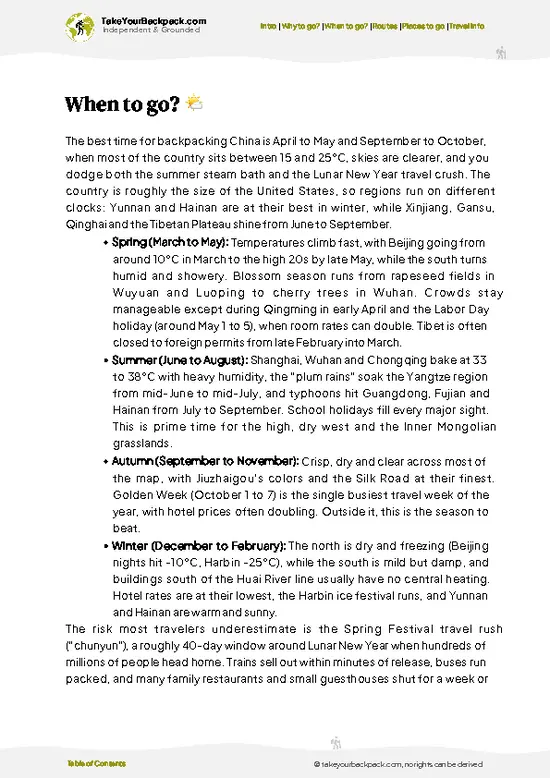
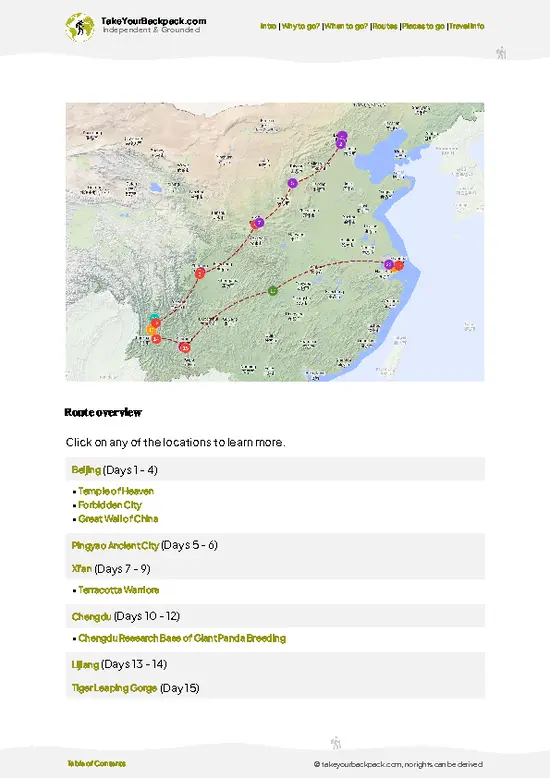
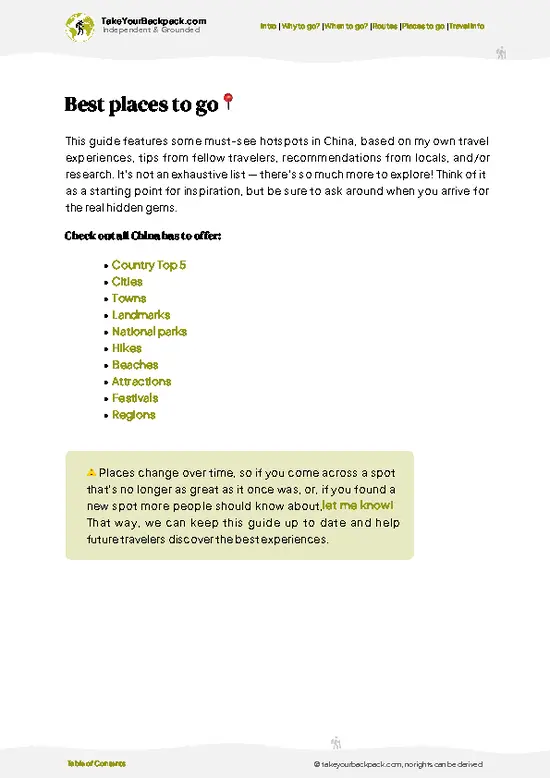
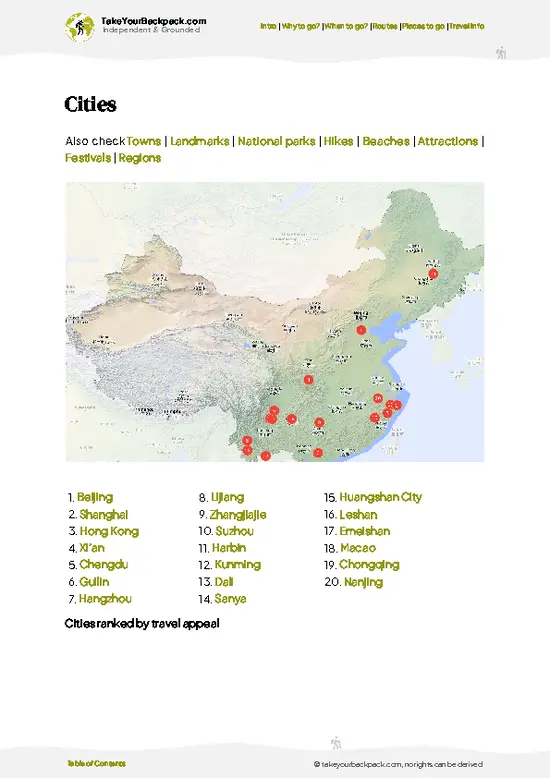
✈️ The backpacker research shortcutChina Travel Guide

An offline-friendly backpacking guide with optimized travel routes, ranked highlights, transport advice, and the best areas to stay.
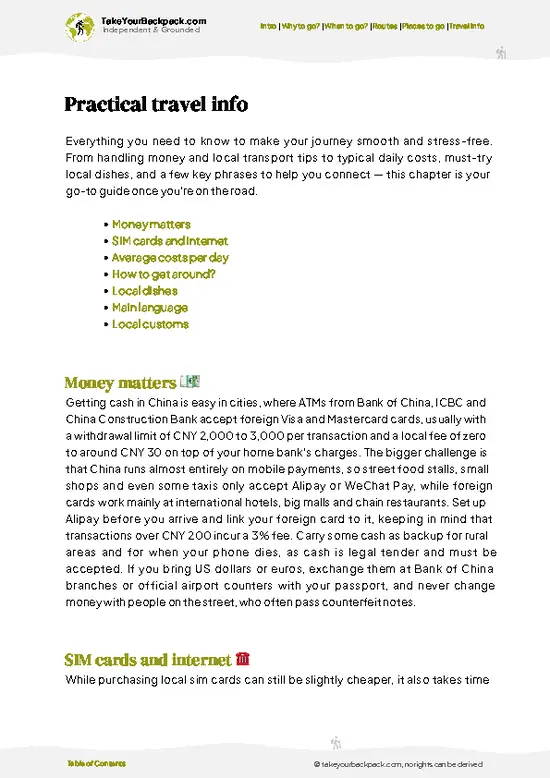
example page 0 from our offline Travel Guide for China
example page 1 from our offline Travel Guide for China
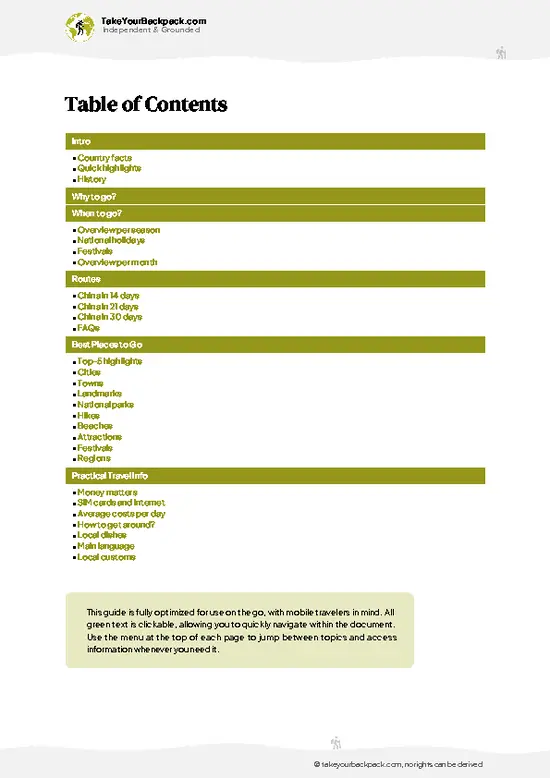
example page 2 from our offline Travel Guide for China
example page 3 from our offline Travel Guide for China
example page 4 from our offline Travel Guide for China
example page 5 from our offline Travel Guide for China
example page 6 from our offline Travel Guide for China
example page 7 from our offline Travel Guide for China
The digital guide (496 pages) contains:
139 highlights, ranked by travel appeal
Optimized 14, 21 & 30-day travel routes
Cities, national parks, landmarks, beaches
How to get around
Offline-friendly for travel without Wi-Fi
👉 Click to see all 30+ guide features

📅 Plan smarter in minutes, not weeks
Month by month travel advice
Festivals & national holidays
Budget expectations

🗺️ Go to the right places, skip the overrated ones
Honest pros & cons of destinations
Top hikes, parks & viewpoints
Lesser-known places most travelers miss
Clear “worth it vs skip it” guidance

🛏️ Travel smoothly without rookie mistakes
Best areas to stay
Transport systems explained simply
Common scams & safety advice
SIM cards, money & practical tips

🌍 Understand the country, not just visit it
Culture & traditions
52 Essential phrases & customs
Festivals worth planning around
Traveler-friendly historical context
Insights that make places more meaningful

📱 Built for real travel conditions
Fully downloadable PDF
Works completely offline
Optimized for phone use
Useful in remote areas & buses
Everything in one place
Save weeks of stressful planning
Get instant access to your full guide. 30‑day money-back guarantee.


By proceeding you agree to our terms.
Sent to your inbox immediately after payment • 100% Secure Checkout
Best Backpacking Travel Advisor 2025 tourism awardBest Backpacking
Travel Advisor
2025
What others say about Take Your Backpack Guides:
⭐⭐⭐⭐⭐
Fantastic, amazing amount of information!
⭐⭐⭐⭐⭐
My goodness this is amazing, it's what I've been looking for hats off too you!
⭐⭐⭐⭐⭐
I think this is absolutely BRILLIANT
⭐⭐⭐⭐
Very complete and informative. It's still missing places, but I gotta to commend you
⭐⭐⭐⭐⭐
This is truly amazing, thank you, can't wait to explore it with my kids!
⭐⭐⭐⭐⭐
Awesome resource, thank you!
⭐⭐⭐⭐⭐
This is amazing! Can't wait to explore the ones I haven't seen
⭐⭐⭐⭐
I love this! Well done, great idea.
⭐⭐⭐⭐⭐
Thanks for taking the time to make this gem!
⭐⭐⭐⭐⭐
This might be the best website I've ever seen.
⭐⭐⭐⭐⭐
Congratulations, and thank you so much for your work; it's incredibly valuable.
⭐⭐⭐⭐
In all seriousness I think you did a great job pointing out the important spots
⭐⭐⭐⭐⭐
10/10 very good
⭐⭐⭐⭐⭐
As someone who's only just starting to visit regularly this is awesome, thank you.
⭐⭐⭐⭐
Thank you very much! I'm going to visit my dad, it's going to be very useful!
⭐⭐⭐⭐⭐
This is really cool! We'll be travelling for the first time and this definitely come in handy.
⭐⭐⭐⭐⭐
You are now our minister of culture, congratulations 👨‍💼
⭐⭐⭐⭐⭐
Just wanted to tell you that this is a pearl! Going to follow your recommendations.
⭐⭐⭐⭐⭐
This is so cool. I'll definitely be using the resource for my travels soon.
⭐⭐⭐⭐⭐
This is very impressive! Good work.
⭐⭐⭐⭐⭐
This is an amazing and informative site. Very well done!

🛏️ Where to stay?Best areas to stay in China

Staying near the Mogao Caves in Dunhuang is all about balancing comfort with authenticity. The area around the caves is a bit touristy, but don’t let that scare you off. You’ll find a mix of budget-friendly guesthouses and hostels that cater to backpackers.

Look for accommodations in the city center. This area buzzes with energy, making it easy to meet fellow travelers. You’ll find local eateries serving up hearty noodles and dumplings, perfect for refueling after a day of exploring. Plus, being in the center means you can easily hop on a bus or bike to the caves without hassle.

Another option … read more 👉
Staying near the Mogao Caves in Dunhuang is all about balancing comfort with authenticity. The area around the caves is a bit touristy, but don’t let that scare you off. You’ll find a mix of budget-friendly guesthouses and hostels that cater to backpackers.

Look for accommodations in the city center. This area buzzes with energy, making it easy to meet fellow travelers. You’ll find local eateries serving up hearty noodles and dumplings, perfect for refueling after a day of exploring. Plus, being in the center means you can easily hop on a bus or bike to the caves without hassle.

Another option is to stay near the Crescent Lake. It’s a bit quieter, but the scenery is stunning. You can catch the sunset reflecting off the dunes, which is a sight worth the trip alone. Just be aware that it’s a little farther from the main action, so plan your transport accordingly.

Safety isn’t a huge concern here, but always trust your instincts. The vibe is generally friendly, and locals are often willing to help. Embrace the experience, and you’ll find that the real magic of Dunhuang lies in its stories and the people you meet along the way.

👛 Costs (as of 26 January 2025)Typical daily expenses

Visiting the Mogao Caves is a journey into ancient artistry, but it comes with its own set of costs. Here’s a breakdown to help you navigate the expenses.
  • Entrance Fee: Expect to pay around €30 ($35) for a standard ticket. This grants you access to the main caves and a guided tour. Note that tickets can sell out quickly, especially during peak seasons, so book in advance.
  • Transportation: Getting to Dunhuang, where the caves are located, can vary. A train from major cities like Xi’an can cost between €50-€100 ($60-$120) depending on the class. Local transport to the caves from the city center is about €5 ($6) for a bus ride.
  • Guided Tours: If you want a deeper dive into the history and significance of the caves, consider a guided tour. Prices range from €20-€50 ($25-$60) depending on the length
read more 👉
Visiting the Mogao Caves is a journey into ancient artistry, but it comes with its own set of costs. Here’s a breakdown to help you navigate the expenses.
  • Entrance Fee: Expect to pay around €30 ($35) for a standard ticket. This grants you access to the main caves and a guided tour. Note that tickets can sell out quickly, especially during peak seasons, so book in advance.
  • Transportation: Getting to Dunhuang, where the caves are located, can vary. A train from major cities like Xi’an can cost between €50-€100 ($60-$120) depending on the class. Local transport to the caves from the city center is about €5 ($6) for a bus ride.
  • Guided Tours: If you want a deeper dive into the history and significance of the caves, consider a guided tour. Prices range from €20-€50 ($25-$60) depending on the length and depth of the tour. This can be worth it for the insights you gain.
  • Accommodation: Options in Dunhuang vary widely. Budget hostels start around €10 ($12) per night, while mid-range hotels can go for €40-€80 ($50-$100). Splurging on a nicer hotel can set you back €100 ($120) or more.
  • Food: Dining in Dunhuang is affordable. Street food can cost as little as €2-€5 ($2.50-$6) per meal. A sit-down restaurant meal might run you €10-€20 ($12-$25), depending on your choice of cuisine.

These costs can add up, but the experience of standing before the ancient murals and sculptures is priceless. Just be prepared for the crowds and plan accordingly.


source: chinahighlights.com
⚠️ Prices can change and everyone travels differently, so take this as a rough guide. Hope it helps you plan your adventure!

Other Chinese landmarks near Mogao Caves

Explore more nearby:


💡 Not sure where to go next?
Create a personalized itinerary for China including Mogao Caves and the places that fit your trip.

Generate my itinerary

👉 Discover all landmarks

Or checkout all China has to offer (think cities, towns, villages, national parks, hikes, beaches, festivals)
Country photo of China

We 💚 feedbackIs it worth it?

The Mogao Caves are a treasure trove of ancient art, with murals and sculptures that tell stories you won’t find in any textbook. But let’s be real: the crowds can be overwhelming, especially during peak season. You’ll need to navigate through groups of tourists, which can dilute the experience. Still, if you can push through the hustle, the spiritual weight of these caves makes it all worthwhile. It’s a journey into history that’s hard to replicate.

✈️ When did I visit China?
As part of my 1.5 year travel around the world trip, I visited China in August 2015, coming from Mongolia by the TransMongolia Express.

✍️ Help improve this page!
The information on this page is based on my own backpacking experience in China, supplemented with up-to-date research and feedback from other travelers. Travel details can change, so if you notice anything outdated or incomplete, feel free to let me know.


🙋‍♂️ Give feedback

👋 Meet the founderWho’s Behind Take Your Backpack?

Johan, backpacker and founder of TakeYourBackpackHi, I’m Johan (Netherlands 🇳🇱), the creator of TakeYourBackpack. Over the past decade, I’ve backpacked through 80+ countries across six continents, gaining extensive experience with independent travel, long-term trips, and overland routes.

This site is built on a combination of firsthand travel experience and carefully curated insights from other backpackers. Many guides are based on places I’ve personally visited, while others bring together tips, observations, and practical advice shared by trusted travelers I’ve met along the way.

The goal is to provide realistic, experience-driven guidance — not generic itineraries — so you can explore destinations with better context, clearer expectations, and more confidence.

Get full China guide •
Instant download • 139 highlights • Full Offline guide