
×

China🇨🇳 | landmarksMausoleum of the First Qin EmperorBurial mound, underground army, ancient artifacts | things to do and best time to go

Explore Huangshan MountainExplore Mogao Caves

Backpacking in Mausoleum of the First Qin Emperor
UNESCO World Heritage site
👀 For curious travelersunique site ranked #21
By Johan Kruseman 🇳🇱 | Updated September 4, 2026

Most people realize too late that the Mausoleum of the First Qin Emperor is actually a sprawling archaeological zone, not just “the Terracotta Warriors hall,” so planning extra time and shuttle money matters. It sits just outside Xi’an in Shaanxi province, central China. As a backpacker, you get a genuine world wonder with heavy historical weight, slightly chaotic crowds, and ticket prices that feel high but not outrageous. The warriors themselves are jaw-dropping, but the vibe is museum-like, not mystical, and the best photos usually come from patient angles, not quick snaps.

Discover everything you want to know in the 📖 China Travel Guide.


Get your China guide
130 ranked highlights, routes & tips, works offline (463 pages)
Loading the map 🌍
CLICK TO FILTER
cities
towns
landmarks
national parks
hikes
beaches
attractions
festivals
regions
SHOW COUNTRY’S BESTSHOW ALL

✨ Why go?
Ranked #21 unique site in China
Why visitors keep coming back

The Mausoleum of the First Qin Emperor is a must-see, but let’s cut through the fluff. Yes, it’s crowded and the ticket prices can sting, but the Terracotta Army is a jaw-dropper. Over 8,000 life-sized soldiers, each with unique features, tell a story of ancient ambition.

This site isn’t just a pit stop; it fits perfectly into a broader route through Xi’an, a city rich in history and culture. You can easily explore the city walls or grab some biangbiang noodles afterward. The effort is worth it for a glimpse into China’s past that’s as real as it gets.
Want to include Mausoleum of the First Qin Emperor in your China route?
Create a personalized China itinerary that includes Mausoleum of the First Qin Emperor and the places that fit your trip — based on your travel style, budget, and available time. Get your route in seconds.

Generate my trip

💡 HighlightsEssential experiences to have while visiting Mausoleum of the First Qin Emperor

  • Pit 1 — The Main Army (Infantry): The jaw-dropper — a huge hall filled with rows of life-size warriors in battle formation. It’s the best place to appreciate the scale (thousands of figures) and the individual facial details that make each statue feel like a real person frozen in time. (personal favorite — it’s impossible not to stare for ages.)
  • Pit 2 — The Mixed-Arms Formation: A more chaotic, tactical-looking pit where chariots, cavalry and infantry were arranged together. It’s the place to see how Qin military thinking translated into three-dimensional battlefield planning.
  • Pit 3 — The Command Post: Much smaller but crucial — thought to be a command center with higher-ranking officers and distinctive poses. It gives you a sense of the hierarchy behind the army rather than just the mass
read more 👉
  • Pit 1 — The Main Army (Infantry): The jaw-dropper — a huge hall filled with rows of life-size warriors in battle formation. It’s the best place to appreciate the scale (thousands of figures) and the individual facial details that make each statue feel like a real person frozen in time. (personal favorite — it’s impossible not to stare for ages.)
  • Pit 2 — The Mixed-Arms Formation: A more chaotic, tactical-looking pit where chariots, cavalry and infantry were arranged together. It’s the place to see how Qin military thinking translated into three-dimensional battlefield planning.
  • Pit 3 — The Command Post: Much smaller but crucial — thought to be a command center with higher-ranking officers and distinctive poses. It gives you a sense of the hierarchy behind the army rather than just the mass of soldiers.
  • The Emperor’s Tomb Mound: The sealed earthen mound of Qin Shi Huang is the mysterious heart of the complex — unopened and surrounded by speculation (mercury rivers, detailed underground models, vast riches). Its sheer secrecy and scale are part of what makes the whole site so compelling.
  • Bronze Chariots and Horses: Two exquisitely preserved full-size bronze chariots found near the mausoleum — they show advanced metalworking, geared wheel design and the level of luxury reserved for the emperor’s afterlife.
  • Mausoleum Site Museum & Exhibition Halls: Practical but essential — displays of weapons, lacquerware, restoration labs and explanatory models that put the pits in context. You’ll leave knowing how things were made and why conservation is a constant scramble.
  • Craftsmanship & Early Mass-Production Techniques: Look past the drama and you’ll spot something rarer — a mix of individual artistry and assembly-line production (molded parts, hand-finished faces, traces of original paint). It’s a peek at how a state mobilized artisans on an industrial scale 2,200 years ago.
Spotted a mistake or missing something? Contact us.

Things to do near Mausoleum of the First Qin Emperor

Ratings based on Tripadvisor reviews. When you book through this link, you support our work at no extra cost to you.

🌤️ When to go?When to go for the best experience


  • Weather: Spring (April-May) and autumn (September-October) offer mild, dry conditions. Summers scorch at 30-35°C (86-95°F), making outdoor exploration brutal. Winters dip to 0-5°C (32-41°F), often gray and chilly.

  • Temperature: Avoid summer heat that drains energy and winter cold that numbs fingers. Spring and fall hover around a comfortable 15-22°C (59-72°F), perfect for long walks among the terracotta warriors.

  • Daylight Hours: Peak daylight in May and September means more time to soak in the site without rushing. Winter days are short, cutting your exploration window.

  • Crowds: National holidays and weekends pack the site with tour groups, especially in May and October. Early weekdays in shoulder seasons offer a quieter, more personal experience.

  • Seasonal Activities: The site itself
read more 👉

  • Weather: Spring (April-May) and autumn (September-October) offer mild, dry conditions. Summers scorch at 30-35°C (86-95°F), making outdoor exploration brutal. Winters dip to 0-5°C (32-41°F), often gray and chilly.

  • Temperature: Avoid summer heat that drains energy and winter cold that numbs fingers. Spring and fall hover around a comfortable 15-22°C (59-72°F), perfect for long walks among the terracotta warriors.

  • Daylight Hours: Peak daylight in May and September means more time to soak in the site without rushing. Winter days are short, cutting your exploration window.

  • Crowds: National holidays and weekends pack the site with tour groups, especially in May and October. Early weekdays in shoulder seasons offer a quieter, more personal experience.

  • Seasonal Activities: The site itself doesn’t change much seasonally, but spring flowers and autumn foliage around the complex add unexpected beauty.

  • Price Fluctuations: Entrance fees stay stable year-round, but nearby accommodation spikes during Chinese holidays. Booking ahead in shoulder seasons saves cash and hassle.


Pro-tip: Hit the site early on a weekday in late April or early October—cool temps, fewer crowds, and enough daylight to savor every detail without sweating or freezing.


source: climatestotravel.comJANJanuary: fair for travelingFEBFebruary: fair for travelingMARMarch: good for travelingAPRApril: excellent for travelingMAYMay: highly recommended for travelingJUNJune: fair for travelingJULJuly: below average for travelingAUGAugust: below average for travelingSEPSeptember: excellent for travelingOCTOctober: highly recommended for travelingNOVNovember: good for travelingDECDecember: fair for traveling
when-to-go

✈️ The backpacker research shortcutChina Travel Guide

An offline-friendly backpacking guide with optimized travel routes, ranked highlights, transport advice, and the best areas to stay.
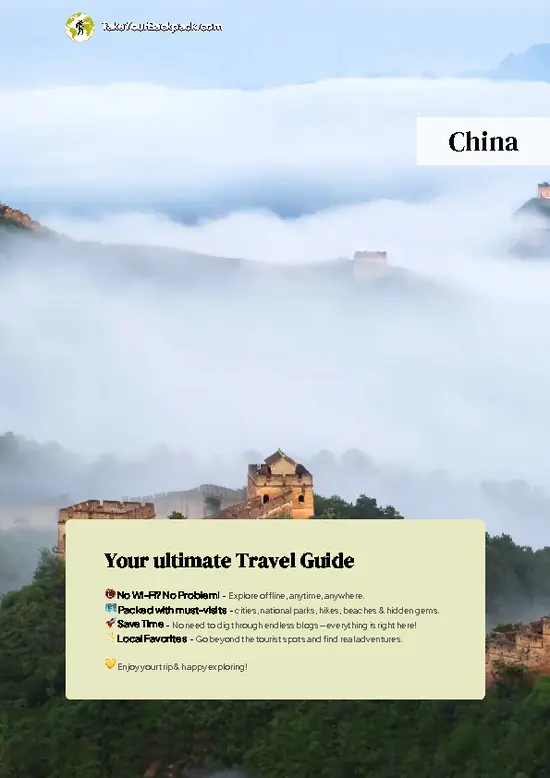
example page 0 from our offline Travel Guide for China
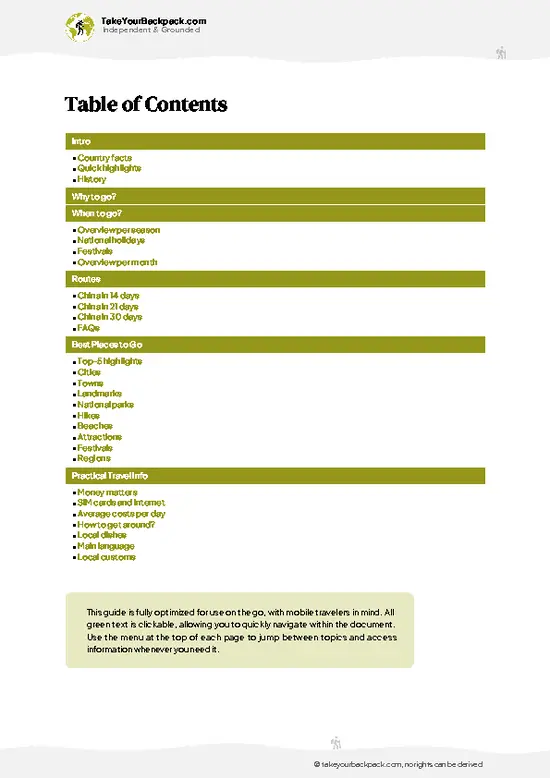
example page 1 from our offline Travel Guide for China
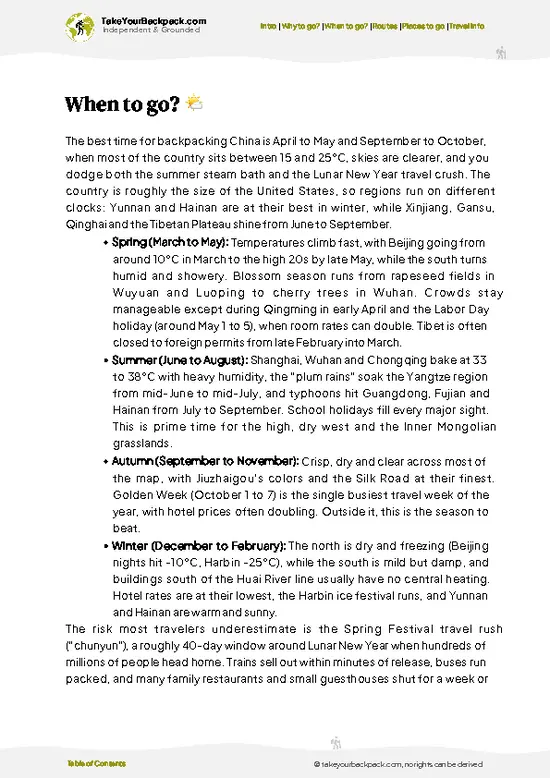
example page 2 from our offline Travel Guide for China
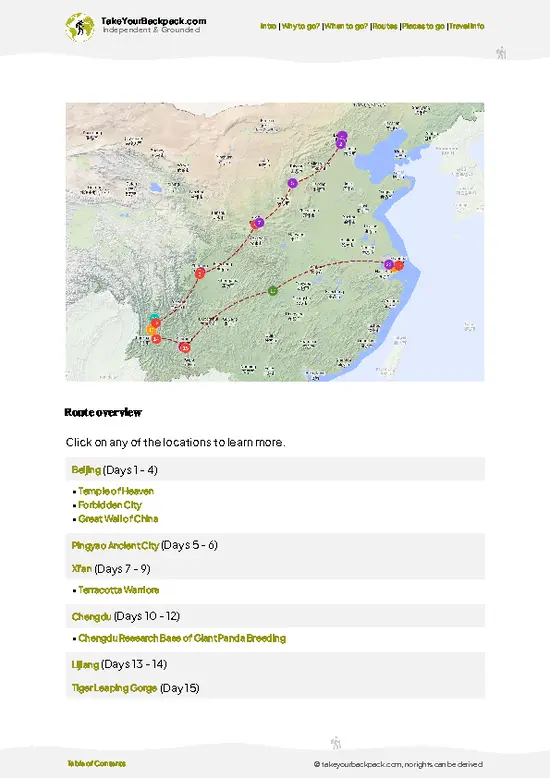
example page 3 from our offline Travel Guide for China
example page 4 from our offline Travel Guide for China
example page 5 from our offline Travel Guide for China
example page 6 from our offline Travel Guide for China
example page 7 from our offline Travel Guide for China
The digital guide (463 pages) contains:
130 highlights, ranked by travel appeal
Optimized 14, 21 & 30-day travel routes
Cities, national parks, landmarks, beaches
How to get around
Offline-friendly for travel without Wi-Fi
👉 Click to see all 30+ guide features

📅 Plan smarter in minutes, not weeks
Month by month travel advice
Festivals & national holidays
Budget expectations

🗺️ Go to the right places, skip the overrated ones
Honest pros & cons of destinations
Top hikes, parks & viewpoints
Lesser-known places most travelers miss
Clear “worth it vs skip it” guidance

🛏️ Travel smoothly without rookie mistakes
Best areas to stay
Transport systems explained simply
Common scams & safety advice
SIM cards, money & practical tips

🌍 Understand the country, not just visit it
Culture & traditions
52 Essential phrases & customs
Festivals worth planning around
Traveler-friendly historical context
Insights that make places more meaningful

📱 Built for real travel conditions
Fully downloadable PDF
Works completely offline
Optimized for phone use
Useful in remote areas & buses
Everything in one place
Save weeks of stressful planning
Get instant access to your full guide. 30‑day money-back guarantee.
+ Add another guide for just US$7.80

By proceeding you agree to our terms.
Sent to your inbox immediately after payment • 100% Secure Checkout
Best Backpacking Travel Advisor 2025 tourism awardBest Backpacking
Travel Advisor
2025
What others say about Take Your Backpack Guides:
⭐⭐⭐⭐⭐
Fantastic, amazing amount of information!
⭐⭐⭐⭐⭐
My goodness this is amazing, it's what I've been looking for hats off too you!
⭐⭐⭐⭐⭐
I think this is absolutely BRILLIANT
⭐⭐⭐⭐
Very complete and informative. It's still missing places, but I gotta to commend you
⭐⭐⭐⭐⭐
This is truly amazing, thank you, can't wait to explore it with my kids!
⭐⭐⭐⭐⭐
Awesome resource, thank you!
⭐⭐⭐⭐⭐
This is amazing! Can't wait to explore the ones I haven't seen
⭐⭐⭐⭐
I love this! Well done, great idea.
⭐⭐⭐⭐⭐
Thanks for taking the time to make this gem!
⭐⭐⭐⭐⭐
This might be the best website I've ever seen.
⭐⭐⭐⭐⭐
Congratulations, and thank you so much for your work; it's incredibly valuable.
⭐⭐⭐⭐
In all seriousness I think you did a great job pointing out the important spots
⭐⭐⭐⭐⭐
10/10 very good
⭐⭐⭐⭐⭐
As someone who's only just starting to visit regularly this is awesome, thank you.
⭐⭐⭐⭐
Thank you very much! I'm going to visit my dad, it's going to be very useful!
⭐⭐⭐⭐⭐
This is really cool! We'll be travelling for the first time and this definitely come in handy.
⭐⭐⭐⭐⭐
You are now our minister of culture, congratulations 👨‍💼
⭐⭐⭐⭐⭐
Just wanted to tell you that this is a pearl! Going to follow your recommendations.
⭐⭐⭐⭐⭐
This is so cool. I'll definitely be using the resource for my travels soon.
⭐⭐⭐⭐⭐
This is very impressive! Good work.
⭐⭐⭐⭐⭐
This is an amazing and informative site. Very well done!

🛏️ Where to stay?How to pick the right area

Stay in the heart of Xi’an for easy access to the Mausoleum of the First Qin Emperor. The Beilin District is a solid choice; it’s buzzing with backpacker-friendly hostels and local eateries. You’ll find a mix of travelers here, making it easy to connect.

Another option is the area near the South Gate. It’s lively, with street food stalls and shops, plus it’s close to public transport.

Both spots are safe and vibrant, giving you a taste of local life while keeping you near the Terracotta Army. Just remember, the crowds can be intense, but the experience is worth it.

👛 Costs (as of 4 September 2026)What things cost and how to budget

Visiting the Mausoleum of the First Qin Emperor is a journey steeped in history, but it comes with its own set of costs. Here’s the breakdown:
  • Entrance Fee: Expect to pay around €25 ($30) for a ticket. This grants you access to the main site, including the Terracotta Army. It’s worth every cent, but be prepared for the crowds.
  • Transportation: Getting there can vary. If you’re coming from Xi’an, a taxi will cost about €15-€20 ($18-$24). Public buses are cheaper, around €2 ($2.50), but they take longer and can be packed. Factor in your comfort level.
  • Guided Tours: If you want a deeper dive, guided tours range from €50-€100 ($60-$120). This often includes transportation and a knowledgeable guide who can share insights that you won’t find in brochures. It’s a solid investment for the curious traveler.
read more 👉
Visiting the Mausoleum of the First Qin Emperor is a journey steeped in history, but it comes with its own set of costs. Here’s the breakdown:
  • Entrance Fee: Expect to pay around €25 ($30) for a ticket. This grants you access to the main site, including the Terracotta Army. It’s worth every cent, but be prepared for the crowds.
  • Transportation: Getting there can vary. If you’re coming from Xi’an, a taxi will cost about €15-€20 ($18-$24). Public buses are cheaper, around €2 ($2.50), but they take longer and can be packed. Factor in your comfort level.
  • Guided Tours: If you want a deeper dive, guided tours range from €50-€100 ($60-$120). This often includes transportation and a knowledgeable guide who can share insights that you won’t find in brochures. It’s a solid investment for the curious traveler.
  • Food and Drink: On-site dining options are limited and can be pricey. Budget around €10-€15 ($12-$18) for a basic meal. If you venture into Xi’an, you can find much better local cuisine for less.
  • Souvenirs: If you’re looking to take home a piece of history, expect to spend €5-€30 ($6-$36) on trinkets. Just remember, some of these can be overpriced, so haggle where you can.

The Mausoleum is a must-see, but be ready for the reality of costs and crowds. The real magic lies in the stories and history that surround you, not just the Instagram moments.


source: chinahighlights.com
⚠️ Prices can change and everyone travels differently, so take this as a rough guide. Hope it helps you plan your adventure!

FAQFrequently asked questions about Mausoleum of the First Qin Emperor

The Mausoleum of the First Qin Emperor is the burial site of Qin Shi Huang, the first emperor of China, famous for the Terracotta Army. It dates back to 210-209 BCE and is located near Xi'an in Shaanxi Province.
Visiting the Mausoleum and the Terracotta Army site typically requires 3 to 4 hours to explore thoroughly. This allows time to see the main pits, the museum, and the surrounding archaeological park.
To reach the Mausoleum of the First Qin Emperor, take a bus or taxi from Xi'an city center, about 40 kilometers away. Public buses run regularly and the journey takes around 1 hour.
⚠️ Things can change over time, so always validate details locally before you go.

Other Chinese landmarks near Mausoleum of the First Qin Emperor

Explore more nearby:


💡 Not sure where to go next?
Create a personalized itinerary for China including Mausoleum of the First Qin Emperor and the places that fit your trip.

Generate my itinerary

👉 Discover all landmarks

Or checkout all China has to offer (think cities, towns, villages, national parks, hikes, beaches, festivals)
Country photo of China

We 💚 feedbackIs it worth it?

The Mausoleum of the First Qin Emperor is a mind-blowing peek into ancient ambition. The sheer scale of the Terracotta Army is jaw-dropping. But brace yourself for the crowds; it can feel like a sardine can during peak season. Still, the history here is worth every elbow bump.

✈️ When did I visit China?
As part of my 1.5 year travel around the world trip, I visited China in August 2015, coming from Mongolia by the TransMongolia Express.

✍️ Help improve this page!
The information on this page is based on my own backpacking experience in China, supplemented with up-to-date research and feedback from other travelers. Travel details can change, so if you notice anything outdated or incomplete, feel free to let me know.


🙋‍♂️ Give feedback

👋 Meet the founderWho’s Behind Take Your Backpack?

Johan, backpacker and founder of TakeYourBackpackHi, I’m Johan (Netherlands 🇳🇱), the creator of TakeYourBackpack. Over the past decade, I’ve backpacked through 80+ countries across six continents, gaining extensive experience with independent travel, long-term trips, and overland routes.

This site is built on a combination of firsthand travel experience and carefully curated insights from other backpackers. Many guides are based on places I’ve personally visited, while others bring together tips, observations, and practical advice shared by trusted travelers I’ve met along the way.

The goal is to provide realistic, experience-driven guidance — not generic itineraries — so you can explore destinations with better context, clearer expectations, and more confidence.

Get full China guide •
Instant download • 130 highlights • Full Offline guide