×

China🇨🇳 | landmarksPotala Palace, LhasaHilltop fortress, Tibetan murals, golden roofs | things to do and best time to go

Explore Mount WutaiExplore Summer Palace, Beijing

Backpacking in Potala Palace, Lhasa
UNESCO World Heritage site
🏆 Top pickunique site ranked #5
By Johan Kruseman 🇳🇱 | Updated June 3, 2026

Most people only realize after they leave that Potala Palace quietly trains your body for the rest of Tibet; if you can handle those stairs at 3,600+ meters, every later hike feels easier. Potala Palace sits in Lhasa, in the Tibet Autonomous Region of western China, looming over the city like a stone ship. As a backpacker, you’re not coming here for cheap thrills. Tickets are pricey, time slots are rigid, and the crowds can feel like a conveyor belt, especially in peak season. But the payoff is heavy: walking through the former home of the Dalai Lamas, smelling yak butter in dim chapels, and watching pilgrims prostrate outside hits harder than any postcard view. Photos are limited inside, and the altitude will smack you if you rush, yet that slow, breathless climb is exactly what makes it feel sacred instead of staged.

Discover everything you want to know in the 📖 China Travel Guide.


Get your China guide
139 ranked highlights, routes & tips, works offline (496 pages)
Loading the map 🌍
CLICK TO FILTER
cities
towns
landmarks
national parks
hikes
beaches
attractions
festivals
regions
SHOW COUNTRY’S BESTSHOW ALL

✨ Why go?
Ranked #5 unique site in China
Reasons people choose to visit here

The Potala Palace in Lhasa isn’t just another Instagram backdrop; it’s a living history that demands your attention. Sure, it’s crowded, and the entrance fee can pinch your wallet, but the effort-to-reward ratio is off the charts. Standing at over 12,000 feet, this architectural marvel is a testament to Tibetan culture and spirituality.

You’ll be awed by the intricate murals and the sheer scale of the place. The unique blend of Buddhist tradition and Tibetan artistry is something you won’t find anywhere else. Plus, it fits seamlessly into a broader route through Tibet, making it a natural stop on your journey.

After exploring the palace, take a stroll around Barkhor Street to soak in the local vibe. The street is alive with vendors, pilgrims, and the scent of yak butter. This isn’t just … read more 👉
The Potala Palace in Lhasa isn’t just another Instagram backdrop; it’s a living history that demands your attention. Sure, it’s crowded, and the entrance fee can pinch your wallet, but the effort-to-reward ratio is off the charts. Standing at over 12,000 feet, this architectural marvel is a testament to Tibetan culture and spirituality.

You’ll be awed by the intricate murals and the sheer scale of the place. The unique blend of Buddhist tradition and Tibetan artistry is something you won’t find anywhere else. Plus, it fits seamlessly into a broader route through Tibet, making it a natural stop on your journey.

After exploring the palace, take a stroll around Barkhor Street to soak in the local vibe. The street is alive with vendors, pilgrims, and the scent of yak butter. This isn’t just a pit stop; it’s a chance to connect with the heart of Tibetan life. The low cost of local food and accommodations means you can splurge on experiences that truly matter.
Want to include Potala Palace, Lhasa in your China route?
Create a personalized China itinerary that includes Potala Palace, Lhasa and the places that fit your trip — based on your travel style, budget, and available time. Get your route in seconds.

Generate my trip

💡 HighlightsDon't-miss highlights and experiences

  1. The White Palace (Potrang Karpo) — The former administrative and living quarters of the Dalai Lamas; you can still feel the mix of everyday life and statecraft here. Wood-panel rooms, old furniture and lacquered doors give a surprisingly intimate look at how rulers actually lived, not just how they ruled.
  2. The Red Palace (Potrang Marpo) — The spiritual heart of the complex: chapels, shrines and golden altars stacked vertically. It’s where the most important rituals took place, so the atmosphere is thick with devotion and centuries of incense and chanting.
  3. Reliquary stupas and tombs of past Dalai Lamas — Ornate burial stupas with precious metalwork and inlays that memorialize previous Dalai Lamas. The craftsmanship is extraordinary; these are both religious treasures and museum-quality art
read more 👉
  1. The White Palace (Potrang Karpo) — The former administrative and living quarters of the Dalai Lamas; you can still feel the mix of everyday life and statecraft here. Wood-panel rooms, old furniture and lacquered doors give a surprisingly intimate look at how rulers actually lived, not just how they ruled.
  2. The Red Palace (Potrang Marpo) — The spiritual heart of the complex: chapels, shrines and golden altars stacked vertically. It’s where the most important rituals took place, so the atmosphere is thick with devotion and centuries of incense and chanting.
  3. Reliquary stupas and tombs of past Dalai Lamas — Ornate burial stupas with precious metalwork and inlays that memorialize previous Dalai Lamas. The craftsmanship is extraordinary; these are both religious treasures and museum-quality art pieces.
  4. Murals, thangkas and carved interiors — Huge wall paintings and embroidered thangkas that tell Buddhist stories and lineage histories. The scale and color survive better than you’d expect at that altitude, and they’re a masterclass in Tibetan iconography.
  5. Upper terraces and panoramic views over Lhasa — Climb up and the city, Barkhor market and Jokhang temple spread out below; the palace silhouette against the sky is unforgettable. Personal favorite: catching sunset up there — the light makes the white-and-red facades glow and the whole valley hush for a few minutes.
  6. Massive rammed-earth walls and clever architecture — The palace sits on a hill and rises in tiers; thick, heat-retaining walls and wooden beams let it survive the cold and thin air. It’s an engineering solution that’s also a visual statement — fortress, monastery, palace all at once.
  7. Museum rooms and historical artifacts — Small exhibits hold seals, scriptures, robes, ceremonial objects and documents that explain the political and religious role Potala played. Good for grounding the visit: you get context, not just pretty views and gilding.
Spotted a mistake or missing something? Contact us.

Things to do around Potala Palace, Lhasa

Ratings based on Tripadvisor reviews. When you book through this link, you support our work at no extra cost to you.

🌤️ When to go?Best time to visit Potala Palace, Lhasa


  • Weather: The best window is late spring to early autumn (May to October). Winters are brutal—think -10°C to -20°C (14°F to -4°F)—and the palace’s high altitude makes cold snap days unforgiving. Summers bring milder temps around 10°C to 20°C (50°F to 68°F), but also occasional rain.

  • Temperature: Daytime highs hover between 15°C and 20°C (59°F to 68°F) in peak months, perfect for trekking and exploring without overheating or freezing your fingers off.

  • Daylight Hours: Long summer days stretch up to 14 hours, giving you plenty of time to soak in the palace and surrounding city without rushing.

  • Crowds: Peak tourist season is July and August, when the palace swarms with visitors and prices spike. Early June or late September offer a quieter vibe with fewer selfie sticks in your shot.

read more 👉

  • Weather: The best window is late spring to early autumn (May to October). Winters are brutal—think -10°C to -20°C (14°F to -4°F)—and the palace’s high altitude makes cold snap days unforgiving. Summers bring milder temps around 10°C to 20°C (50°F to 68°F), but also occasional rain.

  • Temperature: Daytime highs hover between 15°C and 20°C (59°F to 68°F) in peak months, perfect for trekking and exploring without overheating or freezing your fingers off.

  • Daylight Hours: Long summer days stretch up to 14 hours, giving you plenty of time to soak in the palace and surrounding city without rushing.

  • Crowds: Peak tourist season is July and August, when the palace swarms with visitors and prices spike. Early June or late September offer a quieter vibe with fewer selfie sticks in your shot.

  • Seasonal Activities: Tibetan festivals like Saga Dawa (May/June) add cultural depth but also crowd pressure. If you want authenticity without the crush, avoid festival dates.

  • Price Fluctuations: Expect higher accommodation and tour prices during summer and festival times. Shoulder seasons bring better deals and more breathing room.


Pro-tip: Aim for late May or early October—weather’s solid, crowds thin, and prices ease up. You’ll get the palace’s grandeur without the hassle.


source: climatestotravel.comJANJanuary: below average for travelingFEBFebruary: below average for travelingMARMarch: fair for travelingAPRApril: good for travelingMAYMay: highly recommended for travelingJUNJune: good for travelingJULJuly: fair for travelingAUGAugust: fair for travelingSEPSeptember: highly recommended for travelingOCTOctober: highly recommended for travelingNOVNovember: fair for travelingDECDecember: below average for traveling
when-to-go

✈️ The backpacker research shortcutChina Travel Guide

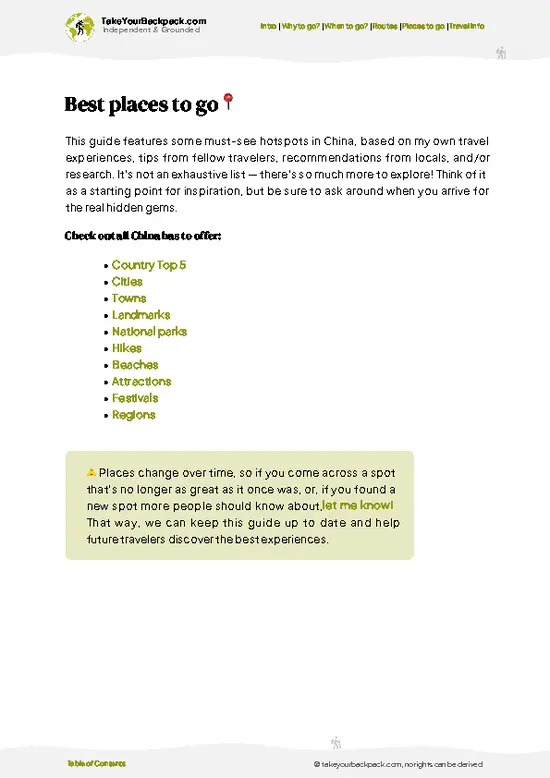
An offline-friendly backpacking guide with optimized travel routes, ranked highlights, transport advice, and the best areas to stay.
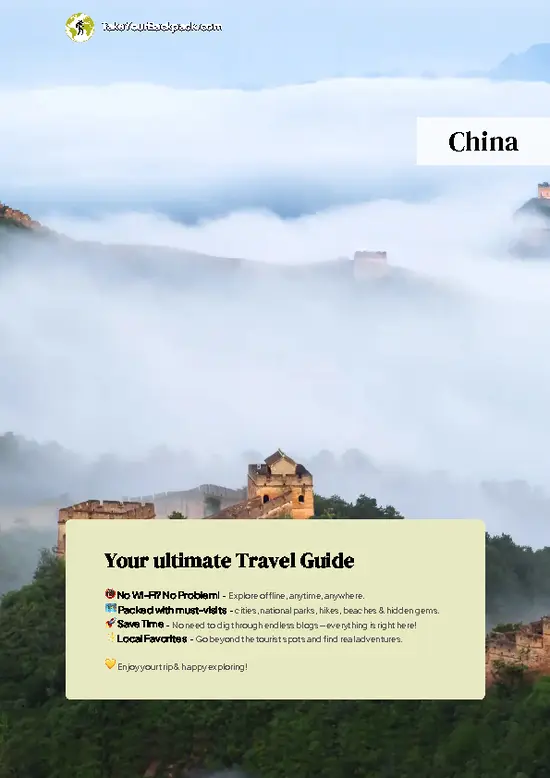
example page 0 from our offline Travel Guide for China
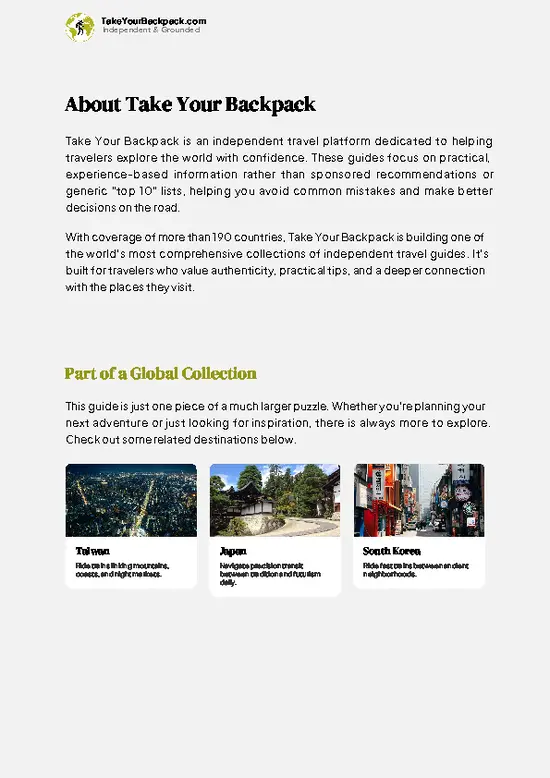
example page 1 from our offline Travel Guide for China
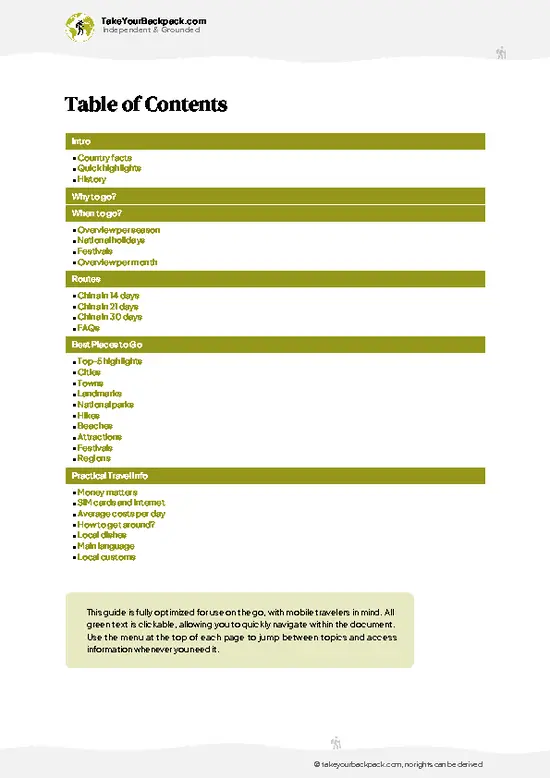
example page 2 from our offline Travel Guide for China
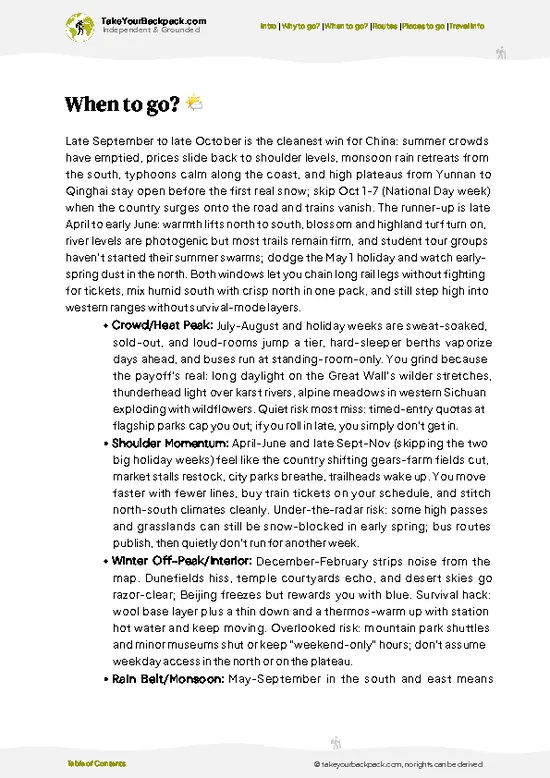
example page 3 from our offline Travel Guide for China
example page 4 from our offline Travel Guide for China
example page 5 from our offline Travel Guide for China
example page 6 from our offline Travel Guide for China
example page 7 from our offline Travel Guide for China
The digital guide (496 pages) contains:
139 highlights, ranked by travel appeal
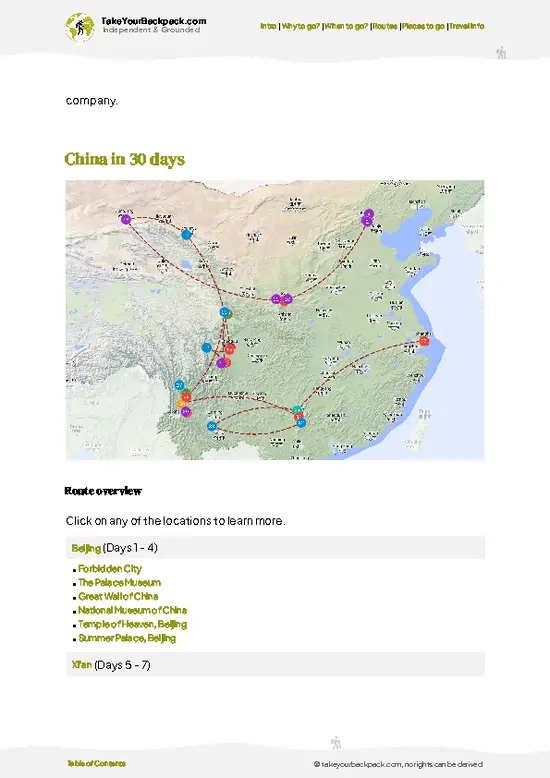
Optimized 14, 21 & 30-day travel routes
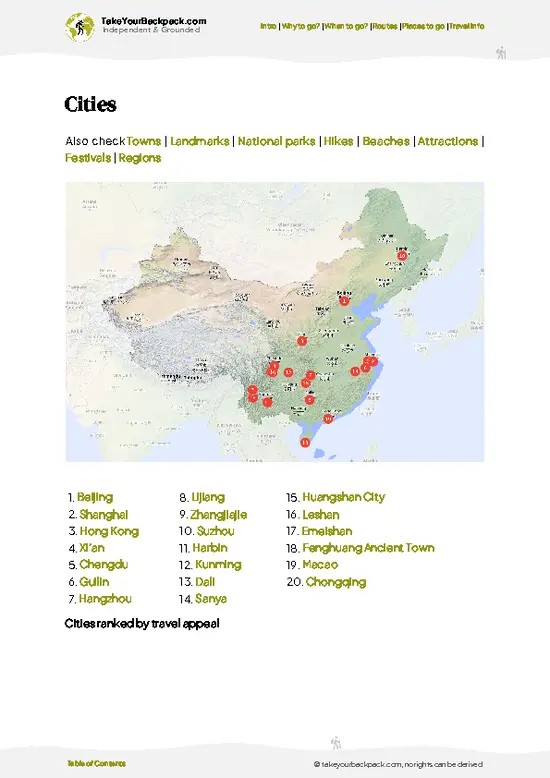
Cities, national parks, landmarks, beaches
How to get around
Offline-friendly for travel without Wi-Fi
👉 Click to see all 30+ guide features

📅 Plan smarter in minutes, not weeks
Month by month travel advice
Festivals & national holidays
Budget expectations

🗺️ Go to the right places, skip the overrated ones
Honest pros & cons of destinations
Top hikes, parks & viewpoints
Lesser-known places most travelers miss
Clear “worth it vs skip it” guidance

🛏️ Travel smoothly without rookie mistakes
Best areas to stay
Transport systems explained simply
Common scams & safety advice
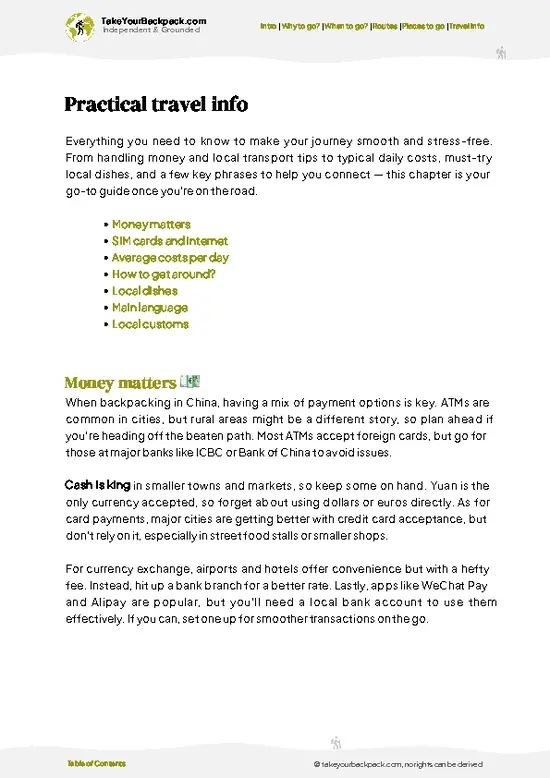
SIM cards, money & practical tips

🌍 Understand the country, not just visit it
Culture & traditions
52 Essential phrases & customs
Festivals worth planning around
Traveler-friendly historical context
Insights that make places more meaningful

📱 Built for real travel conditions
Fully downloadable PDF
Works completely offline
Optimized for phone use
Useful in remote areas & buses
Everything in one place
Save weeks of stressful planning
Get instant access to your full guide. 30‑day money-back guarantee.


By proceeding you agree to our terms.
Sent to your inbox immediately after payment • 100% Secure Checkout
Best Backpacking Travel Advisor 2025 tourism awardBest Backpacking
Travel Advisor
2025
What others say about Take Your Backpack Guides:
⭐⭐⭐⭐⭐
Fantastic, amazing amount of information!
⭐⭐⭐⭐⭐
My goodness this is amazing, it's what I've been looking for hats off too you!
⭐⭐⭐⭐⭐
I think this is absolutely BRILLIANT
⭐⭐⭐⭐
Very complete and informative. It's still missing places, but I gotta to commend you
⭐⭐⭐⭐⭐
This is truly amazing, thank you, can't wait to explore it with my kids!
⭐⭐⭐⭐⭐
Awesome resource, thank you!
⭐⭐⭐⭐⭐
This is amazing! Can't wait to explore the ones I haven't seen
⭐⭐⭐⭐
I love this! Well done, great idea.
⭐⭐⭐⭐⭐
Thanks for taking the time to make this gem!
⭐⭐⭐⭐⭐
This might be the best website I've ever seen.
⭐⭐⭐⭐⭐
Congratulations, and thank you so much for your work; it's incredibly valuable.
⭐⭐⭐⭐
In all seriousness I think you did a great job pointing out the important spots
⭐⭐⭐⭐⭐
10/10 very good
⭐⭐⭐⭐⭐
As someone who's only just starting to visit regularly this is awesome, thank you.
⭐⭐⭐⭐
Thank you very much! I'm going to visit my dad, it's going to be very useful!
⭐⭐⭐⭐⭐
This is really cool! We'll be travelling for the first time and this definitely come in handy.
⭐⭐⭐⭐⭐
You are now our minister of culture, congratulations 👨‍💼
⭐⭐⭐⭐⭐
Just wanted to tell you that this is a pearl! Going to follow your recommendations.
⭐⭐⭐⭐⭐
This is so cool. I'll definitely be using the resource for my travels soon.
⭐⭐⭐⭐⭐
This is very impressive! Good work.
⭐⭐⭐⭐⭐
This is an amazing and informative site. Very well done!

🛏️ Where to stay?Best areas to stay in China

Staying near Potala Palace in Lhasa is a balancing act between the allure of the site and the reality of the crowds. The area around Barkhor Street is a prime spot for backpackers. It’s bustling, filled with shops, street food, and the hum of local life. You’ll find a mix of budget accommodations here, perfect for solo travelers looking to connect.

Another option is the area around the Norbulingka Park. It’s quieter, offering a more relaxed vibe while still being a short walk from the palace. This is where you can escape the tourist frenzy and soak in some local culture.

Safety is generally … read more 👉
Staying near Potala Palace in Lhasa is a balancing act between the allure of the site and the reality of the crowds. The area around Barkhor Street is a prime spot for backpackers. It’s bustling, filled with shops, street food, and the hum of local life. You’ll find a mix of budget accommodations here, perfect for solo travelers looking to connect.

Another option is the area around the Norbulingka Park. It’s quieter, offering a more relaxed vibe while still being a short walk from the palace. This is where you can escape the tourist frenzy and soak in some local culture.

Safety is generally good in these neighborhoods, but like anywhere, keep your wits about you. Prices can vary, especially during peak seasons, so be prepared for a bit of negotiation.

Ultimately, the real magic lies in the interactions you’ll have. Chat with locals, share a meal, and immerse yourself in the Tibetan way of life. That’s the experience that makes the journey worthwhile, far beyond the Instagram snapshots.

👛 Costs (as of 18 January 2025)Typical daily expenses

Visiting Potala Palace in Lhasa, China, is a journey that demands both time and money, but the experience is worth every penny. Here’s a breakdown of what to expect in terms of costs:
  • Entrance Fee: The ticket price ranges from €10 to €15 (about $11 to $16). This fee grants you access to the palace and its stunning halls, chapels, and the breathtaking views of Lhasa from the rooftop. Be aware that tickets can sell out quickly, especially during peak seasons.
  • Guided Tours: If you want to dive deeper into the history and significance of the palace, consider a guided tour. Prices typically range from €20 to €50 ($22 to $55), depending on the length and depth of the tour. A knowledgeable guide can enhance your visit significantly, revealing stories that you might miss on your own.
  • Transportation:
read more 👉
Visiting Potala Palace in Lhasa, China, is a journey that demands both time and money, but the experience is worth every penny. Here’s a breakdown of what to expect in terms of costs:
  • Entrance Fee: The ticket price ranges from €10 to €15 (about $11 to $16). This fee grants you access to the palace and its stunning halls, chapels, and the breathtaking views of Lhasa from the rooftop. Be aware that tickets can sell out quickly, especially during peak seasons.
  • Guided Tours: If you want to dive deeper into the history and significance of the palace, consider a guided tour. Prices typically range from €20 to €50 ($22 to $55), depending on the length and depth of the tour. A knowledgeable guide can enhance your visit significantly, revealing stories that you might miss on your own.
  • Transportation: Getting to Potala Palace can vary in cost. Local buses are the cheapest option, costing around €0.50 ($0.55). If you prefer a taxi, expect to pay between €5 and €10 ($6 to $11) from central Lhasa. Walking is also a great option if you’re up for it; the palace is a prominent landmark.
  • Accommodation: Prices for hotels in Lhasa can range widely. Budget options start at around €15 ($16) per night, while mid-range hotels can go up to €50 ($55) or more. Staying close to the palace can save you time and give you easy access to other attractions.
  • Food: Meals in Lhasa can be quite affordable. Street food and local eateries offer dishes for as low as €2 to €5 ($2.20 to $5.50). If you opt for a sit-down restaurant, expect to spend around €10 to €20 ($11 to $22) per meal. Sampling local Tibetan cuisine is a must.

Plan your budget wisely, and be prepared for the crowds. The real magic of Potala Palace lies in its history and the spiritual energy that permeates the air.


source: xizang.gov.cn
⚠️ Prices can change and everyone travels differently, so take this as a rough guide. Hope it helps you plan your adventure!

Other Chinese landmarks near Potala Palace, Lhasa

Explore more nearby:


💡 Not sure where to go next?
Create a personalized itinerary for China including Potala Palace, Lhasa and the places that fit your trip.

Generate my itinerary

👉 Discover all landmarks

Or checkout all China has to offer (think cities, towns, villages, national parks, hikes, beaches, festivals)
Country photo of China

We 💚 feedbackParting advice and final tips

Visiting Potala Palace is like stepping into a living history book. The sheer scale and intricate details of this architectural marvel are breathtaking. But let’s be real: the crowds can be overwhelming, especially during peak season. You’ll be jostling for space with selfie sticks and tour groups. Still, if you can navigate the chaos, the spiritual energy and stunning views make it all worthwhile. Just be prepared for a bit of a hustle.

✈️ When did I visit China?
As part of my 1.5 year travel around the world trip, I visited China in August 2015, coming from Mongolia by the TransMongolia Express.

✍️ Help improve this page!
The information on this page is based on my own backpacking experience in China, supplemented with up-to-date research and feedback from other travelers. Travel details can change, so if you notice anything outdated or incomplete, feel free to let me know.


🙋‍♂️ Give feedback

👋 Meet the founderWho’s Behind Take Your Backpack?

Johan, backpacker and founder of TakeYourBackpackHi, I’m Johan (Netherlands 🇳🇱), the creator of TakeYourBackpack. Over the past decade, I’ve backpacked through 80+ countries across six continents, gaining extensive experience with independent travel, long-term trips, and overland routes.

This site is built on a combination of firsthand travel experience and carefully curated insights from other backpackers. Many guides are based on places I’ve personally visited, while others bring together tips, observations, and practical advice shared by trusted travelers I’ve met along the way.

The goal is to provide realistic, experience-driven guidance — not generic itineraries — so you can explore destinations with better context, clearer expectations, and more confidence.

Get full China guide •
Instant download • 139 highlights • Full Offline guide