×

Colombia🇨🇴 | citiesBogotáGold Museum, Candelaria lanes, Monserrate, Sunday Ciclovía | things to do and best time to go

Explore San AndresExplore Cali

Backpacking in Bogotá
🏆 Top pickcity ranked #3
By Johan Kruseman 🇳🇱 | Updated October 19, 2026

Most people come to Bogotá for La Candelaria, the colonial core of colorful façades, street art and the Gold Museum, and it earns the visit. What gets overlooked is that the city works as a very good place to stop moving, with strong coffee, cheap lunches and a sprawling, fast-changing capital that rewards a few days over a single afternoon. Bogotá sits high in the Andes, in Colombia’s capital district. My mistake here was hailing a street cab near the bus terminal instead of using a ride app, and I paid triple the fare and lost 40 minutes to traffic. Since then I use the app or TransMilenio, because the saving in money and nerves beats the small convenience. Skip the big shopping malls, they cost you hours for nothing you can’t get at home. Spend that time in Candelaria and the museums instead. Bogotá suits culture fans, food lovers and anyone needing a hub. It frustrates people wanting beaches, quiet or tidy sightseeing.

Discover everything you want to know in the 📖 Colombia Travel Guide.


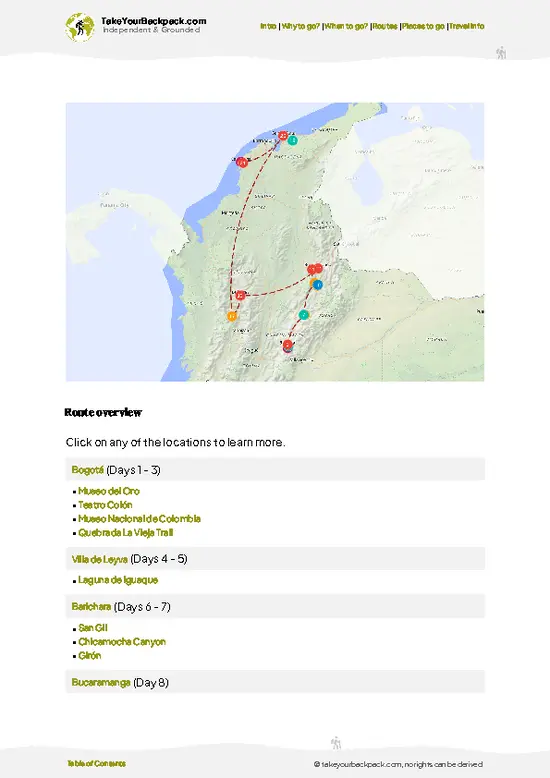
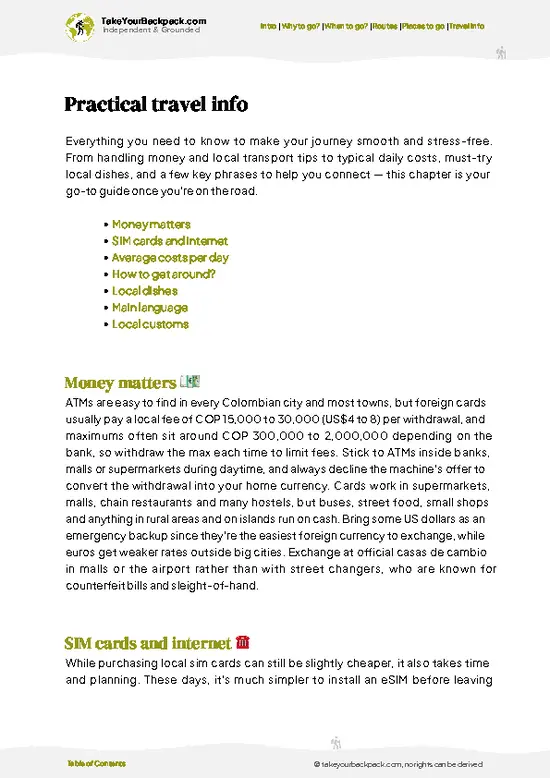
example page 0 from our offline Travel Guide for Colombia
example page 1 from our offline Travel Guide for Colombia
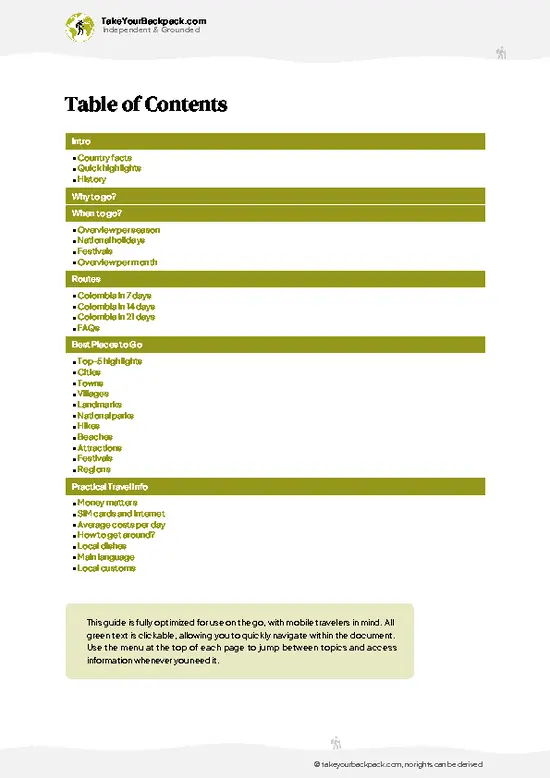
example page 2 from our offline Travel Guide for Colombia
example page 3 from our offline Travel Guide for Colombia
example page 4 from our offline Travel Guide for Colombia
example page 5 from our offline Travel Guide for Colombia
example page 6 from our offline Travel Guide for Colombia
example page 7 from our offline Travel Guide for Colombia
Loading the map 🌍
CLICK TO FILTER
cities
towns
villages
landmarks
national parks
hikes
beaches
attractions
festivals
regions
SHOW COUNTRY’S BESTSHOW ALL

✨ Why go?
Ranked #3 city in Colombia
Why visitors keep coming back

Bogotá earns a place on your route because it packs more museums, street food and live music than any other city in Colombia, and you can fill four or five days without repeating yourself. Hostels cluster in La Candelaria and Chapinero, so you can pick between a walkable old-town base and a nightlife-heavy, more modern neighborhood with better restaurants. The Zona Rosa and Chapinero bars keep going late, and salsa and rock venues are easy to find. The city also works as a transit point, with the main international airport and long-distance buses fanning out to coffee country, the Caribbean coast and the south. Be realistic though. Distances are big, traffic is heavy, and the cloudy, chilly weather can drag on if you stay too long. Two to four days suits most backpackers, longer if you want … read more 👉
Bogotá earns a place on your route because it packs more museums, street food and live music than any other city in Colombia, and you can fill four or five days without repeating yourself. Hostels cluster in La Candelaria and Chapinero, so you can pick between a walkable old-town base and a nightlife-heavy, more modern neighborhood with better restaurants. The Zona Rosa and Chapinero bars keep going late, and salsa and rock venues are easy to find. The city also works as a transit point, with the main international airport and long-distance buses fanning out to coffee country, the Caribbean coast and the south. Be realistic though. Distances are big, traffic is heavy, and the cloudy, chilly weather can drag on if you stay too long. Two to four days suits most backpackers, longer if you want to study Spanish, work remotely or go deeper into the art scene. Come for the culture and the food, then move on to warmer places once you have had your fill.

💡 HighlightsDon't-miss highlights and experiences

  1. Museo del Oro (Gold Museum): The most famous sight in Bogotá, with tens of thousands of pre-Hispanic gold pieces, including the Muisca raft. Go on a weekday morning to beat school groups. Entry is about US$1.50 to 2, and 2 to 3 hours is right.
  2. Plaza de Bolívar and La Candelaria: The historic square is ringed by the cathedral, Capitol and Palace of Justice. Wander the steep, colorful lanes behind it. Free, 1 to 2 hours, best in the morning.
  3. Monserrate: A 3,152 meter (10,340 foot) hilltop sanctuary with sweeping views over the whole city. Take the cable car or funicular for roughly US$5 to 8 return, or hike the stone stairway on a Sunday morning when it is busiest and safest. Allow 3 to 4 hours, and go before afternoon clouds.
  4. Museo Botero: Free, with Fernando Botero’s round-figured paintings and
… read more 👉
  1. Museo del Oro (Gold Museum): The most famous sight in Bogotá, with tens of thousands of pre-Hispanic gold pieces, including the Muisca raft. Go on a weekday morning to beat school groups. Entry is about US$1.50 to 2, and 2 to 3 hours is right.
  2. Plaza de Bolívar and La Candelaria: The historic square is ringed by the cathedral, Capitol and Palace of Justice. Wander the steep, colorful lanes behind it. Free, 1 to 2 hours, best in the morning.
  3. Monserrate: A 3,152 meter (10,340 foot) hilltop sanctuary with sweeping views over the whole city. Take the cable car or funicular for roughly US$5 to 8 return, or hike the stone stairway on a Sunday morning when it is busiest and safest. Allow 3 to 4 hours, and go before afternoon clouds.
  4. Museo Botero: Free, with Fernando Botero’s round-figured paintings and sculptures alongside works by Picasso and Monet. It takes about 1 to 1.5 hours.
  5. Graffiti tour: Bogotá is known for street art, much of it legal and commissioned. Free walking tours run on a tip basis (US$5 to 10 is typical) and last about 2 to 3 hours, usually late morning.
  6. Paloquemao Market: A working market for fruit, flowers and cheap breakfast stalls, far from the tourist trail. Go before 10 AM, spend US$3 to 6 and plan on 1 to 2 hours.
  7. Usaquén Sunday Market: A flea market in a former village in the north, with crafts and street food. Free entry, best from 10 AM to 2 PM, and 2 hours is plenty.
  8. Ciclovía: On Sundays and holidays main roads close to cars and fill with cyclists, joggers and bike rental stands. Rentals cost about US$4 to 8, and a ride takes 2 to 3 hours from morning.
For day trips, look at Zipaquirá’s Salt Cathedral, Guatavita Lake and the village of Villa de Leyva. Doing everything above takes roughly three full days.
Spotted a mistake or missing something? Contact us.

Things to do in Bogotá

Ratings based on Tripadvisor reviews. When you book through this link, you support our work at no extra cost to you.

🏘️ NeighborhoodsNeighborhood guide to Bogotá

Bogotá sprawls for kilometers, but a backpacker only needs four or five areas, and they sit close enough to link in a day each.
  • La Candelaria is the colonial core, with steep cobbled lanes, street murals, the Museo del Oro and Plaza de Bolívar. Walk it by day, grab a cheap set lunch and a hot chocolate with cheese, and leave by dark, since the empty streets after 9 p.m. are not worth the risk. It gives you the most sights for the least money.
  • Chapinero and Zona T hold the polished restaurants and clubs. Prices run about double Candelaria, so come for one good dinner, not a week.
  • Parque 93 is upscale and tidy, with craft beer and brunch. Pretty, but the same food is cheaper elsewhere, so skip it unless you want a quiet cafe afternoon.
  • Usaquén is a former village on the north side with a Sunday
… read more 👉
Bogotá sprawls for kilometers, but a backpacker only needs four or five areas, and they sit close enough to link in a day each.
  • La Candelaria is the colonial core, with steep cobbled lanes, street murals, the Museo del Oro and Plaza de Bolívar. Walk it by day, grab a cheap set lunch and a hot chocolate with cheese, and leave by dark, since the empty streets after 9 p.m. are not worth the risk. It gives you the most sights for the least money.
  • Chapinero and Zona T hold the polished restaurants and clubs. Prices run about double Candelaria, so come for one good dinner, not a week.
  • Parque 93 is upscale and tidy, with craft beer and brunch. Pretty, but the same food is cheaper elsewhere, so skip it unless you want a quiet cafe afternoon.
  • Usaquén is a former village on the north side with a Sunday flea market, plazas and street snacks. It is a 40 to 60 minute trip from the center, which is worth it on Sundays only.
  • Chapinero Alto mixes bookshops, specialty coffee and a lively LGBTQ+ scene. It is the best area for nightlife without tourist-bar markups, and it is walkable in the evening along the main streets.

⌛️ 1 day1-day itinerary for Bogotá

8:30 AM, Museo del Oro: Start here before the crowds, since it is the one stop you should not skip. The gold rooms and the dim Muisca offering room take about two hours. Walk five minutes to the next stop.
11:00 AM, Plaza de Bolívar and La Candelaria: Cross the square, peek into the cathedral, then climb the lanes toward Chorro de Quevedo, a small plaza where the city was supposedly founded. Street art covers many walls.
12:45 PM, Lunch at a local corrientazo spot: Look for a set lunch of soup, rice, meat and juice in the side streets for a fraction of tourist-menu prices. Then stroll to the Museo Botero, a few blocks away, for a free hour among the plump figures.
2:30 PM, Quinta de Bolívar: Few travelers bother with this quiet colonial country house where Bolívar lived, tucked on the slope of … read more 👉
8:30 AM, Museo del Oro: Start here before the crowds, since it is the one stop you should not skip. The gold rooms and the dim Muisca offering room take about two hours. Walk five minutes to the next stop.
11:00 AM, Plaza de Bolívar and La Candelaria: Cross the square, peek into the cathedral, then climb the lanes toward Chorro de Quevedo, a small plaza where the city was supposedly founded. Street art covers many walls.
12:45 PM, Lunch at a local corrientazo spot: Look for a set lunch of soup, rice, meat and juice in the side streets for a fraction of tourist-menu prices. Then stroll to the Museo Botero, a few blocks away, for a free hour among the plump figures.
2:30 PM, Quinta de Bolívar: Few travelers bother with this quiet colonial country house where Bolívar lived, tucked on the slope of the eastern hills. The garden is calm and the walk is short, though uphill. Expect around an hour.
4:00 PM, Monserrate: Take a taxi or ride app to the base station, then ride up for city views as the light softens. Wear layers because it gets cold and cloudy fast.
6:30 PM, Dinner in Chapinero or Parque 93: Ride back down and take a ride app to a restaurant district for ajiaco or a craft beer. It is a relaxed finish after a full day.

🌤️ When to go?Weather, crowds, and seasonal trade-offs

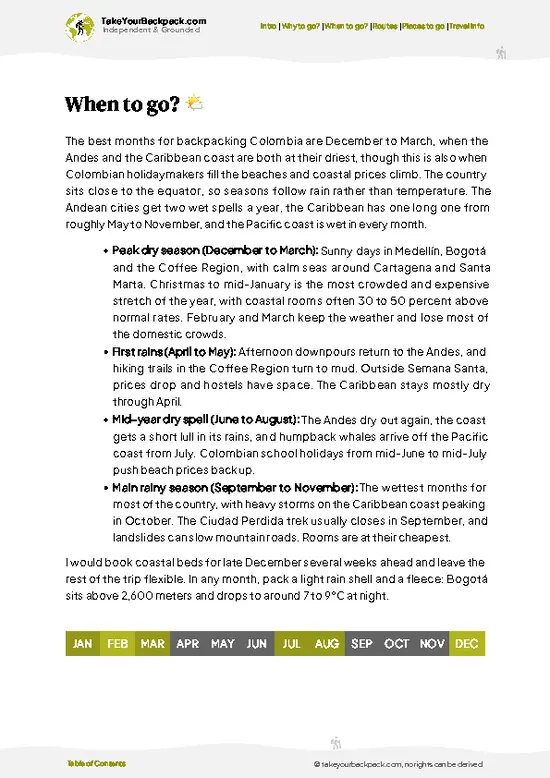
  • Dry Season (December to March): Sunny, with the clearest skies for hiking up Monserrate. Daytime highs reach 19 to 21°C (66 to 70°F), and nights drop to 6 to 9°C (43 to 48°F). Holiday weeks bring crowds and higher hostel prices.
  • First Rains (April to May): Afternoon downpours become regular, but mornings are often clear. Crowds thin and beds get cheaper.
  • Mid-Year Dry Spell (June to August): Cooler, breezier and drier, with strong winds that suit kite festivals. Domestic travelers fill the city in July.
  • Wet Season (September to November): The rainiest stretch, with cold, gray days around 14 to 18°C (57 to 64°F). Museums and cafes fill the gaps, and rates sit at their lowest.
Daylight stays steady all year, so pack layers and an umbrella in any month, and book ahead for Christmas.

source: climatestotravel.comJANJanuary: excellent for travelingFEBFebruary: excellent for travelingMARMarch: highly recommended for travelingAPRApril: good for travelingMAYMay: fair for travelingJUNJune: good for travelingJULJuly: good for travelingAUGAugust: good for travelingSEPSeptember: highly recommended for travelingOCTOctober: good for travelingNOVNovember: good for travelingDECDecember: excellent for traveling
colombia-city-bogota
© Google | Elio Guzman

✈️ The backpacker research shortcutColombia Travel Guide

An offline-friendly backpacking guide with optimized travel routes, ranked highlights, transport advice, and the best areas to stay.
example page 0 from our offline Travel Guide for Colombia
example page 1 from our offline Travel Guide for Colombia
example page 2 from our offline Travel Guide for Colombia
example page 3 from our offline Travel Guide for Colombia
example page 4 from our offline Travel Guide for Colombia
example page 5 from our offline Travel Guide for Colombia
example page 6 from our offline Travel Guide for Colombia
example page 7 from our offline Travel Guide for Colombia
The digital guide (349 pages) contains:
✅ 115 highlights, ranked by travel appeal
✅ Optimized 7, 14 & 21-day travel routes
✅ Cities, national parks, landmarks, beaches
✅ How to get around
✅ Offline-friendly for travel without Wi-Fi
👉 Click to see all 30+ guide features

📅 Plan smarter in minutes, not weeks
✅ Month by month travel advice
✅ Festivals & national holidays
✅ Budget expectations

🗺️ Go to the right places, skip the overrated ones
✅ Honest pros & cons of destinations
✅ Top hikes, parks & viewpoints
✅ Lesser-known places most travelers miss
✅ Clear “worth it vs skip it” guidance

🛏️ Travel smoothly without rookie mistakes
✅ Best areas to stay
✅ Transport systems explained simply
✅ Common scams & safety advice
✅ SIM cards, money & practical tips

🌍 Understand the country, not just visit it
✅ Culture & traditions
✅ 52 Essential phrases & customs
✅ Festivals worth planning around
✅ Traveler-friendly historical context
✅ Insights that make places more meaningful

📱 Built for real travel conditions
✅ Fully downloadable PDF
✅ Works completely offline
✅ Optimized for phone use
✅ Useful in remote areas & buses
✅ Everything in one place
Stop searching, start planning
Get instant access to your full guide. 30‑day money-back guarantee.
+ Add another guide for just

By proceeding you agree to our terms.
Sent to your inbox immediately after payment • 100% Secure Checkout
Best Backpacking Travel Advisor 2025 tourism awardBest Backpacking
Travel Advisor
2025
What others say about Take Your Backpack Guides:
⭐⭐⭐⭐⭐
Fantastic, amazing amount of information!
⭐⭐⭐⭐⭐
My goodness this is amazing, it's what I've been looking for hats off too you!
⭐⭐⭐⭐⭐
I think this is absolutely BRILLIANT
⭐⭐⭐⭐
Very complete and informative. It's still missing places, but I gotta to commend you
⭐⭐⭐⭐⭐
This is truly amazing, thank you, can't wait to explore it with my kids!
⭐⭐⭐⭐⭐
Awesome resource, thank you!
⭐⭐⭐⭐⭐
This is amazing! Can't wait to explore the ones I haven't seen
⭐⭐⭐⭐
I love this! Well done, great idea.
⭐⭐⭐⭐⭐
Thanks for taking the time to make this gem!
⭐⭐⭐⭐⭐
This might be the best website I've ever seen.
⭐⭐⭐⭐⭐
Congratulations, and thank you so much for your work; it's incredibly valuable.
⭐⭐⭐⭐
In all seriousness I think you did a great job pointing out the important spots
⭐⭐⭐⭐⭐
10/10 very good
⭐⭐⭐⭐⭐
As someone who's only just starting to visit regularly this is awesome, thank you.
⭐⭐⭐⭐
Thank you very much! I'm going to visit my dad, it's going to be very useful!
⭐⭐⭐⭐⭐
This is really cool! We'll be travelling for the first time and this definitely come in handy.
⭐⭐⭐⭐⭐
You are now our minister of culture, congratulations 👨‍💼
⭐⭐⭐⭐⭐
Just wanted to tell you that this is a pearl! Going to follow your recommendations.
⭐⭐⭐⭐⭐
This is so cool. I'll definitely be using the resource for my travels soon.
⭐⭐⭐⭐⭐
This is very impressive! Good work.
⭐⭐⭐⭐⭐
This is an amazing and informative site. Very well done!

🛏️ Where to stay?Best areas and accommodation options

La Candelaria is the best place for most budget travelers, with the densest cluster of hostels and cheap guesthouses in the city. Dorm beds are plentiful, you can walk to museums and cafes, and TransMilenio stations are close for onward trips. The downside is the quiet, poorly lit streets after dark, so pick a place on or near a busy street and take an app taxi home late at night. Noise is usually a minor issue, though weekend parties can carry through thin walls.
Chapinero is the second choice, especially if you want nightlife, good coffee and a less touristy feel. Hostels are fewer and a little … read more 👉
La Candelaria is the best place for most budget travelers, with the densest cluster of hostels and cheap guesthouses in the city. Dorm beds are plentiful, you can walk to museums and cafes, and TransMilenio stations are close for onward trips. The downside is the quiet, poorly lit streets after dark, so pick a place on or near a busy street and take an app taxi home late at night. Noise is usually a minor issue, though weekend parties can carry through thin walls.
Chapinero is the second choice, especially if you want nightlife, good coffee and a less touristy feel. Hostels are fewer and a little pricier, but the streets are livelier in the evening and feel safer to walk. Transport links are strong, with TransMilenio running along the main avenue and plenty of taxis. It suits longer stays, remote work and travelers who prefer restaurants over sights. Book ahead for December and January, when the better-reviewed places fill up.

🚌 Getting aroundGetting around like a local

The costliest mistake is hailing a street taxi from the airport or a bus terminal without using the official taxi queue or an app, since overcharging and long detours add up fast. Bogotá is huge and traffic can turn a 10 km trip into a 90 minute crawl, so plan around it. Walking works well inside Candelaria and the Zona T, but the rest needs wheels.
  • TransMilenio is the red articulated bus network with dedicated lanes, and it beats everything else for speed on the main corridors. A ride costs about US$0.75 and needs a rechargeable Tu Llave card. It runs roughly 4:30 a.m. to 11 p.m. and gets packed at rush hours, so keep your bag in front.
  • SITP buses reach the neighborhoods that TransMilenio skips. Fares match TransMilenio and the same card works, but routes are confusing, so only use them if
… read more 👉
The costliest mistake is hailing a street taxi from the airport or a bus terminal without using the official taxi queue or an app, since overcharging and long detours add up fast. Bogotá is huge and traffic can turn a 10 km trip into a 90 minute crawl, so plan around it. Walking works well inside Candelaria and the Zona T, but the rest needs wheels.
  • TransMilenio is the red articulated bus network with dedicated lanes, and it beats everything else for speed on the main corridors. A ride costs about US$0.75 and needs a rechargeable Tu Llave card. It runs roughly 4:30 a.m. to 11 p.m. and gets packed at rush hours, so keep your bag in front.
  • SITP buses reach the neighborhoods that TransMilenio skips. Fares match TransMilenio and the same card works, but routes are confusing, so only use them if an app shows your line. They are slow and not worth the effort for first-timers.
  • Ride-hailing and taxis cost US$2 to 5 for most central trips, and US$8 to 12 from the airport. Apps like Uber, inDrive and Cabify are cheaper and more predictable than street cabs. Use them at night, and split the fare with other travelers for the best value.
  • Bicycle and Ciclovía are excellent on Sundays and holidays, when main roads like Carrera Séptima close to cars from about 7 a.m. to 2 p.m. Rentals run US$5 to 10 for the day. On weekdays, skip riding, since traffic and exhaust make it unpleasant.
  • Walking is free and the best way to see Candelaria and Chapinero. Watch the altitude, since at 2,600 m you will tire faster than expected. Take taxis home after dark.

👛 Costs (as of 19 October 2026)Typical daily expenses

A backpacker in Bogotá spends about US$30 to 67 a day, or around US$45 using high-season dorm beds.
CategoryBudget RangeLocal Reality
Dorm (high season)US$9 to 15Candelaria and Chapinero hostels fill up in December and July.
Dorm (off-season)US$7 to 11Better rates from April to May and September to November.
MealsUS$10 to 16Set lunches cost US$3 to 5, and dinner in a casual restaurant US$5 to 8.
Local transportUS$2 to 5TransMilenio rides are about US$0.75 each, and app taxis fill gaps at night.
City transport passUS$2 to 4The reloadable Tu Llave card costs about US$1.50 and works on buses.
Activities and entry feesUS$4 to 10Museo del Oro is about US$1.50 to 2, and Monserrate funicular is about US$7 to 10.
MiscellaneousUS$3 to 6Coffee, snacks, SIM data and laundry.
Total Daily BudgetUS$30 to 67About
… read more 👉
A backpacker in Bogotá spends about US$30 to 67 a day, or around US$45 using high-season dorm beds.
CategoryBudget RangeLocal Reality
Dorm (high season)US$9 to 15Candelaria and Chapinero hostels fill up in December and July.
Dorm (off-season)US$7 to 11Better rates from April to May and September to November.
MealsUS$10 to 16Set lunches cost US$3 to 5, and dinner in a casual restaurant US$5 to 8.
Local transportUS$2 to 5TransMilenio rides are about US$0.75 each, and app taxis fill gaps at night.
City transport passUS$2 to 4The reloadable Tu Llave card costs about US$1.50 and works on buses.
Activities and entry feesUS$4 to 10Museo del Oro is about US$1.50 to 2, and Monserrate funicular is about US$7 to 10.
MiscellaneousUS$3 to 6Coffee, snacks, SIM data and laundry.
Total Daily BudgetUS$30 to 67About US$45 on a typical day.
Eat the set lunch (corrientazo) as your main meal and keep dinner light to save US$4 to 6 a day. Many museums are free on certain days, so check before you pay.
⚠️ Prices can change and everyone travels differently, so take this as a rough guide. Hope it helps you plan your adventure!

🚌 Day tripsEasy escapes and nearby places

Bogotá works well as a base, with several rewarding excursions reachable by bus or shared transport in half a day or less.Zipaquirá Salt Cathedral: An underground church carved inside a salt mine, with huge crosses and blue lighting. Take the TransMilenio to Portal Norte, then a bus for about 1.5 hours each way. Entry is around US$14 to 20, and the total with transport comes to US$25. Go on a weekday, since weekends are crowded. First-timers often arrive too late to do the tour comfortably.
👉 Explore ZipaquiráGuatavita Lake: A circular mountain lake tied to the El Dorado legend, reached by a bus to Guatavita town (about 2 hours). Entrance to the reserve costs about US$5 to 8 and includes a guided hike. Dry months are best for clear views. Many forget warm layers, and the wind is cold at 3,000 … read more 👉
Bogotá works well as a base, with several rewarding excursions reachable by bus or shared transport in half a day or less.Zipaquirá Salt Cathedral: An underground church carved inside a salt mine, with huge crosses and blue lighting. Take the TransMilenio to Portal Norte, then a bus for about 1.5 hours each way. Entry is around US$14 to 20, and the total with transport comes to US$25. Go on a weekday, since weekends are crowded. First-timers often arrive too late to do the tour comfortably.
👉 Explore ZipaquiráGuatavita Lake: A circular mountain lake tied to the El Dorado legend, reached by a bus to Guatavita town (about 2 hours). Entrance to the reserve costs about US$5 to 8 and includes a guided hike. Dry months are best for clear views. Many forget warm layers, and the wind is cold at 3,000 m.
Villa de Leyva: A whitewashed colonial town with an enormous cobbled plaza, about 3.5 to 4 hours by bus. A long day trip, but doable at US$20 to 30 return, and nearby fossils and wineries add variety. A common error is leaving after noon and missing the last bus back.
👉 Explore Villa de LeyvaSuesca: A climbing and rappelling spot about 1.5 hours from the city, with sandstone cliffs and good beginner routes. Day packages run US$25 to 45 with gear. Dry season is best, when the rock is firm.

🍲 FoodEating & Drinking in Bogotá

Bogotá's signature is ajiaco, a thick chicken and three-potato soup with corn, capers and cream, served with avocado. It suits the cold highland climate and is the one dish to eat here. The other local ritual is chocolate santafereño, hot chocolate served with a slab of cheese you drop in and spoon out when it melts. It sounds odd and tastes excellent.
Look for tamales bogotanos at weekend breakfast, wrapped in banana leaf and eaten with bread, and changua, a milk and egg soup that locals swear by on cold mornings. Fresh almojábanas and pandebono come warm from corner bakeries.
For cheap meals, head to the neighborhood plazas de mercado like Paloquemao, where you can try fruits such as lulo, curuba and granadilla and eat a set lunch (corrientazo) for US$3 to 5. Candelaria has plenty of tiny … read more 👉
Bogotá's signature is ajiaco, a thick chicken and three-potato soup with corn, capers and cream, served with avocado. It suits the cold highland climate and is the one dish to eat here. The other local ritual is chocolate santafereño, hot chocolate served with a slab of cheese you drop in and spoon out when it melts. It sounds odd and tastes excellent.
Look for tamales bogotanos at weekend breakfast, wrapped in banana leaf and eaten with bread, and changua, a milk and egg soup that locals swear by on cold mornings. Fresh almojábanas and pandebono come warm from corner bakeries.
For cheap meals, head to the neighborhood plazas de mercado like Paloquemao, where you can try fruits such as lulo, curuba and granadilla and eat a set lunch (corrientazo) for US$3 to 5. Candelaria has plenty of tiny lunch counters, and Chapinero offers craft coffee and beer. For drinks, try canelazo or local craft beer from Bogotá Beer Company-type taprooms in Zona T, and tinto, the small black coffee sold everywhere for under US$1.

🛡️ SafetyTraveler Safety Guide

Bogotá is manageable if you act like a local, and most trouble is petty theft rather than violence. Phone snatching is the main issue, especially in Candelaria and around TransMilenio stations, so keep your phone in a front pocket and avoid using it at the curb. Stay out of the empty streets of the center after dark and avoid walking above Candelaria toward the hills at night. Solo travelers do fine, and an app taxi after 9 p.m. is easy and cheap. Common annoyances include street taxis padding fares and “friendly” strangers who offer to exchange money or sell emeralds. A polite no and a steady walk is enough. Drink spiking exists in some bars, so watch your glass and never leave with someone you just met. Carry a small amount of cash and leave your passport in the hostel safe.

FAQCommon questions from travelers

Three to four days covers Bogotá well. That gives you one day for La Candelaria and the Museo del Oro, one for Monserrate and Chapinero, and one for a trip to Zipaquirá (about 1.5 hours each way). Add a fourth day for Guatavita or Usaquén's Sunday market.
Bogotá is manageable for solo backpackers who use common sense. Phone theft is the main risk, so keep it out of sight near TransMilenio stations and in Candelaria. After 9 p.m., take an app taxi (US$2 to 5) rather than walking, and stay in well-lit areas like Chapinero.
Bogotá is known for its colonial La Candelaria district, the Museo del Oro with about 55,000 gold pieces, and Monserrate hill at 3,152 m. It is also famous for its street art, ajiaco soup, and specialty coffee. The Sunday Ciclovía closes over 120 km of roads to cars, which locals love.
⚠️ Things can change over time, so always validate details locally before you go.

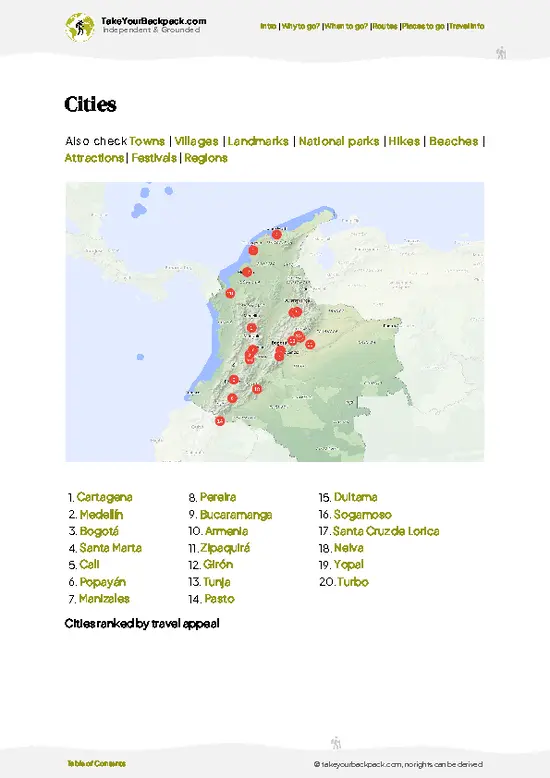
Other Colombian cities near Bogotá

Explore more nearby:

  • Zipaquirá—Salt Cathedral, halite mine, Calle Real cafés, Bogotá day trip| 36 km away
  • Tunja—Painted colonial ceilings, gilded chapels, Boyacá capital, student streets| 122 km away
  • Manizales—Neo-Gothic cathedral tower, cable car, ridge-top cafés| 163 km away

💡 Not sure where to go next?
Create a personalized itinerary for Colombia including Bogotá and the places that fit your trip.

Generate my itinerary

👉 Discover all cities

Or checkout all Colombia has to offer (think cities, towns, villages, national parks, hikes, beaches, festivals)
Country photo of Colombia

We 💚 feedbackKey takeaways before you go

Bogotá is at its best on a Sunday morning, when the Ciclovía closes the main roads and clouds haven’t yet rolled over the hills. Plan your stay to include one, and book Monserrate for that same morning. I would skip the rainy afternoons for outdoor plans and spend them in museums or cafés instead.

✈️ When did I visit Colombia?
Did a good 3-week trip around Colombia in August 2014.

✍️ Help improve this page!
The information on this page is based on my own backpacking experience in Colombia, supplemented with up-to-date research and feedback from other travelers. Travel details can change, so if you notice anything outdated or incomplete, feel free to let me know.


🙋‍♂️ Give feedback

👋 Meet the founderWho’s Behind Take Your Backpack?

Johan, backpacker and founder of TakeYourBackpackHi, I’m Johan (Netherlands 🇳🇱), the creator of TakeYourBackpack. Over the past 3 decades, I’ve backpacked through 90+ countries across six continents, gaining extensive experience with independent travel, long-term trips, and overland routes.

This site is built on a combination of firsthand travel experience and carefully curated insights from other backpackers. Many guides are based on places I’ve personally visited, while others bring together tips, observations, and practical advice shared by trusted travelers I’ve met along the way.

The goal is to provide realistic, experience-driven guidance — not generic itineraries — so you can explore destinations with better context, clearer expectations, and more confidence.