×

Colombia🇨🇴 | regionsChocóPacific rainforest, black sand beaches, endemic wildlife | things to do and best time to go

Explore Chicamocha CanyonExplore La Guajira

Backpacking in Chocó
👌 Worth visitingregion ranked #3
By Johan Kruseman 🇳🇱 | Updated September 4, 2026

You land in Medellín with two weeks in Colombia and one big fork in the road: do you burn days and pesos getting to Chocó for wild Pacific coast and rainforest, or play it safe with easier, cheaper spots like the Coffee Region or the Caribbean? That choice matters, because Chocó is where you trade comfort and convenience for raw, high-reward experiences.

Chocó sits on Colombia’s northwest edge, squeezed between Panama and the Pacific, spilling inland into dense jungle. For backpackers, it’s gorgeous and chaotic: black-sand beaches around Nuquí and Bahía Solano, whales in season, rivers you actually want to swim in, and Afro-Colombian towns where tourism still feels like a side hustle, not an industry. It’s pricier and slower to reach than Santa Marta, buses are patchy, boats rule the game, and rain is a lifestyle. But if you want fewer hostels-with-pool vibes and more “I can’t believe this is still this wild,” Chocó wins.

Discover everything you want to know in the 📖 Colombia Travel Guide.
Loading the map 🌍
CLICK TO FILTER
cities
towns
villages
landmarks
national parks
hikes
beaches
attractions
festivals
regions
SHOW COUNTRY’S BESTSHOW ALL

✨ Why go?
Ranked #3 region in Colombia
What makes it a must-see region

In the heart of Colombia, Chocó is a backpacker’s playground that’s all about variety. You’ve got lush rainforests, stunning coastlines, and vibrant Afro-Colombian culture—all within a few hours of each other. This region is a goldmine for those who want to experience multiple landscapes without the hassle of constant relocation.

Imagine waking up to the sound of howler monkeys, then spending the afternoon on a secluded beach, all in the same day. That’s the beauty of Chocó. The transport flexibility here is a game-changer. Local buses and shared taxis make it easy to hop from one breathtaking spot to another, allowing you to soak in the scenery at your own pace.

Plus, the essence of slow travel is alive and well. You can dive deep into the local culture, savoring traditional dishes and … read more 👉
In the heart of Colombia, Chocó is a backpacker’s playground that’s all about variety. You’ve got lush rainforests, stunning coastlines, and vibrant Afro-Colombian culture—all within a few hours of each other. This region is a goldmine for those who want to experience multiple landscapes without the hassle of constant relocation.

Imagine waking up to the sound of howler monkeys, then spending the afternoon on a secluded beach, all in the same day. That’s the beauty of Chocó. The transport flexibility here is a game-changer. Local buses and shared taxis make it easy to hop from one breathtaking spot to another, allowing you to soak in the scenery at your own pace.

Plus, the essence of slow travel is alive and well. You can dive deep into the local culture, savoring traditional dishes and chatting with locals, rather than just ticking boxes on a tourist checklist. This isn’t just a trip; it’s an immersive experience that connects you to nature and community in a way that’s hard to find elsewhere. Embrace the trade-offs, and you’ll discover the true soul of Colombia.
Want to include Chocó in your Colombia route?
Create a personalized Colombia itinerary that includes Chocó and the places that fit your trip — based on your travel style, budget, and available time. Get your route in seconds.

Generate my trip

💡 HighlightsEssential experiences to have while visiting Chocó

  1. Parque Nacional Natural Ensenada de Utría (Utría National Park) — Mangroves, rainforest trails, tide pools and small, sheltered beaches where humpback whales pass every year. The mix of sea and jungle is pure Chocó: guided mangrove walks at low tide, untouched snorkeling pockets, and very few people. Personal favorite — nothing beats a morning paddle watching whales and frigatebirds around the same bay.
  2. Nuquí — hot springs, waterfalls and jungle surf — A rainforest-on-the-beach town that’s more about experiences than infrastructure: rustic eco-lodges, hot springs up the river, jungle hikes to waterfalls, and surfable breaks like Guachalito. Whale season from July-October is a bonus; get a local guide and expect basic comfort, brilliant jungle noise, and real local food.
  3. Bahía Solano: El
read more 👉
  1. Parque Nacional Natural Ensenada de Utría (Utría National Park) — Mangroves, rainforest trails, tide pools and small, sheltered beaches where humpback whales pass every year. The mix of sea and jungle is pure Chocó: guided mangrove walks at low tide, untouched snorkeling pockets, and very few people. Personal favorite — nothing beats a morning paddle watching whales and frigatebirds around the same bay.
  2. Nuquí — hot springs, waterfalls and jungle surf — A rainforest-on-the-beach town that’s more about experiences than infrastructure: rustic eco-lodges, hot springs up the river, jungle hikes to waterfalls, and surfable breaks like Guachalito. Whale season from July-October is a bonus; get a local guide and expect basic comfort, brilliant jungle noise, and real local food.
  3. Bahía Solano: El Valle & El Almejal — Turtle nesting beaches, easy whale-watching, and surf in a small-town Pacific setting. El Valle is low-key but lively during whale season; El Almejal is quieter, great for beach walks and nocturnal turtle patrols run by locals. Easy day trips from the town let you combine beach, jungle and community visits without long hikes.
  4. Quibdó malecon, markets and the currulao scene — The capital’s riverfront life is Afro-Chocoano culture on display: bustling markets, riverboats on the Atrato, and nights where currulao (traditional drumming and dance) breaks out. Walk the malecón at dusk, eat encocado at a market stall, and if you can time it, catch a live music night — nothing touristy about it.
  5. Atrato River community trips & Emberá encounters — Longboat trips up the Atrato take you to riverside Afro-Colombian and Emberá villages for cooking, basket weaving and canoeing through side channels. These are real community stays (hire a local guide, bring an offering, and be respectful) — you’ll learn how river life shapes everything here.
  6. Capurganá & Sapzurro (Acandí) — Caribbean beaches with jungle hinterland — On Chocó’s Caribbean fringe you get warm, clear water, snorkeling, jungle hikes to La Miel and a laid-back border-town vibe near Panama. No roads in—access is by boat via Necoclí—so it feels remote but is easy to reach and very different from the Pacific coast.
  7. Los Katíos National Park (Darién foothills) — A biodiverse, lowland rainforest and UNESCO site tucked on the northern edge of Chocó. Birdwatchers and nature lovers come for the mix of Caribbean/Darién species, big trees and rare fauna. It’s remote and regulated, so visits feel like being one of the few people to see a slice of intact jungle.
  8. Lloró cloud forest and waterfalls (hidden gem) — One of the wettest spots on Earth with dense cloud forest, orchids, hummingbirds and countless waterfalls. Few tourists bother getting here, so trails and local lodges feel authentic; if you’re into birding or dramatic scenery without crowds, this is pure gold.
  9. Juradó (hidden gem) — A tiny Pacific fishing village near the Panama border with empty beaches, mangrove channels and slow, local life. Reachable by boat, Juradó is for travelers who want to disappear for a few days, watch fishermen bring in the catch, and walk endless sand with almost no one around.
  10. Bojayá and the Bellavista riverfront (hidden gem, historically significant) — A riverside town with a tragic modern history and resilient Afro-Colombian communities; visiting is a sober, important way to learn about the region’s conflicts and social fabric. River travel from Quibdó and respectful time in town with local guides gives perspective you won’t get from beaches or parks.
Spotted a mistake or missing something? Contact us.

Things to do near Chocó

Ratings based on Tripadvisor reviews. When you book through this link, you support our work at no extra cost to you.

⌛️ 5 daysWhat you can realistically do in a week

Day 1: Quibdó
The journey kicks off in Quibdó, the capital of Chocó. This city is your gateway to the lush, rain-soaked wonders of the region. Spend the day acclimating and exploring local markets. The transport system here is basic but effective; you’ll find buses and mototaxis zipping around. Use this day to gather intel from locals about the best routes and hidden spots.

Day 2: Nuquí
From Quibdó, hop on a short flight to Nuquí. This coastal town is where the Pacific meets the jungle, and it’s a prime spot for whale watching if you’re here between July and October. The flight saves you hours of travel time on rough roads, allowing you to dive straight into the experience. Spend the afternoon on the beach, soaking in the laid-back vibe.

Day 3: Termales
Take a boat to Termales, a … read more 👉
Day 1: Quibdó
The journey kicks off in Quibdó, the capital of Chocó. This city is your gateway to the lush, rain-soaked wonders of the region. Spend the day acclimating and exploring local markets. The transport system here is basic but effective; you’ll find buses and mototaxis zipping around. Use this day to gather intel from locals about the best routes and hidden spots.

Day 2: Nuquí
From Quibdó, hop on a short flight to Nuquí. This coastal town is where the Pacific meets the jungle, and it’s a prime spot for whale watching if you’re here between July and October. The flight saves you hours of travel time on rough roads, allowing you to dive straight into the experience. Spend the afternoon on the beach, soaking in the laid-back vibe.

Day 3: Termales
Take a boat to Termales, a small village known for its natural hot springs. The ride is an adventure in itself, navigating through mangroves and spotting wildlife. The springs are a perfect way to unwind after a day of travel. This detour is worth it; the soothing waters and stunning surroundings make for a memorable evening.

Day 4: El Cantil
Travel to El Cantil, a remote beach accessible only by boat. This is where you can truly escape the tourist trail. The journey is longer, but the isolation is a reward in itself. Spend your day hiking along the coast or simply lounging on the sand. The lack of amenities means you’ll need to pack wisely, but the tranquility is unparalleled.

Day 5: Back to Quibdó
Return to Quibdó for your final day. Use this time to reflect on your trip and explore any spots you missed. The transport back is straightforward, but don’t rush; enjoy the local cuisine one last time.

The must-do day? Day 2 in Nuquí. The combination of stunning beaches, potential whale sightings, and the vibrant local culture makes it the highlight of your Chocó adventure. Embrace the rhythm of the region, and you’ll leave with stories worth sharing.
Turn your Chocó visit into an Colombia adventure
Build a complete Colombia route with Chocó, hidden gems, must-see destinations, and realistic travel times included.

Generate my trip

🌤️ When to go?Best time to visit Chocó


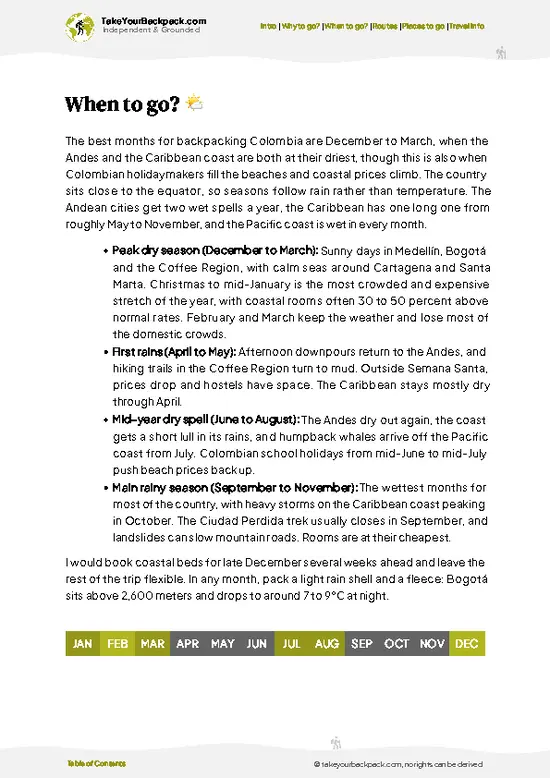
  • Weather: Chocó is one of the wettest places on Earth. The dry season runs roughly from July to October, offering the best chance to dodge the relentless rain. Outside this window, expect daily downpours that can turn trails into mudslides and rivers into wild rides.

  • Temperature: Temperatures hover between 24°C and 30°C (75°F to 86°F) year-round. Humidity is high, so even if it’s not scorching, the air feels thick—pack light, quick-dry gear and prepare for sweat.

  • Daylight Hours: Near the equator, daylight stays steady—about 12 hours daily. Sunrise around 6:00 AM, sunset near 6:00 PM. Plan early starts to maximize dry morning hours before afternoon showers hit.

  • Crowds: Chocó remains off the beaten path, so crowds are minimal year-round. The dry season sees a slight uptick in eco-tourists
read more 👉

  • Weather: Chocó is one of the wettest places on Earth. The dry season runs roughly from July to October, offering the best chance to dodge the relentless rain. Outside this window, expect daily downpours that can turn trails into mudslides and rivers into wild rides.

  • Temperature: Temperatures hover between 24°C and 30°C (75°F to 86°F) year-round. Humidity is high, so even if it’s not scorching, the air feels thick—pack light, quick-dry gear and prepare for sweat.

  • Daylight Hours: Near the equator, daylight stays steady—about 12 hours daily. Sunrise around 6:00 AM, sunset near 6:00 PM. Plan early starts to maximize dry morning hours before afternoon showers hit.

  • Crowds: Chocó remains off the beaten path, so crowds are minimal year-round. The dry season sees a slight uptick in eco-tourists and bird watchers, but you’ll still have plenty of solitude.

  • Seasonal Activities: Whale watching peaks between July and October, aligning perfectly with the dry season. If that’s your jam, time your trip accordingly. Otherwise, river tours and jungle treks are doable year-round but shine in drier months.

  • Price Fluctuations: Expect modest price hikes during the dry season, especially in lodging near popular spots like Nuquí. Off-season means better deals but brace for wet conditions that might limit your plans.


Pro-tip: Book your trip for late July or early August—just as the rains ease but before the tourist trickle starts. You’ll get the sweet spot of manageable weather, fewer crowds, and prime whale-watching without the premium prices.


source: climatestotravel.comJANJanuary: fair for travelingFEBFebruary: fair for travelingMARMarch: fair for travelingAPRApril: fair for travelingMAYMay: fair for travelingJUNJune: good for travelingJULJuly: excellent for travelingAUGAugust: excellent for travelingSEPSeptember: excellent for travelingOCTOctober: excellent for travelingNOVNovember: fair for travelingDECDecember: fair for traveling
colombia-region-choco
© Google | La Maja Mina

✈️ The backpacker research shortcutColombia Travel Guide

An offline-friendly backpacking guide with optimized travel routes, ranked highlights, transport advice, and the best areas to stay.
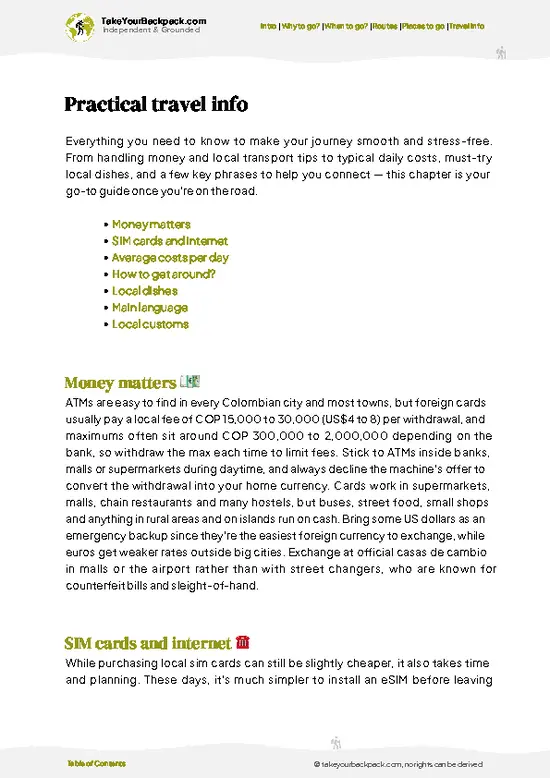
example page 0 from our offline Travel Guide for Colombia
example page 1 from our offline Travel Guide for Colombia
example page 2 from our offline Travel Guide for Colombia
example page 3 from our offline Travel Guide for Colombia
example page 4 from our offline Travel Guide for Colombia
example page 5 from our offline Travel Guide for Colombia
example page 6 from our offline Travel Guide for Colombia
example page 7 from our offline Travel Guide for Colombia
The digital guide (464 pages) contains:
122 highlights, ranked by travel appeal
Optimized 7, 14 & 21-day travel routes
Cities, national parks, landmarks, beaches
How to get around
Offline-friendly for travel without Wi-Fi
👉 Click to see all 30+ guide features

📅 Plan smarter in minutes, not weeks
Month by month travel advice
Festivals & national holidays
Budget expectations

🗺️ Go to the right places, skip the overrated ones
Honest pros & cons of destinations
Top hikes, parks & viewpoints
Lesser-known places most travelers miss
Clear “worth it vs skip it” guidance

🛏️ Travel smoothly without rookie mistakes
Best areas to stay
Transport systems explained simply
Common scams & safety advice
SIM cards, money & practical tips

🌍 Understand the country, not just visit it
Culture & traditions
52 Essential phrases & customs
Festivals worth planning around
Traveler-friendly historical context
Insights that make places more meaningful

📱 Built for real travel conditions
Fully downloadable PDF
Works completely offline
Optimized for phone use
Useful in remote areas & buses
Everything in one place
Save weeks of stressful planning
Get instant access to your full guide. 30‑day money-back guarantee.
+ Add another guide for just US$7.80

By proceeding you agree to our terms.
Sent to your inbox immediately after payment • 100% Secure Checkout
Best Backpacking Travel Advisor 2025 tourism awardBest Backpacking
Travel Advisor
2025
What others say about Take Your Backpack Guides:
⭐⭐⭐⭐⭐
Fantastic, amazing amount of information!
⭐⭐⭐⭐⭐
My goodness this is amazing, it's what I've been looking for hats off too you!
⭐⭐⭐⭐⭐
I think this is absolutely BRILLIANT
⭐⭐⭐⭐
Very complete and informative. It's still missing places, but I gotta to commend you
⭐⭐⭐⭐⭐
This is truly amazing, thank you, can't wait to explore it with my kids!
⭐⭐⭐⭐⭐
Awesome resource, thank you!
⭐⭐⭐⭐⭐
This is amazing! Can't wait to explore the ones I haven't seen
⭐⭐⭐⭐
I love this! Well done, great idea.
⭐⭐⭐⭐⭐
Thanks for taking the time to make this gem!
⭐⭐⭐⭐⭐
This might be the best website I've ever seen.
⭐⭐⭐⭐⭐
Congratulations, and thank you so much for your work; it's incredibly valuable.
⭐⭐⭐⭐
In all seriousness I think you did a great job pointing out the important spots
⭐⭐⭐⭐⭐
10/10 very good
⭐⭐⭐⭐⭐
As someone who's only just starting to visit regularly this is awesome, thank you.
⭐⭐⭐⭐
Thank you very much! I'm going to visit my dad, it's going to be very useful!
⭐⭐⭐⭐⭐
This is really cool! We'll be travelling for the first time and this definitely come in handy.
⭐⭐⭐⭐⭐
You are now our minister of culture, congratulations 👨‍💼
⭐⭐⭐⭐⭐
Just wanted to tell you that this is a pearl! Going to follow your recommendations.
⭐⭐⭐⭐⭐
This is so cool. I'll definitely be using the resource for my travels soon.
⭐⭐⭐⭐⭐
This is very impressive! Good work.
⭐⭐⭐⭐⭐
This is an amazing and informative site. Very well done!

🛏️ Where to stay?Choosing the right base

When you hit Chocó, Colombia, you’re diving into a world where lush jungles meet the Pacific. Here’s where to plant your backpack for the best blend of safety, social vibes, and budget-friendly options.

Start in Quibdó, the capital. It’s a bustling hub with a vibrant Afro-Colombian culture. You’ll find local markets and street food that won’t break the bank. Plus, the community is welcoming, making it easy to connect with fellow travelers.

Next up, Capurganá. This coastal town is a backpacker favorite. The beaches are stunning, and the atmosphere is laid-back. You can chill out in hammocks … read more 👉
When you hit Chocó, Colombia, you’re diving into a world where lush jungles meet the Pacific. Here’s where to plant your backpack for the best blend of safety, social vibes, and budget-friendly options.

Start in Quibdó, the capital. It’s a bustling hub with a vibrant Afro-Colombian culture. You’ll find local markets and street food that won’t break the bank. Plus, the community is welcoming, making it easy to connect with fellow travelers.

Next up, Capurganá. This coastal town is a backpacker favorite. The beaches are stunning, and the atmosphere is laid-back. You can chill out in hammocks or join in on group activities like snorkeling. The vibe here is all about camaraderie, perfect for solo adventurers.

Don’t overlook Nuquí. It’s a bit more remote, but that’s part of its charm. Known for its hot springs and whale watching, it’s a haven for nature lovers. The locals are friendly, and you’ll find plenty of opportunities to bond over shared experiences.

Each of these spots offers a unique slice of Chocó life. Choose wisely, and you’ll walk away with stories that’ll make your friends green with envy.

🚌 Getting aroundTransportation options and practical tips

Chocó is a wild, untamed slice of Colombia where the rhythm of life dances to its own beat. Forget rigid schedules; here, time is more of a suggestion than a rule. The air is thick with humidity and the scent of rich earth, while the sound of rushing rivers and chirping wildlife fills the backdrop. You’ll find yourself navigating a landscape that feels both chaotic and liberating, where intuition often trumps planning. Whether you’re hopping on a boat or cramming into a bus, the journey is as much a part of the experience as the destination itself.


  • Boats: The primary mode of transport along the rivers, these boats connect remote communities. Prices vary, but expect to pay around 20,000 to 50,000 COP depending on distance. They typically run from dawn until early evening, but it’s best to
read more 👉
Chocó is a wild, untamed slice of Colombia where the rhythm of life dances to its own beat. Forget rigid schedules; here, time is more of a suggestion than a rule. The air is thick with humidity and the scent of rich earth, while the sound of rushing rivers and chirping wildlife fills the backdrop. You’ll find yourself navigating a landscape that feels both chaotic and liberating, where intuition often trumps planning. Whether you’re hopping on a boat or cramming into a bus, the journey is as much a part of the experience as the destination itself.


  • Boats: The primary mode of transport along the rivers, these boats connect remote communities. Prices vary, but expect to pay around 20,000 to 50,000 COP depending on distance. They typically run from dawn until early evening, but it’s best to check locally for the latest schedules. Comfort is basic, but the views are spectacular.


  • Chivas: These colorful, open-air buses are a fun way to travel short distances. They usually operate from 6 AM to 6 PM and cost about 5,000 to 15,000 COP. Expect a lively atmosphere with music blaring and locals chatting. It’s not the fastest option, but it’s a cultural experience that’s hard to beat.


  • Intermunicipal Buses: For longer distances, these buses are your best bet. They run between major towns like Quibdó and Medellín, with prices ranging from 30,000 to 70,000 COP. Buses leave throughout the day, but aim for early morning departures to avoid delays. Comfort varies, but you can usually find a decent seat and air conditioning.


  • Motorbike Taxis: For quick trips within towns, motorbike taxis are a game-changer. Fares are negotiable, typically around 3,000 to 10,000 COP. They zip through traffic and can get you where you need to go faster than any car. Just make sure to wear a helmet!


To navigate Chocó efficiently, embrace the local vibe: ask around for the latest transport tips and schedules. Locals know the ins and outs, and their advice can save you time and hassle. Plus, you’ll feel more connected to the community, which is what this region is all about.

🍲 FoodLocal Cuisine & Drinks

In Chocó, food is a celebration of flavors and cultures. Dive into sancocho, a hearty fish stew that warms the soul, often made with fresh catch from the Pacific. Pair it with patacones, crispy fried plantains that add a satisfying crunch. Don’t miss arroz con coco, rice cooked in coconut milk, which brings a sweet, tropical twist to your meal.

Street food is where the magic happens. Vendors line the streets with empanadas stuffed with meat or cheese, sizzling on hot grills. Grab one and enjoy it with a side of aji, a spicy sauce that packs a punch. Markets buzz with life; the Bazurto Market in Quibdó is a sensory overload, filled with the aroma of spices and the chatter of locals.

Dining here is casual and communal. Expect to share tables and stories, and don’t be surprised if your meal … read more 👉
In Chocó, food is a celebration of flavors and cultures. Dive into sancocho, a hearty fish stew that warms the soul, often made with fresh catch from the Pacific. Pair it with patacones, crispy fried plantains that add a satisfying crunch. Don’t miss arroz con coco, rice cooked in coconut milk, which brings a sweet, tropical twist to your meal.

Street food is where the magic happens. Vendors line the streets with empanadas stuffed with meat or cheese, sizzling on hot grills. Grab one and enjoy it with a side of aji, a spicy sauce that packs a punch. Markets buzz with life; the Bazurto Market in Quibdó is a sensory overload, filled with the aroma of spices and the chatter of locals.

Dining here is casual and communal. Expect to share tables and stories, and don’t be surprised if your meal comes with a side of laughter. When it comes to drinks, try chicha, a fermented corn beverage that’s a staple in local gatherings.

Remember, in Chocó, meals are not just about food; they’re about connection. Embrace the slow pace, savor each bite, and let the vibrant atmosphere envelop you.

FAQCommon questions from travelers

5 to 7 days are ideal to explore Chocó thoroughly. This allows time to visit key spots like Nuquí, Bahía Solano, and the Utría National Park. Travel between locations can be slow due to limited infrastructure.
You get around Chocó mainly by boat and small planes, as roads are scarce and often in poor condition. Local boats connect coastal towns, and small airstrips serve places like Nuquí and Bahía Solano. Walking and moto-taxis are common for short distances within towns.
Chocó is known for its dense rainforests, rich biodiversity, and Afro-Colombian culture. It has some of the highest rainfall in the world and is a hotspot for whale watching from July to October. The region is also famous for its pristine beaches and vibrant wildlife.
⚠️ Things can change over time, so always validate details locally before you go.

Other Colombian regions near Chocó

Explore more nearby:

  • Chicamocha Canyon—deep gorge, arid slopes, cable car views| 393 km away
  • La Guajira—desert dunes, Wayuu culture, salt flats| 787 km away

💡 Not sure where to go next?
Create a personalized itinerary for Colombia including Chocó and the places that fit your trip.

Generate my itinerary

👉 Discover all regions

Or checkout all Colombia has to offer (think cities, towns, villages, national parks, hikes, beaches, festivals)
Country photo of Colombia

We 💚 feedbackFinal thoughts on visiting Chocó

Chocó is a wild symphony of nature, where the rainforest meets the Pacific. The biodiversity here is mind-blowing; you’ll feel like you’ve stepped into a living postcard. But here’s the kicker: the infrastructure can be rough. Expect delays and bumpy roads. If you’re cool with a little chaos, you’ll snag experiences that most travelers miss. Just pack your patience, and you’ll leave with stories that’ll make your friends green with envy.

✈️ When did I visit Colombia?
Did a good 3-week trip around Colombia in August 2014.

✍️ Help improve this page!
The information on this page is based on my own backpacking experience in Colombia, supplemented with up-to-date research and feedback from other travelers. Travel details can change, so if you notice anything outdated or incomplete, feel free to let me know.


🙋‍♂️ Give feedback

👋 Meet the founderWho’s Behind Take Your Backpack?

Johan, backpacker and founder of TakeYourBackpackHi, I’m Johan (Netherlands 🇳🇱), the creator of TakeYourBackpack. Over the past decade, I’ve backpacked through 80+ countries across six continents, gaining extensive experience with independent travel, long-term trips, and overland routes.

This site is built on a combination of firsthand travel experience and carefully curated insights from other backpackers. Many guides are based on places I’ve personally visited, while others bring together tips, observations, and practical advice shared by trusted travelers I’ve met along the way.

The goal is to provide realistic, experience-driven guidance — not generic itineraries — so you can explore destinations with better context, clearer expectations, and more confidence.

Get full Colombia guide •
Instant download • 122 highlights • Full Offline guide