×

Colombia🇨🇴 | regionsLa Guajiradesert dunes, Wayuu culture, salt flats | things to do and best time to go

Explore ChocóExplore Barichara

Backpacking in La Guajira
🌟 Highlightregion ranked #2
By Johan Kruseman 🇳🇱 | Updated September 4, 2026

Most blogs sell La Guajira as “pure desert and dunes,” but the part that actually changes your trip is how social it is: you’re rarely alone out there, you’re negotiating with Wayuu families, drivers, and boat guys constantly, and that human layer matters more than the sand. La Guajira sits on Colombia’s far Caribbean tip, above Santa Marta and east of Palomino, stretching to the Venezuelan border. For backpackers, it’s raw, windy, and gorgeous in a harsh way: Cabo de la Vela and Punta Gallinas give you lunar landscapes, wild beaches, and starry nights that make Tayrona feel tame, but you pay with long, bumpy rides, erratic transport, and very basic comfort. It’s cheaper than Cartagena, pricier than Santa Marta, and way more authentic than Palomino’s Instagram strip. Think fewer cafés, more hammocks, goats, and salt flats. If you want polished, stay south; if you want adventure, come north.

Discover everything you want to know in the 📖 Colombia Travel Guide.
Loading the map 🌍
CLICK TO FILTER
cities
towns
villages
landmarks
national parks
hikes
beaches
attractions
festivals
regions
SHOW COUNTRY’S BESTSHOW ALL

✨ Why go?
Ranked #2 region in Colombia
What makes this region worth visiting

La Guajira is a backpacker’s playground that offers a unique blend of landscapes and experiences without the hassle of constant relocation. You can wake up in the arid desert, explore the stunning beaches of Cabo de la Vela, and then trek through the lush hills of the Sierra Nevada—all in one trip. This region is a masterclass in variety.

Transport here is surprisingly flexible. You can hop on a shared taxi or a moto-taxi to get around, making it easy to explore at your own pace. This means you can spend more time soaking in the local culture and less time stressing about logistics.

The beauty of La Guajira lies in its ability to mix nature and culture seamlessly. You can meet the Wayuu people, learn about their traditions, and then dive into the crystal-clear waters of the Caribbean—all … read more 👉
La Guajira is a backpacker’s playground that offers a unique blend of landscapes and experiences without the hassle of constant relocation. You can wake up in the arid desert, explore the stunning beaches of Cabo de la Vela, and then trek through the lush hills of the Sierra Nevada—all in one trip. This region is a masterclass in variety.

Transport here is surprisingly flexible. You can hop on a shared taxi or a moto-taxi to get around, making it easy to explore at your own pace. This means you can spend more time soaking in the local culture and less time stressing about logistics.

The beauty of La Guajira lies in its ability to mix nature and culture seamlessly. You can meet the Wayuu people, learn about their traditions, and then dive into the crystal-clear waters of the Caribbean—all while embracing the slow travel ethos.

This isn’t just a destination; it’s an experience that invites you to savor every moment. So, pack your bags and get ready to uncover the layers of La Guajira—your adventure awaits!
Want to include La Guajira in your Colombia route?
Create a personalized Colombia itinerary that includes La Guajira and the places that fit your trip — based on your travel style, budget, and available time. Get your route in seconds.

Generate my trip

💡 HighlightsPlaces and moments you shouldn't skip

  1. Punta Gallinas: The actual northernmost point of mainland South America — raw desert cliffs, huge dunes plunging into turquoise bays and the tiny white lighthouse. It’s a long, bumpy trip (four-wheelers or local boat) but the feeling of standing where the continent ends is unlike anywhere else.
  2. Cabo de la Vela: Where the Guajira desert meets the Caribbean — think wind-swept cliffs, spectacular sunsets from Pilón de Azúcar (the sugar-pile dune), kite-friendly winds and Wayuu fishing hamlets. The combination of remote beach vibes and living indigenous culture is what makes it special.
  3. Macuira National Natural Park (personal favorite): A green “island” of cloud forest and palm canyons rising out of the desert — cold springs, weird endemic plants and short, scenic hikes. It’s unexpectedly
read more 👉
  1. Punta Gallinas: The actual northernmost point of mainland South America — raw desert cliffs, huge dunes plunging into turquoise bays and the tiny white lighthouse. It’s a long, bumpy trip (four-wheelers or local boat) but the feeling of standing where the continent ends is unlike anywhere else.
  2. Cabo de la Vela: Where the Guajira desert meets the Caribbean — think wind-swept cliffs, spectacular sunsets from Pilón de Azúcar (the sugar-pile dune), kite-friendly winds and Wayuu fishing hamlets. The combination of remote beach vibes and living indigenous culture is what makes it special.
  3. Macuira National Natural Park (personal favorite): A green “island” of cloud forest and palm canyons rising out of the desert — cold springs, weird endemic plants and short, scenic hikes. It’s unexpectedly cool and lush for La Guajira; when you get there it feels like stepping into a different region.
  4. Salinas de Manaure: Vast, geometric salt flats worked by Wayuu families — you can watch traditional salt-harvesting, see pale pools glow at sunrise and meet salt workers who’ve done this for generations. The landscape is otherworldly and very photogenic, especially near low tide.
  5. Santuario de Fauna y Flora Los Flamencos: Coastal lagoons and mangroves where flamingos, migratory birds and shorebirds concentrate — slow boat rides or guided walks make for subtle but rewarding wildlife watching. It’s a quieter, more ecological side of the coast than crowded beaches.
  6. Riohacha malecon & Mercado de Artesanías: The sea-front promenade and adjacent crafts market are the best place to see day-to-day life in the department capital and to buy authentic Wayuu mochilas, hats and jewelry directly from makers. Food stalls, fishermen and local buskers give it a real, lived-in feel — good for people-watching and last-minute supplies.
  7. Taroa village and dunes (hidden gem): A tiny fishing settlement a bit off the usual Cabo circuits where red-rock outcrops, quiet beaches and small dunes meet fishermen’s boats. Most tour groups skip it; you get raw coastal scenery and very few other tourists, plus friendly locals who’ll share fresh fish and stories.
  8. Pozo Azul / natural pools at Punta Gallinas (hidden gem): Small sheltered pools and calm little beaches tucked between dunes and cliffs where you can swim in warm, clear water — they feel private and are perfect after a long dusty drive. Locals tend to know the best spots; bring snorkel gear if you have it.
  9. Wayuu rancherías around Uribia and Manaure (hidden gem): Visiting a family run ranchería (with permission and a local guide) to learn about weaving, traditional food, and daily life is an irreplaceable cultural experience — you’ll see how mochilas are made and hear stories in Wayuunaiki. Do it respectfully and preferably arranged through a local host or ethical tour.
  10. Maicao bazaars & border traders: The chaotic, colorful markets of this border town show a different side of La Guajira — Middle Eastern and Caribbean influences blend in food, spices and textiles, and bargains are real if you know how to haggle. It’s gritty and authentic, not polished, and gives a good sense of the region’s commercial crossroads.
Spotted a mistake or missing something? Contact us.

⌛️ 5 days5-day itinerary for La Guajira

Day 1: Riohacha
The journey kicks off in Riohacha, the gateway to La Guajira. You’ll want to spend a night here to acclimate and soak in the local vibe. The transport system is a mix of buses and mototaxis, so getting around is straightforward. Explore the waterfront and grab a fresh seafood dish at a local eatery. This sets the tone for your adventure—easygoing, yet vibrant.

Day 2: Cabo de la Vela
Early morning, hop on a bus to Cabo de la Vela. The ride is about 2-3 hours, but the landscape shifts dramatically. You’ll see the arid desert meeting the Caribbean Sea, a sight that’s worth every minute. Cabo is a laid-back beach town, perfect for unwinding. Spend the afternoon lounging on the beach or visiting the iconic Pilón de Azúcar. The local Wayuu culture adds depth to your experience, … read more 👉
Day 1: Riohacha
The journey kicks off in Riohacha, the gateway to La Guajira. You’ll want to spend a night here to acclimate and soak in the local vibe. The transport system is a mix of buses and mototaxis, so getting around is straightforward. Explore the waterfront and grab a fresh seafood dish at a local eatery. This sets the tone for your adventure—easygoing, yet vibrant.

Day 2: Cabo de la Vela
Early morning, hop on a bus to Cabo de la Vela. The ride is about 2-3 hours, but the landscape shifts dramatically. You’ll see the arid desert meeting the Caribbean Sea, a sight that’s worth every minute. Cabo is a laid-back beach town, perfect for unwinding. Spend the afternoon lounging on the beach or visiting the iconic Pilón de Azúcar. The local Wayuu culture adds depth to your experience, so engage with the community.

Day 3: Punta Gallinas
This is where the adventure ramps up. Take a 4x4 from Cabo to Punta Gallinas, the northernmost point of South America. It’s a bumpy ride, but the views of the dunes and ocean are jaw-dropping. Spend the night in a hammock at a local eco-lodge. The isolation here is a breath of fresh air, and you’ll feel like you’ve stepped into another world.

Day 4: Explore Punta Gallinas
Dedicate this day to exploring the area. Visit the stunning Taroa Dunes and the serene beaches. The pace is slow, allowing you to soak in the beauty. This is the heart of La Guajira, where the desert meets the sea in a dance of colors.

Day 5: Back to Riohacha
Make your way back to Riohacha, but take a detour to the small village of Uribia. This off-path reward offers a glimpse into authentic Wayuu life. The local market is bustling, and you can pick up unique handicrafts.

The must-do day? Day 3 in Punta Gallinas. It’s the essence of La Guajira—raw, beautiful, and utterly unforgettable. You’ll leave with stories that resonate long after you’ve returned home.
Turn your La Guajira visit into an Colombia adventure
Build a complete Colombia route with La Guajira, hidden gems, must-see destinations, and realistic travel times included.

Generate my trip

🌤️ When to go?Choosing the right time of year


  • Topic: Weather – La Guajira bakes hot and dry most of the year, with temperatures hovering between 28°C and 35°C (82°F to 95°F). The rainy season hits from October to December, turning dusty trails into slippery mud—skip those months unless you’re into impromptu mud baths.

  • Topic: Temperature – Expect consistent heat. Nights cool slightly to around 22°C (72°F), but days are relentless. Pack light, breathable gear and a hat that actually blocks the sun—trust me, you’ll thank me.

  • Topic: Daylight Hours – Near the equator, daylight stays steady year-round, about 12 hours. Sunrise around 6:00 AM, sunset near 6:00 PM. Perfect for early starts and late afternoon beach hangs without losing daylight.

  • Topic: Crowds – Peak season aligns with Colombia’s dry months, especially January to March.
read more 👉

  • Topic: Weather – La Guajira bakes hot and dry most of the year, with temperatures hovering between 28°C and 35°C (82°F to 95°F). The rainy season hits from October to December, turning dusty trails into slippery mud—skip those months unless you’re into impromptu mud baths.

  • Topic: Temperature – Expect consistent heat. Nights cool slightly to around 22°C (72°F), but days are relentless. Pack light, breathable gear and a hat that actually blocks the sun—trust me, you’ll thank me.

  • Topic: Daylight Hours – Near the equator, daylight stays steady year-round, about 12 hours. Sunrise around 6:00 AM, sunset near 6:00 PM. Perfect for early starts and late afternoon beach hangs without losing daylight.

  • Topic: Crowds – Peak season aligns with Colombia’s dry months, especially January to March. Expect more tourists and higher prices then. If you want space to roam and fewer selfie sticks, aim for shoulder months like April or September.

  • Topic: Seasonal Activities – The Wayuu cultural festivals pop up mostly in the dry season. Catching one means vibrant local music and crafts but plan ahead—these events draw crowds and bump prices.

  • Topic: Price Fluctuations – Dry season means higher accommodation and tour costs. Off-season drops prices but beware of limited services and occasional rain disruptions. Balance your budget with your tolerance for unpredictability.


Pro-tip: Hit La Guajira just before the dry season peaks—late November or early January—when the weather’s solid, crowds are thin, and prices haven’t fully spiked. You’ll feel like you’ve hacked the system.


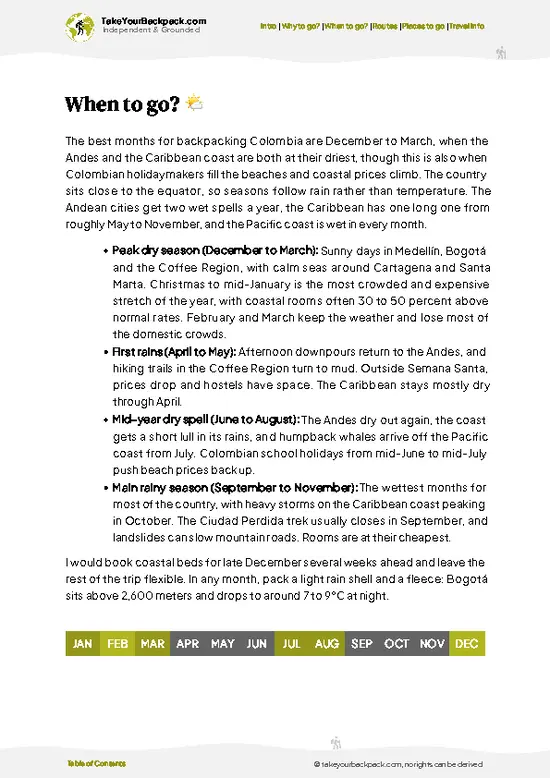
source: climatestotravel.comJANJanuary: excellent for travelingFEBFebruary: excellent for travelingMARMarch: excellent for travelingAPRApril: highly recommended for travelingMAYMay: good for travelingJUNJune: good for travelingJULJuly: good for travelingAUGAugust: good for travelingSEPSeptember: highly recommended for travelingOCTOctober: fair for travelingNOVNovember: highly recommended for travelingDECDecember: fair for traveling
when-to-go

✈️ The backpacker research shortcutColombia Travel Guide

An offline-friendly backpacking guide with optimized travel routes, ranked highlights, transport advice, and the best areas to stay.
example page 0 from our offline Travel Guide for Colombia
example page 1 from our offline Travel Guide for Colombia
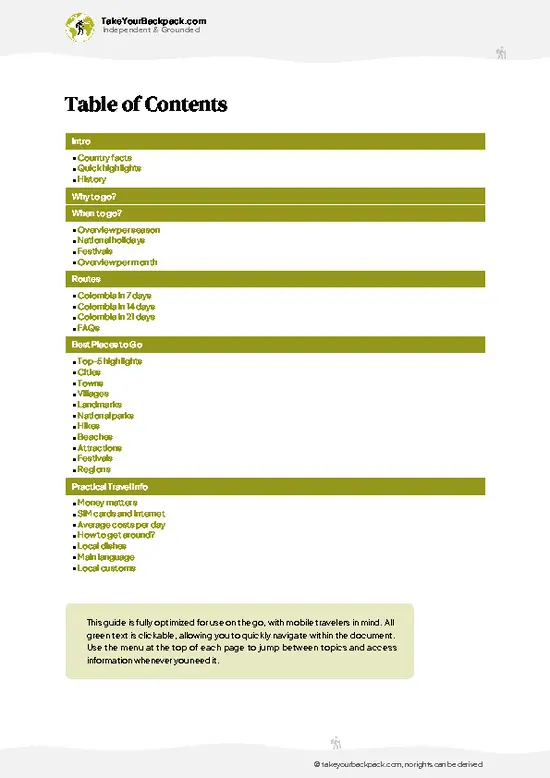
example page 2 from our offline Travel Guide for Colombia
example page 3 from our offline Travel Guide for Colombia
example page 4 from our offline Travel Guide for Colombia
example page 5 from our offline Travel Guide for Colombia
example page 6 from our offline Travel Guide for Colombia
example page 7 from our offline Travel Guide for Colombia
The digital guide (464 pages) contains:
122 highlights, ranked by travel appeal
Optimized 7, 14 & 21-day travel routes
Cities, national parks, landmarks, beaches
How to get around
Offline-friendly for travel without Wi-Fi
👉 Click to see all 30+ guide features

📅 Plan smarter in minutes, not weeks
Month by month travel advice
Festivals & national holidays
Budget expectations

🗺️ Go to the right places, skip the overrated ones
Honest pros & cons of destinations
Top hikes, parks & viewpoints
Lesser-known places most travelers miss
Clear “worth it vs skip it” guidance

🛏️ Travel smoothly without rookie mistakes
Best areas to stay
Transport systems explained simply
Common scams & safety advice
SIM cards, money & practical tips

🌍 Understand the country, not just visit it
Culture & traditions
52 Essential phrases & customs
Festivals worth planning around
Traveler-friendly historical context
Insights that make places more meaningful

📱 Built for real travel conditions
Fully downloadable PDF
Works completely offline
Optimized for phone use
Useful in remote areas & buses
Everything in one place
Save weeks of stressful planning
Get instant access to your full guide. 30‑day money-back guarantee.
+ Add another guide for just €6.50

By proceeding you agree to our terms.
Sent to your inbox immediately after payment • 100% Secure Checkout
Best Backpacking Travel Advisor 2025 tourism awardBest Backpacking
Travel Advisor
2025
What others say about Take Your Backpack Guides:
⭐⭐⭐⭐⭐
Fantastic, amazing amount of information!
⭐⭐⭐⭐⭐
My goodness this is amazing, it's what I've been looking for hats off too you!
⭐⭐⭐⭐⭐
I think this is absolutely BRILLIANT
⭐⭐⭐⭐
Very complete and informative. It's still missing places, but I gotta to commend you
⭐⭐⭐⭐⭐
This is truly amazing, thank you, can't wait to explore it with my kids!
⭐⭐⭐⭐⭐
Awesome resource, thank you!
⭐⭐⭐⭐⭐
This is amazing! Can't wait to explore the ones I haven't seen
⭐⭐⭐⭐
I love this! Well done, great idea.
⭐⭐⭐⭐⭐
Thanks for taking the time to make this gem!
⭐⭐⭐⭐⭐
This might be the best website I've ever seen.
⭐⭐⭐⭐⭐
Congratulations, and thank you so much for your work; it's incredibly valuable.
⭐⭐⭐⭐
In all seriousness I think you did a great job pointing out the important spots
⭐⭐⭐⭐⭐
10/10 very good
⭐⭐⭐⭐⭐
As someone who's only just starting to visit regularly this is awesome, thank you.
⭐⭐⭐⭐
Thank you very much! I'm going to visit my dad, it's going to be very useful!
⭐⭐⭐⭐⭐
This is really cool! We'll be travelling for the first time and this definitely come in handy.
⭐⭐⭐⭐⭐
You are now our minister of culture, congratulations 👨‍💼
⭐⭐⭐⭐⭐
Just wanted to tell you that this is a pearl! Going to follow your recommendations.
⭐⭐⭐⭐⭐
This is so cool. I'll definitely be using the resource for my travels soon.
⭐⭐⭐⭐⭐
This is very impressive! Good work.
⭐⭐⭐⭐⭐
This is an amazing and informative site. Very well done!

🛏️ Where to stay?Best areas to stay in Colombia

In La Guajira, the choices you make about where to stay can shape your entire experience. Let’s break it down.

Start in Riohacha, the capital. It’s a bustling hub where you can find a mix of locals and travelers. The waterfront is perfect for sunset strolls, and the vibe is friendly. You’ll find plenty of budget-friendly eateries serving fresh seafood. Plus, it’s a great launchpad for excursions to the desert and beaches.

Next up, Palomino. This beach town is a backpacker’s paradise. Think lazy days on the sand, vibrant nightlife, and a community that thrives on sharing stories around bonfires. … read more 👉
In La Guajira, the choices you make about where to stay can shape your entire experience. Let’s break it down.

Start in Riohacha, the capital. It’s a bustling hub where you can find a mix of locals and travelers. The waterfront is perfect for sunset strolls, and the vibe is friendly. You’ll find plenty of budget-friendly eateries serving fresh seafood. Plus, it’s a great launchpad for excursions to the desert and beaches.

Next up, Palomino. This beach town is a backpacker’s paradise. Think lazy days on the sand, vibrant nightlife, and a community that thrives on sharing stories around bonfires. It’s safe, social, and the perfect spot to meet fellow travelers. The nearby Sierra Nevada mountains offer stunning hikes if you want to mix in some adventure.

Then there’s Manaure, a quieter option. It’s known for its salt flats and indigenous Wayuu culture. Staying here gives you a chance to experience local life without the tourist rush. You’ll find authentic interactions and a slower pace, which can be refreshing.

Each of these spots offers a unique flavor of La Guajira. Choose wisely, and you’ll unlock experiences that linger long after you leave.

🚌 Getting aroundGetting around like a local

La Guajira is a wild symphony of chaos and beauty. Here, schedules are more like suggestions, and the rhythm of travel flows with the pulse of the wind-swept desert. You’ll find yourself navigating a landscape where the unexpected is the norm, and the journey often becomes the destination. Whether you’re bouncing along in a shared taxi or waiting for a bus that may or may not arrive on time, the experience is as much about the people you meet as the places you see. Embrace the spontaneity; it’s all part of the La Guajira charm.


  • Shared Taxis (Colectivos): These are your best friends for getting around. They typically run from Riohacha to places like Cabo de la Vela and Punta Gallinas. Expect to pay around 20,000 to 30,000 COP per ride. They leave when full, so be prepared for a bit of a wait,
read more 👉
La Guajira is a wild symphony of chaos and beauty. Here, schedules are more like suggestions, and the rhythm of travel flows with the pulse of the wind-swept desert. You’ll find yourself navigating a landscape where the unexpected is the norm, and the journey often becomes the destination. Whether you’re bouncing along in a shared taxi or waiting for a bus that may or may not arrive on time, the experience is as much about the people you meet as the places you see. Embrace the spontaneity; it’s all part of the La Guajira charm.


  • Shared Taxis (Colectivos): These are your best friends for getting around. They typically run from Riohacha to places like Cabo de la Vela and Punta Gallinas. Expect to pay around 20,000 to 30,000 COP per ride. They leave when full, so be prepared for a bit of a wait, but the ride is quick—about 2 to 3 hours depending on the destination.


  • Long-Distance Buses: Companies like Expreso Brasilia and Copetran offer services from major cities like Barranquilla and Santa Marta to Riohacha. Prices range from 50,000 to 80,000 COP, and the journey can take 6 to 8 hours. Buses are generally comfortable, with air conditioning, but don’t expect luxury. They usually leave in the morning and early afternoon, so plan accordingly.


  • Motorbike Rentals: For the adventurous, renting a motorbike in Riohacha is a game-changer. Prices hover around 80,000 COP per day. You’ll have the freedom to explore at your own pace, but be cautious—roads can be rough, and fuel stations are sparse. Just make sure you have a valid license and a helmet.


  • 4x4 Tours: If you want to reach the more remote areas like Punta Gallinas, consider joining a 4x4 tour. Prices vary, typically around 200,000 COP per person for a full day. These tours usually include stops at stunning landscapes and local communities, making it a worthwhile splurge for the experience.


  • Local Buses: For short distances within towns, local buses are a cheap option, costing around 1,500 to 3,000 COP. They’re not the most comfortable, but they’re a great way to soak in the local vibe. Just flag one down and hop on!


For a tactical tip: always ask locals about the best times to travel. They know the ins and outs of when to catch a ride or avoid the crowds. This insider knowledge can save you time and money, making your journey through La Guajira not just efficient, but also rich with local flavor.

🍲 FoodLocal Flavors for Backpackers

In La Guajira, food is a vibrant celebration of culture and community. Dive into arepas de huevo, a local favorite where crispy corn cakes cradle a golden egg, often paired with a spicy aji sauce that ignites your taste buds. Don’t miss the cazuela de mariscos, a rich seafood stew that showcases the bounty of the Caribbean, bursting with flavors of coconut and fresh herbs.

Street food here is a rite of passage. Vendors line the bustling markets, serving up empanadas stuffed with everything from beef to cheese. Grab one and enjoy it with a cold aguapanela, a refreshing drink made from panela (unrefined cane sugar) and water, perfect for cooling off in the heat.

Dining customs are relaxed but communal. Expect to share tables and engage in lively conversation. When you’re invited to join a … read more 👉
In La Guajira, food is a vibrant celebration of culture and community. Dive into arepas de huevo, a local favorite where crispy corn cakes cradle a golden egg, often paired with a spicy aji sauce that ignites your taste buds. Don’t miss the cazuela de mariscos, a rich seafood stew that showcases the bounty of the Caribbean, bursting with flavors of coconut and fresh herbs.

Street food here is a rite of passage. Vendors line the bustling markets, serving up empanadas stuffed with everything from beef to cheese. Grab one and enjoy it with a cold aguapanela, a refreshing drink made from panela (unrefined cane sugar) and water, perfect for cooling off in the heat.

Dining customs are relaxed but communal. Expect to share tables and engage in lively conversation. When you’re invited to join a meal, it’s a sign of hospitality—accept it! Tipping isn’t mandatory, but rounding up the bill is appreciated.

For a true local vibe, seek out the plazas where families gather, and food stalls pop up during the evenings. The aromas of grilled meats and spices fill the air, inviting you to indulge in the flavors of La Guajira. Embrace the experience; it’s all part of the adventure.

FAQFrequently asked questions about La Guajira

4 to 5 days are sufficient to explore the main highlights of La Guajira, including Cabo de la Vela and Punta Gallinas. This allows time for travel between remote areas and experiencing local Wayuu culture. Longer stays are recommended for deeper cultural immersion or visiting less accessible spots.
You get around La Guajira mainly by shared jeeps (colectivos) and moto-taxis, as public transport is limited. Organized tours are common for reaching remote areas like Punta Gallinas, costing around 100,000 to 150,000 COP for day trips. Walking is feasible within towns but not between distant sites.
La Guajira is known for its desert landscapes, the northernmost point of South America at Punta Gallinas, and the indigenous Wayuu culture. It features unique natural attractions like the Flamingo-filled salt flats and the Pilón de Azúcar sand dune. The region is also famous for its artisanal Wayuu bags and crafts.
⚠️ Things can change over time, so always validate details locally before you go.

Other Colombian regions near La Guajira

Explore more nearby:

  • Chicamocha Canyon—deep gorge, arid slopes, cable car views| 506 km away
  • Chocó—Pacific rainforest, black sand beaches, endemic wildlife| 787 km away

💡 Not sure where to go next?
Create a personalized itinerary for Colombia including La Guajira and the places that fit your trip.

Generate my itinerary

👉 Discover all regions

Or checkout all Colombia has to offer (think cities, towns, villages, national parks, hikes, beaches, festivals)
Country photo of Colombia

We 💚 feedbackParting advice and final tips

La Guajira is a wild beauty, where the desert meets the Caribbean. You’ll find vibrant Wayuu culture and breathtaking landscapes that feel untouched. But here’s the kicker: getting around can be a hassle. Roads are rough, and public transport is scarce. Plan your logistics well, and you’ll unlock an experience that’s raw and rewarding. Embrace the adventure, and you’ll leave with stories that outshine any postcard.

✈️ When did I visit Colombia?
Did a good 3-week trip around Colombia in August 2014.

✍️ Help improve this page!
The information on this page is based on my own backpacking experience in Colombia, supplemented with up-to-date research and feedback from other travelers. Travel details can change, so if you notice anything outdated or incomplete, feel free to let me know.


🙋‍♂️ Give feedback

👋 Meet the founderWho’s Behind Take Your Backpack?

Johan, backpacker and founder of TakeYourBackpackHi, I’m Johan (Netherlands 🇳🇱), the creator of TakeYourBackpack. Over the past decade, I’ve backpacked through 80+ countries across six continents, gaining extensive experience with independent travel, long-term trips, and overland routes.

This site is built on a combination of firsthand travel experience and carefully curated insights from other backpackers. Many guides are based on places I’ve personally visited, while others bring together tips, observations, and practical advice shared by trusted travelers I’ve met along the way.

The goal is to provide realistic, experience-driven guidance — not generic itineraries — so you can explore destinations with better context, clearer expectations, and more confidence.

Get full Colombia guide •
Instant download • 122 highlights • Full Offline guide