×

Colombia🇨🇴 | attractionsMuseo del Oro QuimbayaQuimbaya goldwork, archaeological finds, indigenous heritage | things to do and best time to go

Explore Museo del CaribeExplore Museo del Oro Zenú

Backpacking in Museo del Oro Quimbaya
👌 Worth visitingattraction ranked #12
By Johan Kruseman 🇳🇱 | Updated July 30, 2026

Your breath fogs the glass as you lean in, nose inches from a gold poporo that looks like it was spun by moonlight and left behind by a vanished civilization. The room is cool and silent, except for the soft shuffle of sneakers on polished tile and the distant hum of a dehumidifier working overtime. This is Museo del Oro Quimbaya, tucked away in Armenia, deep in Colombia’s coffee country—far from the Bogotá crowds and the Instagrammed chaos of Cartagena’s walls.

Here’s the straight truth: Museo del Oro Quimbaya isn’t flashy, and you won’t find busloads of selfie-stick tourists. The wow-factor is quieter but deeper—real pre-Columbian gold, not just jewelry but ritual objects that feel charged with old secrets. It’s cheap to enter, rarely crowded, and the staff actually seem happy you showed up. Compared to the capital’s Gold Museum, this place is smaller, but the intimacy is the point. You get time to think, to feel the weight of history without elbowing through a mob. If you want adrenaline, look elsewhere; if you want to stand face-to-face with Colombia’s ancient soul, this is your spot.

Discover everything you want to know in the 📖 Colombia Travel Guide.
Loading the map 🌍
CLICK TO FILTER
cities
towns
villages
landmarks
national parks
hikes
beaches
attractions
festivals
regions
SHOW COUNTRY’S BESTSHOW ALL

✨ Why go?
Ranked #12 attraction in Colombia
Why Museo del Oro Quimbaya should be on your travel list

The Museo del Oro Quimbaya in Colombia isn’t just another shiny pit stop for backpackers chasing Instagram likes. Yes, it’s famous for its gold artifacts, but that’s just the surface. This place is a deep dive into pre-Colombian history, showcasing the craftsmanship and spiritual life of the Quimbaya culture. If you think gold means just bling, think again—these pieces tell stories of ancient rituals, social hierarchies, and a connection to nature that’s been lost in modern life.

Sure, it can get crowded, especially during peak tourist seasons, and the entrance fee isn’t dirt cheap by local standards. But the effort-to-reward ratio here is off the charts. You’re not just looking at shiny objects; you’re stepping into a cultural milestone that anchors Colombia’s indigenous heritage in a way … read more 👉
The Museo del Oro Quimbaya in Colombia isn’t just another shiny pit stop for backpackers chasing Instagram likes. Yes, it’s famous for its gold artifacts, but that’s just the surface. This place is a deep dive into pre-Colombian history, showcasing the craftsmanship and spiritual life of the Quimbaya culture. If you think gold means just bling, think again—these pieces tell stories of ancient rituals, social hierarchies, and a connection to nature that’s been lost in modern life.

Sure, it can get crowded, especially during peak tourist seasons, and the entrance fee isn’t dirt cheap by local standards. But the effort-to-reward ratio here is off the charts. You’re not just looking at shiny objects; you’re stepping into a cultural milestone that anchors Colombia’s indigenous heritage in a way few other sites do. For backpackers trekking through Colombia, it’s a major waypoint—a moment to pause, reflect, and appreciate the layers beneath the country’s vibrant present.

Skip it, and you miss a chunk of Colombia’s soul. Make time, and you get a rare, authentic connection to a civilization that shaped the region long before modern borders existed. That’s the real magic.
Want to include Museo del Oro Quimbaya in your Colombia route?
Create a personalized Colombia itinerary that includes Museo del Oro Quimbaya and the places that fit your trip — based on your travel style, budget, and available time. Get your route in seconds.

Generate my trip

💡 HighlightsTop highlights of Museo del Oro Quimbaya

1. The Goldwork of the Quimbaya Civilization
Let’s cut through the Instagram haze: you’re not coming here for a few shiny trinkets in glass cases. The Museo del Oro Quimbaya is a full-on goldsmithing masterclass, and the Quimbaya pieces are the headliners. These aren’t generic “ancient artifacts”—they’re technical marvels. You’ll see poporos (lime containers) and nose rings so finely worked they make modern jewelry look like craft fair rejects. The gold here isn’t just metal; it’s a language, a status symbol, and a spiritual tool. If you’ve ever rolled your eyes at a “gold museum” elsewhere, this one will recalibrate your standards.


2. The Pre-Columbian Ceramics Collection
Gold gets the headlines, but the ceramics are where you find the Quimbaya soul. These aren’t dusty pots—they’re personality … read more 👉
1. The Goldwork of the Quimbaya Civilization
Let’s cut through the Instagram haze: you’re not coming here for a few shiny trinkets in glass cases. The Museo del Oro Quimbaya is a full-on goldsmithing masterclass, and the Quimbaya pieces are the headliners. These aren’t generic “ancient artifacts”—they’re technical marvels. You’ll see poporos (lime containers) and nose rings so finely worked they make modern jewelry look like craft fair rejects. The gold here isn’t just metal; it’s a language, a status symbol, and a spiritual tool. If you’ve ever rolled your eyes at a “gold museum” elsewhere, this one will recalibrate your standards.


2. The Pre-Columbian Ceramics Collection
Gold gets the headlines, but the ceramics are where you find the Quimbaya soul. These aren’t dusty pots—they’re personality pieces. Look for the anthropomorphic vessels with exaggerated features: big noses, wide eyes, and postures that suggest a sense of humor (or at least a sense of self-awareness). The ceramics here are a direct line to daily life, ritual, and even the Quimbaya sense of play. If you want to understand a culture, look at what they made for themselves, not just what they buried with their elite.


3. The Museum’s Architecture and Setting
Most museums are boxes. This one is a statement. Rogelio Salmona, Colombia’s most celebrated architect, designed the building as a series of red-brick curves and open courtyards. It’s not just a backdrop—it’s part of the experience. Light pours in, the air moves, and the whole place feels like it was built to honor the artifacts, not just store them. If you’re the type who notices how a space feels, you’ll remember this one long after you’ve forgotten the gold weights.


4. The Interactive Exhibits
This isn’t a “look but don’t touch” operation. The museum’s interactive displays let you get tactile with the techniques—replica molds, hands-on demonstrations, and multimedia that actually works (a rarity in South American museums). You’ll walk away with a sense of how these objects were made, not just what they look like. For families or anyone who learns by doing, this is the difference between a passive stroll and an active adventure.


5. The Quimbaya Cosmology and Mythology Section(Personal Favorite)
Here’s where the museum goes from “interesting” to “mind-expanding.” The displays on Quimbaya beliefs—about the afterlife, the power of gold, and the role of shamans—are immersive and refreshingly honest. No sugarcoating, no mystical mumbo-jumbo. Just a clear-eyed look at how a pre-Columbian culture saw the world, and how those ideas shaped everything from burial practices to bling. If you want to leave with more than just photos, spend time here. This is where the real magic lives, far from the Instagram filters and tourist buses.
Spotted a mistake or missing something? Contact us.

🌤️ When to go?Seasonal considerations and timing


  • Weather: The best time to visit Museo del Oro Quimbaya is during the dry season, from December to March. Rainfall drops significantly, making it easier to explore without soggy shoes or dodging sudden downpours. The wet season, April to November, can be relentless, turning the streets slippery and the museum experience less pleasant.

  • Temperature: Expect a comfortable range between 18°C to 26°C (64°F to 79°F) year-round. It’s mild, but mornings and evenings can feel cooler, especially in the dry season, so pack a light jacket. No extreme heat means you won’t be melting inside the museum or outside on the streets.

  • Daylight Hours: Colombia’s proximity to the equator means daylight is steady—about 12 hours year-round. No need to rush; you’ll have ample time to soak in the exhibits without
read more 👉

  • Weather: The best time to visit Museo del Oro Quimbaya is during the dry season, from December to March. Rainfall drops significantly, making it easier to explore without soggy shoes or dodging sudden downpours. The wet season, April to November, can be relentless, turning the streets slippery and the museum experience less pleasant.

  • Temperature: Expect a comfortable range between 18°C to 26°C (64°F to 79°F) year-round. It’s mild, but mornings and evenings can feel cooler, especially in the dry season, so pack a light jacket. No extreme heat means you won’t be melting inside the museum or outside on the streets.

  • Daylight Hours: Colombia’s proximity to the equator means daylight is steady—about 12 hours year-round. No need to rush; you’ll have ample time to soak in the exhibits without feeling pressed by fading light.

  • Crowds: The museum draws more visitors during the dry season and local holidays, especially December and early January. If you hate elbow-to-elbow viewing, aim for midweek visits in February or March when the crowd thins but the weather stays dry.

  • Seasonal Activities: December to March also aligns with cultural festivals in Quindío, adding layers of local flavor beyond the museum walls. These months offer a richer, more immersive experience if you’re up for exploring the region’s traditions alongside the gold artifacts.

  • Price Fluctuations: Entry fees remain stable year-round, but accommodation and flights spike during the dry season and holidays. Booking early or traveling just outside peak months can save you a chunk of cash without sacrificing the experience.


Pro-tip: Visit in late February for the sweet spot—dry weather, fewer tourists, and a chance to catch local events without the holiday price hike.


source: climatestotravel.comJANJanuary: highly recommended for travelingFEBFebruary: excellent for travelingMARMarch: excellent for travelingAPRApril: fair for travelingMAYMay: fair for travelingJUNJune: fair for travelingJULJuly: fair for travelingAUGAugust: fair for travelingSEPSeptember: fair for travelingOCTOctober: fair for travelingNOVNovember: fair for travelingDECDecember: highly recommended for traveling
when-to-go

✈️ The backpacker research shortcutColombia Travel Guide

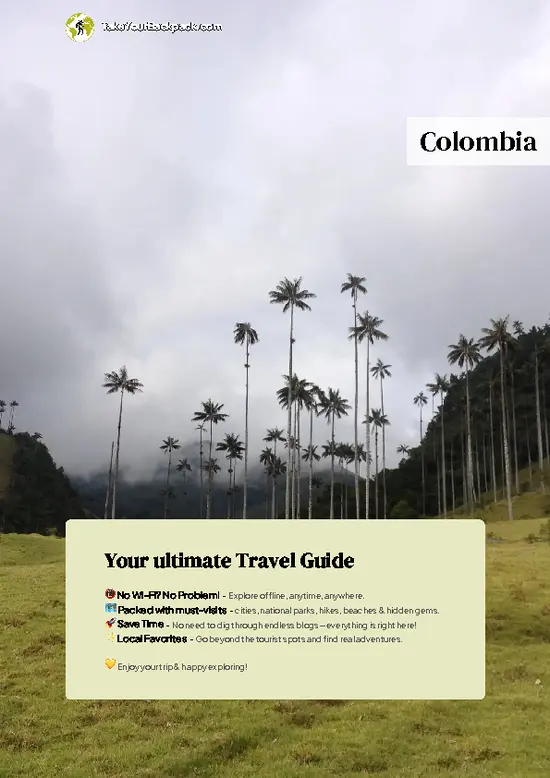
An offline-friendly backpacking guide with optimized travel routes, ranked highlights, transport advice, and the best areas to stay.
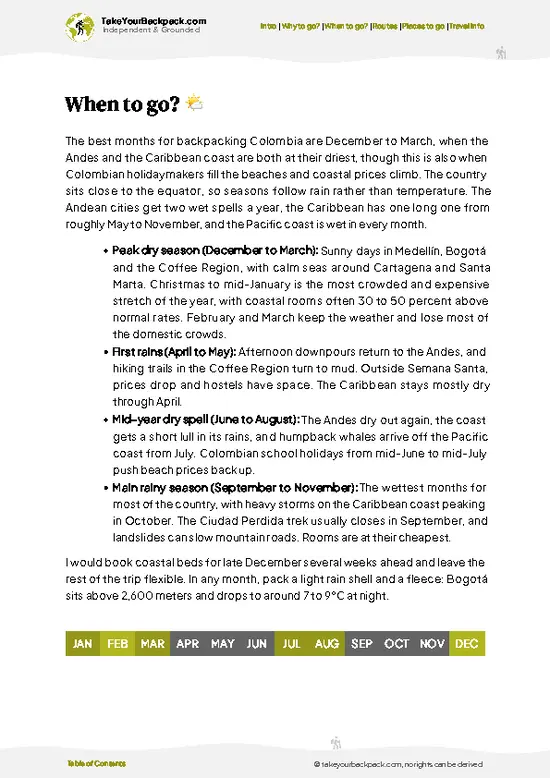
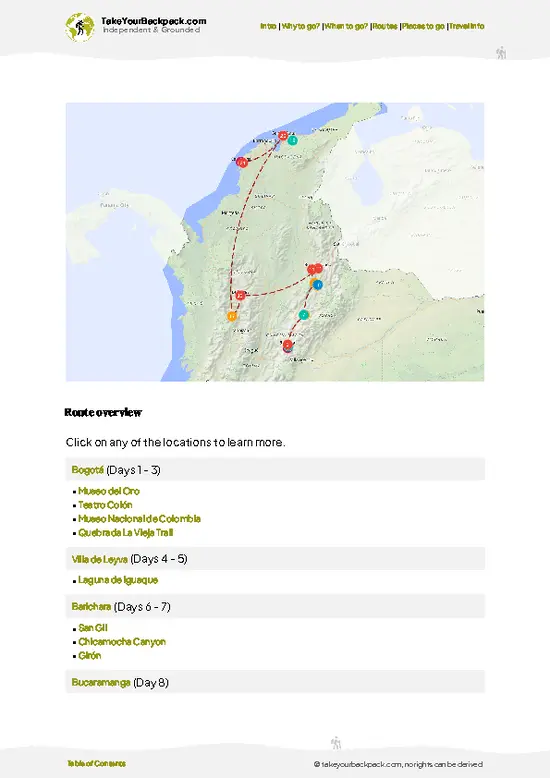
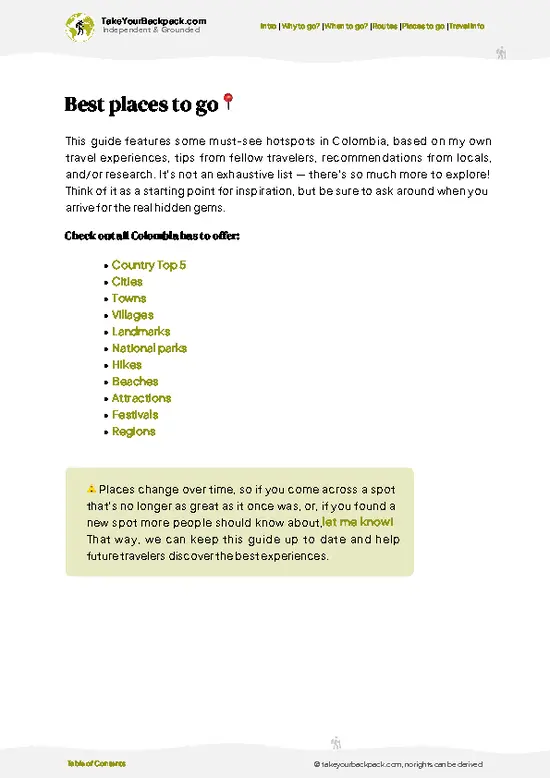
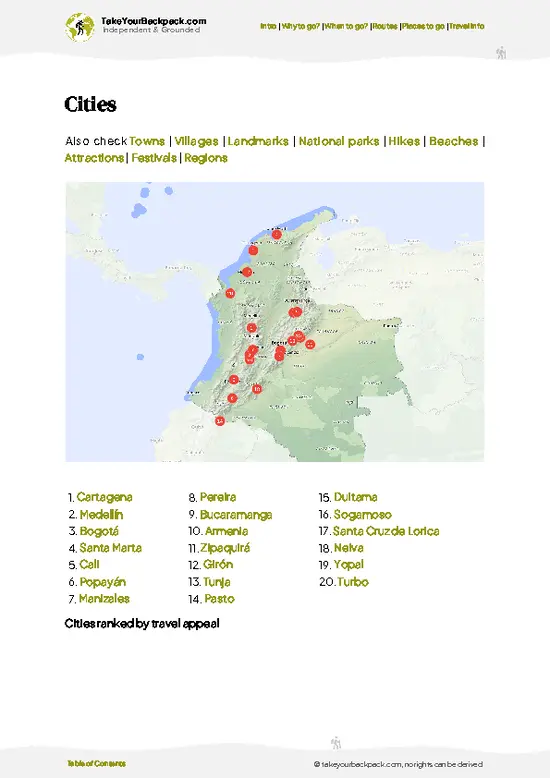
example page 0 from our offline Travel Guide for Colombia
example page 1 from our offline Travel Guide for Colombia
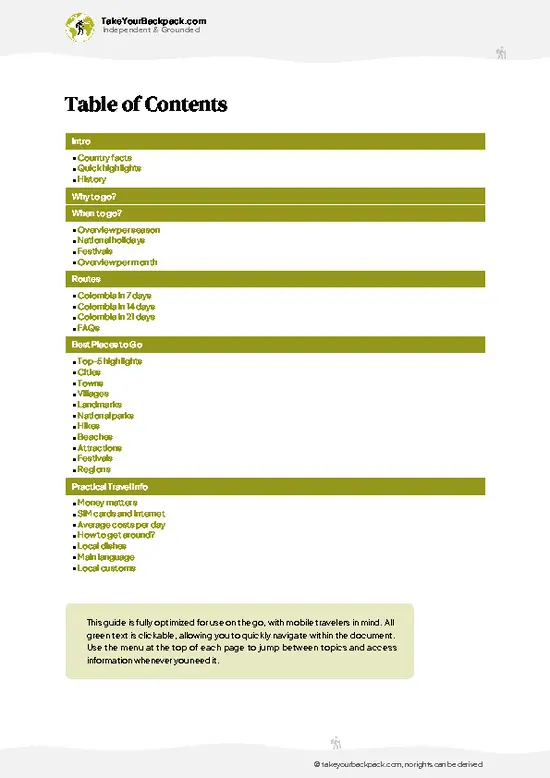
example page 2 from our offline Travel Guide for Colombia
example page 3 from our offline Travel Guide for Colombia
example page 4 from our offline Travel Guide for Colombia
example page 5 from our offline Travel Guide for Colombia
example page 6 from our offline Travel Guide for Colombia
example page 7 from our offline Travel Guide for Colombia
The digital guide (464 pages) contains:
122 highlights, ranked by travel appeal
Optimized 7, 14 & 21-day travel routes
Cities, national parks, landmarks, beaches
How to get around
Offline-friendly for travel without Wi-Fi
👉 Click to see all 30+ guide features

📅 Plan smarter in minutes, not weeks
Month by month travel advice
Festivals & national holidays
Budget expectations

🗺️ Go to the right places, skip the overrated ones
Honest pros & cons of destinations
Top hikes, parks & viewpoints
Lesser-known places most travelers miss
Clear “worth it vs skip it” guidance

🛏️ Travel smoothly without rookie mistakes
Best areas to stay
Transport systems explained simply
Common scams & safety advice
SIM cards, money & practical tips

🌍 Understand the country, not just visit it
Culture & traditions
52 Essential phrases & customs
Festivals worth planning around
Traveler-friendly historical context
Insights that make places more meaningful

📱 Built for real travel conditions
Fully downloadable PDF
Works completely offline
Optimized for phone use
Useful in remote areas & buses
Everything in one place
Save weeks of stressful planning
Get instant access to your full guide. 30‑day money-back guarantee.


By proceeding you agree to our terms.
Sent to your inbox immediately after payment • 100% Secure Checkout
Best Backpacking Travel Advisor 2025 tourism awardBest Backpacking
Travel Advisor
2025
What others say about Take Your Backpack Guides:
⭐⭐⭐⭐⭐
Fantastic, amazing amount of information!
⭐⭐⭐⭐⭐
My goodness this is amazing, it's what I've been looking for hats off too you!
⭐⭐⭐⭐⭐
I think this is absolutely BRILLIANT
⭐⭐⭐⭐
Very complete and informative. It's still missing places, but I gotta to commend you
⭐⭐⭐⭐⭐
This is truly amazing, thank you, can't wait to explore it with my kids!
⭐⭐⭐⭐⭐
Awesome resource, thank you!
⭐⭐⭐⭐⭐
This is amazing! Can't wait to explore the ones I haven't seen
⭐⭐⭐⭐
I love this! Well done, great idea.
⭐⭐⭐⭐⭐
Thanks for taking the time to make this gem!
⭐⭐⭐⭐⭐
This might be the best website I've ever seen.
⭐⭐⭐⭐⭐
Congratulations, and thank you so much for your work; it's incredibly valuable.
⭐⭐⭐⭐
In all seriousness I think you did a great job pointing out the important spots
⭐⭐⭐⭐⭐
10/10 very good
⭐⭐⭐⭐⭐
As someone who's only just starting to visit regularly this is awesome, thank you.
⭐⭐⭐⭐
Thank you very much! I'm going to visit my dad, it's going to be very useful!
⭐⭐⭐⭐⭐
This is really cool! We'll be travelling for the first time and this definitely come in handy.
⭐⭐⭐⭐⭐
You are now our minister of culture, congratulations 👨‍💼
⭐⭐⭐⭐⭐
Just wanted to tell you that this is a pearl! Going to follow your recommendations.
⭐⭐⭐⭐⭐
This is so cool. I'll definitely be using the resource for my travels soon.
⭐⭐⭐⭐⭐
This is very impressive! Good work.
⭐⭐⭐⭐⭐
This is an amazing and informative site. Very well done!

🛏️ Where to stay?Best areas to stay in Colombia

Museo del Oro Quimbaya sits in Armenia’s heart, but don’t expect a backpacker’s party zone right outside its doors. The real action for budget travelers is a short walk away in the city center. This area is where you’ll find a mix of safe streets, affordable eats, and a surprisingly social vibe for a smaller Colombian city. It’s not Cartagena or Medellín, so the crowds are manageable, but you’ll still bump into other travelers swapping tips over cheap coffee or street food. Staying near the central plaza means you’re close to local markets and nightlife that’s low-key but authentic—no tourist … read more 👉
Museo del Oro Quimbaya sits in Armenia’s heart, but don’t expect a backpacker’s party zone right outside its doors. The real action for budget travelers is a short walk away in the city center. This area is where you’ll find a mix of safe streets, affordable eats, and a surprisingly social vibe for a smaller Colombian city. It’s not Cartagena or Medellín, so the crowds are manageable, but you’ll still bump into other travelers swapping tips over cheap coffee or street food. Staying near the central plaza means you’re close to local markets and nightlife that’s low-key but authentic—no tourist traps here. It’s the kind of place where you get the pulse of daily life, not just a polished museum visit. That’s the real magic around Museo del Oro Quimbaya.

👛 Costs (as of 30 July 2026)What things cost and how to budget

La entrada al Museo del Oro Quimbaya es gratuita para todos los visitantes. ([quindio.gov.co](https://www.quindio.gov.co/medios/imagenes/Secretaria_de_cultura/Museos/2-MUSEO_DEL_ORO_QUIMBAYA_CENTRO_CULTURAL_ARMENIA_1.pdf?utm_source=openai))

source: banrepcultural.org
⚠️ Prices can change and everyone travels differently, so take this as a rough guide. Hope it helps you plan your adventure!

Other Colombian attractions near Museo del Oro Quimbaya

Explore more nearby:


💡 Not sure where to go next?
Create a personalized itinerary for Colombia including Museo del Oro Quimbaya and the places that fit your trip.

Generate my itinerary

👉 Discover all attractions

Or checkout all Colombia has to offer (think cities, towns, villages, national parks, hikes, beaches, festivals)
Country photo of Colombia

We 💚 feedbackWhat to keep in mind

Museo del Oro Quimbaya isn’t just another shiny gold museum—it’s a deep dive into Colombia’s indigenous soul, packed with artifacts that tell stories no Instagram post can capture. But heads up: it can get crowded, especially on weekends, which dulls the vibe a bit. Still, if you’re patient and curious, the craftsmanship and history here hit harder than any tourist trap. Worth the wait, no question.

✈️ When did I visit Colombia?
Did a good 3-week trip around Colombia in August 2014.

✍️ Help improve this page!
The information on this page is based on my own backpacking experience in Colombia, supplemented with up-to-date research and feedback from other travelers. Travel details can change, so if you notice anything outdated or incomplete, feel free to let me know.


🙋‍♂️ Give feedback

👋 Meet the founderWho’s Behind Take Your Backpack?

Johan, backpacker and founder of TakeYourBackpackHi, I’m Johan (Netherlands 🇳🇱), the creator of TakeYourBackpack. Over the past decade, I’ve backpacked through 80+ countries across six continents, gaining extensive experience with independent travel, long-term trips, and overland routes.

This site is built on a combination of firsthand travel experience and carefully curated insights from other backpackers. Many guides are based on places I’ve personally visited, while others bring together tips, observations, and practical advice shared by trusted travelers I’ve met along the way.

The goal is to provide realistic, experience-driven guidance — not generic itineraries — so you can explore destinations with better context, clearer expectations, and more confidence.

Get full Colombia guide •
Instant download • 122 highlights • Full Offline guide