
×

Colombia🇨🇴 | townsPalominoriver tubing, surf beaches, Sierra Nevada views | things to do and best time to go

Explore JardínExplore Salento

Backpacking in Palomino
🌟 Highlighttown ranked #8
By Johan Kruseman 🇳🇱 | Updated September 4, 2026

Most people only realize on the bus out that Palomino is the easiest place on the Caribbean coast to actually slow down: you can walk from your hammock to the river, the beach, and the highway in minutes, so every day feels logistically simple instead of sweaty and chaotic.

Palomino sits on Colombia’s northern Caribbean shore, east of Santa Marta, on the road toward Riohacha and La Guajira. It’s a sandy, spread‑out village where jungle, river, and sea all stack into one horizon. Backpackers stop because it breaks up the Santa Marta–La Guajira haul and gives you beach time with Sierra Nevada peaks hovering behind you. The trade‑off: the village core is dusty and basic, the beach strip is increasingly touristic, and the sea is rough for swimming. Evenings are mellow: bonfires, hostel dinners, soft reggaeton from beach bars, easy to meet people but rarely wild. Compared to Costeño or Buritaca it’s busier and more built‑up, but still calmer and more nature‑focused than Taganga or Santa Marta.

Discover everything you want to know in the 📖 Colombia Travel Guide.
Loading the map 🌍
CLICK TO FILTER
cities
towns
villages
landmarks
national parks
hikes
beaches
attractions
festivals
regions
SHOW COUNTRY’S BESTSHOW ALL

✨ Why go?
Ranked #8 town in Colombia
Why Palomino should be on your travel list

Palomino is a backpacker’s haven that offers a refreshing pause on the Colombian coast. Nestled between the Sierra Nevada mountains and the Caribbean, this village exudes a laid-back vibe that invites you to slow down. The warm air carries the scent of palm trees and saltwater, creating an atmosphere that feels both inviting and serene.

Many travelers stop here to recharge between busier spots like Santa Marta and Tayrona National Park. The proximity to stunning beaches allows for lazy days spent lounging or swimming, while the nearby hiking trails cater to those craving adventure. You’ll find a mix of solo travelers seeking tranquility and couples looking for a romantic escape.

Most backpackers linger longer than planned, drawn in by the local character and the chance to connect with … read more 👉
Palomino is a backpacker’s haven that offers a refreshing pause on the Colombian coast. Nestled between the Sierra Nevada mountains and the Caribbean, this village exudes a laid-back vibe that invites you to slow down. The warm air carries the scent of palm trees and saltwater, creating an atmosphere that feels both inviting and serene.

Many travelers stop here to recharge between busier spots like Santa Marta and Tayrona National Park. The proximity to stunning beaches allows for lazy days spent lounging or swimming, while the nearby hiking trails cater to those craving adventure. You’ll find a mix of solo travelers seeking tranquility and couples looking for a romantic escape.

Most backpackers linger longer than planned, drawn in by the local character and the chance to connect with fellow adventurers over a cold drink at a beachside bar. The village is social but not overwhelming, making it perfect for those who appreciate a balance of quiet and community. If you’re after a place to unwind and soak in the natural beauty, Palomino is a worthy stop on your journey.
Want to include Palomino in your Colombia route?
Create a personalized Colombia itinerary that includes Palomino and the places that fit your trip — based on your travel style, budget, and available time. Get your route in seconds.

Generate my trip

💡 HighlightsKey sights and experiences for travelers

  1. Playa Palomino (the main beach) — Long, palm-fringed sand that’s the village’s beating heart; perfect for long walks, swimming (when the sea is calm) and watching sunrise with practically no crowds compared to other Caribbean spots.
  2. Río Palomino — The lazy river that people tube down; the water, jungle vibe and easy access make it an absolute must-do for a relaxed half-day and a great way to meet other travelers and locals.
  3. La Barra (river mouth) — Where the river meets the sea and locals gather to swim, fish and hang out; the shifting sandbars make for natural pools at low tide and great photo moments.
  4. Palomino town center / main street — Small but lively: a string of restaurants, travel agencies, budget hostels and tiny shops where you actually see daily village life and pick up tours
read more 👉
  1. Playa Palomino (the main beach) — Long, palm-fringed sand that’s the village’s beating heart; perfect for long walks, swimming (when the sea is calm) and watching sunrise with practically no crowds compared to other Caribbean spots.
  2. Río Palomino — The lazy river that people tube down; the water, jungle vibe and easy access make it an absolute must-do for a relaxed half-day and a great way to meet other travelers and locals.
  3. La Barra (river mouth) — Where the river meets the sea and locals gather to swim, fish and hang out; the shifting sandbars make for natural pools at low tide and great photo moments.
  4. Palomino town center / main street — Small but lively: a string of restaurants, travel agencies, budget hostels and tiny shops where you actually see daily village life and pick up tours or affordable eats.
  5. Beachfront palapas and fishing spots — Simple open-air restaurants run by local families and fishermen’s landing areas where you can buy fresh catch and watch the daily rhythm of a coastal village.
  6. Local artisan stalls and Wayuu crafts — Scattered along the main road and beach; real handmade bags, bracelets and textiles sold by artisans (supporting locals and getting authentic souvenirs).
  7. Local surf break (Palomino point) — A mellow break popular with beginners and longboarders; good surf lessons and board rentals make this an accessible, fun way to spend a morning.
  8. Fishermen’s jetty / small pier — A compact, photogenic spot to watch nets being hauled, boats leave at dawn and fishermen mend their gear — more atmosphere than a postcard.
  9. Hilltop mirador (local viewpoint) — Short climb from the village up a sandy trail rewards you with panoramic views of the beach, river mouth and the Sierra Nevada foothills — great at sunset.
  10. Trailhead to the Sierra Nevada foothills and community paths — The starting point for short hikes, birding and hiring local indigenous or campesino guides for respectful cultural walks into the lower slopes of the Sierra.
A few great day trips just outside Palomino are Tayrona National Natural Park, the mountain town of Minca (my personal favorite for coffee, waterfalls and cooler air), and the river/beach area around Buritaca.
Spotted a mistake or missing something? Contact us.

Things to do near Palomino

Ratings based on Tripadvisor reviews. When you book through this link, you support our work at no extra cost to you.

🏘️ NeighborhoodsHow different areas shape the experience

Palomino is a small town where the Caribbean breeze mixes with jungle humidity, setting the stage for a backpacker’s laid-back adventure. Each neighborhood offers a distinct flavor, so knowing where to drop your pack can shape your whole stay.

Palomino Centro
This is the town’s heartbeat—easy to walk, with shops, eateries, and the bus terminal all within reach. It’s where you’ll find budget hostels and a few lively bars that pulse with local music after dark. Perfect if you want to dive into town life without breaking the bank or if you’re staying just a few nights. The streets hum with activity but quiet down enough for decent sleep.

Playa Palomino
Stretching along the beach, this area is a magnet for those chasing ocean views and hammock naps. It’s quieter than Centro, with mid-range … read more 👉
Palomino is a small town where the Caribbean breeze mixes with jungle humidity, setting the stage for a backpacker’s laid-back adventure. Each neighborhood offers a distinct flavor, so knowing where to drop your pack can shape your whole stay.

Palomino Centro
This is the town’s heartbeat—easy to walk, with shops, eateries, and the bus terminal all within reach. It’s where you’ll find budget hostels and a few lively bars that pulse with local music after dark. Perfect if you want to dive into town life without breaking the bank or if you’re staying just a few nights. The streets hum with activity but quiet down enough for decent sleep.

Playa Palomino
Stretching along the beach, this area is a magnet for those chasing ocean views and hammock naps. It’s quieter than Centro, with mid-range hostels and eco-lodges tucked among palm trees. The sand and surf are your main attractions here, and nightlife is mellow—think bonfires and acoustic guitars rather than clubs. Ideal for longer stays where you want to balance chill time with occasional socializing.

La Cienaga
A short moto ride inland, this neighborhood offers a more authentic, less touristy vibe. It’s cheaper and slower-paced, with dirt roads and local markets. Not the place for nightlife or quick access to the beach, but if you want to stretch your budget and experience daily Colombian life, it’s a solid choice. Transport options are limited, so plan accordingly.

Understanding these zones helps you pick the right base. Whether you crave the buzz of Centro, the beachside calm of Playa Palomino, or the local rhythm of La Cienaga, you’ll avoid the frustration of a mismatched stay and unlock the real Palomino experience.

⌛️ 1 dayWhat you can realistically do in a day

Palomino is the kind of place where the Caribbean breeze carries the scent of salt and jungle leaves, and the rhythm of life slows down just enough to make you notice the small things—the chatter of local fishermen, the splash of waves on the shore, the way the morning light filters through palm fronds. It’s not just a beach town; it’s a gateway to the Sierra Nevada mountains, where the jungle meets the sea in a way that feels both wild and welcoming.

Start your day early with a walk along the beach in the neighborhood of El Centro. The sand is cool underfoot, and the water is calm enough for a morning swim before the sun climbs too high. Grab a fresh fruit juice from one of the small stands—mango or guava, if you’re lucky—and watch the fishermen haul in their catch. This is the heartbeat … read more 👉
Palomino is the kind of place where the Caribbean breeze carries the scent of salt and jungle leaves, and the rhythm of life slows down just enough to make you notice the small things—the chatter of local fishermen, the splash of waves on the shore, the way the morning light filters through palm fronds. It’s not just a beach town; it’s a gateway to the Sierra Nevada mountains, where the jungle meets the sea in a way that feels both wild and welcoming.

Start your day early with a walk along the beach in the neighborhood of El Centro. The sand is cool underfoot, and the water is calm enough for a morning swim before the sun climbs too high. Grab a fresh fruit juice from one of the small stands—mango or guava, if you’re lucky—and watch the fishermen haul in their catch. This is the heartbeat of Palomino, simple and honest.

By midday, head inland for a tubing trip down the Palomino River. It’s the classic activity here, but don’t just settle for the usual float. Instead, ask around for a guide who can take you to the less crowded stretch near the village of La Boquilla. The river narrows, the jungle thickens, and the soundscape shifts from distant chatter to birdsong and rushing water. It’s a quieter, more immersive way to experience the landscape that most tourists miss.

As the afternoon fades, wander through the neighborhood of La Punta, where the vibe is more laid-back and local. Stop by a small café or eatery for a plate of fresh ceviche or fried fish—simple, flavorful, and perfectly paired with a cold Aguila beer. When the sun dips low, find a spot on the beach to watch the sky turn from gold to deep purple. The light here isn’t just pretty; it’s a reminder that this day, with all its easy rhythms and hidden corners, is exactly why you came.
Turn your Palomino visit into an Colombia adventure
Build a complete Colombia route with Palomino, hidden gems, must-see destinations, and realistic travel times included.

Generate my trip

🌤️ When to go?When to go for the best experience


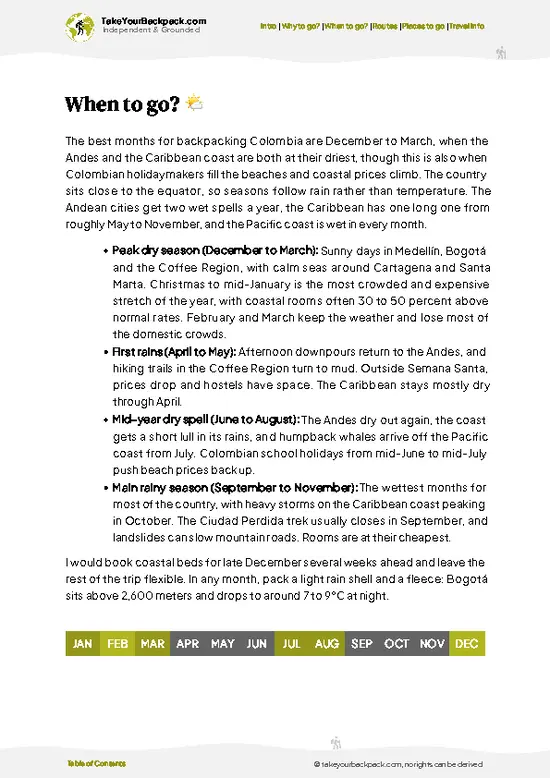
  • Topic: Weather and Temperature: Palomino’s dry season runs from December to March, with daytime highs around 30°C (86°F) and cooler nights near 22°C (72°F). This is when the sun feels strong but not oppressive, perfect for beach and jungle hikes. The rainy season, April to November, brings frequent afternoon showers and humidity that can push temps above 32°C (90°F), making trekking sticky and less pleasant.

  • Topic: Daylight Hours: Near the equator, Palomino enjoys roughly 12 hours of daylight year-round. Sunrise is around 6:00 AM, and sunset near 6:00 PM, giving you a reliable window to plan early starts and late finishes without worrying about drastic seasonal shifts.

  • Topic: Crowds and Atmosphere: Peak season (dry months) draws more travelers, especially around Christmas and Easter.
read more 👉

  • Topic: Weather and Temperature: Palomino’s dry season runs from December to March, with daytime highs around 30°C (86°F) and cooler nights near 22°C (72°F). This is when the sun feels strong but not oppressive, perfect for beach and jungle hikes. The rainy season, April to November, brings frequent afternoon showers and humidity that can push temps above 32°C (90°F), making trekking sticky and less pleasant.

  • Topic: Daylight Hours: Near the equator, Palomino enjoys roughly 12 hours of daylight year-round. Sunrise is around 6:00 AM, and sunset near 6:00 PM, giving you a reliable window to plan early starts and late finishes without worrying about drastic seasonal shifts.

  • Topic: Crowds and Atmosphere: Peak season (dry months) draws more travelers, especially around Christmas and Easter. The village buzzes with energy, but beaches and trails can feel crowded. The rainy season offers solitude and a lush, green landscape, but some trails may be slippery or closed.

  • Topic: Seasonal Activities: Dry months are ideal for tubing down the Palomino River and exploring Tayrona National Park’s trails without mud. The rainy season enhances river flow for more thrilling tubing but limits hiking options.

  • Topic: Price Fluctuations: Expect higher prices for accommodation and tours during the dry season and holidays. The rainy season sees a drop in rates, making it a budget-friendly time if you don’t mind occasional downpours.


Pro-tip: Aim for late January to early March—dry enough for adventure, but before the Easter rush, so you get the best light, fewer crowds, and a smoother vibe.


source: climatestotravel.comJANJanuary: excellent for travelingFEBFebruary: excellent for travelingMARMarch: excellent for travelingAPRApril: good for travelingMAYMay: fair for travelingJUNJune: fair for travelingJULJuly: fair for travelingAUGAugust: fair for travelingSEPSeptember: fair for travelingOCTOctober: good for travelingNOVNovember: good for travelingDECDecember: highly recommended for traveling
when-to-go

✈️ The backpacker research shortcutColombia Travel Guide

An offline-friendly backpacking guide with optimized travel routes, ranked highlights, transport advice, and the best areas to stay.
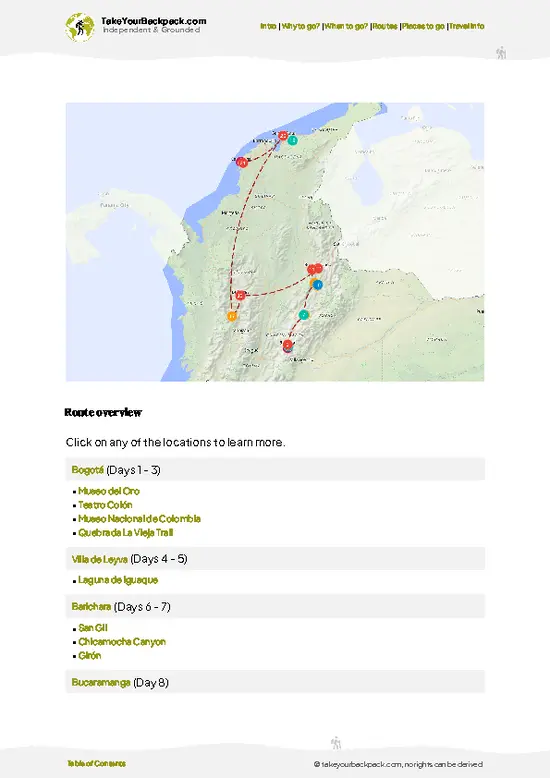
example page 0 from our offline Travel Guide for Colombia
example page 1 from our offline Travel Guide for Colombia
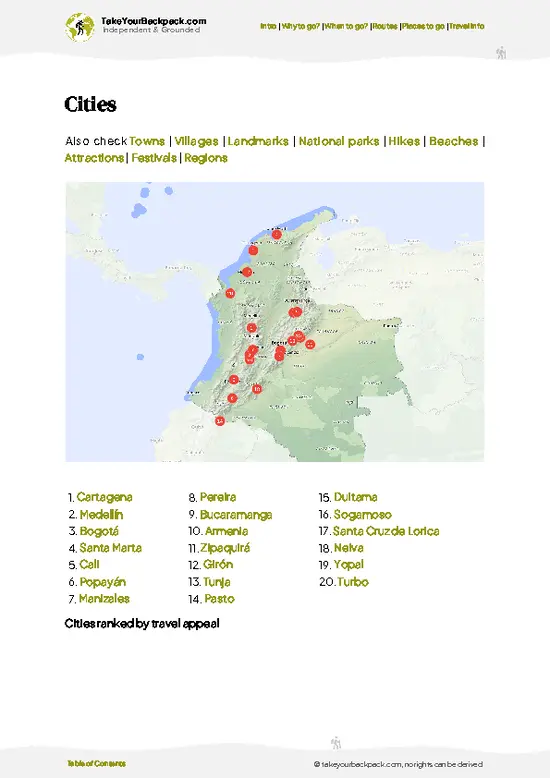
example page 2 from our offline Travel Guide for Colombia
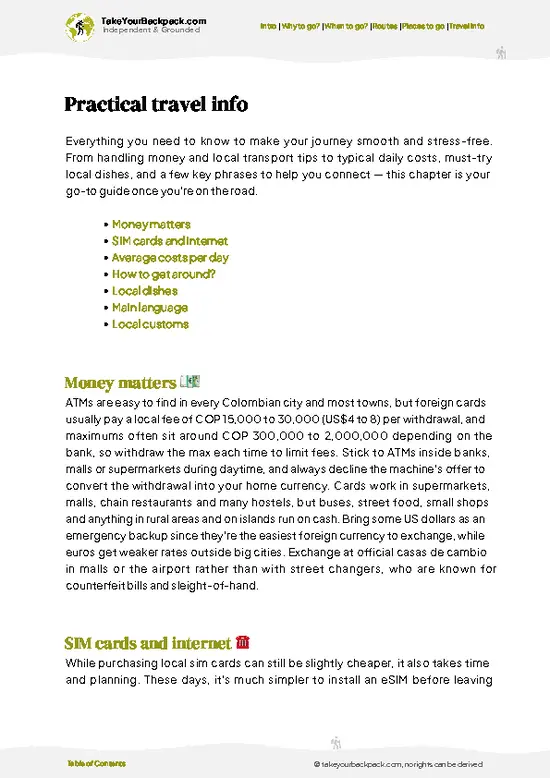
example page 3 from our offline Travel Guide for Colombia
example page 4 from our offline Travel Guide for Colombia
example page 5 from our offline Travel Guide for Colombia
example page 6 from our offline Travel Guide for Colombia
example page 7 from our offline Travel Guide for Colombia
The digital guide (464 pages) contains:
122 highlights, ranked by travel appeal
Optimized 7, 14 & 21-day travel routes
Cities, national parks, landmarks, beaches
How to get around
Offline-friendly for travel without Wi-Fi
👉 Click to see all 30+ guide features

📅 Plan smarter in minutes, not weeks
Month by month travel advice
Festivals & national holidays
Budget expectations

🗺️ Go to the right places, skip the overrated ones
Honest pros & cons of destinations
Top hikes, parks & viewpoints
Lesser-known places most travelers miss
Clear “worth it vs skip it” guidance

🛏️ Travel smoothly without rookie mistakes
Best areas to stay
Transport systems explained simply
Common scams & safety advice
SIM cards, money & practical tips

🌍 Understand the country, not just visit it
Culture & traditions
52 Essential phrases & customs
Festivals worth planning around
Traveler-friendly historical context
Insights that make places more meaningful

📱 Built for real travel conditions
Fully downloadable PDF
Works completely offline
Optimized for phone use
Useful in remote areas & buses
Everything in one place
Save weeks of stressful planning
Get instant access to your full guide. 30‑day money-back guarantee.
+ Add another guide for just US$7.80

By proceeding you agree to our terms.
Sent to your inbox immediately after payment • 100% Secure Checkout
Best Backpacking Travel Advisor 2025 tourism awardBest Backpacking
Travel Advisor
2025
What others say about Take Your Backpack Guides:
⭐⭐⭐⭐⭐
Fantastic, amazing amount of information!
⭐⭐⭐⭐⭐
My goodness this is amazing, it's what I've been looking for hats off too you!
⭐⭐⭐⭐⭐
I think this is absolutely BRILLIANT
⭐⭐⭐⭐
Very complete and informative. It's still missing places, but I gotta to commend you
⭐⭐⭐⭐⭐
This is truly amazing, thank you, can't wait to explore it with my kids!
⭐⭐⭐⭐⭐
Awesome resource, thank you!
⭐⭐⭐⭐⭐
This is amazing! Can't wait to explore the ones I haven't seen
⭐⭐⭐⭐
I love this! Well done, great idea.
⭐⭐⭐⭐⭐
Thanks for taking the time to make this gem!
⭐⭐⭐⭐⭐
This might be the best website I've ever seen.
⭐⭐⭐⭐⭐
Congratulations, and thank you so much for your work; it's incredibly valuable.
⭐⭐⭐⭐
In all seriousness I think you did a great job pointing out the important spots
⭐⭐⭐⭐⭐
10/10 very good
⭐⭐⭐⭐⭐
As someone who's only just starting to visit regularly this is awesome, thank you.
⭐⭐⭐⭐
Thank you very much! I'm going to visit my dad, it's going to be very useful!
⭐⭐⭐⭐⭐
This is really cool! We'll be travelling for the first time and this definitely come in handy.
⭐⭐⭐⭐⭐
You are now our minister of culture, congratulations 👨‍💼
⭐⭐⭐⭐⭐
Just wanted to tell you that this is a pearl! Going to follow your recommendations.
⭐⭐⭐⭐⭐
This is so cool. I'll definitely be using the resource for my travels soon.
⭐⭐⭐⭐⭐
This is very impressive! Good work.
⭐⭐⭐⭐⭐
This is an amazing and informative site. Very well done!

🛏️ Where to stay?Choosing the right base

Palomino’s charm isn’t just in its palm-fringed beaches or the lazy river that cuts through the village—it’s in how you live it. For backpackers, the best places to stay are those that plug you directly into that laid-back rhythm without sacrificing comfort or community.

Start with the hostels along the main strip near the beach. Places like La Sirena Eco Hostel offer dorms and private rooms with hammocks strung between coconut trees, where the ocean breeze carries the scent of salt and tropical flowers. Why here? Because you wake up to the sound of waves, not traffic, and you’re steps from the … read more 👉
Palomino’s charm isn’t just in its palm-fringed beaches or the lazy river that cuts through the village—it’s in how you live it. For backpackers, the best places to stay are those that plug you directly into that laid-back rhythm without sacrificing comfort or community.

Start with the hostels along the main strip near the beach. Places like La Sirena Eco Hostel offer dorms and private rooms with hammocks strung between coconut trees, where the ocean breeze carries the scent of salt and tropical flowers. Why here? Because you wake up to the sound of waves, not traffic, and you’re steps from the surf and the local eateries that serve fresh ceviche and arepas. The social vibe is strong, so you’ll meet fellow travelers swapping stories over a cold Aguila.

If you want a quieter, greener setting, Palomino Hostel sits a bit inland, surrounded by jungle sounds and the occasional howler monkey. It’s a better choice if you want to decompress after a day of river tubing or hiking in the Sierra Nevada. The rooms are simple but clean, and the communal kitchen lets you cook up your own meals, saving cash for that extra round of fresh coconut juice.

Booking a spot near the river’s mouth is a smart move. It’s where the village’s pulse is strongest, and you can easily join guided tours or rent a bike to explore. Staying here means you’re not just passing through Palomino—you’re living it, with the sun on your skin and the scent of wet earth after a tropical rain soaking into your memory.

🚌 Getting aroundGetting around like a local

Palomino moves at its own rhythm—more like the lazy drift of the Caribbean breeze than a strict timetable. The town’s pulse is set by the sun climbing over the Sierra Nevada foothills and the tide rolling in from the ocean. You won’t find rigid schedules here; instead, expect a blend of laid-back locals and travelers who navigate by intuition and the occasional shouted call for a ride. The scent of salt air mingles with fresh jungle greenery, and the streets hum with the casual chatter of vendors and the occasional rumble of a moto taxi. This isn’t a place where you race against the clock; it’s where you learn to read the flow and move with it, unlocking smoother, more authentic connections with the town and its people.

Walking: The most straightforward way to get around Palomino is on foot. … read more 👉
Palomino moves at its own rhythm—more like the lazy drift of the Caribbean breeze than a strict timetable. The town’s pulse is set by the sun climbing over the Sierra Nevada foothills and the tide rolling in from the ocean. You won’t find rigid schedules here; instead, expect a blend of laid-back locals and travelers who navigate by intuition and the occasional shouted call for a ride. The scent of salt air mingles with fresh jungle greenery, and the streets hum with the casual chatter of vendors and the occasional rumble of a moto taxi. This isn’t a place where you race against the clock; it’s where you learn to read the flow and move with it, unlocking smoother, more authentic connections with the town and its people.

Walking: The most straightforward way to get around Palomino is on foot. The town is compact, with dirt and paved paths weaving between colorful hostels, beachfront shacks, and jungle trails. Walking costs nothing, lets you soak in the humid air thick with tropical flowers, and gives you the freedom to stop whenever a street vendor’s fresh fruit or a local’s smile catches your eye. It’s slow, but that’s the point.

Moto Taxis: These buzzing three-wheelers are the lifeblood of local transit. They dart through narrow streets and jungle roads, offering quick, cheap rides for around 3,000 to 5,000 COP (less than $2). They don’t run on a schedule—just flag one down when you need it. The trade-off is a bumpy, open-air ride that’s part adventure, part adrenaline rush, especially when the rain starts to fall and the dirt roads turn slippery.

Colectivos (Shared Vans): For trips to nearby towns like Santa Marta or Taganga, colectivos are your budget-friendly option. They leave when full, so timing is flexible but unpredictable—expect waits of 15 to 45 minutes. The fare is about 10,000 to 15,000 COP ($3-$4.50). These vans are basic but functional, packed with locals and travelers alike, and offer a chance to catch snippets of conversation and local music through open windows.

Buses: Larger buses connect Palomino to bigger hubs but run less frequently and follow rough schedules, often early morning or late afternoon. Tickets cost around 12,000 to 20,000 COP ($4-$6). They’re slower and less flexible than colectivos but more comfortable for longer distances, with seats that recline and some air circulation—though don’t expect air conditioning.

Bicycle Rentals: If you want to explore beyond the town at your own pace, renting a bike is a solid choice. Daily rentals run about 15,000 to 25,000 COP ($5-$8). The terrain can be challenging—expect sandy patches and occasional steep climbs—but the reward is a quiet, immersive ride through jungle paths and along the coast, with the wind carrying the scent of salt and earth.

Mastering Palomino’s transit means embracing its relaxed, organic pace. There’s no rush here, just a series of small, sensory moments that build into a richer, more grounded experience. Walk when you want to absorb the town’s textures, hop on a moto taxi for quick bursts of local life, and use colectivos or buses to stretch your range without breaking the bank. Each mode is a piece of the puzzle, helping you move through Palomino not as a tourist on a schedule, but as someone who’s tuned in to the town’s natural rhythm.

👛 Costs (as of 4 September 2026)What things cost and how to budget

Backpacking in Palomino, Colombia, offers a laid-back vibe with costs that reflect its small-town charm and growing popularity among travelers. Here’s a realistic breakdown of what you’ll spend daily:
  • Dorm Accommodation: Expect to pay around $8 to $15 USD per night for a bed in a shared dorm. Hostels here are simple but clean, often with hammocks and open-air common areas where the sea breeze cools things down.
  • Meals: Local eateries serve up fresh, hearty plates for $3 to $6 USD. Think fried fish, rice, and plantains—flavors that hit the right notes without draining your wallet. Street food snacks like arepas or empanadas go for about $1 to $2 USD each.
  • Local Transport: Palomino is small enough to explore mostly on foot, but if you want to venture out, moto-taxis or colectivos cost around
read more 👉
Backpacking in Palomino, Colombia, offers a laid-back vibe with costs that reflect its small-town charm and growing popularity among travelers. Here’s a realistic breakdown of what you’ll spend daily:
  • Dorm Accommodation: Expect to pay around $8 to $15 USD per night for a bed in a shared dorm. Hostels here are simple but clean, often with hammocks and open-air common areas where the sea breeze cools things down.
  • Meals: Local eateries serve up fresh, hearty plates for $3 to $6 USD. Think fried fish, rice, and plantains—flavors that hit the right notes without draining your wallet. Street food snacks like arepas or empanadas go for about $1 to $2 USD each.
  • Local Transport: Palomino is small enough to explore mostly on foot, but if you want to venture out, moto-taxis or colectivos cost around $1 to $3 USD per short ride. It’s a cheap way to get to nearby beaches or the river mouth.
  • Basic Activities/Entry Fees: Many natural attractions, like the Palomino River tubing or beach access, are free or cost a small fee of $2 to $5 USD. Guided hikes or tours to Tayrona National Park start around $15 to $25 USD, which is worth it for the insider knowledge and smoother logistics.
  • Miscellaneous Expenses: Budget $2 to $5 USD for essentials like bottled water, occasional coffee, or a cold drink. Wi-Fi is often included in hostels, but if you need a local SIM card, it’ll run about $10 USD with some data.

Altogether, you’re looking at roughly $16 to $35 USD per day to cover the essentials without cutting corners. Palomino’s charm is in its simplicity—spend smart, and you’ll have plenty left over to enjoy the laid-back rhythm of the town and the natural beauty that surrounds it.


source: colombia.travel
⚠️ Prices can change and everyone travels differently, so take this as a rough guide. Hope it helps you plan your adventure!

🚌 Day tripsBest day trips from Palomino

Palomino, Colombia, is a backpacker’s dream base, offering a blend of stunning landscapes and vibrant culture. From here, you can easily embark on day trips that immerse you in the region’s natural beauty and local charm.

La Sierra Nevada Trek
This trek takes you into the foothills of the Sierra Nevada mountains, where the air is crisp and the views are jaw-dropping. Expect to spend about 4-5 hours hiking through lush trails, with the scent of wildflowers and the sound of rushing streams as your backdrop. The journey is free if you go solo, but consider hiring a local guide for around $20 to enrich your experience with stories of the indigenous Kogi people. Mistake: Many first-timers underestimate the trail’s difficulty; wear sturdy shoes and bring plenty of water. 👉 Explore Palomino

Los read more 👉
Palomino, Colombia, is a backpacker’s dream base, offering a blend of stunning landscapes and vibrant culture. From here, you can easily embark on day trips that immerse you in the region’s natural beauty and local charm.

La Sierra Nevada Trek
This trek takes you into the foothills of the Sierra Nevada mountains, where the air is crisp and the views are jaw-dropping. Expect to spend about 4-5 hours hiking through lush trails, with the scent of wildflowers and the sound of rushing streams as your backdrop. The journey is free if you go solo, but consider hiring a local guide for around $20 to enrich your experience with stories of the indigenous Kogi people. Mistake: Many first-timers underestimate the trail’s difficulty; wear sturdy shoes and bring plenty of water. 👉 Explore Palomino

Los Flamencos Sanctuary
Just a short 30-minute ride from Palomino, this sanctuary is a haven for birdwatchers and nature lovers. The entrance fee is around $5, and you can spend a leisurely afternoon wandering the boardwalks, spotting flamingos and other wildlife. The best time to visit is early morning or late afternoon when the light casts a golden hue over the wetlands. A common pitfall is rushing through; take your time to soak in the atmosphere and snap some photos. 👉 Explore Palomino

Taganga Beach
A quick 45-minute bus ride will land you in Taganga, a laid-back fishing village with a beach that invites relaxation. Grab a fresh ceviche from a local vendor for about $6 and lounge on the sand, or dive into the clear waters for snorkeling. The vibe here is chill, especially during the off-peak season from May to November. Many travelers miss the sunset; don’t be one of them—stay for the show as the sky ignites in colors. 👉 Explore Palomino

Palomino River Tubing
For a more adventurous day, head to the Palomino River for tubing. Rent a tube for around $10 and float down the river, surrounded by towering palms and the sounds of nature. The trip takes about 3 hours, and the best time is during the dry season from December to March when the water is perfect for floating. A common mistake is not checking the weather; heavy rains can make the river too wild. 👉 Explore Palomino

Aracataca
A 1-hour bus ride brings you to Aracataca, the birthplace of Gabriel García Márquez. Explore the town’s literary history and visit the house where he grew up for a small fee. The atmosphere is rich with stories, and you can grab a coffee for about $2 at a local café. Many overlook this cultural gem; don’t miss the chance to walk the streets that inspired magical realism. 👉 Explore Palomino
Want to know what more Colombia offers?
The Colombia Travel Guide describes 122 highlights, from cities to national parks, from beaches to hikes

Get the Travel Guide -

🛡️ SafetyStaying Safe: What Travelers Should Know

Palomino feels laid-back, but that ease can lull you into casual habits that invite petty hassles. The main stretch along the beach and the town center are generally safe during the day, but keep your wits about you when wandering after dark—street lighting thins out, and the quiet can make you an easy target for opportunists. Solo travelers should blend in by dressing simply and avoiding flashy gear; a low profile goes a long way here.

Watch your belongings closely in crowded spots like the bus station or market stalls—pickpocketing isn’t rampant but happens enough to merit attention. The most common annoyance is the “helpful” local who insists on guiding you to a hostel or tour, often expecting a tip afterward. Politely but firmly decline if you’re set on your own plans. Carry small bills … read more 👉
Palomino feels laid-back, but that ease can lull you into casual habits that invite petty hassles. The main stretch along the beach and the town center are generally safe during the day, but keep your wits about you when wandering after dark—street lighting thins out, and the quiet can make you an easy target for opportunists. Solo travelers should blend in by dressing simply and avoiding flashy gear; a low profile goes a long way here.

Watch your belongings closely in crowded spots like the bus station or market stalls—pickpocketing isn’t rampant but happens enough to merit attention. The most common annoyance is the “helpful” local who insists on guiding you to a hostel or tour, often expecting a tip afterward. Politely but firmly decline if you’re set on your own plans. Carry small bills for purchases to avoid awkward change disputes, and always confirm prices upfront. Palomino’s charm is in its relaxed rhythm, so staying alert without paranoia keeps your experience smooth and genuine.

FAQFrequently asked questions about Palomino

Yes, Palomino is worth visiting for its beautiful beaches, river tubing, and proximity to Tayrona National Park. It offers a more relaxed and less touristy atmosphere compared to nearby cities like Santa Marta. Many backpackers stay here to enjoy nature and local culture.
2 to 3 days are ideal to explore Palomino fully. This allows time for beach relaxation, river tubing on the Palomino River, and a day trip to Tayrona National Park. Staying longer is recommended if you want to unwind or explore nearby indigenous communities.
No, Palomino is not practical as a day trip from nearby cities like Santa Marta due to travel time. It takes about 2 to 3 hours each way by bus or colectivo, making a day trip rushed and tiring. Overnight stays are recommended to enjoy the area properly.
⚠️ Things can change over time, so always validate details locally before you go.

Other Colombian towns near Palomino

Explore more nearby:

  • Puerto Colombia—Historic pier, Atlantic coast, beachside eateries| 155 km away
  • Santa Cruz de Mompox—Island town, wrought-iron balconies, river sunsets| 242 km away
  • Tolu—Seaside promenade, bicycle taxis, coastal seafood| 290 km away

💡 Not sure where to go next?
Create a personalized itinerary for Colombia including Palomino and the places that fit your trip.

Generate my itinerary

👉 Discover all towns

Or checkout all Colombia has to offer (think cities, towns, villages, national parks, hikes, beaches, festivals)
Country photo of Colombia

We 💚 feedbackFinal thoughts on visiting Palomino

Palomino’s charm lies in its raw beauty—the way the sun dips behind the Sierra Nevada, casting long shadows on the beach, while the salty breeze carries the scent of fresh arepas. But be ready for the reality check: the infrastructure can be a bit rough. Expect uneven roads and sporadic Wi-Fi. Embrace it. The minor inconveniences only deepen your connection to this laid-back paradise. It’s all part of the adventure.

✈️ When did I visit Colombia?
Did a good 3-week trip around Colombia in August 2014.

✍️ Help improve this page!
The information on this page is based on my own backpacking experience in Colombia, supplemented with up-to-date research and feedback from other travelers. Travel details can change, so if you notice anything outdated or incomplete, feel free to let me know.


🙋‍♂️ Give feedback

👋 Meet the founderWho’s Behind Take Your Backpack?

Johan, backpacker and founder of TakeYourBackpackHi, I’m Johan (Netherlands 🇳🇱), the creator of TakeYourBackpack. Over the past decade, I’ve backpacked through 80+ countries across six continents, gaining extensive experience with independent travel, long-term trips, and overland routes.

This site is built on a combination of firsthand travel experience and carefully curated insights from other backpackers. Many guides are based on places I’ve personally visited, while others bring together tips, observations, and practical advice shared by trusted travelers I’ve met along the way.

The goal is to provide realistic, experience-driven guidance — not generic itineraries — so you can explore destinations with better context, clearer expectations, and more confidence.

Get full Colombia guide •
Instant download • 122 highlights • Full Offline guide