×
Tayrona National Park

Colombia🇨🇴 | national parksTayrona National Parkbeach coves, rainforest trails, archaeological ruins | things to do and best time to go

Explore Sierra Nevada de Santa Marta National ParkExplore Valle de Cocora

Backpacking in Tayrona
🏆 Top picknational park ranked #1
By Johan Kruseman 🇳🇱 | Updated September 4, 2026

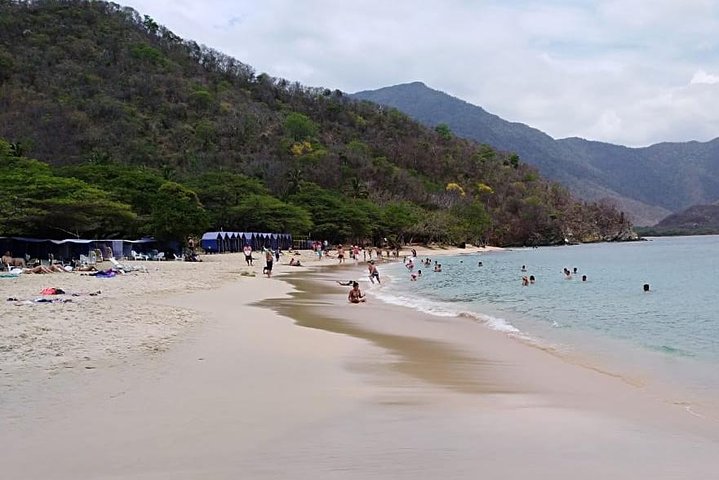
Your first real decision in Tayrona is simple but brutal: do you pay with money or with sweat. Either you hike in from El Zaino with your pack in the heat, or you pay for horses, boats, or lockers and strip your load down. That choice shapes your whole day. Tayrona National Park sits on Colombia’s Caribbean coast, just northeast of Santa Marta, wrapping jungle-covered hills around a string of coves and beaches. For backpackers, it’s gorgeous and annoying in equal measure: solid day hikes, postcard beaches, monkeys and birds overhead, but also strict rules, limited access points, and entrance fees that feel high by Colombian standards. Camping and hammocks near Cabo San Juan and Arrecifes are atmospheric but crowded and not as cheap as you’d hope. Compared with nearby Parque Nacional Sierra Nevada de Santa Marta or Los Flamencos, Tayrona is easier, busier, more beach-focused, and less wild—but also more logistically controlled, which can be a relief if you’re new to Colombia.

Discover everything you want to know in the 📖 Colombia Travel Guide.
Loading the map 🌍
CLICK TO FILTER
cities
towns
villages
landmarks
national parks
hikes
beaches
attractions
festivals
regions
SHOW COUNTRY’S BESTSHOW ALL

✨ Why go?
Ranked #1 national park in Colombia
What makes this national park worth exploring

Backpackers flock to Tayrona National Park for its blend of independent exploration and affordable accommodations. The park offers a range of budget camping options and nearby hostels, making it easy to stretch your funds while enjoying the natural beauty. You can pitch a tent right by the beach or find a cozy spot in a hostel, allowing you to soak in the atmosphere without breaking the bank.

The trail variety is another draw. From easy walks to more challenging hikes, there’s something for everyone. You can wander through lush jungles, discover ancient ruins, and hit pristine beaches, all at your own pace. This flexibility makes Tayrona particularly appealing for self-guided travelers. You won’t feel pressured to stick to a tour group’s schedule, which can be liberating.

However, be mindful … read more 👉
Backpackers flock to Tayrona National Park for its blend of independent exploration and affordable accommodations. The park offers a range of budget camping options and nearby hostels, making it easy to stretch your funds while enjoying the natural beauty. You can pitch a tent right by the beach or find a cozy spot in a hostel, allowing you to soak in the atmosphere without breaking the bank.

The trail variety is another draw. From easy walks to more challenging hikes, there’s something for everyone. You can wander through lush jungles, discover ancient ruins, and hit pristine beaches, all at your own pace. This flexibility makes Tayrona particularly appealing for self-guided travelers. You won’t feel pressured to stick to a tour group’s schedule, which can be liberating.

However, be mindful of the entrance fees and potential costs for amenities inside the park. Bring enough cash, as ATMs are scarce. Understanding these details can save you from unexpected expenses, allowing you to focus your energy on the experiences that truly matter.
Want to include Tayrona National Park in your Colombia route?
Create a personalized Colombia itinerary that includes Tayrona National Park and the places that fit your trip — based on your travel style, budget, and available time. Get your route in seconds.

Generate my trip

💡 HighlightsTop highlights of Tayrona

  • Cabo San Juan de Guía — The postcard cove: a twin-bay with a skinny sandbar, palm trees and a small ranger camp. Great for camping, sunrise/sunset photos and watching local boats drift by. (My personal favorite — pure, classic Tayrona vibes.)
  • La Piscina — A naturally sheltered swimming hole protected by a ring of rocks; calm, clear water ideal for snorkeling and a lazy dip after hiking. It feels almost like a secret lagoon compared with the rough surf elsewhere.
  • Arrecifes — Jagged rock coastline and pounding surf that make for dramatic views and excellent wildlife spotting (marine birds, sometimes turtles close to shore). Not safe for swimming, but unbeatable for photography and coastal atmosphere.
  • Pueblito (archaeological site) — Ruins of an ancient Tayrona village tucked into the foothills;
read more 👉
  • Cabo San Juan de Guía — The postcard cove: a twin-bay with a skinny sandbar, palm trees and a small ranger camp. Great for camping, sunrise/sunset photos and watching local boats drift by. (My personal favorite — pure, classic Tayrona vibes.)
  • La Piscina — A naturally sheltered swimming hole protected by a ring of rocks; calm, clear water ideal for snorkeling and a lazy dip after hiking. It feels almost like a secret lagoon compared with the rough surf elsewhere.
  • Arrecifes — Jagged rock coastline and pounding surf that make for dramatic views and excellent wildlife spotting (marine birds, sometimes turtles close to shore). Not safe for swimming, but unbeatable for photography and coastal atmosphere.
  • Pueblito (archaeological site) — Ruins of an ancient Tayrona village tucked into the foothills; the hike there gives a real sense of the indigenous history, terraces and stonework. It’s quieter and more cultural than the beach crowds.
  • The Coastal Trail from El Zaino to Cabo — A classic multi-stop hike along jungle and coastline: beaches, lookout points, monkeys in the treetops and changing microclimates as you gain a little elevation. Easy sections, some steeper bits — perfect day-hike material if you like variety.
  • Wildlife & Birding — Howler and capuchin monkeys, colorful toucans and tanagers, agoutis and sloths in the trees; plus sea turtles and reef fish offshore. The park’s mix of mountain and Caribbean ecosystems packs a lot of species into a small area.
  • Sierra Nevada Views & Biodiversity — The backdrop of the Sierra Nevada de Santa Marta creates dramatic, jungle-clad slopes that spill straight down to the sea. The result is rich biodiversity and lush trails where the forest feels dense and alive.
Spotted a mistake or missing something? Contact us.

Things to do around Tayrona National Park

Ratings based on Tripadvisor reviews. When you book through this link, you support our work at no extra cost to you.

🌤️ When to go?Weather, crowds, and seasonal trade-offs


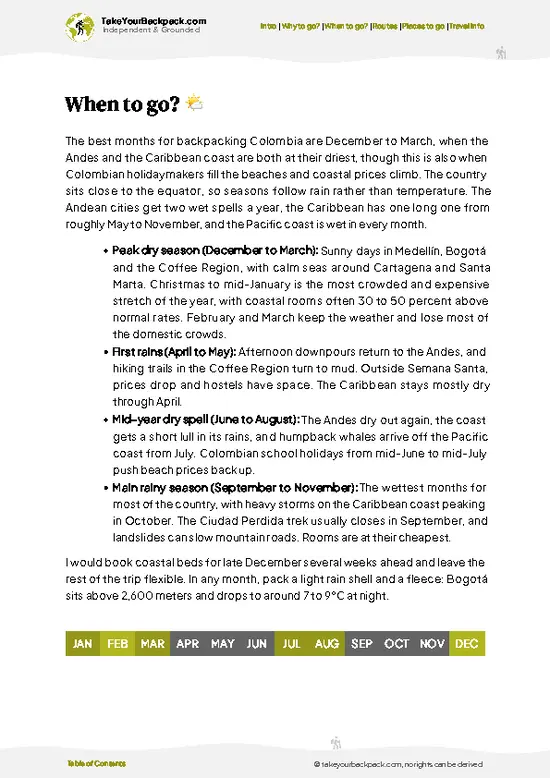
  • Weather: The dry season from December to March offers the most reliable weather, with minimal rain and clearer trails. The wet season, April to November, brings heavy showers that can turn paths muddy and slippery, making some areas less accessible.

  • Temperature: Daytime temperatures hover around 28-32°C (82-90°F) year-round, but humidity spikes during the rainy months, which can sap your energy faster. Nights are cooler, dropping to about 22-24°C (72-75°F), so pack accordingly.

  • Daylight Hours: Expect roughly 11 to 12 hours of daylight throughout the year, with sunrise around 6:00 AM and sunset near 6:00 PM. Early starts are essential to avoid afternoon heat and maximize your hiking window.

  • Crowds: Peak season aligns with the dry months and local holidays, especially December and January,
read more 👉

  • Weather: The dry season from December to March offers the most reliable weather, with minimal rain and clearer trails. The wet season, April to November, brings heavy showers that can turn paths muddy and slippery, making some areas less accessible.

  • Temperature: Daytime temperatures hover around 28-32°C (82-90°F) year-round, but humidity spikes during the rainy months, which can sap your energy faster. Nights are cooler, dropping to about 22-24°C (72-75°F), so pack accordingly.

  • Daylight Hours: Expect roughly 11 to 12 hours of daylight throughout the year, with sunrise around 6:00 AM and sunset near 6:00 PM. Early starts are essential to avoid afternoon heat and maximize your hiking window.

  • Crowds: Peak season aligns with the dry months and local holidays, especially December and January, when the park fills up. If you want solitude, aim for the shoulder months like late March or early November.

  • Seasonal Activities: Dry months are best for snorkeling and beach time, as water visibility improves. The wet season limits these activities but offers lush jungle views and fewer tourists.

  • Price Fluctuations: Accommodation and tour prices spike during the dry season and holidays. Booking in advance is crucial. Off-season rates can be 30-50% lower but come with the risk of rain disrupting plans.


Pro-tip: Visit just before or after the peak dry season to balance decent weather, fewer crowds, and better prices—your energy and wallet will thank you.


source: climatestotravel.comJANJanuary: highly recommended for travelingFEBFebruary: excellent for travelingMARMarch: highly recommended for travelingAPRApril: fair for travelingMAYMay: fair for travelingJUNJune: fair for travelingJULJuly: fair for travelingAUGAugust: fair for travelingSEPSeptember: fair for travelingOCTOctober: fair for travelingNOVNovember: good for travelingDECDecember: highly recommended for traveling
Colombia - Tayrona National Park

✈️ The backpacker research shortcutColombia Travel Guide

An offline-friendly backpacking guide with optimized travel routes, ranked highlights, transport advice, and the best areas to stay.
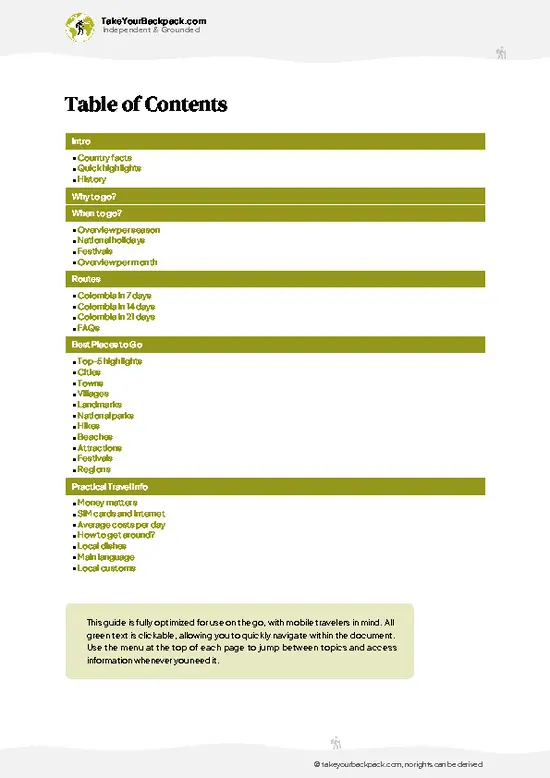
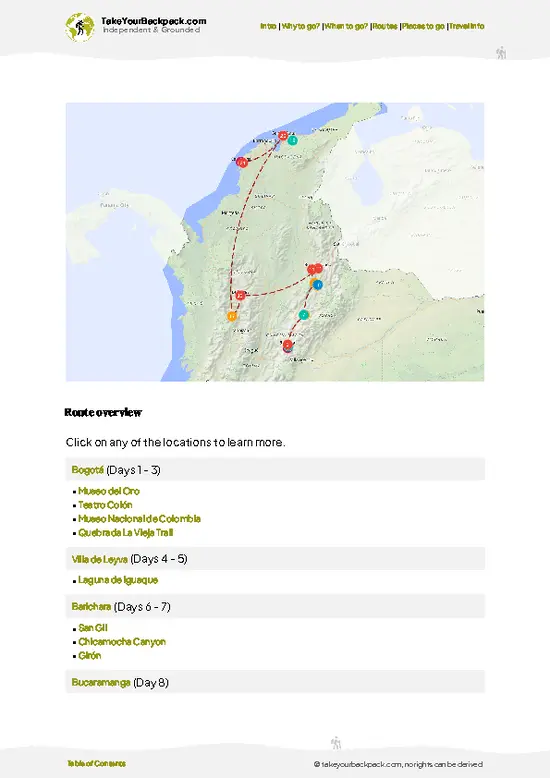
example page 0 from our offline Travel Guide for Colombia
example page 1 from our offline Travel Guide for Colombia
example page 2 from our offline Travel Guide for Colombia
example page 3 from our offline Travel Guide for Colombia
example page 4 from our offline Travel Guide for Colombia
example page 5 from our offline Travel Guide for Colombia
example page 6 from our offline Travel Guide for Colombia
example page 7 from our offline Travel Guide for Colombia
The digital guide (464 pages) contains:
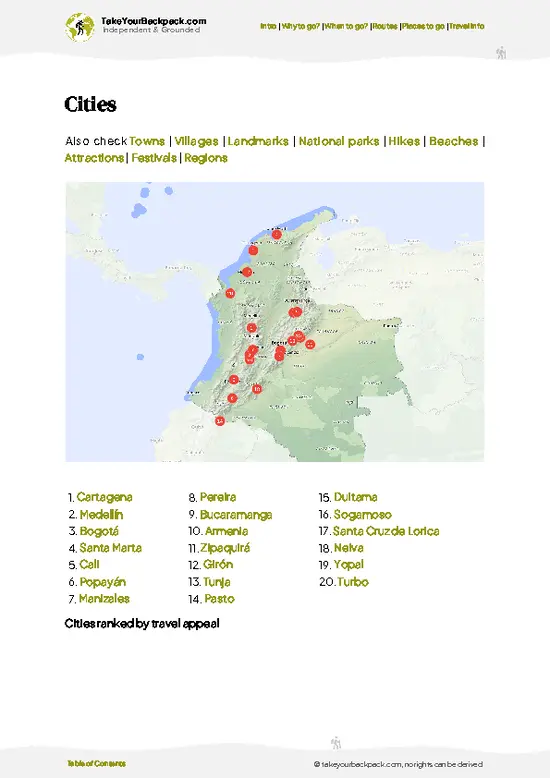
122 highlights, ranked by travel appeal
Optimized 7, 14 & 21-day travel routes
Cities, national parks, landmarks, beaches
How to get around
Offline-friendly for travel without Wi-Fi
👉 Click to see all 30+ guide features

📅 Plan smarter in minutes, not weeks
Month by month travel advice
Festivals & national holidays
Budget expectations

🗺️ Go to the right places, skip the overrated ones
Honest pros & cons of destinations
Top hikes, parks & viewpoints
Lesser-known places most travelers miss
Clear “worth it vs skip it” guidance

🛏️ Travel smoothly without rookie mistakes
Best areas to stay
Transport systems explained simply
Common scams & safety advice
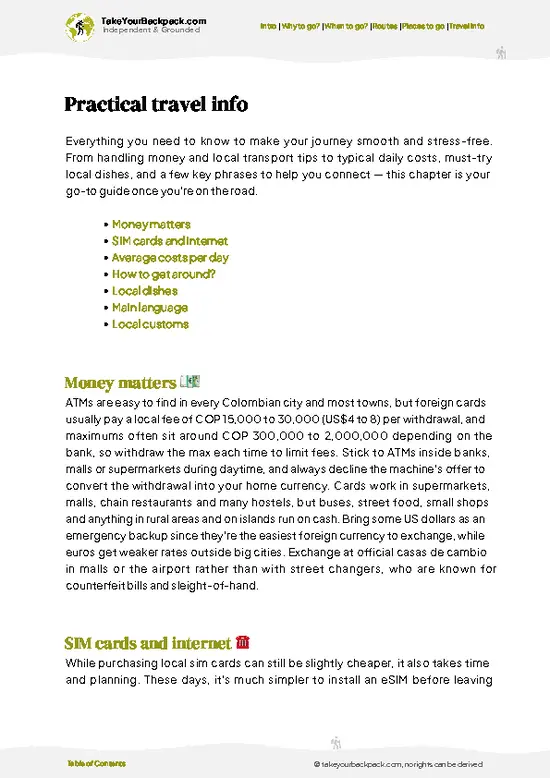
SIM cards, money & practical tips

🌍 Understand the country, not just visit it
Culture & traditions
52 Essential phrases & customs
Festivals worth planning around
Traveler-friendly historical context
Insights that make places more meaningful

📱 Built for real travel conditions
Fully downloadable PDF
Works completely offline
Optimized for phone use
Useful in remote areas & buses
Everything in one place
Save weeks of stressful planning
Get instant access to your full guide. 30‑day money-back guarantee.
+ Add another guide for just US$7.80

By proceeding you agree to our terms.
Sent to your inbox immediately after payment • 100% Secure Checkout
Best Backpacking Travel Advisor 2025 tourism awardBest Backpacking
Travel Advisor
2025
What others say about Take Your Backpack Guides:
⭐⭐⭐⭐⭐
Fantastic, amazing amount of information!
⭐⭐⭐⭐⭐
My goodness this is amazing, it's what I've been looking for hats off too you!
⭐⭐⭐⭐⭐
I think this is absolutely BRILLIANT
⭐⭐⭐⭐
Very complete and informative. It's still missing places, but I gotta to commend you
⭐⭐⭐⭐⭐
This is truly amazing, thank you, can't wait to explore it with my kids!
⭐⭐⭐⭐⭐
Awesome resource, thank you!
⭐⭐⭐⭐⭐
This is amazing! Can't wait to explore the ones I haven't seen
⭐⭐⭐⭐
I love this! Well done, great idea.
⭐⭐⭐⭐⭐
Thanks for taking the time to make this gem!
⭐⭐⭐⭐⭐
This might be the best website I've ever seen.
⭐⭐⭐⭐⭐
Congratulations, and thank you so much for your work; it's incredibly valuable.
⭐⭐⭐⭐
In all seriousness I think you did a great job pointing out the important spots
⭐⭐⭐⭐⭐
10/10 very good
⭐⭐⭐⭐⭐
As someone who's only just starting to visit regularly this is awesome, thank you.
⭐⭐⭐⭐
Thank you very much! I'm going to visit my dad, it's going to be very useful!
⭐⭐⭐⭐⭐
This is really cool! We'll be travelling for the first time and this definitely come in handy.
⭐⭐⭐⭐⭐
You are now our minister of culture, congratulations 👨‍💼
⭐⭐⭐⭐⭐
Just wanted to tell you that this is a pearl! Going to follow your recommendations.
⭐⭐⭐⭐⭐
This is so cool. I'll definitely be using the resource for my travels soon.
⭐⭐⭐⭐⭐
This is very impressive! Good work.
⭐⭐⭐⭐⭐
This is an amazing and informative site. Very well done!

🛏️ Where to stay?Best areas to stay in Colombia

Tayrona National Park offers a mix of options for backpackers, both inside the park and in nearby towns.

Inside the park, you’ll find eco-friendly accommodations like the Cabañas Arrecifes. These rustic cabins are basic but comfortable, providing a great way to immerse yourself in nature. Expect to pay around 50,000 to 100,000 COP per night. Just remember, you’ll need to book in advance, especially during peak season.

Another option is Ecohabs Tayrona, which offers a bit more comfort with stunning views. Prices here can climb to 400,000 COP, but the experience is worth it if you’re looking … read more 👉
Tayrona National Park offers a mix of options for backpackers, both inside the park and in nearby towns.

Inside the park, you’ll find eco-friendly accommodations like the Cabañas Arrecifes. These rustic cabins are basic but comfortable, providing a great way to immerse yourself in nature. Expect to pay around 50,000 to 100,000 COP per night. Just remember, you’ll need to book in advance, especially during peak season.

Another option is Ecohabs Tayrona, which offers a bit more comfort with stunning views. Prices here can climb to 400,000 COP, but the experience is worth it if you’re looking for a splurge.

If you prefer to stay outside the park, the nearby town of Taganga is a popular choice. It’s a lively fishing village with plenty of hostels and budget accommodations. You can find dorms for as low as 30,000 COP. Taganga is also a great base for diving and other activities, but be prepared for a bit of a party scene.

Lastly, Santa Marta is about an hour away and offers a wider range of accommodations. It’s a good option if you want more amenities and nightlife. Just keep in mind that staying in Santa Marta means extra travel time to reach the park.

Plan wisely, and you’ll save your energy and budget for the breathtaking hikes and stunning beaches that await you.

👛 Costs (as of 4 September 2026)Typical daily expenses

Visiting Tayrona National Park in Colombia can be an incredible experience, but it’s essential to be aware of the costs involved to avoid surprises.

Entrance fees are a primary consideration. As of the latest estimates, the entrance fee is around 60,000 COP, which is approximately $15 USD. This fee grants you access to the park for a day. If you plan to stay overnight, you’ll need to factor in additional costs for accommodations.

Camping within the park can cost between $10 to $20 USD per night, depending on the location and amenities. If you prefer a more comfortable stay, eco-lodges and cabins are available, typically ranging from $40 to $100 USD per night.

Food options vary widely. If you’re dining at park restaurants, expect to pay around $10 to $20 USD for a meal. Bringing your own … read more 👉
Visiting Tayrona National Park in Colombia can be an incredible experience, but it’s essential to be aware of the costs involved to avoid surprises.

Entrance fees are a primary consideration. As of the latest estimates, the entrance fee is around 60,000 COP, which is approximately $15 USD. This fee grants you access to the park for a day. If you plan to stay overnight, you’ll need to factor in additional costs for accommodations.

Camping within the park can cost between $10 to $20 USD per night, depending on the location and amenities. If you prefer a more comfortable stay, eco-lodges and cabins are available, typically ranging from $40 to $100 USD per night.

Food options vary widely. If you’re dining at park restaurants, expect to pay around $10 to $20 USD for a meal. Bringing your own snacks can save you money, but be mindful of park regulations regarding waste.

Transportation to the park is another cost to consider. If you’re traveling from Santa Marta, a bus ride will set you back about $5 USD. Private transfers can be more expensive, ranging from $30 to $50 USD.

Lastly, budget for activities. Guided tours, such as snorkeling or hiking, can add another $20 to $50 USD to your expenses, depending on the service.

Being aware of these costs will help you manage your budget effectively, allowing you to focus on enjoying the natural beauty and unique experiences Tayrona National Park has to offer.


source: parquesnacionales.gov.co
⚠️ Prices can change and everyone travels differently, so take this as a rough guide. Hope it helps you plan your adventure!

🥾 TrailsWhere to hike in Tayrona: trails for every level

Tayrona National Park is a gem on Colombia’s Caribbean coast, offering a mix of stunning beaches, lush jungles, and diverse wildlife. The trails here take you through varying terrains, from sandy paths to rocky inclines, and you’ll find yourself surrounded by tropical flora and fauna. Keep your eyes peeled for monkeys swinging overhead and colorful birds flitting about. The hikes can range from easy strolls to more challenging treks, depending on what you’re up for.

One of the most popular trails is the Cabo San Juan Trail. Here are the details:
  • Length: 4.5 km
  • Estimated Duration: 1.5 to 2 hours
  • Difficulty
read more 👉
Tayrona National Park is a gem on Colombia’s Caribbean coast, offering a mix of stunning beaches, lush jungles, and diverse wildlife. The trails here take you through varying terrains, from sandy paths to rocky inclines, and you’ll find yourself surrounded by tropical flora and fauna. Keep your eyes peeled for monkeys swinging overhead and colorful birds flitting about. The hikes can range from easy strolls to more challenging treks, depending on what you’re up for.

One of the most popular trails is the Cabo San Juan Trail. Here are the details:
  • Length: 4.5 km
  • Estimated Duration: 1.5 to 2 hours
  • Difficulty Level: Moderate
  • Key Features: Stunning beach views, lush jungle, and the picturesque Cabo San Juan beach
  • Terrain: Mixed; sandy paths and some rocky sections

Another trail worth checking out is the Pueblito Trail:
  • Length: 8 km
  • Estimated Duration: 3 to 4 hours
  • Difficulty Level: Moderate to Challenging
  • Key Features: Ancient ruins of the Tayrona civilization, beautiful landscapes, and a chance to spot wildlife
  • Terrain: Steep inclines and uneven paths

Getting to Tayrona is pretty straightforward. You can hop on a bus from Santa Marta, which takes about an hour and is fairly cheap. The park can get crowded, especially during weekends and holidays, so if you prefer a quieter experience, consider visiting during the week. As for the entrance fee, it’s around 60,000 COP, which is totally worth it for the breathtaking views and the chance to connect with nature. Just remember to pack plenty of water and snacks, because once you’re on the trails, you’ll want to soak it all in without rushing back for supplies!
⚠️ Hiking info can sometimes be outdated or inaccurate. Before you hit the trail, check the latest conditions with locals. If you do spot anything that's off, I'd love to hear from you, so I can update it for fellow travelers.

🛡️ SafetyStaying Safe: What Travelers Should Know

Tayrona National Park is a stunning place, but it comes with its own set of realities. The weather can shift quickly, so be prepared for sudden rain, especially during the wet season from May to November. Lightweight, quick-dry clothing and a reliable rain jacket will serve you well.

The trails vary in difficulty. Some sections are steep and rocky, demanding good footing and a steady pace. Navigation is generally straightforward, but keep an eye on trail markers. Don’t underestimate the heat; hydration is key, especially on longer hikes.

Wildlife encounters are part of the experience. While snakes and insects are present, they usually avoid humans. If you spot wildlife, observe from a distance and don’t feed them. This keeps both you and the animals safe.

First-timers often overlook the … read more 👉
Tayrona National Park is a stunning place, but it comes with its own set of realities. The weather can shift quickly, so be prepared for sudden rain, especially during the wet season from May to November. Lightweight, quick-dry clothing and a reliable rain jacket will serve you well.

The trails vary in difficulty. Some sections are steep and rocky, demanding good footing and a steady pace. Navigation is generally straightforward, but keep an eye on trail markers. Don’t underestimate the heat; hydration is key, especially on longer hikes.

Wildlife encounters are part of the experience. While snakes and insects are present, they usually avoid humans. If you spot wildlife, observe from a distance and don’t feed them. This keeps both you and the animals safe.

First-timers often overlook the importance of timing. Start your hikes early to avoid the midday heat and crowds. With the right preparation, you can focus on the beauty around you rather than potential pitfalls.

FAQFrequently asked questions about Tayrona

2 to 3 days are ideal to explore Tayrona National Park thoroughly, allowing time for hiking, beach visits, and wildlife spotting. One day is possible but limits the experience to a few key spots. Overnight stays in ecohabs or camping inside the park enhance the visit.
Yes, you can visit Tayrona National Park without a car. Public buses run from Santa Marta to the park entrance, and taxis or moto-taxis are available for shorter distances. Walking and hiking inside the park are the main ways to get around once inside.
Yes, there is an entrance fee to Tayrona National Park. The fee is approximately 58,000 COP (about 15 USD) for foreigners, and it varies slightly for Colombians. Tickets can be purchased at the park entrance or online in advance.
⚠️ Things can change over time, so always validate details locally before you go.

Other Colombian national parks near Tayrona

Explore more nearby:


💡 Not sure where to go next?
Create a personalized itinerary for Colombia including Tayrona and the places that fit your trip.

Generate my itinerary

👉 Discover all national parks

Or checkout all Colombia has to offer (think cities, towns, villages, national parks, hikes, beaches, festivals)
Country photo of Colombia

We 💚 feedbackIs it worth it?

Tayrona National Park is a slice of paradise where the jungle meets the Caribbean. The trails lead to breathtaking beaches that feel like a world away from the hustle. But be prepared: the entrance fee can sting a bit, and the park’s popularity means it can get crowded, especially on weekends. Arrive early to snag a good spot and soak in the beauty without the throngs. It’s worth the effort for those pristine views.

✈️ When did I visit Colombia?
Did a good 3-week trip around Colombia in August 2014.

✍️ Help improve this page!
The information on this page is based on my own backpacking experience in Colombia, supplemented with up-to-date research and feedback from other travelers. Travel details can change, so if you notice anything outdated or incomplete, feel free to let me know.


🙋‍♂️ Give feedback

👋 Meet the founderWho’s Behind Take Your Backpack?

Johan, backpacker and founder of TakeYourBackpackHi, I’m Johan (Netherlands 🇳🇱), the creator of TakeYourBackpack. Over the past decade, I’ve backpacked through 80+ countries across six continents, gaining extensive experience with independent travel, long-term trips, and overland routes.

This site is built on a combination of firsthand travel experience and carefully curated insights from other backpackers. Many guides are based on places I’ve personally visited, while others bring together tips, observations, and practical advice shared by trusted travelers I’ve met along the way.

The goal is to provide realistic, experience-driven guidance — not generic itineraries — so you can explore destinations with better context, clearer expectations, and more confidence.

Get full Colombia guide •
Instant download • 122 highlights • Full Offline guide