×

Colombia🇨🇴 | citiesSanta Martabeachfront city, Sierra Nevada, port access | things to do and best time to go

Explore MedellinExplore Popayán

Backpacking in Santa Marta
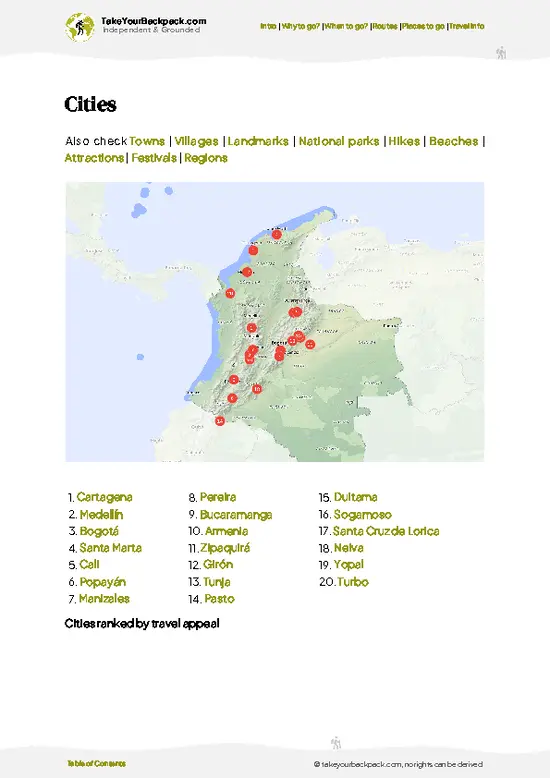
🏆 Top pickcity ranked #4
By Johan Kruseman 🇳🇱 | Updated September 4, 2026

Most people think Santa Marta is just a sweaty jumping-off point for Tayrona and the Lost City, but that sells it short and also slightly mislabels it: it’s more of a scruffy, useful hub than a “beach paradise.” Sitting on Colombia’s Caribbean coast east of Barranquilla and west of La Guajira, it’s where buses, boats, and treks all intersect. For backpackers, that’s the real value: cheap hostels, easy colectivos to Minca and Palomino, and a constant churn of travelers to link up with over supermarket rum. The historic center has a few handsome colonial buildings and Parque de los Novios for people-watching, but the city beaches are mediocre and the heat can be brutal. It feels rougher and more local than polished Cartagena, yet I’ve always felt reasonably safe with basic street sense—think “functional base camp” rather than destination romance.

Discover everything you want to know in the 📖 Colombia Travel Guide.
Loading the map 🌍
CLICK TO FILTER
cities
towns
villages
landmarks
national parks
hikes
beaches
attractions
festivals
regions
SHOW COUNTRY’S BESTSHOW ALL

✨ Why go?
Ranked #4 city in Colombia
Why visitors keep coming back

Santa Marta is a backpacker’s hub that strikes a balance between affordability and adventure. It’s a city that serves as a basecamp for day trips to places like Tayrona National Park and the Sierra Nevada mountains, making it a strategic stop on your Colombian journey. The hostel scene is vibrant, with options that cater to every budget, often featuring communal spaces that foster connections with fellow travelers.

Food is another highlight; you can feast on local dishes without breaking the bank. The walkability of Santa Marta means you can easily explore its charming streets, vibrant markets, and beachfront promenades. As the sun sets, the nightlife kicks in, offering everything from laid-back beach bars to lively clubs, ensuring your evenings are just as engaging as your days.

Plus, … read more 👉
Santa Marta is a backpacker’s hub that strikes a balance between affordability and adventure. It’s a city that serves as a basecamp for day trips to places like Tayrona National Park and the Sierra Nevada mountains, making it a strategic stop on your Colombian journey. The hostel scene is vibrant, with options that cater to every budget, often featuring communal spaces that foster connections with fellow travelers.

Food is another highlight; you can feast on local dishes without breaking the bank. The walkability of Santa Marta means you can easily explore its charming streets, vibrant markets, and beachfront promenades. As the sun sets, the nightlife kicks in, offering everything from laid-back beach bars to lively clubs, ensuring your evenings are just as engaging as your days.

Plus, onward travel is a breeze, whether you’re heading to Cartagena or deeper into Colombia’s interior. If you’re looking for a place that combines convenience with a dash of local flavor, Santa Marta is more than just a stop—it’s a smart choice for any backpacking route.
Want to include Santa Marta in your Colombia route?
Create a personalized Colombia itinerary that includes Santa Marta and the places that fit your trip — based on your travel style, budget, and available time. Get your route in seconds.

Generate my trip

💡 HighlightsThe experiences that define the visit

Quinta de San Pedro Alejandrino
This is where Simón Bolívar, the liberator of South America, spent his final days. The estate is a living museum—lush gardens, colonial architecture, and a palpable sense of history. You’re not just walking through rooms; you’re tracing the last steps of a continent-shaping figure. Go early in the morning to beat the heat and the school groups. Entry is around 25,000 COP (about $6), and you’ll want at least 90 minutes to do it justice.

Parque de Los Novios
Santa Marta’s social heart. By day, it’s a leafy plaza with colonial facades and shaded benches. By night, it morphs into a buzzing open-air lounge, with locals and travelers sharing beers and street food. The people-watching is world-class, and the energy is contagious. Free to enter, but expect to spend 10, … read more 👉
Quinta de San Pedro Alejandrino
This is where Simón Bolívar, the liberator of South America, spent his final days. The estate is a living museum—lush gardens, colonial architecture, and a palpable sense of history. You’re not just walking through rooms; you’re tracing the last steps of a continent-shaping figure. Go early in the morning to beat the heat and the school groups. Entry is around 25,000 COP (about $6), and you’ll want at least 90 minutes to do it justice.

Parque de Los Novios
Santa Marta’s social heart. By day, it’s a leafy plaza with colonial facades and shaded benches. By night, it morphs into a buzzing open-air lounge, with locals and travelers sharing beers and street food. The people-watching is world-class, and the energy is contagious. Free to enter, but expect to spend 10,000-40,000 COP ($2-$10) on snacks or drinks. Best after sunset, when the heat fades and the city’s pulse kicks in. Stay as long as your curiosity (or your appetite) lasts.

Catedral Basílica de Santa Marta
The oldest cathedral in Colombia, and it looks the part—weathered white stone, thick walls, and a cool, echoing interior. Bolívar’s remains were once housed here, and the sense of age is almost cinematic. Step inside for a moment of calm and a dose of history. Free entry. Ten minutes is enough for a look, but linger if you want to soak up the atmosphere or catch a service. Early morning or late afternoon is best for quiet reflection.

Museo del Oro Tairona - Casa de la Aduana
Not just another gold museum. This one’s compact but dense, with pre-Columbian artifacts and sharp storytelling about the region’s Indigenous cultures. The building itself is a colonial relic, right on the main square. Entry is free. You can see the highlights in 30-45 minutes, but if you’re a history buff, double that. Go midday to escape the sun.

Taganga Viewpoint (Mirador de Taganga)
Technically still within city limits, this hillside perch gives you a panoramic sweep of the bay, the Caribbean, and the fishing village of Taganga. The climb is short but sweaty—bring water and a camera. Sunset is the jackpot moment, when the sky goes full technicolor. Free, but a mototaxi up costs about 10,000 COP ($2.50). Allow 45-60 minutes, including gawking time.

Mercado Público de Santa Marta
This is the city’s sensory overload zone. Piles of tropical fruit, fishmongers shouting prices, and the aroma of frying arepas. It’s gritty, chaotic, and absolutely real. Go for breakfast—try a fresh juice and a local tamal for under 10,000 COP ($2.50). Give yourself 30-40 minutes, but keep your valuables close and your wits about you.

Santa Marta is your launchpad for bigger adventures: Tayrona National Park’s wild beaches, the Lost City trek, and Minca’s cloud forests are all within striking distance. Tayrona’s blend of jungle and coastline is my personal favorite—worth every sweaty step.
Spotted a mistake or missing something? Contact us.

Things to do in Santa Marta

Ratings based on Tripadvisor reviews. When you book through this link, you support our work at no extra cost to you.

🏘️ NeighborhoodsNeighborhood guide to Santa Marta

Santa Marta is a vibrant hub for backpackers, offering a mix of beach life, culture, and adventure. Here’s how the neighborhoods stack up:

El Rodadero: This area is all about the beach vibe. It’s lively, with plenty of restaurants and bars, making it perfect for social butterflies. Prices can be a bit higher here, especially during peak season. Walkability is decent, but you’ll want to use local transport for longer trips. Great for short stays if you’re looking to soak up sun and nightlife.

Centro Histórico: The heart of Santa Marta, this neighborhood is rich in history and culture. You’ll find charming colonial architecture and local markets. It’s walkable, with affordable accommodations and eateries. The nightlife is more laid-back, perfect for those who prefer a quieter evening. Ideal … read more 👉
Santa Marta is a vibrant hub for backpackers, offering a mix of beach life, culture, and adventure. Here’s how the neighborhoods stack up:

El Rodadero: This area is all about the beach vibe. It’s lively, with plenty of restaurants and bars, making it perfect for social butterflies. Prices can be a bit higher here, especially during peak season. Walkability is decent, but you’ll want to use local transport for longer trips. Great for short stays if you’re looking to soak up sun and nightlife.

Centro Histórico: The heart of Santa Marta, this neighborhood is rich in history and culture. You’ll find charming colonial architecture and local markets. It’s walkable, with affordable accommodations and eateries. The nightlife is more laid-back, perfect for those who prefer a quieter evening. Ideal for longer stays if you want to immerse yourself in local life.

Taganga: A fishing village just a short ride from Santa Marta, Taganga is a backpacker favorite. It’s known for its diving spots and relaxed atmosphere. Prices are generally lower, and the vibe is chill. Walkability is excellent, with everything close by. This area is great for both short and longer stays, especially if you’re into water activities.

Parque de los Novios: This area is a social hotspot, surrounded by bars and restaurants. It’s lively at night, making it perfect for those who want to experience local nightlife. Costs are moderate, and it’s easy to walk around. Best for short stays if you want to be in the thick of things without venturing too far from the action.

⌛️ 1 dayHow to make the most of one day

Santa Marta, Colombia, is a vibrant coastal city where the Sierra Nevada mountains meet the Caribbean Sea. It’s a place rich in history, with colonial architecture and a laid-back vibe that invites exploration. You can feel the pulse of the city in its bustling markets and along the picturesque waterfront.

Start your day in the historic center, where you can sip a strong cup of Colombian coffee at a local café. The Plaza de San Francisco is a great spot to soak in the morning sun while admiring the colonial buildings. After your caffeine fix, wander over to the Catedral Basílica Metropolitana, a stunning structure that’s a testament to the city’s past.

As the sun climbs higher, make your way to the Taganga neighborhood, a short ride away. This fishing village offers a more relaxed atmosphere. … read more 👉
Santa Marta, Colombia, is a vibrant coastal city where the Sierra Nevada mountains meet the Caribbean Sea. It’s a place rich in history, with colonial architecture and a laid-back vibe that invites exploration. You can feel the pulse of the city in its bustling markets and along the picturesque waterfront.

Start your day in the historic center, where you can sip a strong cup of Colombian coffee at a local café. The Plaza de San Francisco is a great spot to soak in the morning sun while admiring the colonial buildings. After your caffeine fix, wander over to the Catedral Basílica Metropolitana, a stunning structure that’s a testament to the city’s past.

As the sun climbs higher, make your way to the Taganga neighborhood, a short ride away. This fishing village offers a more relaxed atmosphere. Here, you can grab a fresh seafood lunch at one of the local eateries. Try the ceviche; it’s a local favorite. After lunch, take a stroll along the beach or, if you’re feeling adventurous, rent a kayak to explore the coastline.

In the afternoon, head back to Santa Marta and visit the Quinta de San Pedro Alejandrino, the former estate of Simón Bolívar. It’s not always on the tourist radar, but the gardens and museum provide a peaceful retreat and a glimpse into Colombia’s revolutionary history.

As evening approaches, return to the waterfront for dinner. The area around the marina is lively, with plenty of restaurants offering local dishes. Enjoy a plate of arepas while watching the sunset over the sea.

Santa Marta is a city that balances history, culture, and natural beauty. By focusing on these key areas, you’ll experience the essence of this coastal gem without feeling rushed.
Turn your Santa Marta visit into an Colombia adventure
Build a complete Colombia route with Santa Marta, hidden gems, must-see destinations, and realistic travel times included.

Generate my trip

🌤️ When to go?Weather, crowds, and seasonal trade-offs


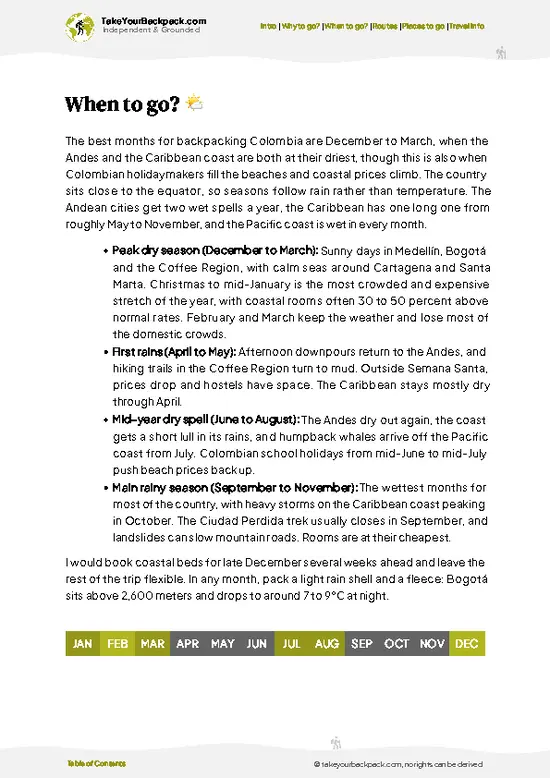
  • Topic: Weather – Santa Marta’s dry season runs from December to April, offering mostly sunny skies and minimal rain. The wet season, May to November, brings heavy afternoon showers that can disrupt hiking and beach plans.

  • Topic: Temperature – Expect daytime highs around 30-32°C (86-90°F) year-round, with nights cooling to about 24°C (75°F). The dry season feels more comfortable for outdoor activities, while the wet season’s humidity can make the heat feel more oppressive.

  • Topic: Daylight Hours – Near the equator, daylight is steady year-round, roughly 12 hours daily. This consistency means no drastic shifts in your daily schedule, letting you plan hikes and beach time without worrying about early sunsets.

  • Topic: Crowds – Peak tourist influx aligns with the dry season, especially December
read more 👉

  • Topic: Weather – Santa Marta’s dry season runs from December to April, offering mostly sunny skies and minimal rain. The wet season, May to November, brings heavy afternoon showers that can disrupt hiking and beach plans.

  • Topic: Temperature – Expect daytime highs around 30-32°C (86-90°F) year-round, with nights cooling to about 24°C (75°F). The dry season feels more comfortable for outdoor activities, while the wet season’s humidity can make the heat feel more oppressive.

  • Topic: Daylight Hours – Near the equator, daylight is steady year-round, roughly 12 hours daily. This consistency means no drastic shifts in your daily schedule, letting you plan hikes and beach time without worrying about early sunsets.

  • Topic: Crowds – Peak tourist influx aligns with the dry season, especially December through February. Expect busier hostels and higher prices. The wet season sees fewer travelers, offering a quieter, more local experience but with weather trade-offs.

  • Topic: Seasonal Activities – Dry months are prime for trekking the Lost City or snorkeling in Tayrona Park. Wet months limit trail access and water clarity but bring lush landscapes and fewer tourists.

  • Topic: Price Fluctuations – Accommodation and tours spike in the dry season, particularly around holidays. Off-season offers better deals but factor in potential weather disruptions that might affect your itinerary.


Pro-tip: Aim for late November or early December—just before the dry season crowds hit—to snag lower prices while still enjoying mostly dry weather and full daylight.


source: climatestotravel.comJANJanuary: excellent for travelingFEBFebruary: excellent for travelingMARMarch: excellent for travelingAPRApril: highly recommended for travelingMAYMay: fair for travelingJUNJune: fair for travelingJULJuly: fair for travelingAUGAugust: fair for travelingSEPSeptember: fair for travelingOCTOctober: fair for travelingNOVNovember: good for travelingDECDecember: highly recommended for traveling
when-to-go

✈️ The backpacker research shortcutColombia Travel Guide

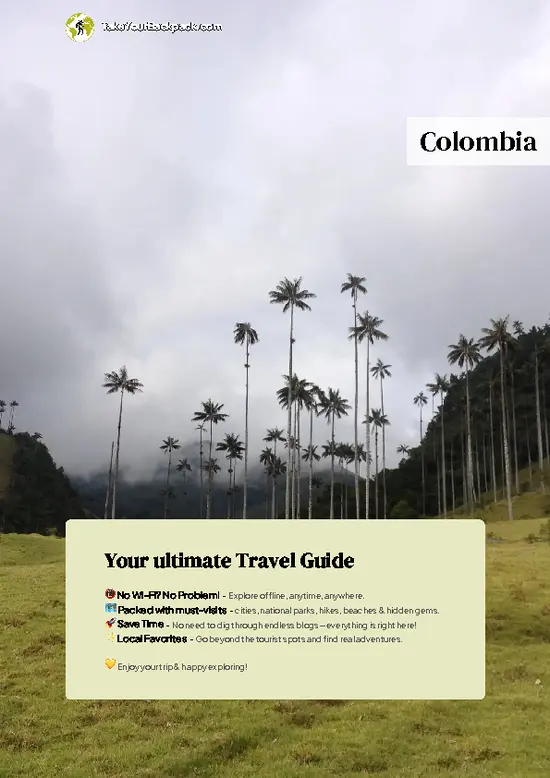
An offline-friendly backpacking guide with optimized travel routes, ranked highlights, transport advice, and the best areas to stay.
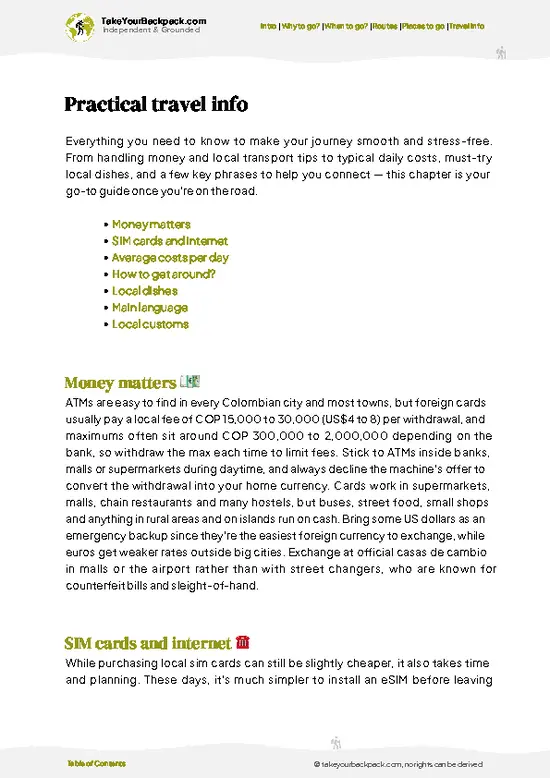
example page 0 from our offline Travel Guide for Colombia
example page 1 from our offline Travel Guide for Colombia
example page 2 from our offline Travel Guide for Colombia
example page 3 from our offline Travel Guide for Colombia
example page 4 from our offline Travel Guide for Colombia
example page 5 from our offline Travel Guide for Colombia
example page 6 from our offline Travel Guide for Colombia
example page 7 from our offline Travel Guide for Colombia
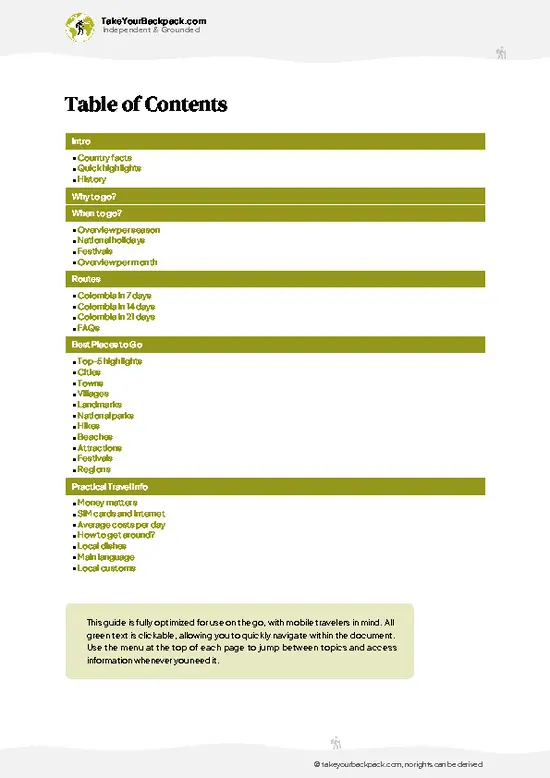
The digital guide (464 pages) contains:
122 highlights, ranked by travel appeal
Optimized 7, 14 & 21-day travel routes
Cities, national parks, landmarks, beaches
How to get around
Offline-friendly for travel without Wi-Fi
👉 Click to see all 30+ guide features

📅 Plan smarter in minutes, not weeks
Month by month travel advice
Festivals & national holidays
Budget expectations

🗺️ Go to the right places, skip the overrated ones
Honest pros & cons of destinations
Top hikes, parks & viewpoints
Lesser-known places most travelers miss
Clear “worth it vs skip it” guidance

🛏️ Travel smoothly without rookie mistakes
Best areas to stay
Transport systems explained simply
Common scams & safety advice
SIM cards, money & practical tips

🌍 Understand the country, not just visit it
Culture & traditions
52 Essential phrases & customs
Festivals worth planning around
Traveler-friendly historical context
Insights that make places more meaningful

📱 Built for real travel conditions
Fully downloadable PDF
Works completely offline
Optimized for phone use
Useful in remote areas & buses
Everything in one place
Save weeks of stressful planning
Get instant access to your full guide. 30‑day money-back guarantee.
+ Add another guide for just US$7.80

By proceeding you agree to our terms.
Sent to your inbox immediately after payment • 100% Secure Checkout
Best Backpacking Travel Advisor 2025 tourism awardBest Backpacking
Travel Advisor
2025
What others say about Take Your Backpack Guides:
⭐⭐⭐⭐⭐
Fantastic, amazing amount of information!
⭐⭐⭐⭐⭐
My goodness this is amazing, it's what I've been looking for hats off too you!
⭐⭐⭐⭐⭐
I think this is absolutely BRILLIANT
⭐⭐⭐⭐
Very complete and informative. It's still missing places, but I gotta to commend you
⭐⭐⭐⭐⭐
This is truly amazing, thank you, can't wait to explore it with my kids!
⭐⭐⭐⭐⭐
Awesome resource, thank you!
⭐⭐⭐⭐⭐
This is amazing! Can't wait to explore the ones I haven't seen
⭐⭐⭐⭐
I love this! Well done, great idea.
⭐⭐⭐⭐⭐
Thanks for taking the time to make this gem!
⭐⭐⭐⭐⭐
This might be the best website I've ever seen.
⭐⭐⭐⭐⭐
Congratulations, and thank you so much for your work; it's incredibly valuable.
⭐⭐⭐⭐
In all seriousness I think you did a great job pointing out the important spots
⭐⭐⭐⭐⭐
10/10 very good
⭐⭐⭐⭐⭐
As someone who's only just starting to visit regularly this is awesome, thank you.
⭐⭐⭐⭐
Thank you very much! I'm going to visit my dad, it's going to be very useful!
⭐⭐⭐⭐⭐
This is really cool! We'll be travelling for the first time and this definitely come in handy.
⭐⭐⭐⭐⭐
You are now our minister of culture, congratulations 👨‍💼
⭐⭐⭐⭐⭐
Just wanted to tell you that this is a pearl! Going to follow your recommendations.
⭐⭐⭐⭐⭐
This is so cool. I'll definitely be using the resource for my travels soon.
⭐⭐⭐⭐⭐
This is very impressive! Good work.
⭐⭐⭐⭐⭐
This is an amazing and informative site. Very well done!

🛏️ Where to stay?Choosing the right base

Santa Marta’s backpacker scene centers around two main neighborhoods: El Rodadero and the historic center, often called Centro. Each offers a distinct trade-off between comfort, cost, and social buzz, so your choice hinges on what you want to prioritize.

El Rodadero is the go-to for budget travelers craving beach access without the hassle of long commutes. It’s safe, lively, and packed with hostels that cater to solo backpackers looking to meet others. The vibe here is relaxed but social, with plenty of bars and eateries where you can swap stories over cold drinks. The trade-off? It’s a bit touristy, … read more 👉
Santa Marta’s backpacker scene centers around two main neighborhoods: El Rodadero and the historic center, often called Centro. Each offers a distinct trade-off between comfort, cost, and social buzz, so your choice hinges on what you want to prioritize.

El Rodadero is the go-to for budget travelers craving beach access without the hassle of long commutes. It’s safe, lively, and packed with hostels that cater to solo backpackers looking to meet others. The vibe here is relaxed but social, with plenty of bars and eateries where you can swap stories over cold drinks. The trade-off? It’s a bit touristy, so prices for food and activities can be higher than in other parts of the city. But you gain convenience and a built-in social scene, which is a huge win if you’re short on time or want to maximize downtime.

Centro, on the other hand, offers a more authentic urban experience with a lower price tag. Hostels here are nestled among colonial streets and local markets, giving you a pulse on everyday life. It’s safe during the day and early evening, but you’ll want to be a bit more cautious after dark. The social scene is less concentrated than El Rodadero, so you’ll need to seek out bars or hostel events to connect. The payoff is a deeper cultural immersion and more bang for your buck, especially if you’re comfortable navigating a busier, less polished environment.

In short, El Rodadero trades a bit of authenticity for ease and social energy, while Centro demands more street smarts but rewards with local flavor and savings. Both have solid hostel options, so your choice boils down to whether you want your trip to lean more toward beachside chill or city exploration.

🚌 Getting aroundMoving around without the hassle

Santa Marta moves at its own rhythm—part laid-back Caribbean charm, part bustling urban pulse. It’s not a city where you’ll find strict timetables etched in stone; instead, it’s a dance between informal hustle and the occasional, surprisingly punctual bus. The flow here is a blend of intuition and patience, where knowing when to jump on a colectivo or when to hoof it can save you time and cash. Understanding this balance is your secret weapon for navigating Santa Marta efficiently without sacrificing comfort or blowing your budget.


  • Walking: The heart of Santa Marta’s historic center is compact and walkable. Strolling costs nothing and lets you soak in the city’s colors, sounds, and smells at your own pace. It’s the most comfortable way to explore the old town’s plazas and markets, but
read more 👉
Santa Marta moves at its own rhythm—part laid-back Caribbean charm, part bustling urban pulse. It’s not a city where you’ll find strict timetables etched in stone; instead, it’s a dance between informal hustle and the occasional, surprisingly punctual bus. The flow here is a blend of intuition and patience, where knowing when to jump on a colectivo or when to hoof it can save you time and cash. Understanding this balance is your secret weapon for navigating Santa Marta efficiently without sacrificing comfort or blowing your budget.


  • Walking: The heart of Santa Marta’s historic center is compact and walkable. Strolling costs nothing and lets you soak in the city’s colors, sounds, and smells at your own pace. It’s the most comfortable way to explore the old town’s plazas and markets, but it’s not practical for longer distances or the beach areas.


  • Colectivos: These shared minibuses are the budget traveler’s best friend. They run frequently from early morning (around 5:30 AM) until about 9 PM, costing roughly 2,000 COP ($0.50). They’re fast compared to walking and cover routes to the beach and nearby neighborhoods, but expect cramped seating and a stop-anywhere style that can feel chaotic if you’re not used to it.


  • City Buses: Larger and slightly more comfortable than colectivos, city buses operate on fixed routes with fares around 2,200 COP ($0.55). They start early, around 5 AM, and run until 10 PM. They’re slower due to frequent stops but offer a smoother ride and more space, making them a solid middle ground between speed and comfort.


  • Taxi: Taxis are plentiful and relatively affordable by international standards, with short rides costing around 8,000–10,000 COP ($2–$2.50). They offer door-to-door comfort and flexibility, especially late at night when colectivos and buses slow down. The trade-off is money—taxis are the quickest and most comfortable but can eat into a tight budget fast.


  • Motorcycle Taxis (Mototaxis): These are the wild card—cheap (about 2,000–3,000 COP), quick, and perfect for squeezing through traffic jams. They’re not officially regulated, so safety varies. Use them only if you’re comfortable with a bit of risk and want to save time on short hops.


Mastering Santa Marta’s transit is about balancing your priorities: save money by hopping on colectivos and walking, or spend a bit more for comfort and speed with taxis. The city’s flow rewards those who read its cues—jump on the right ride at the right time, and you’ll turn logistics into a winning game rather than a frustrating puzzle.

👛 Costs (as of 4 September 2026)Travel costs and budget guide for Santa Marta

Santa Marta, Colombia, offers a backpacking experience where your daily budget dances between time, money, and comfort, each choice shaping your adventure’s flavor.
  • Dorm Accommodation (High Season): Expect to pay around $10 to $15 per night. This is when the city buzzes with tourists, and prices edge up. Hostels here often include basic amenities and a social vibe, perfect for meeting fellow travelers.
  • Dorm Accommodation (Off-Season): Prices drop to about $6 to $10 per night. The quieter months mean better deals and more space, though some hostels might scale back services.
  • Meals: Street food and local eateries keep costs low, roughly $3 to $7 per meal. You can savor fresh seafood or traditional Colombian dishes without breaking the bank. Cooking your own meals in hostel kitchens can cut
read more 👉
Santa Marta, Colombia, offers a backpacking experience where your daily budget dances between time, money, and comfort, each choice shaping your adventure’s flavor.
  • Dorm Accommodation (High Season): Expect to pay around $10 to $15 per night. This is when the city buzzes with tourists, and prices edge up. Hostels here often include basic amenities and a social vibe, perfect for meeting fellow travelers.
  • Dorm Accommodation (Off-Season): Prices drop to about $6 to $10 per night. The quieter months mean better deals and more space, though some hostels might scale back services.
  • Meals: Street food and local eateries keep costs low, roughly $3 to $7 per meal. You can savor fresh seafood or traditional Colombian dishes without breaking the bank. Cooking your own meals in hostel kitchens can cut this further.
  • Local Transport: Short rides on buses or shared taxis typically cost between $0.50 and $1.50. It’s a cheap way to hop around neighborhoods but can be slow and crowded.
  • City Transport Pass: Santa Marta doesn’t have a unified city transport pass like bigger cities. Budget around $2 to $4 daily if you plan multiple trips using buses or taxis.
  • Basic Activities/Entry Fees: Entrance to museums or parks usually ranges from $3 to $10. Some natural attractions or guided tours push higher, but many beaches and public spaces are free.
  • Miscellaneous Expenses: Think snacks, water, occasional coffee, or small souvenirs—budget $2 to $5 daily. It’s the buffer for those little extras that add up without warning.

Altogether, a realistic daily budget for backpacking in Santa Marta falls between $20 and $40. This range balances modest comfort with authentic local experiences, letting you decide where to save and where to splurge. The city’s charm lies in its simplicity—spend wisely, and you’ll find plenty of value without feeling pinched.


source: colombia.travel
⚠️ Prices can change and everyone travels differently, so take this as a rough guide. Hope it helps you plan your adventure!

🚌 Day tripsShort trips worth adding

Santa Marta is a prime launchpad for unforgettable day trips that balance time, money, and comfort. Here’s how to maximize your experience without breaking the bank.

Tayrona National Park
Just a 45-minute ride from Santa Marta, Tayrona is a must-visit for its stunning beaches and lush jungles. The entrance fee is around $20, but the real cost is your time—plan for a full day to explore. Hike through the park to reach iconic spots like Cabo San Juan, where you can swim or just soak in the scenery. A common mistake is underestimating the hike; wear good shoes and bring plenty of water. The best time to visit is during the dry season (December to March) when the trails are more accessible.
👉 Explore Tayrona National Park

Minca
A quick 30-minute drive from Santa Marta, Minca offers a refreshing … read more 👉
Santa Marta is a prime launchpad for unforgettable day trips that balance time, money, and comfort. Here’s how to maximize your experience without breaking the bank.

Tayrona National Park
Just a 45-minute ride from Santa Marta, Tayrona is a must-visit for its stunning beaches and lush jungles. The entrance fee is around $20, but the real cost is your time—plan for a full day to explore. Hike through the park to reach iconic spots like Cabo San Juan, where you can swim or just soak in the scenery. A common mistake is underestimating the hike; wear good shoes and bring plenty of water. The best time to visit is during the dry season (December to March) when the trails are more accessible.
👉 Explore Tayrona National Park

Minca
A quick 30-minute drive from Santa Marta, Minca offers a refreshing escape into the Sierra Nevada mountains. Known for its coffee farms and waterfalls, you can sip freshly brewed coffee while enjoying panoramic views. Budget around $10 for transport and a few dollars for coffee tastings. Many first-timers miss the chance to hike to Pozo Azul, a beautiful swimming hole. Visit during the dry season for the best experience, but be prepared for cooler mountain air.
👉 Explore Minca

Palomino
About an hour away, Palomino is a laid-back beach town perfect for relaxation or adventure. The bus ride costs around $5, and you can spend the day lounging on the beach or tubing down the river. The real charm lies in its chill vibe and local eateries. A common pitfall is sticking to the beach; venture inland for a more authentic experience. The best time to visit is during the dry season when the weather is ideal for both beach and river activities.
👉 Explore Palomino

Taganga
Just 15 minutes from Santa Marta, Taganga is a small fishing village that’s become a backpacker hotspot. It’s famous for diving and snorkeling, with costs around $30 for a day trip. The village’s charm lies in its local seafood and vibrant atmosphere. First-timers often overlook the sunset views from the hilltop; make the trek for a stunning end to your day. Visit during the dry season for the best diving conditions.


Cabo de la Vela
Though a bit further at about 3 hours, Cabo de la Vela is worth the trip for its unique desert-meets-ocean landscape. Expect to spend around $25 for transport and meals. The area is known for its windsurfing and stunning sunsets. Many backpackers miss the chance to explore the nearby dunes; don’t skip this for a full experience. The best time to visit is from December to March when the winds are favorable.
👉 Explore Cabo de la Vela
Want to know what more Colombia offers?
The Colombia Travel Guide describes 122 highlights, from cities to national parks, from beaches to hikes

Get the Travel Guide -

🍲 FoodWhat to Eat & Drink

In Santa Marta, food is a vibrant tapestry of flavors that tells the story of the coast. Start with arepas, those cornmeal pockets filled with cheese or meat, perfect for a quick bite. Don’t miss ceviche, fresh fish marinated in lime, often served with crispy plantain chips. The coastal influence means seafood is king here, and you’ll find it grilled or fried at local stalls.

For a true taste of the region, seek out the street vendors. They’re the heartbeat of the city, serving up empanadas stuffed with everything from beef to chicken, all crispy and golden. Markets buzz with energy, where you can grab a bowl of sancocho, a hearty stew that warms the soul.

When it comes to drinks, try aguardiente, the local anise-flavored spirit. It’s often shared among friends, so don’t be shy about joining … read more 👉
In Santa Marta, food is a vibrant tapestry of flavors that tells the story of the coast. Start with arepas, those cornmeal pockets filled with cheese or meat, perfect for a quick bite. Don’t miss ceviche, fresh fish marinated in lime, often served with crispy plantain chips. The coastal influence means seafood is king here, and you’ll find it grilled or fried at local stalls.

For a true taste of the region, seek out the street vendors. They’re the heartbeat of the city, serving up empanadas stuffed with everything from beef to chicken, all crispy and golden. Markets buzz with energy, where you can grab a bowl of sancocho, a hearty stew that warms the soul.

When it comes to drinks, try aguardiente, the local anise-flavored spirit. It’s often shared among friends, so don’t be shy about joining in. The drinking culture here is communal; you’ll find locals toasting at casual bars or even on the beach at sunset.

Etiquette is relaxed; just dive in and enjoy. Share a table, swap stories, and savor the moment. In Santa Marta, every bite and sip is an invitation to connect.

🛡️ SafetyStaying Safe: What Travelers Should Know

Santa Marta is generally safe for backpackers, but a few situational awareness tips can enhance your experience. Stick to well-trodden areas like the historic center and the beach promenade, especially after dark. Solo travelers should avoid quiet streets at night; instead, opt for lively spots where people gather.

Common scams are minimal, but be cautious of overly friendly locals offering unsolicited help. They might expect a tip or lead you to a shop where prices are inflated. Always negotiate taxi fares upfront or use ride-hailing apps to avoid surprises.

Annoyances can include persistent street vendors. A polite but firm “no, gracias” usually does the trick. Carry your belongings close and stay aware of your surroundings, especially in crowded areas. With these strategies, you’ll … read more 👉
Santa Marta is generally safe for backpackers, but a few situational awareness tips can enhance your experience. Stick to well-trodden areas like the historic center and the beach promenade, especially after dark. Solo travelers should avoid quiet streets at night; instead, opt for lively spots where people gather.

Common scams are minimal, but be cautious of overly friendly locals offering unsolicited help. They might expect a tip or lead you to a shop where prices are inflated. Always negotiate taxi fares upfront or use ride-hailing apps to avoid surprises.

Annoyances can include persistent street vendors. A polite but firm “no, gracias” usually does the trick. Carry your belongings close and stay aware of your surroundings, especially in crowded areas. With these strategies, you’ll navigate Santa Marta confidently, enjoying its vibrant culture without unnecessary stress.

FAQFrequently asked questions about Santa Marta

3 to 4 days are sufficient to explore Santa Marta and nearby attractions like Tayrona National Park and the Lost City trek. This allows time for beach relaxation and cultural visits without rushing.
Yes, Santa Marta is generally safe for solo backpackers if standard precautions are taken, such as avoiding isolated areas at night and keeping valuables secure. Popular tourist areas like the historic center and Taganga are commonly frequented by solo travelers.
Santa Marta is known for being the gateway to Tayrona National Park, its colonial historic center, and as the starting point for the challenging Lost City trek. It also has beautiful beaches and is one of the oldest cities in South America, founded in 1525.
⚠️ Things can change over time, so always validate details locally before you go.

Other Colombian cities near Santa Marta

Explore more nearby:

  • Cartagena—walled city, Caribbean coast, colonial architecture| 168 km away
  • Lorica—Sinú River, Moorish facades, riverside market| 283 km away
  • Turbo—Caribbean port, banana trade, humid lowlands| 445 km away

💡 Not sure where to go next?
Create a personalized itinerary for Colombia including Santa Marta and the places that fit your trip.

Generate my itinerary

👉 Discover all cities

Or checkout all Colombia has to offer (think cities, towns, villages, national parks, hikes, beaches, festivals)
Country photo of Colombia

We 💚 feedbackFinal thoughts on visiting Santa Marta

Santa Marta is a vibrant launchpad for exploring Colombia’s Caribbean coast. The beaches are inviting, and the nearby Sierra Nevada mountains offer stunning hikes. But be prepared: the heat can be relentless, and the city’s infrastructure isn’t always up to par. You might find yourself sweating through a few bus rides or dodging potholes. Embrace the chaos, and you’ll uncover a raw, authentic experience that’s worth every drop of sweat.

✈️ When did I visit Colombia?
Did a good 3-week trip around Colombia in August 2014.

✍️ Help improve this page!
The information on this page is based on my own backpacking experience in Colombia, supplemented with up-to-date research and feedback from other travelers. Travel details can change, so if you notice anything outdated or incomplete, feel free to let me know.


🙋‍♂️ Give feedback

👋 Meet the founderWho’s Behind Take Your Backpack?

Johan, backpacker and founder of TakeYourBackpackHi, I’m Johan (Netherlands 🇳🇱), the creator of TakeYourBackpack. Over the past decade, I’ve backpacked through 80+ countries across six continents, gaining extensive experience with independent travel, long-term trips, and overland routes.

This site is built on a combination of firsthand travel experience and carefully curated insights from other backpackers. Many guides are based on places I’ve personally visited, while others bring together tips, observations, and practical advice shared by trusted travelers I’ve met along the way.

The goal is to provide realistic, experience-driven guidance — not generic itineraries — so you can explore destinations with better context, clearer expectations, and more confidence.

Get full Colombia guide •
Instant download • 122 highlights • Full Offline guide