v2.webp)
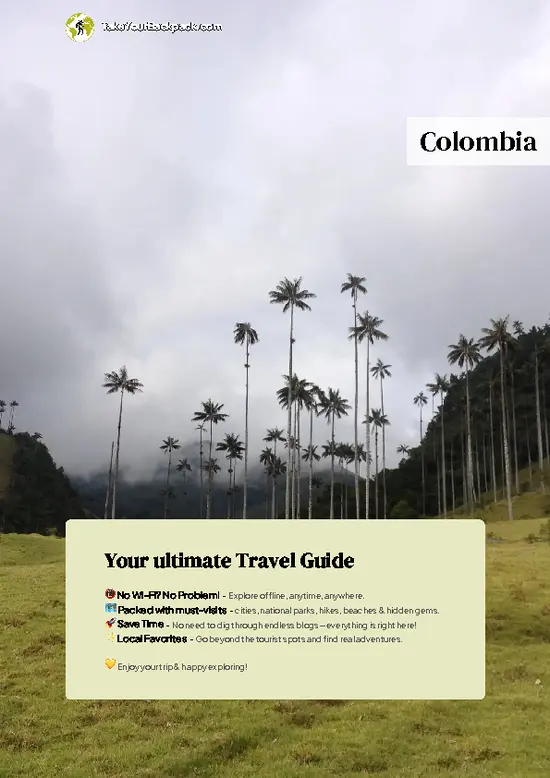
- Calle Real (Calle de las Artesanías): The painted colonial street is what Ráquira is known for, with whitewashed houses trimmed in saturated blues, reds and yellows, and shops spilling pottery, hammocks, wool ruanas and clay figures onto the cobbles. Go on a weekday morning for fewer tour groups, or Sunday for the most stalls open. Free to stroll, 1 to 2 hours, with small pieces from about US$1.
- Plaza Central and the Monumento al Alfarero: The main square holds the statue of a potter at his wheel, a fair tribute to the craft that built the town. Cafés line the edges, so it works for a slow coffee (about US$1) and people-watching. Late afternoon is calm. Free, 30 to 45 minutes.
- Pottery workshops in the village: Several family workshops let you watch clay being shaped and fired in kilns, and some
- Calle Real (Calle de las Artesanías): The painted colonial street is what Ráquira is known for, with whitewashed houses trimmed in saturated blues, reds and yellows, and shops spilling pottery, hammocks, wool ruanas and clay figures onto the cobbles. Go on a weekday morning for fewer tour groups, or Sunday for the most stalls open. Free to stroll, 1 to 2 hours, with small pieces from about US$1.
- Plaza Central and the Monumento al Alfarero: The main square holds the statue of a potter at his wheel, a fair tribute to the craft that built the town. Cafés line the edges, so it works for a slow coffee (about US$1) and people-watching. Late afternoon is calm. Free, 30 to 45 minutes.
- Pottery workshops in the village: Several family workshops let you watch clay being shaped and fired in kilns, and some offer a short wheel session. Weekday mornings are when the potters are working. Watching is usually free, a hands-on class runs roughly US$5 to 12, and plan 1 to 2 hours.
- Iglesia de Nuestra Señora de la Candelaria: The modest colonial-style church on the square is a quiet counterpoint to the colored shopfronts, worth a look at its simple interior. Morning or before evening Mass is best. Free, 15 to 20 minutes.
- Casa Museo and Ecoparque Cerámico Candelaria area: A short walk or moto-taxi ride out of the center, the grounds display large ceramic pieces and sculptures made by local artisans, with open green space for a breather from the shops. Go in the morning when it is cooler. Entry is typically around US$2 to 4, 1 hour.
Spotted a mistake or missing something? Contact us.

Bogota City Private Tour - Monserrate, Museo del Oro, Candelaria

Ancestral Expedition through the Cave of the Factory

Villa de Leyva Food Tour at Sunset
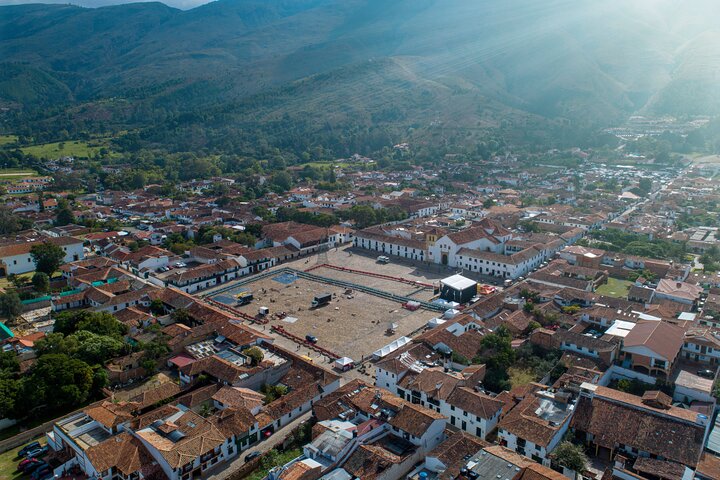
From Villa de Leyva 5 Hour City Tour

Discover Villa de Leyva with Museums & Coffee Tasting

Ráquira Colors & Culture: Day Trip with Lunch & Transport

From Villa de Leyva Vineyard Tour

Bogota Luxury City Tour: Premium Vehicle, Tour Guide & Tickets

From Villa de Leyva La Periquera Hiking Tour


 Best Backpacking
.jpg) Hi, I’m Johan (Netherlands 🇳🇱), the creator of TakeYourBackpack. Over the past 3 decades, I’ve backpacked through 90+ countries across six continents, gaining extensive experience with independent travel, long-term trips, and overland routes.
Hi, I’m Johan (Netherlands 🇳🇱), the creator of TakeYourBackpack. Over the past 3 decades, I’ve backpacked through 90+ countries across six continents, gaining extensive experience with independent travel, long-term trips, and overland routes.