×

Costa Rica🇨🇷 | landmarksBijagual Waterfall180-meter plunge, mossy basalt wall, muddy forest trail, Turrubares hills | things to do and best time to go

Explore Liberia CityExplore Cerro de la Muerte

Backpacking in Bijagual Waterfall
👌 Worth visitingunique site ranked #3
By Johan Kruseman 🇳🇱 | Updated October 22, 2026

Bijagual Waterfall drops roughly 180 meters (about 600 feet) over a cliff, which makes it one of the tallest falls in Costa Rica, and the base is about an hour’s walk each way from the parking area. It lies in the Central Pacific hills of Costa Rica, inland from Jacó and reached by a steep, winding road above Carara National Park. Crowds are thin compared with the big-name falls, and the entry fee stays modest, though the road in is rough and public transport is scarce. I once skipped the sturdy shoes and trusted flip-flops on the muddy lower trail, slid twice, and learned that wet clay beats rubber every time. Now I wear boots with real tread. The reward is the sound first, a low roar rolling through the forest, then the cool mist on your arms and the wet basalt glistening dark green with moss, while a pool churns white below.

Discover everything you want to know in the 📖 Costa Rica Travel Guide.


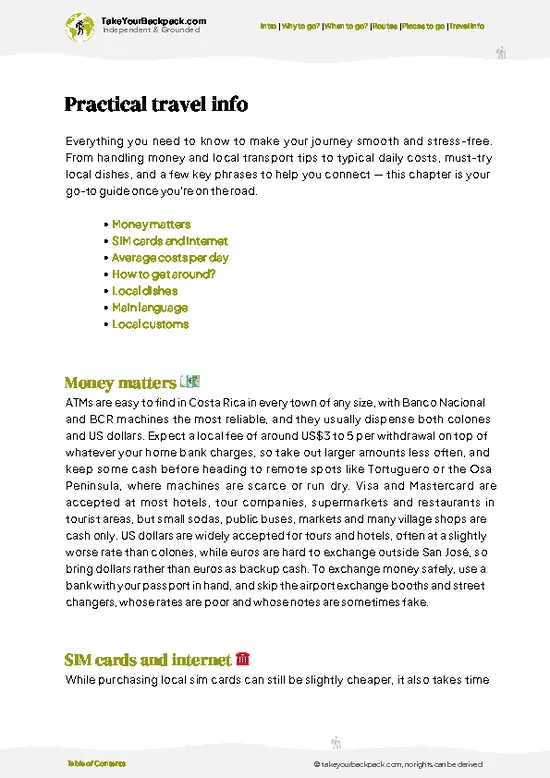
example page 0 from our offline Travel Guide for Costa Rica
example page 1 from our offline Travel Guide for Costa Rica
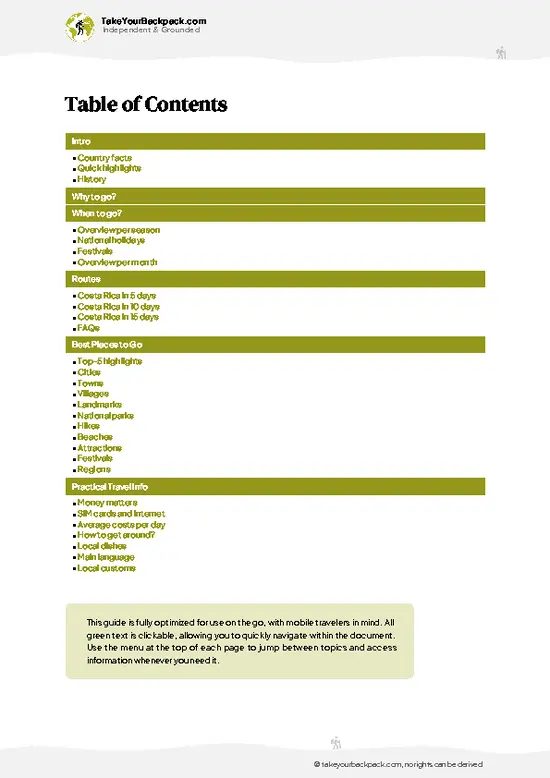
example page 2 from our offline Travel Guide for Costa Rica
example page 3 from our offline Travel Guide for Costa Rica
example page 4 from our offline Travel Guide for Costa Rica
example page 5 from our offline Travel Guide for Costa Rica
example page 6 from our offline Travel Guide for Costa Rica
example page 7 from our offline Travel Guide for Costa Rica
Loading the map 🌍
CLICK TO FILTER
cities
towns
villages
landmarks
national parks
hikes
beaches
attractions
festivals
regions
SHOW COUNTRY’S BESTSHOW ALL

✨ Why go?
Ranked #3 unique site in Costa Rica
What makes this unique site worth visiting

Bijagual Waterfall is worth the detour mainly because of its height of roughly 180 meters or more, which dwarfs the falls most backpackers tick off in Costa Rica. Standing at the base, you tilt your head back to find the lip, and the pool below is still quiet enough to wade into without elbowing a tour group. That solitude is the second reason. The approach runs through working farmland and secondary forest, so the walk itself shows you rural Costa Rica rather than a ticketed park, and locals along the way are glad to point you right.

The third reason is geography. Bijagual Waterfall pairs easily with the Carara National Park corridor and the Pacific coast beaches nearby, so it fits a loop between the capital and the surf towns instead of demanding its own trip. Bring sturdy shoes with grip, … read more 👉
Bijagual Waterfall is worth the detour mainly because of its height of roughly 180 meters or more, which dwarfs the falls most backpackers tick off in Costa Rica. Standing at the base, you tilt your head back to find the lip, and the pool below is still quiet enough to wade into without elbowing a tour group. That solitude is the second reason. The approach runs through working farmland and secondary forest, so the walk itself shows you rural Costa Rica rather than a ticketed park, and locals along the way are glad to point you right.

The third reason is geography. Bijagual Waterfall pairs easily with the Carara National Park corridor and the Pacific coast beaches nearby, so it fits a loop between the capital and the surf towns instead of demanding its own trip. Bring sturdy shoes with grip, cash in small bills and a dry bag for your phone, since the spray soaks everything near the pool.

💡 HighlightsMust-see experiences and standout moments

  1. The Main Cascade: the signature sight, a single tall plunge down a dark rock wall, among the highest in the country. The scale is best judged from the base, where the water arrives as mist well before it reaches the rocks.
  2. The Plunge Pool: a cool, green basin at the foot of the fall where you can wade in and cool off. Current and slick stones near the impact zone make the outer edges the sensible place to stay.
  3. The Forest Trail: the path in passes through secondary forest and farm edges. Expect mud, roots, bird calls and the occasional butterfly drifting across the track.
  4. River Crossings: the stream that feeds the falls is crossed along the way, and shallow fords with rounded boulders make the walk feel like a proper outing. Waterproof sandals or quick-drying shoes pay off.
  5. The Spray Zone: closer
… read more 👉
  1. The Main Cascade: the signature sight, a single tall plunge down a dark rock wall, among the highest in the country. The scale is best judged from the base, where the water arrives as mist well before it reaches the rocks.
  2. The Plunge Pool: a cool, green basin at the foot of the fall where you can wade in and cool off. Current and slick stones near the impact zone make the outer edges the sensible place to stay.
  3. The Forest Trail: the path in passes through secondary forest and farm edges. Expect mud, roots, bird calls and the occasional butterfly drifting across the track.
  4. River Crossings: the stream that feeds the falls is crossed along the way, and shallow fords with rounded boulders make the walk feel like a proper outing. Waterproof sandals or quick-drying shoes pay off.
  5. The Spray Zone: closer to the wall, the air turns damp and loud, and moss and ferns coat every surface. Photographers should wrap lenses and shoot from slightly back.
  6. Bijagual Village: the small rural community around the falls, where a shop or farm stand supplies cold drinks and directions. It gives a look at daily life in the Turrubares hills far from resort Costa Rica.
Bijagual Waterfall needs about two to three hours in total, including the walk in, a swim and a slow look at the base.
Spotted a mistake or missing something? Contact us.

🌤️ When to go?Weather, crowds, and seasonal trade-offs

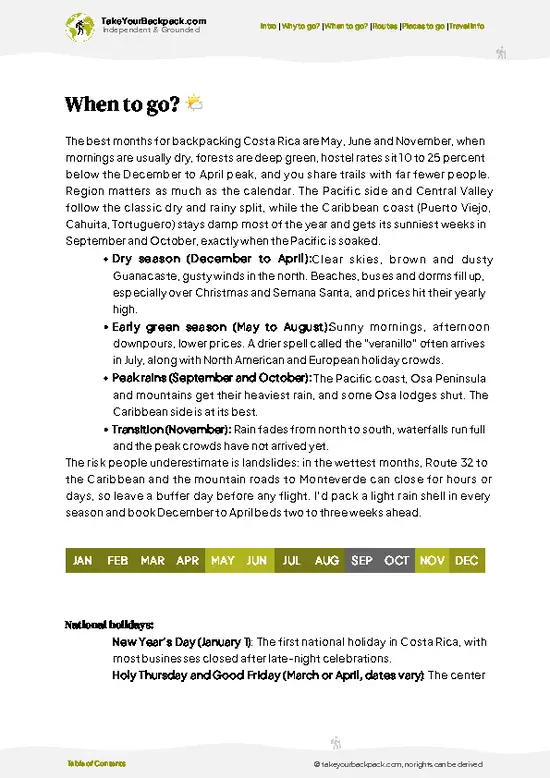
  • Dry Season (December to April): Trails and the river crossing are at their easiest, and the pool below the falls is clear enough for swimming. Daytime highs run 29 to 33°C (84 to 91°F), mornings are cooler at 20 to 22°C (68 to 72°F), and daylight lasts roughly 11 to 12 hours. Weekends and Christmas to Easter bring Costa Rican families, so the pools fill by midday.
  • Green Season (May to November): Afternoon downpours are near-daily, the river runs brown after heavy rain, and the falls are at full volume. Temperatures sit at 24 to 30°C (75 to 86°F). Crowds thin out and rooms in the nearby Pacific towns drop 20 to 40 percent.
  • September and October: These are the wettest months on the central Pacific side, and access roads can wash out, so plan for rain every day.
  • Holiday Weeks: Semana Santa and the
… read more 👉
  • Dry Season (December to April): Trails and the river crossing are at their easiest, and the pool below the falls is clear enough for swimming. Daytime highs run 29 to 33°C (84 to 91°F), mornings are cooler at 20 to 22°C (68 to 72°F), and daylight lasts roughly 11 to 12 hours. Weekends and Christmas to Easter bring Costa Rican families, so the pools fill by midday.
  • Green Season (May to November): Afternoon downpours are near-daily, the river runs brown after heavy rain, and the falls are at full volume. Temperatures sit at 24 to 30°C (75 to 86°F). Crowds thin out and rooms in the nearby Pacific towns drop 20 to 40 percent.
  • September and October: These are the wettest months on the central Pacific side, and access roads can wash out, so plan for rain every day.
  • Holiday Weeks: Semana Santa and the weeks after New Year raise prices and traffic.
Go on a weekday morning in January or February, when the water is clear and you may have the pool to yourself.


source: climatestotravel.comJANJanuary: excellent for travelingFEBFebruary: excellent for travelingMARMarch: excellent for travelingAPRApril: excellent for travelingMAYMay: fair for travelingJUNJune: fair for travelingJULJuly: fair for travelingAUGAugust: fair for travelingSEPSeptember: fair for travelingOCTOctober: fair for travelingNOVNovember: highly recommended for travelingDECDecember: highly recommended for traveling

✈️ The backpacker research shortcutCosta Rica Travel Guide

An offline-friendly backpacking guide with optimized travel routes, ranked highlights, transport advice, and the best areas to stay.
example page 0 from our offline Travel Guide for Costa Rica
example page 1 from our offline Travel Guide for Costa Rica
example page 2 from our offline Travel Guide for Costa Rica
example page 3 from our offline Travel Guide for Costa Rica
example page 4 from our offline Travel Guide for Costa Rica
example page 5 from our offline Travel Guide for Costa Rica
example page 6 from our offline Travel Guide for Costa Rica
example page 7 from our offline Travel Guide for Costa Rica
The digital guide (287 pages) contains:
✅ 92 highlights, ranked by travel appeal
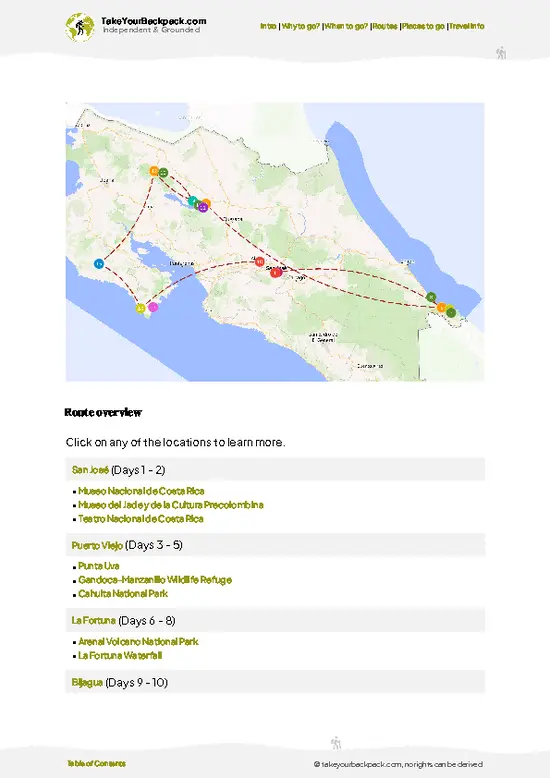
✅ Optimized 5, 10 & 15-day travel routes
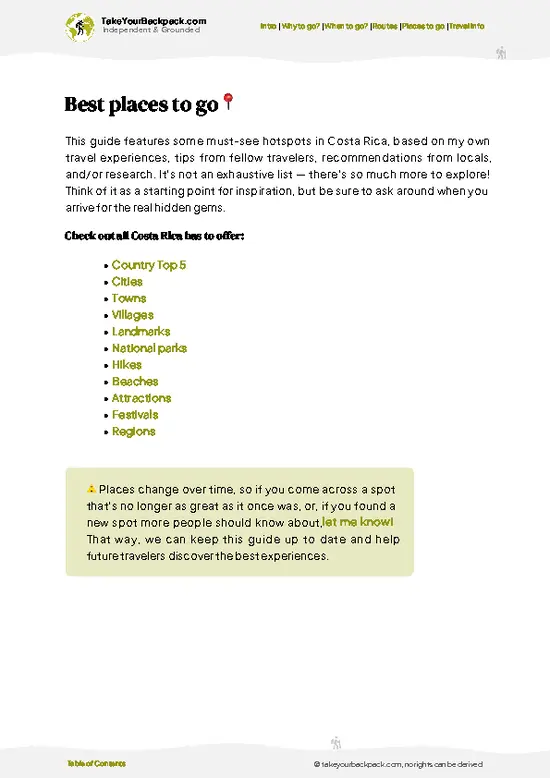
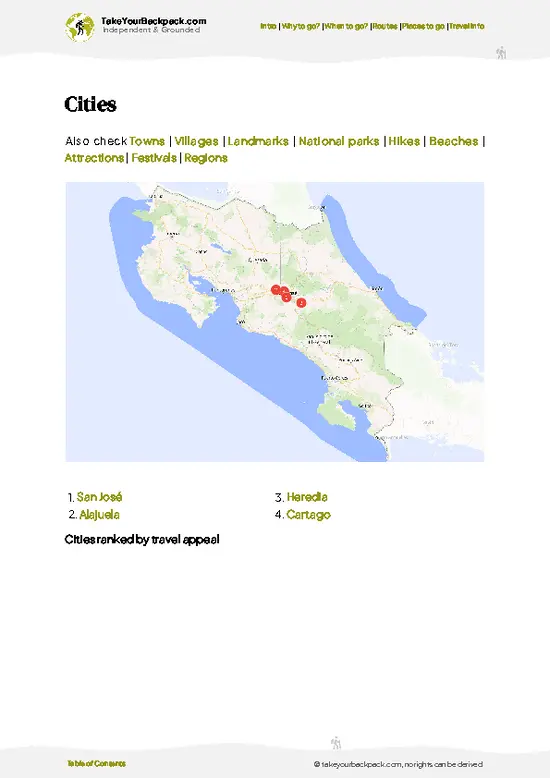
✅ Cities, national parks, landmarks, beaches
✅ How to get around
✅ Offline-friendly for travel without Wi-Fi
👉 Click to see all 30+ guide features

📅 Plan smarter in minutes, not weeks
✅ Month by month travel advice
✅ Festivals & national holidays
✅ Budget expectations

🗺️ Go to the right places, skip the overrated ones
✅ Honest pros & cons of destinations
✅ Top hikes, parks & viewpoints
✅ Lesser-known places most travelers miss
✅ Clear “worth it vs skip it” guidance

🛏️ Travel smoothly without rookie mistakes
✅ Best areas to stay
✅ Transport systems explained simply
✅ Common scams & safety advice
✅ SIM cards, money & practical tips

🌍 Understand the country, not just visit it
✅ Culture & traditions
✅ 52 Essential phrases & customs
✅ Festivals worth planning around
✅ Traveler-friendly historical context
✅ Insights that make places more meaningful

📱 Built for real travel conditions
✅ Fully downloadable PDF
✅ Works completely offline
✅ Optimized for phone use
✅ Useful in remote areas & buses
✅ Everything in one place
Stop searching, start planning
Get instant access to your full guide. 30‑day money-back guarantee.
+ Add another guide for just

By proceeding you agree to our terms.
Sent to your inbox immediately after payment • 100% Secure Checkout
Best Backpacking Travel Advisor 2025 tourism awardBest Backpacking
Travel Advisor
2025
What others say about Take Your Backpack Guides:
⭐⭐⭐⭐⭐
Fantastic, amazing amount of information!
⭐⭐⭐⭐⭐
My goodness this is amazing, it's what I've been looking for hats off too you!
⭐⭐⭐⭐⭐
I think this is absolutely BRILLIANT
⭐⭐⭐⭐
Very complete and informative. It's still missing places, but I gotta to commend you
⭐⭐⭐⭐⭐
This is truly amazing, thank you, can't wait to explore it with my kids!
⭐⭐⭐⭐⭐
Awesome resource, thank you!
⭐⭐⭐⭐⭐
This is amazing! Can't wait to explore the ones I haven't seen
⭐⭐⭐⭐
I love this! Well done, great idea.
⭐⭐⭐⭐⭐
Thanks for taking the time to make this gem!
⭐⭐⭐⭐⭐
This might be the best website I've ever seen.
⭐⭐⭐⭐⭐
Congratulations, and thank you so much for your work; it's incredibly valuable.
⭐⭐⭐⭐
In all seriousness I think you did a great job pointing out the important spots
⭐⭐⭐⭐⭐
10/10 very good
⭐⭐⭐⭐⭐
As someone who's only just starting to visit regularly this is awesome, thank you.
⭐⭐⭐⭐
Thank you very much! I'm going to visit my dad, it's going to be very useful!
⭐⭐⭐⭐⭐
This is really cool! We'll be travelling for the first time and this definitely come in handy.
⭐⭐⭐⭐⭐
You are now our minister of culture, congratulations 👨‍💼
⭐⭐⭐⭐⭐
Just wanted to tell you that this is a pearl! Going to follow your recommendations.
⭐⭐⭐⭐⭐
This is so cool. I'll definitely be using the resource for my travels soon.
⭐⭐⭐⭐⭐
This is very impressive! Good work.
⭐⭐⭐⭐⭐
This is an amazing and informative site. Very well done!

🛏️ Where to stay?Where staying makes the most sense

Most backpackers sleep in Playa Hermosa or Jacó, both a short drive from the Bijagual access road, and Jacó has the deepest pool of budget beds. Jacó is the social choice, with dorms, surf schools, cheap sodas (local diners) and a busy evening scene along the main strip. It is also the easiest base for buses and shared rides. Stick to the streets close to the beach and the main road, and keep valuables out of sight, because petty theft from bags and parked cars does happen. Solo travelers meet people easily here, and group trips to the falls are simple to arrange.

Playa Hermosa, a few kilometers … read more 👉
Most backpackers sleep in Playa Hermosa or Jacó, both a short drive from the Bijagual access road, and Jacó has the deepest pool of budget beds. Jacó is the social choice, with dorms, surf schools, cheap sodas (local diners) and a busy evening scene along the main strip. It is also the easiest base for buses and shared rides. Stick to the streets close to the beach and the main road, and keep valuables out of sight, because petty theft from bags and parked cars does happen. Solo travelers meet people easily here, and group trips to the falls are simple to arrange.

Playa Hermosa, a few kilometers north, is quieter. It has a laid-back surf crowd, a few small guesthouses and far fewer late nights, which suits people who want sleep before an early hike.

On the inland side, the village of Bijagual and the farms along the road to the falls offer simple rural lodging and homestay-style rooms. Beds are scarce and the vibe is peaceful rather than social, but you wake up minutes from the trailhead. Orotina and Turrubares are practical only if you have your own vehicle.

Book ahead for weekends and the December to April stretch, when surf-town dorms fill.

👛 Costs (as of 22 October 2026)How expensive it really is

Bijagual Waterfall costs a backpacker about US$45 to 90 per day, including the entry fee, transport from Jacó and meals. Travelers pay in colones, but cards are accepted at some larger businesses, so carry small cash for the access road and rural stops.
CategoryBudget RangeLocal Reality
Entry feeUS$10 to 15Charged by the local operator or landowner at the trail entrance, usually cash and sometimes bundled with parking or guide services.
Accommodation (high season)US$15 to 30Dorm beds in Jacó run toward the top of this range from December to April. Low season drops about US$5 to 10.
TransportUS$8 to 25Buses to Jacó are cheap, but the last stretch to the falls usually needs a taxi, a shared ride or a rental car. Taxis from Jacó run roughly US$25 to 40 each way, so splitting helps.
FoodUS$12 to 20A
… read more 👉
Bijagual Waterfall costs a backpacker about US$45 to 90 per day, including the entry fee, transport from Jacó and meals. Travelers pay in colones, but cards are accepted at some larger businesses, so carry small cash for the access road and rural stops.
CategoryBudget RangeLocal Reality
Entry feeUS$10 to 15Charged by the local operator or landowner at the trail entrance, usually cash and sometimes bundled with parking or guide services.
Accommodation (high season)US$15 to 30Dorm beds in Jacó run toward the top of this range from December to April. Low season drops about US$5 to 10.
TransportUS$8 to 25Buses to Jacó are cheap, but the last stretch to the falls usually needs a taxi, a shared ride or a rental car. Taxis from Jacó run roughly US$25 to 40 each way, so splitting helps.
FoodUS$12 to 20A casado (rice, beans, meat, salad) at a local soda costs US$6 to 9. Pack snacks, since there is little to buy near the falls.
Guide or tour (optional)US$0 to 15The trail is manageable alone in dry weather, but a local guide helps after rain when the river crossing is higher.
Total Daily BudgetUS$45 to 90Around US$65 for a typical high-season day, sharing rides and eating at sodas.
⚠️ Prices can change and everyone travels differently, so take this as a rough guide. Hope it helps you plan your adventure!

FAQCommon questions from travelers

Bijagual Waterfall is a tall cascade in the Turrubares area of central Costa Rica, reached by hiking a short trail through forest and across a river. The drop is roughly 180 meters in total, with a swimmable pool at its base. Most visitors come from Jacó, Orotina or the Central Valley, and entry runs about US$10 to 15.
Plan on half a day at Bijagual Waterfall, around 3 to 5 hours including the hike in and out and time for a swim. The trail is a few kilometers round trip, with a river crossing that is easy in the dry season and trickier after rain. If you start from Jacó, allow another 1.5 to 2 hours of round-trip driving, so an early start makes sure you are back before afternoon storms.
Reaching Bijagual Waterfall is simplest from Jacó, about 45 minutes to an hour by car along a mostly paved route that turns to rough gravel for the last stretch. From San José it takes roughly 1.5 to 2 hours by car via Orotina. Buses run only to the larger towns such as Jacó or Orotina, so the final leg usually needs a taxi, which costs around US$25 to 40 each way, or a rental car.
⚠️ Things can change over time, so always validate details locally before you go.

Other Costa Rican landmarks near Bijagual Waterfall

Explore more nearby:

  • La Fortuna Waterfall—500 steps, 70-meter drop, spray-soaked base, Arenal backdrop| 78 km away
  • Cerro de la Muerte—Pan-American high point, páramo, dwarf bamboo, quetzal valley| 95 km away

💡 Not sure where to go next?
Create a personalized itinerary for Costa Rica including Bijagual Waterfall and the places that fit your trip.

Generate my itinerary

👉 Discover all landmarks

Or checkout all Costa Rica has to offer (think cities, towns, villages, national parks, hikes, beaches, festivals)
Country photo of Costa Rica

We 💚 feedbackParting advice and final tips

Bijagual Waterfall suits travelers who like a rough road and a quiet pool more than a polished park. If you are on a loop between the capital and the Pacific beaches and you want one big natural payoff without a crowd, go. Pack grippy shoes and a dry bag, and ask a local about the track before you commit.

✈️ When did I visit Costa Rica?
Costa Rica I visited during my half year trip through South and Central America back in 2003

✍️ Help improve this page!
The information on this page is based on my own backpacking experience in Costa Rica, supplemented with up-to-date research and feedback from other travelers. Travel details can change, so if you notice anything outdated or incomplete, feel free to let me know.


🙋‍♂️ Give feedback

👋 Meet the founderWho’s Behind Take Your Backpack?

Johan, backpacker and founder of TakeYourBackpackHi, I’m Johan (Netherlands 🇳🇱), the creator of TakeYourBackpack. Over the past 3 decades, I’ve backpacked through 90+ countries across six continents, gaining extensive experience with independent travel, long-term trips, and overland routes.

This site is built on a combination of firsthand travel experience and carefully curated insights from other backpackers. Many guides are based on places I’ve personally visited, while others bring together tips, observations, and practical advice shared by trusted travelers I’ve met along the way.

The goal is to provide realistic, experience-driven guidance — not generic itineraries — so you can explore destinations with better context, clearer expectations, and more confidence.