×

Costa Rica🇨🇷 | townsCahuitaCaribbean park trail, black sand, coconut rice | things to do and best time to go

Explore Orosi ValleyExplore La Fortuna

Backpacking in Cahuita
🌟 Highlighttown ranked #10
By Johan Kruseman 🇳🇱 | Updated October 22, 2026

Cahuita is a Caribbean-coast town, not a Pacific-style resort, and the water here is rarely the clear turquoise of the brochures: rivers stain it tea-brown after rain. It sits in the southeast of Costa Rica, in Limón province. Getting here is easy by bus from San José or Puerto Viejo. The dirt streets smell of coconut oil, wood smoke and rain-soaked almond leaves, and reggae drifts from open-front bars. Walk the national park trail, skip the souvenir stalls, and spend evenings at a beachfront table. Hostels are small and friendly, so meeting people is easy without any party scene. I expected a sleepy dead end; the shared dinner tables proved wrong. Howler monkeys wake the whole town before six.

Discover everything you want to know in the 📖 Costa Rica Travel Guide.


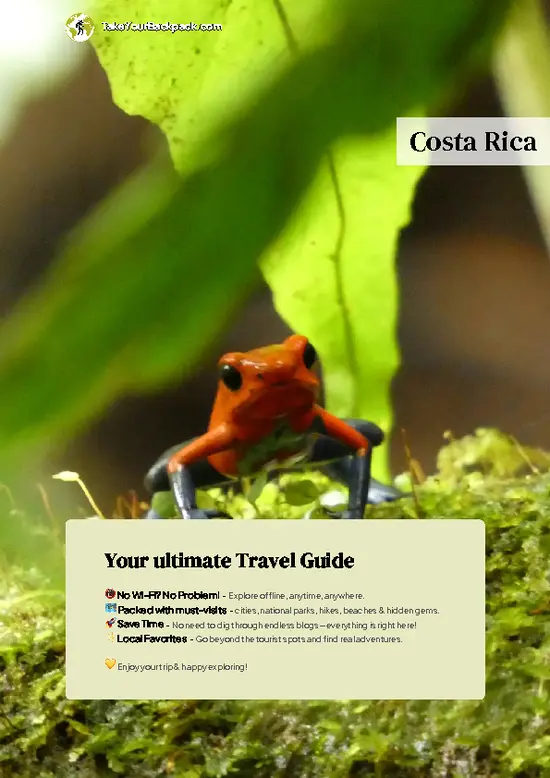
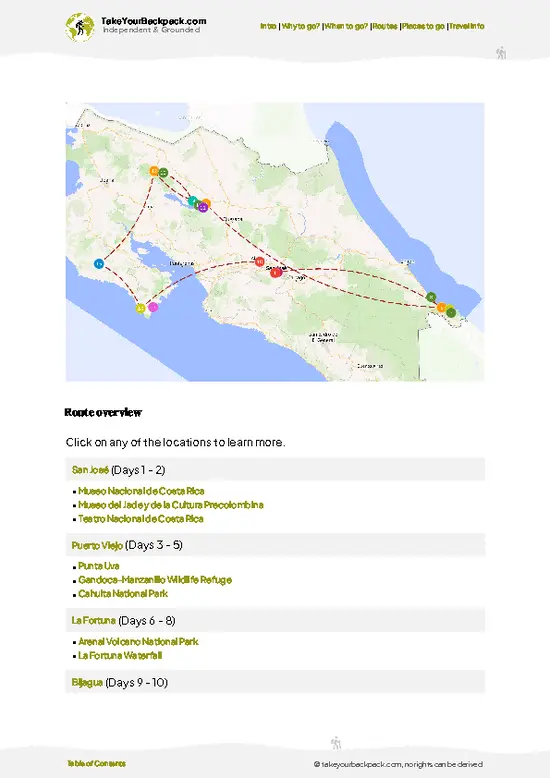
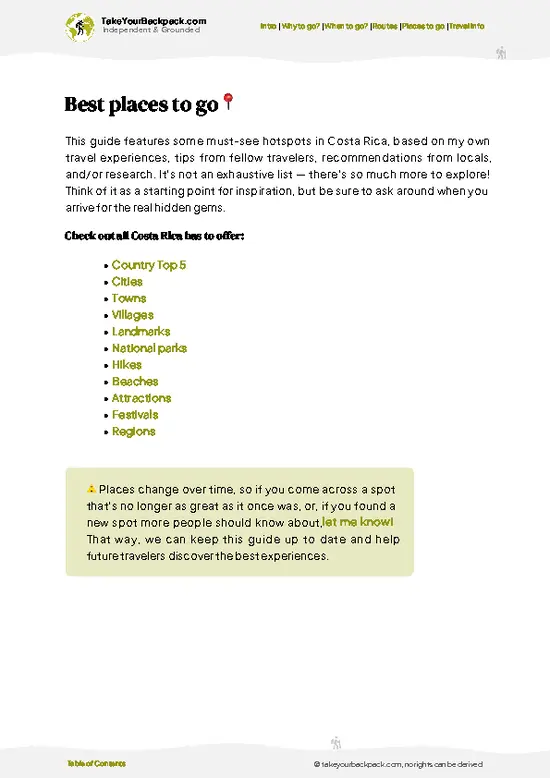
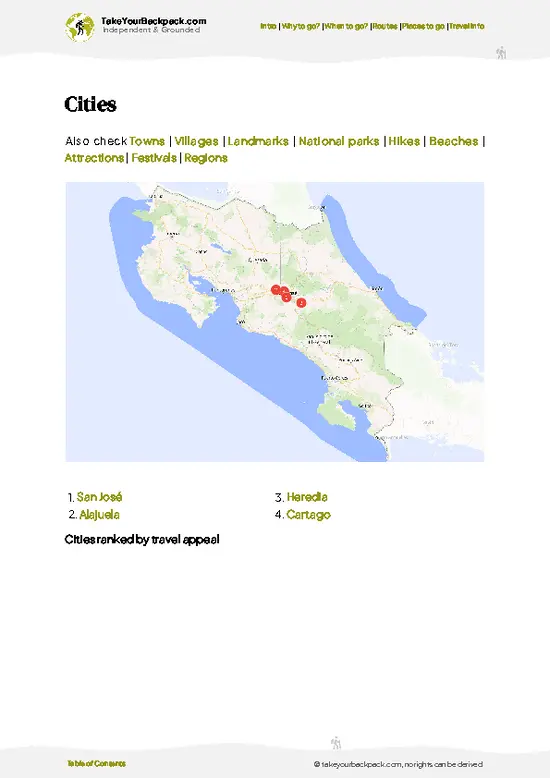
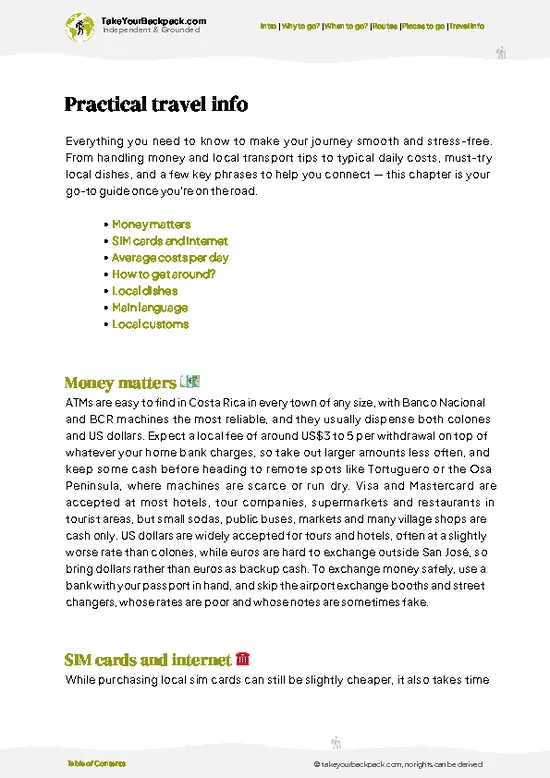
example page 0 from our offline Travel Guide for Costa Rica
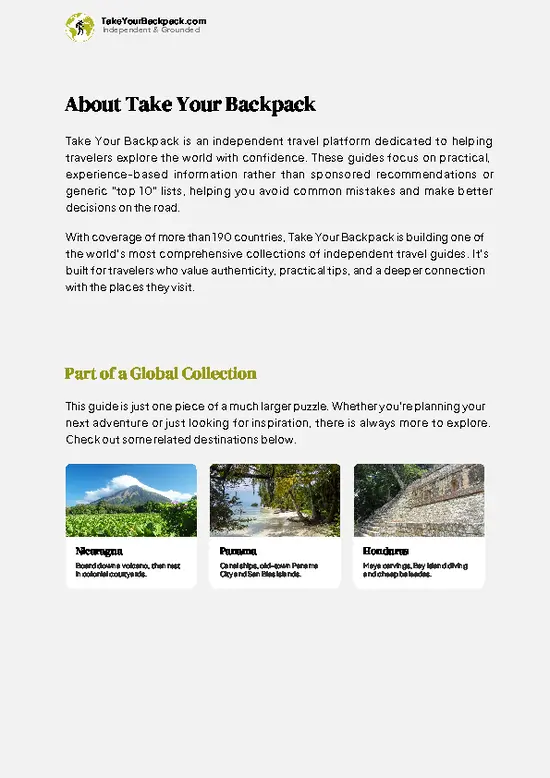
example page 1 from our offline Travel Guide for Costa Rica
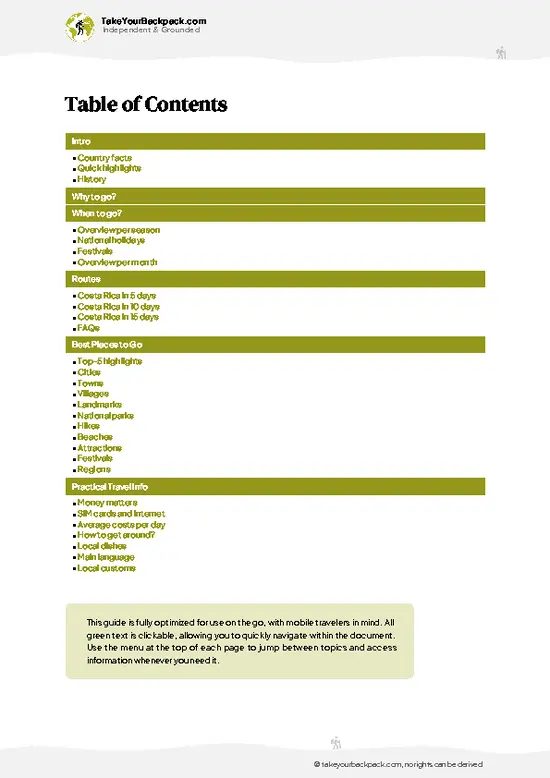
example page 2 from our offline Travel Guide for Costa Rica
example page 3 from our offline Travel Guide for Costa Rica
example page 4 from our offline Travel Guide for Costa Rica
example page 5 from our offline Travel Guide for Costa Rica
example page 6 from our offline Travel Guide for Costa Rica
example page 7 from our offline Travel Guide for Costa Rica
Loading the map 🌍
CLICK TO FILTER
cities
towns
villages
landmarks
national parks
hikes
beaches
attractions
festivals
regions
SHOW COUNTRY’S BESTSHOW ALL

✨ Why go?
Ranked #10 town in Costa Rica
Why Cahuita should be on your travel list

Cahuita works because the jungle starts at the edge of town. Cahuita National Park is a walk from your hostel, and the coast path is flat enough for anyone, which suits first-timers and slow travelers alike. Most people stay two or three nights, and many linger longer once they find the rhythm of beach mornings and rice-and-beans lunches at family-run sodas. Solo travelers do well here: hostels and guesthouses are small, dinners get shared, and the main street is short enough that you keep bumping into the same faces. The Afro-Caribbean cooking is a draw by itself, with coconut-based rundown stews and patty stands. Nightlife is low-key, a few bars and some music. If you want clubs, look elsewhere. If you want a calm base for wildlife and sea, this fits.

💡 HighlightsWhat this place is best known for

  1. Cahuita National Park (Playa Blanca trail): The town’s best-known sight is a flat coastal trail of about 7 kilometers through forest beside a coral-fringed shore. Sloths, white-faced monkeys and raccoons show up often. Go early, before 8 AM, for the most animals. Entry at the Kelly Creek gate is by donation, and at the Puerto Vargas end it is about US$5 to 6. Allow 3 to 4 hours.
  2. Playa Negra: A long black-sand beach north of the center, good for walking and for sunsets, with calm stretches for swimming. It is free and needs 1 to 2 hours. Watch for rip currents.
  3. Cahuita Point and the coral reef: The reef lies just off the park shoreline and is best viewed on a guided snorkel trip when the sea is calm, usually in drier months. Tours cost about US$30 to 45 and take 2 to 3 hours.
  4. Kelly Creek ranger
… read more 👉
  1. Cahuita National Park (Playa Blanca trail): The town’s best-known sight is a flat coastal trail of about 7 kilometers through forest beside a coral-fringed shore. Sloths, white-faced monkeys and raccoons show up often. Go early, before 8 AM, for the most animals. Entry at the Kelly Creek gate is by donation, and at the Puerto Vargas end it is about US$5 to 6. Allow 3 to 4 hours.
  2. Playa Negra: A long black-sand beach north of the center, good for walking and for sunsets, with calm stretches for swimming. It is free and needs 1 to 2 hours. Watch for rip currents.
  3. Cahuita Point and the coral reef: The reef lies just off the park shoreline and is best viewed on a guided snorkel trip when the sea is calm, usually in drier months. Tours cost about US$30 to 45 and take 2 to 3 hours.
  4. Kelly Creek ranger station: The easy park entrance at the end of the main street, where you can check trail conditions and spot birds along the first stretch. It takes 30 minutes and costs a donation.
  5. Main street soda crawl: Small family eateries serve rice and beans cooked in coconut milk, fried plantains and fresh fish for roughly US$6 to 12 a meal. Come at lunch for the freshest dishes and allow 1 hour.
Cahuita also makes a good base for day trips to Puerto Viejo’s beaches, the Gandoca-Manzanillo wildlife refuge and the Jaguar Rescue Center. Together, the five stops fill about one long day or a relaxed two.
Spotted a mistake or missing something? Contact us.

Things to do near Cahuita

Ratings based on Tripadvisor reviews. When you book through this link, you support our work at no extra cost to you.

🏘️ NeighborhoodsUnderstanding the local layout

Cahuita is small enough to cover on foot in an afternoon, and its three areas feel very different.
  • Town Center: A few dusty blocks around the main street, with the bus stop, the supermarket, the park entrance and rice-and-beans sodas where coconut milk and chili smells drift out at lunch. Worth your time at dusk, when Caribbean music starts up. Skip it at midday, when the sun bounces off the pavement.
  • Playa Negra: The black-sand beach stretches northwest of town along a road lined with palms and low-key bars. Waves are heavier and the sand burns your feet, so swim with care. Great for sunsets and quiet, but the walk from the center is 1 to 3 km, and it is dark and sparse at night.
  • Playa Blanca and the National Park: South of the center, a shaded trail runs past howler monkeys, sloths and white-sand
… read more 👉
Cahuita is small enough to cover on foot in an afternoon, and its three areas feel very different.
  • Town Center: A few dusty blocks around the main street, with the bus stop, the supermarket, the park entrance and rice-and-beans sodas where coconut milk and chili smells drift out at lunch. Worth your time at dusk, when Caribbean music starts up. Skip it at midday, when the sun bounces off the pavement.
  • Playa Negra: The black-sand beach stretches northwest of town along a road lined with palms and low-key bars. Waves are heavier and the sand burns your feet, so swim with care. Great for sunsets and quiet, but the walk from the center is 1 to 3 km, and it is dark and sparse at night.
  • Playa Blanca and the National Park: South of the center, a shaded trail runs past howler monkeys, sloths and white-sand coves, with reef snorkeling offshore. This is the best use of a morning. Go early before the heat settles in, and expect humid, muddy stretches.

⌛️ 1 dayWhat you can realistically do in a day

This is a slow beach-and-jungle day, built around the national park and long pauses in between.
7:00 AM, Main street breakfast: Start at a small soda with gallo pinto, eggs and strong coffee. The howler monkeys are already loud, so you will be awake anyway.
8:00 AM, Kelly Creek park entrance: Walk to the end of the street and start the coastal trail while the animals are active. Go at least as far as Playa Blanca, stopping often to look up.
12:30 PM, Lunch near the beach: Walk back and eat coconut-based fish or chicken at a seafront table. Rest through the hottest hours.
2:30 PM, Playa Negra: Walk the black sand north, away from the crowds, for beach time and a swim in the calmer areas.
4:30 PM, Cahuita’s back lanes: Few visitors wander the unpaved lanes behind the main street, where locals sit … read more 👉
This is a slow beach-and-jungle day, built around the national park and long pauses in between.
7:00 AM, Main street breakfast: Start at a small soda with gallo pinto, eggs and strong coffee. The howler monkeys are already loud, so you will be awake anyway.
8:00 AM, Kelly Creek park entrance: Walk to the end of the street and start the coastal trail while the animals are active. Go at least as far as Playa Blanca, stopping often to look up.
12:30 PM, Lunch near the beach: Walk back and eat coconut-based fish or chicken at a seafront table. Rest through the hottest hours.
2:30 PM, Playa Negra: Walk the black sand north, away from the crowds, for beach time and a swim in the calmer areas.
4:30 PM, Cahuita’s back lanes: Few visitors wander the unpaved lanes behind the main street, where locals sit on porches, sell patties and play dominoes. Buy a snack and say hello.
6:30 PM, Dinner and music: Finish at a bar or soda for rundown stew and some live reggae, then walk back by the lights of the main street.

🌤️ When to go?Best time to visit Cahuita

  • February to April: The driest stretch on this coast, with highs near 29°C (84°F) and lows around 22°C (72°F). Sea is calm for snorkeling, and rooms fill during Easter week.
  • September and October: Oddly, the Caribbean side is at its driest then, while the rest of Costa Rica soaks. Prices dip and beaches empty out.
  • November to January: Heavy rain, rough seas and muddy trails, though crowds thin and rates stay moderate outside the holidays. Daylight lasts about 11 hours all year.
  • June and July: Warm and showery with a busy local holiday crowd, and a decent mix of sun and surf.
Book ahead only for Christmas and Easter, and otherwise plan your visit around September.

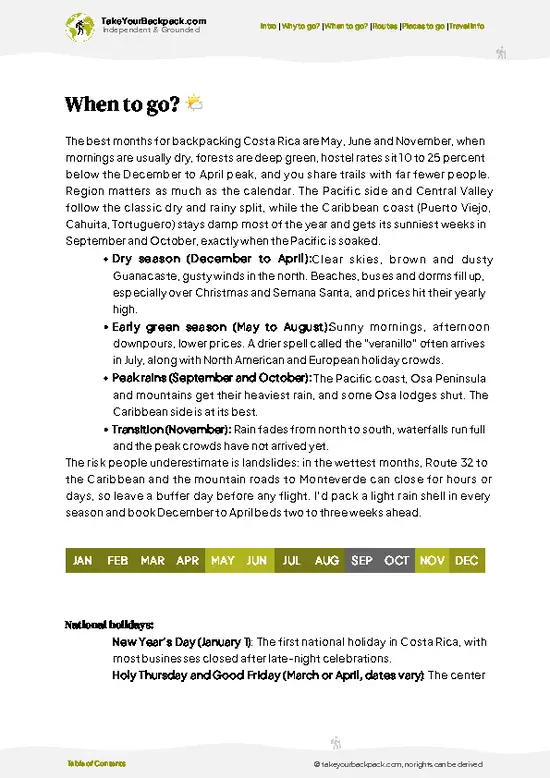
source: climatestotravel.comJANJanuary: highly recommended for travelingFEBFebruary: highly recommended for travelingMARMarch: highly recommended for travelingAPRApril: highly recommended for travelingMAYMay: good for travelingJUNJune: fair for travelingJULJuly: fair for travelingAUGAugust: fair for travelingSEPSeptember: fair for travelingOCTOctober: fair for travelingNOVNovember: highly recommended for travelingDECDecember: highly recommended for traveling
when-to-go

✈️ The backpacker research shortcutCosta Rica Travel Guide

An offline-friendly backpacking guide with optimized travel routes, ranked highlights, transport advice, and the best areas to stay.
example page 0 from our offline Travel Guide for Costa Rica
example page 1 from our offline Travel Guide for Costa Rica
example page 2 from our offline Travel Guide for Costa Rica
example page 3 from our offline Travel Guide for Costa Rica
example page 4 from our offline Travel Guide for Costa Rica
example page 5 from our offline Travel Guide for Costa Rica
example page 6 from our offline Travel Guide for Costa Rica
example page 7 from our offline Travel Guide for Costa Rica
The digital guide (287 pages) contains:
✅ 92 highlights, ranked by travel appeal
✅ Optimized 5, 10 & 15-day travel routes
✅ Cities, national parks, landmarks, beaches
✅ How to get around
✅ Offline-friendly for travel without Wi-Fi
👉 Click to see all 30+ guide features

📅 Plan smarter in minutes, not weeks
✅ Month by month travel advice
✅ Festivals & national holidays
✅ Budget expectations

🗺️ Go to the right places, skip the overrated ones
✅ Honest pros & cons of destinations
✅ Top hikes, parks & viewpoints
✅ Lesser-known places most travelers miss
✅ Clear “worth it vs skip it” guidance

🛏️ Travel smoothly without rookie mistakes
✅ Best areas to stay
✅ Transport systems explained simply
✅ Common scams & safety advice
✅ SIM cards, money & practical tips

🌍 Understand the country, not just visit it
✅ Culture & traditions
✅ 52 Essential phrases & customs
✅ Festivals worth planning around
✅ Traveler-friendly historical context
✅ Insights that make places more meaningful

📱 Built for real travel conditions
✅ Fully downloadable PDF
✅ Works completely offline
✅ Optimized for phone use
✅ Useful in remote areas & buses
✅ Everything in one place
Stop searching, start planning
Get instant access to your full guide. 30‑day money-back guarantee.
+ Add another guide for just

By proceeding you agree to our terms.
Sent to your inbox immediately after payment • 100% Secure Checkout
Best Backpacking Travel Advisor 2025 tourism awardBest Backpacking
Travel Advisor
2025
What others say about Take Your Backpack Guides:
⭐⭐⭐⭐⭐
Fantastic, amazing amount of information!
⭐⭐⭐⭐⭐
My goodness this is amazing, it's what I've been looking for hats off too you!
⭐⭐⭐⭐⭐
I think this is absolutely BRILLIANT
⭐⭐⭐⭐
Very complete and informative. It's still missing places, but I gotta to commend you
⭐⭐⭐⭐⭐
This is truly amazing, thank you, can't wait to explore it with my kids!
⭐⭐⭐⭐⭐
Awesome resource, thank you!
⭐⭐⭐⭐⭐
This is amazing! Can't wait to explore the ones I haven't seen
⭐⭐⭐⭐
I love this! Well done, great idea.
⭐⭐⭐⭐⭐
Thanks for taking the time to make this gem!
⭐⭐⭐⭐⭐
This might be the best website I've ever seen.
⭐⭐⭐⭐⭐
Congratulations, and thank you so much for your work; it's incredibly valuable.
⭐⭐⭐⭐
In all seriousness I think you did a great job pointing out the important spots
⭐⭐⭐⭐⭐
10/10 very good
⭐⭐⭐⭐⭐
As someone who's only just starting to visit regularly this is awesome, thank you.
⭐⭐⭐⭐
Thank you very much! I'm going to visit my dad, it's going to be very useful!
⭐⭐⭐⭐⭐
This is really cool! We'll be travelling for the first time and this definitely come in handy.
⭐⭐⭐⭐⭐
You are now our minister of culture, congratulations 👨‍💼
⭐⭐⭐⭐⭐
Just wanted to tell you that this is a pearl! Going to follow your recommendations.
⭐⭐⭐⭐⭐
This is so cool. I'll definitely be using the resource for my travels soon.
⭐⭐⭐⭐⭐
This is very impressive! Good work.
⭐⭐⭐⭐⭐
This is an amazing and informative site. Very well done!

🛏️ Where to stay?Best areas to stay in Costa Rica

The town center is the best base for most budget travelers, with Playa Negra a good second choice. Both have dorm beds and basic private rooms, but options are limited, so book ahead from December to April.
Staying in the center means shops, sodas and the bus stop sit within a short walk, and the streets feel lively and safe until late. Nights can be noisy from music and traffic, so earplugs help. Dorm beds usually cost US$12 to 20.
Playa Negra is quieter, with jungle sounds, ocean noise and cooler air at night, though the road is dark and quite isolated after sunset. Good for lingering stays and … read more 👉
The town center is the best base for most budget travelers, with Playa Negra a good second choice. Both have dorm beds and basic private rooms, but options are limited, so book ahead from December to April.
Staying in the center means shops, sodas and the bus stop sit within a short walk, and the streets feel lively and safe until late. Nights can be noisy from music and traffic, so earplugs help. Dorm beds usually cost US$12 to 20.
Playa Negra is quieter, with jungle sounds, ocean noise and cooler air at night, though the road is dark and quite isolated after sunset. Good for lingering stays and surfers, but you need a bicycle or a taxi for food and buses, and mosquito screens matter. Both areas sit within easy reach of the national park entrances.

🚌 Getting aroundMoving around without the hassle

Cahuita runs on its feet and a bicycle, and you pay for nearly everything in cash. A bus from Puerto Viejo or Limón costs US$1.50 to 4, which you pay to the driver or at the ticket window. The town is flat and compact, traffic is light, and the main pace is slow and sandy.
  • Walking: Free, and the best choice. The center, the park entrance and the first stretch of Playa Negra take 5 to 30 minutes. Bring a flashlight after dark because lighting on the beach road is thin.
  • Bicycle rental: US$5 to 10 a day from guesthouses and shops. This is the best way to reach Playa Negra and ride on to Puerto Viejo, about 17 km along a mostly flat road, with warm wind in your face and the odd truck passing. Lock it up at the beach.
  • Intercity bus: Services connect Cahuita with Puerto Viejo (about 30 minutes), Limón
… read more 👉
Cahuita runs on its feet and a bicycle, and you pay for nearly everything in cash. A bus from Puerto Viejo or Limón costs US$1.50 to 4, which you pay to the driver or at the ticket window. The town is flat and compact, traffic is light, and the main pace is slow and sandy.
  • Walking: Free, and the best choice. The center, the park entrance and the first stretch of Playa Negra take 5 to 30 minutes. Bring a flashlight after dark because lighting on the beach road is thin.
  • Bicycle rental: US$5 to 10 a day from guesthouses and shops. This is the best way to reach Playa Negra and ride on to Puerto Viejo, about 17 km along a mostly flat road, with warm wind in your face and the odd truck passing. Lock it up at the beach.
  • Intercity bus: Services connect Cahuita with Puerto Viejo (about 30 minutes), Limón (about 1 hour) and San José (about 4 to 5 hours, US$10 to 15). The stop sits near the town center. Buses run from early morning to late afternoon, so check the last departure before a day out.
  • Taxi: Short rides are US$3 to 6, and Puerto Viejo costs US$25 to 35. Worth it for the last stretch with a heavy pack or late at night, and unnecessary otherwise. Agree on the fare first because taxis rarely use meters.
  • Shared shuttle: To San José or the Panama border, seats cost US$40 to 60 and the ride is air-conditioned. Pricier than the bus, but a good option if you prefer a door-to-door pickup.

👛 Costs (as of 22 October 2026)Travel costs and budget guide for Cahuita

Cahuita runs about US$55 to 65 a day for a backpacker who sleeps in dorms, eats at local sodas and walks everywhere. Prices are quoted in dollars across the Caribbean coast, though colones are accepted and the only ATM options in town are limited.
CategoryBudget RangeLocal Reality
Dorm accommodationUS$12 to 20 (high season, December to April)Dorm beds are few, so private budget rooms at US$25 to 40 fill the gap. Low season drops a few dollars.
MealsUS$14 to 22A casado at a soda runs US$6 to 9. Rice and beans with coconut milk and fish is the local specialty, usually US$8 to 12. Grocery shopping cuts costs.
Local transportUS$1 to 6Town is flat and walkable. Buses to Puerto Viejo run around US$1 to 2, and bike rental is US$5 to 10 a day.
Basic activities/entry feesUS$5 to 20Cahuita National Park
… read more 👉
Cahuita runs about US$55 to 65 a day for a backpacker who sleeps in dorms, eats at local sodas and walks everywhere. Prices are quoted in dollars across the Caribbean coast, though colones are accepted and the only ATM options in town are limited.
CategoryBudget RangeLocal Reality
Dorm accommodationUS$12 to 20 (high season, December to April)Dorm beds are few, so private budget rooms at US$25 to 40 fill the gap. Low season drops a few dollars.
MealsUS$14 to 22A casado at a soda runs US$6 to 9. Rice and beans with coconut milk and fish is the local specialty, usually US$8 to 12. Grocery shopping cuts costs.
Local transportUS$1 to 6Town is flat and walkable. Buses to Puerto Viejo run around US$1 to 2, and bike rental is US$5 to 10 a day.
Basic activities/entry feesUS$5 to 20Cahuita National Park works on donation at the Kelly Creek entrance, while the Puerto Vargas entrance charges about US$5 to 6. Guided snorkeling tours cost US$30 to 45.
Miscellaneous expensesUS$5 to 10Sunscreen, bug spray, laundry and an occasional beer at US$2 to 3.
Total Daily BudgetUS$55 to 65Based on dorm or basic room, local meals and one modest activity.
Buy fruit and breakfast supplies at the town supermarket and skip the guided park walk, since the main trail is easy to follow on your own.
⚠️ Prices can change and everyone travels differently, so take this as a rough guide. Hope it helps you plan your adventure!

🚌 Day tripsExploring the surroundings

Cahuita sits on the Caribbean coast, so day trips are easy, since most places lie along one road and buses run regularly during daylight.Puerto Viejo de Talamanca: Surfers, bars and reggae spread along a beach road 17 km south. The bus takes about 30 minutes and costs under US$2, or you can cycle it. Go for a Salsa Brava surf session or an evening out, and avoid the last-bus mistake by checking return times.
Gandoca-Manzanillo Wildlife Refuge: Quiet beaches and forest trails lie beyond Puerto Viejo, with snorkeling and kayaking. Allow about 1.5 hours each way by bus and connection, and a budget of US$15 to 30 including food. February to April offers the calmest water.
👉 Explore Gandoca-Manzanillo Wildlife RefugeJaguar Rescue Center: A rehabilitation center for sloths, monkeys and birds near … read more 👉
Cahuita sits on the Caribbean coast, so day trips are easy, since most places lie along one road and buses run regularly during daylight.Puerto Viejo de Talamanca: Surfers, bars and reggae spread along a beach road 17 km south. The bus takes about 30 minutes and costs under US$2, or you can cycle it. Go for a Salsa Brava surf session or an evening out, and avoid the last-bus mistake by checking return times.
Gandoca-Manzanillo Wildlife Refuge: Quiet beaches and forest trails lie beyond Puerto Viejo, with snorkeling and kayaking. Allow about 1.5 hours each way by bus and connection, and a budget of US$15 to 30 including food. February to April offers the calmest water.
👉 Explore Gandoca-Manzanillo Wildlife RefugeJaguar Rescue Center: A rehabilitation center for sloths, monkeys and birds near Puerto Viejo, about 40 minutes away. Guided tours cost around US$22 to 25, and booking a morning slot avoids the afternoon rain. Tours are walk-in friendly outside peak weeks.
Limón: A port city about 45 km north with a market and the coast’s busiest bus terminal. It is better as a transfer point than a destination, so make the trip early. Costs about US$3 to 4 each way.

🛡️ SafetyStaying Safe: What Travelers Should Know

Cahuita is relaxed and broadly safe, and most problems are petty. Theft from beaches and parked bikes is the common one, so leave valuables in your lodging, lock your bicycle and never leave a bag unattended on the sand. Hotels and tour touts sometimes pester arrivals near the bus stop, and a polite no works. Rip currents on Playa Negra are a real risk, so swim only where locals do. After dark, stick to the main street, avoid the unlit beach road and use a taxi back from Playa Negra. Solo travelers, including women, generally feel comfortable, though unsolicited offers of drugs happen and are easily ignored. Use licensed park guides, and check prices before agreeing.

FAQTraveler FAQ

Cahuita is worth a stay of its own, not a quick stopover, because the Cahuita National Park trail runs about 7 km along white and black sand beaches where sloths, white-faced capuchins and howler monkeys are common. The park uses a donation-based entrance at the Kelly Creek ranger station (a suggested US$5 to 10), while the Puerto Vargas entrance charges US$5 to 6. Add Playa Negra's dark sand, Caribbean rice and beans with coconut, and reggae-tinged evenings, and the town rewards more than a single night.
Two to three days suits Cahuita well. Day one covers the national park walk (3 to 4 hours one way with swimming stops) and a beach afternoon. Day two can go to snorkeling the reef off Punta Cahuita (US$30 to 45 on a guided boat), a visit to Playa Negra, or a Talamanca indigenous or chocolate tour (US$30 to 50). A third day is useful if rain interrupts the plan or you want a slow Caribbean pace.
Yes, Cahuita works as a day trip from Puerto Viejo (about 20 to 30 minutes by bus, US$1 to 2) and from Limón (about 1 hour by bus, US$2 to 3). Buses from San José take about 4 to 4.5 hours and cost US$10 to 14, so a day trip from the capital leaves little time and is not recommended. From Puerto Viejo, early buses let you walk the park trail and catch the last bus back in the late afternoon.
⚠️ Things can change over time, so always validate details locally before you go.

Other Costa Rican towns near Cahuita

Explore more nearby:

  • Puerto Viejo—Bike rentals, Salsa Brava, Caribbean coves| 14 km away
  • Turrialba—Reventazón rapids, CATIE gardens, fresh cheese| 94 km away
  • San Isidro de El General—Chirripó permits, mountain air, concrete cathedral| 102 km away

💡 Not sure where to go next?
Create a personalized itinerary for Costa Rica including Cahuita and the places that fit your trip.

Generate my itinerary

👉 Discover all towns

Or checkout all Costa Rica has to offer (think cities, towns, villages, national parks, hikes, beaches, festivals)
Country photo of Costa Rica

We 💚 feedbackParting advice and final tips

Cahuita rewards the people who look closely at the park’s first kilometer, because the best wildlife often sits near the entrance, not at the far beach. I would bring a rain jacket, insect repellent and cash, then walk slowly. Skip the rush to Puerto Viejo for a day.

✈️ When did I visit Costa Rica?
Costa Rica I visited during my half year trip through South and Central America back in 2003

✍️ Help improve this page!
The information on this page is based on my own backpacking experience in Costa Rica, supplemented with up-to-date research and feedback from other travelers. Travel details can change, so if you notice anything outdated or incomplete, feel free to let me know.


🙋‍♂️ Give feedback

👋 Meet the founderWho’s Behind Take Your Backpack?

Johan, backpacker and founder of TakeYourBackpackHi, I’m Johan (Netherlands 🇳🇱), the creator of TakeYourBackpack. Over the past 3 decades, I’ve backpacked through 90+ countries across six continents, gaining extensive experience with independent travel, long-term trips, and overland routes.

This site is built on a combination of firsthand travel experience and carefully curated insights from other backpackers. Many guides are based on places I’ve personally visited, while others bring together tips, observations, and practical advice shared by trusted travelers I’ve met along the way.

The goal is to provide realistic, experience-driven guidance — not generic itineraries — so you can explore destinations with better context, clearer expectations, and more confidence.