
×

Costa Rica🇨🇷 | townsPuerto ViejoBike rentals, Salsa Brava, Caribbean coves | things to do and best time to go

Explore MonteverdeExplore Tamarindo

Backpacking in Puerto Viejo
🏆 Top picktown ranked #5
By Johan Kruseman 🇳🇱 | Updated October 20, 2026

Bikes lean against every wall in Puerto Viejo, and the town’s soundtrack is the tick of bike chains over sandy gravel, mixed with reggae drifting from open-front bars. It sits on the southern Caribbean coast of Costa Rica, near the Panama border. I arrived at dusk, and the first thing I noticed was the smell of woodsmoke, coconut and wet earth, with warm light spilling from rice-and-beans kitchens. The beaches are the real draw: Playa Cocles for surf, Punta Uva for calm swimming. The town center itself is just a few dusty streets, so skip trying to sightsee it and rent a bike instead. Getting here takes a long bus ride, but hostels make meeting people effortless and evenings are social without being rowdy. Beach lovers, surfers and slow travelers will like it most. Anyone wanting polish, big nightlife or dry weather should look elsewhere.

Discover everything you want to know in the 📖 Costa Rica Travel Guide.


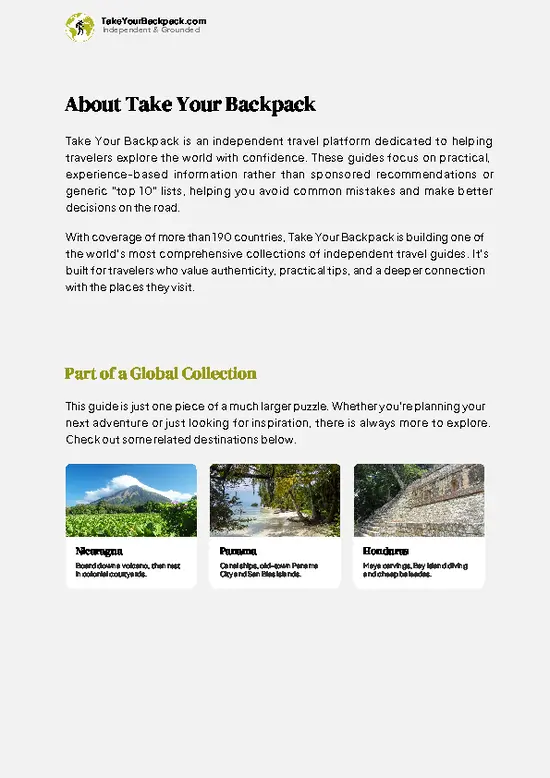
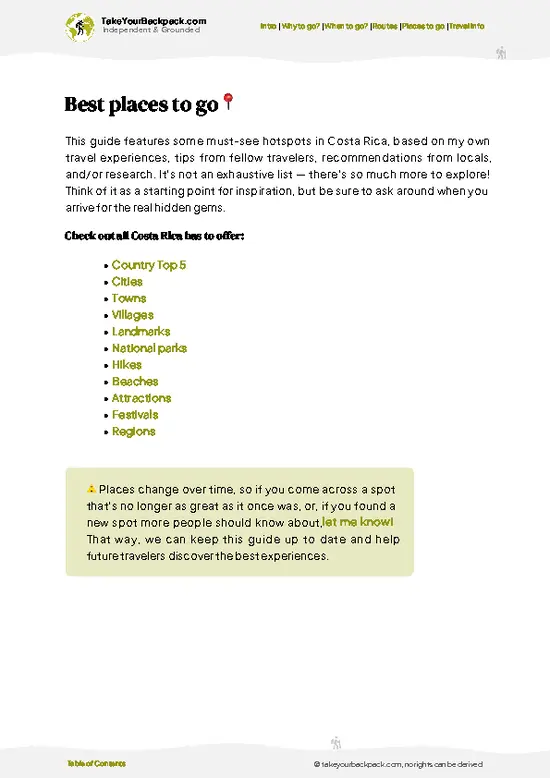
example page 0 from our offline Travel Guide for Costa Rica
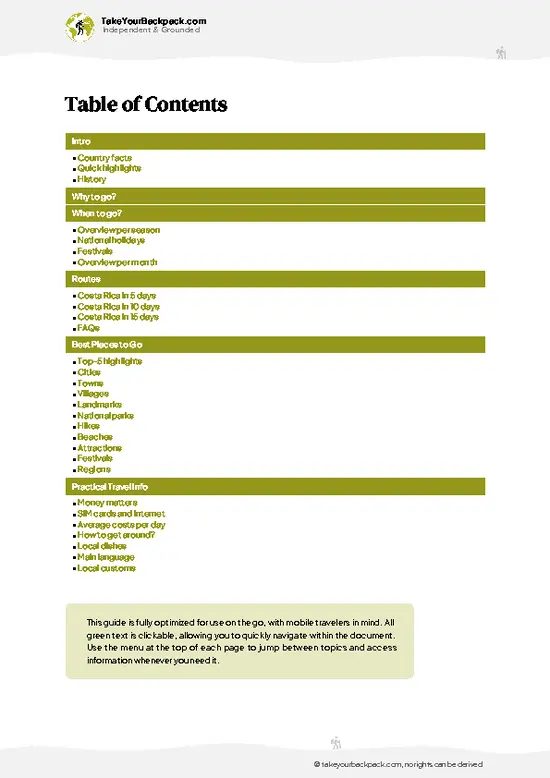
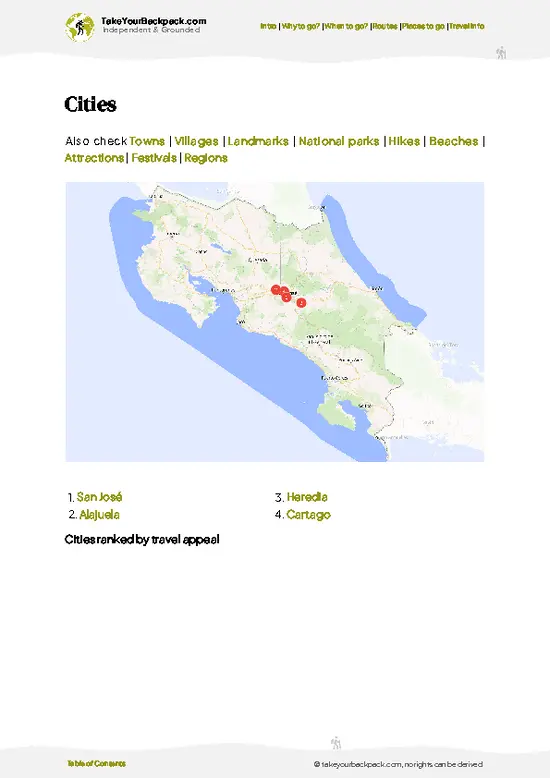
example page 1 from our offline Travel Guide for Costa Rica
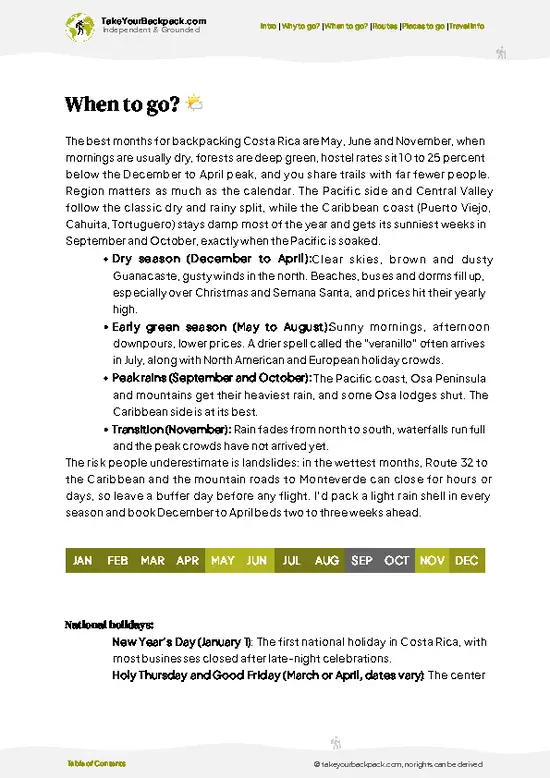
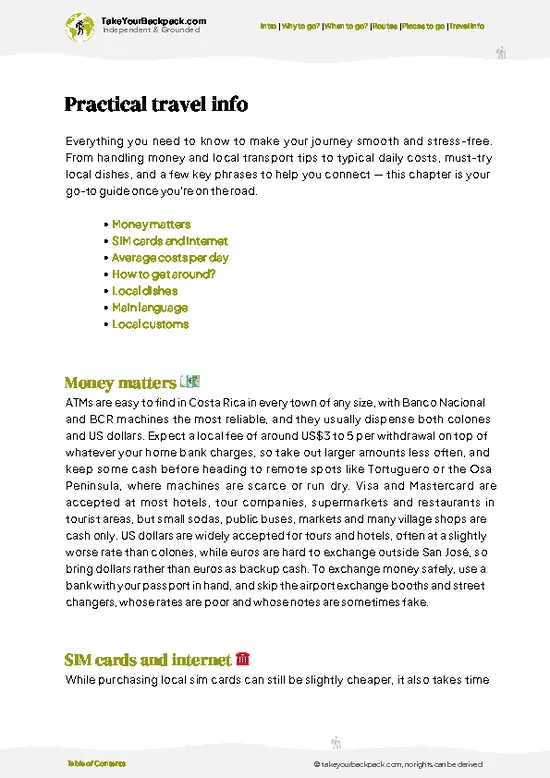
example page 2 from our offline Travel Guide for Costa Rica
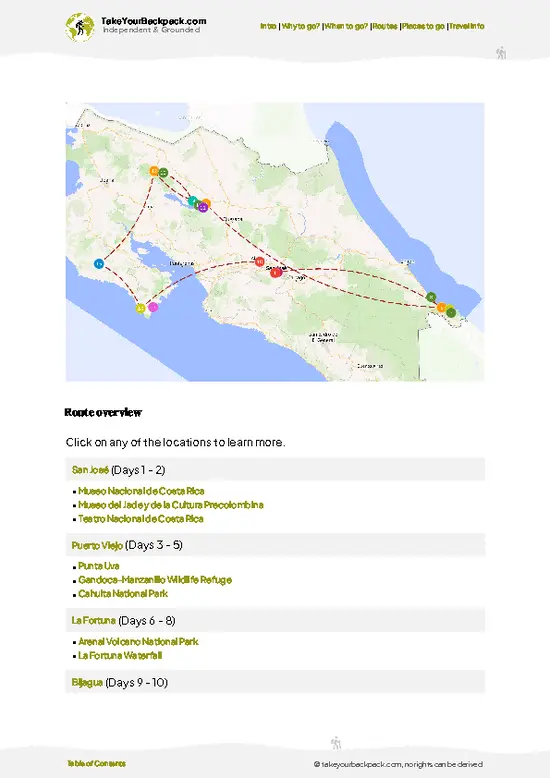
example page 3 from our offline Travel Guide for Costa Rica
example page 4 from our offline Travel Guide for Costa Rica
example page 5 from our offline Travel Guide for Costa Rica
example page 6 from our offline Travel Guide for Costa Rica
example page 7 from our offline Travel Guide for Costa Rica
Loading the map 🌍
CLICK TO FILTER
cities
towns
villages
landmarks
national parks
hikes
beaches
attractions
festivals
regions
SHOW COUNTRY’S BESTSHOW ALL

✨ Why go?
Ranked #5 town in Costa Rica
Why Puerto Viejo should be on your travel list

Puerto Viejo works because everything good sits along one flat coastal road you can ride in an afternoon. Most travelers arrive planning two nights and stay four or five, drawn by the easy rhythm of surf in the morning, a bike ride to Punta Uva after lunch and dinner at a family-run Caribbean kitchen. The food is distinct from the rest of the country, built on coconut, plantain and spicy jerk-style flavors, and the Afro-Caribbean heritage shows up in the music and cooking. Hostels and small guesthouses are scattered through the jungle edge behind the beaches, which keeps the social scene relaxed and easy to join. Solo travelers meet people over shared surf lessons and bike rentals, while the Cahuita National Park trails and the Gandoca-Manzanillo refuge nearby give hikers real reasons to linger. … read more 👉
Puerto Viejo works because everything good sits along one flat coastal road you can ride in an afternoon. Most travelers arrive planning two nights and stay four or five, drawn by the easy rhythm of surf in the morning, a bike ride to Punta Uva after lunch and dinner at a family-run Caribbean kitchen. The food is distinct from the rest of the country, built on coconut, plantain and spicy jerk-style flavors, and the Afro-Caribbean heritage shows up in the music and cooking. Hostels and small guesthouses are scattered through the jungle edge behind the beaches, which keeps the social scene relaxed and easy to join. Solo travelers meet people over shared surf lessons and bike rentals, while the Cahuita National Park trails and the Gandoca-Manzanillo refuge nearby give hikers real reasons to linger. Nightlife exists but stays low-key, mostly bars with live music rather than clubs. It suits slow travelers best. If you need constant activity or reliable sunshine, a short stop is plenty.

💡 HighlightsPlaces and moments you shouldn't skip

  1. Playa Cocles: The town’s main surf beach, with a steady beach break and dark sand just a short ride from the center. Go early for cleaner waves and fewer people. Free to enter; lessons cost roughly US$40 to 60 for 2 hours.
  2. Salsa Brava: Costa Rica’s heaviest wave breaks over a shallow reef just off the town’s edge, and watching it from the shore is spectacle enough. Winter months (December to March) bring the biggest swells. Free, 30 to 60 minutes.
  3. Playa Negra: The black-sand beach at the northern end of town, quieter and better for walking at sunset than swimming when the surf is up. Free, 1 to 2 hours.
  4. Jaguar Rescue Center: A wildlife rehabilitation center for sloths, monkeys and birds, run as a guided tour of the recovering animals. Morning tours are best, when animals are more active. Roughly
… read more 👉
  1. Playa Cocles: The town’s main surf beach, with a steady beach break and dark sand just a short ride from the center. Go early for cleaner waves and fewer people. Free to enter; lessons cost roughly US$40 to 60 for 2 hours.
  2. Salsa Brava: Costa Rica’s heaviest wave breaks over a shallow reef just off the town’s edge, and watching it from the shore is spectacle enough. Winter months (December to March) bring the biggest swells. Free, 30 to 60 minutes.
  3. Playa Negra: The black-sand beach at the northern end of town, quieter and better for walking at sunset than swimming when the surf is up. Free, 1 to 2 hours.
  4. Jaguar Rescue Center: A wildlife rehabilitation center for sloths, monkeys and birds, run as a guided tour of the recovering animals. Morning tours are best, when animals are more active. Roughly US$25 to 30, about 1.5 hours.
  5. Punta Uva: A calm cove with clear water, palm shade and a jungle backdrop, about 20 minutes by bike from the center. Mornings are best for swimming and snorkeling. Free, plan 2 to 4 hours.
For day trips, Cahuita National Park, Gandoca-Manzanillo Wildlife Refuge and the Bribri indigenous territory in the Talamanca foothills are all within reach. Start with Punta Uva on a bike for the best first taste of the coast.
Spotted a mistake or missing something? Contact us.

Things to do near Puerto Viejo

Ratings based on Tripadvisor reviews. When you book through this link, you support our work at no extra cost to you.

🏘️ NeighborhoodsKey areas and districts to know

Puerto Viejo is small enough to cover on foot or by bike, but the stretches along the coast road to the south each have their own personality.
  • Center: The grid around the bus stop and main street is where you eat, change money and book tours. Expect dust, motorbike buzz and the smell of grilled chicken and coffee. Spend an hour here, not a day.
  • Salsa Brava and Playa Negra: To the north, the black-sand beach has dark, gritty sand and a breeze full of woodsmoke and salt. It is quieter, good for sunsets and watching surfers at the Salsa Brava reef break, and worth a slow afternoon. Swim only where it looks calm.
  • Cocles: A 2 km walk or short bike ride southeast, with the longest, widest beach, palms leaning over pale sand, and a row of beach bars with reggae thumping after dark. This is the nightlife
… read more 👉
Puerto Viejo is small enough to cover on foot or by bike, but the stretches along the coast road to the south each have their own personality.
  • Center: The grid around the bus stop and main street is where you eat, change money and book tours. Expect dust, motorbike buzz and the smell of grilled chicken and coffee. Spend an hour here, not a day.
  • Salsa Brava and Playa Negra: To the north, the black-sand beach has dark, gritty sand and a breeze full of woodsmoke and salt. It is quieter, good for sunsets and watching surfers at the Salsa Brava reef break, and worth a slow afternoon. Swim only where it looks calm.
  • Cocles: A 2 km walk or short bike ride southeast, with the longest, widest beach, palms leaning over pale sand, and a row of beach bars with reggae thumping after dark. This is the nightlife and surf zone, and it is the best use of your evenings.
  • Punta Uva and Manzanillo: Further south, the road narrows into green tunnels of jungle, with calm turquoise coves at Punta Uva and a sleepy fishing village at Manzanillo. Rent a bike, but skip it in heavy rain, when the road turns to mud puddles.

⌛️ 1 dayA smart one-day plan

7:30 AM, Playa Negra: Start with a quiet walk on the black sand while the town is still waking up. Locals walk dogs and fishermen check their gear. Bike south afterward along the coastal road.
9:00 AM, Breakfast in the center: Grab fresh fruit, gallo pinto and strong coffee at a small café on the main street. Good fuel before a long ride.
10:30 AM, Salsa Brava: Walk to the edge of the reef and watch surfers tackle the shallow, powerful wave. Even if the surf is flat, the rocky coastline is worth a few photos.
12:00 PM, Playa Cocles: Ride south to this surf beach for a swim or lesson. Lock your bike where you can see it and keep valuables with you.
1:30 PM, Lunch at a Caribbean kitchen: Order rice and beans cooked in coconut milk, or the spicy rondón stew, at a local place off the main road. It … read more 👉
7:30 AM, Playa Negra: Start with a quiet walk on the black sand while the town is still waking up. Locals walk dogs and fishermen check their gear. Bike south afterward along the coastal road.
9:00 AM, Breakfast in the center: Grab fresh fruit, gallo pinto and strong coffee at a small café on the main street. Good fuel before a long ride.
10:30 AM, Salsa Brava: Walk to the edge of the reef and watch surfers tackle the shallow, powerful wave. Even if the surf is flat, the rocky coastline is worth a few photos.
12:00 PM, Playa Cocles: Ride south to this surf beach for a swim or lesson. Lock your bike where you can see it and keep valuables with you.
1:30 PM, Lunch at a Caribbean kitchen: Order rice and beans cooked in coconut milk, or the spicy rondón stew, at a local place off the main road. It is the best way to taste the area’s heritage.
3:00 PM, Chocolate farm visit: Skip the usual beach afternoon and ride inland to a small family cacao farm. You will see the whole process from pod to bar, which most beach-bound travelers skip.
5:30 PM, Punta Uva: Finish at this calm cove as the light softens. Swim, then ride back in the dusk.
7:30 PM, Dinner and live music: Back in town, pick a bar with reggae playing and end the day.

🌤️ When to go?Seasonal considerations and timing

February to April and September to October are the driest stretches on this Caribbean coast, which runs on a different rhythm from the rest of Costa Rica.
  • Late Summer and Early Fall: September and October are the calmest, sunniest months here, while the Pacific side is soaking. Highs reach 29°C (84°F), seas are flat and rooms are cheaper.
  • Feb to April: Dry-ish, with lows near 22°C (72°F). Surf is fair, and Easter week fills every bed.
  • December and January: Peak crowds and top prices, with some rain showers. Book ahead.
  • Nov and Jun to Jul: Wetter, with big downpours, muddy roads and rougher swimming, but fewer people. Surf peaks in December through March and again in June and July.
Daylight stays close to 12 hours year-round, so plan outdoor days for mornings.

source: climatestotravel.comJANJanuary: excellent for travelingFEBFebruary: excellent for travelingMARMarch: excellent for travelingAPRApril: highly recommended for travelingMAYMay: highly recommended for travelingJUNJune: good for travelingJULJuly: good for travelingAUGAugust: good for travelingSEPSeptember: fair for travelingOCTOctober: fair for travelingNOVNovember: good for travelingDECDecember: excellent for traveling
costa-rica-city-puerto-viejo
© Google | Vanesa Vallez

✈️ The backpacker research shortcutCosta Rica Travel Guide

An offline-friendly backpacking guide with optimized travel routes, ranked highlights, transport advice, and the best areas to stay.
example page 0 from our offline Travel Guide for Costa Rica
example page 1 from our offline Travel Guide for Costa Rica
example page 2 from our offline Travel Guide for Costa Rica
example page 3 from our offline Travel Guide for Costa Rica
example page 4 from our offline Travel Guide for Costa Rica
example page 5 from our offline Travel Guide for Costa Rica
example page 6 from our offline Travel Guide for Costa Rica
example page 7 from our offline Travel Guide for Costa Rica
The digital guide (287 pages) contains:
✅ 92 highlights, ranked by travel appeal
✅ Optimized 5, 10 & 15-day travel routes
✅ Cities, national parks, landmarks, beaches
✅ How to get around
✅ Offline-friendly for travel without Wi-Fi
👉 Click to see all 30+ guide features

📅 Plan smarter in minutes, not weeks
✅ Month by month travel advice
✅ Festivals & national holidays
✅ Budget expectations

🗺️ Go to the right places, skip the overrated ones
✅ Honest pros & cons of destinations
✅ Top hikes, parks & viewpoints
✅ Lesser-known places most travelers miss
✅ Clear “worth it vs skip it” guidance

🛏️ Travel smoothly without rookie mistakes
✅ Best areas to stay
✅ Transport systems explained simply
✅ Common scams & safety advice
✅ SIM cards, money & practical tips

🌍 Understand the country, not just visit it
✅ Culture & traditions
✅ 52 Essential phrases & customs
✅ Festivals worth planning around
✅ Traveler-friendly historical context
✅ Insights that make places more meaningful

📱 Built for real travel conditions
✅ Fully downloadable PDF
✅ Works completely offline
✅ Optimized for phone use
✅ Useful in remote areas & buses
✅ Everything in one place
Stop searching, start planning
Get instant access to your full guide. 30‑day money-back guarantee.
+ Add another guide for just

By proceeding you agree to our terms.
Sent to your inbox immediately after payment • 100% Secure Checkout
Best Backpacking Travel Advisor 2025 tourism awardBest Backpacking
Travel Advisor
2025
What others say about Take Your Backpack Guides:
⭐⭐⭐⭐⭐
Fantastic, amazing amount of information!
⭐⭐⭐⭐⭐
My goodness this is amazing, it's what I've been looking for hats off too you!
⭐⭐⭐⭐⭐
I think this is absolutely BRILLIANT
⭐⭐⭐⭐
Very complete and informative. It's still missing places, but I gotta to commend you
⭐⭐⭐⭐⭐
This is truly amazing, thank you, can't wait to explore it with my kids!
⭐⭐⭐⭐⭐
Awesome resource, thank you!
⭐⭐⭐⭐⭐
This is amazing! Can't wait to explore the ones I haven't seen
⭐⭐⭐⭐
I love this! Well done, great idea.
⭐⭐⭐⭐⭐
Thanks for taking the time to make this gem!
⭐⭐⭐⭐⭐
This might be the best website I've ever seen.
⭐⭐⭐⭐⭐
Congratulations, and thank you so much for your work; it's incredibly valuable.
⭐⭐⭐⭐
In all seriousness I think you did a great job pointing out the important spots
⭐⭐⭐⭐⭐
10/10 very good
⭐⭐⭐⭐⭐
As someone who's only just starting to visit regularly this is awesome, thank you.
⭐⭐⭐⭐
Thank you very much! I'm going to visit my dad, it's going to be very useful!
⭐⭐⭐⭐⭐
This is really cool! We'll be travelling for the first time and this definitely come in handy.
⭐⭐⭐⭐⭐
You are now our minister of culture, congratulations 👨‍💼
⭐⭐⭐⭐⭐
Just wanted to tell you that this is a pearl! Going to follow your recommendations.
⭐⭐⭐⭐⭐
This is so cool. I'll definitely be using the resource for my travels soon.
⭐⭐⭐⭐⭐
This is very impressive! Good work.
⭐⭐⭐⭐⭐
This is an amazing and informative site. Very well done!

🛏️ Where to stay?Where staying makes the most sense

The center and the stretch toward Playa Negra hold the best-value budget beds, with dorms from about US$10 to 18 a night and plenty of private rooms around US$30 to 50. Staying here puts restaurants, ATMs, bus stops and tour offices within walking distance, and streets stay lit and populated into the evening. The trade-off is noise, as bars play music until late, so bring earplugs.

Cocles is the second option, about 2 km away. It suits surfers and anyone who wants to wake up near the beach, with a more relaxed vibe and fewer tourists after dusk. Beds are somewhat scarcer and costlier, but the … read more 👉
The center and the stretch toward Playa Negra hold the best-value budget beds, with dorms from about US$10 to 18 a night and plenty of private rooms around US$30 to 50. Staying here puts restaurants, ATMs, bus stops and tour offices within walking distance, and streets stay lit and populated into the evening. The trade-off is noise, as bars play music until late, so bring earplugs.

Cocles is the second option, about 2 km away. It suits surfers and anyone who wants to wake up near the beach, with a more relaxed vibe and fewer tourists after dusk. Beds are somewhat scarcer and costlier, but the cycle path and the bus into town make it easy to reach everything. Late-night walks on the unlit road back from the bars are less comfortable, so use a taxi or take a bike with lights.

Book ahead for December, January and Easter week, when the cheapest beds vanish. Mosquito nets and fans matter more than air conditioning in this humid climate.

🚌 Getting aroundTransportation options and practical tips

From the bus stop in the center, everything central is within a 5 minute walk, and the coast road beyond is flat and easy. Puerto Viejo has no trains and no real city transit, so you move by foot, bike or bus. Expect warm humid air, bike bells and the occasional diesel cloud from a passing shuttle.
  • Walking: Fine for the center and Playa Negra. Sidewalks are patchy and the road shoulder is narrow after dark, so carry a headlamp.
  • Bicycle: The best way to travel to Cocles, Punta Uva and Manzanillo, at US$5 to 10 per day. The road is flat and shaded, with tropical rain arriving fast, so start early and bring a poncho.
  • Local bus: Buses run along the coast road to Cocles, Punta Uva and Manzanillo for about US$1 to 2, roughly hourly in daytime. Cheap, but schedules slip, so do not rely on them for tight
… read more 👉
From the bus stop in the center, everything central is within a 5 minute walk, and the coast road beyond is flat and easy. Puerto Viejo has no trains and no real city transit, so you move by foot, bike or bus. Expect warm humid air, bike bells and the occasional diesel cloud from a passing shuttle.
  • Walking: Fine for the center and Playa Negra. Sidewalks are patchy and the road shoulder is narrow after dark, so carry a headlamp.
  • Bicycle: The best way to travel to Cocles, Punta Uva and Manzanillo, at US$5 to 10 per day. The road is flat and shaded, with tropical rain arriving fast, so start early and bring a poncho.
  • Local bus: Buses run along the coast road to Cocles, Punta Uva and Manzanillo for about US$1 to 2, roughly hourly in daytime. Cheap, but schedules slip, so do not rely on them for tight plans.
  • Taxi: Rides to Cocles or Punta Uva run about US$5 to 15, and are worth it after dark or in a downpour. Agree the price first.
  • Shuttle and long-distance bus: Buses to Limón (about 1.5 hours, US$3 to 5) and San José (about 4 to 5 hours, US$11 to 15) leave from the center. Shared shuttles to the capital, Bocas del Toro and Arenal cost US$30 to 60 and save time. Book the day before in busy months.

👛 Costs (as of 20 October 2026)Travel costs and budget guide for Puerto Viejo

Puerto Viejo costs about US$41 to 76 a day for a backpacker, and about US$62 when staying in a dorm in high season.
CategoryBudget RangeLocal Reality
Dorm accommodationUS$10 to 18High season (December to April) sits near US$15 to 18 per night, low season nearer US$10 to 12.
MealsUS$15 to 25A casado (rice, beans, meat, salad) at a soda costs US$6 to 9, and cooking in a hostel kitchen cuts costs.
Local transportUS$3 to 8A bus costs US$1 to 2, or a rented bike costs US$5 to 10 per day.
Basic activities/entry feesUS$8 to 15Cahuita park is by donation, the rescue center tour is about US$22 to 25, and beaches are free.
Miscellaneous expensesUS$5 to 10Beer is US$2 to 4, with snacks, sunscreen and repellent adding up.
Total Daily BudgetUS$41 to 76Around US$62 using a high-season dorm.
Eating at sodas away … read more 👉
Puerto Viejo costs about US$41 to 76 a day for a backpacker, and about US$62 when staying in a dorm in high season.
CategoryBudget RangeLocal Reality
Dorm accommodationUS$10 to 18High season (December to April) sits near US$15 to 18 per night, low season nearer US$10 to 12.
MealsUS$15 to 25A casado (rice, beans, meat, salad) at a soda costs US$6 to 9, and cooking in a hostel kitchen cuts costs.
Local transportUS$3 to 8A bus costs US$1 to 2, or a rented bike costs US$5 to 10 per day.
Basic activities/entry feesUS$8 to 15Cahuita park is by donation, the rescue center tour is about US$22 to 25, and beaches are free.
Miscellaneous expensesUS$5 to 10Beer is US$2 to 4, with snacks, sunscreen and repellent adding up.
Total Daily BudgetUS$41 to 76Around US$62 using a high-season dorm.
Eating at sodas away from the beachfront saves a good deal, since prices drop 30 to 40 percent from the main strip. Carry some US dollars or colones for small vendors, as many places charge a card surcharge.
⚠️ Prices can change and everyone travels differently, so take this as a rough guide. Hope it helps you plan your adventure!

🚌 Day tripsBest day trips from Puerto Viejo

Puerto Viejo works well as a base for day trips, since most good targets lie within 1 to 2 hours, mostly by bus or tour.
Cahuita National Park: Coral reefs, white-faced capuchins and sloths line a flat forest trail along the sea. It is a 25 to 30 minute bus ride (US$1 to 2), and park entry is by donation (suggested about US$5). Go early, and most first-timers forget insect repellent.
👉 Explore Cahuita National Park
Gandoca-Manzanillo Wildlife Refuge: A coastal jungle path leads to quiet beaches and snorkeling in clear water. It takes about 30 minutes by bus or bike (US$1 to 2 by bus). Entry is free. Dry months of February to April and September to October are best, and the trail gets muddy in rain.
👉 Explore Gandoca-Manzanillo Wildlife Refuge
Jaguar Rescue Center: A wildlife rescue center where … read more 👉
Puerto Viejo works well as a base for day trips, since most good targets lie within 1 to 2 hours, mostly by bus or tour.
Cahuita National Park: Coral reefs, white-faced capuchins and sloths line a flat forest trail along the sea. It is a 25 to 30 minute bus ride (US$1 to 2), and park entry is by donation (suggested about US$5). Go early, and most first-timers forget insect repellent.
👉 Explore Cahuita National Park
Gandoca-Manzanillo Wildlife Refuge: A coastal jungle path leads to quiet beaches and snorkeling in clear water. It takes about 30 minutes by bus or bike (US$1 to 2 by bus). Entry is free. Dry months of February to April and September to October are best, and the trail gets muddy in rain.
👉 Explore Gandoca-Manzanillo Wildlife Refuge
Jaguar Rescue Center: A wildlife rescue center where guided tours (about US$22 to 25) show recovering sloths, monkeys and birds. It sits just south of town, about 10 minutes by bike. Tours run mornings and afternoons, and booking ahead helps.

Indigenous Bribri Cacao Tour: A half-day visit to a Bribri community in the Talamanca foothills, covering chocolate making from bean to bar and plant medicine. Tours cost about US$40 to 60 including transport. The rainy months make the paths slick, so wear shoes with grip.

🛡️ SafetyScams, Hazards, and Annoyances

Puerto Viejo is broadly safe, but petty theft is the most common trouble. Leave nothing on the beach while you swim, and never leave valuables in a rental bike basket or on a bus seat. Lock bikes with a proper chain, because unlocked ones disappear quickly. At night, avoid the unlit road between Cocles and the center on foot, and use a taxi or a bike with lights. Solo travelers, including women, generally do fine, but stick to busy streets late and watch your drink in bars. Rip currents at Cocles and Salsa Brava are the bigger physical risk, so swim near other people and look for flags. Expect occasional street sellers pushing drugs, and a polite no and walking on is enough. Count your change and agree on taxi prices up front.

FAQCommon questions from travelers

Puerto Viejo is worth a stay of several days, not a quick stopover, because the Caribbean coast here has its own pace, Afro-Caribbean cooking and a string of beaches within easy reach. Playa Cocles, Playa Chiquita and Punta Uva sit along a coastal road of about 10 km, and Cahuita National Park is roughly 17 km north. Most backpackers who planned one night end up staying three or more, since a rented bike (about US$8 to 12 a day) makes everything easy.
Puerto Viejo suits 3 to 4 days for most backpackers: one day for Playa Cocles and the town itself, one for the bike ride out to Punta Uva and Manzanillo, and one for Cahuita National Park or a Bribri indigenous reserve visit. A fifth day makes sense if you want a cacao farm tour (about US$30 to 45) or surf lessons (about US$40 to 60). Beach days are weather dependent on this coast, so extra buffer helps.
Puerto Viejo can be done from Limón, Cahuita or even San José only as a very long day, and I would not recommend it. The bus from San José takes about 4.5 to 5 hours each way (around US$12 to 15), which leaves little time on the sand. From Cahuita, a 25 to 30 minute ride (about US$1.50 to 3) makes a day trip easy, and Puerto Viejo works well as a base for Cahuita and Manzanillo.
⚠️ Things can change over time, so always validate details locally before you go.

Other Costa Rican towns near Puerto Viejo

Explore more nearby:

  • Cahuita—Caribbean park trail, black sand, coconut rice| 14 km away
  • Turrialba—Reventazón rapids, CATIE gardens, fresh cheese| 105 km away
  • San Isidro de El General—Chirripó permits, mountain air, concrete cathedral| 109 km away

💡 Not sure where to go next?
Create a personalized itinerary for Costa Rica including Puerto Viejo and the places that fit your trip.

Generate my itinerary

👉 Discover all towns

Or checkout all Costa Rica has to offer (think cities, towns, villages, national parks, hikes, beaches, festivals)
Country photo of Costa Rica

We 💚 feedbackWhat to keep in mind

Puerto Viejo deserves three or four nights, since the first day usually goes to adjusting to the heat and rhythm. Stay less and you will rush a place that rewards slowness. I would rent a bike on day one and skip the taxis completely.

✈️ When did I visit Costa Rica?
Costa Rica I visited during my half year trip through South and Central America back in 2003

✍️ Help improve this page!
The information on this page is based on my own backpacking experience in Costa Rica, supplemented with up-to-date research and feedback from other travelers. Travel details can change, so if you notice anything outdated or incomplete, feel free to let me know.


🙋‍♂️ Give feedback

👋 Meet the founderWho’s Behind Take Your Backpack?

Johan, backpacker and founder of TakeYourBackpackHi, I’m Johan (Netherlands 🇳🇱), the creator of TakeYourBackpack. Over the past 3 decades, I’ve backpacked through 90+ countries across six continents, gaining extensive experience with independent travel, long-term trips, and overland routes.

This site is built on a combination of firsthand travel experience and carefully curated insights from other backpackers. Many guides are based on places I’ve personally visited, while others bring together tips, observations, and practical advice shared by trusted travelers I’ve met along the way.

The goal is to provide realistic, experience-driven guidance — not generic itineraries — so you can explore destinations with better context, clearer expectations, and more confidence.